Tag: State Bank of Pakistan

  • Pakistani rupee experiences 11th consecutive session of decline against US dollar

    Pakistani rupee experiences 11th consecutive session of decline against US dollar

    .

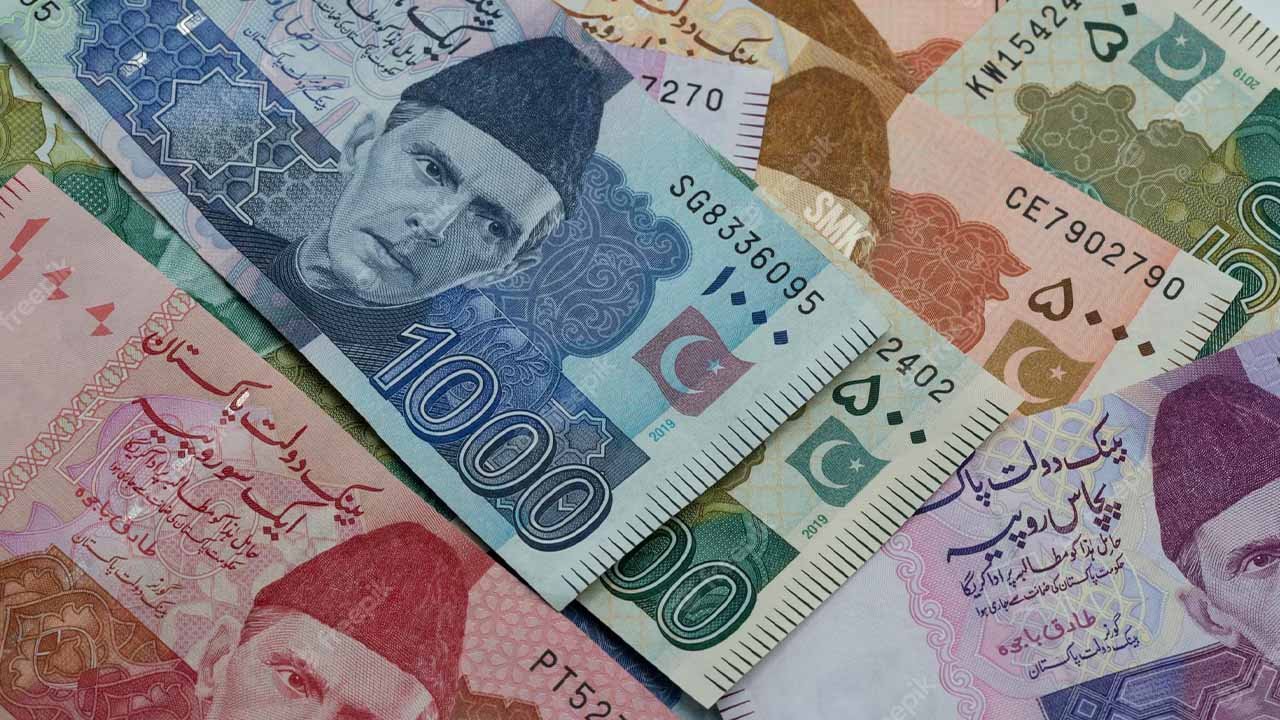
    The Pakistani rupee faced its eleventh consecutive session of losses against the US dollar, depreciating by 0.34 per cent in the inter-bank market on Monday.

    According to the State Bank of Pakistan (SBP), the rupee settled at 285.29, marking a decline of Re0.98.

    In the preceding week, the rupee had also suffered losses against the US dollar, closing 1.33 per cent lower at 284.31 in the inter-bank market, equivalent to a decrease of Rs3.74. This marked the third consecutive week of declines for the local currency.

    Prior to this recent trend, the Pakistani rupee had maintained a positive trajectory for 28 consecutive sessions, one of the longest appreciation runs, gaining a cumulative 10.93 per cent since reaching a record low of 307.1 in the inter-bank market on September 5.

    This surge was largely attributed to efforts to combat smuggling and increased controls on exchange companies.

    However, the situation has since shifted in favour of the US dollar, with global currencies remaining stable on Monday but appearing poised to continue their recent uptrend. This comes as the US dollar retreated following a moderation in the Federal Reserve’s hawkish stance.

    Internationally, major global currencies showed stability early on Monday, with the US dollar index flat at 105.11 and the euro at $1.0726.

    The dollar index experienced its most significant decline since mid-July, falling over 1 per cent last week and reaching a six-week low.

    Weakness in US job data, softer global manufacturing figures, and declining longer-term Treasury yields also contributed to the dollar’s weakened position.
  • More imports, less exports: Pakistan’s trade gap grows in October

    More imports, less exports: Pakistan’s trade gap grows in October

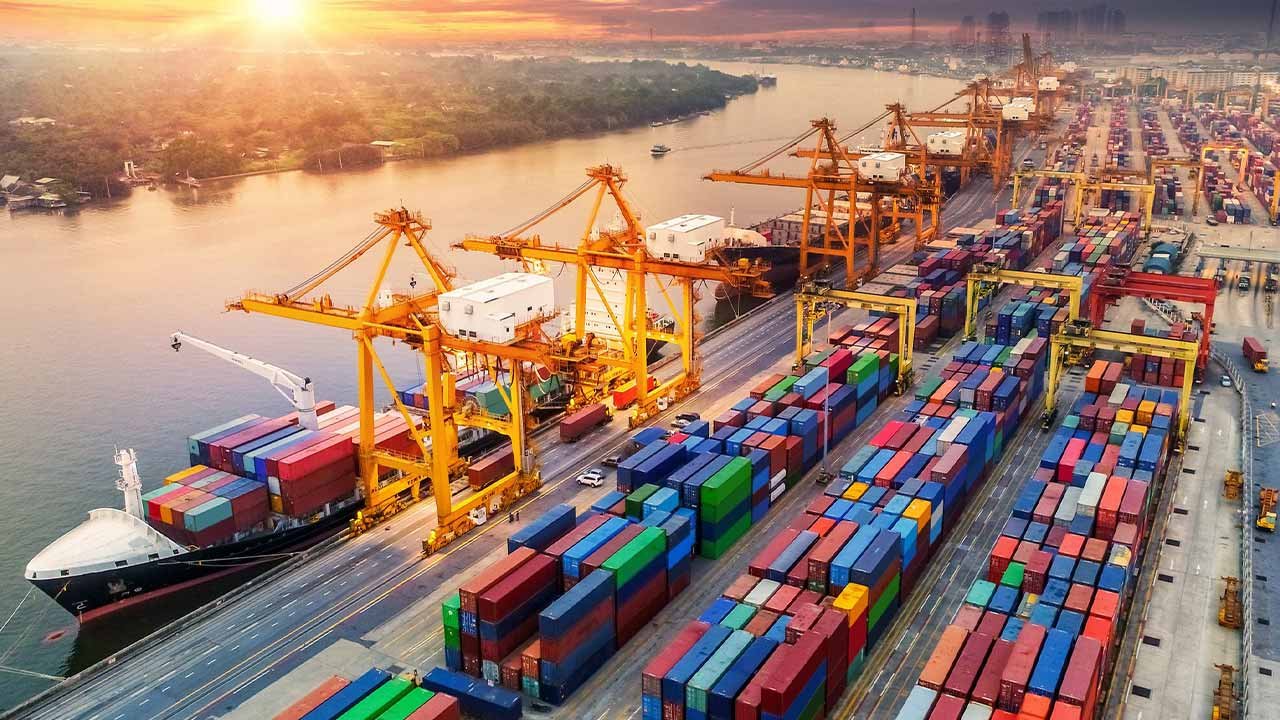
    Recent trade data for Pakistan reveals a monthly trade deficit increase of $0.6 billion, primarily driven by an $0.8 billion surge in imports.

    However, on an annual basis, the trade deficit is gradually shrinking at a modest rate of 4 per cent.

    This is not necessarily negative news, as import restrictions have been lifted as part of the İnternational Monetary Fund (IMF) programme while the economy is experiencing an uptick in demand.

    The encouraging aspect lies in the positive signs displayed by the export sector. The Pakistani rupee (PKR) has depreciated by approximately 35 per cent year-on-year, falling from PKR 220/USD to PKR 280/USD.

    Last year, exporters faced challenges in importing raw materials, machinery, and intermediate goods.

    Consequently, the 14 per cent year-on-year growth in exports, rising from $2.4 billion to $2.7 billion, is a heartening development, provided this trajectory continues.

    Recent measures by the State Bank of Pakistan (SBP) aimed at promoting exports, including competitive gas rates for exporters, reflect a positive intent.

    While industries reliant on gas may require more regionally competitive energy rates, the direction is favorable.

    Moreover, the alignment of open market and interbank exchange rates may encourage a shift from official channels.

    To address Pakistan’s economic challenges, two key corrections are imperative, among many others: increasing tax revenues and enhancing value-added exports.

    Depreciation of the currency alone cannot serve as the sole remedy for stimulating growth.

    To achieve a comprehensive economic framework, it is essential to boost the exports-to-GDP ratio beyond the current 8 per cent.

    This should encourage capitalists to prioritise exports and foreign direct investment (FDI) over property, fixed income, currency, and trading, ensuring sustained double-digit growth over the next five years.

  • State Bank of Pakistan maintains 22% policy rate in line with market consensus

    State Bank of Pakistan maintains 22% policy rate in line with market consensus

    Following the consensus in the broader market, the Monetary Policy Committee (MPC) of the State Bank of Pakistan (SBP) announced on Monday that it would maintain the key policy rate at 22 per cent, as stated in their press release.

    The Committee recognised that headline inflation, as expected, increased in September 2023 but anticipates a decline in October, followed by a sustained decrease, particularly in the latter half of the fiscal year.

    While the MPC acknowledged potential risks to the FY24 inflation outlook and the current account due to recent global oil price volatility and forthcoming gas tariff increases in November 2023, they also identified mitigating factors.

    These factors include targeted fiscal consolidation in the first quarter, enhanced availability of crucial commodities in the market, and the alignment of interbank and open market exchange rates.

    The MPC emphasised that the real policy rate, looking forward over a 12-month horizon, remains significantly positive.

    This is deemed appropriate to achieve the medium-term inflation target of 5-7 per cent by the end of FY25, contingent upon the sustained fiscal consolidation and timely realisation of planned external inflows, as articulated in the MPC statement.

  • State Bank of Pakistan set to announce policy rate decision today

    State Bank of Pakistan set to announce policy rate decision today

    The State Bank of Pakistan (SBP) will soon unveil its latest monetary policy for the upcoming two months.

    In an official statement, the central bank declared that the Monetary Policy Committee (MPC) of SBP will convene on Monday, October 30, 2023, to determine the monetary policy. SBP will then issue the Monetary Policy Statement via a press release on the same day.

    Currently, the State Bank’s policy rate stands at 22 per cent. Since October 2021, the central bank has increased its policy rate by a cumulative 1,500 basis points in an effort to combat rising inflation and bolster the external balance. This rate has remained unchanged since July 2023.

    The forthcoming policy rate announcement is poised to exert a substantial influence on Pakistan’s industries and inflation rate.

    In the most recent meeting held in July, the State Bank of Pakistan (SBP) resolved to maintain the interest rate at 22 per cent.

    The Monetary Policy Committee of the central bank meticulously assessed economic data and the prevailing inflation situation before opting to retain the interest rate. It’s worth noting that substantial progress has been achieved in the current account, thanks to government initiatives.

    This decision comes against the backdrop of Pakistan contending with a high inflation rate, currently pegged at 29.65 per cent.

  • State Bank of Pakistan’s forex reserves dip by $220 million in weekly report 

    State Bank of Pakistan’s forex reserves dip by $220 million in weekly report 

    The State Bank of Pakistan (SBP) witnessed a notable decline in its foreign exchange reserves, with a weekly reduction of $220 million, bringing the total to $7.5 billion as of October 20th, according to the data released on Thursday. 

    The overall liquid foreign reserves of the country now stand at $12.6 billion, while the commercial banks hold net foreign reserves of $5.1 billion.  

    The decrease in SBP’s reserves was attributed to debt repayments during the week that ended on October 20, 2023, leading to a decrease of $220 million and bringing the total to $7,494.2 million. 

    Last week saw a modest increase of $67 million in Pakistan’s central bank reserves. Notably, Pakistan’s central bank received a significant boost to its reserves in July of this year.  

    This boost was a result of the initial installment of approximately $1.2 billion from the International Monetary Fund (IMF), following the approval of a new $3-billion stand-by arrangement by the IMF. Additionally, Pakistan received inflows from Saudi Arabia and the UAE. 

    Nevertheless, the central bank’s reserves have come under pressure due to a combination of factors, including ongoing debt repayments, increased import payments after the easing of restrictions, and a lack of substantial new inflows. 

  • Here’s when PayPal and Stripe payment services will be available in Pakistan

    Here’s when PayPal and Stripe payment services will be available in Pakistan

    Dr Umar Saif, Pakistan’s interim Federal Minister for IT and Telecommunications, shared noteworthy developments on Wednesday regarding the imminent availability of PayPal and Stripe payment gateways within the country. Addressing the flourishing freelancing community, he drew attention to the current scarcity of financial tools to facilitate payments within this sector. 

    During these discussions with major industry players, including PayPal, Stripe, and Wise, a compelling case for Pakistan was presented, despite reservations, including those arising from the Financial Action Task Force (FATF). 

    Dr Saif expressed optimism, foreseeing promising updates on PayPal and Stripe services in the coming four to six weeks, heralding positive implications for the freelancer community. 

    Highlighting the substantial size and potential of Pakistan’s IT freelancing workforce, the country ranks as the world’s second-largest online workforce, boasting approximately 1.5 million active IT freelancers. Nonetheless, the sector’s growth has been stymied by infrastructure limitations. 

    To address these challenges, the E-Rozgar programme is set to offer interest-free loans to the private sector, with plans for establishing co-working spaces capable of accommodating 500,000 individuals. Dr Saif also revealed a collaborative initiative with the Higher Education Commission (HEC) to introduce standardised testing for IT graduates. 

    The significance of Pakistan’s IT sector cannot be understated, with around 19,000 companies contributing substantially to both employment and the national economy, boasting official exports worth $2.5 billion. 

    Another pertinent issue discussed by Dr Saif is the reluctance of some IT companies to maintain foreign exchange reserves and revenues abroad due to constraints on repatriating US dollars. Despite conservative estimates placing Pakistan’s IT exports at $4–4.5 billion, the reality is obscured by restrictions on US-dollar spending. 

    Fueled by cooperative efforts between the IT ministry and P@SHA, a positive development has emerged. IT companies can now retain 50 per cent of their revenue in US dollar accounts and receive corporate debit cards from banks, facilitating international payments without hindrance. 

    In addition, the State Bank of Pakistan (SBP) has played a crucial role in assisting IT exporters. The SBP recently increased the permissible retention limit for IT exporters, allowing them to hold 50 per cent of their export proceeds in Exporters’ Specialised Foreign Currency Accounts (ESFCAs) with the aim of bolstering IT and IT-enabled services exports. 

  • Pakistani rupee continues to lose against US dollar

    Pakistani rupee continues to lose against US dollar

    The Pakistani rupee experienced a 0.16 per cent depreciation against the US dollar in the inter-bank market on Wednesday, settling at 279.88, marking a decrease of Re0.45, as reported by the State Bank of Pakistan (SBP).

    The previous day, the rupee had depreciated by 0.11 per cent, closing at 279.43 against the US dollar. In a related development, the SBP anticipates an increase in remittances to Pakistan due to a notable rise in labour migration. 

    In fiscal years 2022 and 2023, Pakistan observed a significant surge in labour migration compared to the preceding two years, with around 0.8 million Pakistani workers registered through the Bureau of Emigration and Overseas Employment (BEOE) and Overseas Employment Corporation (OEC) during FY23.

    Internationally, the US dollar gained strength on Wednesday, supported by robust US economic data. Meanwhile, the euro faced challenges due to a dimming growth outlook in the Eurozone. US business output showed improvement in October, signalling a recovery from a five-month contraction, as reported on Tuesday. 

    In contrast, data from the same day indicated an unexpected downturn in business activity in the Eurozone. The euro, against the dollar, was up 0.05 per cent at $1.0595 but had declined by 0.75 per cent the previous day. This shift boosted the dollar index, which steadied at 106.23, moving away from a one-month low of 105.35 recorded in the previous session.

    Furthermore, oil prices remained above $88 on Wednesday, driven by concerns about escalating conflicts in the Middle East, which offset worries about reduced demand due to the gloomy economic prospects in Europe.

  • Pakistan’s forex reserves surge by $67 million to reach $7.7 billion

    Pakistan’s forex reserves surge by $67 million to reach $7.7 billion

    The State Bank of Pakistan (SBP) reported a notable weekly surge in foreign exchange reserves, with an increase of $67 million, reaching $7.7 billion as of October 13, as per the latest data release on Thursday.

    In total, the nation’s readily available foreign reserves amounted to $12.9 billion, with commercial banks holding $5.2 billion in net foreign reserves. The central bank did not provide a specific explanation for this increase.

    During the week concluding on October 13, 2023, the SBP’s reserves climbed by $67 million, reaching a total of $7,714.0 million, according to the SBP’s statement. This follows a previous week’s increase of $31 million.

    Notably, in July of this year, the central bank’s reserves received a significant boost when Pakistan received an initial disbursement of approximately $1.2 billion from the International Monetary Fund (IMF), following the approval of a new $3-billion stand-by arrangement. Additionally, inflows from Saudi Arabia and the UAE contributed to this increase.

    Nevertheless, the central bank’s reserves have faced pressure due to ongoing debt repayments, increased import expenditures following the easing of restrictions, and a lack of fresh inflows.

  • Pakistani rupee appreciates by Rs5.07 against US dollar in five days 

    Pakistani rupee appreciates by Rs5.07 against US dollar in five days 

    The Pakistani rupee (PKR) showed a notable increase in value against the US dollar (USD), appreciating by 5.07 PKR in five days to reach a closing rate of 277.62 PKR per USD on Friday. This stands in contrast to the previous week’s closing rate of 282.69 PKR per USD.

    In today’s interbank trading session, the local currency exhibited a gain of 96 paisa. It reached an intraday high (bid) of 278.5 PKR and a low (ask) of 287.55 PKR.

    In the open market, exchange companies adjusted their rates, with the rupee strengthening by 1 PKR. These companies quoted the dollar at 274 PKR for buying and 277 PKR for selling, as opposed to the prior rates of 275 PKR for buying and 278 PKR for selling.

    This increase in the value of the rupee can be attributed to several factors. Notably, there has been a concerted effort, backed by the military, to curtail illegal outflows of US dollars from the country.

    Additionally, the government has implemented various measures aimed at bolstering the local currency.

    Addressing concerns related to Afghan transit trade, Pakistan’s Ministry of Commerce recently took a significant step by imposing a ban on 212 items that were previously imported into Afghanistan through Pakistan under the Afghan transit trade agreement.

    This move, enacted through a Statutory Regulatory Order (SRO) issued on October 3, was executed in accordance with the authority granted by the Imports and Exports (Control) Act of 1950.

    Furthermore, the Federal Board of Revenue (FBR) has imposed a 10% processing fee on five key categories of Afghan transit commercial goods imported into Afghanistan via Pakistan.

    In parallel, the State Bank of Pakistan has introduced recent reforms aimed at consolidating and redefining various types of exchange companies into a single category. These changes come with well-defined mandates and higher capital requirements, ultimately contributing to a more transparent financial landscape.