Tag: State Bank of Pakistan

  • SBP Governor confirms Pakistan’s strong position to achieve IMF targets 

    SBP Governor confirms Pakistan’s strong position to achieve IMF targets 

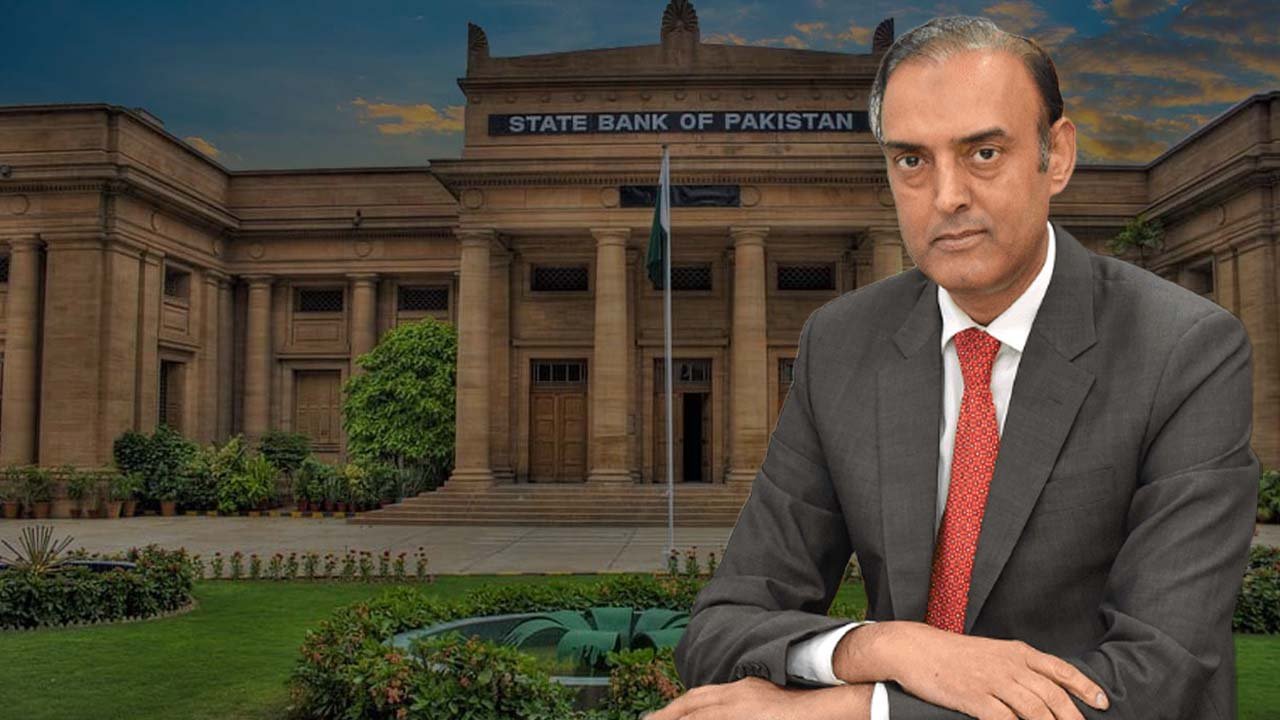
    The Governor of the State Bank of Pakistan (SBP), Jameel Ahmad, provided a reassuring update to investors on Friday, affirming that the nation is well-positioned to meet the International Monetary Fund’s (IMF) end-September targets for net international reserves and net domestic assets. 

    Ahmad said that Pakistan is “very comfortably” placed to meet IMF targets. 

    This declaration was made by Governor SBP during a meeting with prominent international investors held on the sidelines of the IMF-World Bank gatherings in Marrakech, Morocco.  

    The meeting was organised by prominent global banks such as Barclays, JP Morgan, Standard Bank, and Jefferies. 

    According to an official press release from the central bank, investors were apprised of recent macroeconomic developments, the government’s response to prevailing challenges, and the economic outlook of Pakistan and were provided with the opportunity to seek clarification on these matters. 

    Governor Ahmad informed investors that the current policy framework is strategically oriented towards achieving stability by addressing prevailing macroeconomic imbalances. 

    He highlighted that the SBP had taken early measures to tighten monetary policy in response to escalating global inflation. 

    Nevertheless, certain domestic obstacles, such as the 2022 floods, had complicated the SBP’s efforts to combat inflation. 

    The governor noted that these stabilisation measures have begun to yield positive outcomes. Inflation, after reaching a peak of 38.0 per cent in May 2023, decreased to 31.4 per cent in September 2023 and is anticipated to continue on a downward trajectory in the coming months. 

    Furthermore, Pakistan’s external account has exhibited substantial improvements, with foreign exchange reserves being steadily replenished. 

    Governor Ahmad expressed confidence that inflation would significantly decrease in the latter half of the fiscal year. 

    He emphasised that the stand-by arrangement with the IMF is anticipated to provide essential support for ongoing economic stabilisation efforts. 

    In addition, he reported that foreign exchange reserves have improved considerably, marked by an increase from a low of $3.1 billion in January 2023 to $7.6 billion at the end of September 2023. 

    This reserve enhancement was largely bolstered by non-debt-creating inflows amid favourable market conditions. 

    According to Geo, the Governor further revealed that the SBP has successfully met the forward book target of $4.2 billion for end-September 2023, as agreed with the IMF, with a substantial surplus. 

    Likewise, the SBP is confidently poised to fulfil other end-September IMF targets, including net international reserves (NIR) and net domestic assets (NDA). 

    Concluding his statement to investors, Governor Ahmad conveyed that Pakistan is diligently addressing long-standing structural deficiencies.  

    He expressed optimism that, with the support of both multilateral and bilateral partners, the nation is on course to achieve sustainable and inclusive economic growth in the medium term. 
  • Pakistan’s foreign exchange reserves increase by $31 million, reaching $7.64 billion

    Pakistan’s foreign exchange reserves increase by $31 million, reaching $7.64 billion

    The State Bank of Pakistan (SBP) reported an increase of $31 million in its foreign exchange reserves on a weekly basis, reaching a total of $7.64 billion as of October 6, according to data released on Thursday.

    The overall liquid foreign reserves of the country amounted to $13.03 billion, with commercial banks holding net foreign reserves of $5.39 billion.

    The central bank did not provide a specific explanation for the increase in reserves.

    In its report, the SBP stated, “During the week ending on October 6, 2023, the SBP’s reserves rose by $31 million, reaching $7,646.7 million.”

    Notably, the previous week witnessed a decrease of $21 million in Pakistan’s central bank reserves.

    In July of this year, the SBP’s reserves received a significant boost when Pakistan received the first tranche of approximately $1.2 billion from the International Monetary Fund (IMF) after the approval of a new $3-billion stand-by arrangement. Additionally, inflows from Saudi Arabia and the UAE contributed to the growth of reserves.

    However, it’s worth mentioning that the central bank’s reserves have been under pressure due to ongoing debt repayments, an increase in import expenditures following the relaxation of restrictions, and a lack of fresh inflows.

  • SBP reports $112 million increase in workers’ remittances

    SBP reports $112 million increase in workers’ remittances

    In September 2023, Pakistan experienced a notable surge in workers’ remittances, marking a 5.3 per cent increase compared to August 2023.

    This uptick can be primarily attributed to a crackdown on the informal money transfer systems known as hawala and hundi.

    According to the State Bank of Pakistan (SBP), the country received remittances amounting to $2.206 billion in September 2023, up from $2.094 billion in August 2023, equating to a $112 million rise.

    The majority of remittance inflows for September 2023 were derived from several key sources, with Saudi Arabia contributing $538.2 million, the United Arab Emirates $400 million, the United Kingdom $311.1 million, and the United States of America $263.4 million.

    This increase in remittances can be linked to the fact that a substantial number of Pakistani expatriates resorted to using the Hawala/Hundi channels during the initial two months of the fiscal year, largely due to a significant disparity between official and unofficial exchange rates.

    Subsequently, strict enforcement measures against illegal currency dealers have curbed this volatility, leading to a gradual appreciation of the Pakistani rupee in both the interbank and open currency markets.

    In the last month, the rupee has rebounded by 9 per cent, recovering from its record low of 307.1 against the dollar on September 5. The crackdown on these illicit currency dealers has also contributed to the 5 per cent month-on-month increase in remittances for September.

    However, when examining the entire first quarter of fiscal year FY24, the overall home remittances to Pakistan have experienced a sharp decline of 20 per cent, totalling $1.57 billion. Home remittances for the July-September period of FY24 amounted to $6.33 billion, a decrease from $7.90 billion during the same period in the previous fiscal year, FY23.

    During this initial quarter, remittances from all major sources displayed a downward trajectory. Specifically, home remittances from Saudi Arabia decreased by 22 per cent to $1.516 billion for July–September in FY24, down from $1.946 billion in the equivalent period in FY23.

  • State Bank of Pakistan reports $21 million decline in forex reserves

    State Bank of Pakistan reports $21 million decline in forex reserves

    Pakistan’s total liquid foreign reserves reached a sum of $13,030.8 million, with the central bank holding reserves amounting to $7,615.4 million, as reported by the State Bank of Pakistan (SBP). 

    According to a statement released by the State Bank of Pakistan on Thursday, during the week ending on September 28, 2023, SBP’s reserves experienced a decrease of $21 million, resulting in a total of US$ 7,615.4 million. Concurrently, commercial banks held net foreign reserves totaling $5,415.4 million. 

    In the preceding week, ending on September 22, 2023, the country’s total liquid foreign reserves were reported at US$ 13.162 billion. Among these, the central bank held foreign reserves amounting to $7.636 billion, while commercial banks held net foreign reserves of $5.525 billion. 

    As of September 29, the total liquid foreign reserves of Pakistan stood at US$ 13.18 billion, with the central bank’s reserves totaling $7,636.7 million. The State Bank of Pakistan (SBP) spokesperson attributed the decrease in SBP’s reserves by $59 million to debt repayments during the week ending on September 22, 2023. Net foreign reserves held by commercial banks amounted to $5,525.1 million. 

    In the week ending on September 15, 2023, the country’s total liquid foreign reserves were recorded at $13.186 billion. Among these, the central bank held foreign reserves amounting to $7.695 billion, while commercial banks held net foreign reserves totaling $5.491 billion. 

  • Pakistani rupee claims top spot as best-performing currency worldwide 

    Pakistani rupee claims top spot as best-performing currency worldwide 

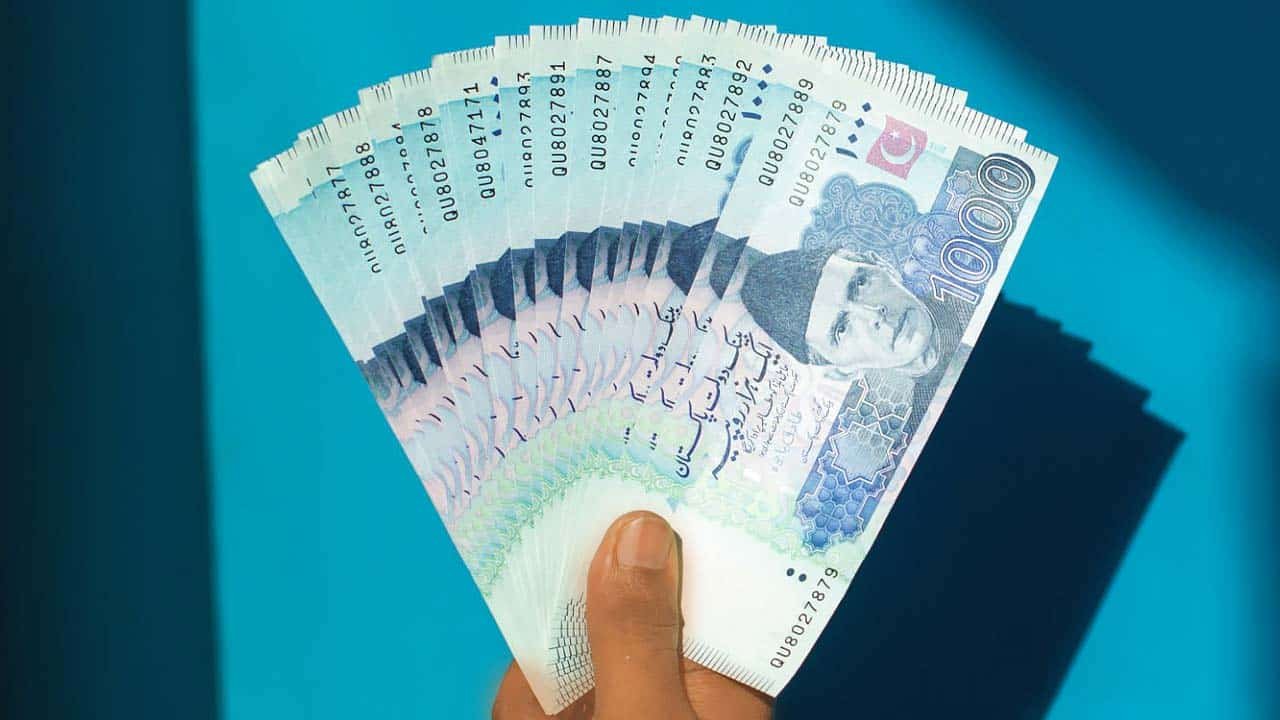
    Amidst a determined crackdown on smuggling and illegal financial activities, the Pakistani rupee has emerged as the world’s top-performing currency for September. During this remarkable month, the rupee’s value surged from Rs305.54 against the US dollar on August 31st to Rs287.74 on September 28th, a notable increase of Rs17.8 or 6.2 per cent.

    Impressively, this positive trend persisted for 17 consecutive trading sessions, resulting in an overall gain of nearly 7 per cent since hitting its lowest point at 307.1 on September 5th. 

    It’s essential to note that the currency market was closed on Friday, September 29th. In terms of global currency performance, the Mauritian rupee secured the second position with a modest appreciation of 0.7 per cent, while the Hong Kong dollar claimed third place, showing a slight improvement of 0.2 per cent throughout September. These figures are based on data from the brokerage house Arif Habib Limited (AHL), reported on a recent Friday. 

    Financial experts attribute this remarkable rupee surge to a series of government measures aimed at curbing dollar smuggling and currency hoarding. Additionally, during the same month, the State Bank of Pakistan (SBP) introduced structural reforms targeting the Exchange Companies (ECs) sector. These reforms included a directive for commercial banks to establish their own ECs as wholly-owned subsidiaries and an increase in the minimum capital requirement for ECs from Rs200 million to Rs500 million. 

    Notably, the Pakistani rupee recorded substantial gains in the inter-bank market, appreciating by 6-9 per cent against three major currencies – the US dollar, UK Pound, and Euro – over the past few weeks. Even in the open market, the rupee showed a significant upswing of 11-13 per cent, effectively eliminating the premium associated with the open-market rate. This is particularly impressive given that the US Dollar index reached a 10-month high. 

    This strengthening of the rupee aligns with the commitment made by Pakistani authorities in July when they entered into a vital $3 billion Stand-By Arrangement (SBA) with the International Monetary Fund (IMF). This agreement was pivotal in averting a potential sovereign default and required the adoption of a market-based exchange rate, which has now proven to be a pivotal factor in the rupee’s impressive resurgence. 

  • Pakistan’s forex reserves decline by $59 million to $7.64 billion due to debt payments

    Pakistan’s forex reserves decline by $59 million to $7.64 billion due to debt payments

    The State Bank of Pakistan (SBP) reported a weekly decrease in foreign exchange reserves, with a decline of $59 million, bringing the total to $7.64 billion as of September 22, according to data released on Thursday.

    The overall liquid foreign reserves of the country amounted to $13.16 billion, with commercial banks holding net foreign reserves of $5.52 billion.

    The central bank attributed this reduction in reserves to debt repayments, stating, “During the week ending on September 22, 2023, SBP’s reserves decreased by $59 million to $7,636.7 million due to debt repayments.”

    Notably, Pakistan’s central bank reserves had increased by $56 million the previous week, following four consecutive weeks of decline, during which SBP reserves had dwindled by a cumulative total of $416 million.

    In July, SBP’s reserves received a boost when Pakistan received approximately $1.2 billion as the first tranche from the International Monetary Fund (IMF), following approval of a new $3-billion stand-by arrangement. Additionally, inflows from Saudi Arabia and the UAE contributed to the increase.

    Despite these positive developments, the central bank’s reserves have come under pressure due to ongoing debt repayments, increased import payments following the easing of restrictions, and a lack of fresh inflows.

  • Pakistani rupee set to become best performer against US dollar following record-low recovery

    Pakistani rupee set to become best performer against US dollar following record-low recovery

    In September, Pakistan’s rupee emerged as the global front-runner in currency performance, driven by the interim government’s vigorous measures to curb illicit US dollar trading.

    According to a comprehensive report by Bloomberg, the Pakistani rupee has experienced a remarkable surge of nearly 6 per cent during this month, a notable accomplishment given the downward trajectory of most other currencies like the Thai baht and South Korean won against the strengthening US dollar, fueled by expectations of prolonged high US interest rates.

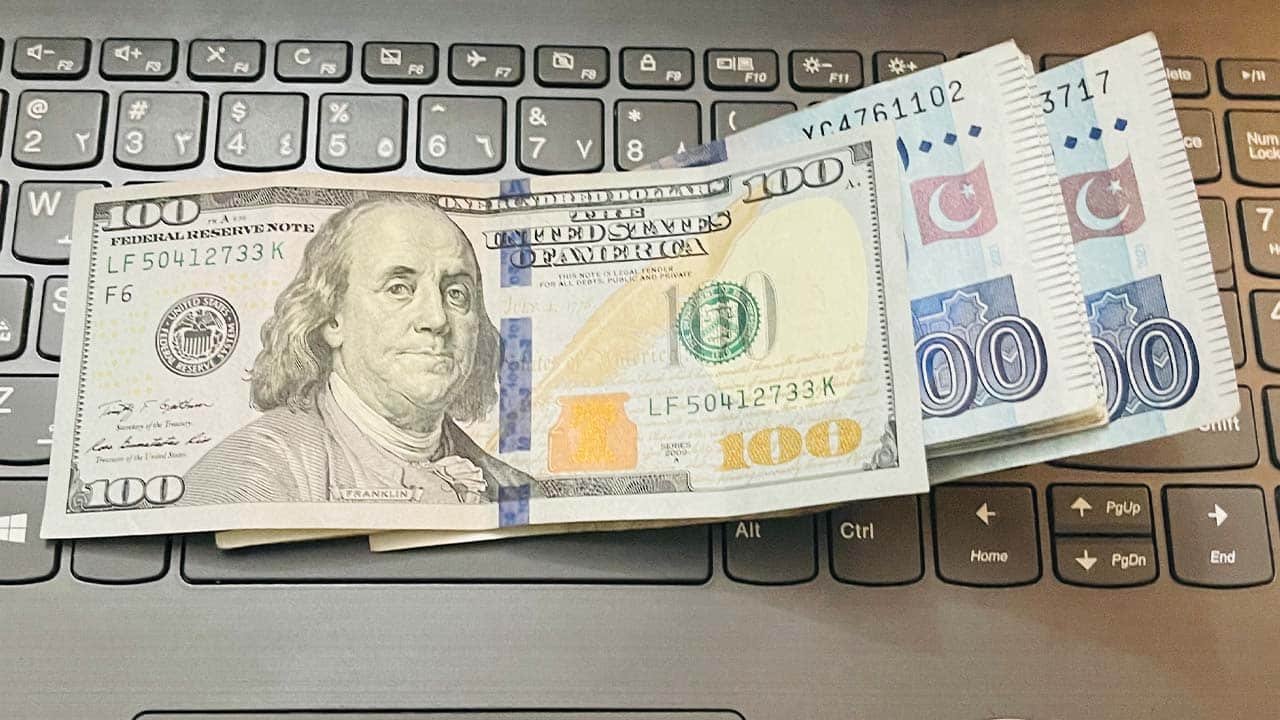
    On Thursday, the rupee exhibited resilience by rising 0.1 per cent, reaching Rs287.95 per dollar after hitting a record low of approximately Rs307 earlier in the month.

    Khurram Schehzad, the Chief Executive Officer of Alpha Beta Core Solutions Pvt. Ltd., a financial consultancy located in Karachi, commented on the situation, highlighting the prevalence of leakages through informal channels such as hawala and hundi trade, which are common in South Asia.

    Schehzad noted, when the USD rate reverses, everyone from hoarders to exporters, who have been holding onto their export proceeds, starts offloading their dollars.

    The Bloomberg report underscores the Pakistani government’s intensified efforts to crack down on illegal dollar trading, which have significantly contributed to the rupee’s resurgence.

    In addition to these measures, the central bank has raised capital requirements for smaller exchange companies and mandated large banks to establish their exchange entities, aiming to enhance transparency and oversight in the retail foreign exchange market.

  • Good news: the gain of the rupee continues, now at Rs288.75

    Good news: the gain of the rupee continues, now at Rs288.75

    The Pakistani rupee continued to exhibit strength against the US dollar, marking a 0.36 per cent gain in the inter-bank market on Wednesday. Remarkably, this marks the rupee’s 16th consecutive appreciation against the greenback.

    According to the State Bank of Pakistan (SBP), the rupee settled at Rs288.75, reflecting an increase of Rs1.05 in the inter-bank market. This follows a 0.37 per cent appreciation observed on Tuesday, settling at Rs289.80.

    Over the past days, the rupee has consistently followed an upward trajectory, showcasing a remarkable recovery of over 6 per cent since reaching a historic low of Rs307.1 against the US dollar in the inter-bank market on September 5.

    On the global stage, the US dollar maintained its robust position, trading near a 10-month high against major currencies on Wednesday. This situation is underpinned by the persistent elevation of Treasury yields, driven by expectations of sustained higher US interest rates. Concurrently, the yen faced challenges as it edged closer to a critical intervention threshold.

    Recent statements from Federal Reserve officials have hinted at the possibility of further interest rate hikes, despite the central bank’s decision to hold rates steady the previous week. This has led to an ascent in US Treasury yields to levels not seen in several years, as financial markets recalibrate their expectations regarding the potential peak of US rates and the likelihood of a prolonged period of tight monetary conditions.

    The US dollar index, a gauge of its strength, recently stood at 106.20, having reached a 10-month peak of 106.26 in the preceding session. Meanwhile, the euro remained subdued, hovering close to a six-month low and trading at approximately $1.0569.

  • Govt’s borrowing soars to over Rs1.6 trillion in three months, marking a fivefold increase from last year

    Govt’s borrowing soars to over Rs1.6 trillion in three months, marking a fivefold increase from last year

    In the current fiscal year, FY24, the federal government’s net borrowing to meet its financial obligations for governing the nation amounted to Rs1.6 trillion.

    According to official data released by the State Bank of Pakistan (SBP), the government secured loans exceeding Rs1.6 trillion in cash from the domestic banking sector during the first quarter, up significantly from the Rs261 billion borrowed during the same period in the previous year.

    During this period, the government obtained a net loan of Rs98 billion from SBP. It’s worth noting that the government is obligated to adhere to International Monetary Fund regulations, which prohibit direct borrowing from the central bank.

    Additionally, the government raised Rs1.5 trillion from scheduled banks in the first quarter of FY24 (up to September 8) to address the budget deficit.

    The net borrowing by the government for budgetary support in FY23 totaled Rs3.74 trillion, marking an increase from Rs3.13 trillion in FY22.

  • Pakistani rupee settles at Rs290.86 against US dollar, marking 14th consecutive gain

    Pakistani rupee settles at Rs290.86 against US dollar, marking 14th consecutive gain

    In continuation of its recent positive streak, the Pakistani rupee extended its upward trajectory against the US dollar for the 14th consecutive session, marking a gain of 0.31 per cent in the interbank market on Monday.

    According to data released by the State Bank of Pakistan (SBP), the rupee closed at Rs290.86, representing a noteworthy increase of Re0.9 in the inter-bank market. This sustained appreciation trend has seen the rupee make significant gains, amounting to 5.28 per cenr, or Rs16.24, since its record low of Rs307.1 against the US dollar on September 5 in the inter-bank market.

    In the previous week, the rupee experienced a further appreciation of 1.74 per cent, concluding positively for all five trading sessions and settling at Rs291.76 against the US dollar in the inter-bank market by the end of the week. Additionally, the rupee’s performance in the open market has strengthened, reducing the ‘premium’ to negligible levels and aligning with the benchmarks established by the International Monetary Fund (IMF).

    While several experts attribute the rupee’s recent gains to administrative and enforcement measures, some argue that these increases reflect the currency’s intrinsic value when speculative influences and negative sentiment are excluded.