Tag: State Bank of Pakistan

  • Pakistan imports tea worth Rs31.64 billion in just two months 

    Pakistan imports tea worth Rs31.64 billion in just two months 

    According to data from the Pakistan Bureau of Statistics (PBS), Pakistan’s imports of food items in the first two months of the fiscal year 2023–24 amounted to Rs378.98 billion. 

    The PBS data reveals that during this two-month period, Pakistan imported tea worth Rs31.64 billion, a notable increase from Rs20.23 billion during the corresponding period in the previous year.  

    Additionally, Pakistan imported palm oil valued at Rs158.7 billion and soybean oil worth Rs13.56 billion. 

    Furthermore, Pakistan imported pulses worth Rs48.25 billion and dry fruits valued at over Rs2 billion during the same two-month period. 

    It is worth noting that in July, the State Bank of Pakistan (SBP) lifted all import restrictions as part of its efforts to meet the conditions set by the International Monetary Fund (IMF). 

    Read more: Pakistani rupee gains value, now at Rs292.78 per US dollar 

    The central bank issued a circular to abolish these import restrictions and authorised banks to facilitate remittances to clear more than 6,000 containers. 

    The SBP clarified in the circular that remittances would be made available for all imports following the implementation of the latest order. 

  • Pakistani rupee gains value, now at Rs292.78 per US dollar

    Pakistani rupee gains value, now at Rs292.78 per US dollar

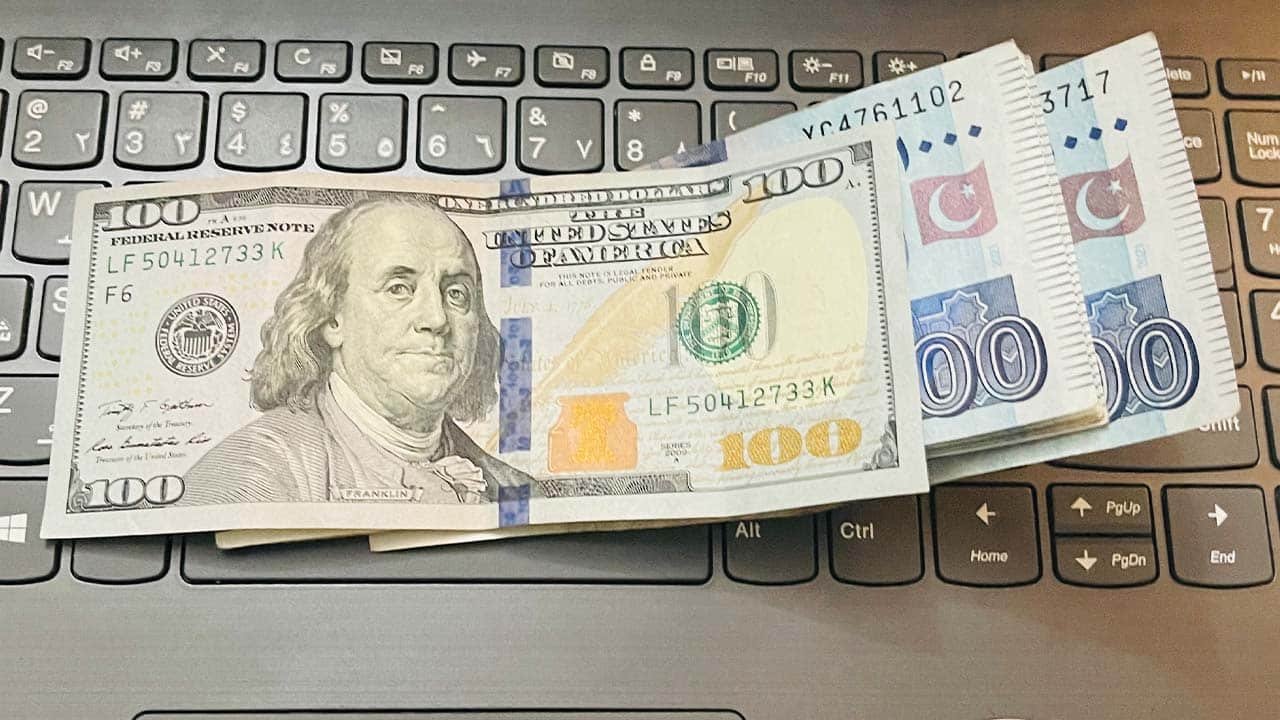
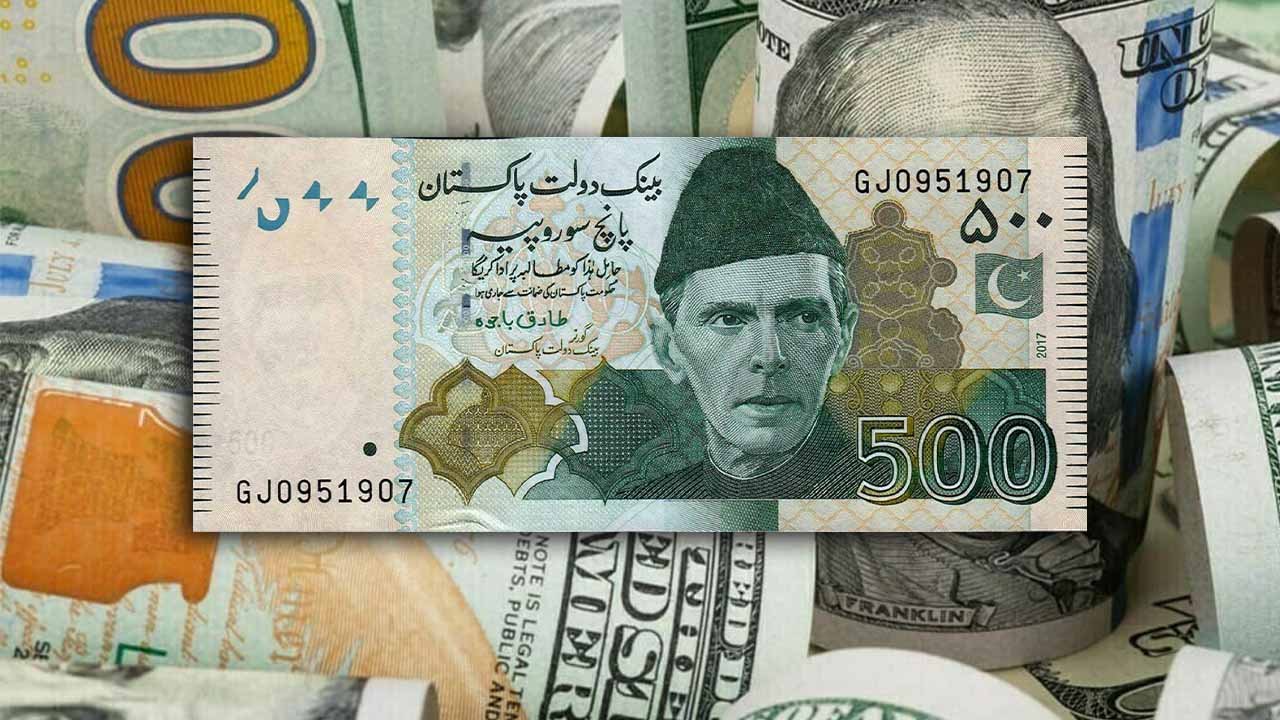
    The Pakistani rupee’s ascent against the US dollar persisted for the 12th consecutive session in the inter-bank market on Thursday, registering a 0.38 per cent gain.

    According to the State Bank of Pakistan (SBP), the rupee settled at 292.78, marking a notable increase of Rs1.1 within the inter-bank market. Just the day before, on Wednesday, the rupee had exhibited a similar upward trend, appreciating by 0.35 per cent and settling at 293.88.

    This remarkable turnaround in the rupee’s value follows a recent period of decline, during which it hit a record low of 307.1 in the inter-bank market on September 5.

    The transformation in its fortune can be attributed to a series of structural reforms introduced by the State Bank of Pakistan (SBP) within the Exchange Companies’ (ECs) sector, along with various administrative measures implemented by authorities to combat currency smuggling and hoarding.

    On the global stage, the US dollar reached new heights on Thursday, notably against the yen, marking its strongest position since November.

    This surge in the dollar’s strength followed a hawkish stance taken by the US Federal Reserve at its recent monetary policy meeting, where it opted to maintain interest rates within the 5.25 per cent–5.50 per cent range.

    The Fed’s decision reflected a growing confidence among officials that their assertive monetary policy approach can effectively combat inflation without causing significant economic disruption or substantial job losses.

    Conversely, oil prices experienced a decline on Thursday, following the previous session’s significant drop, as expectations of US interest rate hikes overshadowed the impact of reduced US crude stockpiles.

  • PKR gains for 11th straight session, reaches Rs293.88 per dollar

    PKR gains for 11th straight session, reaches Rs293.88 per dollar

    The Pakistani rupee continued its upward trend against the US dollar, marking the 11th consecutive session of appreciation in the interbank market on Wednesday.

    According to the State Bank of Pakistan (SBP), the rupee closed at 293.88, reflecting a 0.35 per cent increase. This follows a 0.36 per cent appreciation on Tuesday, when it settled at 294.90.

    Recent days have seen a remarkable strengthening of the rupee, with a nearly 4.5 per cent gain since hitting a record low of 307.1 in the inter-bank market on September 5. 

    This turnaround is attributed to structural reforms introduced by the State Bank of Pakistan (SBP) in the Exchange Companies’ (ECs) sector and reported efforts to combat smuggling, both of which have provided support to the currency markets.

    Globally, the US dollar remained steady on Wednesday, with a slight softening against the yen, in anticipation of the Federal Reserve’s highly anticipated rate decision later in the day. 

    The US dollar index, which gauges the greenback against a basket of currencies, held steady at 105.13 as traders awaited the Fed’s announcement. Market expectations are that the Fed will likely maintain interest rates in the range of 5.25 per cent to 5.50 per cent, putting the spotlight on the central bank’s forward guidance.

    Meanwhile, oil prices, a significant indicator of currency stability, declined by nearly $1 on Wednesday, ahead of the US Federal Reserve’s interest rate decision. Investors remain uncertain about when peak interest rates will be reached and the potential impact on energy demand. 

    These price drops occurred despite larger-than-expected reductions in US oil stockpiles and weaker US shale output, both of which point to limited crude supply for the remainder of 2023.

  • 10-day winning streak: Pakistani rupee soars to Rs294.90 against US dollar 

    10-day winning streak: Pakistani rupee soars to Rs294.90 against US dollar 

    In a noteworthy financial trend, the Pakistani rupee continued its upward trajectory against the US dollar, marking its 10th consecutive session of appreciation in the interbank market. On Tuesday, the rupee displayed resilience by appreciating by 0.36 per cent, settling at Rs294.9, following a notable increase of Rs1.05. 

    This positive momentum in the exchange rate follows the previous day’s gain, where the rupee had strengthened by 0.3 per cent to close at Rs295.95. This recent surge in the value of the Pakistani rupee comes in stark contrast to its earlier performance, when it reached an all-time low of Rs307.1 in the interbank market. 

    The shift in fortune can be attributed to government initiatives aimed at reforming the Exchange Companies’ (ECs) sector and cracking down on smuggling activities, both of which have bolstered confidence in the currency markets. 

    This development offers some relief to the prevailing economic outlook, which had been under pressure due to the easing of import restrictions, leading to a widening of the current account deficit in July. 

    Analysts at Topline Securities anticipate that the PKR/USD exchange rate in the inter-bank market will likely remain within the range of Rs320–340 by June 2024, providing a forward-looking perspective on the currency’s performance. 

    Meanwhile, on the global stage, the US dollar experienced a modest decline, albeit remaining close to its six-month peak against major currencies. This movement occurred ahead of the Federal Reserve’s highly anticipated interest rate decision scheduled for Wednesday. 

  • Pakistan to launch digital rupee to reduce printing and distribution costs

    Pakistan to launch digital rupee to reduce printing and distribution costs

    The government has opted to introduce a digital currency as a strategic move aimed at reducing expenses associated with currency printing and distribution.

    According to The News, this digital currency initiative is expected to contribute to the appreciation of the rupee’s value, bolster the overall economy, and facilitate extensive financial transactions.

    Much like the Chinese digital currency, where one unit is equivalent to one Chinese Yuan, the value of this digital currency will be pegged to the Pakistani rupee. The State Bank of Pakistan (SBP) will be the driving force behind this endeavour, offering government-backed guarantees similar to traditional currency notes. The SBP has already begun its efforts, enlisting the expertise of professionals for its development.

    To oversee this transformation, a specialised department known as the Central Bank Digital Currency has been established. This department is diligently assessing the cost benefits and feasibility of the digital currency to ensure seamless transactions upon its launch.

    The government’s objective is to gradually replace physical currency notes with digital currency while maintaining an 80:20 ratio, allowing currency notes to coexist as a backup in unforeseen circumstances.

    The adoption of digital currency will also yield significant savings by eliminating the expenses associated with printing, distributing, and disposing of physical notes. Additionally, every digital transaction will be meticulously documented, enhancing the effectiveness of monetary policy enforcement.

    Furthermore, digital currency holds substantial potential for advancing cross-border trade and investment and extending access to financial services for the unbanked population. The World Bank acknowledges its potential to enhance the financial industry’s efficiency, resilience, and reliability, with blockchain technology serving as one of the pivotal distributed ledger technologies supporting these advancements.

  • Pakistani rupee surges 0.43% versus US dollar in inter-bank trading

    Pakistani rupee surges 0.43% versus US dollar in inter-bank trading

    The Pakistani rupee displayed resilience against the US dollar, registering a noteworthy 0.43 per cent appreciation in the early hours of trading within the inter-bank market on Friday.

    By 11:15 am, the rupee had reached a level of 296.68, marking a substantial increase of Rs1.28 in the inter-bank market.

    In contrast, on the previous Wednesday, the rupee had demonstrated a 0.29 per cent appreciation, ultimately settling at 297.96.

    Concurrently, the Monetary Policy Committee (MPC) of the State Bank of Pakistan (SBP) opted to maintain the key policy rate at 22 per cent, anticipating a future decline in inflation.

    This decision mirrors the MPC’s stance during the preceding meeting, indicating a consistent status quo in the policy rate despite market expectations of a potential rate hike.

    Internationally, the US dollar maintained relative stability in the Asian market on Friday, slightly retreating from its recent gains against other currencies. This shift coincided with the strengthening of the yuan, driven by positive economic data from China.

    The US dollar’s surge was driven by an unexpected increase of 0.6 per cent in August retail sales, surpassing the estimated 0.2 per cent rise. Additionally, market participants reacted to the European Central Bank’s 25-basis-point hike.

    While the US dollar index currently stands at 105.32, marginally lower than Thursday’s six-month peak of 105.43, it still maintains its overall strength.

    Furthermore, oil prices experienced an uptick on Friday, marking their third consecutive weekly gain. This rise was influenced by better-than-expected Chinese economic data and reports indicating record oil consumption, reinforcing the belief in continued high demand from the world’s second-largest crude consumer.

  • Pakistani currency strengthens amid crackdown on smuggling

    Pakistani currency strengthens amid crackdown on smuggling

    The Pakistani rupee continued its upward trajectory against the US dollar, registering a 0.6 per cent appreciation in the inter-bank market on Monday.

    At precisely 2:15 pm, the rupee was quoted at Rs301.10, marking a notable increase of Rs1.85 within the inter-bank market.

    In the preceding week, the rupee exhibited a 0.83 per cent gain, concluding at 302.95 in its exchange rate against the US dollar within the inter-bank arena. However, this performance is only part of a larger narrative, as the gap between the inter-bank and open market rates underwent a substantial reduction.

    This shift occurred in conjunction with reported measures taken to combat smuggling and speculative activities, leading to a remarkable turnaround for the currency after it had reached a record low just the previous Tuesday.

    The State Bank of Pakistan’s (SBP) initiative to fortify controls over Exchange Companies, coupled with reports of the army chief’s intervention and the deployment of law-enforcement personnel at currency dealer outlets, played pivotal roles in the rupee’s resurgence.

  • Open market: PKR gains Rs30 against US dollar in just four days

    Open market: PKR gains Rs30 against US dollar in just four days

    The Pakistani rupee (PKR) has shown remarkable strength, appreciating by 4 rupees against the US dollar (USD) in the open market, with current quotes at 301/305 around noon. In just four days, the PKR gained an impressive 30 rupees (9.97 per cent), moving from PKR 331 to PKR 301 against the USD.

    Simultaneously, in the interbank market, PKR appreciated by 2 rupees in today’s session, quoted at 302.74/302.84, following a similar gain in the previous interbank session, reducing the gap between the interbank and open market to 0.57 per cent.

    This surge in the local currency is attributed to reforms by the State Bank of Pakistan (SBP) in the exchange companies sector. These reforms aim to consolidate exchange companies into a single category with a well-defined mandate and higher capital requirements, also encouraging banks to establish wholly owned exchange companies.

    An ongoing crackdown against speculators, hoarders, and smugglers has further boosted sentiment, reducing the disparity between the open market and interbank rates below the IMF’s recommended threshold.

    The black market for Hawala/Hundi has also seen a significant decline in dollar rates. Previously, rising demand for dollars due to speculation and smuggling had widened the gap between open market and interbank rates, exceeding IMF recommendations.

    The government’s initiatives effectively curb speculative activities in the open market without interbank intervention. Further improvements are expected if similar measures are taken against gold smuggling, as individuals may opt for smuggled gold investments in the absence of dollar access.

  • Rising debt levels: Pakistan’s national debt surpasses Rs61 trillion

    Rising debt levels: Pakistan’s national debt surpasses Rs61 trillion

    The federal government has witnessed a substantial increase in its total debt, which has surged to nearly Rs62 trillion. This significant escalation is primarily attributed to the government’s strategic borrowing from both domestic and foreign sources, a measure aimed at covering the fiscal deficit.

    According to The News, data from the State Bank of Pakistan (SBP) reveals that as of July 2023, the total debt of the government stands at Rs61.75 trillion. This figure reflects a substantial year-on-year increase of 22.11 per cent, compared to Rs50.57 trillion recorded in July 2022. Furthermore, on a month-on-month basis, the government’s debt exhibited a 1.49 per cent increase from Rs60.84 trillion in June 2023.

    The surge in the debt burden can be predominantly attributed to the government’s reliance on domestic and foreign borrowing mechanisms to address fiscal deficits.

    Breaking down the composition of the debt, data from the central bank highlights that a significant portion of Rs39.02 trillion is domestically sourced, representing a notable year-on-year growth of 24.08 per cent. This domestic debt comprises Rs29.59 trillion in long-term debt and Rs9.29 trillion in short-term debt. The remaining Rs22.73 trillion is external in nature.

    By the close of July 2023, the government’s long-term debt had escalated by 24.44 per cent year-on-year to Rs29.59 trillion when compared to the figure of Rs23.78 trillion recorded in the same period a year earlier. In parallel, short-term debt exhibited a substantial year-on-year increase of 27.14 per cent as opposed to Rs7.31 trillion in July 2022.