Tag: State Bank of Pakistan

  • Pakistani rupee gains ground as State Bank eases cross-border transaction rules

    Pakistani rupee gains ground as State Bank eases cross-border transaction rules

    In a significant turn of events, the Pakistani rupee experienced a notable appreciation against the US dollar in the open-market on Thursday.

    The value of the US dollar dropped to the range of Rs295-300, compared to the previous day’s rate of Rs314. This shift can be attributed to recent changes implemented by the State Bank of Pakistan (SBP) to facilitate cross-border transactions.

    Currency dealers consulted by Business Recorder acknowledged that the supply of US dollars remains limited in the market, as customers are not actively selling their currency. This scarcity could be a contributing factor to the rupee’s recent surge in value.

    According to experts, the recent development is a direct result of the SBP’s decision to allow credit card payments through banks. The SBP, on Wednesday, permitted banks to purchase US dollars from the interbank market for settling card-based cross-border transactions with International Payment Schemes (IPSs).

    Previously, the SBP guidelines only permitted authorized dealers to purchase US dollars from exchange companies for settling card-based cross-border transactions with IPSs such as Visa and MasterCard.

    However, in response to stakeholder feedback, the SBP opted to extend this privilege to banks, allowing them to source dollars from the interbank market for such transactions.

  • Pakistani rupee maintains upward trend for fourth consecutive day, closes at Rs285.15 against dollar

    Pakistani rupee maintains upward trend for fourth consecutive day, closes at Rs285.15 against dollar

    According to the State Bank of Pakistan (SBP), the Pakistani currency has maintained its upward trend against the US dollar for the fourth consecutive working day in the interbank market.

    The local unit (PKR) has recovered Rs0.59 against the USD, closing at Rs285.15, while the US dollar closed at Rs285.74 on the previous day.

    In contrast, the open market has seen the dollar being sold at over Rs300. Last week, the rupee reached a record low of Rs298.93 against the US dollar.

     Experts attribute the fluctuation in the dollar rate to the deadlock over the IMF deal and ongoing political unrest in the country.

    Due to the delay in the revival of the $6.5 billion International Monetary Fund (IMF) bailout programme, Pakistan is now seeking additional funding from friendly nations.

    The staff-level agreement between the International Monetary Fund and Pakistan, initially scheduled for February 9, has been postponed.

  • Pakistan’s forex reserves decline to $4.31 billion, covering less than a month’s worth of imports

    Pakistan’s forex reserves decline to $4.31 billion, covering less than a month’s worth of imports

    The State Bank of Pakistan (SBP) has experienced a continuous decline in foreign exchange reserves for the third consecutive week. This decline is attributed to the country’s ongoing struggle to secure a deal with the International Monetary Fund (IMF).

    The central bank’s statement indicates that the reserves decreased by $72 million to reach $4.31 billion as of May 12, primarily due to external debt payments. This amount is sufficient for less than a month’s worth of imports.

    In contrast, commercial banks in Pakistan hold net foreign reserves amounting to $5.62 billion, which is $1.01 billion higher than the central bank’s reserves. Therefore, the country’s total liquid foreign reserves amount to $9.93 billion.

    Pakistan’s economy is currently facing significant challenges, exacerbated by financial difficulties and the delay in reaching an agreement with the IMF. Such an agreement is crucial as it would provide much-needed funding to mitigate the risk of default.

    Earlier, on May 11, the State Bank of Pakistan (SBP) witnessed a decline of $74 million in foreign exchange reserves within a week, resulting in reserves amounting to $4.38 billion. Additionally, commercial banks held net foreign reserves of $5.6 billion.

    Reports indicate that the IMF remains skeptical and is urging Islamabad to take further actions to unlock the loan program, despite assurances from friendly countries regarding external funds for Pakistan.

    Pakistan has been asked to present a repayment plan for a $3.7 billion loan to the IMF in June and demonstrate stronger support from friendly nations to fulfill its commitments.

  • Pakistan suspends cryptocurrency services to combat illegal transactions

    Pakistan suspends cryptocurrency services to combat illegal transactions

    The Pakistani government announced on Wednesday that it will suspend cryptocurrency services provided over the internet in the country in order to prevent illicit digital currency transactions.

    According to Geo, the State Bank of Pakistan (SBP) and the Ministry of Information Technology have already begun the process of prohibiting cryptocurrencies, complying with the directives.

    During a briefing to the Senate Standing Committee on Finance, Dr Aisha Ghaus Pasha, the Minister of State for Finance and Revenue, emphasised that cryptocurrency will never be legalised in Pakistan.

    She revealed that the Financial Action Task Force (FATF) has imposed restrictions on the matter, stating that the condition set by FATF is that cryptocurrency will not be legalised.

    Supporting Pasha’s stance, Sohail Jawad, the Director of SBP, stated that crypto transactions carry high risks and will therefore never be granted permission in Pakistan. He explained that cryptocurrency is a virtual currency with over 16,000 types currently in existence. Additionally, he mentioned that the market, which was valued at $2.8 trillion, has now shrunk to $1.2 trillion.

    Senator Saleem Mandviwalla from the Pakistan Peoples’ Party (PPP) expressed concerns over the billions of dollars invested in the market. In response, the SBP official reassured him by mentioning that the Federal Investigation Agency (FIA) and the Financial Monitoring Unit (FMU), a financial intelligence unit aiding Pakistan in combating terrorism financing and money laundering, are actively addressing these concerns.

    Pakistan has witnessed a surge in cryptocurrency trading and mining, as evidenced by the growing interest in related social media videos and online exchange transactions.

    Although the government had previously banned trading and mining of virtual currencies in April 2018, cryptocurrency mining continues to thrive in the country, despite the closure of several mining farms.

    Most exchanges operate discreetly through undisclosed partners, evading regulatory oversight. Nevertheless, the government persists in its efforts to curtail crypto trading activities.

  • Pakistan commits to 4% annual profit on $2 billion deposit from Saudi Arabia

    Pakistan commits to 4% annual profit on $2 billion deposit from Saudi Arabia

    According to reliable sources, Pakistan has agreed to pay an annual profit of four per cent to Saudi Arabia on a deposit of $2 billion with the State Bank of Pakistan (SBP) for a duration of one year.

    This decision was made to fulfill one of the prerequisites set by the International Monetary Fund (IMF), which demanded that Pakistan secure external funding of approximately $6 billion, according to Brecorder.

    Additionally, the United Arab Emirates (UAE) has also confirmed to the IMF that it will deposit $1 billion with the State Bank of Pakistan.

    On May 10, 2023, the Finance Division presented an additional agenda item to the Federal Cabinet, informing them that the Kingdom of Saudi Arabia, through its Ministry of Finance, had agreed to deposit $2 billion with the State Bank of Pakistan for a one-year period. The proposed annual profit rate was set at 4 per cent.

    The draft Deposit Agreement, provided by the Saudi side, was sent to the Ministry of Law and Justice and the Office of the Attorney General for Pakistan for examination and clearance in accordance with the Cabinet’s decision on May 14, 2019.

    Upon approval by the Federal Cabinet, the Finance Division of the Government of Pakistan will authorize the State Bank of Pakistan to proceed with the Deposit Agreement. The Ministry of Law and Justice has given its clearance to the draft

    Agreement, subject to the completion of all necessary formalities, while the Federal Board of Revenue (FBR) has granted its approval for tax exemption.

  • Pakistan rupee recovers by one paisa against US dollar

    Pakistan rupee recovers by one paisa against US dollar

    According to the State Bank of Pakistan (SBP), the Pakistani rupee (PKR) strengthened by Rs0.01 against the US dollar in the interbank market on Tuesday.

    The local currency managed to recover and closed at Rs284.96.

    In contrast, the dollar is being traded at Rs290 in the open market.

    It’s worth noting that the rupee had reached a record low of Rs298.93 against the US dollar last week.

    Market speculation suggests that the rupee’s gains were further supported by reduced demand for foreign currency, resulting from a significant import payment between May 9 and 11, coinciding with the period of heightened political drama in the country.

    Reports indicate that the substantial dollar payment for imports had been arranged by the oil refineries. Oil imports constitute approximately one-fourth of the total import bill for a month.

    Earlier, the rupee experienced a sharp decline of 4.71 per cent or Rs14.09 in just two days (May 10-11), hitting a record low of Rs298.93/$ due to worsening political turmoil and deteriorating law and order following the arrest of former Prime Minister Imran Khan. However, the rupee managed to recover some of its losses after Khan’s release on May 12, as ordered by the court.

  • Pak Suzuki follows Atlas Honda’s lead, raises motorcycle prices amid economic crisis

    Pak Suzuki follows Atlas Honda’s lead, raises motorcycle prices amid economic crisis

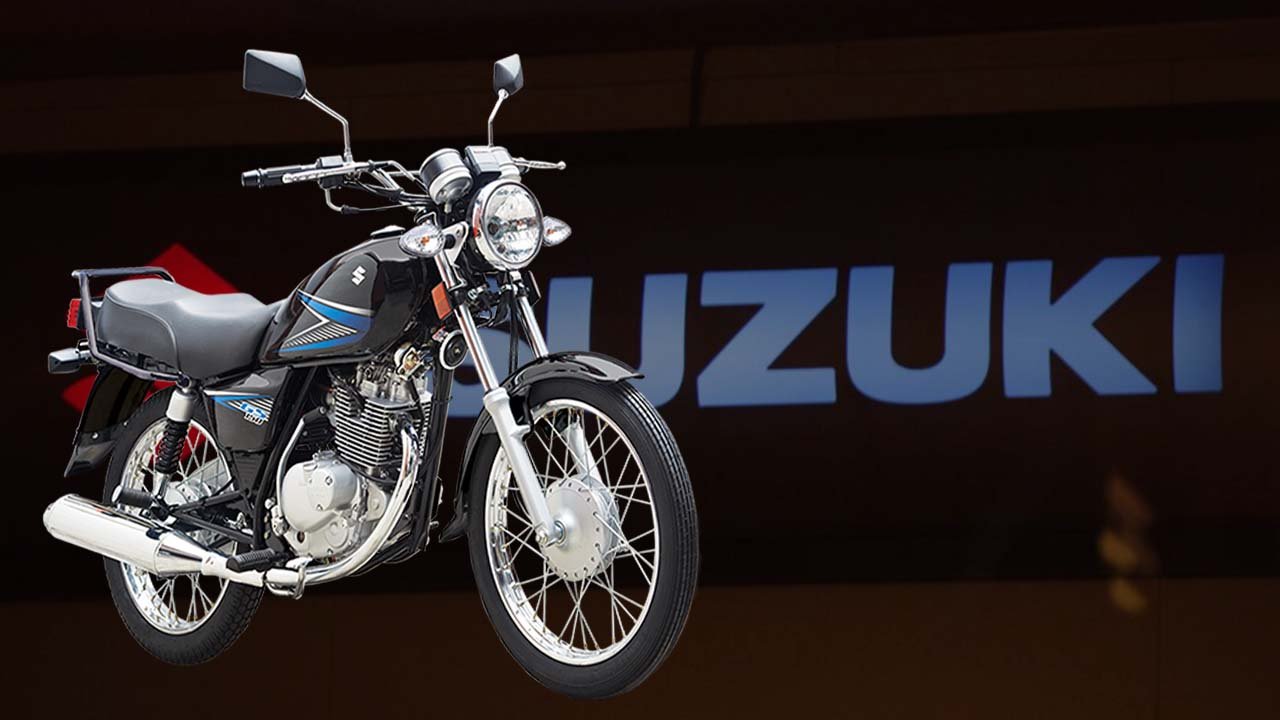
    In the midst of Pakistan’s economic crisis, the country’s automobile industry is struggling to stay afloat. One of the major players in the two-wheeler market, Pak Suzuki Motors, has recently increased the prices of its motorcycles due to the continuous devaluation of the rupee.

    This comes as no surprise since Pakistan’s auto industry heavily depends on imports and has been facing obstacles due to restrictions on the opening of letters of credit (LCs) after the rupee’s depreciation.

    According to a notification sent by the company to its dealers, the new rates will apply from May 9 and remain unchanged until further notice. The retail prices include the ex-factory product price and freight charges incurred on motorcycles that are delivered to dealerships.

    The notification mentioned that the rate of GD110s has increased to Rs335,000, GS150 to Rs364,000, GSX125 to Rs488,000, GR150 to Rs521,000, and GW250JP to Rs1.04 million.

    It’s worth noting that this isn’t the first time the automobile industry has seen such a price hike. Atlas Honda, Pakistan’s biggest player in the two-wheeler segment in terms of market share, recently increased its motorcycle prices for the fourth time this year, making them more expensive by Rs5,000-15,000.

    As the industry continues to face hindrances, it remains to be seen how it will adapt to the current economic conditions.

    Here are the new prices for all Suzuki motorcycles:

    Motorcycle Price (in PKR)
    GD110s Rs335,000
    GS150 Rs364,000
    GSX125 Rs488,000
    GR150 Rs521,000
    GW250JP Rs1,040,000
  • Pakistan’s auto sector records 98% sales growth in March despite high prices

    Pakistan’s auto sector records 98% sales growth in March despite high prices

    Despite high car prices, Pakistan’s auto sector has seen a growth of 98 per cent in March, selling about 7,201 units compared to 3,642 units sold in the previous month. The increase has provided a ray of hope to the auto sector, which has picked up some pace after several months.

    However, car sales, including sales of non-Pakistan Automotive Manufacturers Association (PAMA) vehicles, plunged 68 per cent in March compared to the same month last year, due to non-production days and a decline in purchasing power.

    The monthly growth is due to better volumetric sales of Pak Suzuki Motor Company (PSMC) and Indus Motors, which increased by 475 per cent and 6 per cent respectively on a month-on-month basis. Arif Habib Limited also stated that due to rising inflationary pressure, consumers have switched to affordable vehicles of below 1000cc, which increased by 423 per cent.

    Despite the recent growth, fears of a slowdown still exist due to measures taken by the State Bank of Pakistan (SBP) to curb imports, resulting in production limitations as auto assemblers require prior permission to import completely knocked-down (CKD) units and raw materials.

    Sales of all other variants of cars, jeeps, tractors, pick-ups, three-wheelers and two-wheelers have also witnessed a year-on-year decline in March 2023, according to data released by PAMA a day earlier.

    In the first nine months of fiscal year 2022-23, 85,776 units were sold, down 50 per cent from 172,612 units sold during the same period in FY22. Sales of 1300cc and above cars were recorded at 2,913 units, down 67 per cent compared to the same month of the previous year’s sales of 9,280 units. In March 2023, 1,000cc cars recorded sales of 964 units, including 475 units of Suzuki Cultus and 489 units of Suzuki WagonR, against 2,410 units in the same month last year.

    Further breakdown of the data reveals that below 1000cc vehicles recorded a sale of 3,324 units, lower by 70 per cent than 11,109 units sold last year. Suzuki’s new Alto sold 2,542 units in March 2023 compared to 9,814 units in March 2022.

    Buses and trucks saw a decrease to 308 units in March from 565 units in the same month last year, while sales of jeeps and pick-ups decreased to 2,150 units from 4,403 units sold during the same period last year. Sales of tractors dropped to 2,984 units from 5,651 units in March 2022, while sales of rickshaws and motorbikes also decreased to 84,307 units in March against 151,010 units in the same period last year.

    PSMC recorded a jump of 475 per cent on a monthly basis to 5,628 units primarily due to the availability of CKD parts amid an easing of LC issues, while Indus Motors reported an increase of 6 per cent month-on-month to 1,912 units in March. However, Honda Car (HCAR) sales declined by 49 per cent month-on-month to 835 units in March due to the closure of the plant for 23 days on account of CKD issues.

    Hyundai sales were down 34 per cent month-on-month, with Tucson down 46 per cent month-on-month to 380 units and Sonata down 40 per cent month-on-month to 118 units in the period under review.
  • Pakistani rupee falls to historic low of Rs288.43 against dollar

    Pakistani rupee falls to historic low of Rs288.43 against dollar

    On Wednesday, the Pakistani rupee (PKR) reached a new record low, falling to Rs288.43 against the US dollar in the interbank market.

    The State Bank of Pakistan (SBP) reported that the rupee slid by Rs1.34 against the greenback before closing at Rs288.43. Meanwhile, the Forex Association of Pakistan (FAP) has reported that the selling rate of the dollar in the open market was recorded at Rs295.

    This comes after the rupee had closed at Rs287.09 per US dollar the day before, with the greenback trading at over Rs291 in the open market. Additionally, on April 5, the rupee had closed at Rs287.85 per US dollar, while the greenback was trading at over Rs293 in the open market.

    Experts suggest that the drop in the rupee’s value can be attributed to various factors such as economic challenges, political uncertainty, and depleting foreign exchange reserves.

    It is worth noting that a staff-level agreement between the International Monetary Fund (IMF) and Pakistan was scheduled to take place on February 9.