Tag: State Bank of Pakistan

  • Exchange companies remove cap on dollar-rupee exchange rate to abolish grey market

    Exchange companies remove cap on dollar-rupee exchange rate to abolish grey market

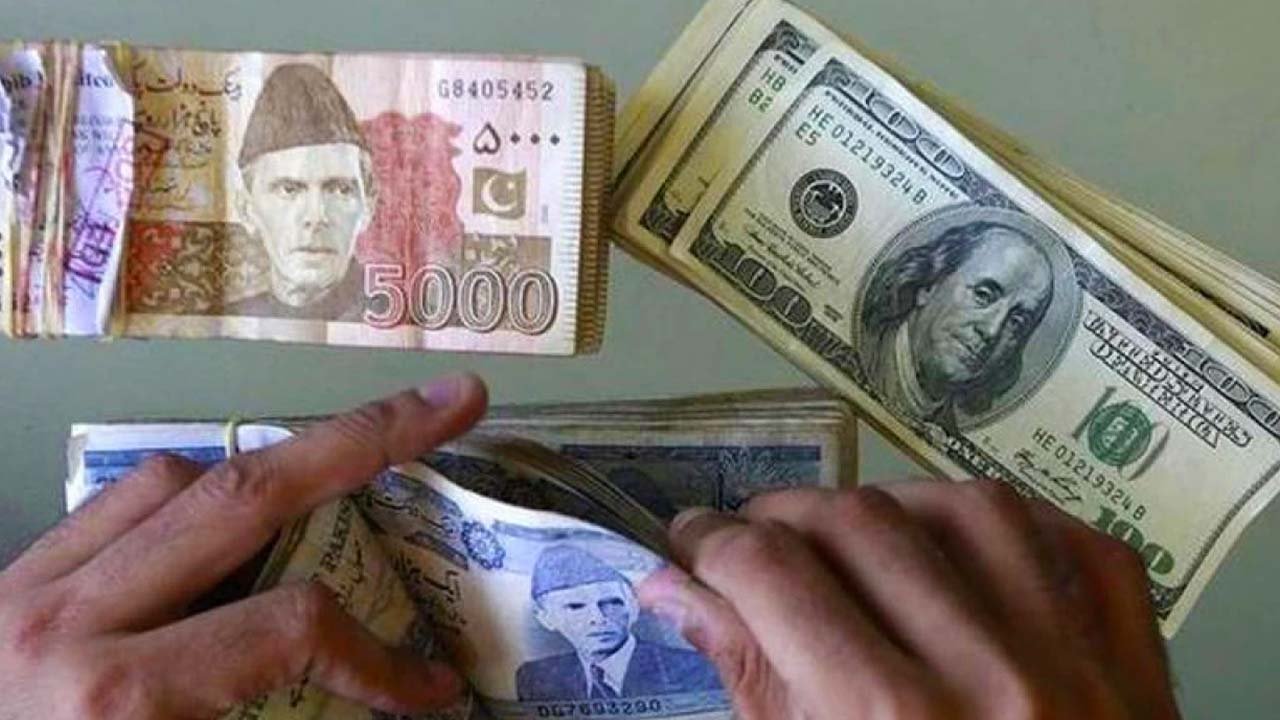
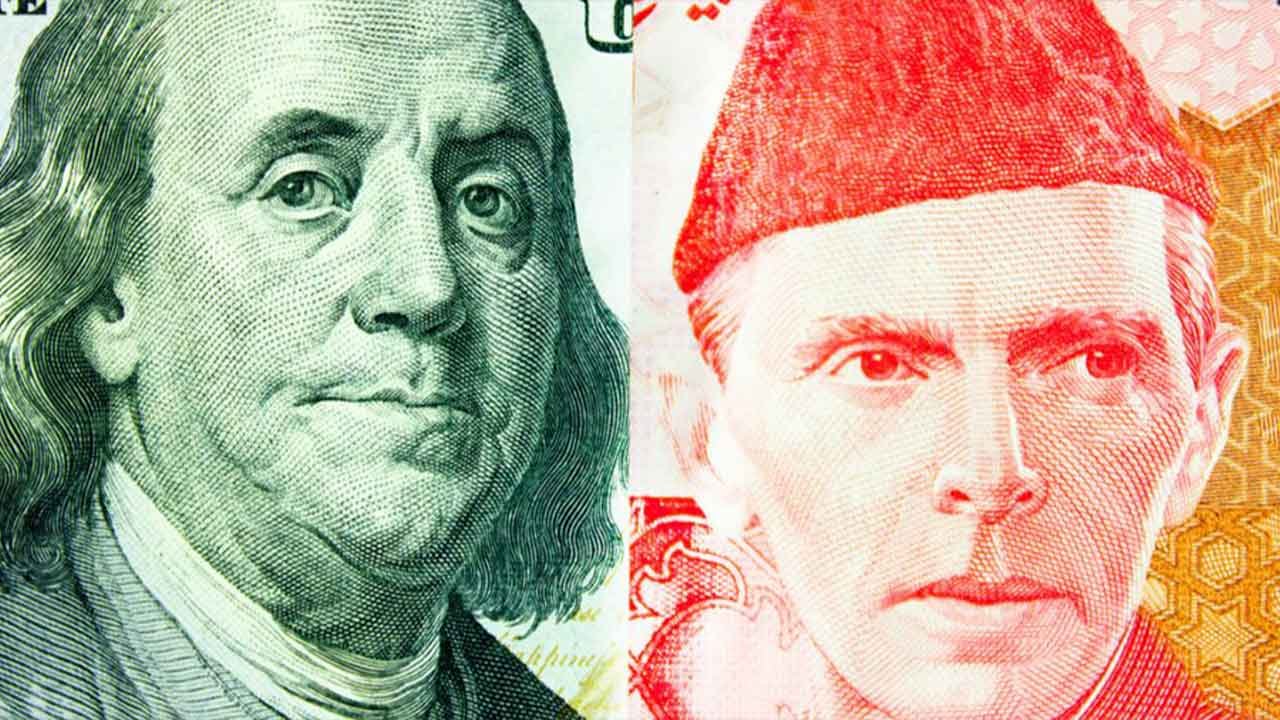
    The exchange companies have decided to stop artificially keeping Pakistani rupee (PKR) overvalued against US dollar in the open market and let the rupee-dollar exchange rate depreciate to its actual value.

    Pakistani rupee may steadily lose value until it reaches the level of the grey market in a few days, according to reports.

    The black market price of local currency is currently between Rs250 and Rs260 per US dollar, although traders had artificially kept the rate at Rs238 till Tuesday.

    “The association has decided to remove cap on rupee-dollar exchange rate,” Exchange Companies Association of Pakistan (ECAP) President Malik Bostan said in audio and video messages after chairing a zoom meeting on Tuesday.

    “The move would help eliminate black currency markets, increase flow of foreign currencies to the dealers and available to public (for international travelling, education and hospital fees and etc.”

    He said that in the interest of the country, traders voluntarily opted to restrict the exchange rate. But the choice led to an underground market for cash that seemed to be more detrimental to the country.

    “People were buying dollars from open market (at Rs238) and selling in black market (at Rs250-260), making it a business to mint profit,” he said, adding no one was coming to the dealers’ counters to sell foreign currency which resulted into drying up supplies on the other hand.

    According to ECAP General Secretary Zafar Paracha, the decision to abolish the exchange rate ceiling will aid in the eradication of the black market and restore the inflow of foreign money from the illicit system into the legitimate one.

    Additionally, the government has been urged by the International Monetary Fund (IMF) to relinquish control over the rupee-dollar exchange rate in the interbank market and allow market forces to decide the rate while taking the demand and supply of US dollars into account.

    Accordingly, it is anticipated that the local currency would also reach Rs250-260 in the interbank market as compared to the US dollar.

    Pakistan technically has three currency markets, including the interbank, open, and black markets. As a result, each of the three markets is providing a different rate.

    The black currency market was formed after Finance Minister Ishaq Dar tried to keep the currency artificially overvalued at Rs180–200 to the US dollar after returning to the ministry in late September 2022.

    The currency, therefore, appreciated to Rs218 in the early days of October from its all-time low of Rs240 the first time in late July 2022 and the last time in September 2022.

    Dar opened an investigation against the commercial banks, blaming them for market forces that had artificially devalued the currency to Rs240 per dollar.

    Governor State Bank of Pakistan (SBP) Jameel Ahmed said that the central bank has completed the investigation against 13 commercial banks allegedly involved in rupee-dollar parity manipulation.

    “The central bank is all set to take action against them in days (instead weeks and months). The action could be fiscal or regulatory one,” he added.
  • SBP asks banks to prioritise import of certain essential items to help businesses

    SBP asks banks to prioritise import of certain essential items to help businesses

    In order to help businesses, the State Bank of Pakistan (SBP) on Monday removed the necessity for prior import approval and asked banks to give priority to the importation of certain necessities, including food, medicine, and energy.

    The business community, including various trade bodies and chambers of commerce, has drawn attention to the fact that many shipping containers carrying imported goods are stuck at the ports as a result of delays in the release of shipping documents by banks, according to a statement issued by the SBP on Monday.

    “SBP has advised banks to provide one-time facilitation to all those importers who could either extend their payment terms to 180 days (or beyond) or arrange funds from abroad to settle their pending import payments.”

     “Accordingly, till March 31, 2023, banks have been advised to process and release documents of shipments/ goods that have already arrived at a port in Pakistan or have been shipped on or before January 18, 2023,” said the central bank.

    To avoid any future issues, SBP also suggests that clients notify their banks before beginning any import transaction.

    To the dismay of many importers and firms in Pakistan, who cited these constraints as the reason for closing down or curtailing operations, the SBP restricted imports early this year due to low levels of foreign exchange reserves.

    Last week, the business community of the country harshly criticised the SBP’s role in the issue in light of the difficulty in issuing letters of credit.

  • Gold price increases by Rs1,200 to Rs187,200 per tola

    Gold price increases by Rs1,200 to Rs187,200 per tola

    The per tola price of 24-karat gold witnessed an increase of Rs1,200 on Saturday and was traded at Rs187,200, up from Rs186,000 the previous trading day. The price of 10 grammes of 24-karat gold also increased by Rs1,029 to Rs160,494 according to All Sindh Sarafa Jewellers Association.

    Although gold is often used as an inflation hedge, it is quite vulnerable to monetary tightening, which raises the opportunity cost of owning the bullion, which is typically a non-yielding asset like other precious metals. In other words, a precious metal investment cannot be “put to use” to try to make a profit.

    According to the jewellers association, gold in the local market continued to be “undercost” by Rs3,000 a tola when compared to the Dubai market, maintaining its Friday trend.

    Dealers claimed it was difficult to determine if the potential increase in the policy rate of 100–200 basis points (BPS) had been included in the price of the yellow metal.

    According to a research report from Pearl Securities, the State Bank of Pakistan (SBP) may raise the policy rate by 100 to 200 basis points to reduce ongoing inflationary pressures.

  • Pakistan gets $2 billion from UAE, with $1 billion additional loan in pipeline

    Pakistan gets $2 billion from UAE, with $1 billion additional loan in pipeline

    Finance Minister Ishaq Dar announced on Wednesday that the Abu Dhabi Fund for Development (ADFD) has rolled over their deposit of $2 billion with the State Bank of Pakistan (SBP).

    In a tweet, the minister highlighted that Prime Minister Shehbaz Sharif had discussed the rollover with the United Arab Emirates (UAE) President Sheikh Mohammed bin Zayed al-Nahyan, during his recent visit to the country.

    The UAE agreed to give Pakistan $1 billion and roll over an existing $2 billion loan on January 12, according to the Pakistani information minister, as the nation’s central bank’s foreign reserves had shrunk to only three weeks’ worth of imports.

    The UAE’s financial assistance gave the nation, which is still recovering from devastating countrywide floods that have cost more than $30 billion in damage, some solace.

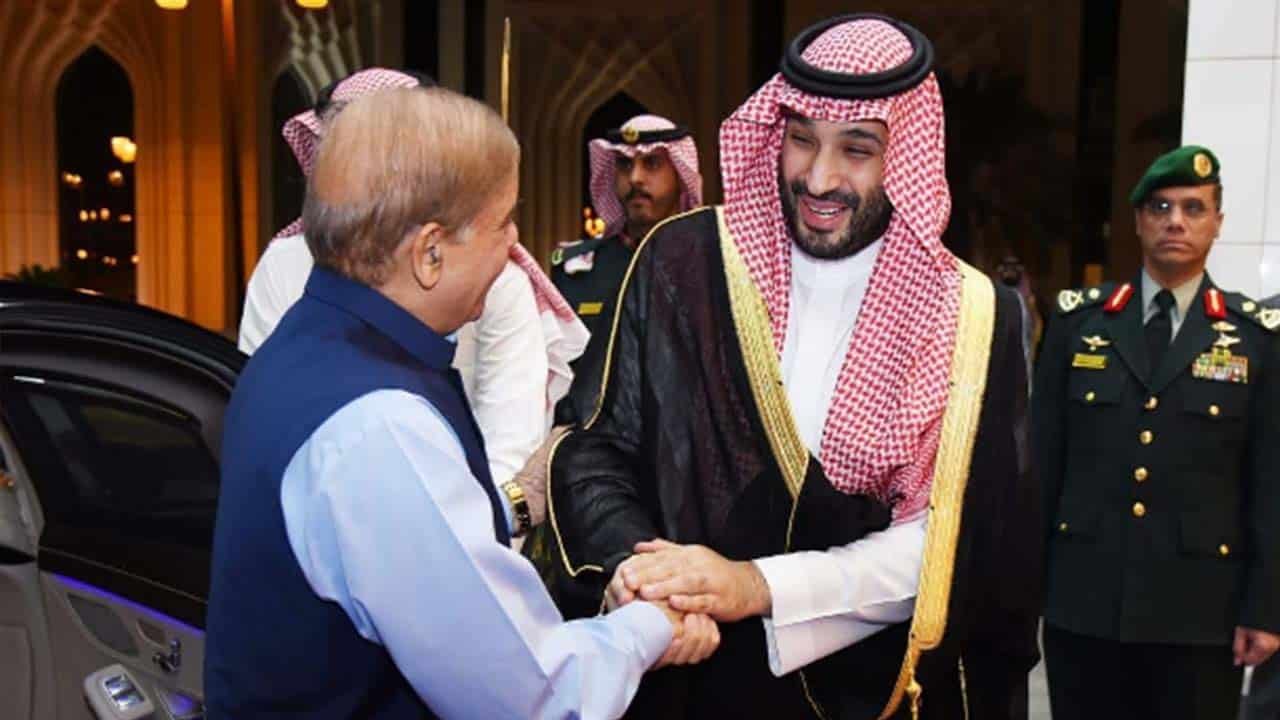
    Shehbaz Sharif, the prime minister of Pakistan, announced the loans as he began a two-day trip to the United Arab Emirates. In a statement, Sharif stated, “This support will help us weather economic hardships.

    He met with UAE President Sheikh Mohammed bin Zayed al-Nahyan and was scheduled to speak with other government representatives and business executives about commercial and economic potential, according to Information Minister Marriyum Aurangzeb.

    External finance is essential for Pakistan’s faltering economy because the IMF’s ninth review to approve the transfer of a fresh $1.1 billion tranche of money to Pakistan has been on hold since September.

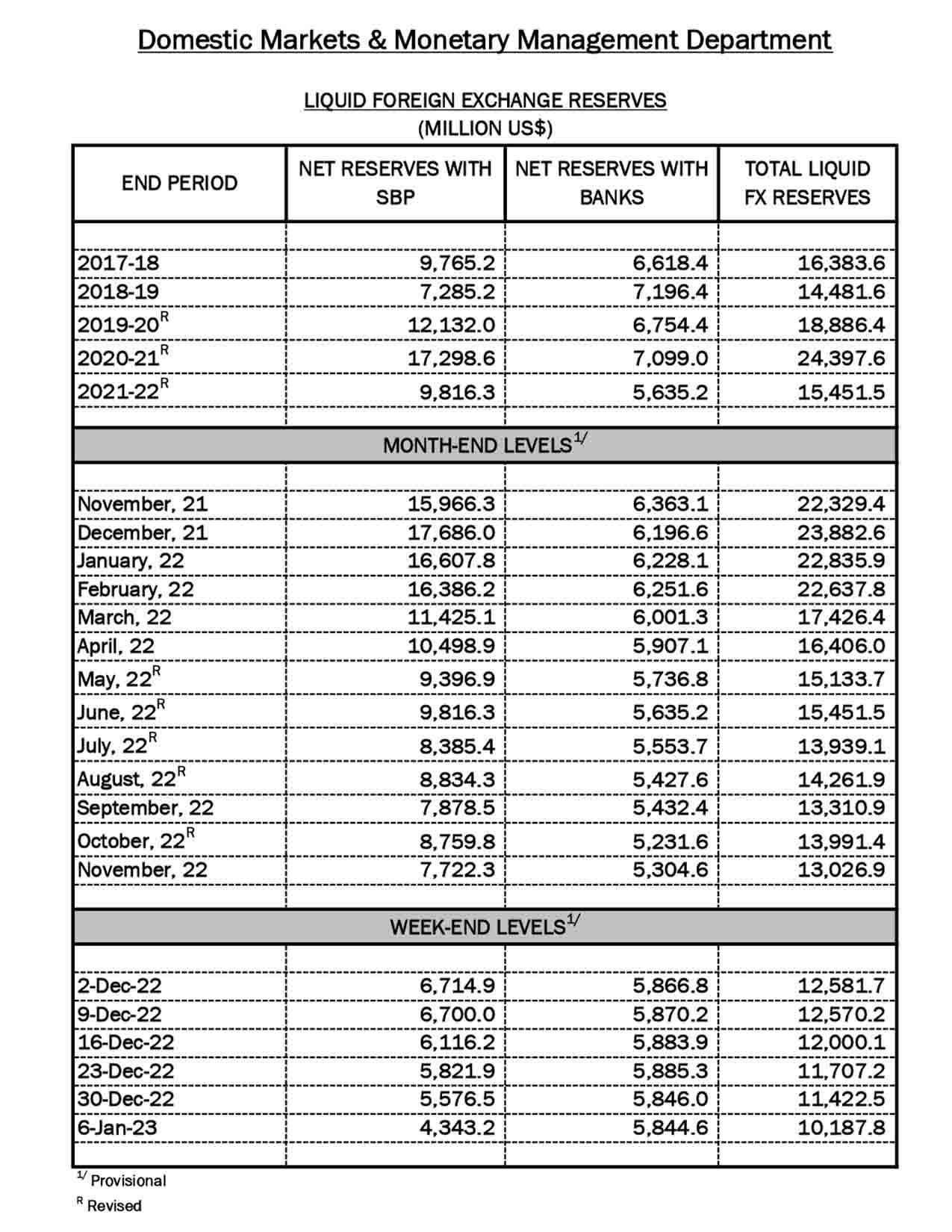
    According to Geo, SBP’s foreign exchange holdings dropped to an alarming $4.3 billion level, barely enough for three weeks’ worth of imports, according to the bank. Net foreign exchange reserves held by commercial banks stood at $5.8 billion, and total liquid reserves at $10.1 billion.

  • Dollar inflows from next week will increase foreign exchange reserves: SBP governor

    Dollar inflows from next week will increase foreign exchange reserves: SBP governor

    Governor of the State Bank of Pakistan (SBP) Jameel Ahmad expressed hope on Wednesday that the situation of Pakistan’s foreign exchange reserves will improve as the country is anticipated to receive capital inflows in the coming days.

    “We are expecting inflows from next week onwards, which would reduce pressure on our foreign exchange reserves,” the SBP governor said.

    Ahmad reaffirmed his commitment to addressing the concerns of manufacturers and claimed that the nation’s foreign exchange reserves have reached very low levels. But as projects in the pipeline start to take shape, he predicted, “we will see a boom in reserves, which will increase our ability to support businesses.”

    According to the most recent SBP data, the central bank’s foreign exchange reserves dropped significantly by $1.23 billion, to a critically low level of $4.34 billion. SBP’s reserves are at their lowest point since February 2014.

    The country held $10.19 billion in liquid foreign reserves, and commercial banks kept $5.85 billion in net foreign reserves, according to Brecorder.

    To the dismay of many importers and firms in Pakistan, who claimed these limits as the cause for closing or curtailing operations, the SBP restricted imports earlier this year due to the low level of reserves.

    According to Ahmad, the SBP facilitated shipments under the headings of necessities, energy, industries focused on exports, agricultural inputs, deferred payment / self-funded imports, and imports for projects focused on exports that were almost finished.

    Prior to this, the central bank made the decision to remove import restrictions beginning on January 2, 2023.

    “Our capacity to export will build up only after we complete export-oriented projects, thus we have facilitated the timely completion of these projects,” he said.

    “We want to facilitate all the industries, however, we can only do so under our given capacity of inflows. We do not produce dollars locally, they come through exports, remittances, and inflows from lenders,” said Ahmed.

    “We are focusing on improving our capacity, and are also taking administrative intervention to bring our imports on a reasonable level,” he added.

    The SBP chief said evaluating the Letter of Credit (LC) is a time-consuming exercise. “We have cleared 33,000 LC cases,” he said.

    He added that steps had been done to control the current account deficit and that the central bank was aware of issues facing the business community.

    The governor stated that an action plan in this regard will soon be launched after the SBP carefully evaluates the business community’s ideas.

    He assured the business community that the central bank will ensure the approval of 365 days or over LCs from banks. “Similarly, if you have arranged a project loan, and yet the LCs are not being opened, the SBP will ensure it,” he said.

    The SBP had recommended banks to compel the retention of 35% of their export receipts in special foreign currency accounts in order to encourage IT companies and independent contractors to bring their foreign exchange earnings into the nation.

    “We are hopeful that the problems of the IT sector will be addressed, and as a consequence, our exports from the IT sector will increase,” said Ahmed in his address.

  • SBP-held foreign exchange reserves dropped to 9-year low of $4.34 billion

    SBP-held foreign exchange reserves dropped to 9-year low of $4.34 billion

    The State Bank of Pakistan’s (SBP) foreign exchange reserves fell to $4.34 billion, its lowest level since February 2014, due to a lack of dollar inflows from the International Monetary Fund (IMF) or friendly nations.

    The SBP disclosed on Thursday that due to the repayment of external debt, its reserves fell by $1.23 billion during the week ended January 6.

    The country has been experiencing a severe dollar shortage, which is having a negative impact on the capacity to import even food and industrial raw supplies. The country doesn’t have enough dollars, according to the most recent status of foreign exchange reserves, to pay for even one month’s worth of routine imports.

    Data showed that commercial banks held $5.84 billion in net foreign currency reserves, while the overall amount of liquid foreign exchange reserves was $10.18 billion.

    Ever since the beginning of 2022–2023, reserves have been rapidly decreasing. In the upcoming months, analysts predict rising inflation and limited industrial output as manufacturing is constrained by the scarcity of imported raw materials.

    According to Geo, United Arab Emirates (UAE) will roll over the existing loan of $2 billion and give an additional $1 billion loan, which should stabilise the reserve position in the coming days.

    As the government strives to reduce imports amid a dollar shortage, the reserves, which fell to their lowest level since February 2014, would now only provide import coverage of 0.82 month.

  • Pakistan will take fiscal measures set by IMF but there will be no burden on the common man: Ishaq Dar

    Pakistan will take fiscal measures set by IMF but there will be no burden on the common man: Ishaq Dar

    Federal Minister for Finance and Revenue Ishaq Dar has categorically denied rumours suggesting that the government is considering “access to foreign exchange held with commercial banks.”

    “It is categorically denied and clarified that there is no such move under consideration of the government,” said Dar, in a series of tweets.

    The statement come days after the finance minister said that the country’s foreign exchange reserves stand at $10 billion, a much higher amount than the SBP’s $5.6 billion reserves as of December 30, 2022, since “dollars held by commercial banks also belonged to the country.”

    This comment gave rise to fears that the government may confiscate dollars from private banks as had been done in 1998 when Dar was the finance minister.

    However, Dar said that his comment was “greatly misconstrued” and nothing like this would happen.

    Dar explained at a press conference with Prime Minister Shehbaz Sharif and other federal cabinet members that before 1999, all foreign currency was deposited with the State Bank of Pakistan (SBP), and private banks were not permitted to hold any foreign currency.

    “In February 1999, when I was the finance minister, we devised a system whereby a substantial amount [of dollars] remain with [private] banks. It was on June 30, 1999 that reserves were broken down into three columns — those with the SBP, commercial banks and total.

    “Whenever Pakistan’s reserves are quoted anywhere in the world — a survey or a document — the [total figure] is quoted and then a breakdown is given. I gave a breakdown too,” he added.

    The minister claimed that certain people were to blame for the country’s dire circumstances, which caused it to drop from the 24th to the 47th largest economy in 2016.

    “Even now, they cannot tolerate any good development. They gave such a twist [to my statement],” he said, adding that while the federal cabinet was busy working for Pakistan under PM Shehbaz’s guidance, such people were spreading rumours that the government would take dollars from commercial banks.

    “Nothing of that sort will happen. Everything is all worked out … and in order. Nothing to worry about,” he assured, urging those “spreading the rumours” to play a positive national role.

    Dar also tweeted about the reserves later, saying national foreign exchange reserves always include forex held with SBP and commercial banks.

    Furthermore, Dar tweeted about the reserves and stated that SBP and commercial bank holdings are usually included in the nation’s foreign exchange reserves.

    “Recently I quoted the forex reserves figure based on this principle. Some vested elements who ruined this country’s economy in the past, gave it a deliberate twist and started a campaign as if govt was considering access to foreign exchange held with commercial banks which indeed is the property of the citizens.

    “It is categorically denied and clarified that there is no such move under consideration of the government,” he emphasised.

    The finance minister once again claimed that Pakistan’s foreign exchange reserves would increase soon.

    As of December 30, 2022, Pakistan’s foreign exchange reserves had decreased to $5.6 billion, an eight-year low. This is equivalent to imports for three weeks.

    The swift decrease has made it impossible for the government to repay its international debts without taking out new loans from allies.

    Govt to comply with IMF conditions without burdening common man

    The International Monetary Fund (IMF) programme’s ninth review, which would release $1.18 billion, has been postponed for months due to the government’s refusal to comply with some conditions imposed by the international lender.

    In today’s press conference, Dar acknowledged the delay and claimed that it was due to revenue collection. The Federal Board of Revenue (FBR) missed its goal in December, the finance minister said, and the super tax that the administration enacted in June of last year had been declared unlawful by a high court.

    Dar said that his team informed the IMF that Pakistan could recover the amount easily after the Supreme Court takes a decision on the super tax.

    “We are not changing the fiscal budget target and we will achieve it,” he claimed.

    Dar said that the IMF suggested that the government implement fiscal measures and eliminate some subsidies. “We have identified some budgetary measures, but the average person won’t be overburdened.”

    He asserted that the measures would be very specific and classified.

  • Saudi Arabia mulls increasing investments in Pakistan to $10 billion

    Saudi Arabia mulls increasing investments in Pakistan to $10 billion

    Saudi Crown Prince Mohammed Bin Salman has directed the Saudi Development Fund (SDF) to study increasing the deposit amount in the State of Bank of Pakistan (SBP) to $5 billion.

    “His Royal Highness Prince Mohammed bin Salman bin Abdulaziz Al Saud, Crown Prince and Prime Minister, has directed to study augmenting the Kingdom of Saudi Arabia’s investments in the sisterly Islamic Republic of Pakistan which have previously been announced on August 25, 2022, to reach $10 billion,” it said.

    “The crown prince also directed the Saudi Development Fund to study increasing the amount of the deposit provided by the Kingdom of Saudi Arabia in favour of the Central Bank of Pakistan which have previously been extended on December 2, 2022, to hit a $5 billion ceiling,” according to Saudi Press Agency.

    The move, according to SPA, confirmed Saudi Arabia’s commitment to assist Pakistan’s economy and its sisterly people.

    The development was reached within the framework of the ongoing dialogue between Prime Minister Shehbaz Sharif and Prince Salman.

    The announcement made today comes the day after Prince Salman and Chief of Army Staff General Asim Munir met in Madina to discuss ways to strengthen bilateral ties between the two nations. Munir was on a week-long official visit to Saudi Arabia and the United Arab Emirates.

    The SBP and SFD entered into a contract in 2021 for the SBP to receive $3 billion, which would be deposited in the central bank’s account to increase its foreign exchange reserves.

    The SFD subsequently acknowledged the rollover of a $3 billion deposit for an additional year in September of last year. The deposit was supposed to maturity on December 5 but Saudi Arabia extended its term on December 2.

    Saudi Arabia had previously committed to restart its financial assistance to Pakistan in the final week of October 2021, providing $1.2 billion in oil deliveries on a deferred payment plan and around $3 billion in safe deposit boxes.

    The accord was made the same month when former prime minister Imran Khan visited Saudi Arabia.

  • Pakistani banks start charging dollar transactions at open market rates

    Pakistani banks start charging dollar transactions at open market rates

    Pakistani banks have announced that they will settle debit and credit card transactions made with foreign retailers and websites at the open market exchange rate for the US dollar.

    The conversion rate for the transactions would be calculated by the open market rate in place at the time, which might not match the rate listed on the foreign merchant’s website.

    Customers were advised by the banks in a statement that they could only settle debit or credit card purchases with foreign retailers or websites by buying dollars on the open market. As a result, the conversion rate for these transactions will be determined by the current open market rate.

    The statement, according to bankers, was made in response to several client concerns over the increased exchange rate.

    On Friday, the Pakistani rupee lost Rs0.02 to the US dollar in the interbank market, continuing its downward trajectory.

    The State Bank of Pakistan (SBP) reported that the exchange rate of the local currency for the dollar was Rs227.12. Which shows a 0.01 per cent decline from the close of Rs227.12 on Thursday.

    According to SBP, the Pakistani rupee is valued at Rs227–228 against the dollar. However, in the open market, the greenback is priced above Rs250 and goes as high as Rs275.

  • SBP to start issuing new banknotes with Governor Jameel Ahmad’s signature from today

    SBP to start issuing new banknotes with Governor Jameel Ahmad’s signature from today

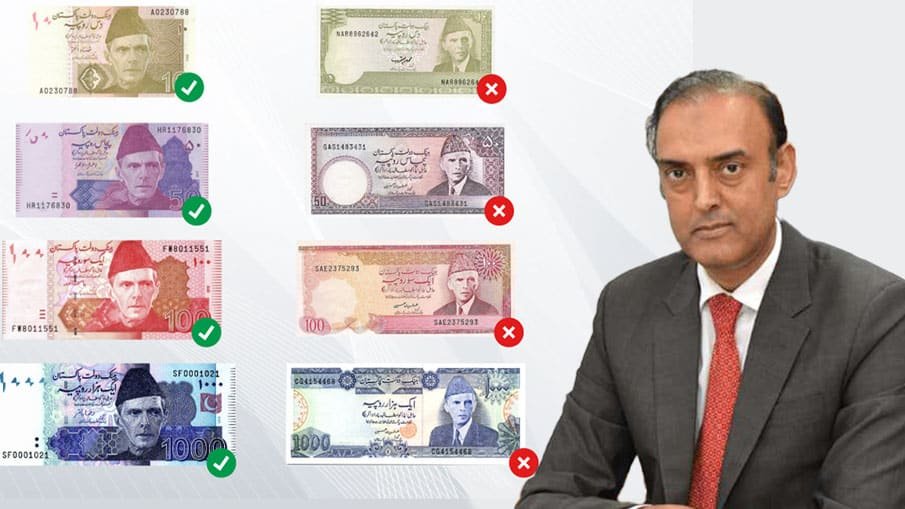
    The State Bank of Pakistan (SBP) will start issuing new banknotes on December 29, 2022.

    The new SBP Banking Services Corporation banknotes will include the signature of the new governor, Jameel Ahmad.

    Banknotes containing the signatures of his predecessors will also remain legal tender.

    Earlier, the SBP stated that banknotes of the old design, large-sized banknotes with denominations of Rs10, Rs50, Rs100, and Rs1,000 could be exchanged from the SBP till December 31, 2022.

    The federal government extended the deadline for exchanging old designed large-size banknotes in Notification F.No.2(1)IF-III/2010 until December 23, 2021.

    In a statement, State Bank stated that December 31, 2022, was the “last and final deadline for exchange of such banknotes, upon expiry of which, these banknotes shall no longer be exchangeable from the counters of the SBP Banking Services Corporation (BSC) and thus will lose their value.”