Tag: State Bank of Pakistan

  • Pakistan’s total liquid foreign reserves increases to $14.68 billion

    Pakistan’s total liquid foreign reserves increases to $14.68 billion

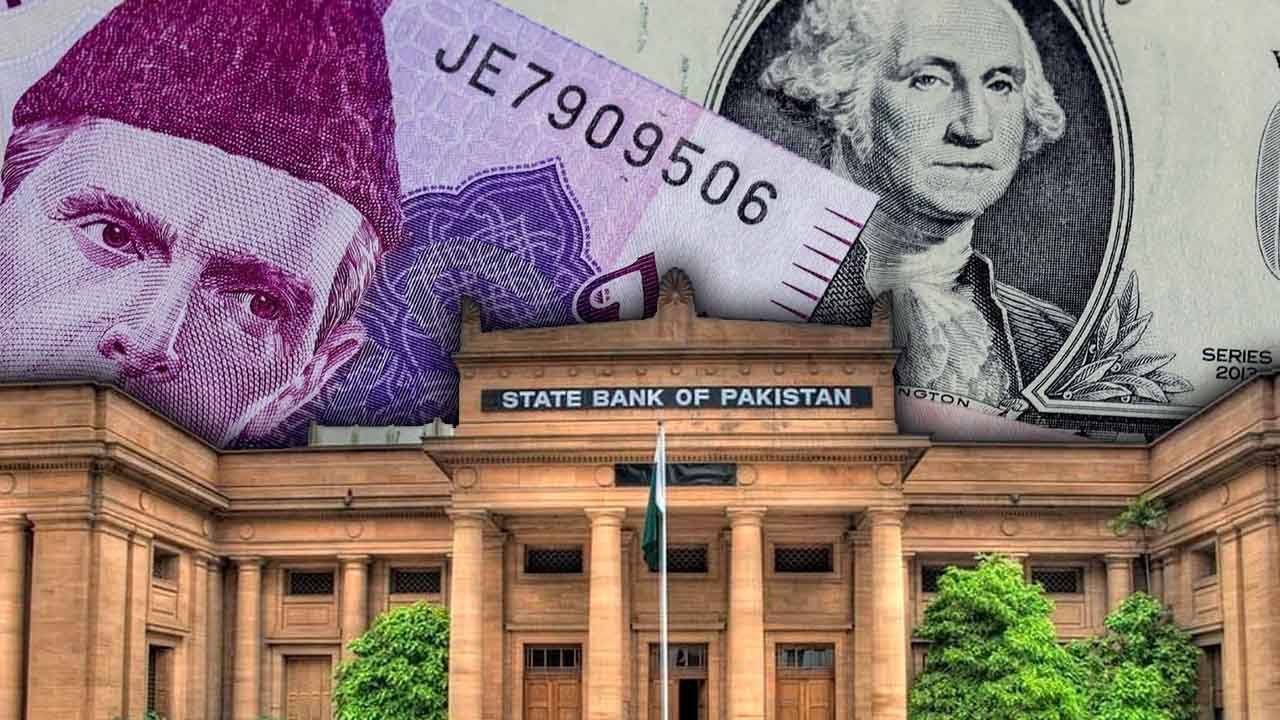
    The Asian Development Bank (ADB) contributed to an increase of $1.517 billion in Pakistan’s foreign exchange reserves during the week ending October 28 to bring them to $14.679 billion, the central bank reported on Thursday.

    The State Bank of Pakistan’s foreign exchange holdings increased by $1.473 billion to $8.912 billion.

    “This increase is attributed to the receipt of US$ 1,500 million from ADB,” the SBP said in a statement.

    The SBP has enough reserves to cover imports for 1.29 months. Additionally, commercial bank reserves increased by $44 million to $5.766 billion.

    When the government is dealing with a balance of payments issue, the increase in foreign reserves is encouraging for the nation’s finances. At least $30 billion has been lost as a result of the country’s devastating floods this summer.

    A $500 million deal between Pakistan and the World Bank has been signed. The $200 million investment will be used to support an agricultural transformation project in Punjab.

    According to The News, another project in Khyber Pakhtunkhwa for $300 million in climate change projects will be funded by the World Bank.
  • Pakistani rupee continues to fall against USD for the third consecutive session

    Pakistani rupee continues to fall against USD for the third consecutive session

    For the third session in a row, the Pakistani rupee lost 97 paise in the interbank market on Friday as it fell against the dollar.

    The local currency depreciated by 0.44 per cent from yesterday’s finish of Rs221.5 to settle at Rs222.47 per dollar, according to the State Bank of Pakistan.

    Data gathered by Mettis Global show that the value of the PKR has decreased by Rs16.64 or 7.52 per cent since the beginning of this fiscal year.

    This week’s first day saw the sovereign default risk rise to its highest level since November 2009. On October 25, the country’s five-year credit default swap (CDS), which functions as a form of insurance against the risk of sovereign default, climbed by more than three per centage points, reaching 52.8pc, a 13-year high.

    Investors’ decreasing confidence in Pakistan’s capacity to repay its international loans is reflected in the growing CDS level.

  • Rupee resumes downward trend against US dollar

    Rupee resumes downward trend against US dollar

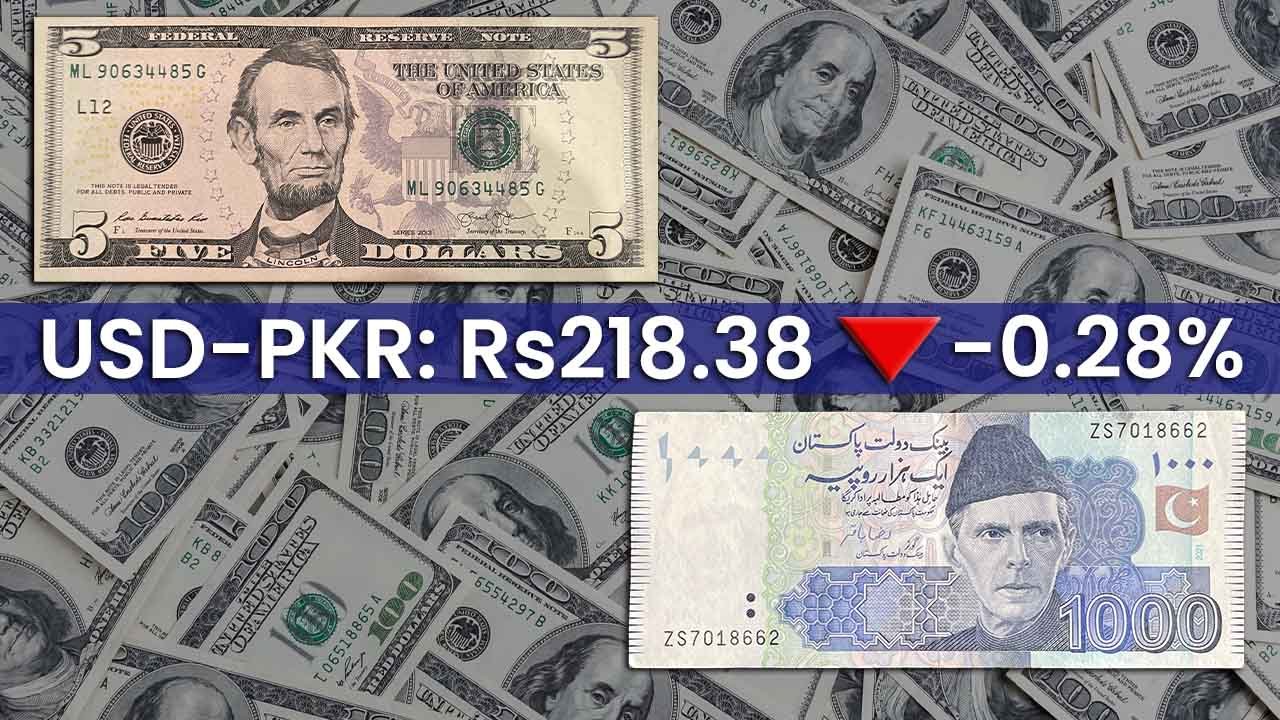
    Pakistani rupee suffered a marginal loss of Rs0.50 against the US dollar in the interbank market, extending its losses for a second straight session.

    State Bank of Pakistan (SBP) reports that the local currency lost Rs0.50 against the dollar in the interbank market and ended the day at Rs218.38.

    The Forex Association of Pakistan (FAP) said that banks were trading US dollars for Rs218.78 at the time. The exchange rate for the dollar in the open market was between Rs220 and Rs222.

    This is the second time, the rupee has registered a loss in its value after Federal Finance Minister Ishaq Dar’s return to office. The local currency appreciated by almost Rs22, or 10.1 per cent, against the greenback in the last 13 sessions.

    Earlier, Federal Minister For Finance and Revenue Ishaq Dar vowed to bring back Pakistani rupee at its original value which is less than 200 against US dollar. “I can genuinely prove that dollar’s actual value is below Rs200,” he added.

  • Pakistani rupee continues to rise for 13th consecutive session

    Pakistani rupee continues to rise for 13th consecutive session

    The Pakistani rupee is strengthening versus the US dollar in the interbank market and increased by more than 0.4 per cent on Tuesday morning.

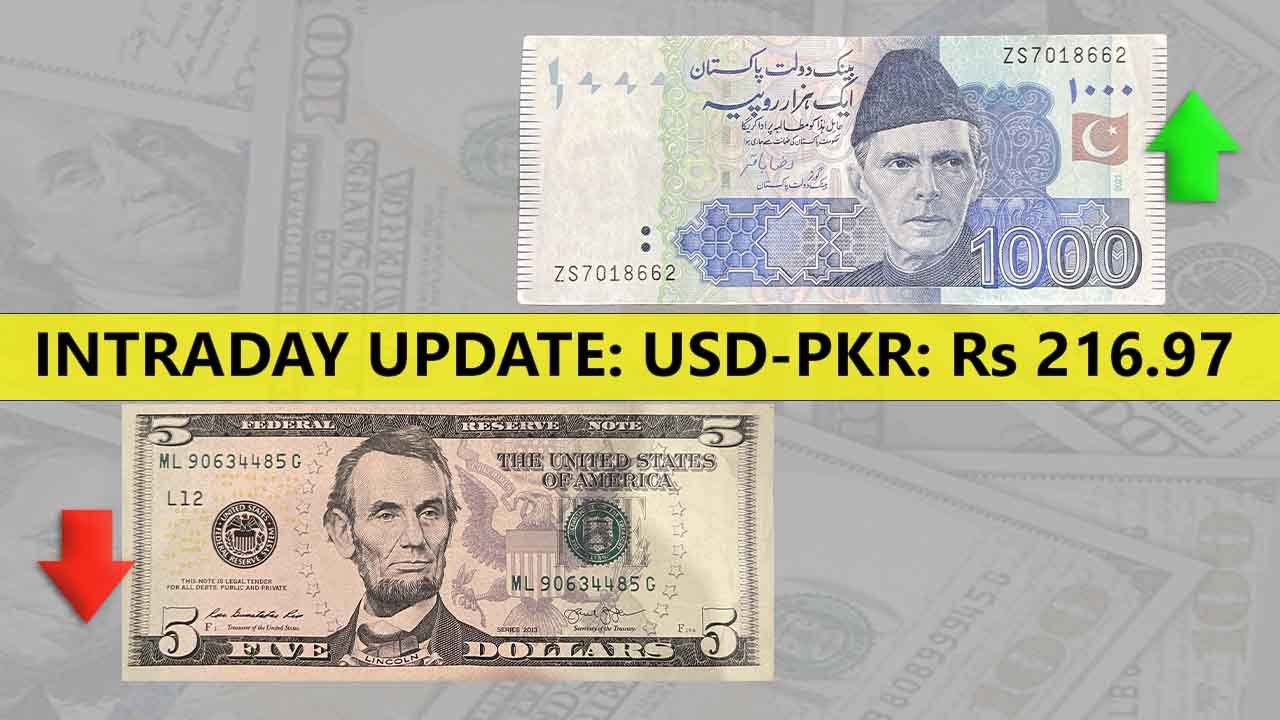
    During intra-day trading, the rupee was quoted at Rs216.97 at around 10:40 am, up Rs1 or 0.46 per cent against the US dollar.

    On Monday, the rupee continued its upward trend against the US dollar for the 12th straight session and appreciated Rs1.95 or 0.89 per cent to settle at Rs217.97.

    The Monetary Policy Committee (MPC) of the central bank maintained its benchmark policy rate at 15 per cent on Monday, which was a significant development.

    However, market observers attribute the rupee’s recent increase to the central bank and other authorities’ efforts to curb market speculation.

    According to Brecorder, the United Nations Development Programme issued a grim warning on Tuesday, stating that there was a debt problem that was rapidly worsening in a number of developing countries, including Pakistan.

    Without prompt assistance, the poverty rate in at least 54 countries would increase, according to UNDP, and “critical investments in climate adaptation and mitigation will not happen.”

    Sri Lanka, Pakistan, Tunisia, Chad, and Zambia are the nations most at risk right now, according to UNDP head economist George Gray Molina.

    In other countries, the dollar loomed big over precarious financial markets on Tuesday, worrying investors with concerns about rising interest rates, global growth, and geopolitical tensions.

    The 20-year high of Rs114.78 that it reached late last month was not far away; the US dollar index was up 0.053 per cent at Rs113.12 at the time.

    An increase in COVID-19 cases in China and a stronger US dollar contributed to Tuesday’s decline in oil prices, a major measure of currency parity, as they sparked worries about a faltering global economy.

  • LC payments up to $50,000 to be released by SBP

    LC payments up to $50,000 to be released by SBP

    Federal Finance Minister Ishaq Dar said that $50,000 in letters of credit (LC) payments that are overdue will be settled this week.

    According to Geo, the decision was made following a discussion with the Governor State Bank of Pakistan (SBP) Jameel Ahmed Dar said that the SBP chief will convey these instructions to clear LCs as a “first step” towards growth next month before departing for Washington DC to meet with International Monetary Fund (IMF).

    Almost 4,400 requests for opening LCs, a payment mechanism used in international trade to provide an economic guarantee from a creditworthy bank to an exporter of goods, will be deducted after these decisions, according to the speaker, who revealed that there were a total of 7,952 cases still pending.

    For certain imports, including completely knocked down (CKD) vehicles, telephones, and various types of machinery, the SBP previously required prior approval before opening LCs or registering contracts. However, these directives were given on May 20.

    The Finance Minister also made it clear that Pakistan will not be refinancing its loans through the Paris Club. According to him, Pakistan will make sure to make timely payments to multilateral organisations for its national sovereign debt obligations. He claimed that in this regard, a strategy had been developed.

  • Pakistani rupee crashes against US dollar for 11th day in a row

    Pakistani rupee crashes against US dollar for 11th day in a row

    For the eleventh session in a row, Pakistan’s rupee has lost value versus the US dollar, falling 0.41 per cent on Friday in the interbank market as the dollar gained momentum throughout the world and investors’ concerns about the increasing trade imbalance intensified.

    The rupee dropped by Rs0.96, according to the State Bank of Pakistan (SBP), and ended the day at Rs236.84. The rupee has lost Rs18.24, or 7.7 per cent, overall over the last 11 trading sessions against the US dollar.

    In the interbank market on Thursday, the Pakistani rupee declined against the US dollar for the tenth straight session as investors expected funding from allies and foreign creditors. It ended the day down 0.66 per cent at Rs235.88.

    The local currency increased in value last month as a result of Pakistan fulfilling all previous IMF requirements, which allowed the programme to resume. This development enabled Pakistan to receive $1.17 billion under the Extended Fund Facility (EFF).

    The local currency has recently, however, been under intense pressure once more and is currently hovering close to its all-time low as funding anticipated from allies has not yet materialised.

    Additionally, the State Bank of Pakistan’s (SBP) foreign exchange reserves decreased by $176 million, reaching $8.62 billion as of September 9, 2022, according to information made public on Thursday.

    According to the SBP, the nation possessed $14.32 billion in liquid foreign reserves. Commercial banks held $5.7 billion in net foreign reserves.

    Globally, the dollar remained close to recent highs on Friday as Treasury yields rose and the demand for the currency persisted on expectations that the Federal Reserve would need to raise rates further to control inflation.

    The US dollar index, which compares the value of the dollar to a basket of other currencies, increased to Rs109.69, which is not far from its two-decade high of Rs110.79.

    In the meantime, oil prices—a crucial factor in determining currency parity—were largely stable on Friday, but they were headed for a weekly decrease due to worries about sudden interest rate hikes that would likely slow global economic growth and fuel demand.

  • Govt appoints Jameel Ahmad as Governor SBP for 5 years

    Govt appoints Jameel Ahmad as Governor SBP for 5 years

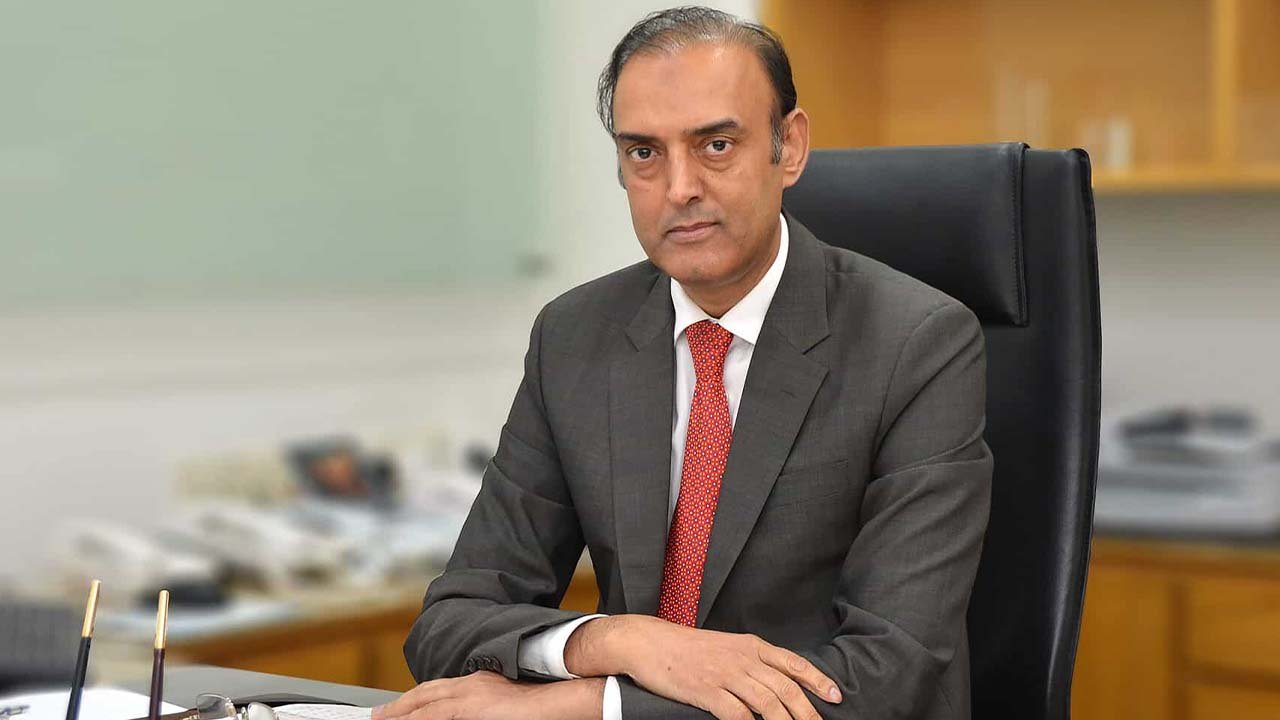
    According to a Finance Division announcement on Friday, the government has appointed Jameel Ahmad as Governor of the State Bank of Pakistan (SBP) for a tenure of five years, effective immediately.

    “In exercise of powers conferred under Section 11A (1) read with Section 14(1) of the State Bank of Pakistan (SBP) Act 1956 (Amended 2022), Jameel Ahmad is appointed as Governor State Bank of Pakistan for a term of five (5) years with the approval of the President of Pakistan, upon the recommendation of Federal Government, with immediate effect,” read the notification.

    Jameel Ahmad was the deputy governor of the central bank and was reappointed by the government on October 25, 2018, for a three-year term. From April 11, 2017, to October 15, 2018, he also held the position of Deputy Governor (Banking & FMRM).

    “Jameel Ahmad has an illustrious career as an accomplished central banker span over 30 years at various senior positions at the State Bank of Pakistan and the Saudi Central Bank (SAMA),” read information available on the SBP website.

    Mr Jameel Ahmad did his MBA from University of Punjab at Lahore and is a Fellow Member of the Institute of Cost & Management Accountants of Pakistan (FCMA), an Associate Member of the Institute of Bankers Pakistan and a Fellow Member of the Institute of Corporate Secretaries of Pakistan (FCIS).

  • SBP unveils Rs75 commemorative banknote

    SBP unveils Rs75 commemorative banknote

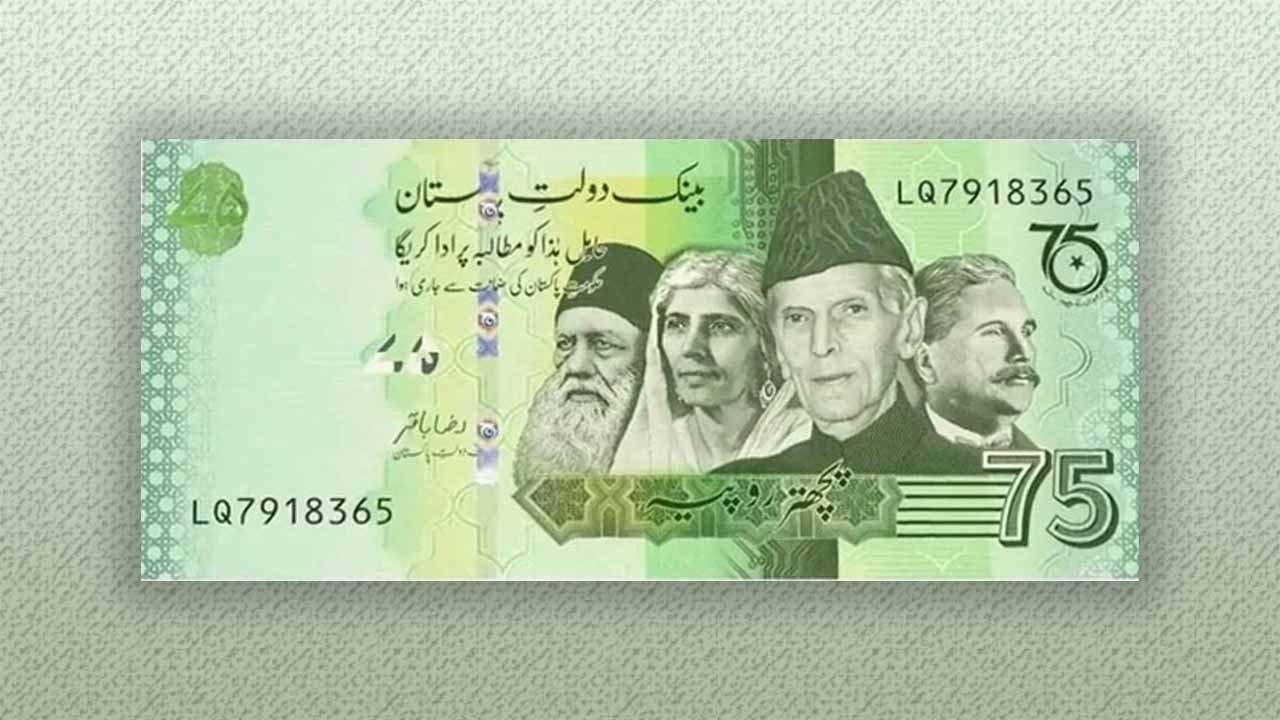
    To commemorate 75 years of Pakistan’s independence, the State Bank of Pakistan (SBP) presented the Rs75 commemorative banknote on Sunday during a ceremony conducted at the SBP Museum.

    The banknote was unveiled by the acting Governor of SBP Dr Murtaza Syed.

    Dr Murtaza made the following observation after the introduction of the commemorative banknote and flag-hoisting ceremony: “While the issuance of coins and postal stamps is a regular and recurring element to honour days of national importance.”

    The former SBP governor Dr. Raza Baqir has signed the banknote, which would be available to the general public from September 30.

    The colour of the banknote is primarily green, with hints of white and yellow. Green is a symbol of prosperity and development that also draws on Pakistan’s Islamic heritage. White, on the other hand, highlights the diversity of religions among its residents.

    The front of the note has portraits of the Quaid-e-Azam Muhammad Ali Jinnah, Sir Syed Ahmed Khan, Allama Muhammad Iqbal, and Mohtarma Fatima Jinnah.

    The images of the Markhor and Deodar trees on the reverse reflect Pakistan’s dedication as a nation to combating climate change and its effects.

    The Markhor and Deodar trees are both representations of the destruction caused by these changes and need immediate action to stop and reverse environmental degradation.

    Speaking at the event, Dr Syed remarked, “The SBP Finance Department went above and above to quickly complete this vital project, and I applaud their efforts.”

    The central bank has now released two notes of this type, including the Rs75 note. In the past, to commemorate Pakistan’s Golden Jubilee, the SBP released the first and, to date, only commemorative banknote in 1997.

    To commemorate the nation’s centennial of independence, children with disabilities also participated and sang national patriotic songs during the ceremony.

  • State Bank of Pakistan fines major banks for violating regulations

    State Bank of Pakistan fines major banks for violating regulations

    Banks operating in Pakistan have been slapped with hefty fines from the State Bank of Pakistan (SBP) totaling Rs131.4 million as a result of enforcement action against infractions of its established policies.

    According to the specifics, SBP fined JS Bank Limited Rs85.148 million, the highest sanction of the three banks, for breaking regulator guidelines regarding CDD/KYC, Asset Quality, FX, and General Banking Operations. Additionally, the central bank has recommended JS Bank Limited to improve its processes and controls in the areas that have been highlighted.

    In addition, Habib Bank Limited was fined Rs29.035 million for disobeying regulatory directives regarding CDD/KYC. The bank has been urged to tighten its controls and procedures in the highlighted areas in addition to the punitive action.

    Last but not least, the Bank of Punjab was additionally penalised Rs17.243 million for breaking regulatory guidelines relating to Asset Quality & CDD/KYC. Along with taking legal action, the bank has been urged to tighten its procedures and controls in the highlighted areas.

    The SBP has previously imposed fines totaling more than Rs100 million on four banks for regulatory violations.

    Read more: Rupee gains ground against dollar for second day, closes at Rs238

    Earlier, due to a breach of asset quality regulations, the National Bank of Pakistan (NBP) was fined Rs19.26 million. Additionally, U Microfinance Bank Limited which is owned by Ufone was fined Rs10.26 million and given the go-ahead to launch an internal investigation into any violations of regulatory directives as well as to discipline any indiscreet employees.

    According to SBP, these actions are based on shortcomings in the observance of regulatory directives and do not reflect poorly on the businesses’ financial soundness.