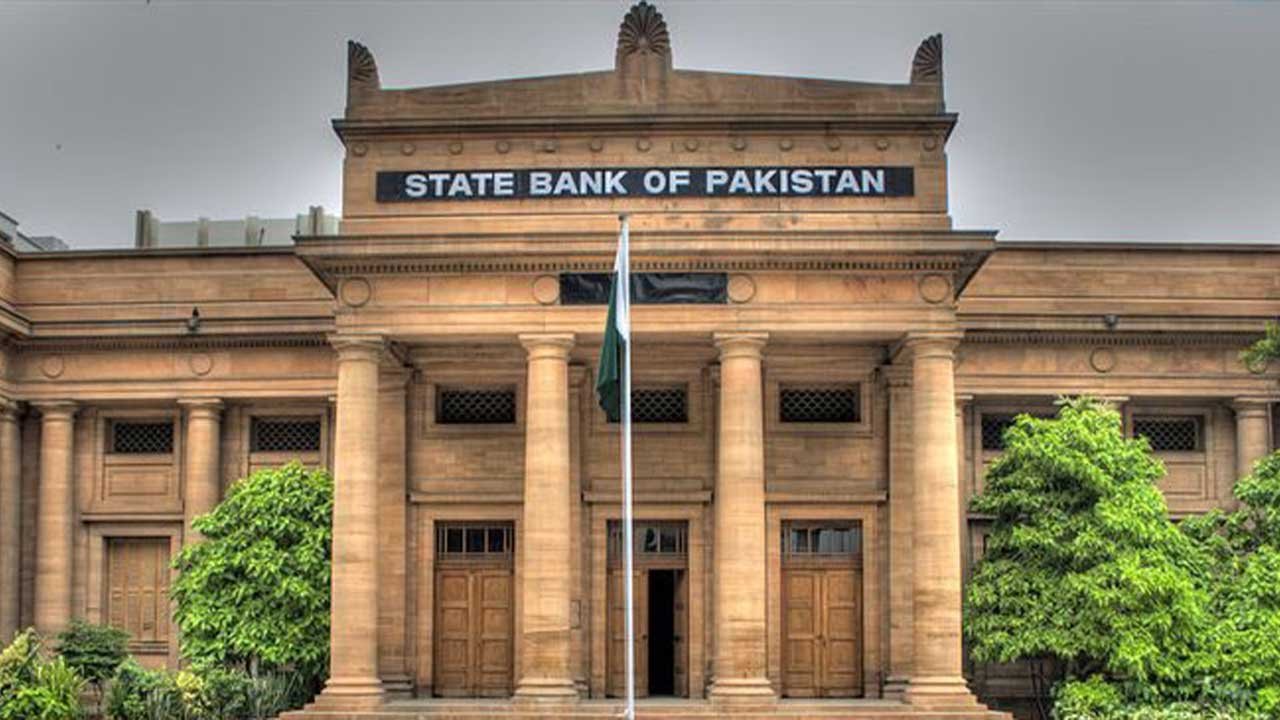
Tag: State Bank of Pakistan

  • ADB projects Pakistan’s economy to ‘recover slightly’ in FY23

    ADB projects Pakistan’s economy to ‘recover slightly’ in FY23

    In FY2023, Pakistan’s Gross Domestic Product (GDP) growth is expected to modestly improve due to structural changes, according to the Asian Development Bank (ADB).

    According to the bank’s most recent Asian Development Outlook Supplement, Pakistan’s GDP growth is predicted to decrease in FY22 (which ends on June 30, 2022), as a result of fiscal tightening measures taken to control rising demand pressures and contain external and fiscal imbalances.

    As the country’s inflation surged from 12.3 per cent in December 2021 to 21.3 per cent in June 2022, the bank slightly lowered Pakistan’s inflation for FY22 and dramatically for FY23.

    “In addition to the effects of elevated global energy and food prices, the government’s efforts to revive the stalled International Monetary Fund (IMF) programme has meant raising power tariffs and withdrawing subsidies in the oil and power sectors,” said ADB.

    In comparison to Sri Lanka, which boosted its policy rate by 950 basis points over the previous six months, the State Bank of Pakistan (SBP) has upped interest rates by 525 basis points since January 1. This also makes it one of the most active central banks in the region.

    The ADB also reduced its 2022 growth prediction for Asia and issued a warning that things could become worse as a result of the conflict in Ukraine and supply chain disruptions that are expected to drive up costs.

    Read more: Pakistani rupee plunges to Rs227 against US dollar at midday trading

    Although Covid-19’s effects had subsided, the region was now dealing with the consequences of Russia’s invasion of Ukraine, lockdowns in China, and aggressively raised interest rates, according to the Manila-based lender.

    The bank reduced its 2022 growth prediction to 4.6 per cent to reflect the decline in developing Asia, which runs from Kazakhstan in Central Asia to the Cook Islands in the Pacific.

    South Asia’s economy is anticipated to grow less than the projected rate of growth in the Asian Development Outlook 2022.
  • SBP raises policy rate to 14-year-high of 15 per cent

    SBP raises policy rate to 14-year-high of 15 per cent

    In an attempt to calm the economy, control inflation, and support the beleaguered rupee, the State Bank of Pakistan’s Monetary Policy Committee (MPC) decided to raise the policy rate by 125 basis points (bps) to 15 per cent on Thursday.

    The previous policy rate at the same level was in 2008, so the current policy rate is at a level that is 14 years higher. The committee also disclosed that, in order to improve the transmission of monetary policy, interest rates on EFS and LTFF loans are now tied to the policy rate.

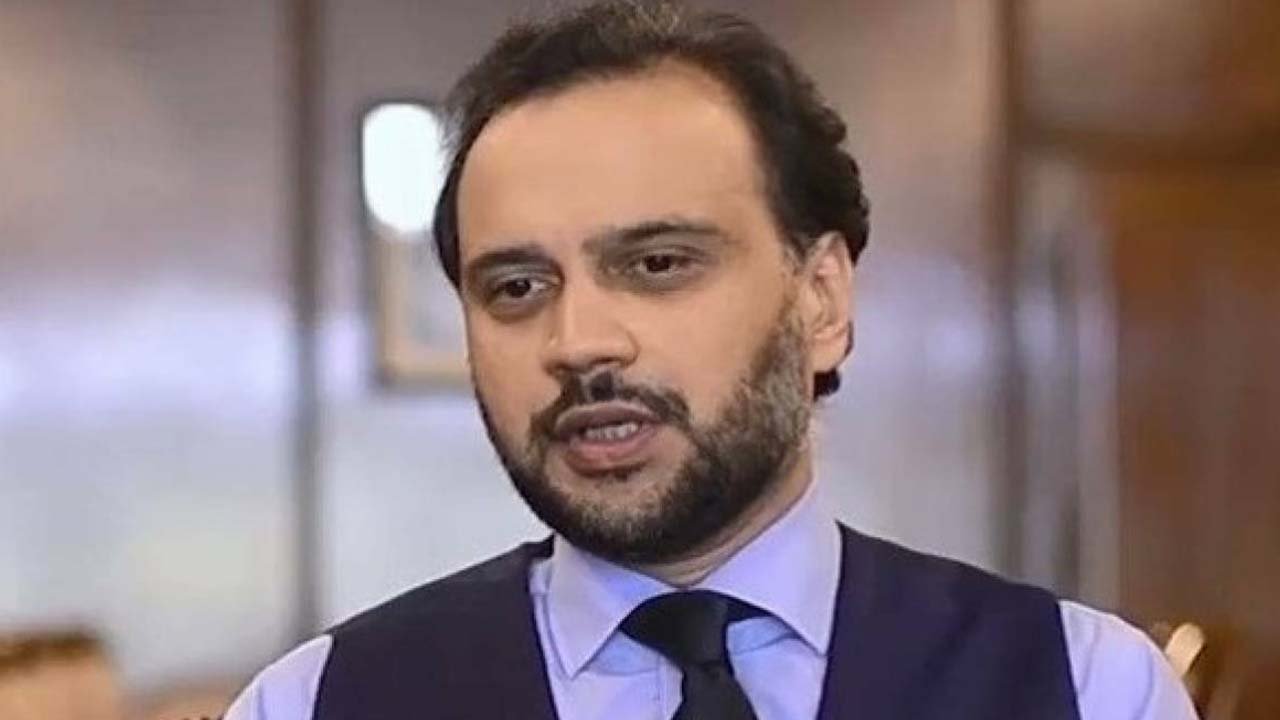
    Following the MPC meeting on Thursday, SBP Acting Governor Dr Murtaza Syed gave a virtual press conference where he announced the monetary policy decision. He told the media that the rate of inflation has been rising at its highest rate since 1970.

    “Globally, inflation is at multi-decade highs in most countries, and central banks are acting aggressively, putting pressure on most emerging market currencies to depreciate,” he continued.

    He praised recent government decisions, such as ending petroleum subsidies, and claimed that these actions had made it possible to finish the IMF loan programme. Pakistan’s external financing requirements for FY23 will be met thanks to significant additional funding from external sources, which will be stimulated by the anticipated conclusion of the ongoing IMF review.

    Then, during the course of FY23, rupee pressures should ease and the SBP’s FX reserves should gradually resume their prior upward trajectory.

    According to him, monetary tightening and fiscal consolidation will cause GDP growth to moderate to 3–4 per cent in FY23, helping to close the positive output gap and lessen demand-side pressures on inflation.

    The acting governor SBP stated that, according to the MPC’s baseline outlook, headline inflation is likely to remain high in FY23, hovering around 19–20 per cent, before dropping sharply to the target range of 5–7 per cent by the end of FY24, driven by stringent policies, a normalisation of global commodity prices, and advantageous base effects.

  • PTI foreign funding case: ECP reserves verdict

    PTI foreign funding case: ECP reserves verdict

     The Election Commission of Pakistan (ECP) on Tuesday reserved the verdict in the Pakistan Tehreek-e-Insaf (PTI) “foreign funding” case.

    ECP concluded the case after seven years of trial, which started in 2014 when PTI’s founding member Akbar S Babar filed it. The date when the verdict will be announced is yet to be revealed.

    PTI hid funds worth millions of rupees from the ECP, the report of an ECP scrutiny committee probing the party’s funds had revealed on January 4.

    The report stated that the PTI provided “false information” regarding the party’s funding to the ECP. It said that the State Bank of Pakistan’s (SBP) bank statement revealed that the party had received Rs1.64 billion in funding.

    Read more: ECP barred: IHC suspends 30-day deadline order in PTI foreign funding case

    The report of an ECP scrutiny committee probing the party’s funds revealed the following details.

    The committee’s report showed that the PTI had only disclosed 12 out of its 65 accounts, which are registered with the SBP.

    The report stated that in the years 2008/2009 and 2012/2013, the PTI disclosed funding worth Rs1.33 billion against an actual amount of Rs1.64 billion, which was reflected in SBP’s bank statement. Therefore, the party did not disclose funding worth Rs310 million.

    A scrutiny committee of the ECP constituted in March 2019 to audit foreign funds of the PTI had finally submitted its report to the commission on November 26, 2021.

  • Pakistani rupee remains volatile as US dollar surpasses Rs211

    Pakistani rupee remains volatile as US dollar surpasses Rs211

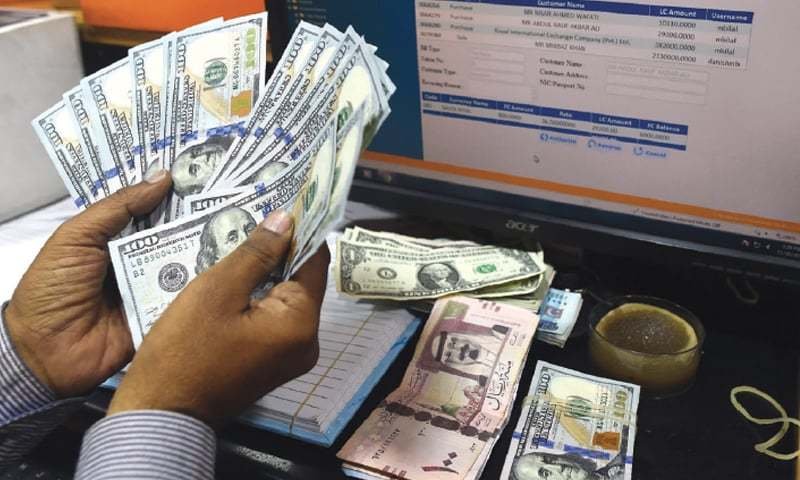
    On Monday, the Pakistani rupee dropped sharply to a record low of over Rs211 against the US dollar in the interbank market, indicating that the currency remains highly volatile.

    The rupee’s latest devaluation against the US dollar is the result of panic buying by traders in response to reports that some financial institutions were out of foreign currency.

    According to the State Bank of Pakistan (SBP), the US dollar was available at Rs211.21 at 11:03 AM and had closed at Rs208.75 on Friday.

    It is worth noting that the Pakistani rupee has fallen for the seventh working day in a row, losing nearly Rs6, or more than 3 per cent, to date.

    Experts predict that the Pakistan rupee will continue to fall against the US dollar and other major currencies owing to concerns regarding the IMF’s $6 billion program’s restoration, the country’s expanding current account deficit, and dwindling foreign exchange reserves.

    The PKR which lost 32.5 per cent of its value in the current financial year 2021-22 is forecasted to remain under stress as the dollar is in high demand in the market due to economic crises.

    SBP appears helpless to stem the rupee’s speculative fall, as demand for the US dollar continues to rise due to quarter-end payment strain.

    Monetary specialists attribute the depreciation of the local currency to a widening trade deficit, political instability, and a drop in foreign direct investment. The currency expert believes that the positive news from the Financial Action Task Force (FATF) will help attract foreign investment, increasing the availability of the dollar.

    Traders expect the rupee to settle in a range of 195-200 per dollar until the end of the current fiscal year 2021-22 if the IMF deal is finalised.

    According to data compiled by Ismail Iqbal Securities, Pakistan’s currency has depreciated by 14.57 per cent against the dollar this year, making it one of the worst performers in the world.

    The worst-performing currency was the Sri Lankan rupee, which fell 43.9 per cent, followed by the Laotian Kip, which fell 24 per cent, the Turkish Lira, which fell 23.18 per cent, and the Ghana Cedi, which fell 22.33 per cent, according to the data.

  • Pakistani rupee gains ground for the third consecutive day

    Pakistani rupee gains ground for the third consecutive day

    Pakistani rupee (PKR) gained 60 paisas after closing in the inter-bank market on May 31, as a return of clarity on the economic front and a reduction in domestic political turmoil boosted it for the third consecutive day.

    According to the State Bank of Pakistan (SBP), the local currency closed at Rs198.46 after gaining 60 paisas (0.30 per cent) in the day. The local currency concluded at Rs199.06 on Monday, up 70 paisas, or 0.35 per cent, from its previous closing.

    On the other hand, oil prices, a key indicator of currency parity, rose on Tuesday as the EU decided to cut Russian oil imports, fueling fears of a tighter market already stressed for supply ahead of the peak summer driving season in the US and Europe.

    The appreciation arrived as European Union leaders decided to slash 90 per cent of Russian oil imports by the end of this year, breaking a deadlock with Hungary over the bloc’s heaviest sanctions against Moscow since the invasion of Ukraine.

    The rise in oil prices is another bad news for Pakistan, which has seen its import bill increase, putting strain on external payments while increasing market demand for dollars.

  • SBP shortens car loan tenure to deflate import bill

    SBP shortens car loan tenure to deflate import bill

    The State Bank of Pakistan (SBP) decreased the consumer lending duration for vehicles on May 24, bringing it to a maximum of three years for cars with engine displacements greater than 1,000cc and five years for those with engine displacements less than 1,000cc.

    “The maximum tenure of auto finance facility is reduced from five (5) years to three (3) years for vehicles above 1,000 cc engine displacement and from seven (7) years to five (5) years for vehicles up to 1,000 cc engine displacement,” read the circular.

    The SBP decided to change the Prudential Regulations for Consumer Financing (PRCF) in its circular Letter No. 19 of 2022:

    Other amendments issued previously, via BPRD Circular Letter No. 29 dated September 23, 2021, will now be applicable on financing for all locally assembled/manufactured vehicles, including financing for vehicles with up to 1,000 cc engine capacity and locally assembled/manufactured electric vehicles, according to the central bank.

    “However, the regulatory treatment of Roshan Apni Car product communicated earlier to RDA participant banks will continue to remain effective,” read the circular.

    “The maximum tenure of auto finance facility is reduced from five (5) years to three (3) years for vehicles above 1,000 cc engine displacement and from seven (7) years to five (5) years for vehicles up to 1,000 cc engine displacement,” read the letter.

    Other amendments issued previously, via BPRD Circular Letter No. 29 dated September 23, 2021, will now be applicable on financing for all locally assembled/manufactured vehicles, including financing for vehicles with up to 1,000 cc engine capacity and locally assembled/manufactured electric vehicles, according to the central bank.

    “However, the regulatory treatment of Roshan Apni Car product communicated earlier to RDA participant banks will continue to remain effective,” read the circular.

  • SBP hikes interest rate by 150 basis points to control inflation

    SBP hikes interest rate by 150 basis points to control inflation

    The State Bank of Pakistan’s (SBP) Monetary Policy Committee (MPC) approved a 150 basis point increase in the benchmark interest rate, pushing it to 13.75 per cent to control inflation.

    It is worth noting that this is the maximum level of interest rate since 2011 when it was 14 per cent.

    The central bank mentioned in a statement that after the last MPC meeting, preliminary estimates indicate that growth in FY22 has been considerably higher than predicted.

    On May 23, the MPC agreed to hike the policy rate by 150 basis points to 13.75 per cent. “This action, together with much needed fiscal consolidation, should help moderate demand to a more sustainable pace while keeping inflation expectations anchored and containing risks to external stability.

    “External pressures remain elevated and the inflation outlook has deteriorated due to both home-grown and international factors. Domestically, an expansionary fiscal stance this year, exacerbated by the recent energy subsidy package, has fueled demand and lingering policy uncertainty has compounded pressures on the exchange rate”.

    “Globally, inflation has intensified due to the Russia-Ukraine conflict and renewed supply disruptions caused by the new Covid wave in China. As a result, almost all central banks across the world are suddenly confronting multi-year high inflation and a challenging outlook.”

    The MPC stated that raising interest rates will help to protect external and economic stability.

    “Since the last MPC meeting, secondary market yields, benchmark rates and cut-off rates in the government’s auctions have risen, particularly at the short end. The MPC noted that the market rates should be aligned with the policy rate and in case of any misalignment after today’s policy decision, the SBP would take appropriate action”.

    According to the report, overall inflation climbed from 12.7 per cent (year on year) in March to 13.4 per cent in April, led by consumable food products and core inflation. “The rise in core inflation reflects strong domestic demand and second-round effects of supply shocks,” it noted.

    The MPC believes that when power and fuel subsidies are phased out, inflation will spike momentarily and remain strong through FY23 before falling steeply in FY24. “This baseline outlook is subject to risks from the path of global commodity prices and the domestic fiscal policy stance,” it said.

  • Pakistan receives $3 billion in remittances, highest in history

    Pakistan receives $3 billion in remittances, highest in history

    The State Bank of Pakistan (SBP) announced on Friday that remittances from Pakistani employees overseas have surpassed $3 billion for the first time, with Saudi Arabia and the United Arab Emirates contributing the most.

    Saudi Arabia ($707 million), the United Arab Emirates ($614 million), the United Kingdom ($484 million), and the United States of America ($346 million) were the largest sources of remittances in April 2022.

    “Remittances crossed the monthly mark of US $3 billion for the first time. Cumulatively, at $26.1 billion, remittances grew by 7.6 % in the ten months of FY22 compared to last year,” says a statement issued by the SBP.

    In terms of growth, remittances have been increased by 11.2 per cent on a month-on-month basis, and 11.9 per cent on a yearly basis

  • Dr Murtaza Syed assumes charge as the new Governor State Bank of Pakistan

    Dr Murtaza Syed assumes charge as the new Governor State Bank of Pakistan

    With effect from May 5, Dr Murtaza Syed, the senior-most Deputy Governor and a former Deputy Resident Representative of the International Monetary Fund (IMF), became the new acting Governor of the State Bank of Pakistan (SBP).

    Prior to this, the federal government named Dr Syed as the Deputy Governor of the SBP for three years on January 27, 2020.

    Dr Syed has taken up the position in light of Section 10(2) of the State Bank of Pakistan (SBP) Act 1956 (amended), and has therefore succeeded Dr Reza Baqir, whose term ended on May 4, according to the notification.

    He holds a Ph.D. in Economics from the University of Oxford’s Nuffield College and has more than 20 years of experience in macroeconomic research and policymaking, including 16 years at the IMF. He worked on IMF initiatives and monitoring of emerging markets and advanced economies such as the Eurozone, Japan, and Korea. Dr Syed also handled IMF training and technical support projects around the world, and between 2010 and 2014, he was the IMF’s Deputy Resident Representative in China.

    Dr Syed started his career as a Senior Policy Analyst at the Human Development Center in Islamabad, where he worked under former Finance Minister D. Mahbub ul Haq. Afterward, he worked for the Institute for Fiscal Studies (IFS), a London-based public policy think tank, where he did research on company investment and employment behaviour, as well as evaluating Latin American anti-poverty programmes.

    Read more: Pakistan’s foreign currency reserves down by $328 million

    Dr Syed has produced papers on a multitude of macroeconomic topics, including fiscal and monetary policy, financial stability, economic crises, investment, demographics, poverty, and inequality, in addition to teaching public policy at the universities of Cambridge and Oxford.

  • All banks to remain open this Saturday

    All banks to remain open this Saturday

    State Bank of Pakistan has recently announced that all banks and their branches would be open on Saturday, April 30, 2022.

    In accordance with SBP’s orders incorporated in Banking Policy and Regulations Department (BPRD) Circular Letter No. 11 of 13 April 2022, all banks and their branches will remain open on Saturday, April 30, 2022.

    Following the announcement by the Pakistani government of public holidays on the occasion of Eid-ul-Fitr from May 2 to May 5, the general public is encouraged to conduct their banking transactions on Saturday, April 30, 2022.

    Read more: Pakistan’s forex reserves inch up to $17.05 billion

    Moreover, banks have been advised to make Alternate Delivery Channels (ADCs) such as ATMs, Mobile Banking, and Internet Banking available 24 hours a day, seven days a week during the Eid holidays.