Tag: State Bank of Pakistan

  • SBP-held forex reserves surge to $7.76 billion in December

    SBP-held forex reserves surge to $7.76 billion in December

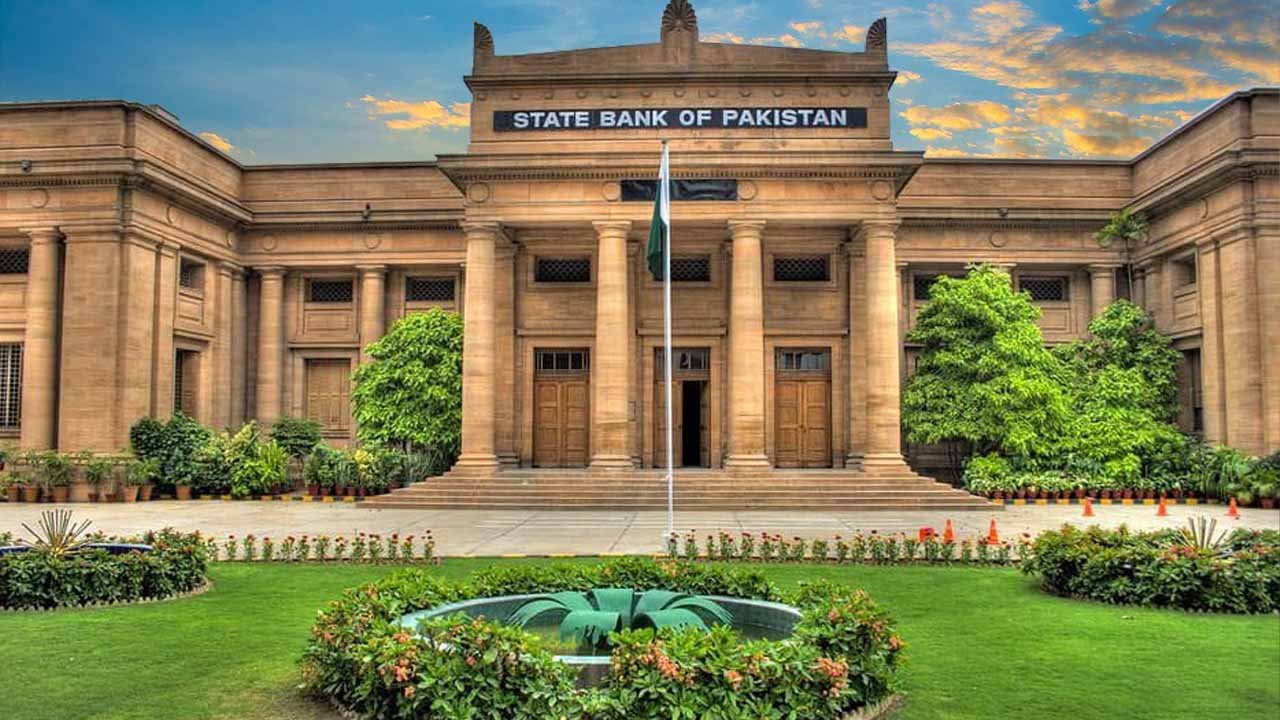
    In the week concluding on December 22, 2023, Pakistan witnessed a substantial increase in its total liquid foreign reserves, reaching a noteworthy $12,855.7 million.

    This surge was reported by the State Bank of Pakistan (SBP), which highlighted that the central bank’s reserves saw a remarkable uptick to $7,757.1 million during the same period.

    The SBP revealed that the surge in reserves, amounting to $852 million, was primarily attributed to official inflows from the Government of Pakistan received during the week under review.

    Simultaneously, commercial banks in the country reported net foreign reserves amounting to $5,098.6 million, further contributing to the overall resilience of Pakistan’s financial position.

    This positive development follows the previous week’s figures, ending on December 15, 2023, where the total liquid foreign reserves were recorded at $12,068.4 million.

    During this period, the central bank held reserves worth $6,904.8 million, with commercial banks reporting net foreign reserves of $5,163.6 million.

    In contrast to the positive financial indicators, Pakistan’s auto industry faced significant challenges in 2023, marked by a sharp decline in car sales of up to 55 per cent. Factories involved in manufacturing car parts also experienced a substantial production cut of 70 per cent.

    The persistent challenges in the auto sector were attributed to the exchange rate crisis, causing a decline in income until the previous year.

    The repercussions of reduced car sales were not limited to impacting the national Treasury; they also resulted in a noticeable decrease in revenue from products.

    An essential factor in this context is the adjustment made by automobile companies following a decrease in the value of the US dollar against the Pakistani rupee.

    In the closing months of 2023, these companies responded by slashing the prices of their units, reflecting the dynamic interplay between economic forces and market conditions.
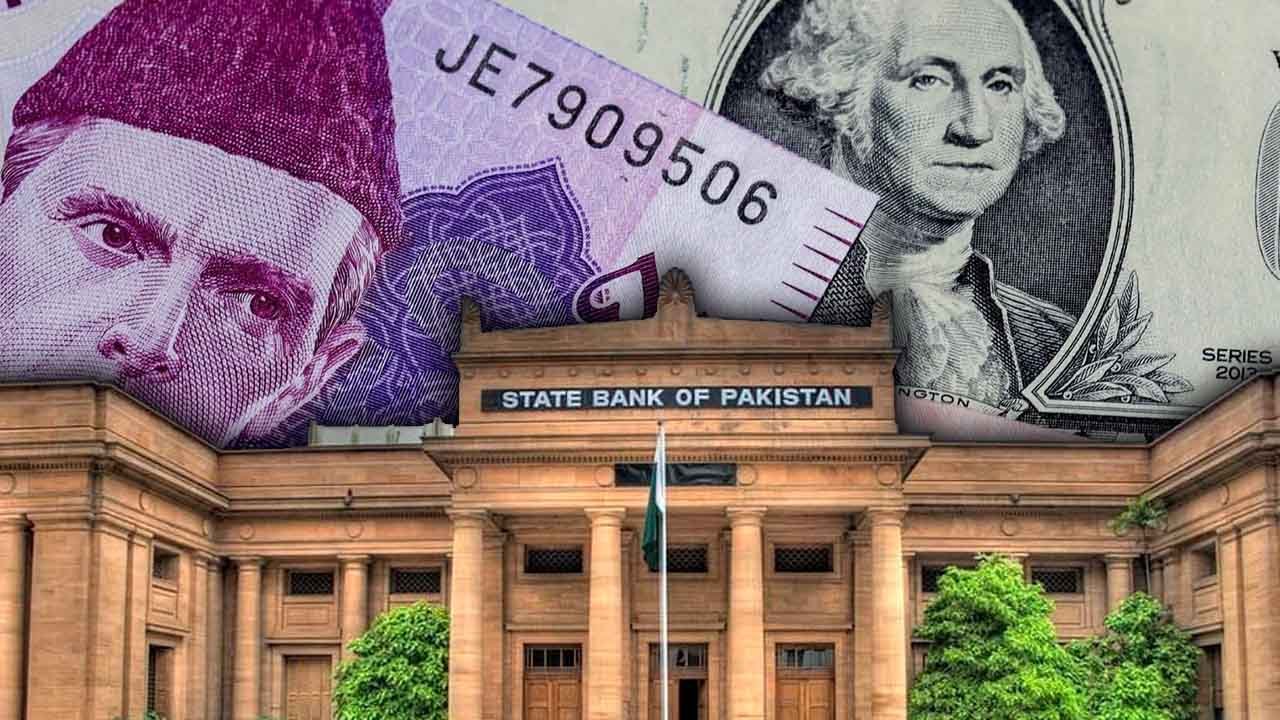
  • Pakistani rupee extends winning streak against US dollar for 12th straight session

    Pakistani rupee extends winning streak against US dollar for 12th straight session

    The Pakistani rupee continued its upward trend against the US dollar for the 12th consecutive session, appreciating by 0.1 per cent in the inter-bank market on Thursday. 

    The State Bank of Pakistan reported that the rupee settled at Rs281.93, marking an increase of Re0.27. A day earlier, the rupee had experienced a slight gain, closing at Rs282.20 against the US dollar.

    In a related development, the Ministry of Finance acknowledged the persistent challenge of higher markup payments. The ministry stressed the importance of both revenue enhancement and prudent expenditure control.

    Internationally, the US dollar faced substantial losses on Thursday, poised for a yearly decline after two years of robust gains. 

    Anticipation of interest rate cuts from the Federal Reserve in the coming year influenced market sentiments. As the year concludes, limited market activity is expected until the New Year due to thin liquidity.

    The dollar index, measuring the US currency against six rivals, reached a five-month low of 100.81. It declined by 0.5 per cent on Wednesday and is on track for a 2.6 per cent decrease this year, breaking a two-year trend of strong gains. I

    Investors are closely monitoring the timing of potential interest rate cuts from the Fed, with markets indicating an 89 per cent chance of a cut in March 2024, according to the CME FedWatch tool. Futures suggest up to 158 basis points of Fed easing in the coming year.

    Oil prices, a significant indicator of currency parity, stabilised on Thursday following a previous sharp decline. 

    Concerns about shipping disruptions along the Red Sea route eased, despite escalating tensions in the Middle East. 

    Brent crude futures rose by 2 cents to $79.75 a barrel, while US WTI crude futures traded 3 cents lower at $74.08 a barrel, rebounding from a nearly 2 per cent drop on Wednesday as major shipping firms resumed operations in the Red Sea.

  • Pakistani rupee gains ground against US dollar for 11th consecutive session

    Pakistani rupee gains ground against US dollar for 11th consecutive session

    The Pakistani rupee sustained its upward trajectory against the US dollar for the 11th consecutive session, exhibiting a 0.06 per cent appreciation in the interbank market on Wednesday. 

    According to the State Bank of Pakistan (SBP), the rupee concluded at Rs282.20, reflecting an increment of Re0.17.

    In the preceding session on Tuesday, the rupee had achieved a marginal gain, settling at Rs282.37 in relation to the US dollar. 

    Concurrently, there has been a notable surge of 200 per cent in the cumulative borrowing by the federal and provincial governments for budgetary support from the domestic banking system in the current fiscal year (FY24).

    Internationally, the US dollar encountered continued pressure on Wednesday, while the euro flirted with a four-month pinnacle. 

    This trend emerged as market expectations of an imminent interest rate cut by the Federal Reserve gained traction. The restrained week, marked by global holiday absences until the New Year, is anticipated to witness subdued trading volumes.

    The dollar index, gauging the US currency against six counterparts, stood at 101.54, just below the five-month low of 101.42 recorded last week. 

    The index is poised for a 1.9 per cent decline in 2023, following two consecutive years of robust gains driven by the Fed’s rate hikes to combat inflation. 

    The recent weakening of the dollar is attributed to market anticipation of forthcoming rate cuts by the Fed in the coming year, diminishing the allure of the greenback.

  • PKR records eighth consecutive gain, closes at Rs282.79 vs dollar

    PKR records eighth consecutive gain, closes at Rs282.79 vs dollar

    In a notable financial trend, the Pakistani rupee (PKR) sustained its positive trajectory against the US dollar (USD) for the eighth consecutive session, witnessing a 0.04 per cent appreciation in the interbank market on Thursday.

    According to the State Bank of Pakistan (SBP), the rupee concluded at Rs282.79 after experiencing a rise of Re0.11.

    The preceding day saw a slight uptick in the PKR’s value, settling at Rs282.9 against the US dollar. 

    A significant development unfolded as the government successfully secured a historic amount of Rs397 billion ($1.4 billion) in Wednesday’s local currency bond auction. 

    This achievement surpassed expectations, marking the highest borrowing in years within a single auction, showcasing sustained market interest even as December draws to a close.

    The substantial participation of investors underscores their confidence in long-term bonds, fueled by the anticipation of an early 2024 rate cut. 

    The government strategically opted for long-term borrowing in response, effectively mitigating rollover risks and minimisingreliance on short-term funding in the future.

    On the global front, the US dollar regained strength on Thursday, prompted by a sudden end to a robust rally for US stocks, compelling investors to seek safety. 

    In the final hour of equities trade on Wall Street, heavy selling induced a ripple of risk aversion through markets, lifting the previously under-pressure greenback from lows.

    As of early Asia trade on Thursday, the dollar index, which is down 1 per cent for the year so far, remained steady at 102.37. 

    In a comparison with major currencies, the Pakistani currency strengthened by 69.15 paisa against the Euro, concluding at Rs309.57 as opposed to the previous rate of Rs310.26. 

    The British Pound saw a reduction in value of 79.58 paisa, settling at Rs357.41 in comparison to the previous day’s Rs358.21.

    However, PKR experienced a slight decline of 0.38 paisa against the Japanese yen, closing at Rs1.974 as compared to the previous day’s rate of Rs1.97. 

    The Saudi Riyal concluded at Rs75.38, registering a decrease of 1.15 paisa from its value of Rs75.39 a day ago. 

    Similarly, the UAE Dirham witnessed a decrease in value of 2.81 paisa, shifting from Rs77.027 the previous day to Rs76.999.

    Meanwhile, oil prices, a crucial indicator of currency parity, experienced a decline on Thursday due to concerns over low demand following an unexpected US crude inventory build, outweighing apprehensions about global trade disruptions linked to tensions in the Middle East. 

    Brent crude futures dropped by 3 cents to $79.67 a barrel, while US West Texas Intermediate crude stood at $74.16 a barrel, reflecting a 6-cent decrease.

  • 7th consecutive gain: Pakistani rupee closes at Rs282.9 against US dollar

    7th consecutive gain: Pakistani rupee closes at Rs282.9 against US dollar

    In a persistent surge, the Pakistani rupee (PKR) continued its upward trend against the US dollar (USD) for the seventh consecutive session, appreciating by 0.04 per cent in the inter-bank market on Wednesday.

    According to the State Bank of Pakistan (SBP), the PKR concluded at Rs282.9, marking an increase of Rs0.11.

    In the open market scenario, the PKR experienced a decline of 25 paisa for both buying and selling against the USD, settling at Rs281.50 and Rs284.50, respectively.

    Conversely, against the Euro, the PKR maintained stability for both buying and selling, closing at Rs307.00 and Rs310.00, respectively.

    Against the UAE dirham, the PKR held steady for both buying and selling, concluding at Rs77.30 and Rs78.00, respectively.

    In comparison, against the Saudi Riyal, the PKR saw a gain of 10 paisa for both buying and selling, closing at Rs75.20 and Rs75.90, respectively.

    This positive trend follows Tuesday’s marginal gain, where the rupee settled at Rs283.01 against the US dollar.

    The dollar index, which experienced a slight dip on Tuesday, maintaining a mostly flat position at 102.20, had previously reached a four-month low of 101.76 last week.

    In the backdrop of global trade concerns and heightened geopolitical tensions in the Middle East, with Yemen’s Iran-aligned Houthi forces conducting attacks on ships in the Red Sea, oil prices surged past $80 a barrel on Wednesday.

    Brent crude futures observed an 89-cent increase, or 1.1 per cent, reaching $80.12 a barrel by 1101 GMT, while US West Texas Intermediate crude climbed 93 cents, or 1.3 per cent, to $74.87 a barrel.

  • Concerns rise over circulation of fake Rs5,000 banknotes

    Concerns rise over circulation of fake Rs5,000 banknotes

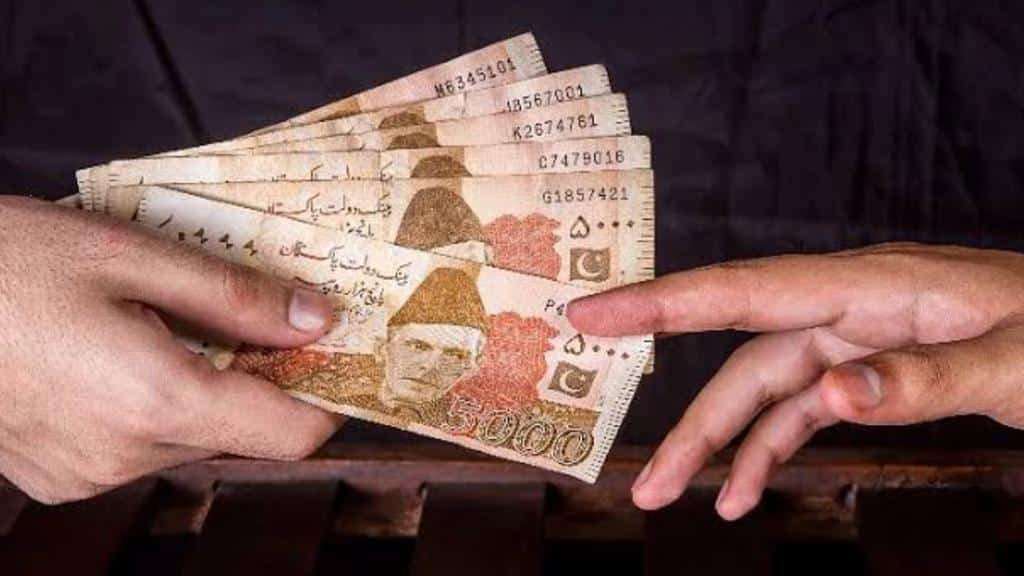
    In a recent meeting, the Senate Standing Committee on Finance convened to address the escalating circulation of counterfeit Rs5,000 banknotes, a matter that has raised serious apprehensions among officials, including those from the State Bank of Pakistan (SBP).

    Chaired by Senator Salim Mandviwala, the committee delved into the severity of the issue as it showcased a bundle of forged Rs5,000 notes.

    Senator Mandviwala, underscoring the gravity of the situation, asserted that even parliamentarians are susceptible to falling victim to this fraudulent activity.

    During the proceedings, Senator Mandviwala directed a challenge to SBP’s Deputy Governor, Dr. Inayat Hussain, urging him to identify the counterfeit notes.

    However, the attempt was met with a purported failure on the part of the Deputy Governor.

    Expressing the need for immediate and decisive action, the committee chairman called upon the central bank to take robust measures to combat the widespread dissemination of counterfeit currency.

    Mandviwala suggested that the infiltration of fake notes into circulation might be occurring through banks.

    A noteworthy proposal from Senator Mandviwala involved the exchange of counterfeit currency for genuine notes, an idea promptly dismissed by Deputy Governor Inayat Hussain.

    The latter cited concerns about potential misuse and abuse as the basis for the refusal.

    During the discussion, Hussain acknowledged the absence of a concrete system to prevent the printing of fake currency within the country.

    He further elaborated that while counterfeit dollars are a global issue, efforts are underway to enhance regulations to control the production and circulation of fake currency, specifically within Pakistan.

    According to ARY News, Mandviwala, highlighting the urgency of the situation, called for immediate relief measures. The committee, in unanimous agreement, advocated for the formulation of a comprehensive policy to combat the growing use of counterfeit currency, particularly within the banking system.

    The committee stressed the necessity of proactive measures to safeguard the financial integrity of the nation.

  • Pakistani rupee gains 20 paisa against US dollar

    Pakistani rupee gains 20 paisa against US dollar

    The Pakistani rupee (PKR) extended its positive trajectory against the US dollar for the sixth consecutive session, appreciating by 0.07 per cent in the inter-bank market on Tuesday.

    According to the State Bank of Pakistan (SBP), the rupee concluded at Rs283.01, marking an increase of Re0.20.

    In the previous session, the rupee saw a marginal gain, settling at Rs283.21 against the US dollar.

    Meanwhile, in a noteworthy development, Pakistan secured $4.285 billion from various financing sources in the first five months (July–November) of the current fiscal year 2023–24.

    This represents a decrease from the $5.114 billion borrowed during the corresponding period in 2022–23, as disclosed by data from the Economic Affairs Division (EAD).

    On the global front, the US dollar experienced a 0.3 per cent decline against the yen, maintaining its position close to a four-month high of 140.95 reached last week.

    Additionally, the greenback lingered near approximately five-month lows against the Australian and New Zealand dollars.

    This was attributed to the strength of risk-sensitive currencies, driven by the anticipation that the US Federal Reserve might initiate interest rate adjustments as early as the beginning of next year.

    In the realm of commodities, oil prices stabilised on Tuesday as investors assessed the potential repercussions on oil supply arising from attacks by Yemen’s Iran-aligned Houthi militants on ships in the Red Sea.

    These attacks have disrupted maritime trade, compelling companies to reroute vessels. Notably, crude prices surged nearly 2 per cent on Monday due to concerns about trade disruptions through the Suez Canal, a vital shipping route that accounts for approximately 15 per cent of global shipping traffic.

    Brent crude declined by 12 cents to $77.83 per barrel.

    The US West Texas Intermediate crude for January, set to expire on Tuesday, experienced a decrease of 62 cents, reaching $71.85. In contrast, the more active February contract only incurred a marginal loss of 3 cents.

  • Pakistani rupee appreciates 0.02% against US dollar to close at Rs283.21

    Pakistani rupee appreciates 0.02% against US dollar to close at Rs283.21

    In a continuing upward trend, the Pakistani rupee demonstrated resilience in the inter-bank market by securing gains against the US dollar for the fifth consecutive session, appreciating by 0.02 per cent on Monday.

    According to the State Bank of Pakistan (SBP), the rupee closed at Rs283.21, marking an increase of Re0.05.

    Throughout the preceding week, the rupee exhibited a noteworthy appreciation, gaining Re0.61 or 0.21 per cent to settle at Rs283.26 against the US dollar in the inter-bank market.

    This marks the fifth consecutive week of the rupee’s advancement against the dollar, a momentum attributed to the recent announcement of a staff-level agreement (SLA) between Pakistan and the International Monetary Fund (IMF) concerning the first review of the $3 billion Stand-by Arrangement (SBA).

    Since the revelation of the SLA on November 15, the local currency has strengthened by Rs4.88, or 1.7 per cent, against the greenback.

    Meanwhile, on a global scale, currencies commenced the week with caution following significant fluctuations in the previous week, driven by various central bank meetings, including rate decisions from the Federal Reserve, the European Central Bank (ECB), and the Bank of England (BoE).

    The greenback, which had been bolstered throughout most of 2022 and 2023 by aggressive rate hikes from the Fed and expectations of prolonged higher rates, experienced a notable decline of approximately 1.3 per cent against a basket of currencies last week in response to the outcomes of the Fed’s policy meeting.