Tag: State-Owned Enterprises

  • Final hurdle cleared: Pakistan on verge of securing IMF tranche

    Final hurdle cleared: Pakistan on verge of securing IMF tranche

    Pakistan is on track to receive the final installment of the $3 billion standby arrangement following the country’s officials meeting the economic performance criteria outlined by the International Monetary Fund (IMF), as per reports.

    Reports indicate that the IMF mission in Pakistan has concluded its review and is preparing to announce an agreement with the government for the disbursement of the last installment, totaling $1.1 billion.

    If successful, the agreement will be presented to the IMF executive board in April for their ultimate approval.

    This development follows recent discussions suggesting that negotiations with the global lending institution may be prolonged due to the parties failing to reach a consensus.

    It’s noted that the IMF has urged the government to regulate and tax cryptocurrency and other online trading platforms.

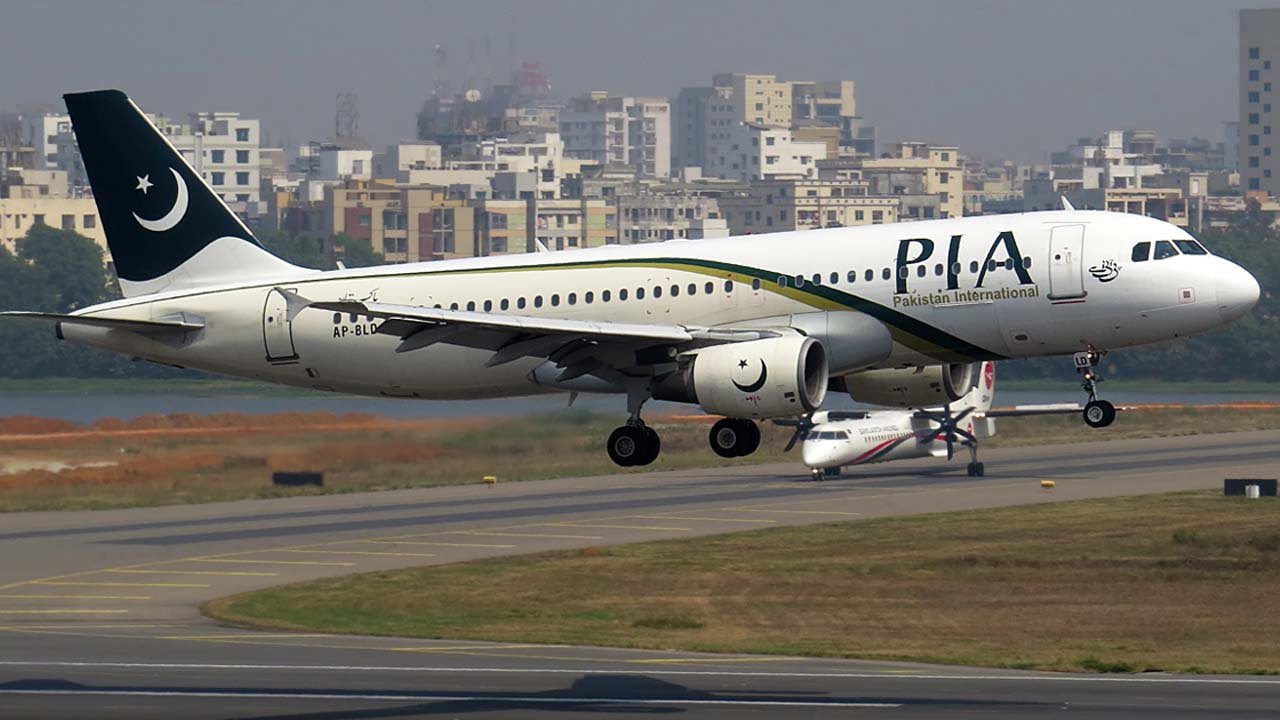
    Additionally, discussions between Pakistan and the IMF have included talks on privatising financially struggling state-owned enterprises, with Pakistan International Airlines being a priority for privatisation.

    Earlier, the government declined the IMF’s proposal to revisit the National Finance Commission (NFC) Award, citing constitutional concerns.

    The IMF had suggested reviewing the NFC Award during the second round of talks, citing a shortage of federal funds.

    Government sources said that any recommendation on the NFC Award that contradicts the constitution will not be endorsed.

    Pakistan managed to avoid a potential sovereign default after the previous coalition government, led by Pakistan Muslim League-Nawaz (PML-N), reached a staff-level agreement with the IMF on a $3 billion SBA.

    Finance Minister Muhammad Aurangzeb expressed Pakistan’s intention to secure a larger and more enduring program with the IMF, aiming to align with the country’s quota. He made these remarks while speaking to reporters in Islamabad on March 13.
  • Pakistan to receive $1.5 billion from international lenders following IMF approval

    Pakistan to receive $1.5 billion from international lenders following IMF approval

    Pakistan is poised to secure funds amounting to $1.5 billion from global lenders, contingent on the approval of the loan tranche under the $3 billion Stand-By Arrangement (SBA) by the International Monetary Fund (IMF), as highlighted by Dr Shamshad Akhtar, the caretaker finance minister, in a recent interview with a local news channel.

    It’s noteworthy that the IMF granted preliminary approval on November 15, 2023, for the disbursement of the upcoming loan tranche within the programme.

    Upon receiving approval, Pakistan will gain access to SDR 528 million, equivalent to approximately $700 million. This will contribute to the cumulative disbursements under the program reaching almost $1.9 billion.

    The agreement underscores the authorities’ commitment to advancing planned fiscal consolidation, expediting cost-reducing reforms in the energy sector, completing the transition to a market-determined exchange rate, and pursuing reforms in state-owned enterprises and governance.

    These measures aim to attract investment, support job creation, and simultaneously enhance social assistance.

    Nathan Porter remarked, “Anchored by the stabilization policies under the SBA, a nascent recovery is underway, supported by international partners and indications of improved confidence.”

    He added that the steadfast execution of the FY24 budget, ongoing adjustments of energy prices, and renewed inflows into the foreign exchange (FX) market have alleviated fiscal and external pressures.

  • Pakistan faces worsening financial woes as state-owned enterprises suffer losses

    Pakistan faces worsening financial woes as state-owned enterprises suffer losses

    Interim Prime Minister (PM) Anwaar-ul-Haq Kakar conveyed on Wednesday that Pakistan is grappling with financial challenges, exacerbated by the continuous losses incurred by state-owned enterprises (SOEs).

    The PM presided over a high-level meeting specifically addressing the issues plaguing Pakistan International Airlines (PIA). 

    During this meeting, comprehensive briefings were presented on various aspects of PIA’s operations.

    Key figures, including Caretaker Minister for Privatisation Fawad Hassan Fawad, Adviser to the Prime Minister Ahad Cheema, and other relevant authorities, were in attendance.

    PM Kakar articulated his concerns regarding the protracted decision-making process concerning PIA’s issues.

    He highlighted the urgency of expediting the privatisation of PIA and other state-owned enterprises that are incurring losses, highlighting that these financial setbacks should not be shouldered by the public through tax money.

    PM Kakar underscored that reforming the aviation sector could lead to improved services for the public.

    Furthermore, he stressed the importance of transparency in the privatisation process and the need to assign responsibility for the losses to facilitate corrective actions and prevent further financial setbacks.

    The meeting received updates on PIA’s financial situation and the progress of its privatisation process.

    The PM directed that the privatisation of the national flag carrier be expedited to relieve the burden on the national treasury.

  • PM Kakar pushes for speedy privatisation of financially troubled state-owned enterprises

    Caretaker Prime Minister (PM) Anwaar-ul-Haq Kakar, in a meeting held on Monday, directed the relevant authorities to expedite the privatisation process of state-owned enterprises (SOEs) that are experiencing financial losses.

    Stressing the importance of this privatisation effort, the Prime Minister emphasised its role in safeguarding the national treasury from further deficits.

    During this meeting, Minister for Privatisation Fawad Hasan Fawad provided a detailed update on the progress made in the privatisation of these enterprises.

    PM Kakar also commended the Special Investment Facilitation Council (SIFC) for its commendable contributions to this endeavor. 

    It’s worth noting that the caretaker Premier had previously issued similar directives to accelerate the privatisation process of Pakistan International Airlines (PIA), a loss-making entity.

    This development comes in response to reports suggesting that unless emergency funding is secured, PIA’s flight operations could face suspension.

    A senior PIA director revealed that the operational fleet had been reduced from 23 to 16 aircraft, resulting in the cancellation of numerous flights.

  • ‘Govt to renegotiate programme with IMF’: Finance Minister

    ‘Govt to renegotiate programme with IMF’: Finance Minister

    The new Federal Minister for Finance and Revenue, Shaukat Tarin has said that the government of Pakistan is trying to renegotiate the terms of the International Monetary Fund (IMF) programme.

    Tarin said this during the National Assembly Finance and Revenue meeting on Monday. He said he is trying to convince IMF that price hikes in electricity tariffs will only create problems for the people, as the country is already deeply impacted by the COVID-19 pandemic.

    “We have assured IMF of reducing circular debt but the demand of increasing tariff is not understandable,” he said.

    Tarin further added that the terms and conditions can also be fulfilled if the government “curtails circular debt through other means instead of increasing the tariff.”

    “Financial and monetary wallets are open all over the world but the IMF’s sword is only hanging over us,” Tarin maintained.

    In addition, the State-Owned Enterprises (SOEs) cannot be managed by the government, and they must be privatised.

    “The 17 per cent General Sales Tax (GST) rate is very high, and a mechanism has been prepared for its reduction,” he said.

    On stabilising Pakistan’s economy, the finance minister said that the four to five per cent economic growth is enough for Pakistan, and the government will now focus on achieving the above-stated targets.

    He regretted that the government is spending 85 per cent revenue on only nine cities and rarely invests in education and health.

    Unless the country moved to higher economic growth, nothing would improve, and if we continue with stabilisation that has been in place for over two years, neither revenue collection would go up, nor job opportunities would be available to people, he explained.

    He said the government would increase the Public Sector Development Programme (PSDP) in the next budget and provide equal growth opportunities to all provinces.

    As the country lacks proper planning, Tarin said that he had selected 10 to 12 sectors on which economic experts had already started working so that they could come up with long-term planning for areas such as price stability, agriculture, industry, revenue, housing, social protection, national services, debt management and privatisation of loss-making state-run entities.

    The committee chairman assured the finance minister of all cooperation by committee members.