Tag: Stats

  • More than 50 per cent of candidates failed in Urdu CSS exam in last three years

    In a surprising statistic, in the three last years at least 54.53 per cent of candidates, who appeared for the Central Superior Services (CSS) Examination failed Pakistan’s national language Urdu subject.

    In 2019, 30 per cent of candidates failed in Urdu, while in 2020 and 2021, the rate of failure shot up to 59 per cent and 73 per cent.

    Regarding the success rate in English, 35,000 out of 49,500 candidates failed in the subject in 2019 with a rate of failure of 73 per cent, which got better in 2020 when only 39 per cent got failed. However, in 2021, 92 per cent failed the subject.

    The details of the candidates were presented in the National Assembly (NA) on Friday.

  • Food price hikes pushes weekly inflation to 3.38 per cent

    Food price hikes pushes weekly inflation to 3.38 per cent

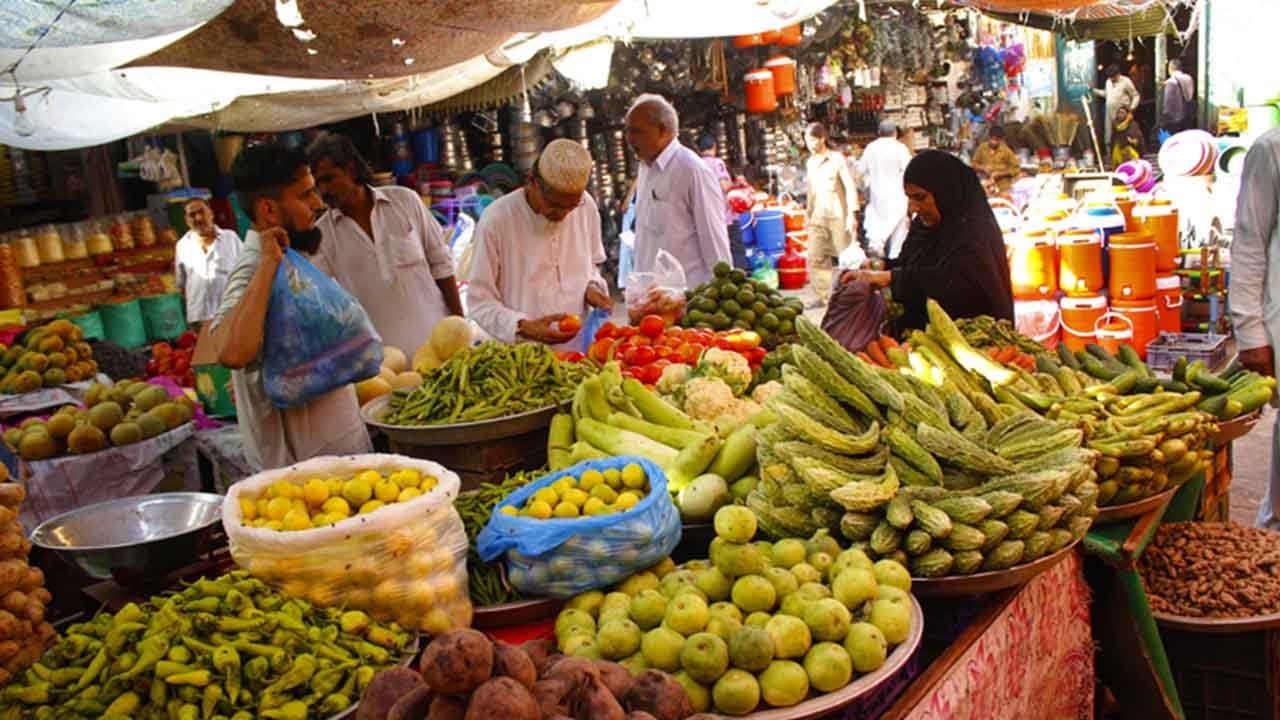
    According to the Pakistan Bureau of Statistics (PBS), the Sensitive Price Indicator (SPI) for the week ended June 16, 2022, surged by 3.38 per cent due to increases in the prices of food and non-food items.

    The year-over-year (YoY) trend indicates a 27.82 per cent rise, owing primarily to an increase in rates of following:

    Onions (135.31 per cent), diesel (132.61 per cent), tomatoes (117.27 per cent), petrol (110.16 per cent), vegetable ghee 1 kg (81.76 per cent), mustard oil (80.88 per cent), pulse Masoor (74.77 per cent), cooking oil 5 litre (71.52 per cent), vegetable ghee 2.5 kg (68.47 per cent), LPG (60.97 per cent), garlic (57.72 per cent), washing soap (52.73 per cent), garlic (57.72 per cent (51.11 per cent).

    On the flip side, a considerable decrease was reported in prices of chilli powder (43.42 per cent), pulse Moong (18.06 per cent), sugar (10.79 per cent), bananas (0.83 per cent), gur (0.45 per cent).

    According to the most recent data, the SPI increased from 182.88 per cent to 189.07 per cent during the week ended June 9, 2022.

    The SPI increased by 2.85 per cent, 3.45 per cent, 3.10 per cent, 3.12 per cent, and 3.10 per cent for consumption groups up to Rs17,732 and Rs17,733 to Rs22,888, Rs22,889 to Rs29,517, and Rs29,518 to Rs44,175 and above Rs44,175 respectively.

    According to the PBS, out of 51 items, 36 (70.59 per cent) increased in price, 06 (11.76 per cent) decreased in price, and 09 (17.65 per cent) remained stable during the week.

    Increase: Vegetable ghee Dalda/Habib or other superior quality 1 kg pouch each (4.95 per cent), tea prepared (4.83 per cent), bread plain (4.37 per cent), toilet soap Lifebuoy (4.13 per cent), pulse Masoor (3.50 per cent), cooking oil Dalda 5 litre tin each (2.87 per cent), Sufi washing soap (2.33 per cent), mustard oil (2.24 per cent), vegetable ghee Dalda/Habib 2.5 kg tin each (1.93 per cent), pulse Mash (1.71 per cent), beef with bone (1.50 per cent), energy saver (1.04 per cent), curd (1.01 per cent), mutton (0.89 per cent), eggs (0.85 per cent), salt powdered (0.79 per cent), lawn printed Gul Ahmed/Al Karam (0.77 per cent), basmati broken (0.68 per cent), garlic (0.59 per cent), tomatoes (0.49 per cent), milk fresh (0.45 per cent), powdered milk Nido (0.41 per cent).

  • Inflation in France hits record-high since 1990s

    Inflation in France hits record-high since 1990s

    Preliminary EU-harmonised statistics indicated that inflation in France surged more than projected in May to a new high, putting additional pressure on President Emmanuel Macron before upcoming legislative elections.

    Consumer prices rose 0.7 per cent in May, for a 12-month inflation rate of 5.8 per cent, up from 5.4 per cent in the last month and the highest rate since France started working on European Union methodology to generate the numbers in the early 1990s, as per the INSEE statistics.

    Inflation was predicted to grow to 5.6 per cent on average, considering a poll of eight economists in a report by Reuters.

    High inflation is at the top of France’s political agenda, and following the elections, Macron’s government has promised a new wave of measures to protect buying power.

    Apart from Malta, France has managed to maintain the inflation lower than the rest of the EU due to a 25 billion euro package of measures that includes, among other things, hefty price limits on gas and electricity.

    Annual inflation in France, as measured by the national consumer price index, climbed to 5.2 per cent in May from 4.8 per cent in April, reaching its highest level since September 1985, according to INSEE.

    This month, economists surveyed by Reuters projected an average growth rate of 5.0 per cent. In France, the national index is regularly monitored, whilst outside the country, the EU-harmonised index is used to assess inflation rates among euro-area nations.

  • Eid-ul-Fitr 2022: Here’s why Pakistan is paying a lot more than last year for clothes, food

    Eid-ul-Fitr 2022: Here’s why Pakistan is paying a lot more than last year for clothes, food

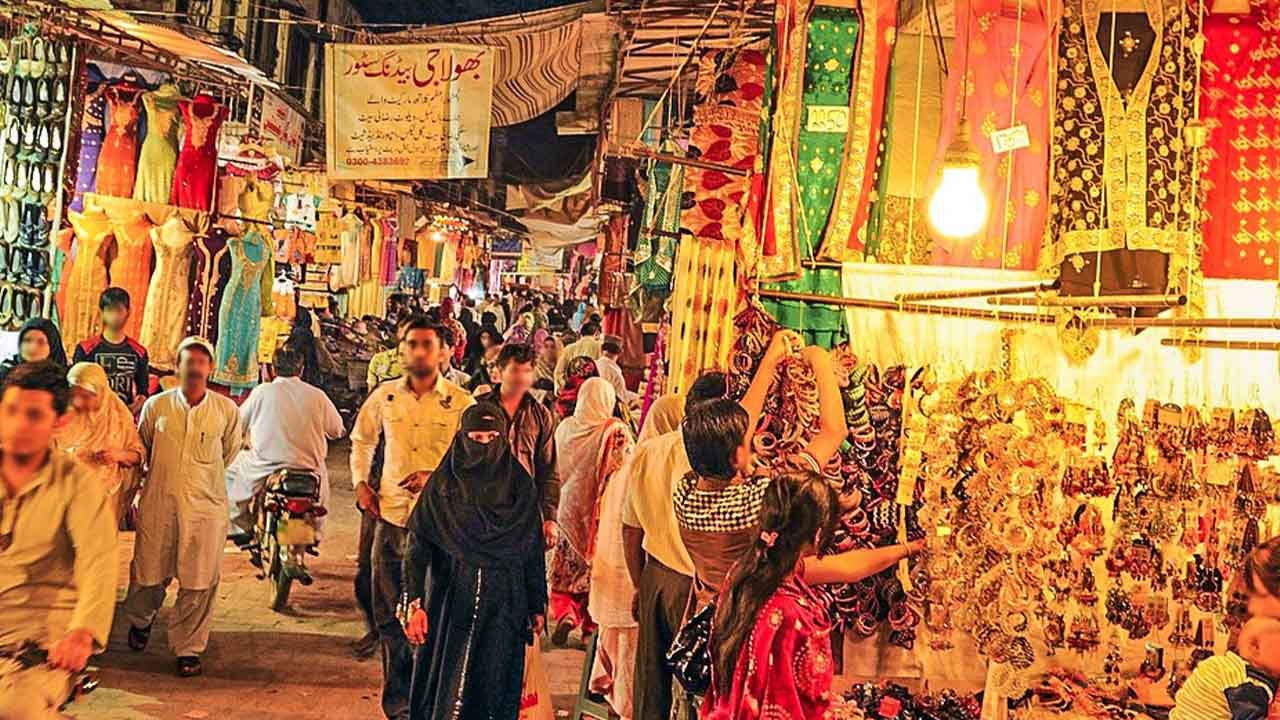
    Cities are decked with spectacular illumination around shopping malls, major streets, and side lanes as Eid shopping begins. Despite growing inflation, there is a lot of hustle in commercial areas.

    But do you know how much higher we are paying for everything this year, from food to clothing, than we did last year?

    Undoubtedly, the PTI-led government struggled to contain inflation, which experts said, was the outcome of record-high global commodity prices and 51 per cent devaluation of the Pakistani rupee (PKR).

    In January 2022, inflation climbed by 13 per cent year on year basis compared to 12.3 per cent in the previous month and 5.7 per cent in January 2021. It is pertinent to mention that inflation reached an all-time high of 14.6 per cent in January 2020.

    The Consumer Price Index (CPI) accelerated in March 2022 over the same month a year ago, according to the inflation bulletin released by the Pakistan Bureau of Statistics (PBS). The index remained higher compared to the preceding month during five out of the past six months.

    Inflation Comparison – January 2022

    General CPI inflation, increased by 13.0 per cent on a year-on-year basis in January 2022 as compared to an increase of 12.3 per cent in the previous month and 5.7 per cent in January 2021. On a month-on-month basis, it increased by 0.4 per cent in January 2022 as compared to decrease of -0.02 per cent in the previous month and a decrease of -0.2 per cent in January 2021.

    Urban CPI inflation, increased by 13.0 per cent on a year-on-year basis in January 2022 as compared to an increase of 12.7 per cent in the previous month and 5.0 per cent in January 2021. On a month-on-month basis, it increased by 0.1 per cent in January 2022 as compared to an increase of 0.3 per cent in the previous month and a decrease of -0.2 per cent in January 2021.

    Rural CPI inflation, increased by 12.9 per cent on a year-on-year basis in January 2022 as compared to an increase of 11.6 per cent in the previous month and 6.6 per cent in January 2021. On a month-on-month basis, it increased by 0.9 per cent in January 2022 as compared to a decrease of -0.5 per cent in the previous month and a decrease of -0.3 per cent in January 2021.

    Wholesale Price Index (WPI) inflation on a year-on-year basis increased by 24.0 per cent in January 2022 as compared to an increase of 26.2 per cent a month earlier and an increase of 6.4 per cent in January 2021. WPI inflation on a Month-on-month basis increased by 0.6 per cent in January 2022 as compared to a decrease of -0.2 per cent a month earlier and an increase of 2.5 per cent in a corresponding month i.e. January 2021.

    Urban Consumer Price Index (UCPI)

    The Urban Consumer Price Index of January 2022 increased by 0.06 per cent over December 2021 and increased by 12.99 per cent over the same month of the last year (January 2021).

    Month-on-Month Inflation

    Main contributors to month-on-month and year-on-year percentage changes are mentioned below:

    Increase in prices of food items: Pulse Masoor (6.13 per cent), Gram whole (4.79 per cent), Fruits (4.11 per cent), Besan (3.82 per cent), Pulse Gram (3.44 per cent), Pulse Mash (3.37 per cent), Wheat (2.68 per cent), Pulse Moong (1.88 per cent), Meat (1.78 per cent) and Rice (1.28 per cent).

    Increase in prices of garments and other items: Woolen Readymade Garments (6.67 per cent), Solid Fuel (5.16 per cent), Hosiery (1.93 per cent), Motor Fuel (1.75 per cent), Cleaning & Laundering (1.59 per cent), Washing soap/Detergents/Match Box (1.46 per cent) and Liquefied Hydrocarbons (1.29 per cent).

    Year-on-Year Inflation – January 2021

    Edible items

    Increased: Cooking Oil (54.33 per cent), Vegetable Ghee (47.4 per cent), Mustard Oil (46.68 per cent), Pulse Masoor (41.3 per cent), Fruits (28.35 per cent), Gram Whole (24.7 per cent), Meat (22.38 per cent), Chicken (17.08 per cent), Pulse Gram (15.67 per cent), Beans (15.37 per cent), Pulse Mash (12.46 per cent) and Vegetables (11.58 per cent).

    Garments and others

    Increased: Electricity Charges (56.20 per cent), Liquefied Hydrocarbons (53.35 per cent), Motor Fuel (36.22 per cent), Footwear (25.47 per cent), Cleaning & Laundering (22.03 per cent), Washing soap/Detergents/Match Box (17.95 per cent), Motor Vehicle Accessories (14.04 per cent), Woolen Readymade Garments (13.03 per cent) and Plastic Products (11.72 per cent).

    Year-on-Year Inflation – March 2022

    CPI National for the month of March, 2022 increased by 12.72 per cent over March, 2021. The Urban CPI recorded an increase of 11.94 per cent while Rural CPI recorded an increase of 13.88 per cent.

    Edible items in urban areas

    Increased: Tomatoes (148.65 per cent), Mustard Oil (59.91 per cent), Vegetable Ghee (49.56 per cent), Cooking Oil (48.05 per cent), Pulse Masoor (38.32 per cent), Vegetables (34.92 per cent), Fruits (32.00 per cent), Gram whole (25.37 per cent), Meat (23.68 per cent), Chicken (19.59 per cent) and Beans (13.62 per cent).

    Edible items in rural areas

    Increased: Tomatoes (158.82 per cent), Cooking Oil (63.47 per cent), Mustard Oil (57.2 per cent), Vegetable Ghee (56.43 per cent), Vegetables (45.62 per cent), Fruits (37.80 per cent), Pulse Masoor (37.46 per cent), Meat (25.19 per cent), Beans (17.38 per cent), Wheat Flour (16.22 per cent), Chicken (15.09 per cent) and Tea (11.74 per cent).

  • Lahore Police arrested 648 dacoits, recovering more than Rs27 crore in three months

    Lahore Police arrested 648 dacoits, recovering more than Rs27 crore in three months

    Lahore Police has recently revealed performance statistics on eliminating crime during the first three months of 2022.

    According to Capital City Police Officer (CCPO) Lahore Additional IG Fayyaz Ahmad Dev, the first three months of the current year were peaceful in terms of overall law, order and security.

    He stated that the Lahore Police Department has applied advanced operational techniques, effective modalities, and systemic reforms to help bolster its force’s capacity to limit violence and preserve tranquility in the city.

    Performance Statistics

    Lahore Police detained 648 wanted members of 253 dacoit gangs and recovered cash and precious items valued at more than Rs27 crore.

    From the criminals, police recovered nearly 70 vehicles, 1,123 motorcycles, 14 laptops, and 843 cell phones. During the city’s big anti-illegal weapons operation, Lahore Police detained 1,214 criminals and registered 1,207 cases against them. From these criminals, police confiscated 05 Kalashnikovs, 90 rifles, 41 guns, 1,007 pistols, 01 carbine, 07 revolvers, and over 6,000 bullets.

    During the last three months, police arrested 1,973 criminals, filed 1,939 FIRs against them, and recovered more than 19 kg heroin, 843 kg charas, three kg ice, 50 kg opium, and 13,815 liters of liquor from them.

    Likewise, the Lahore Police Department nabbed 1,119 gambling suspects and filed 237 cases against them, collecting more than Rs23 lakh 69 thousand in gambling money. Moreover, the Punjab Police is aggressively chasing violators of the tenancy registration, displaying weapons, and violation of the Loudspeaker Act throughout Punjab. There were 1,117 incidents of exhibiting firearms, 4,795 cases of illegal possession of arms, and 624 licenses cancelled.

    Read more: Motorway Police distribute prizes to the best drivers

    According to a Punjab Police spokesperson, 882 cases of tenancy law violations were reported in the metropolis, with 1,233 people arrested. Similarly, 304 cases of violation of the Loudspeaker Act were registered, 310 individuals were arrested, and 1,203 cases of exhibiting and carrying illegal weapons were registered, with stern legal action being taken.

    Special squads have been created on the orders of IG Punjab Rao Sardar Ali Khan to apprehend the culprits, while the effectiveness of the Anti-Riot Force, Dolphin Squad, and Police Response Unit has also been improved. The Commander of Lahore Police is closely watching the productivity of police officers in order to meet crime-control objectives.