Tag: stock market

  • PSX resumes recovery as KSE-100 index gains 670.87 points

    PSX resumes recovery as KSE-100 index gains 670.87 points

    The KSE-100 increased for the fourth consecutive session on Friday as the rupee continued to strengthen against the US dollar, maintaining positive investor confidence at the Pakistan Stock Exchange (PSX).

    The price of WTI crude oil was $87.95 per barrel during the day, while Brent crude oil was being sold at $93.75 per barrel, bringing the global oil prices to multi-month lows.

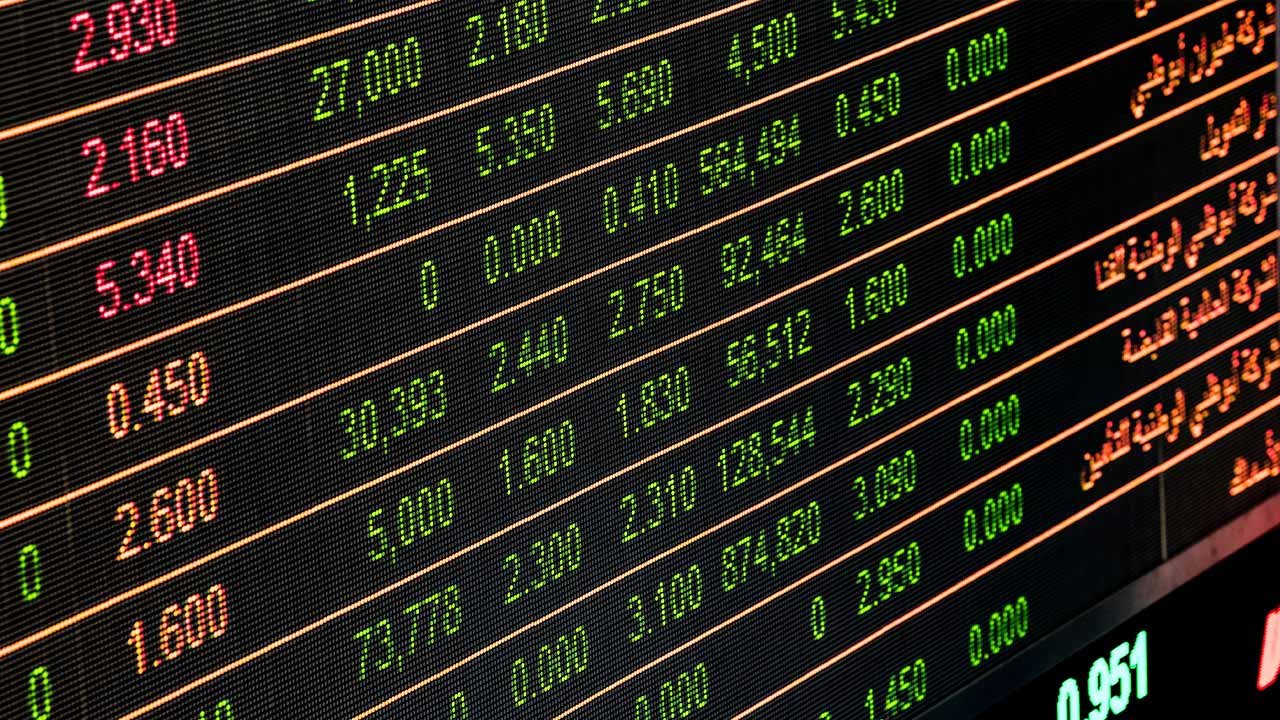
    The domestic equities market gained 670.87 points, or 1.62 per cent, to close at 42,096.24 points as a result of this development.

    The Pakistani currency’s ongoing rebound, which continued for the sixth day in a row against the US dollar, provided additional support for the market.

    Despite initial selling pressure on the market and a period of time in which the KSE-100 index traded flat, investor interest picked up toward the end of the first session, and the market closed roughly 300 points higher.

    The rise gained momentum in the second session, which enabled the index to pass the 42,000-point threshold and conclude with significant gains.

    The day ended strongly for index heavyweights in the banking, fertiliser, cement, chemical, automobile, and cement industries. On a weekly basis, the benchmark KSE-100 increased by 4.85 per cent. Capital Stake said that the PSX had strong sentiment for the fourth straight session.

    According to Topline Securities’ analysis, Pakistan’s stocks saw good momentum as a result of softening global energy prices for coal and oil, which experienced some correction.

    The decline enabled the market maintain its purchasing mood from Thursday and helped the KSE-100 index conclude the day at 42,096 points.

  • Bitcoin falls to lowest since January after stock market

    Bitcoin falls to lowest since January after stock market

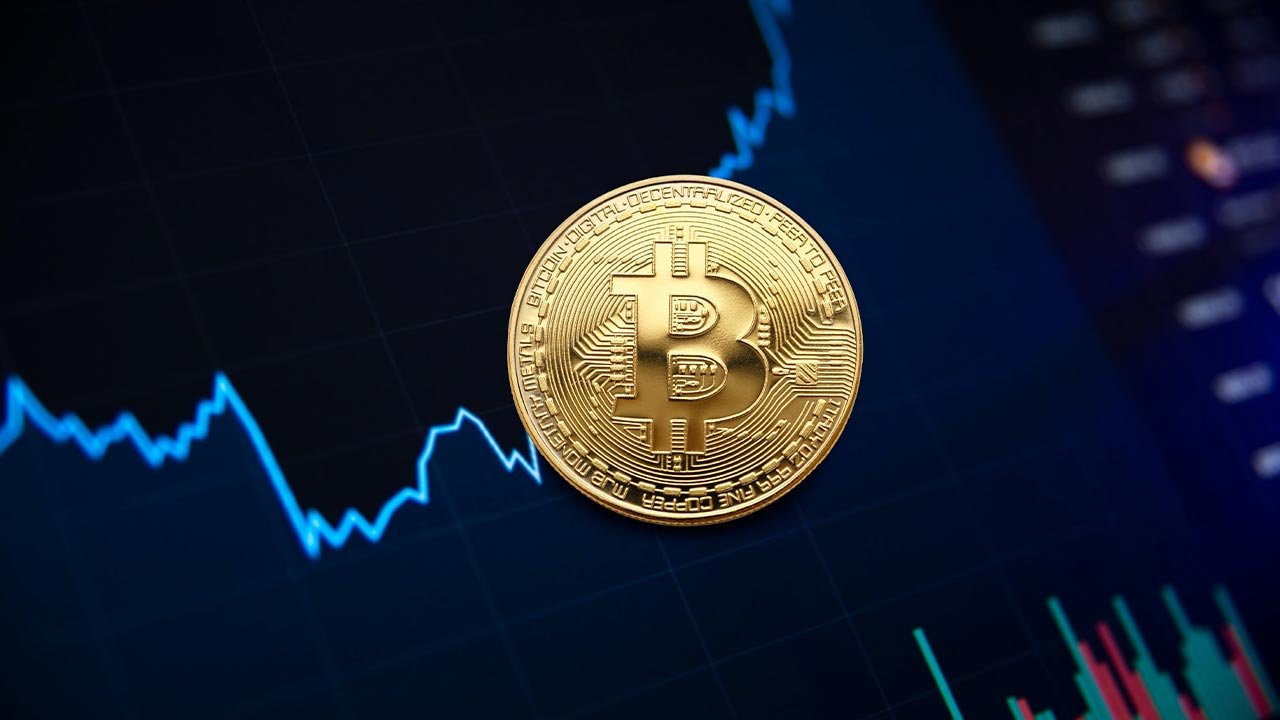
    Bitcoin on Monday, May 9 fell to its lowest level since January 2022, as falling equity markets weighed on cryptocurrencies, which are now trading in line with riskier assets like tech stocks.

    In early trade, bitcoin fell as low as $33,266 to test the January low of $32,951. If it drops below that level, it will be at its lowest since July of 2021. The price then settled at roughly $33,500, down 1.4 per cent.

    A Singapore-based crypto platform, Stack Funds said that everything in crypto is still classified as a risk asset, and most cryptocurrencies are pummelling in the same way that the Nasdaq has been.

    The Nasdaq, which is heavily weighted in technology, plummeted 1.5 per cent last week and is down 22 per cent year to date, as persistent inflation forces the US Federal Reserve to raise rates despite slowing GDP.

    On Monday morning Nasdaq futures were down another 0.8 per cent.

    Other factors in bitcoin’s weekend slide were the crypto market’s notoriously low liquidity on weekends, as well as short-lived fears that an algorithmic stablecoin dubbed Terra (UST) could lose its stability against the US dollar.

    Read more: Pakistan’s foreign currency reserves down by $328 million

    The crypto world is keeping a close eye on UST because of its unique method of maintaining a 1:1 dollar peg, as well as its founders’ aspirations to construct a $10 billion bitcoin reserve to support the stablecoin, implying that UST volatility might potentially leak over into the bitcoin markets.

    On Monday, Ethereum, the world’s second-largest cryptocurrency, plummeted to $2,421, its lowest level since late February.

  • Musk, Twitter sued by Florida pension fund to prevent acquisition

    Musk, Twitter sued by Florida pension fund to prevent acquisition

    Elon Musk and Twitter are back in the spotlight after a Florida pension fund filed a lawsuit on Friday to restrict the Tesla CEO’s $44 billion takeover of the microblogging site.

    The Orlando Police Pension Fund filed a complaint in Delaware Chancery Court, claiming that under Delaware law, Musk cannot entirely take over the company until at least 2025 unless two-thirds of the company’s shares are owned by Musk.

    Musk became an “interesting investor” when he acquired over 9 per cent of the Twitter share, according to the complaint, forcing the delay.

    According to CNN, the whole Twitter board of directors is a defendant in the case, including CEO Parag Agrawal. The current application aims to push the merger’s completion date back to at least 2025.

    The US Federal Trade Commission (FTC) is investigating SpaceX’s creator for antitrust violations, which might postpone the deal’s completion.

    Musk’s initial purchase of the 9 per cent interest is being investigated by the FTC, which is questioning whether he fulfilled an antitrust filing obligation when the stocks were first purchased in April.

    Read more: Elon Musk plans to fire Twitter employees to save money

    The Republican Party strongly supports the Twitter agreement, hoping that conservatives banned from the site, such as former President Donald J Trump, will be allowed to return. Neither Twitter nor Musk has responded to the recent news.

  • ‘Get your money out from under the mattress,’ KTrade to be the next big thing in business

    ‘Get your money out from under the mattress,’ KTrade to be the next big thing in business

    Could Pakistan be the latest world stock market to see a blow-up of interest from retail investors? Ali Farid, the cofounder of KTrade , thinks that KTrade is the next big thing.

    As reported in Forbes, the brokerage firm will be announcing a $4.5m funding round that Farid believes will position KTrade perfectly as a new generation of Pakistanis embracing the stock market. “It is time for people to get their money out from under their mattresses and get a better return from more formal types of savings,” Farid insists.

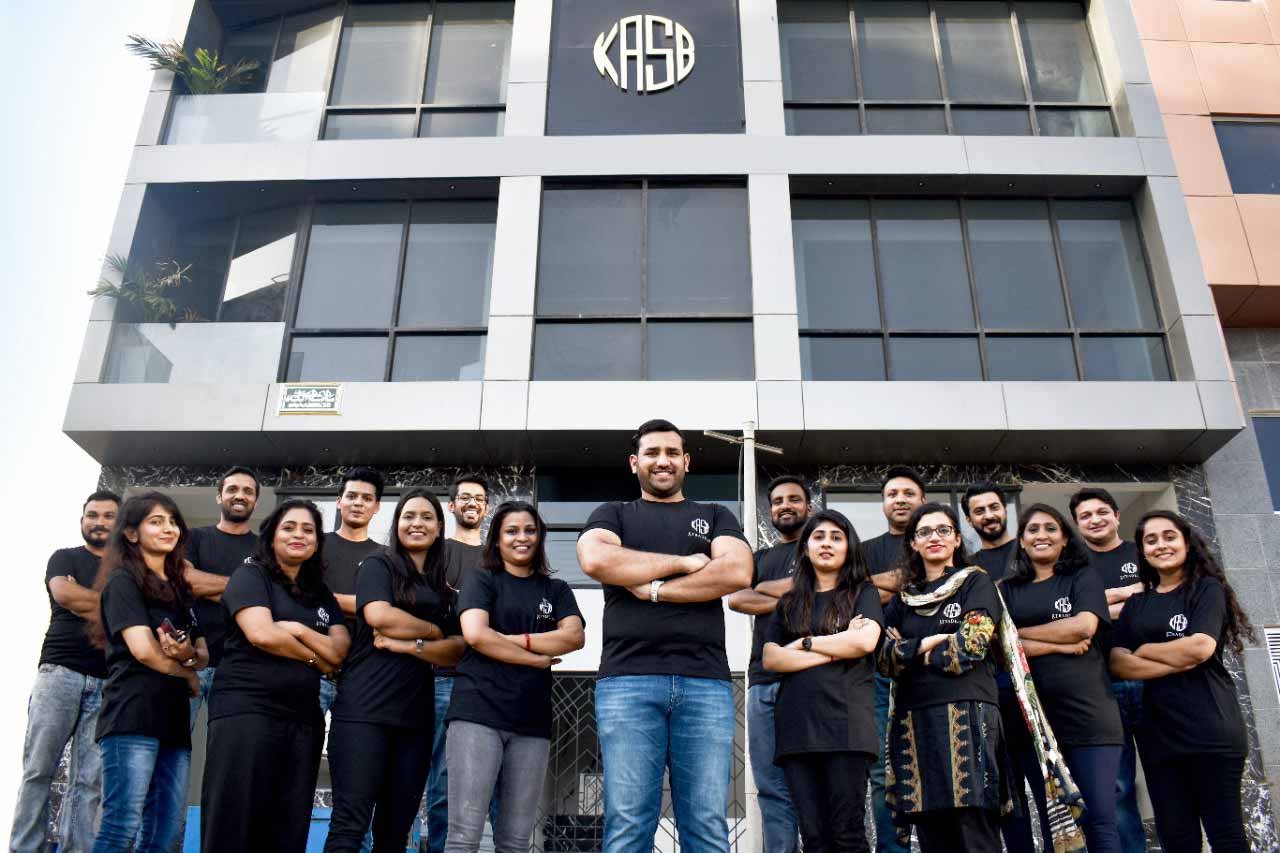
    KTrade is the fintech retail trading app created by Khalid Ali Shah Bukhari (KASB) securities, the leading stock brokerage in Pakistan. KTrade provides easy access to financial markets for retail investors much like its global peers such as XP in Brazil, Zerodha and Groww in India, Tiger in China, Flatex in Germany, and Robinhood in the US.

    Ali Farid led the creation of KTrade. He was previously the CFO of UK listed fintech company SafeCharge (acquired by Nuvei) and a Partner at Autonomous Research (acquired by Alliance Bernstein) in London. Ali is a Rhodes Scholar and has been a top ranked Technology Analyst in Europe since 2013. 

    Ali Farid, the cofounder of KTrade

     “KTrade will enable this mobile-first population to participate in the investment opportunity. By connecting these people to companies we can drive capital trapped in unproductive assets into the formal economy which would eventually drive a virtuous cycle of economic growth and higher investments”, says Farid.

    KASB’s aim is to provide retail savers access to financial education, information and financial products and to help them make better decisions in the field of finance.

    “We aim to regularise access to the capital markets and enable them to make stock market investments. The strong demand for KTrade shows that the market is ready for this transformation. Other regional and emerging markets have seen similar evolution led by successful fintech companies” added Farid. 

  • Stocks hold gains to cross 45,000 points threshold for first time since May 2018

    The Pakistan Stock Exchange (PSX) gained over 500 points on Wednesday to cross the 45,000-point threshold for the first time since May 2018.

    Global equity markets also showed a positive trend. Profit reported that the buying activity was observed across the board. According to the newspaper, “Exploration & production and oil & gas marketing sectors rebounded strongly, whereas cement and fertilizer sectors continued with previous day’s positive momentum.”

    “International crude oil prices jumped significantly on the conclusion of agreement among OPEC+ countries, which became the basis for an uptick in E&P stocks. Cement sector leaped on the expectation of an increase in cement price in the northern region, while banking sector contributed positively in anticipation of annual results.”

    Express Tribune reported that the trading volumes lifted to 664.5million shares due to strong investors’ interest. The market outlook also remained positive due to the government’s decision to settling circular debt with the independent power producers (IPPs), though partially.

    Moreover, the petroleum product sales that rose in double digits also helped the bullish trend. “Oil sales were up 16% to 1.59 million tons in December 2020 compared to 1.37 million tons in the same month of 2019,” the report said.

    It further stated that the State Bank of Pakistan’s report on the Pakistani economy also played a role in rallying the stock market. According to the central bank, the economic activity in the country has been largely restored to pre-coronavirus levels in the first quarter of the current financial year.

  • Bajwa’s resignation amid political uncertainty affects stock market

    Bajwa’s resignation amid political uncertainty affects stock market

    Pakistan’s stocks reversed gains on Monday as Prime Minister (PM) Imran Khan’s Special Assistant on Information (SAPM) Lt Gen (r) Asim Saleem Bajwa resigned ahead of protests planned by opposition parties, raising concerns of increased political uncertainty, foreign media reported.

    “Imran Khan approved my request to relinquish the additional post,” Asim Bajwa tweeted Monday.

    The resignation of Imran’s key spokesperson comes amid increasing challenges to his about two-year-old government as he struggles to contain inflation and revive the country’s economy. Meanwhile, an alliance of 11 opposition parties is planning on holding its first protest rally this week, which is the start of a series of such meetings aimed at ousting Imran Khan.

    The benchmark KSE-100 index closed down 1.4%, reversing earlier gains of as much as 0.6%. The stocks have advanced 48% since touching this year’s low on March 25. “The investors are being cautious and booking profits after recent events including Bajwa’s resignation and the opposition’s planned protest add to the uncertainty,” said Qasim Shah, head of international sales at JS Global Capital Ltd in Karachi.

    The premier had turned down Bajwa’s earlier request to resign.

  • Saudi Arabia’s energy company ‘Aramco’ worth’s $1.7 trillion after a historic IPO

    Saudi Arabia’s energy company ‘Aramco’ worth’s $1.7 trillion after a historic IPO

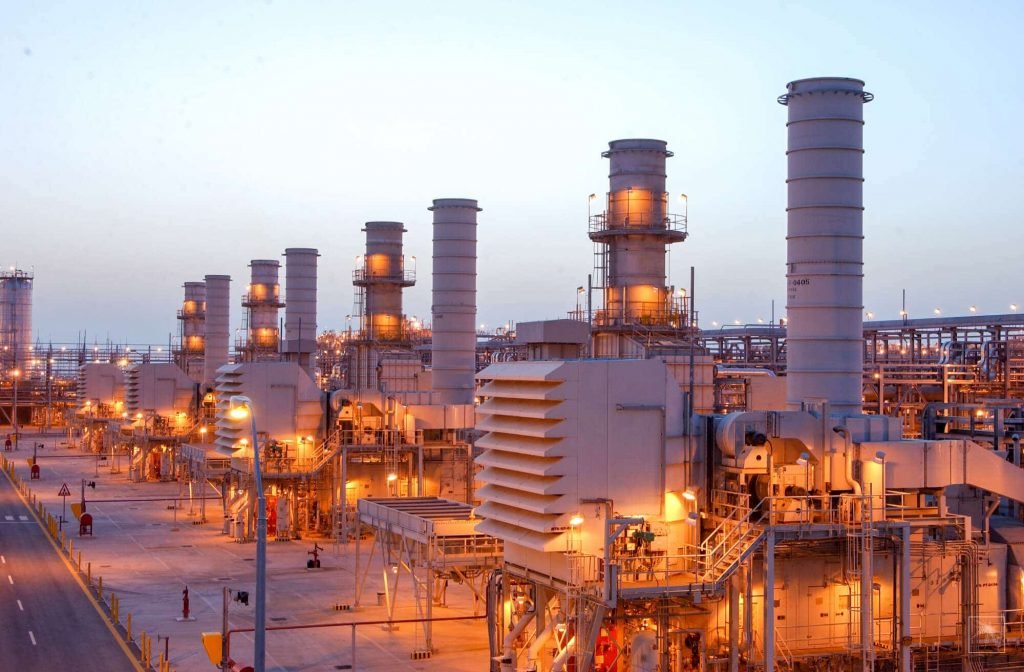
    Saudi Arabia has recently turned Aramco (Arabian-American Oil Company) in publicly owned enterprise. By making it a public entity – that investors can buy and sell shares in the stock market.

    Shaybah

    In the Initial Public Offering (IPO) phase, the worth of the company has plunged to $1.88 trillion that break all the records of the recent decades.

    The offering price of Armaco shares were 32 Riyals ($8.53) and people bought the shares of $25.6 billion – eclipsing Alibaba’s $25 billion IPO of 2014.

    Moreover, seconds after the debut on Riyadh’s Tadawul exchange, the price per stock rose to 35.2 riyals. This development further boosted the energy giant’s valuation.

    Haradh Gas Plant (Aramco)

    On the launch ceremony, the Chairman of Aramco Yasir Al-Rumayyan said “Today the kingdom of Saudi Arabia is no longer the only shareholder of the company. More than five million shareholders have joined including citizens and residents, in addition to Gulf countries and international investment institutions. The kingdom is immensely proud of this day.”

    It was the strategy of Crown Prince Mohammad Bin Salman to overhaul the oil-reliant economy.

    The IPO process had put the energy giant’s value at $1.7 trillion, far ahead of other firms in the trillion-dollar club, including Apple and Microsoft.

    The listing of Aramco, with its huge capital value, boosts the Saudi bourse — known as Tadawul — to the ranks of the world’s top ten.

  • Pakistan outperforms leading stock markets, including Germany, Russia

    Amid efforts by Prime Minister (PM) Imran Khan’s team to stabilise the country’s economy, Pakistan has outperformed some of the world’s leading stock markets, including those of Germany, Sweden, Russia and Ireland.

    According to Bloomberg, Pakistan’s stock market surged by 30% (almost 10,000 points) during the past three months, outperforming the leading stock markets. Ireland’s stock market rose by 19%, followed by Russia’s RTS Index with a 16% increase, Sweden OMX Stockholm 30 with 14% and Germany’s DAX Index that increased by 13.9%, during the same period of time.

    Pakistan’s KSE-100 Index has advanced to the highest level in seven months, after falling to the lowest in almost five years in August, amid attempts by the government to stabilise the economy with a $6 billion loan from the International Monetary Fund (IMF) after a deficit blowout.

    At the same time, bond yields have begun to fall after peaking around 14% mid-year, making debt investments less attractive.

    Even over a week after the report, the stock market remains positive and continues its upward trend. On Tuesday, it touched over 40,000 points in the beginning trade hours. This came a day after the stock exchange gave the highest monthly return in over 6.5 years as the benchmark index rallied past 40,120 points.

    The upward trends in the market, coupled with Moody’s — financial services company — upgrading credit rating of Pakistan, have boosted the confidence of investors. The collective response and profits for traders and investors are making the local market lucrative for prospect interests within and without the country.

    This has materialised also in figures of net-buyers. More people are currently buying shares compared to those selling them.

    According to Samaa, Moody’s expects the current account deficit of Pakistan to continue narrowing in the current and next fiscal year, averaging around 2.2% of the GDP. It was more than 6% in the fiscal year 2018 and around 5% in the fiscal year 2019.

    The stock market had investors pulling out their funds since it plummeted to below 29,000 points in August, owing to the political instability causing negative sentiment and pushing stocks to the verge of a crash. Contrary to the erstwhile beliefs and speculations, the market hit on Monday its highest benchmark index in over 6 months, while the ROI were recorded to be the most since May 2013.