Tag: strike

  • Vegetable, fruit prices soar by 150 per cent amid strikes, sit-ins

    Vegetable, fruit prices soar by 150 per cent amid strikes, sit-ins

    The prices of vegetables and fruits have increased by 150 per cent as strikes by trade organisations and sit-ins by political parties in the country take hold.

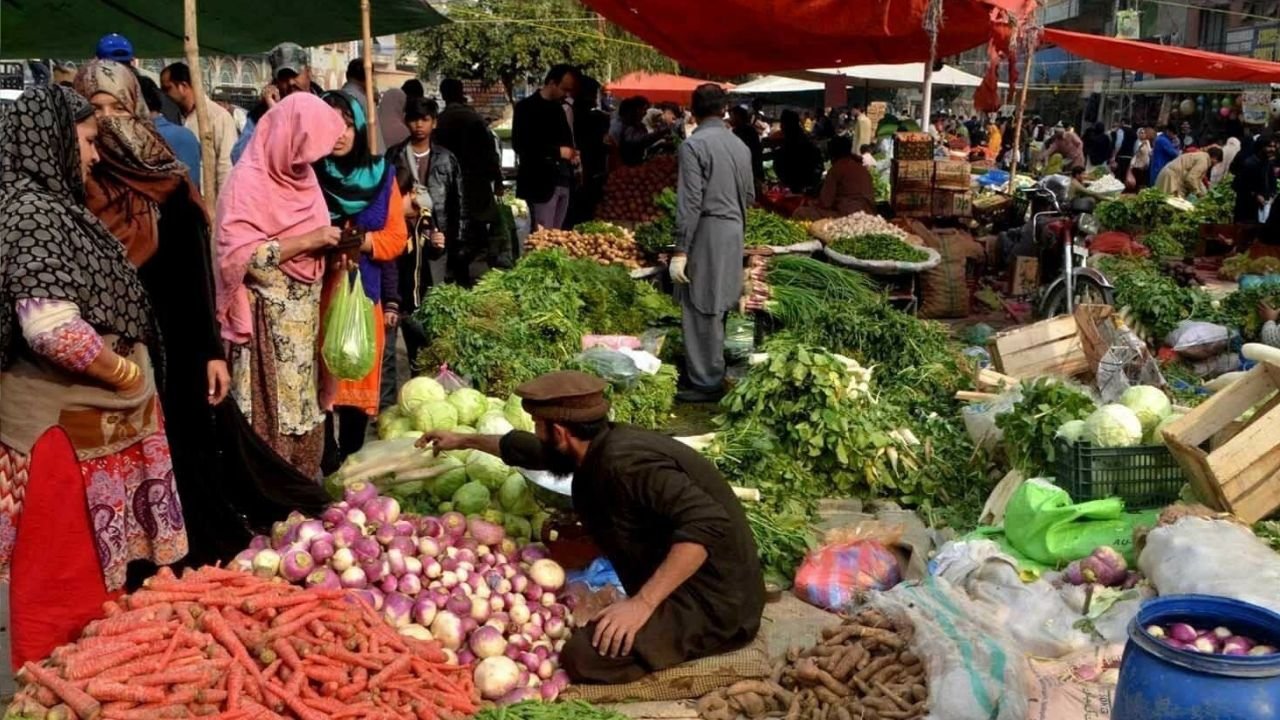
    Roads in Balochistan have been closed since the past four days to impede the Baloch Yakjehti Council from holding a large gathering in Gwadar, hindering goods-carrying vehicles. Consequentially, the prices of vegetables and fruits in Quetta has risen by 100 to 150 rupees per kilogram.

    Okra, previously retailing for Rs 150 per kilogram, has risen to Rs 400, tomatoes have increased from Rs 80 per kilogram to Rs 140, pumpkin has risen from Rs 120 to Rs 200 per kilogram, while peaches have increased from Rs 100 to Rs 250 per kilogram, and apples have also seen a price increase of Rs 100 per kilogram.

    On the other hand, despite the end of the transporters’ strike across Punjab, traders have been exploiting the situation, driving up food prices even further. Shopkeepers, however, are now reportedly selling spices at more reasonable rates.

    According to citizens, rice and pulse prices have increased by 20 per cent in the market due to the strike. They are calling on the government to reduce food prices.

  • Petrol pumps going on nationwide strike from July 5

    Petrol pumps going on nationwide strike from July 5

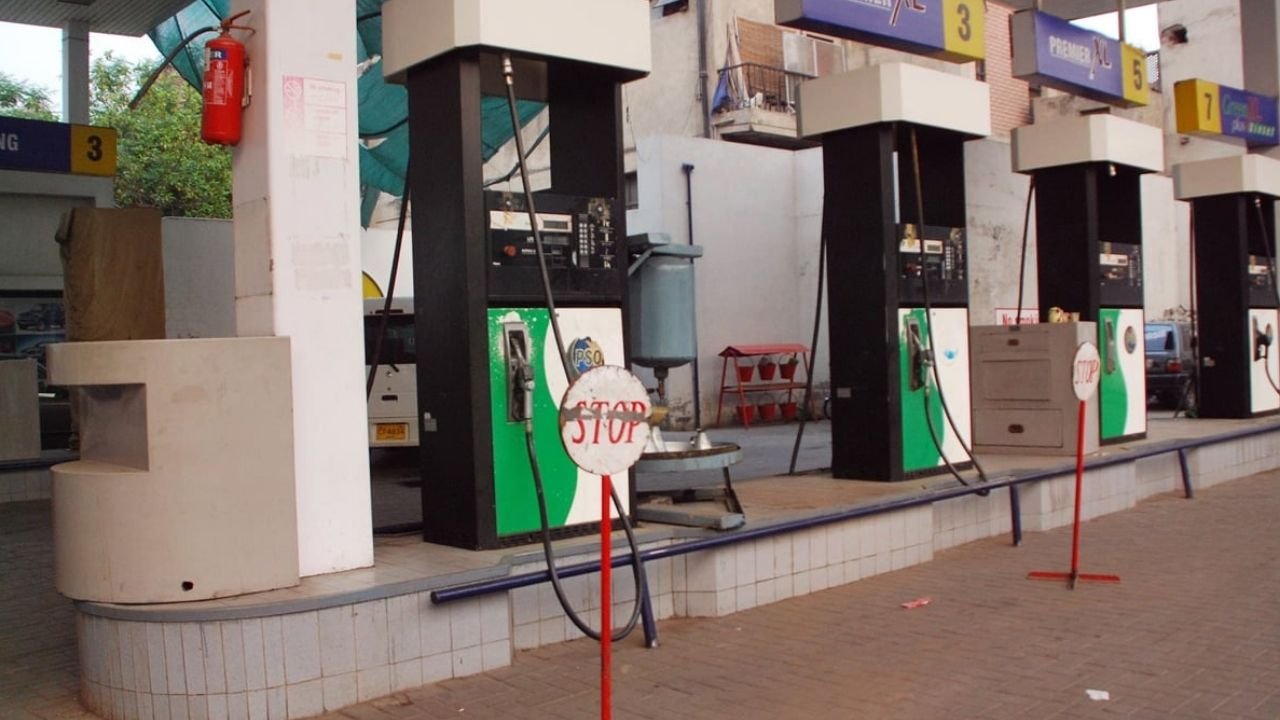
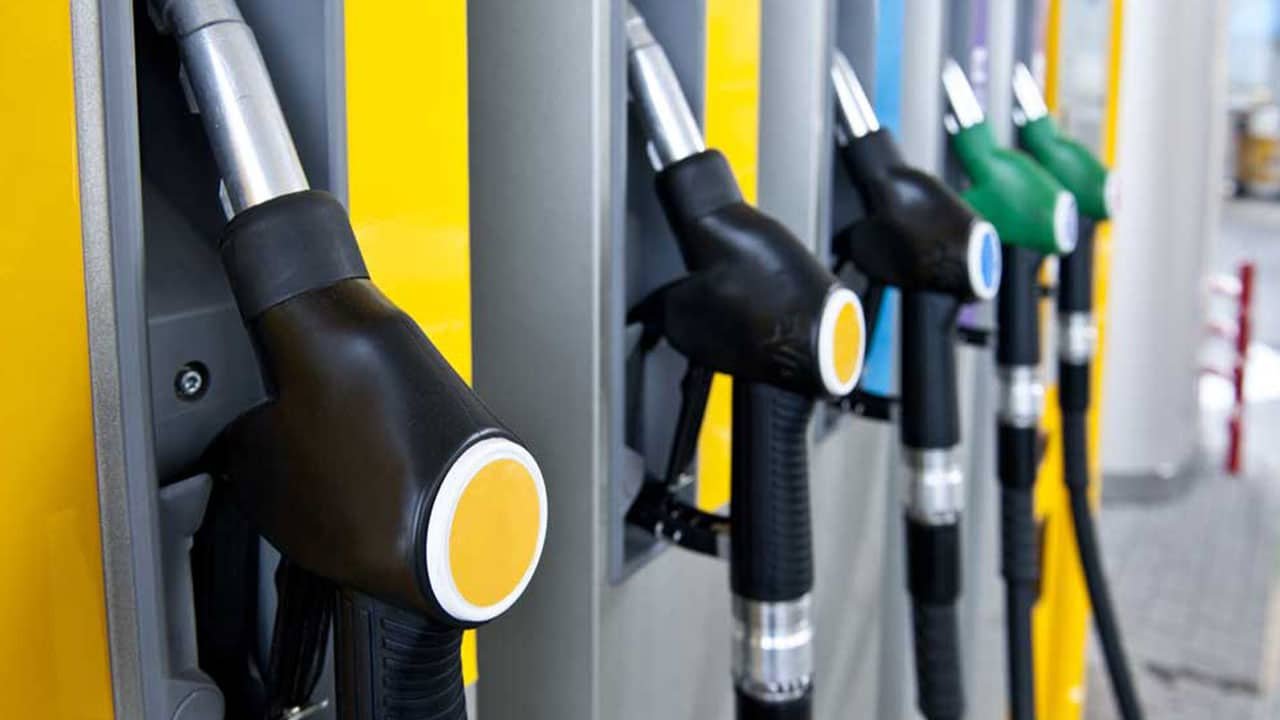
    The Pakistan Petroleum Dealers Association has decided to close petrol pumps across the country starting from 6 am on Friday, July 5.

    The strike was announced after negotiations between the Association and the government fell apart.

    A delegation from the Pakistan Petroleum Dealers Association held meetings with the Finance Minister, Chairman of FBR, and Chairman of OGRA.

    Abdul Sami Khan, President of the Petroleum Dealers Association, stated that the strike may last for more than one day, according to an Aaj News report.

    People have been advised to keep petrol tanks filled until July 4, as pumps across the country will begin to run dry tomorrow night.

    He also mentioned that negotiations will not resume until the government reverses its decision. Fourteen thousand dealers across the country will shut down their pumps starting July 5.

    On the other hand, the Pakistan Oil Tankers Association has declared that it will not be part of the strike.

    Shams Shahwani, Chairman of the Oil Tankers Association, stated that petrol and diesel supplies will continue uninterrupted throughout the country. He believes that given the current circumstances, stopping the supply is not an option, and he wants to prevent inconvenience to customers.

  • NGO World Central Kitchen says seven of its workers killed in Israeli strike in Gaza

    NGO World Central Kitchen says seven of its workers killed in Israeli strike in Gaza

    An Israeli strike killed several people working for US-based charity World Central Kitchen in the Gaza Strip on Monday, according to the organization’s founder.

    World Central Kitchen “lost several of our sisters and brothers in an IDF air strike in Gaza. I am heartbroken and grieving for their families and friends and our whole WCK family,” chef Jose Andres posted on social media site X.

    Earlier, the Gaza health ministry had said the bodies of four foreign aid workers and their Palestinian driver were brought to the hospital in the central town of Deir el-Balah after an Israeli strike targeted their vehicle.

    Hamas said in a statement that the aid workers included “British, Australian and Polish nationalities, with the fourth nationality not known”, and that the fifth person killed was a Palestinian driver and translator.

    US National Security Council spokesperson Adrienne Watson said the White House was “heartbroken and deeply troubled by the strike.”

    “Humanitarian aid workers must be protected as they deliver aid that is desperately needed, and we urge Israel to swiftly investigate what happened,” she wrote on X.

    The Israeli military said in a statement that it was “conducting a thorough review at the highest levels to understand the circumstances of this tragic incident”, adding that it had been “working closely with WCK” in the effort to provide aid to Palestinians.

    At the Al-Aqsa Hospital in Deir el-Balah, an AFP correspondent saw five bodies with three foreign passports lying nearby.

    Australian Prime Minister Anthony Albanese on Tuesday confirmed one of the killed aid workers was Australian national Zomi Frankcom.

    “This is completely unacceptable. Australia expects full accountability for the deaths of aid workers,” Albanese said

    World Central Kitchen has been involved in delivering the aid arriving by boat from Cyprus, and in the construction of a temporary jetty in Gaza.

    Gaza has been under a near-complete blockade since October 7, with the United Nations accusing Israel of preventing deliveries of humanitarian assistance urgently needed by all 2.4 million Palestinians.

    UN agencies have warned repeatedly that northern Gaza is on the verge of famine, calling the situation a man-made crisis because aid lorries are backed up on the Egypt-Gaza border awaiting long checks by Israeli officials. Israel has denied responsibility.

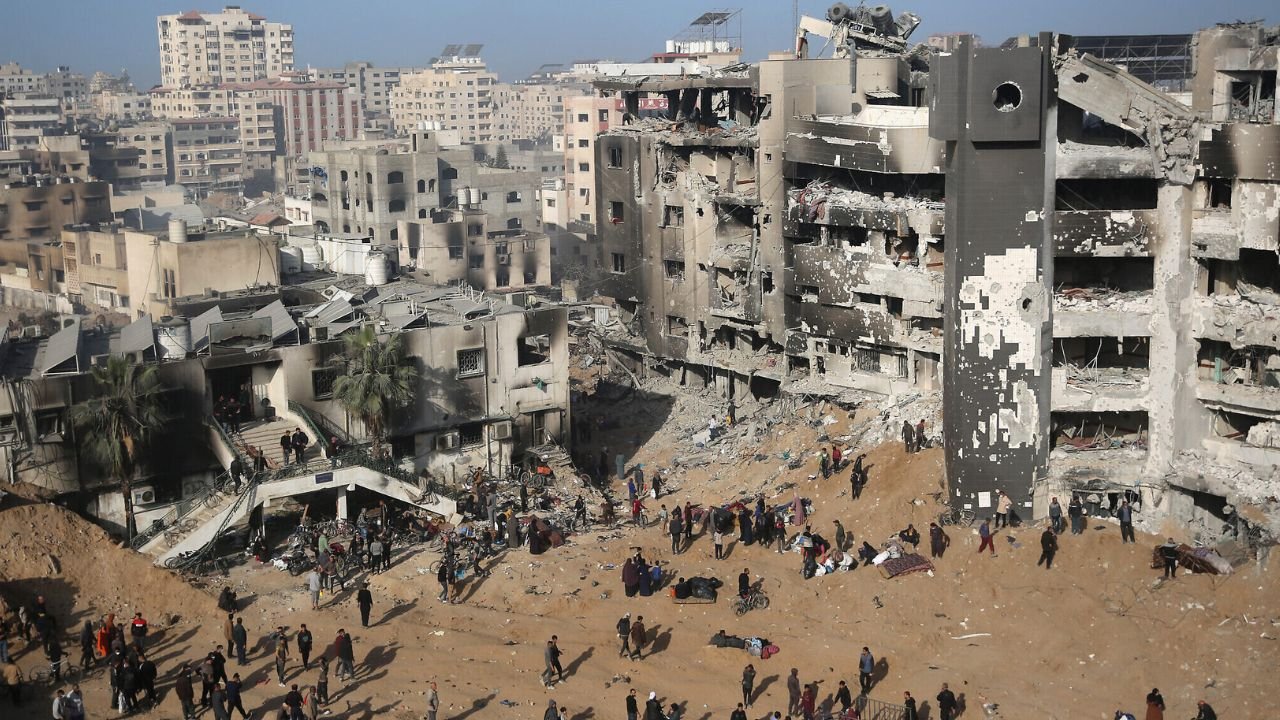
    Israeli genocide in Gaza has killed at least 32,845 people, mostly women and children, according to the health ministry in Gaza.

  • S. Korea starts procedures to suspend licences of 4,900 striking doctors

    S. Korea starts procedures to suspend licences of 4,900 striking doctors

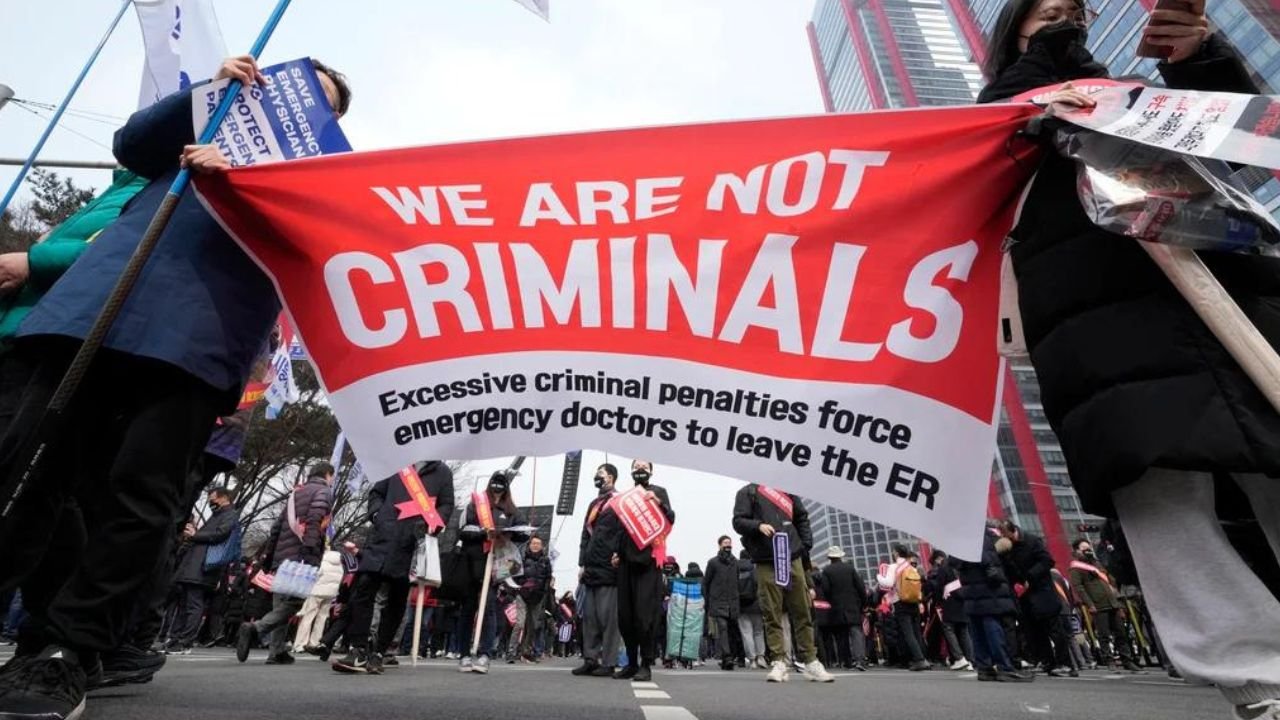
    South Korea said Monday it had started procedures to suspend the medical licenses of 4,900 junior doctors who have resigned and stopped working to protest government medical training reforms, causing health care chaos.

    The walkout, which started February 20, is over government plans to sharply increase the number of doctors, which it says is essential to combat shortages and South Korea’s rapidly aging population, while the medics argue it will erode service quality.

    Nearly 12,000 junior doctors — 93 percent of the trainee workforce — were not in their hospitals at the last count, despite government back to work orders and threats of legal action, forcing Seoul to mobilize military medics and millions of dollars in state reserves to help.

    The Health Ministry on Monday said it had sent administrative notifications — the first step to suspending the doctors’ medical licenses — to thousands of trainee doctors after they defied specific orders telling them to return to their hospitals.

    “As of March 8 (notifications) have been sent to more than 4,900 trainee doctors,” Chun Byung-wang, director of the health and medical policy division at the health ministry, told reporters.

    The government has previously warned striking doctors they face a three month suspension of their licenses, a punishment which, it says, will delay by at least a year their ability to qualify as specialists.

    Chun urged the striking medics to return to their patients.

    “The government will take into account the circumstance and protect trainee doctors if they return to work before the administrative measure is complete,” he said, indicating doctors who come back to work now could avoid the punishment.

    “The government will not give up dialogue. The door for dialogue is always open … The government will respect and listen to opinions of the medical community as a companion for the medical reforms,” he added.

    The government last week announced new measures to improve pay and conditions for trainee medics, plus a review of the continuous 36-hour work period, which is a major gripe of junior doctors.

    The strikes have led to surgery cancelations, long wait times and delayed treatments at major hospitals.

    Seoul has mobilized military doctors and earmarked millions of dollars of state reserves to ease service shortfalls, but has denied that there is a full-blown health care crisis.

    Military doctors will start working in civilian hospitals from Wednesday this week, Chun said.

    Under South Korean law, doctors are restricted from striking, and the health ministry has asked police to investigate people connected to the work stoppage.

    The government is pushing to admit 2,000 more students to medical schools annually from next year to address what it calls one of the lowest doctor-to-population ratios among developed nations.

    Doctors say they fear the reform will erode the quality of service and medical education, but proponents accuse medics of trying to safeguard their salaries and social status.

  • December 11: Global strike for Palestine

    December 11: Global strike for Palestine

    Palestinian activists and organisations across the world have called for a global strike on Monday, December 11, to demand immediate ceasefire of the Israeli attacks on Gaza that have intensified with time.

    Palestinian coalition, National and Islamic Forces, called for a strike and people across the world, to strike “all aspects of public life” in support of Gaza.

    “We expect the entire globe to join the strike, which comes in the context of a broad international movement involving influential figures. This movement stands against the open genocide in Gaza, the ethnic cleansing and the colonial settlement in the West Bank,” the statement released by the coalition read.

    “The strike also opposes attempts to undermine the just national cause of the Palestinian people,” it said.

    People around the world have been called to unanimously express their solidarity with Palestinians who are currently suffering the consequences of Israeli atrocities being committed in Gaza. So far, more than 18,000 people have been killed and more than 49,000 people have been wounded.

  • Rise of the machines: AI spells danger for Hollywood stunt workers

    Rise of the machines: AI spells danger for Hollywood stunt workers

    By Andrew MARSZAL

    Hollywood’s striking actors fear that artificial intelligence is coming for their jobs — but for many stunt performers, that dystopian danger is already a reality.

    From “Game of Thrones” to the latest Marvel superhero movies, cost-slashing studios have long used computer-generated background figures to reduce the number of actors needed for battle scenes.

    Now, the rise of AI means cheaper and more powerful techniques are being explored to create highly elaborate action sequences such as car chases and shootouts — without those pesky (and expensive) humans.

    Stunt work, a time-honored Hollywood tradition that has spanned from silent epics through to Tom Cruise’s latest “Mission Impossible,” is at risk of rapidly shrinking.

    “The technology is exponentially getting faster and better,” said Freddy Bouciegues, stunt coordinator for movies like “Free Guy” and “Terminator: Dark Fate.”

    “It’s really a scary time right now.”

    Studios are already requiring stunt and background performers to take part in high-tech 3D “body scans” on set, often without explaining how or when the images will be used.

    Advancements in AI mean these likenesses could be used to create detailed, eerily realistic “digital replicas,” which can perform any action or speak any dialogue its creators wish.

    Bouciegues fears producers could use these virtual avatars to replace “nondescript” stunt performers — such as those playing pedestrians leaping out of the way of a car chase.

    “There could be a world where they said, ‘No, we don’t want to bring these 10 guys in… we’ll just add them in later via effects and AI. Now those guys are out of the job.”

    But according to director Neill Blomkamp, whose new film “Gran Turismo” hits theaters August 25, even that scenario only scratches the surface.

    The role AI will soon play in generating images from scratch is “hard to compute,” he told AFP.

    “Gran Turismo” primarily uses stunt performers driving real cars on actual racetracks, with some computer-generated effects added on top for one particularly complex and dangerous scene.

    But Blomkamp predicts that, in as soon as six or 12 months, AI will reach a point where it can generate photo-realistic footage like high-speed crashes based on a director’s instructions alone.

    At that point, “you take all of your CG (computer graphics) and VFX (visual effects) computers and throw them out the window, and you get rid of stunts, and you get rid of cameras, and you don’t go to the racetrack,” he told AFP.

    “It’s that different.”

    – The human element –

    The lack of guarantees over the future use of AI is one of the major factors at stake in the ongoing strike by the Screen Actors Guild (SAG-AFTRA) and Hollywood’s writers, who have been on the picket lines 100 days.

    SAG-AFTRA last month warned that studios intend to create realistic digital replicas of performers, to use “for the rest of eternity, in any project they want” — all for the payment of one day’s work.

    The studios dispute this, and say they have offered rules including informed consent and compensation.

    But as well as the potential implications for thousands of lost jobs, Bouciegues warns that no matter how good the technology has become, “the audience can still tell” when the wool is being pulled over their eyes by computer-generated VFX.

    Even if AI can perfectly replicate a battle, explosion or crash, it cannot supplant the human element that is vital to any successful action film, he said, pointing to Cruise’s recent “Top Gun” and “Mission Impossible” sequels.

    “He uses real stunt people, and he does real stunts, and you can see it on the screen. For me, I feel like it subconsciously affects the viewer,” said Bouciegues.

    Current AI technology still gives “slightly unpredictable results,” agreed Blomkamp, who began his career in VFX, and directed Oscar-nominated “District 9.”

    “But it’s coming… It’s going to fundamentally change society, let alone Hollywood. The world is going to be different.”

    For stunt workers like Bouciegues, the best outcome now is to blend the use of human performers with VFX and AI to pull off sequences that would be too dangerous with old-fashioned techniques alone.

    “I don’t think this job will ever just cease to be,” said Bouciegues, of stunt work. “It just definitely is going to get smaller and more precise.”

    But even that is a sobering reality for stunt performers who are currently standing on picket lines outside Hollywood studios.

    “Every stunt guy is the alpha male type, and everybody wants to say, ‘Oh, we’re good,’” said Bouciegues.

    “But I personally have spoken to a lot of people that are freaked out and nervous.”
  • Petroleum dealers’ strike averted: Govt approves Rs1.64 per litre profit margin increase

    Petroleum dealers’ strike averted: Govt approves Rs1.64 per litre profit margin increase

    The government has successfully reached an agreement with the Pakistan Petroleum Dealers Association (PPDA) to avert the strike they had threatened last week. After extensive negotiations, the government agreed to increase the profit margin on petroleum products for dealers by Rs1.64 per litre.

    Chairman of the PPDA, Abdul Sami Khan, made the announcement regarding the deal. Initially, the government had proposed a lower increase of Rs1.64 per litre, but the dealers, who had originally sought a higher increase of Rs5 per litre, resisted, deeming it insufficient to cover their rising business costs. Eventually, they accepted the government’s offer.

    The new profit margin for dealers will be implemented in four phases. Every fortnight, it will be raised by Rs0.41 per litre, culminating in a full raise of Rs1.6 per litre within two months. This will bring the dealers’ margin to Rs7.6 per litre, up from the current Rs6 per litre.

    The decision to strike was initially announced by the PPDA in response to the ongoing inflation crisis. The association stated that increasing interest rates and inflation had severely impacted their businesses and demanded a raise in the dealership margin to cope with the challenges they were facing. They also pointed out a decline in sales by 30%, partly due to the smuggling of Iranian fuel into the country.

    Read more: Petroleum dealers and Minister set to meet today to resolve profit margin dispute

    However, the strike was deferred for two days after the PPDA members engaged in discussions with the State Minister for Petroleum, Musadik Malik. The minister’s visit to Karachi was aimed at convincing the PPDA to call off the nationwide strike.

    In summary, following negotiations with the government, the Pakistan Petroleum Dealers Association has agreed to suspend their planned strike, and the government will increase their profit margin on petroleum products in a phased manner over the next two months.

  • All projects put on hold as Hollywood actors go on strike

    All projects put on hold as Hollywood actors go on strike

    In an unprecedent move, 160,000 Hollywood actors represented by the Screen Actors Guild (SAG) joined writers in strike against Hollywood after negotiations between the union and major studio networks failed.

    Much of Hollywood had shut down in May after writers went on strike, protesting against low pay as studios shifted to streaming, and the incorporation of A.I into writing scripts.

    The demands made by the actors union include fairer working conditions, and protection of actors against digital replicas like A.I and computer generated faces and voices will not be used to replace actors. Another demand was that actors should receive better pay base and residuals- which are payments made to actors in television and films they have starred in.

    During the negotiations, network studios had offered what they called a ‘ground-breaking proposal’ that actors would be asked for consent when their digital replicas would be used in films, while background actors would be scanned and give one day’s pay for their digital image to be used on screen without their consent, which SAG said was unnacceptable:

    “They propose that our background performers should be able to be scanned, get paid for one day’s pay, and their company should own that scan of their image, their likeness, and should be able to use it for the rest of eternity,” the SAG chief negotiator Duncan Crabtree-Ireland said. “If you think that’s a ground-breaking proposal, I suggest you think again.”

    The cast of Christopher Nolan’s ‘Oppenheimer’ walked off the red carpet at the London premiere on Thursday, including A-list actors like Cillian Murphy, Florence Pugh, Emily Blunt and Matt Damon, when the strikes were announced in the US.

    Addressing the strike during a red carpet interview, Damon defended fellow actors who were protesting for studios to provide better pay, sharing that royalty payments are a way for working actors to survive:

    “We got to protect the people who are kind of on the margins. 26,000 bucks a year is what you have to make to get your health insurance. And there are a lot of people (for) who residual payments carry them across that threshold. If those residual payments dry up, so does their healthcare, and that’s absolutely unacceptable.”

    Announcing the SAG-AFTRA strike, President of the union Fran Drescher, called this a sad decision, which will greatly impact both writers and actors.

    “We are the victims here. We are being victimized by a very greedy entity. You are systematically trying to figure out ways to carve us out of what is due us. Shame on you!”

  • Flour mill owners in Punjab threaten to suspend market supplies on February 14

    Flour mill owners in Punjab threaten to suspend market supplies on February 14

    The owners of flour mills have threatened to go on strike, halting supplies to the markets on February 14th, and are demanding that the Punjab food department immediately meet their demands.

    The Chairman of the Pakistan Flour Mills Association (PFMA) Punjab chapter, Chaudhry Iftikhar Ahmad Mattu, has issued a warning of a planned strike on February 14th if the provincial food department does not address their demands.

    During a press conference, the Chairman of PFMA Punjab Mattu criticised the inappropriate behavior and incorrect policies of the provincial food secretary.

    According to ARY News, the Chairman stated that the wrong policies of the food secretary have impacted the supply of flour, leading to the closure of multiple flour mills. He further announced that the flour mills will stop receiving wheat quota from the government starting from February 13th.

    In addition, Chaudhry Iftikhar Ahmad Mattu announced that the flour mills will cease supplies to the market on February 14th and proceed with a strike, unless their demands are promptly met by the Punjab food department. Meanwhile, the Karachi Dairy and Cattle Farmers Association declared its intention to raise milk prices by Rs20 per litre, effective from February 11th.

    In a statement from the Karachi Dairy and Cattle Farmers Association, the spokesperson attributed the price hike of milk to the increased cost of fuel and fodder. The official rate for milk has been set at Rs180 per litre, however, it is being sold for Rs190 in the city.

    With the increase, the price per litre of milk will rise to Rs210. The Commissioner of Karachi has recently ordered operations to seal dairy shops selling milk at elevated prices.

  • All petrol pumps will be closed, petroleum dealers announce strike on Nov 25

    The Pakistan Petroleum Dealers Association (PPDA) has announced a countrywide strike on November 25 for selling petrol “on low-profit margins”, reports The News.

    The association’s spokesperson said that all petrol pumps across the country, including Kashmir and Gilgit Baltistan, will remain closed on November 25 (Thursday).

    He said the strike could extend to an “unspecified period” if the government continues to ignore the association’s demands.

    According to him, “We have no other option but to go on strike as the government has failed to meet the November 17 deadline for the fulfilment of our demands.”

    Previously, the association had made a similar announcement for November 5 but withdrew after a team from the government agreed to increase margins on the sale of petroleum products by six per cent.

    However, there has been no progress ever since.

    PPDA Chairman Abdul Sami Khan said petroleum dealers have been in a difficult position due to the high cost of business and low margins. He said that the government guarantees a margin of only 2 per cent on sales of fuel oil in the face of rising electricity tariffs.

    “We demand the government to cancel our petrol pumps licences. Nearly 50 per cent of the petrol pumps will close down permanently with licence cancellation as no one will reapply for acquisition”.

    Earlier this month, the government had announced the rise of up to Rs 8.14 per litre of petroleum products.