Tag: Student protest in Bangladesh

  • Military in control of Bangladesh after Hasina flees

    Military in control of Bangladesh after Hasina flees

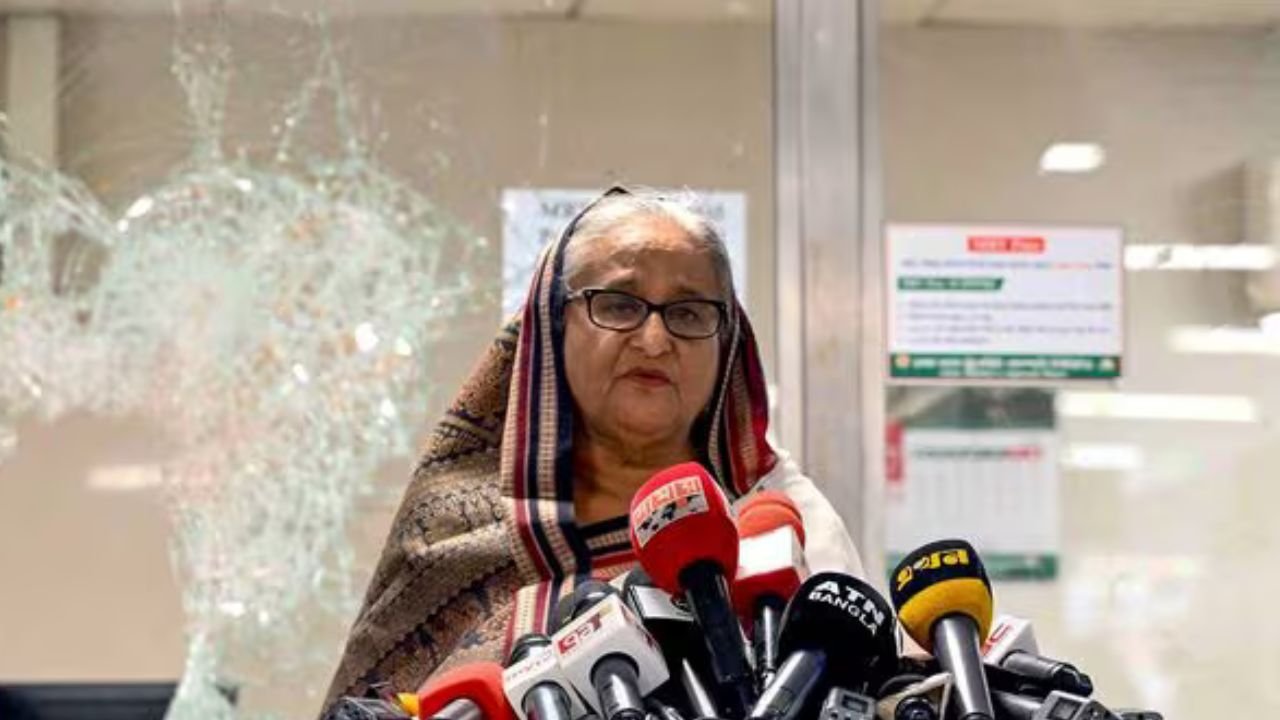
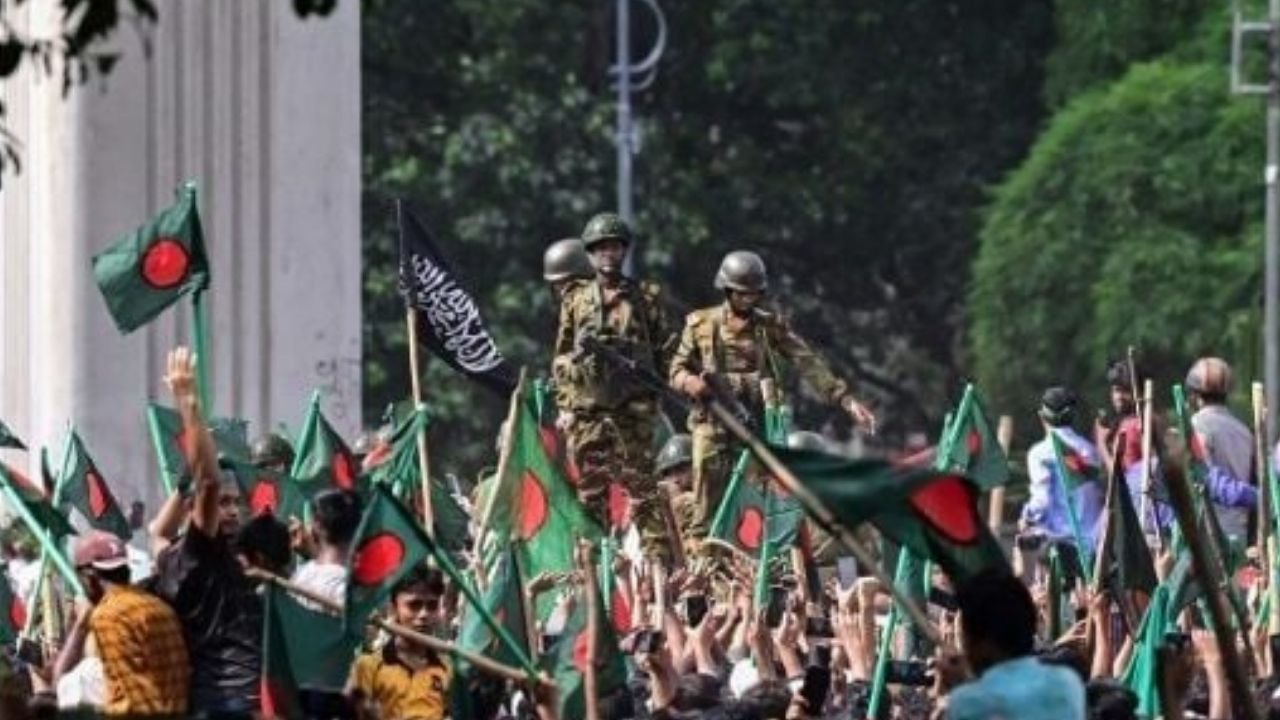
    Bangladesh’s military was in control of the country on Tuesday after mass protests forced longtime ruler Sheikh Hasina to resign and flee.

    Hasina, 76, had been in power since 2009 but was accused of rigging elections in January and then watched millions of people take to the streets over the past month demanding she step down.

    Hundreds of people died as security forces sought to quell the unrest, but the protests grew, and Hasina finally fled Bangladesh aboard a helicopter on Monday as the military turned against her.

    Army chief General Waker-Uz-Zaman announced Monday afternoon on state television that Hasina had resigned and the military would form a caretaker government.

    “The country has suffered a lot, the economy has been hit, many people have been killed — it is time to stop the violence,” said Waker, shortly after jubilant crowds stormed and looted Hasina’s official residence.
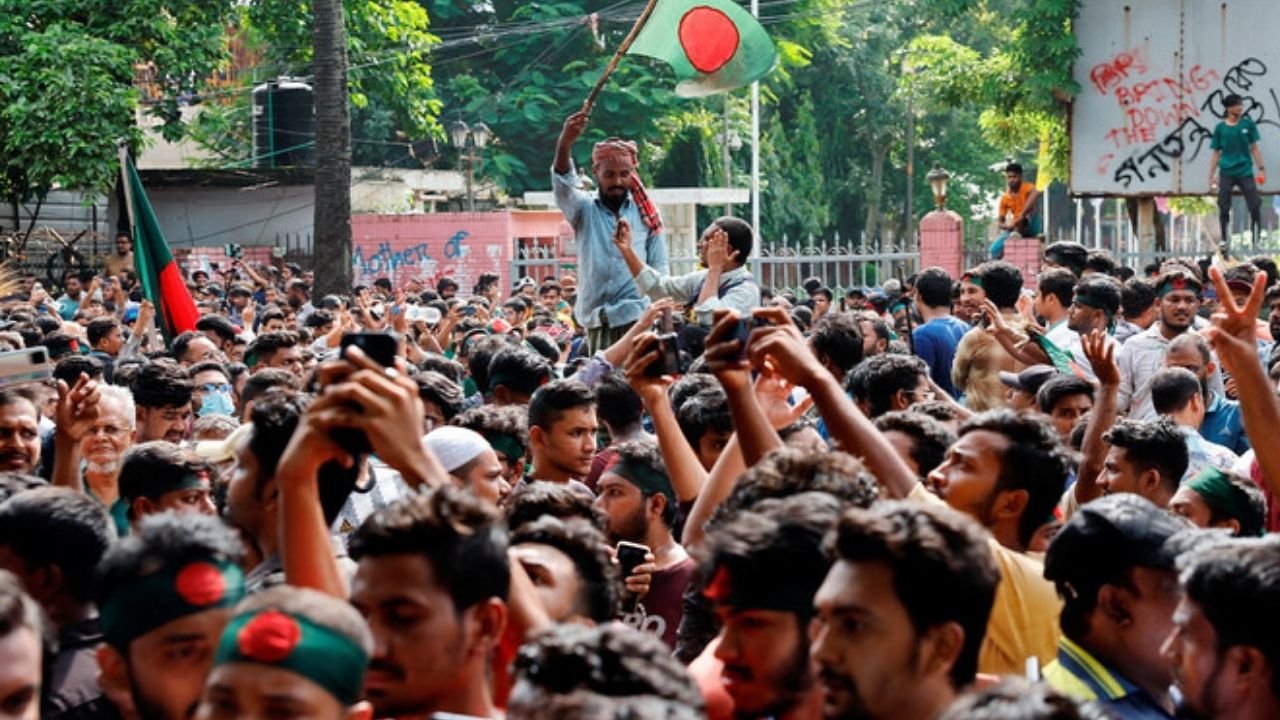
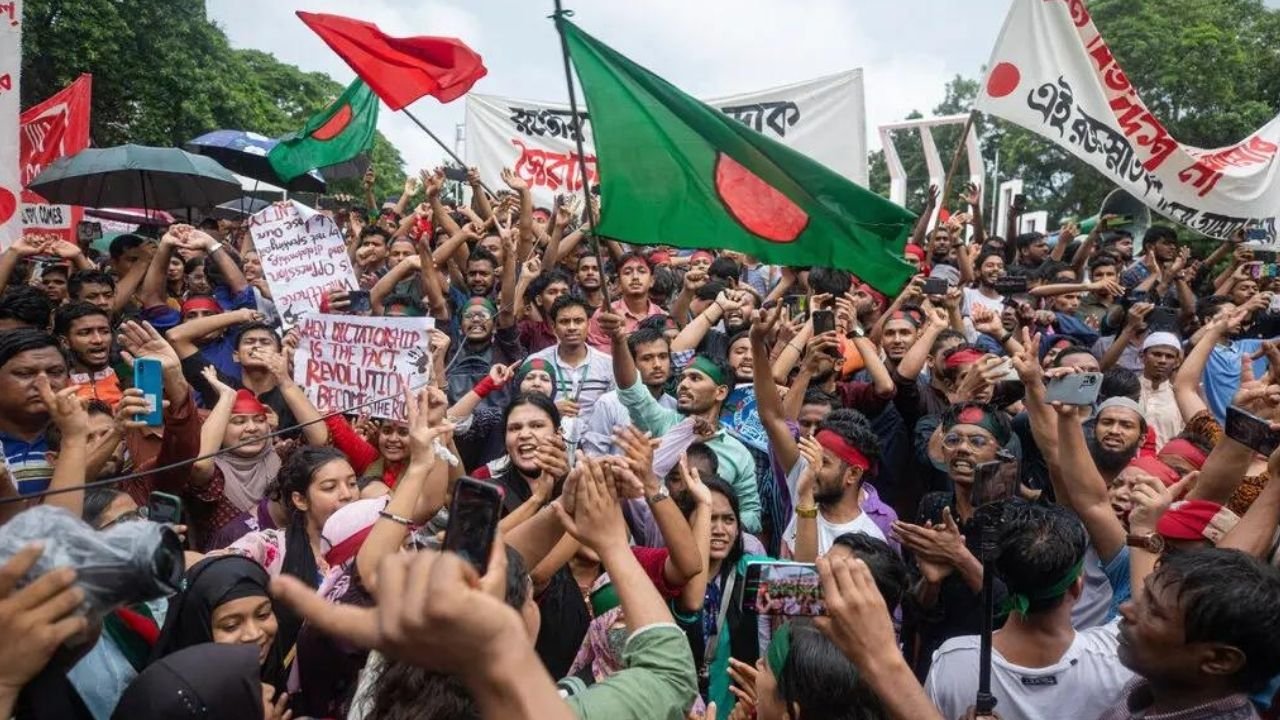
    Millions of Bangladeshis flooded the streets of Dhaka after Waker’s announcement.

    “I feel so happy that our country has been liberated,” said Sazid Ahnaf, 21, comparing the events to the independence war that split the nation from Pakistan more than five decades ago.

    “We have been freed from a dictatorship. It’s a Bengal uprising, what we saw in 1971, and now seeing in 2024.”

    But there were also scenes of chaos and anger, with police reporting at least 66 people killed on Monday as mobs launched revenge attacks on Hasina’s allies.

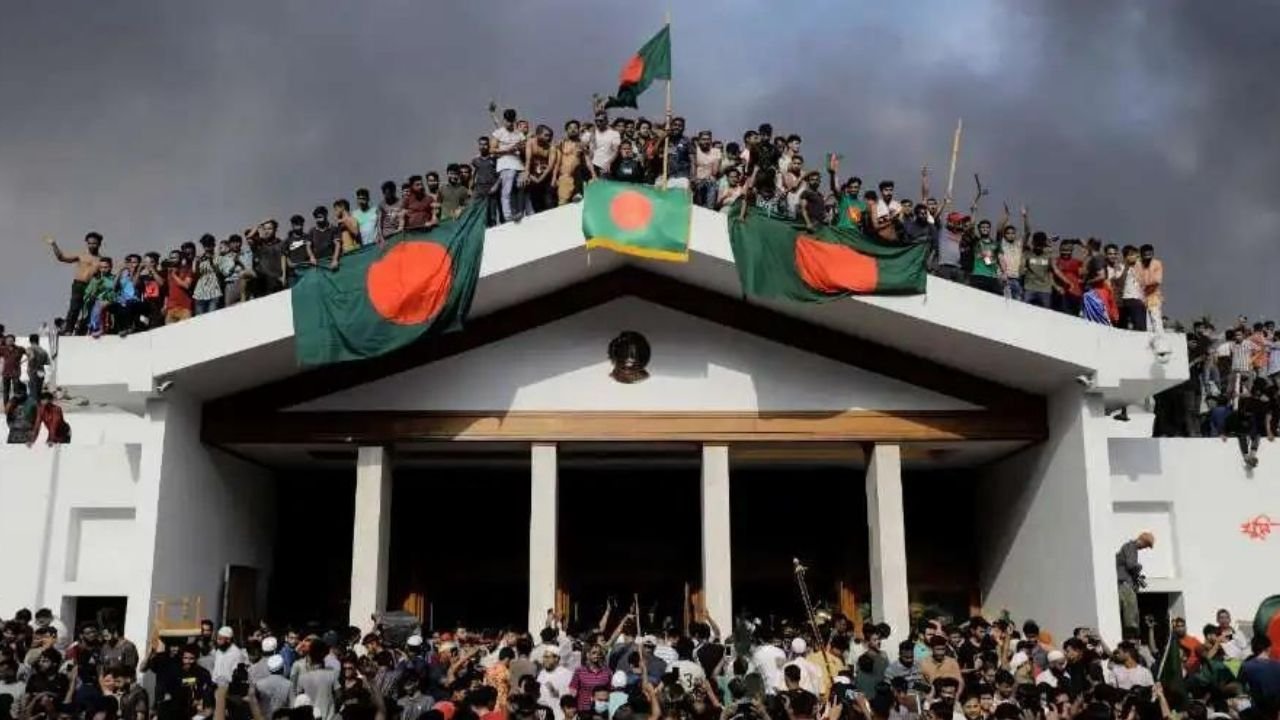
    Protesters stormed parliament and torched TV stations, while some smashed statues of Hasina’s father, Sheikh Mujibur Rahman, the country’s independence hero.

    Others set a museum dedicated to the former leader on fire, flames licking at portraits in destruction barely thinkable just hours before, when Hasina had the loyalty of the security forces under her autocratic grip.

    “The time has come to make them accountable for torture,” said protester Kaza Ahmed. “Sheikh Hasina is responsible for murder.”

    Offices of Hasina’s Awami League across the country were torched and looted, eyewitnesses told AFP.
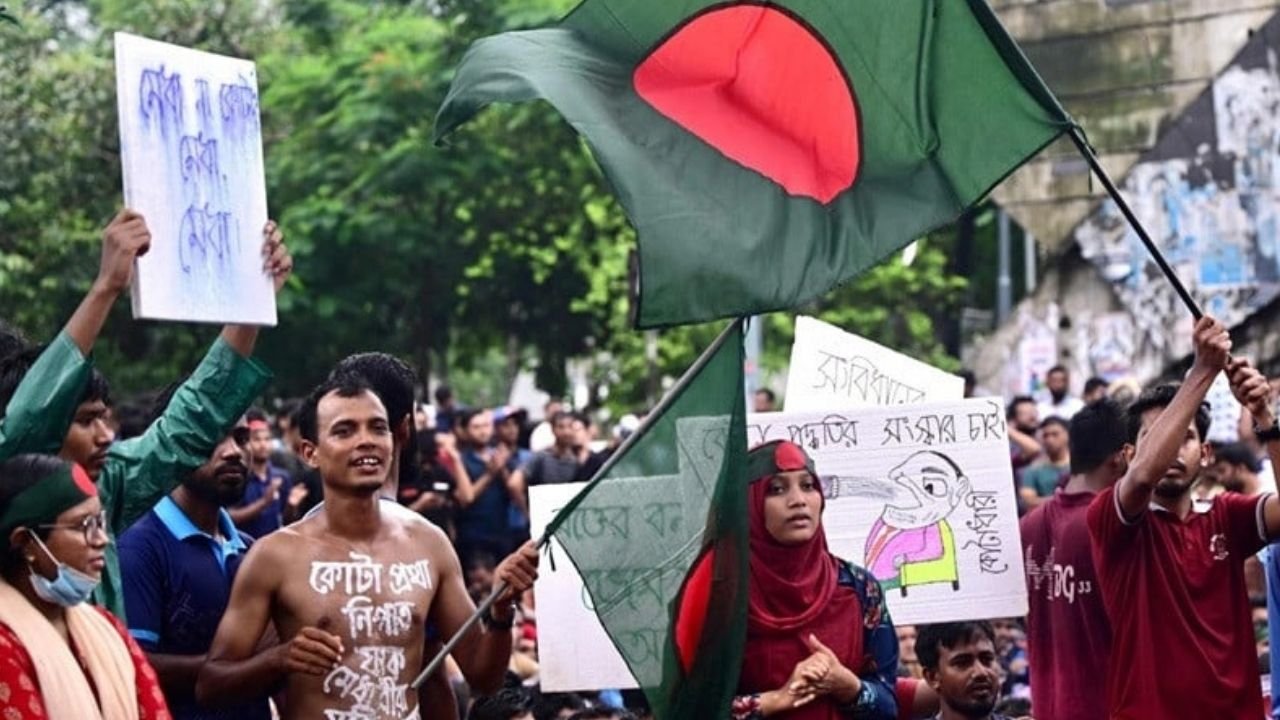
    The unrest began last month in the form of protests against civil service job quotas and then escalated into wider calls for Hasina to stand down.

    Her government was accused by rights groups of misusing state institutions to entrench its hold on power and stamp out dissent, including through the extrajudicial killing of opposition activists.

    At least 366 people died in the unrest that began in early July, according to an AFP tally based on police, government officials and doctors at hospitals.

    Student protest leaders, ahead of an expected meeting with the army chief, said Tuesday that they wanted Nobel laureate and microfinance pioneer Muhammad Yunus, 84, to lead the government.

    “In Dr. Yunus, we trust,” Asif Mahmud, a key leader of the Students Against Discrimination (SAD) group, wrote on Facebook.

    Waker said a curfew would be lifted on Tuesday morning, with the military set to lead an interim government.

    Bangladeshi President Mohammed Shahabuddin late Monday ordered the release of prisoners from the protests, as well as former prime minister and key opposition leader Khaleda Zia, 78.

    Zia, who is in poor health, was jailed by her arch-rival Hasina for graft in 2018.

    The president and army chief also met late Monday, alongside key opposition leaders, with the president’s press team saying it had been “decided to form an interim government immediately.”

    It was not immediately clear if Waker would lead it.

    Hasina’s fate was also uncertain. She fled the country by helicopter, a source close to the ousted leader told AFP.

    Media in neighboring India reported Hasina had landed at a military air base near New Delhi.

    A top-level source said she wanted to “transit” on to London, but calls by the British government for a UN-led investigation into “unprecedented levels of violence” put that into doubt.
    There were widespread calls by protesters to ensure Hasina’s close allies remained in the country.

    Bangladesh’s military said they had shut Dhaka’s international airport on Monday evening, without giving a reason.

    Bangladesh has a long history of coups.

    The military declared an emergency in January 2007 after widespread political unrest and installed a military-backed caretaker government for two years.

    Michael Kugelman, director of the South Asia Institute at the Washington-based Wilson Center, warned that Hasina’s departure “would leave a major vacuum” and that the country was in “uncharted territory.”

    “The coming days are critical,” he said.

    UN Secretary-General Antonio Guterres stressed the importance of a “peaceful, orderly and democratic transition,” his spokesman said. European Union foreign policy chief Josep Borrell echoed that call.

    Former colonial ruler Britain and the United States meanwhile urged “calm.”
  • Protesters storm Bangladesh PM’s palace after she flees

    Protesters storm Bangladesh PM’s palace after she flees

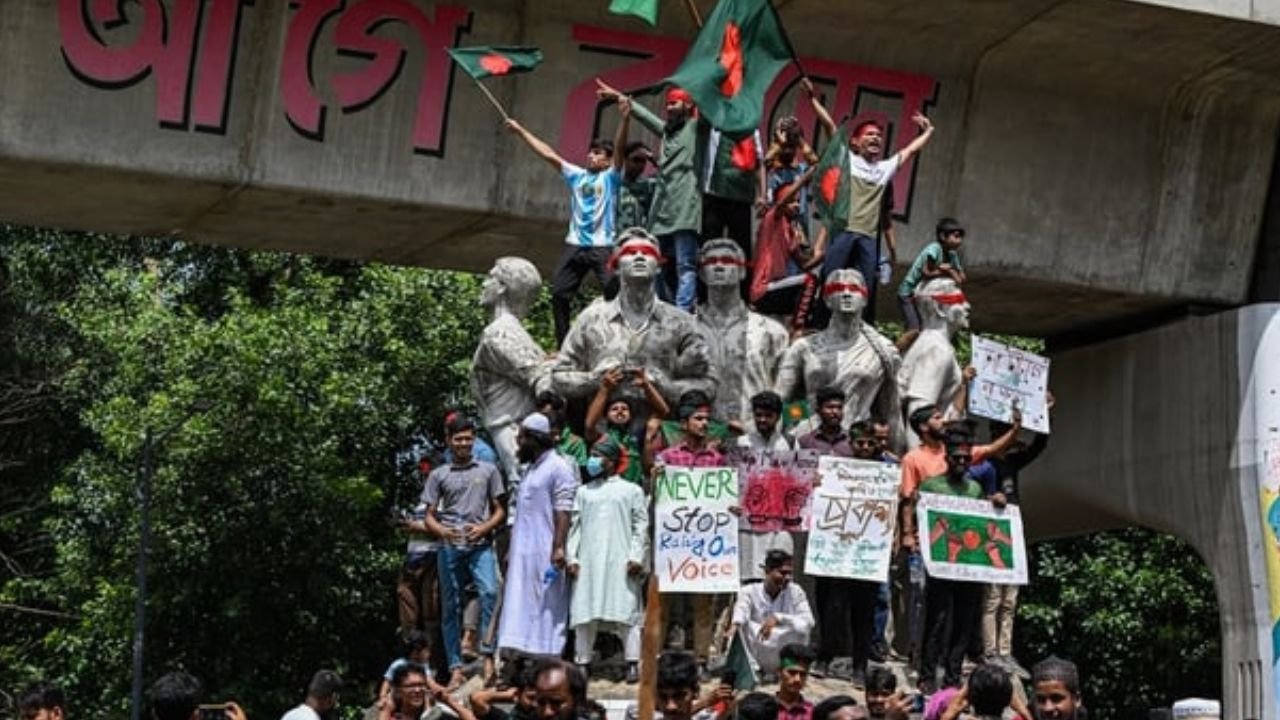
    Cheering protesters stormed Bangladeshi Prime Minister Sheikh Hasina’s palace on Monday after she fled, the culmination of more than a month of deadly anti-government protests.

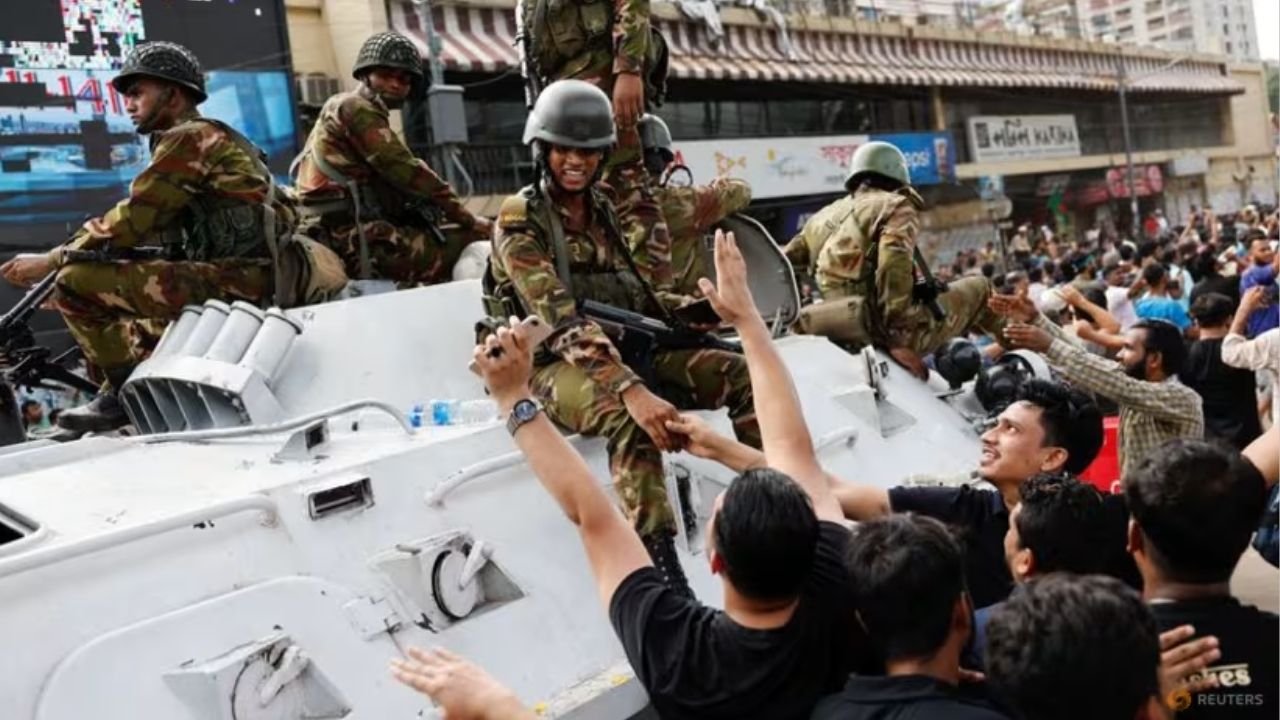
    Jubilant looking crowds waved flags, some dancing on top of a tank in the streets of Dhaka on Monday morning, before hundreds broke through the gates of Hasina’s official residence.

    Bangladesh’s Channel 24 broadcast images of crowds running into the compound, waving to the camera as they celebrated.

    A source close to Hasina, 76, had earlier told AFP she had left her palace for a “safer place”.

    Bangladesh’s army chief Waker-Uz-Zaman would address the nation on Monday afternoon, a military spokesman told AFP without giving further details.

    Before the protesters had stormed the compound, Hasina’s son urged the country’s security forces to block any takeover from her 15-year rule.

    “Your duty is to keep our people safe and our country safe and to uphold the constitution,” her son, US-based Sajeeb Wazed Joy, said in a post on Facebook.

    “It means don’t allow any unelected government to come in power for one minute, it is your duty.”

    Security forces had supported Hasina’s government throughout the unrest, which began last month against civil service job quotas and then escalated into wider calls for her to stand down.

    But the protesters defied curfews and deadly force.

    At least 94 people were killed on Sunday, including 14 police officers, in the deadliest day of the unrest.

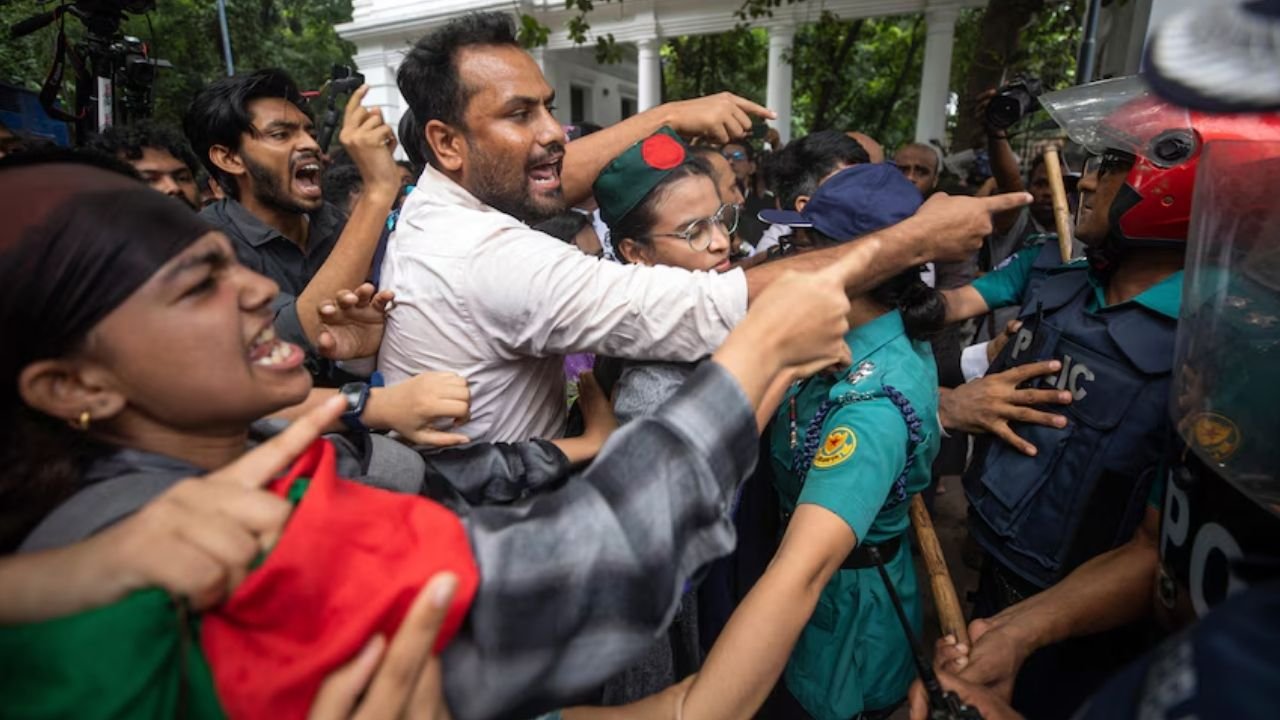
    Protesters and government supporters countrywide battled each other with sticks and knives, and security forces opened fire.

    The day’s violence took the total number of people killed since protests began in early July to at least 300, according to an AFP tally based on police, government officials and doctors at hospitals.

    Waker told officers on Saturday that the military “always stood by the people”, according to an official statement.

    The military declared an emergency in January 2007 after widespread political unrest and installed a military-backed caretaker government for two years.

    ‘Final protest’

    Hasina has ruled Bangladesh since 2009 and won her fourth consecutive election in January after a vote without genuine opposition.

    Her government is accused by rights groups of misusing state institutions to entrench its hold on power and stamp out dissent, including through the extrajudicial killing of opposition activists.

    Demonstrations began over the reintroduction of a quota scheme that reserved more than half of all government jobs for certain groups.

    The protests escalated despite the scheme having been scaled back by Bangladesh’s top court.

    Soldiers and police with armoured vehicles in Dhaka had barricaded routes to Hasina’s office with barbed wire on Monday morning, but vast crowds flooded the streets, tearing down barriers.

    The Business Standard newspaper estimated as many as 400,000 protesters were on the streets but it was impossible to verify the figure.

    “The time has come for the final protest,” said Asif Mahmud, one of the key leaders in the nationwide civil disobedience campaign.

    In several cases, soldiers and police did not intervene to stem Sunday’s protests, unlike during the past month of rallies that repeatedly ended in deadly crackdowns.

    “Let’s be clear: The walls are closing in on Hasina: She’s rapidly losing support and legitimacy,” Michael Kugelman, director of the South Asia Institute at the Washington-based Wilson Center, told AFP.

    “The protests have taken on immense momentum, fuelled by raw anger but also by the confidence that comes with knowing that so much of the nation is behind them,” he said.

    In a hugely symbolic rebuke of Hasina, a respected former army chief demanded the government “immediately” withdraw troops and allow protests.

    “Those who are responsible for pushing people of this country to a state of such an extreme misery will have to be brought to justice,” ex-army chief General Ikbal Karim Bhuiyan told reporters Sunday.

    The anti-government movement had attracted people from across society in the South Asian nation of about 170 million people, including film stars, musicians and singers.

  • Sheikh Hasina leaves Bangladesh, martial law likely

    Sheikh Hasina leaves Bangladesh, martial law likely

    Bangladeshi Prime Minister Sheikh Hasina fled her palace on Monday, a source told AFP, as masses of protesters demanding her resignation roamed the streets of Dhaka. The army chief was set to address the nation.

    Jubilant-looking crowds waved flags, peacefully celebrating, including some dancing on top of a tank, as a source close to the embattled leader said she had left her palace in the capital for a “safer place”.

    Hasina’s son urged the country’s security forces to block any takeover from her rule, while a senior advisor told AFP that her resignation was a “possibility” after being questioned about it.

    “She wanted to record a speech, but she could not get an opportunity to do that,” the source close to Hasina told AFP.

    Bangladesh’s army chief, Waker-Uz-Zaman, will address the nation on Monday afternoon, a military spokesman told AFP without giving further details.

    Waker told officers on Saturday that the military “always stood by the people”, according to an official statement.

    The military declared an emergency in January 2007 afer widespread political unrest and installed a military-backed caretaker government for two years.

    ‘Uphold the constitution’

    Rallies that began last month against civil service job quotas have escalated into some of the worst unrest of Hasina’s 15-year rule and shifed into wider calls for the 76-year-old to leave.

    “Your duty is to keep our people safe and our country safe and to uphold the constitution,” her son, US-based Sajeeb Wazed Joy, said in a post on Facebook.

    “It means don’t allow any unelected government to come in power for one minute, it is your duty.”

    But protesters on Monday defied security forces enforcing a curfew, marching on the capital’s streets afer the deadliest day of unrest since demonstrations erupted last month.

    Internet access was tightly restricted on Monday, ofices were closed and more than 3,500 factories servicing Bangladesh’s economically vital garment industry were shut.

    Soldiers and police with armoured vehicles in Dhaka had barricaded routes to Hasina’s office with barbed wire, AFP reporters said, but vast crowds flooded the streets, tearing down barriers.

    The Business Standard newspaper estimated as many as 400,000 protesters were on the streets but it was impossible to verify the figure.
    “The time has come for the final protest,” said Asif Mahmud, one of the key leaders in the nationwide civil disobedience campaign.

    ‘Shocking violence’

    At least 94 people were killed on Sunday, including 14 police officers.

    Protesters and government supporters countrywide battled each other with sticks and knives, and security forces opened fire.

    The day’s violence took the total number of people killed since protests began in early July to at least 300, according to an AFP tally based on police, government oficials and doctors at hospitals.

    “The shocking violence in Bangladesh must stop,” United Nations rights chief Volker Turk said in a statement.

    “This is an unprecedented popular uprising by all measures,” said Ali Riaz, an Illinois State University politics professor and expert on Bangladesh.
    “Also, the ferocity of the state actors and regime loyalists is unmatched in history.”

    Protesters in Dhaka on Sunday were seen climbing a statue of Hasina’s father, Sheikh Mujibur Rahman, the country’s independence leader, and smashing it with hammers, according to videos on social media verified by AFP.

    ‘Walls are closing in’

    In several cases, soldiers and police did not intervene to stem Sunday’s protests, unlike during the past month of rallies that repeatedly ended in deadly crackdowns.

    “Let’s be clear: The walls are closing in on Hasina. She’s rapidly losing support and legitimacy,” Michael Kugelman, director of the South Asia Institute at the Washington-based Wilson Center, told AFP.

    “The protests have taken on immense momentum, fuelled by raw anger but also by the confidence that comes with knowing that so much of the nation is behind them,” he said.

    In a hugely symbolic rebuke of Hasina, a respected former army chief demanded the government “immediately” withdraw troops and allow protests.

    “Those who are responsible for pushing people of this country to a state of such extreme misery will have to be brought to justice,” ex-army chief General Ikbal Karim Bhuiyan told reporters Sunday.

    The anti-government movement has attracted people from across society in the South Asian nation of about 170 million people, including film stars, musicians and singers.

    Hasina has ruled Bangladesh since 2009 and won her fourth consecutive election in January afer a vote without genuine opposition.

    Her government is accused by rights groups of misusing state institutions to entrench its hold on power and stamp out dissent, including through the extrajudicial killing of opposition activists.

    Demonstrations began over the reintroduction of a quota scheme that reserved more than half of all government jobs for specific groups.

    The protests have escalated despite the scheme having been scaled back by Bangladesh’s top court.

  • 91 killed as Dhaka turns into battleground

    91 killed as Dhaka turns into battleground

    Hundreds of thousands of Bangladeshi protesters demanding Prime Minister Sheikh Hasina resign, clashed with government supporters on Sunday, with dozens killed in one of the deadliest days since demonstrations began.

    Rallies that began last month against civil service job quotas have escalated into some of the worst unrest of Hasina’s 15-year rule and shifted into wider calls for the 76-year-old to step down.

    At least 91 people were killed on Sunday alone, including 14 police officers, with the rival sides battling with sticks and knives and security forces firing rifles, taking the total killed since protests began in July to at least 261.

    Police said protesters att­a­cked their officers, inclu­ding storming a station in the town of Enayetpur.

    “The terrorists attacked the police station and killed 11 policemen,” said Bijoy Basak, a deputy inspector general.

    AFP journalists repo­rted hearing sustained crackles of gunfire after dark on Sunday, with protesters defying a nationwide curfew.

    Mobile internet was tightly restricted.

    ‘Final protest’

    In several cases, soldiers and police did not intervene to stem the protests, unlike the past month of rallies that repeatedly ended in deadly crackdowns.

    Demonstrators in the capital Dhaka, surrounded by a tightly packed and cheering crowd, waved a Bangladeshi flag on top of an armoured car as soldiers watched.

    Asif Mahmud, one of the main leaders in the civil disobedience campaign, called on supporters to march on Dhaka on Monday. “Prepare bamboo sticks and liberate Bangladesh,” he wrote on Facebook on Sunday. “The time has come for the final protest,” he said.

    Brought to justice

    Vast crowds of protesters packed into Dhaka’s central Shahbagh Square on Sunday, with street battles in multiple sites.

    “There were clashes between students and the ruling party men,” police inspector Al Helal said, adding two young men were killed in Dhaka’s Munshiganj district.

    “One of the dead was hacked in his head and another had gunshot injuries.”

    Another policeman, who asked not to be identified, said “the whole city has turned into a battleground”.

    Two people were killed in the city of Kishioreganj, where protesters torched a ruling party office, police said.

    Some former military officers have joined the student movement and ex-army chief Gen Ikbal Karim Bhuiyan turned his Facebook profile picture red in a show of support.

    “We call on the incumbent government to withdraw the armed forces from the street immediately,” Bhuiyan told reporters on Sunday alongside other ex-officers, condemning “egregious killings, torture, disappearances and mass arrests”.

    “Those who are responsible for pushing people of this country to a state of such an extreme misery will have to be brought to justice,” he said.

    No longer about job quotas

    Current army chief Waker-uz-Zaman told officers at the military headquarters in Dhaka on Saturday the “Bangladesh Army is the symbol of trust of the people”.

    “It always stood by the people and will do so for the sake of people and in any need of the state,” he said, according to a statement, which did not say explicitly whether the army backed the protests.

    The demonstrations attracted people from all strata of Bangladeshi society. Rap songs calling for people’s support have spread widely on social media.

    “It is no longer about job quotas,” said Sakhawat, a young female protester who gave only one name, and called Hasina a “killer”.

    A group of 47 manufacturers in the economically vital garment sector said they stood in “solidarity” with the protesters.

    Obaidul Quader, general secretary of the ruling Awami League, has called on party activists to gather “in every district” nationwide to show their support for the government.

    The unrest began in July over the reintroduction of the quota scheme, which reserved more than half of all government jobs for certain groups. It has since been scaled back by the country’s top court.