Tag: students

  • Students ‘inciting violence’ can face cancellation of their identity cards, passports

    Students ‘inciting violence’ can face cancellation of their identity cards, passports

    The Interior Ministry has announced that strict measures will be taken against students involved in or promoting violent activities, including their names being added to the Fourth Schedule.

    According to Section 11EE of the ATA, the Fourth Schedule is to include “any person who is an activist, office-bearer or an associate of an organisation kept under observation … or proscribed … or … affiliated with any group or organisation suspected to be involved in terrorism or sectarianism.”

    If an individual’s name is added to the Fourth Schedule, many of his/her constitutional rights are suspended, such as the cancellation of the identity cards and passports, prohibition from leaving their city, and denial of character certificates from any educational institution.

    The notification issued by the Interior Ministry emphasised that departments should be ready for action against potential troublemakers, The News reported.

    Last week, Pakistan Tehreek-e-Insaf (PTI) announced that it would launch a movement for the restoration of the Constitution and revival of the student unions in the country.

  • At least 174 killed, more than 2,500 arrested amid Bangladesh protests

    At least 174 killed, more than 2,500 arrested amid Bangladesh protests

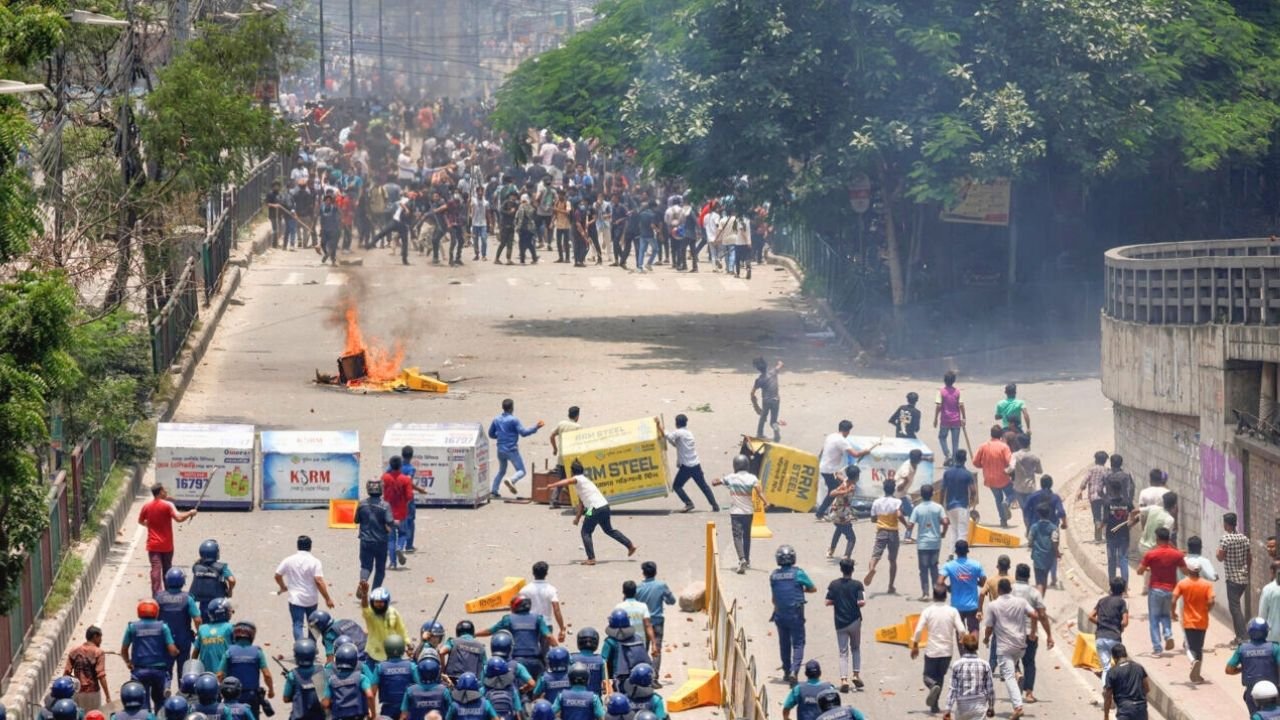
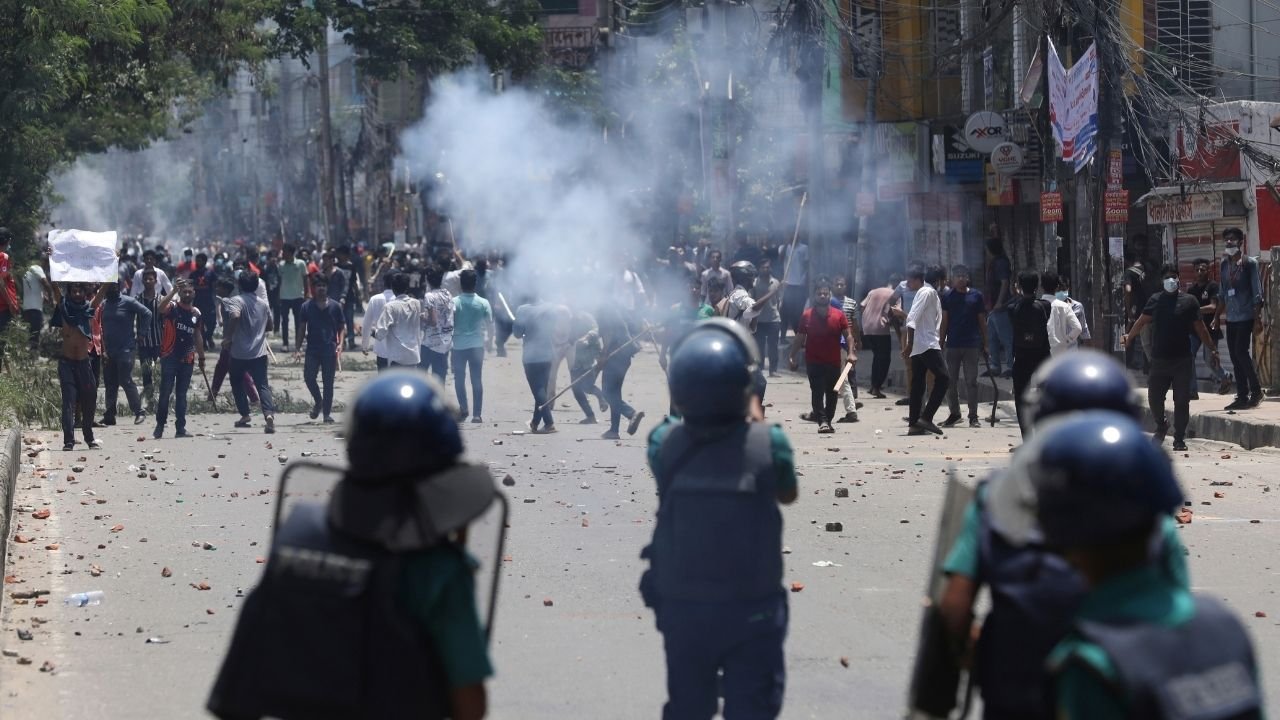
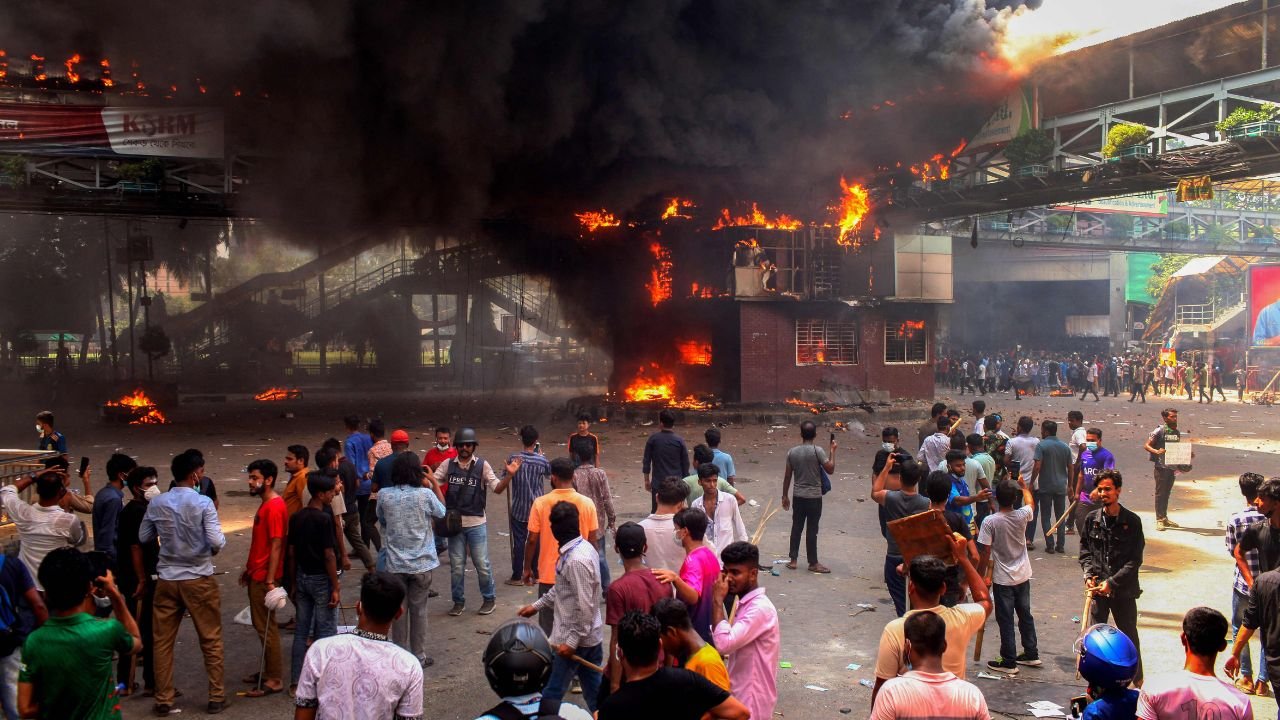
    The number of arrests in days of violence in Bangladesh passed the 2,500 mark in an AFP tally on Tuesday, after protests over employment quotas sparked widespread unrest.

    At least 174 people have died, including several police officers, according to a separate AFP count of victims reported by police and hospitals.

    What began as demonstrations against politicised admission quotas for sought-after government jobs snowballed last week into some of the worst unrest of Prime Minister Sheikh Hasina’s tenure.

    A curfew was imposed and soldiers deployed across the South Asian country, and a nationwide internet blackout drastically restricted the flow of information, upending daily life for many.

    On Sunday, the Supreme Court pared back the number of reserved jobs for specific groups, including the descendants of “freedom fighters” from Bangladesh’s 1971 liberation war against Pakistan.

    The student group leading the demonstrations suspended its protests Monday for 48 hours, with its leader saying they had not wanted reform “at the expense of so much blood”.

    The restrictions remained in place Tuesday after the army chief said the situation had been brought “under control”.

    There was a heavy military presence in Dhaka, with bunkers set up at some intersections and key roads blocked with barbed wire.

    But more people were on the streets, as were hundreds of rickshaws.

    “I did not drive rickshaws the first few days of curfew, But today I didn’t have any choice,” rickshaw driver Hanif told AFP.

    “If I don’t do it, my family will go hungry.”

    The head of Students Against Discrimination, the main group organising the protests, told AFP in his hospital room Monday that he feared for his life after being abducted and beaten, and the group said Tuesday at least four of its leaders were missing, asking authorities to “return” them by the evening.

    ‘Killed at random’

    The authorities’ response to the protests has been widely criticised, with Bangladeshi Nobel Peace Prize laureate Muhammad Yunus urging “world leaders and the United Nations to do everything within their powers to end the violence” in a statement.

    The respected 83-year-old economist is credited with lifting millions out of poverty with his pioneering microfinance bank but earned the enmity of Hasina, who has accused him of “sucking blood” from the poor.

    “Young people are being killed at random every day,” Yunus told AFP. “Hospitals do not reveal the number of wounded and dead.”

    Diplomats in Dhaka also questioned the government’s actions, with US Ambassador Peter Haas telling the foreign minister he had shown a one-sided video at a briefing to diplomats.

    Government officials have repeatedly blamed the protesters and opposition for the unrest.

    More than 1,200 people detained over the course of the violence — nearly half the 2,580 total — were held in Dhaka and its rural and industrial areas, according to police officials who spoke to AFP.

    Almost 600 were arrested in Chittagong and its rural areas, with hundreds more detentions tallied in multiple districts across the country.

    ‘Sheikh Hasina never flees’

    With around 18 million young people in Bangladesh out of work, according to government figures, the June reintroduction of the quota scheme — halted since 2018 — deeply upset graduates facing an acute jobs crisis.

    With protests mounting across the country, the Supreme Court on Sunday curtailed the number of reserved jobs from 56 percent of all positions to seven percent, mostly for the children and grandchildren of “freedom fighters” from the 1971 war.

    While 93 percent of jobs will be awarded on merit, the decision fell short of protesters’ demands to scrap the “freedom fighter” category altogether.

    Late Monday, Hasina’s spokesman told AFP the prime minister had approved a government order putting the Supreme Court’s judgement into effect.

    Critics say the quota is used to stack public jobs with loyalists to Hasina’s ruling Awami League.

    Hasina, 76, has ruled the country since 2009 and won her fourth consecutive election in January after a vote without genuine opposition.

    Her government is also accused by rights groups of misusing state institutions to entrench its hold on power and stamp out dissent, including by the extrajudicial killing of opposition activists.

    bur-sa/slb/

    © Agence France-Presse

  • More than 500 arrested in Bangladesh capital over violence: police

    More than 500 arrested in Bangladesh capital over violence: police

    More than 500 people, including some opposition leaders, have been arrested over days of clashes in the Bangladesh capital Dhaka sparked by protests against job quotas, police said Monday.

    “At least 532 people have been arrested over the violence,” Dhaka Metropolitan Police spokesman Faruk Hossain told AFP.

    “They include some BNP leaders,” he added, referring to the opposition Bangladesh National Party.

    The detainees included the BNP’s third-most senior leader Amir Khosru Mahmud Chowdhury and its spokesman Ruhul Kabir Rizvi Ahmed, he said.

    A former national football captain turned senior BNP figure, Aminul Huq, was also held, he added.

    Mia Golam Parwar, the general secretary of the country’s largest Islamist party, Jamaat-e-Islami, was also arrested, Hossain said.

    He said at least three policemen had been killed during the unrest in the capital and about 1,000 injured, at least 60 of them critically.

    BNP spokesman A.K.M Wahiduzzaman told AFP that nationwide, “several hundred BNP leaders and activists were arrested in the past few days”.

    sa/slb/sco

    © Agence France-Presse

  • Bangladesh imposes curfew, calls in military after deadly unrest

    Bangladesh imposes curfew, calls in military after deadly unrest

    Bangladesh on Friday announced the imposition of a curfew and the deployment of military forces after police failed to quell days of deadly unrest that has spread throughout the country.

    This week’s clashes between student demonstrators and police have killed at least 105 people, according to an AFP count of victims reported by hospitals, and pose a momentous challenge to Prime Minister Sheikh Hasina’s autocratic government after 15 years in office.

    “The government has decided to impose a curfew and deploy the military in aid of the civilian authorities,” Hasina’s press secretary Nayeemul Islam Khan told AFP.

    He added that the curfew would take immediate effect.

    Police in the capital Dhaka earlier took the drastic step of banning all public gatherings for the day — a first since protests began — in an effort to forestall more violence.

    “We’ve banned all rallies, processions and public gatherings in Dhaka today,” police chief Habibur Rahman told AFP, adding the move was necessary to ensure “public safety”.

    That however did not stop another round of confrontations between police and protesters around the sprawling megacity of 20 million people, despite an internet shutdown aimed at frustrating the organisation of rallies.

    “Our protest will continue,” Sarwar Tushar, who joined a march in the capital and sustained minor injuries when it was violently dispersed by police, told AFP.

    “We want the immediate resignation of Sheikh Hasina. The government is responsible for the killings.”

    Student protesters stormed a jail in the central Bangladeshi district of Narsingdi and freed its inmates before setting the facility on fire, a police officer told AFP on condition of anonymity.

    “I don’t know the number of inmates, but it would be in the hundreds,” he added.

    ‘Shocking and unacceptable’

    At least 52 people were killed in the capital on Friday, according to a list drawn up by the Dhaka Medical College Hospital and seen by AFP.

    Police fire was the cause of more than half of the deaths reported so far this week, based on descriptions given to AFP by hospital staff.

    UN human rights chief Volker Turk said the attacks on student protesters were “shocking and unacceptable”.

    “There must be impartial, prompt and exhaustive investigations into these attacks, and those responsible held to account,” he said in a statement.

    The capital’s police force earlier said protesters had on Thursday torched, vandalised and carried out “destructive activities” on numerous police and government offices.

    Among them was the Dhaka headquarters of state broadcaster Bangladesh Television, which remains offline after hundreds of incensed students stormed the premises and set fire to a building.

    Dhaka Metropolitan Police spokesman Faruk Hossain told AFP that officers had arrested Ruhul Kabir Rizvi Ahmed, one of the top leaders of the main opposition Bangladesh Nationalist Party (BNP).

    ‘Symbol of a rigged system’

    Near-daily marches this month have called for an end to a quota system that reserves more than half of civil service posts for specific groups, including children of veterans from the country’s 1971 liberation war against Pakistan.

    Critics say the scheme benefits children of pro-government groups that back Hasina, 76, who has ruled the country since 2009 and won her fourth consecutive election in January after a vote without genuine opposition.

    Hasina’s government is accused by rights groups of misusing state institutions to entrench its hold on power and stamp out dissent, including by the extrajudicial killing of opposition activists.

    Her administration this week ordered schools and universities to close indefinitely as police stepped up efforts to bring the deteriorating law and order situation under control.

    “This is an eruption of the simmering discontent of a youth population built over years,” Ali Riaz, a politics professor at Illinois State University, told AFP.

    “The job quotas became the symbol of a system which is rigged and stacked against them by the regime.”

    ‘Nation-scale’ internet shutdown

    Students say they are determined to press on with protests despite Hasina giving a national address earlier this week on the now-offline state broadcaster seeking to calm the unrest.

    Nearly half of Bangladesh’s 64 districts reported clashes on Thursday, broadcaster Independent Television reported.

    London-based watchdog NetBlocks said Friday that a “nation-scale” internet shutdown remained in effect a day after it was imposed.

    “Metrics show connectivity flatlining at 10% of ordinary levels, raising concerns over public safety as little news flows in or out of the country,” it wrote on social media platform X.

    sa/gle/sst

    © Agence France-Presse
  • Teacher doesn’t take wedding day chuti in Sindh

    Teacher doesn’t take wedding day chuti in Sindh

    Teacher doesn’t take wedding day chuti in Sindh

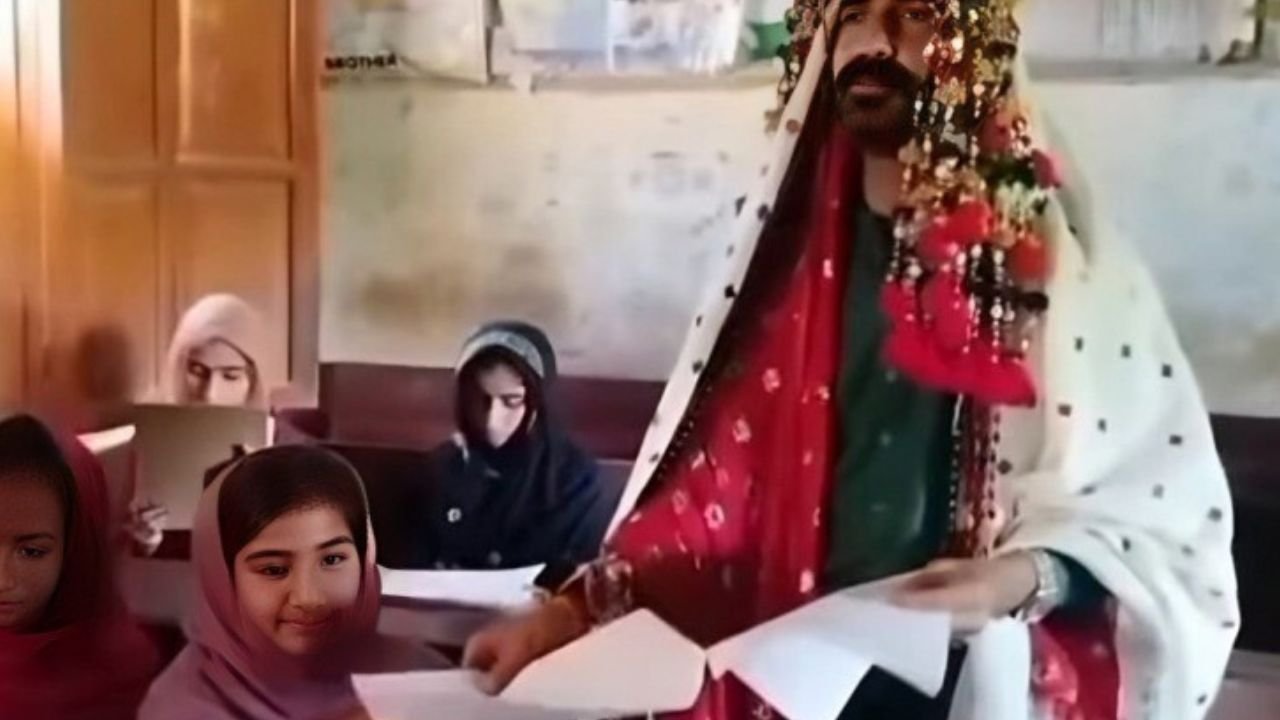
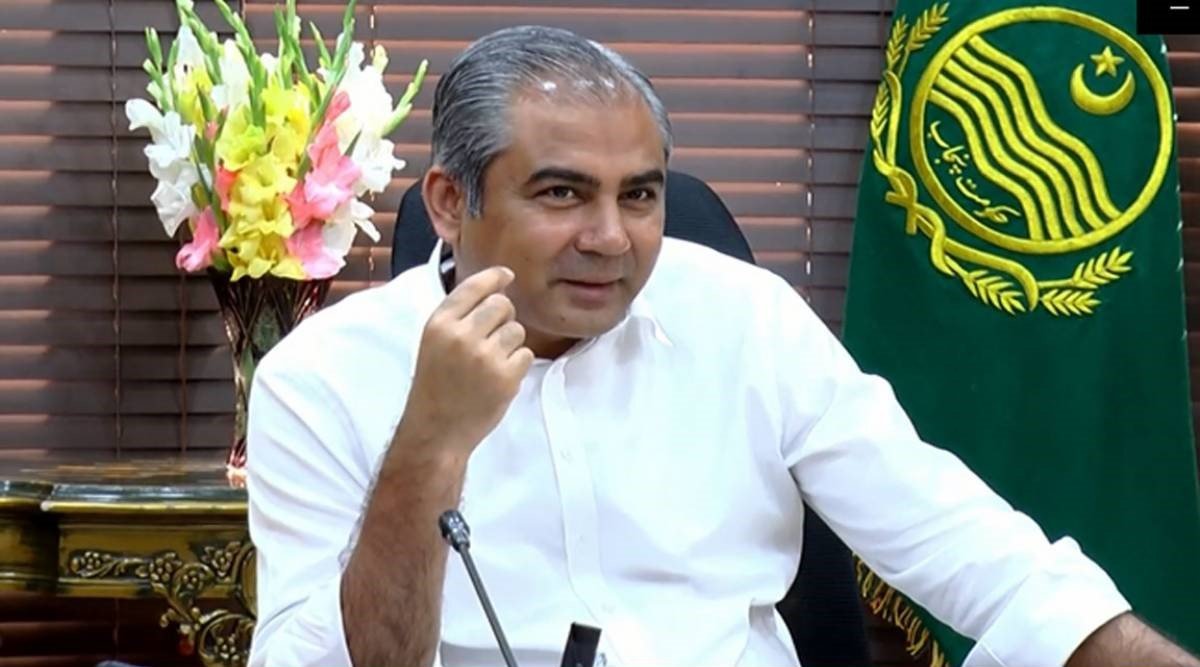
    Sheeraz Rasool Khaskheli, a teacher in Chambar, Tando Allahyar, went to school on his wedding day to collect exam papers from his students. He wore his wedding dress and took the papers before heading home for his wedding. A photo and video of him taking papers has become popular on social media.

    Sheeraz Rasool said it was important to take the exam papers even on his wedding day, showing his dedication to his job as a teacher.

  • Khyber Medical University prohibits ‘intimate relationship’ between faculty, students to counter sexual harassment on campus

    Khyber Medical University prohibits ‘intimate relationship’ between faculty, students to counter sexual harassment on campus

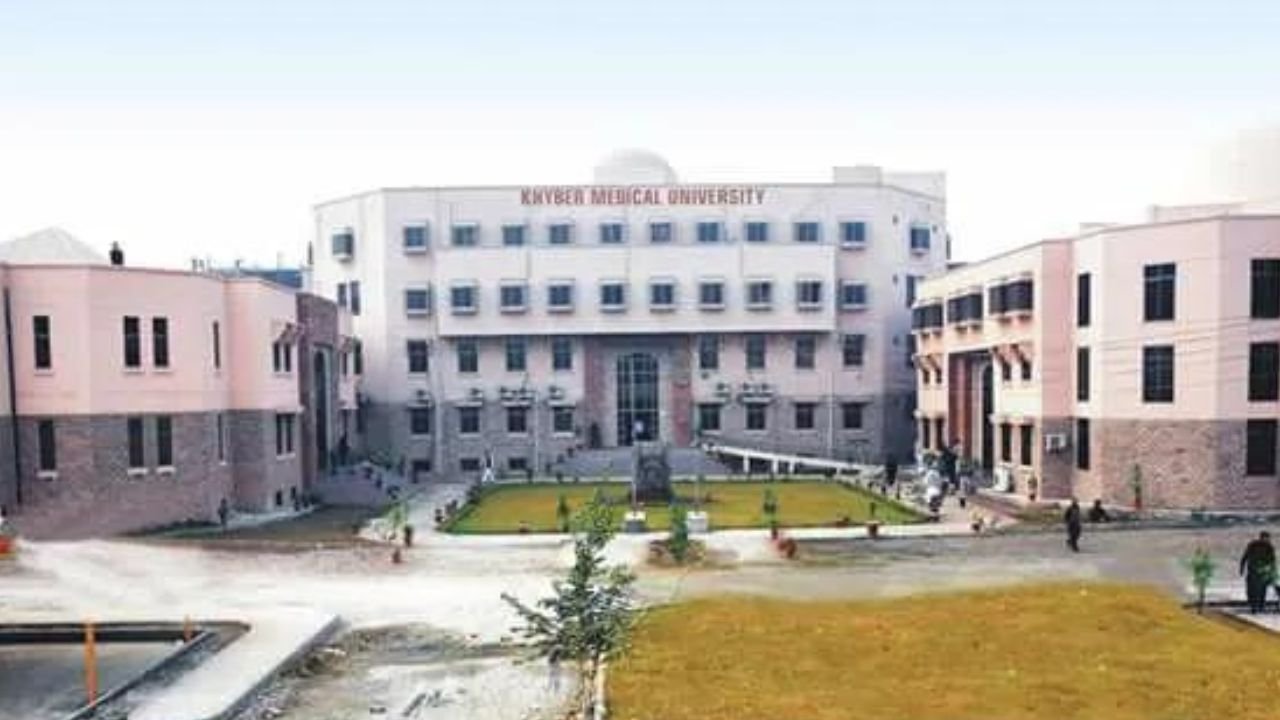
    Khyber Medical University (KMU) has officially prohibited ‘intimate relationship’ between members of staff and students in accordance with the Higher Education Commission to put an end to harassment on campuses.

    Dr Brekhna Jamil, the chairperson of KMU’s harassment inquiry committee, issued the notification, stating that severe penalties will be implemented if the policy is violated along with a possible oral or written “reprimand, dismissal, suspension, expulsion, disciplinary probation, imposition of fine, withholding of degree, cancellation of professional licence, inclusion of decision in personal file and other related sanctions as deemed appropriate,” reports Dawn.

    “These relationships pose conflicts of interest, compromise professional judgment, and risk the credibility of the institution. The individuals involved in such relationships should declare it,” the notification read — titled ‘Prohibition of intimate or romantic relationships between faculty members, staff and students as per HEC’s policy on protection against sexual harassment in higher education institutions 2020,’ .

  • Candidates awarded better grades in 2022 than in 2023, reports Geo

    Candidates awarded better grades in 2022 than in 2023, reports Geo

    It has been revealed that there is a clear difference in grading of the first year (Inter) 2023 and 2022 examinations under Higher Secondary Education Board Karachi.

    More A1, A, and B grades were awarded to candidates in 2022 than in 2023.

    According to details reported by Geo, the percentage of success of A1 and A1 grade candidates in science pre-medical, pre-engineering, and general science last year was high, with 1539 in pre-medical results in the 2020 exams. Candidates succeeded in A-1, 3712 with an A grade, and 4573 with a B grade.

    However, in the 2023 examinations, 654 candidates passed with an A1 grade, 2418 with an A grade, and 3753 secured a B grade.

    In the 2020 pre-engineering results, 1125 candidates passed with A 1, 2468 with an A grade and 3304 with a B grade while in the 2023 exams, 461 candidates passed with A 1, 1566 with an A grade and 2479 with a B grade.

    In the science general result of the 2020 examinations, 216 candidates succeeded with an A grade, while 918 candidates secured an A grade and 1573 candidates with a B grade.

    In the 2023 examinations, 178 candidates passed with an A1 grade and 853 candidates passed with an A grade.

    Background

    The results for the first-year (Part-I) examination announced by the Board of Intermediate Education Karachi (BIEK) on January 24 raised concerns as more than 50 per cent of the students failed.

    According to the Inter board spokesperson, 72 per cent of the candidates failed in arts first year (private) and 80 per cent in arts (regular).

    In this context, Jamaat-e-Islami (JI) also announced a sit-in outside the Board of Intermediate Education office in Karachi (BIEK) following the announcement of inter results which revealed that about 80 per cent Arts students had failed.

  • Three Palestinian students studying in US shot for wearing keffiyah

    Three Palestinian students studying in US shot for wearing keffiyah

    Three Palestinian students were shot for wearing their country’s traditional keffiyeh scarves in Vermont, USA.

    The three boys – identified as Hisham Awartani, Kinnan Abdel Hamid and Tahseen Ahmed – were in Burlington for Thanksgiving holidays when they were targeted and injured, leaving one critically wounded.

    The victims, aged 20, were students of Harvard University, Brown University and Trinity University.

    According to the police, they were walking while visiting the home of one of the victim’s relatives when they were confronted by a white man with a gun.

    “Without speaking, he discharged at least four rounds from the pistol and is believed to have fled,” Burlington Police Chief Jon Murad said in a statement.

    “The fact is that we don’t yet know as much as we want to right now,” he added. “But I urge the public to avoid making conclusions based on statements from uninvolved parties who know even less.”

    According to a statement released by the American-Arab Anti-Discrimination Committee, the victims were Palestinian American college students and that there is “reason to believe this shooting occurred because the victims are Arab.”

    It further revealed that a man shouted at and harassed the three young men, who were chatting in Arabic, and then shot them.

    The FBI Albany, New York, posted a statement on X (formerly Twitter) stating that they are
    “actively” investigating the case with the Burlington Police Department, ATF and other federal, state and local agencies.

  • Khyber Pakhtunkhwa: MDCAT retest paper goes viral

    Khyber Pakhtunkhwa: MDCAT retest paper goes viral

    The second retake of the MDCAT exam in Khyber Pakhtunkhwa has gone viral despite secrecy measures, raising concerns among students. The test was conducted on Sunday across the province in 11 examination centres. More than 40,000 students appeared in the exam.

    The test was conducted by Khyber Medical University (KMU) after the Bluetooth Scandal in the previous attempt conducted by the Educational Testing and Evaluation Agency (ETEA). Neither the students nor the security and administrative staff was allowed to take phones inside the examination centres. Section 144 was imposed with signal jammers installed around the examination centres along with the deployment of 2000 security personnel in the province. Despite all of this, the paper went viral.

    A Twitter user also appreciated the security.

    However, Vice Chancellor KMU Doctor Zia ul Haq told Geo that the paper leaked post-exam, not during the exam. He stressed that the document is public property after the exam. A picture captured with the backdrop of a bedsheet also hints towards the conduction of the exam being transparent.

  • Another exam, more cases of cheating

    Another exam, more cases of cheating

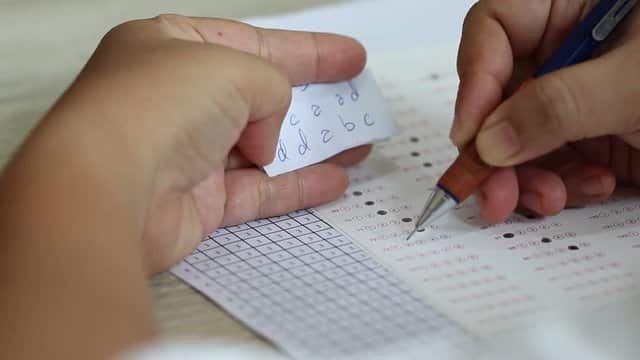
    After cases of cheating during MDCAT examination in Khyber Pakhtunkhwa in September, the Public Service Commission examination has also been infiltrated with cheating.

    According to the Khyber Pakhtunkhwa Public Service Commission, a test was held on June 24 for the recruitment of SDO in the Irrigation Department and CNW, during which 18 candidates were caught cheating.

    KP Public Service Commission officials also revealed that electronic devices, guides and other copy materials were recovered from the candidates during the examination.

    Examinations were cancelled and they have been banned from appearing for a period of one year to three years.

    The commission has issued a public notice for re-examination and the relevant test will be held again on December 23.