Tag: students

  • GCU Lahore denies ‘terminating’ political science teacher ‘for being too political’

    Government College University (GCU) Lahore has denied “terminating” a contractual faculty member of the Department of Political Science, Zagum Abbas, “for being vocal about issues facing students, cultivating a culture of dialogue and encouraging his students to engage in political activities”.

    Zagum, in a Facebook post on Wednesday night, had said that his contract was not extended because he “taught his students to question everything that had been fed to them”.

    According to Zagum, he was “verbally” informed of the decision. “After four years of service to GCU, the administration didn’t even have the decency to provide written notice of termination.” He had further said that he was accused of being “political” and “vocal against the issues facing students and teachers on campus”.

    He had, however, not disclosed the nature of the issues.

    “I want to state proudly that I invited my students to be open, rational and taught them to engage in critical debates. I cultivated a culture of dialogue and engagement and taught my students to question everything which had been fed to them. These were the activities that the myopic men on campus could neither digest nor tolerate.”

    Highlighting his teaching career, Zagum had said he loved his job enough to live away from his family in Gilgit, believing that at least he was “contributing something meaningful to society and the country at large”.

    While support from colleagues and student activists is pouring in for the teacher, the varsity has clarified the termination and welcomed Zagum to apply for a regular appointment “since contractual appointments are subject to workload”.

    “Contractual appointments are subject to workload and classes, as determined by the head of the department. Currently, the workload at the political science department is complete,” a GCU spokesperson told The Current.

    “However, Zagum is welcome to apply for a regular appointment at GCU whenever a post is advertised. If he has any constructive suggestions towards improving the working conditions of contract employees, he is encouraged to provide his feedback directly to the GCU vice chancellor (VC). We wish him all the success in the future,” the spokesperson added.

  • ‘Three Pakistanis diagnosed with coronavirus have been cured’

    ‘Three Pakistanis diagnosed with coronavirus have been cured’

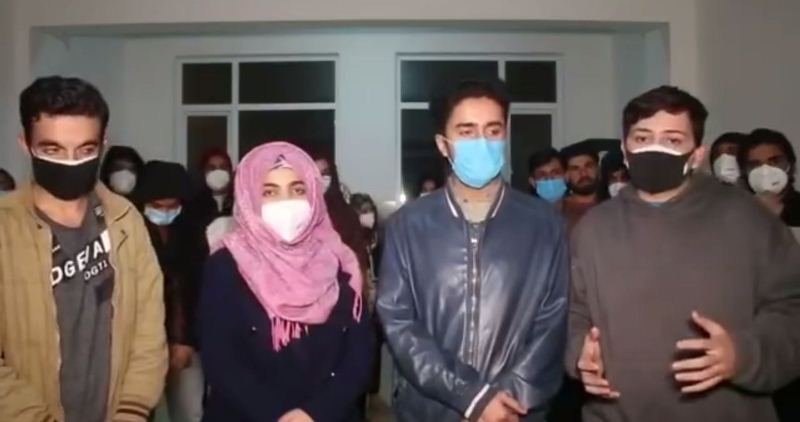
    Three Pakistani students diagnosed with coronavirus in China have been cured, the Chinese embassy in Pakistan has said.

    “We are pleased to learn that three Pakistani citizens affected by coronavirus in China have been cured and discharged from hospitals in Guangzhou and Shenzhen of Guangdong province,” the Chinese mission in Pakistan tweeted Wednesday.

    “All the best to them! Thank you, medical team in China,” it added, tagging Pakistan’s Ambassador to China, Naghmana Hashmi, and Special Assistant to the Prime Minister (PM) on Health, Dr Zafar Mirza.

    No further details of the students, however, were shared by the mission.

    According to The News, Dr Mirza had in January announced that four Pakistani students in China were tested positive for the coronavirus at a press conference in Islamabad. At that time too, the SAPM had refused to share the names of the affected students with the media.

    “The government will take good care of the students who have contracted the virus,” he had said at the presser.

    The death toll from China’s coronavirus epidemic climbed past 1,100 on Wednesday but the number of new cases fell for a second straight day, raising hope the outbreak could peak later this month.

    As Beijing scrambles to contain the outbreak, the number of people infected on a cruise ship off Japan’s coast rose to 174 — the biggest cluster outside the Chinese mainland.

    Another 97 people died in China, raising the national toll to 1,113, while more than 44,600 people have now been infected by newly named COVID-19 virus.

  • ‘India offered to evacuate Pakistani students from coronavirus-hit China’

    ‘India offered to evacuate Pakistani students from coronavirus-hit China’

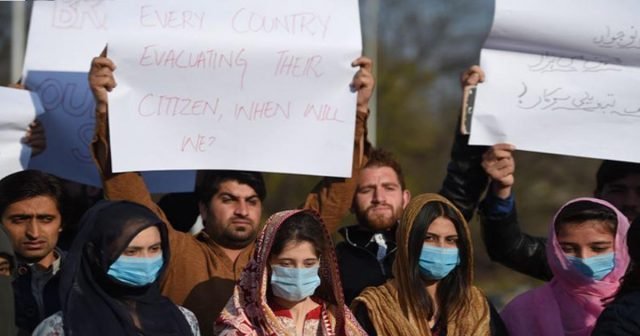
    India had offered to evacuate Pakistani students from China’s Wuhan — the epicentre of deadly coronavirus –, Minister of External Affairs S Jaishankar told Rajya Sabha [Upper House of Indian Parliament], India Today reported.

    According to reports, replying to a question posed by Bharatiya Janata Party (BJP)-nominated lawmaker Rupa Ganguly, S Jaishankar told the house that before the two Air India flights were sent in, India had offered ‘bring back all the people in our neighbourhood’.

    “At the time when two flights were going, we had told all the students and the larger community in Wuhan that we were prepared not only to bring back our own people but bring back all the people in our neighbourhood who would like to come back,” Jaishankar said.

    “This was an offer which was made to all our neighbours, but of them, seven nationals of Maldives chose to avail the offer. But the offer was made to everybody,” the minister clarified.

    Last week, two Air India flights had brought back 638 Indian nationals and seven nationals of Maldives. 80 Indian students left behind in Wuhan

    The minister of external affairs informed the fouse that despite an evacuation effort, 80 Indians — including 10 who were barred from boarding the evacuation flight as they showed symptoms of coronavirus — have remained back in Wuhan.

    Jaishankar said that the 70 Indians chose not to be evacuated, but the Indian Embassy is in constant touch with them all. “I want to assure the house and the families of those in Wuhan that the embassy is in touch with all students and is regularly monitoring their welfare,” he said.

    The minister also applauded the efforts of two embassy officials who risked their lives and traveled from Beijing to Wuhan to help in evacuation efforts.

  • Woke students in ‘secular’ India

    The BJP coming to power has only removed the lid from the internal realities of the unsuccessful story of Indian democracy.

    Unlike Pakistan, where student unions were banned during the military rule of Ziaul Haq, in India, student unions on campuses have successfully sustained till date. In the past few years, Jawaharlal Nehru University (JNU) has been mentioned as a refrain in discussions on student politics — particularly in terms of burgeoning progressive politics — the spillover effect of which has reached not only Pakistan, but major parts of the globe as a good omen for the oppressed.

    The student union of JNU, better known as JNUSU, was recognised as a symbol of resistance, the voice of voiceless and a representative of the marginalised and vulnerable communities within India. JNUSU gained popularity across the world after its former president Kanhaiya Kumar was arrested from campus in 2016 due to his association with a protest gathering held at JNU.

    The protest was organised by some students of the varsity on February 9, 2016, in order to commemorate the judicial killing of Afzal Guru (hanged Feb 9, 2013) and also to question the violation of human rights by the Indian state in Indian occupied Kashmir (IoK).

    Consequently, the fascist Bharatiya Janata Party (BJP) government pressed charges against the students who had organised the protest, as well as Kanhaiya, who had addressed the protest gathering. Kanhaiya, Umar Khalid and Anirban Bhattacharya were the three students who were jailed following the registration of an FIR [First Information Report] against them.

    With already popular Azadi slogans taking a different tone following Kanhaiya’s arrest, students – especially Kashmiri — took a tone that went on to prove their courage at the forefront of the struggle against Indian Prime Minister (PM) Narendra Modi’s fascist regime.

    The recent wave of mass-mobilisation in India started in the aftermath of the controversial Citizenship Amendment Act (CAA) that grants the government the right to declare people, unable to produce citizenship documents, as “illegal immigrants” and allows any declared illegal immigrant, except Muslims, to become a citizen of India on the grounds of persecution in neighbouring Muslim states.

    CAA’s implementation, however, comes after forming a National Register of Citizens (NRC). NRC has been implemented in the Indian state of Assam where people, who have not made it to the register, have either already been detained in camps or are facing the threat of landing in the same since there is no way to prove which countries do these allegedly illegal immigrants belong to.

    The massive mass-scale protests in India against the discriminatory CAA law drew much attention after the December 15 protest led by students of Jamia Millia Islamia University in a Muslim locality of New Delhi. With police cracking down on these protesting students by not only baton-charging but also shooting them, and that too on campus, tables started to turn on the Indian state.

    With students of Aligarh Muslim University protesting on campus against the brutality met out to their peers from Jamia Millia Islamia University, a new wave of resistance took over India. Fierce confrontation meted out to the cops, especially by female students, in what turned out to be the defining moment for the anti-CAA movement, as more people, although largely Muslims, joined the protests, and the same still goes on.

    Outside their campuses, students of Jamia Millia and Aligarh University are much more involved in mobilising and organising the ongoing protests. However, they are subsumed by the grandiosity of JNU and its student leadership that has expressed solidarity to Jamia students by joining one of the protests outside JNU.

    Despite a huge communication gap and both Pakistan and India’s coercive forces employed to keep people away from each other, the engagement of student-political activists gives us hope that a broader united front to fight injustice and oppression will someday be built.
    While mass participation of students, youth and religious minorities in the protests against BJP’s plan of constructing a Hindu Rashtra, which according to their publicised map, is extended to Afghanistan, seems insufficient to deal with, it is important, as well as necessary, to demand that the newly-passed legislation by the parliament be rolled back.

    But would it ensure peace and security for Muslims and other marginalised communities like Dalits, who too are at risk after the promulgation of CAA and NRC? Or in other words, does the struggle for safeguarding Indian constitution in itself, guarantee protection to religious minorities?

    Apart from the popular discourse propagated around the Indian constitution that claims it is ‘secular’, the deployment of state apparatus against lower caste people within Hindus and other marginalised and religious minorities, tell a different story, which has become clearer under the BJP. The destitution of religious minorities in terms of poverty, employment, education and above all, political representation, stands in testimony to the fact that they were reduced to ‘second-class citizens’ in the largest democracy of the world even when BJP was not in power.

    The BJP coming to power has only removed the lid from the internal realities of the unsuccessful story of Indian democracy. Therefore, it becomes much more significant for the protesters from Asam to Uttar Pradesh and from Jamia Millia to Shaheen Bagh to consolidate these anti-BJP forces in one political project which possibly would push the current discourse beyond constitutionalism, instead of leaving the burden of saving constitution and secularism on the shoulders of already underprivileged Muslim community of India.

    Amid all the recent political developments in Pakistan and India, there has been a convergence of progressive ideas across the border which is largely manifested in the unconditional solidarity extended by the Progressive Students’ Collective (PSC) among other progressive student organisations in Pakistan to their counterparts in India.

    Despite a huge communication gap and both the states’ coercive forces employed to keep people away from each other, the engagement of student-political activists gives us hope that a broader united front to fight injustice and oppression will someday be built.
  • Madrassa students won a robotics competition at Taxila University

    Madrassa students won a robotics competition at Taxila University

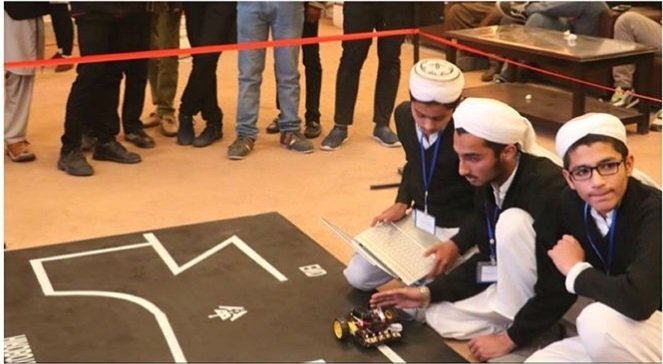
    Students from Jamia Baitul Salam participated in an educational competition held at HITEC University Taxila. The madrassa students won robotics competition beating participants from 20 other universities.

    Not only this but they also won Urdu speech competition
    and spelling bee contest. 

    Every year HITEC University arrange an inter-university event that involves different curricular and co-curricular competition. Over 20 educational institutes take part in different activities. 

    Jamia Baitul Salam is one of Islamic welfare educational institutions that offers their students worldly knowledge under the shade of religion. The institute also offers both matriculation and O level education to the students.

    .

  • We forget…

    It was a cold December morning when Pakistan had woken up to the gloom of having lost Dhaka over four decades ago.

    Leaving their abodes, hundreds of thousands – if not millions – had taken to social networks to vent their frustration over the tragedy that until December 16, 2014, was deemed the darkest in the 70-something years history of the country.

    Little did they know that 150 coffins, 134 of which were to be the heaviest, were to be lifted later that day; that a tragedy much similar to 2004’s Beslan massacre in Russia, was in the offing.

    Six gunmen affiliated with Tehrike Taliban Pakistan (TTP) conducted a terrorist attack on Army Public School (APS) Peshawar at around 10 am. The militants, all of whom were foreign nationals, entered the school and opened fire on staff and children, killing 150, including 134 between the ages of eight and 18.

    The attack sparked widespread reactions from across the country, as condemnations from the public, government, political and religious entities, journalists and celebrities, poured in. Imran Khan’s infamous 126-day Islamabad sit-in as a member of the opposition was also called off.

    While media reacted strongly to the events as major newspapers, news channels and many commentators called for a renewed and strong action against militants, many countries, international organisations and important personalities also condemned the attack.

    Reacting to the carnage at the army-run school, terrorist organisation Al-Qaeda said that “soldiers should be targeted, not their children”.

    Today marks five years since wails of the nation broke through the deafening silence of December amid the state’s failure to protect its own; since those at odds vowed to rise above their differences to unite and fight extremism, and since the moment when we started forgetting yet another tragedy.

    Although it is believed that memories hanging heaviest are the easiest to recall, it is regrettable how we tend to forget even the ones that hold in their crinkles the ability to change not only our lives as individuals but also the fate of the entire nation.

    It is regrettable how we have limited our recalling of these painful memories to certain days such as December 16, without thinking of the families that go through the pain of losing their loved ones, especially minors, all day every day.

    Make no mistake as what we argue is not torturing ourselves with the misery that is our own creation, but what we advocate for is realising every day what led to the tragic episode that should’ve defined us for the generations to come.

    Because it is regrettable how we were let down, it is regrettable how we let down those 150 innocents, regrettable how we let down millions of others killed because of the failure of the state to protect its citizens, and regrettable how many of us fail to realise there still is time for us to pick ourselves up, dust ourselves off and get back in the saddle.

    Here’s to the courageous survivours who beat the cowards five years ago… here’s to the memory of the 150 souls, from the ashes of whom, we must rise.

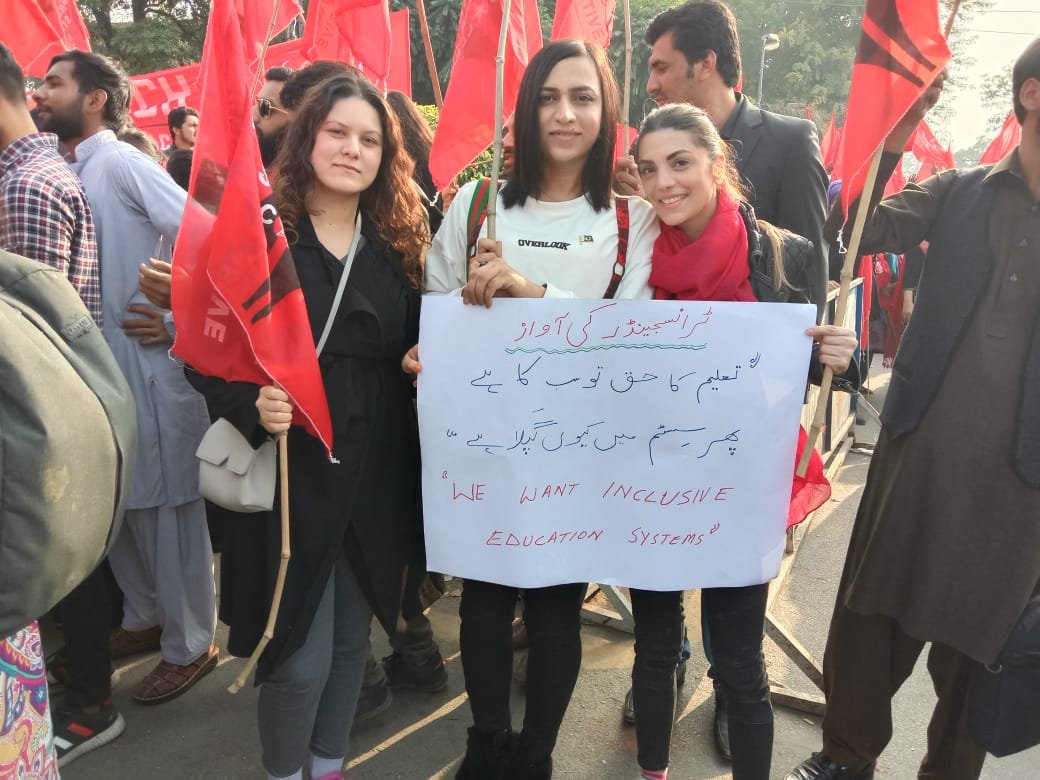
  • Students’ Solidarity March: What is this red all about?

    Students’ Solidarity March: What is this red all about?

    Students, rights activists, lawyers,
    labourers and even politicians on Friday joined hands to hold countrywide
    Students’ Solidarity March as they raised awareness about what they called was
    the persisting “educational crisis” facing Pakistan.

    Among many allegations leveled against the marchers, who were protesting against fee hikes and the policies affecting them, and were demanding a conducive educational environment, was that they were “driven by foreign powers” and were “being misused for someone’s vested interests”.

    Eyebrows were also raised over the fact that major parts of the country turned red as people from all walks of life in over 50 cities took to roads; wearing red, holding daunting placards, raising full-throat slogans against the system and waving red flags.

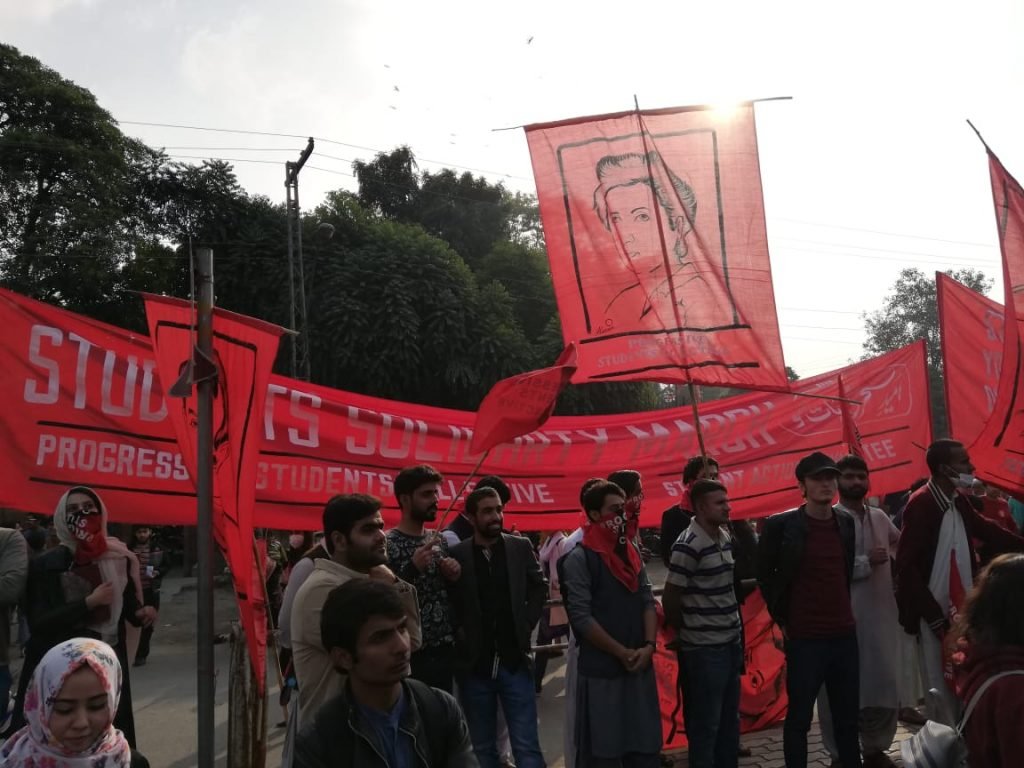
    Banners at the March in Lahore

    Red is a colour long-misconstrued by many first-world countries and some like Pakistan — the ones that participated in the Soviet-Afghan War that insurgent groups fought against the Soviet Army and the Democratic Republic of Afghanistan government.

    But while “Red Scare” is not a term unfamiliar
    to many, the colour red has a deep history that these students refer to and it is
    not all about the red flags that communists used.

    Even though it is predominantly a symbol of socialism, communism and Marxism, it has been associated with left-wing politics since the French Revolution that overthrew the monarchy and established a republic in the late 18th century.

    For these students, it signifies the blood of those spilt in acts of brute force anywhere in the world and the call for change in times of dire need. It signifies resistance.

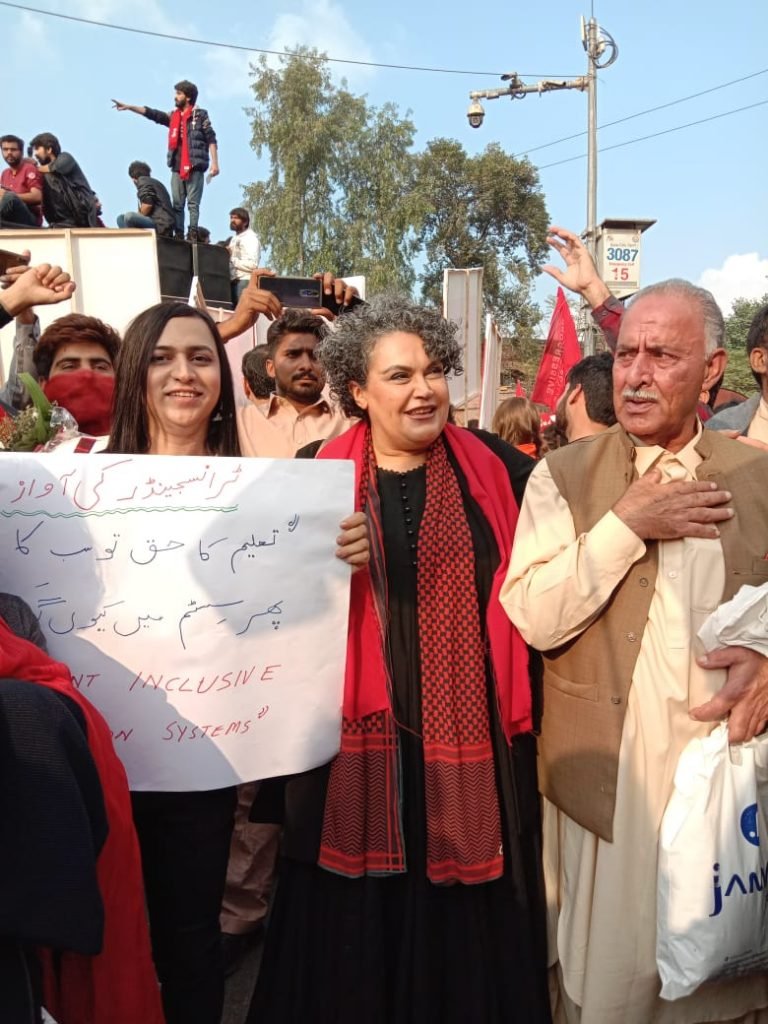
    Ghinwa Bhutto at the March wearing red

    “From Chicago’s Haymarket Square Massacre
    to people from the downtrodden segments of the society committing suicide in modern
    times, from people belonging to the Indo-Pak subcontinent who lost their lives
    in the World Wars to the farmers bearing the brunt of poor economic policies…
    it represents the blood of all those students who have ended their lives
    because of this rotten system,” said one student activist with a red scarf
    around his neck.

    When asked about the person or entity they referred to while raising the slogan ‘jab laal laal lehrayega tab hosh thikanay ayega’, another student activist stepped up to clarify.

    The March across Pakistan

    “We are addressing the ruling elite and
    referring to the industrialists who exploit the poor. We speak of administration
    of educational institutions that treat students like customers and have made
    campuses nothing less than prisons,” she said.

    “None of them represent us, but they are
    the ones who rule us. We need better representation within the corridors of
    power. We… the people… the working class,” the activist maintained, adding that
    the colour red represented the power of the people.

    STUDENTS’
    SOLIDARITY MARCH:

    Earlier, ministers, leaders of opposition parties, journalists as well as rights activists voiced their support for the marchers as the 2019 edition of the Students’ Solidarity March kicked off. The march was held in Karachi, Lahore, Islamabad, Rawalpindi, Quetta, Gilgit, parts of Khyber Pakhtunkhwa (KP), Azad Jammu & Kashmir (AJK) and interior Sindh.

    https://www.youtube.com/watch?v=HqnmOHKW3ss
    What did these students want?

    They demanded the revival of student unions
    and solution to the problems being faced by them and their peers.

    The protesting students said the Pakistan
    Tehreek-e-Insaf (PTI) government had left them dejected and directionless and
    reduced the higher education budget to almost half, bringing Pakistan into the
    list of countries that spend very less on education.

  • Why are we marching?

    On November 2 and 3, 2019, in a meeting hosted by the Progressive Students’ Collective, more than twenty students’ organisations from all across the country, including Gilgit-Baltistan (GB) and Azad Jammu & Kashmir (AJK) formed the Students’ Action Committee to demand revival of student unions and other issues in higher education.

    The committee vowed to
    launch a nationwide struggle for revival of student unions, against the cut in
    educational budget, increasing harassment cases in universities, security
    forces interferences in educational institutions, student torture cases, lack
    of educational infrastructure and ban on freedom of expression. It also decided
    that the first public activity under the banner of Students’ Action Committee
    would be the Students’ Solidarity March on November 29, 2019.

    The current crisis of
    higher education in Pakistan confronts students in the form of rising cost of
    education and a drastic decrease in immediate returns from a college degree.
    Not only is it harder to afford college education, but education expenses also
    leave students and their families in more debt and with limited job
    opportunities. A shrinking job market with employment opportunities swayed
    through social capital in the form of “contacts” has no space for a majority of
    graduates.

    We are marching on November 29 to organise and to seek institutional power in universities and create a way of holding onto that power. It’s our education — we should control it.

    It seems like a
    four-year degree only qualifies one to become a daily-wage labourer. Given this
    continual crisis, students are organising on campuses across the country for
    the forthcoming Students’ Solidarity March, after so many decades their
    struggles for the restoration of students’ unions are not fragmented but
    coordinated.

    Since the collapse of
    the students’ movement of the 70s and the subsequent ban on student unions in
    1984 under the dictatorship of General Ziaul Haq, most campus activism has
    taken the form of single-issue groups. There is a ban on any kind of political
    activity by students on campus and those who have tried to raise their voice
    for rights, have been rusticated, abducted and sometimes killed by fascist
    groups. By using anti-terror laws, their voices have been suppressed.

    Due to different kinds of repression on campuses, students haven’t been able to form an alliance that can give voice to all those being robbed of their rights and facing severe repression.

    From the past one year,
    students are agitating in different campuses on different issues, which include
    protests and sit-ins against fee hikes, sexual harassment, against the
    abduction of a number of students and for better housing, internet and transport
    facilities on campuses.

    While the resistance
    that popped up at Quaid-e-Azam University (QAU) against budget cuts and tuition
    hikes remained partially successful in pressurising the administration to succumb
    to some of their demands, the fiscal situation and budget cuts at QAU are not
    unique.

    We are marching because if we want to create radical change on our campuses — change that addresses economic and cultural aspects of our life — we need to move towards students’ unionism.

    Provincial governments
    across the country are cutting funding to schools and universities; the
    university officials are using budget cuts to jack up tuition fees (hikes that
    will continue for a long time) and to cut essential services and programmes.
    While the students at QAU, Punjab University (PU), Sindh University (SU) and
    the University of Balochistan (UoB) are putting up an amazing response to fee
    hikes, sexual harassment and securitisation of campuses, a coordinated effort
    under the banner of Students’ Action Committee to revive student unions would
    be more beneficial for the student body to assert its power as a class that
    represents the youth of this country.

    Therefore, we are marching on November 29 to organise and to seek institutional power in universities and create a way of holding onto that power.

    Progressive policy
    changes are a great thing on our campuses and they should be fought for, but
    they should be fought for in the context of building student power at campus
    level as well as at national level. Building student power means gaining more
    and more control over our campuses and the decisions that affect us as students.
    In the end, student power means a student-run higher education system.

    It’s our education — we should control it.

    We are marching
    together to ensure that local victories do not become isolated pockets of
    progress and resistance. We are marching to ensure that this work spreads and
    students find ways to coordinate efforts with those underway at other campuses
    in their areas.

    Movements grow not only by example, but when they actively engage people and share resources and hard-earned lessons. Because the federal government still makes most of the higher education policy decisions, students also need to coordinate on the national level in ways that foster cross-campus solidarity and encourage local initiatives.

    We are also aware of
    the fact that coordinating efforts should never mean that local campus organising
    becomes merely an extension of some larger campaign because this sort of
    strategy cannot support long haul organising. We need coordination that is
    mutually beneficial to everyone involved.

    We are marching on November 29 because if we want to create radical change on our campuses — change that addresses economic and cultural aspects of our life — we need to move towards students’ unionism. Unions that are run by the rank and file students; that fight alongside faculty and workers; that seek to empower the historically oppressed and revolutionise our educational system.

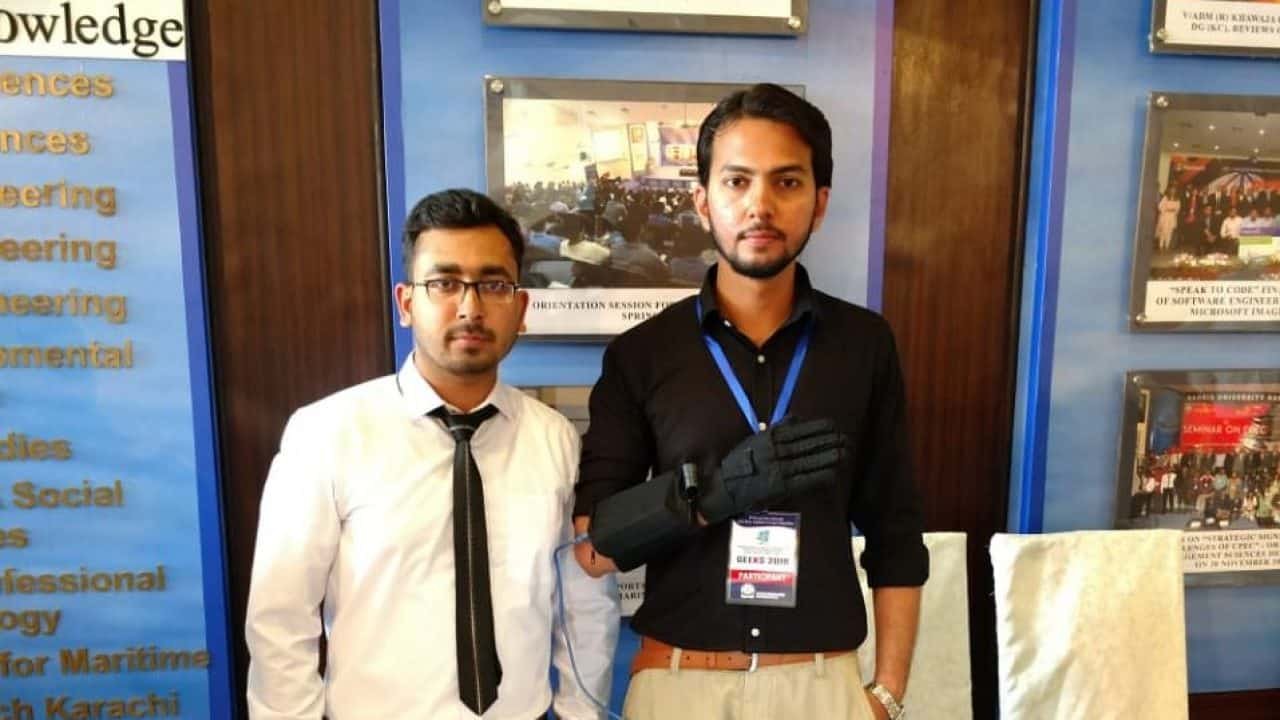
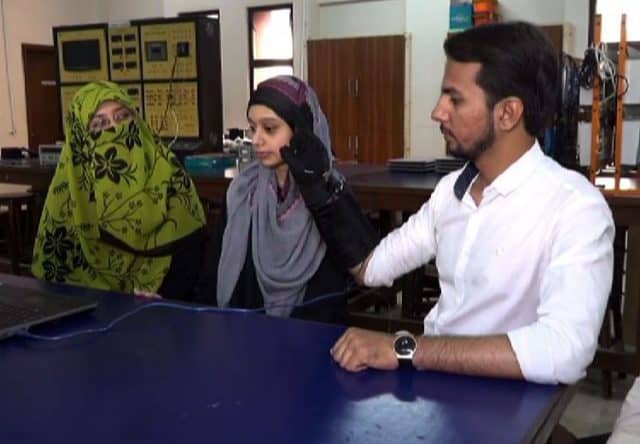
  • Karachi students developed speaking glove

    Karachi students developed speaking glove

    Karachi students of Usman Institute of Technology have invented a smart glove called ‘Speech Generator Glove’ that can turn Pakistani Sign Language into audible speech.

    Speech Generator Glove weighs around 300 grams
    and can convert 28 Urdu words into sentences.

    The students say they are working to add more
    Urdu words into the glove’s dictionary. The Speech Generator Glove’s total word
    capacity is of 3,000 words.