Tag: Study

  • Study finds babies born to COVID-positive mothers have antibodies

    Study finds babies born to COVID-positive mothers have antibodies

    All five babies born to women with COVID-19 infection during a study in Singapore have had antibodies against the virus, although the researchers said it is not yet clear what level of protection this may offer.

    The findings from a study of 16 women released on Friday also found that most were mildy infected, while more severe reactions occurred in older women with a high body mass index – a trend that is mirrored in the general population.

    Of the five who had delivered their babies by the time the study was published, all had antibodies, according to the Singapore Obstetrics and Gynaecology Research Network.

    The number of antibodies in the babies varied, and was higher among those whose mothers’ had been infected nearer to the time of delivery, the researchers said. Further monitoring is required to see whether the antibodies will decline as the babies get older, they added.

  • Men with COVID-19 three times more likely to need intensive care than women: study

    Men with COVID-19 three times more likely to need intensive care than women: study

    Men infected with COVID-19 are three times more likely to require intensive care than women and are at significantly higher risk of dying from the virus, scientists said Wednesday.

    Researchers analysed over three million confirmed coronavirus cases from 46 countries and 44 states in the US between January 1 and June 1, 2020.

    They found that the risk of Sars-Cov-2 infection was the same for women and men, as “exactly half” of the confirmed cases were male patients.

    But men are almost three times more likely than women to be hospitalised in an intensive care unit and are 39 percent more likely to die from the virus, the study said.

    “These data may help doctors to recognise that sex is a risk factor for severe disease when managing patients,” co-author Kate Webb told AFP.

    “Sex is an under reported variable in many studies and this is a reminder that it is an important factor to consider in research,” the Cape Town University researcher said.

    The trend is global – aside from a few exceptions – and can mostly be put down to biological differences, researchers said.

    “Sex differences in both the innate and adaptive immune system have been previously reported and may account for the female advantage in Covid-19,” the authors said.

    Women naturally produce more type I interferon proteins that limit the abnormal immune response known as a cytokine storm, believed to play a role in provoking severe forms of Covid-19.

    The “female” oestradiol hormone may also help women to fend off grave forms of the virus, as it boosts the response of T cells – which kill infected cells – and increases the production of antibodies, the study said.

    “In contrast, the male sex hormone testosterone suppresses the immune system,” the authors noted.

    Sex-based differences in co-morbidities associated with severe Covid-19 may put men at outsize risk, they wrote in the study, published in Nature Communications.

    But data to account for the role of other medical conditions is lacking, they added.

    In addition, the authors noted the similarity in the proportions of women and men with hypertension and diabetes globally, “the most common reported comorbidities in hospitalised Covid-19 patients.”

    The findings may have implications for future vaccines, the authors said.

    Webb noted previous vaccines to other infections have shown differences in response between women and men.

    “It is still to be determined whether the same will be true for Sars-CoV-2 vaccines,” Webb said.

    “But we hope that our paper highlights the need to include sex as a variable when considering vaccine research.”

  • Study reveals one in five COVID-19 patients develop mental illness within 90 days

    Study reveals one in five COVID-19 patients develop mental illness within 90 days

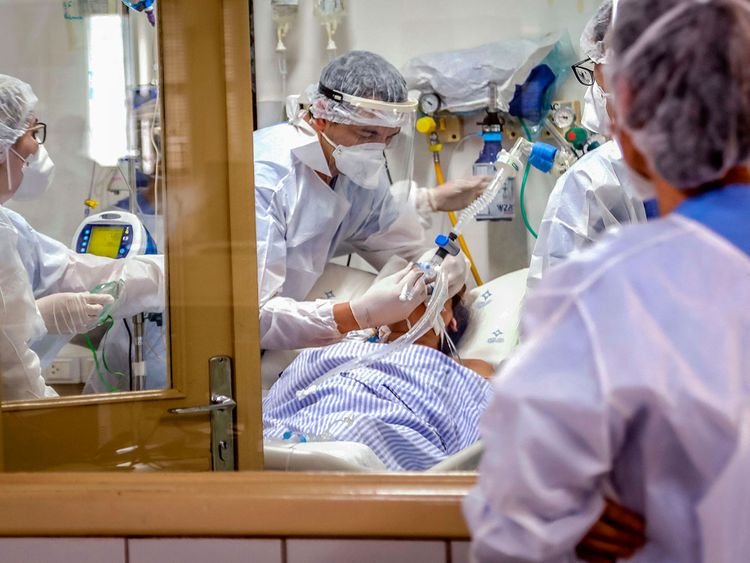
    COVID-19 survivors are likely to be at greater risk of developing mental illness, psychiatrists have said after a large study found that 20% of those infected with the virus are diagnosed with a psychiatric disorder within 90 days.

    Anxiety, depression and insomnia were most common among recovered COVID-19 patients who were involved in the study and researchers also found significantly higher risks of dementia, a brain impairment condition, in them.

    “People have been worried that COVID-19 survivors will be at greater risk of mental health problems, and our findings … show this to be likely,” said Paul Harrison, a professor of psychiatry at Britain’s Oxford University.

    Doctors and scientists around the world instantly need to examine the causes and identify new treatments for mental illness after COVID-19, Harrison said.

    “(Health) services need to be ready to provide care, especially since our results are likely to be underestimates (of the number of psychiatric patients),” he added.

    Read more – Pakistan’s COVID-19 positivity nears 5%. What does that mean?

    In the three months following testing positive for COVID-19, 1 in 5 survivors was recorded as having a first-time diagnosis of anxiety, depression, or insomnia. This was about twice as likely as for other groups of patients in the same period, the researchers said.

    The study also found that people with a pre-existing mental illness were 65% more likely to be diagnosed with COVID-19 than those without.

    Mental health specialists not directly involved with the study said its findings add to growing evidence that COVID-19 can affect the brain and mind, increasing the risk of a range of psychiatric illnesses.

  • Study reveals COVID-19 can survive on human skin for nine hours

    Study reveals COVID-19 can survive on human skin for nine hours

    Japanese researchers have discovered that COVID-19 stays on human skin for nine hours, stressing the need for frequent hand washing to fight the on-going pandemic.

    The pathogen that causes the flu, by comparison, survives on human skin for about 1.8 hours, said the study, published this month in the Clinical Infectious Diseases journal.

    The study backs World Health Organisation guidance for regular and thorough hand washing to limit the spread of the virus.

    “The nine-hour survival of SARS-CoV-2 (the virus strain that causes COVID-19) on human skin may increase the risk of contact transmission in comparison with IAV (influenza A virus), thus accelerating the pandemic,” the study underscored.

    “The longer survival of SARS-CoV-2 on the skin increases contact-transmission risk; however, hand hygiene can reduce this risk,” the study said.

    Both the contagious diseases, the COVID-19 and the flu virus are inactivated within 15 seconds by applying ethanol that is used in the hand sanitizers.

  • Study suggests dengue may provide immunity against COVID-19

    Study suggests dengue may provide immunity against COVID-19

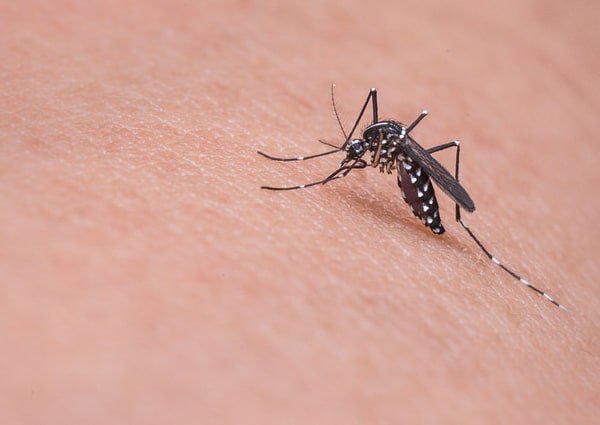
    A new study that analysed the coronavirus outbreak in Brazil has found a link between the spread of the virus and past outbreaks of dengue fever that suggests exposure to the mosquito-transmitted illness may provide some level of immunity against COVID-19.

    The study, which has not yet been published was led by Miguel Nicolelis, a professor at Duke University, compared the geographic distribution of coronavirus cases with the spread of dengue in 2019 and 2020.

    Places with lower coronavirus infection rates and slower case growth were locations that had suffered intense dengue outbreaks this year or last, Nicolelis found.

    “If proven correct, this hypothesis could mean that dengue infection or immunization with an efficacious and safe dengue vaccine could produce some level of immunological protection” against the coronavirus, it added.

    Nicolelis told Reuters that the reveal was interesting because previous studies have shown that people with dengue antibodies in their blood can falsely test positive for COVID-19 antibodies even if they have never been infected by the coronavirus.

     “This indicates that there is an immunological interaction between two viruses that nobody could have expected because the two viruses are from completely different families,” Nicolelis said, adding that further studies are needed to prove the connection.

    Brazil has the third-highest total of COVID-19 infections in the world with more than 4.4 million cases – behind only the United States and India. In states such as Paraná, Santa Catarina, Rio Grande do Sul, Mato Grosso do Sul and Minas Gerais, with a high incidence of dengue last year and early this year, COVID-19 took much longer to reach a level of high community transmission compared to states such as Amapá, Maranhão and Pará that had fewer dengue cases.

    The team found a similar relationship between dengue outbreaks and a slower spread of COVID-19 in other parts of Latin America, as well as Asia and islands in the Pacific and Indian Oceans.

  • On Human Rights Day and In Data: Rape Cases in Punjab

    On Human Rights Day and In Data: Rape Cases in Punjab

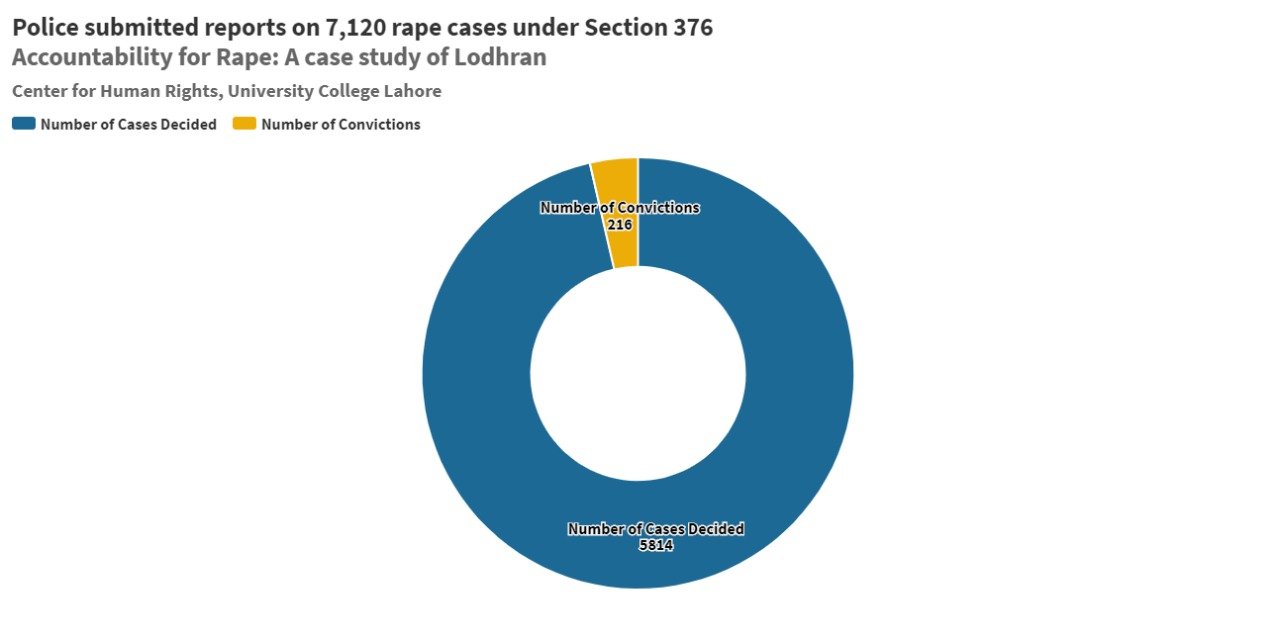
    In a report, done by the University College of Lahore, ‘Accountability for Rape: A case study of Lodhran’, the numbers show that rape cases in Punjab were staggeringly high in 2016-2017. The study is thorough and looks at court judgements to show how alleged rapists were acquitted. And a whole lot of them were set free.

    Police submitted reports on more than 7,000 new rape cases during 2016-17, cases that had a verdict were more than 5,800. Out of the ones that were given a verdict, only 216 cases had a conviction.

    The police did its job and submitted reports in more than 7,000 cases but only 216 were convicted.

    The study revealed that major cities had more rape cases, as expected, but what was not expected was the amount of convictions in relation to the cities.

    Lahore tops the list with the most amount of cases and the least amount of convictions

    Lahore, Rahim Yar Khan and Bahawalpur had the highest number of rape incidents and a very low conviction rate. But

    The highest number of contest acquittals was in Lodhran, which means that when the case went to trial, an acquittal took place when the judge decided that the prosecution had not proved that the defendant was guilty.

    These areas were highlighted because the cases going to court were fewer than larger cities

    The report also showed the cities with the lowest amount of cases with Mianwali and Jhelum topping the list as ‘safer’ cities.

    Cities with the lowest amount of rape cases reported

    Interestingly the study also shows judgments that listed the ‘character’ of the women who were raped.

    How many cases were individual or gang rapes, with individual rapes being the most common type of rape in Punjab.

    79 percent were individual rapes and 16 percent were gang rapes

    The marital status of the women was also documented and most of the women who were raped were married when the incident took place.

    41 percent of the rape victims were married women

    More than half of the incidents that took place involved a man who knew the victim.

  • “Mera beta to bus engineer banega” Have things changed?

    “Mera beta to bus engineer banega” Have things changed?

    We all have grown up listening to “Mera beta to bus engineer banega” aur ” Meri beti doctor banegi” . Many of us thought that things have changed in the recent times so we asked people if they insist that their children study science and children if they were forced to opt for it and why. We must say some of the answers were really intriguing. Have a look