Tag: Subsidies

  • Pakistan will have to agree to ‘unimaginable’ IMF conditions for bailout: PM Shehbaz

    Pakistan will have to agree to ‘unimaginable’ IMF conditions for bailout: PM Shehbaz

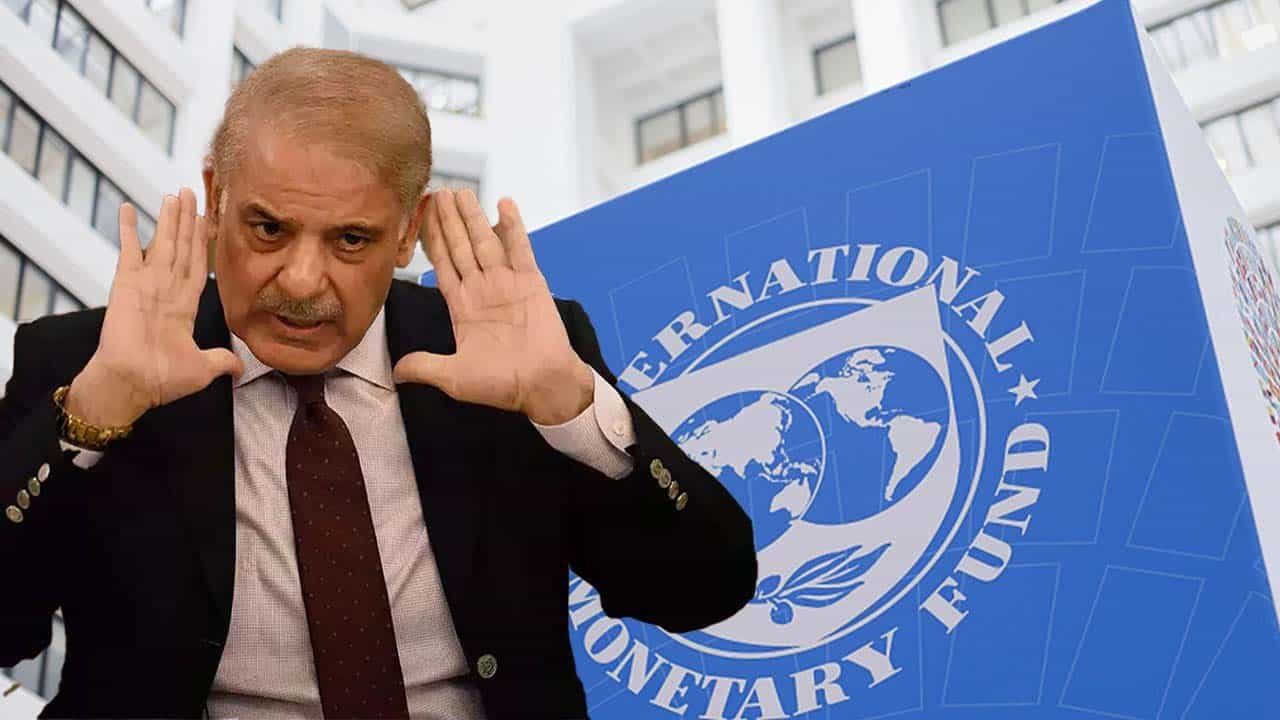
    The government will have to accept “beyond imagination” International Monetary Fund (IMF) bailout requirements, according to Pakistan’s Prime Minister (PM) Shehbaz Sharif, who made the statement on Friday in a meeting of civil and military leaders in the northwestern city of Peshawar.

    In order to avoid backlash before the upcoming elections in October, the administration has refused to implement the tax increases and subsidy reductions that the IMF has required.

    “I will not go into the details but will only say that our economic challenge is unimaginable. The conditions we will have to agree to with the IMF are beyond imagination. But we will have to agree with the conditions,” PM Shehbaz said.

    In the midst of political unrest, a deteriorating security situation, and a balance of payments crisis caused by its high levels of foreign debt, Pakistan’s economy is in terrible circumstances.

    The nation’s central bank announced Thursday that its foreign exchange holdings had decreased once again to $3.1 billion, which analysts said was just enough to cover imports for fewer than three weeks.

    On Wednesday, year-over-year inflation reached a 48-year high, making it difficult for Pakistanis to afford food products.

    With the possibility of national bankruptcy looming and no friendly countries prepared to give less painful bailouts, Islamabad started to submit to pressure ahead of the IMF visit.

    To manage a rogue illicit market in US dollars, the government relaxed regulations on the rupee, which led to the currency falling to historic lows. Additionally, artificially low gasoline costs have increased.

    A backlog of thousands of cargo containers filled with material the countrycannot afford is accumulating at Karachi port as a result of the government no longer providing letters of credit, with the exception of necessary food and medication.

    IMF advises Pakistan to fetch additional revenue

    The IMF has suggested the Pakistani government implement significant, high-quality, and long-lasting tax and non-tax revenue initiatives in order to raise extra funds to close the anticipated Rs. 600 billion fiscal framework shortfall.

    Currently in Pakistan, an IMF delegation led by Mission Chief Nathan Porter is having discussions for the ninth review, which will go through February 9.

    After months of resistance, the government was finally obliged to agree to all the terms laid forth by the Washington-based lender due to the country’s declining foreign exchange reserves and deteriorating economic circumstances.

    Following the conclusion of the negotiations under the $6.5 billion Extended Fund Facility, a staff-level agreement is anticipated.
  • IMF report exposes incorrect PTI policies that led to rupee’s devaluation

    IMF report exposes incorrect PTI policies that led to rupee’s devaluation

    The International Monetary Fund (IMF) has issued its country report for Pakistan, exposing erroneous policies implemented by the PTI administration that, according to the Fund, undermined the country’s currency reserves and led to the rupee’s devaluation.

    The study also discloses what the present administration, led by the PML-N, has promised the international lender, according to Samaa.

    The study does not identify any political party, but it does mention rising GDP, which the PTI has said is the outcome of its policies. Pakistan’s GDP increased by 6 per cent in fiscal year 2021-22 (FY22), which ended less than three months after Imran Khan was overthrown by parliament in early April.

    According to experts, the increase in GDP was driven by unsustainable expansion, which resulted in economic overheating. The IMF study comes to the same conclusion.

    According to the Fund, GDP growth in FY22 was “driven by permissive fiscal policy and a delayed monetary reaction to inflationary pressures.”

    These factors, together with worldwide food and fuel price shocks, resulted in a major worsening of the external situation, including an unsustainable current account deficit, a considerable decrease in reserves, and a significant devaluation of the rupee.

    The PTI administration failed to respond to the worldwide commodity price increase, and its policies caused the rupee to depreciate and currency reserves to dwindle, according to the international lender.

    Pakistan is at a crossroads in its economic development. Internal demand reached unsustainable levels as a result of a challenging external environment paired with procyclical domestic measures. According to the IMF, the resulting economic overheating resulted in high fiscal and external deficits in FY22, contributed to increasing inflation, and destroyed reserve buffers.

    The PTI administration broke its pledges quickly after collecting roughly $1 billion from the IMF. Following the completion of the sixth evaluation, programme implementation worsened. In the midst of a volatile political scene, planned fiscal adjustment was reversed, and some significant EFF agreements were honoured, as per the report.

    According to the report, the present administration has informed the Fund that it would reimpose the general sales tax (GST) on petroleum products and will not provide any fuel subsidies.

    The current administration will not declare a tax amnesty unless Parliament first approves it. It will also simplify the sales tax on services throughout the country. Currently, different provincial territories apply varying rates of sales tax on services.

    The Fund takes notice of the actions implemented by the PML-N administration to re-establish the IMF programme, including a budget based on a basic surplus, a rise in interest rates, and the elimination of fuel subsidies.

    The IMF has advised the government to maintain a market-based currency rate, enhance tax income, and strengthen foreign reserves. The IMF also said that the lending programmes entail exceptional risks even after policy adjustments.

  • Punjab cabinet approves annual budget 2022-23

    Punjab cabinet approves annual budget 2022-23

    On Monday, the provincial cabinet adopted the annual budget for the fiscal year 2022-23, as well as yearly development funds.

    The cabinet passed a Rs 3.226 trillion budget bill for 2022-23 with approval of amended estimates for 2021-22 at a meeting chaired by Punjab Chief Minister Hamza Shehbaz.

    In addition to raising pensions, the meeting approved an increase in salary for provincial employees. Employees were also approved for a 15 per cent special allowance.

    A memorandum of understanding (MoU) for delivering free drugs to cancer patients across the province was approved at the session.

    The meeting also ratified the decisions made at the Punjab cabinet’s previous meeting.

    The chief minister praised the work of provincial ministers, the chairman of the planning and development committee, the secretary of finance, and other authorities in creating the best budget documents.

    He stated that the budget included concrete steps to provide true relief to the public.

    The cabinet has approved a Rs164.26 billion budget for infrastructure development projects. A total of 177 billion rupees has been set allocated for the development of roads.

    In the meantime, the cabinet authorised a planned allocation of Rs164.26 billion for infrastructure development projects. One hundred and seventy-seven billion rupees has been set aside for road construction.

    According to the records, Rs27.63 billion has been put aside for irrigation, Rs5 billion has been set aside for energy, and Rs41.4 billion has been set away for production.

    The provincial finance ministry has proposed allocating Rs29.5 billion for public buildings, as well as more than Rs21 billion for urban development.

    The government of Punjab has set aside Rs14.77 billion for agriculture, Rs4.5 billion for forests, approximately Rs1 billion each for wildlife and fisheries, and nearly Rs4 billion for the livestock and dairy sectors. While Rs6.2 billion has been set aside for governance and information technology (IT).

  • IMF programme will only revive if Govt hikes fuel, electricity prices

    IMF programme will only revive if Govt hikes fuel, electricity prices

    The International Monetary Fund (IMF) has stated unequivocally that the loan programme under the Extended Fund Facility (EFF) will not be revived unless oil and electricity prices are increased. The Pakistani delegation, on the other hand, has asked for more time to withdraw the subsidy.

    The delegation would meet with Prime Minister (PM) Shehbaz Sharif to discuss it. Both parties have agreed to continue discussions. Apart from the withdrawal of the subsidy, officials claim that all other issues have been resolved.

    Pakistan was unable to persuade the IMF despite a week of discussions in Doha, Qatar, from May 18 to May 25.

    IMF postponed the rollback of Pakistan’s stalled $6 billion External Financing Facility (EFF) programme late Wednesday as the government hoped that the revival would bring stability to the financial markets, the rapid weakening of the local currency with depleting foreign exchange reserves.

    In a statement, the Fund underlined the elimination of petroleum and energy subsidies, among other conditions, as a prerequisite for the program’s restoration. Following the conclusion of the talks, Nathan Porter, the IMF Mission Chief for Pakistan, stated that the Fund held meaningful talks with Pakistani representatives.

    “The Mission has engaged in highly constructive discussions with Pakistani authorities in order to reach an agreement on policies and reforms that will lead to the completion of the awaiting seventh evaluation of the authorities’ reform programme, which is backed by an IMF Extended Fund Facility arrangement”.

    As per Porter, significant progress was made during the mission, including the need to continue addressing massive inflation and rising fiscal and current account shortfalls, whereas ensuring sufficient protection for the weakest.

    The Fund also lauded the State Bank of Pakistan’s (SBP) decision to raise the policy rate from 12.25 per cent to 13.75 per cent in order to combat rising inflation. However, the mission chief noted that there were fiscal deviations from the policies agreed upon in the previous review, reflecting in part the fuel and power subsidies announced by the authorities in February.

    The PTI-led government initially concurred to increasing the prices of energy and petroleum products, but Imran Khan announced a subsidy on both commodities later in March, and the present government is proceeding with the same arrangement.

    As per Porter, the IMF team highlighted the importance of tangible policy actions, including the removal of fuel and energy subsidies and the FY2023 budget, to achieve programme objectives. He went on to say that the IMF team is looking forward to proceeding with its discussion and close engagement with the Pakistani government on policies to ensure price stability for the benefit of all Pakistanis.