Tag: subsidy

  • IMF urges Punjab to end electricity subsidy, imposes more conditions

    IMF urges Punjab to end electricity subsidy, imposes more conditions

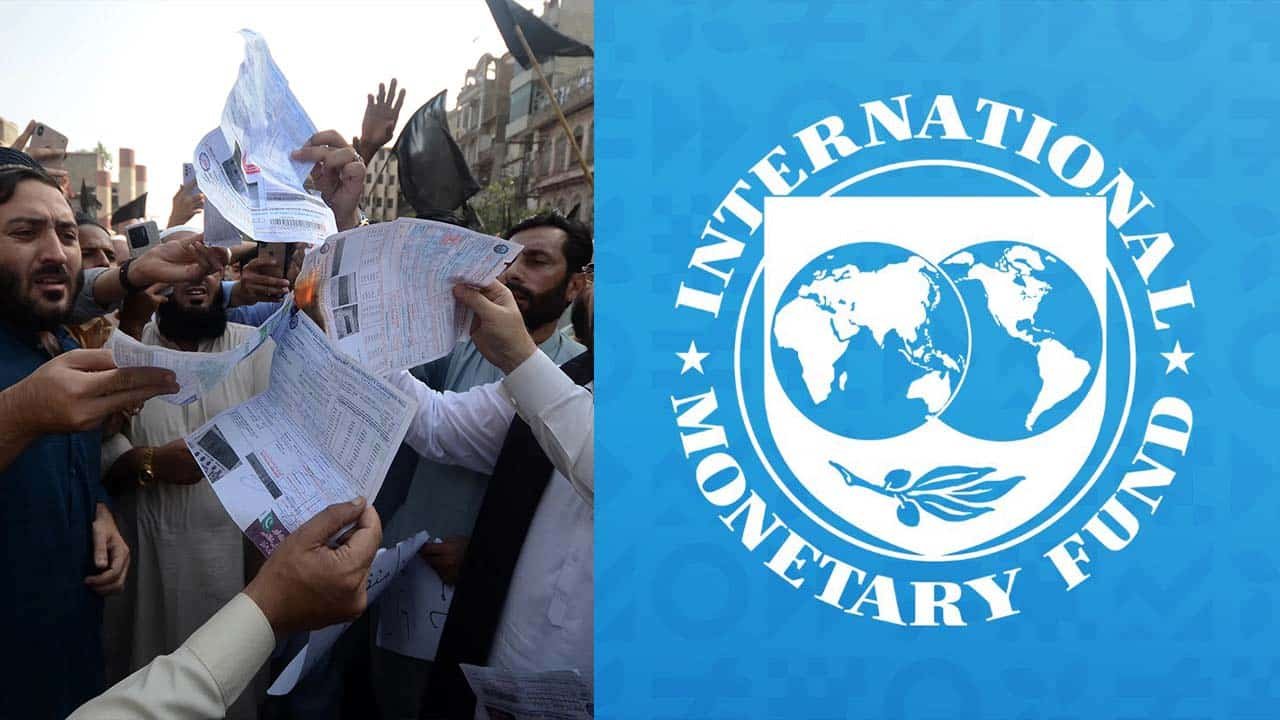
    The International Monetary Fund (IMF) has put forward at least three strict conditions in Pakistan after the Punjab province gave Rs45 to Rs90 billion in electricity subsidies for two months.

    Last month, President of Pakistan Muslim League-Nawaz Muhammad Nawaz Sharif announced that Punjab government would provide relief of fourteen rupees per unit to consumers using up to 500 units of electricity in August and September bills.

    The IMF has asked the province to end the temporary subsidy by September 30th while also clarifying that no province w
    could give such a subsidy during the 37-month Extended Fund Facility (EEF) programme.

    According to IMF, it was one of the conditions for the bailout that no provinces would take such a move. This brings into question Prime Minister Shehbaz Sharif’s previous statement when he encouraged other provinces to follow suit of Punjab.

    Tribune reported that the IMF also introduced the condition that would bind the provinces to not introduce any fiscal policy that could undermine the commitments given under $7 billion loan.

    The provinces have committed to signing a National Fiscal Pact by the end of September, which would mean they undertake some expenditures that are currently the federal government’s responsibility.

  • IMF declines request for tariff adjustment and subsidy on high electricity bills 

    IMF declines request for tariff adjustment and subsidy on high electricity bills 

    In light of the government’s comprehensive deliberation on strategies to alleviate the burden of electricity bills, the International Monetary Fund (IMF) has declined the proposal for tariff adjustments or additional subsidies. This decision was made despite the government’s assertion that its bill collections for August had nearly met expectations, as reported by The News on Tuesday. 

    The IMF has expressed strong reservations regarding the government’s initiative to provide relief to economically disadvantaged individuals facing high power bills. Pakistan has consequently approached the global lender, requesting permission to phase in upcoming quarterly tariff adjustments (QTAs) and Fuel Price Adjustments (FPAs) amounting to Rs7.50 per unit over the next four to six months. 

    An authoritative source confirmed this request, stating, “Pakistan has sought the IMF’s approval for a gradual implementation of QTAs and FPAs over a four to six-month period, potentially incurring additional costs that will require mutual agreement.” 

    According to sources, the power sector continues to grapple with challenges, given the necessity of increasing tariffs by approximately Rs5 per unit in the current month and incorporating FPAs amounting to Rs2.72 per unit. Consequently, a cumulative tariff increase exceeding Rs7 per unit is anticipated.  

    The computation of QTAs will be based on losses incurred during the April-June period, reflecting reduced unit usage, increased interest payments, and fluctuations in exchange rates. Meanwhile, the FPA is calculated to address the rising prices of imported fuel, resulting in a potential hike of Rs7.50 per unit in September bills, subject to regulatory approval.  

    Simultaneously, the Ministry of Power asserts that its bill collection performance for August 2023 has improved and is nearing expectations. They contend that to mitigate the impact of inflated bills, they must seek the IMF’s approval for the staggered implementation of QTAs and FPAs.  

    According to calculations by the Ministry of Power for various consumer categories, those utilising 400 units can anticipate a reduction in power charges from Rs21,000 in August 2023 to Rs16,963 in September and further to Rs11,356 in October, factoring in QTAs and FPAs. Similarly, charges for consumers using 300 units are projected to decrease from Rs13,000 in August to Rs10,000 in September and Rs8,000 in October 2023. 

    With the onset of winter in October, it is anticipated that the issue of escalated bills will gradually subside. Additionally, officials are planning to approach the National Electric Power Regulatory Authority (Nepra) to determine the next tariff adjustments, considering seasonal usage trends. Given the peak usage during the summer months followed by a decline in winter, tariff adjustments will be tailored to accommodate these seasonal fluctuations. 

    The Prime Minister has instructed the Ministry of Finance to develop a strategy for economic stability in Pakistan. During a meeting with Interim Finance Minister Shamshad Akhtar, the current economic situation was discussed. 

    The government aims to find innovative solutions to ease the burden on electricity consumers, addressing issues like circular debt, power theft, and taxes with short-term measures. 

    The caretaker government’s primary goal is to facilitate early general elections while upholding constitutional obligations such as constituency delimitation following the population census. The focus is on restructuring fiscal and monetary policies for economic revitalization. 
  • IMF demands approval for subsidies as Pakistan struggles to secure tranche

    IMF demands approval for subsidies as Pakistan struggles to secure tranche

    Pakistan has been negotiating an agreement with the International Monetary Fund (IMF) since January 2023. The IMF has specified that Pakistan must receive prior approval before providing any additional subsidies.

    Negotiations have hit a snag over a plan announced by Prime Minister Shehbaz Sharif in March to charge wealthy fuel consumers more to subsidise prices for the poor who have been severely impacted by inflation.

    Despite meeting almost all of the Fund’s conditions, the government is struggling to convince the lender to release the tranche. On a separate issue of securing confirmation on the external financing gap of $5 billion by June 2023, the Kingdom of Saudi Arabia and the United Arab Emirates have provided over $2 billion and $1 billion respectively.

    The formal agreements with these countries are expected to be signed soon. The Pakistani authorities are complaining that the IMF has placed prior actions before signing the staff-level agreement, which was not done in the past.

    According to The News, the IMF asks for confirmation from commercial banks before signing the agreement, while banks are asking for IMF’s board approval and the revival of the Fund program to refinance loans worth $2-3 billion.

    Finance Minister Ishaq Dar has assured US diplomat Andrew Schofer that the government is committed to completing the ongoing IMF program.

  • Pakistan did not consult IMF regarding discounted petrol for low-income people: Esther Perez

    Pakistan did not consult IMF regarding discounted petrol for low-income people: Esther Perez

    According to the International Monetary Fund (IMF), Pakistan’s government did not seek advice from the multilateral lender regarding the discounted petrol for the low-income group.

    The government’s plan to increase fuel costs for more affluent drivers to pay for a subsidy for those with lower incomes, according to Esther Perez, the IMF’s resident representative for Pakistan, was not discussed with the international lender.

    “Fund staff are seeking greater details on the scheme in terms of its operation, cost, targeting, protections against fraud and abuse, and offsetting measures, and will carefully discuss these elements with the authorities,” said Perez.

    Earlier, the federal government announced that it would reduce the price of petrol up to Rs100 for motorcycle riders and owners of vehicles up to 800 cc in order to lessen the impact of rising petrol costs on people who are already suffering from inflation. According to Malik, Prime Minister Shehbaz Sharif has ordered that low-income individuals receive petrol subsidies of up to Rs100 per liter instead of Rs50.

    Under a comprehensive strategy, cheap petrol will be offered to motorcyclists and owners of vehicles up to 800 cc, while owners of vehicles beyond 800 cc will be charged full price. The minister made it clear that this is not a subsidy but a cross-subsidy.

    According to Malik, “the owners of big vehicles will pay more for petrol.” The rich will pay Rs100 more for petrol, while the poor will pay Rs100 less. 210 million people are poor in a population of 220 million, and we stand with poor Pakistanis.”

    He said the decision to provide fuel at lesser rates will be implemented within six weeks.

  • Govt announces Rs50 per litre petrol subsidy for low-income individuals

    Govt announces Rs50 per litre petrol subsidy for low-income individuals

    The government has announced a relief package for low-income individuals in the form of a petroleum subsidy worth Rs50 per litre. This announcement was made during a meeting chaired by Prime Minister (PM) Muhammad Shehbaz Sharif on Sunday.

    The Prime Minister directed that consumers using small vehicles such as motorcycles, rickshaws, and 800-CC vehicles will be included in the subsidy scheme. He also instructed relevant authorities to finalise the scheme as soon as possible to ensure its effective implementation.

    The Prime Minister emphasized that this subsidy will provide much-needed relief to low-income individuals, as they are the primary users of small vehicles. Despite the severe economic difficulties faced by the country, the government is committed to assisting the poor in every way possible.

    During the meeting, Minister of State for Petroleum Musadik Malik briefed participants on the strategy for implementing the subsidy to low-income individuals.

  • Govt raises ghee price by Rs75 per kg, sugar by Rs19 per kg

    Govt raises ghee price by Rs75 per kg, sugar by Rs19 per kg

    The government-run Utility Store Corporation (USC) has increased the price of sugar, flour, ghee, and other food items despite the prime minister’s relief package.

    Utility stores increased the price of sugar by Rs19 per kg, ghee by Rs75 per kg, and 20 kg bag of flour by Rs496.

    According to the notification, the new prices will go into effect at utility stores all around the nation on January 1, 2023.

    The Benazir Income Support Programme’s (BISP) deserving beneficiaries will not be subject to the new pricing.

    Prime Minister Shahbaz Sharif had previously stated that Food Stores Corporation would provide targeted subsidies on basic food items. These products included rice, lentils, ghee, sugar, and flour. Customers who are registered in the Benazir Income Support Programme are eligible to purchase food from the Food Stores outlets at discounted prices.

    In the meantime, the Food Stores Corporation has instructed all of its clients and consumers to SMS their Computerized National Identity Card numbers from their mobile phones to 5566. After receiving a one-time password, they can then purchase goods and apply for subsidies.

  • IMF asks Pakistan to reduce expenses before loan talks

    IMF asks Pakistan to reduce expenses before loan talks

    The International Monetary Fund (IMF) has asked Pakistan to reduce expenses before talks on the ninth review of a $7 billion loan programme.

    Discussions between Pakistan and the IMF are still underway, but no party has reached a broad agreement on a revised macroeconomic framework for the current fiscal year.

    According to The News, the ninth review’s conclusion and the distribution of the $1 billion tranche might not happen until the following calendar year 2023 as a result of the ongoing negotiations.

    The discussions went on for weeks, but the two parties were unable to agree to begin policy-level discussions to wrap up the approaching ninth review by the end of November.

    Although both Pakistan and the international lender are keeping quiet and refusing to make any public statements, rumours in the background indicate that the talks broke down due to disagreements over the revised macroeconomic and fiscal framework that Islamabad had prepared and shared with the IMF.

    Pakistan must now put in a lot of effort to finish the review by the first week of December 2022. If the negotiations are successful next month, the IMF will ultimately release the next tranche in January 2023 because the Christmas and New Year holidays start after that date. The Executive Board of the multilateral lender will meet the following year to approve Pakistan’s next tranche.

    The News had approached both IMF and Finance Ministry officials to inquire about the exact schedule for the conclusion of the pending review. One close aide of Minister for Finance Ishaq Dar stated that “discussions were going on Zoom. Insha Allah soon (the review will be concluded).”

    The new macroeconomic and fiscal framework for 2022–23 is being contested by the IMF because it thinks the goals are unattainable and at odds with actual conditions.

    The government anticipated nominal growth in the range of 25 per cent, with real GDP growth of 2 per cent and an average inflation rate of 23 per cent, however, the other numbers did not line up with the revised nominal growth estimates.

    The government has not revised the $7.47 trillion yearly objective set by the Federal Board of Revenue (FBR). The IMF, however, thinks that the reduction of imports may result in a shortfall for the tax collector. Second, assuming FBR met its goal, the tax-to-GDP ratio would decline even lower because it did not equal the nominal growth statistics of 25 per cent. Third, the aim of Rs2 trillion in non-tax revenue also might not be met.

    The government had set a target of Rs855 billion before the next budget, therefore the IMF highlighted that the petroleum development levy may not completely materialise. Because the government was unable to impose a fee of Rs50 per litre on diesel and because the consumption of petroleum products fell by 21 per cent, the levy target may now be reduced downward to Rs500 billion.

    Another obstacle to reaching agreement was the government’s failure to pass legislation and reforms to the energy industry.

    Given that the State Bank of Pakistan’s (SBP) reserves currently stand at $7.8 billion, the delay in finalising the IMF agreement could exacerbate the economic problems already plaguing the nation.

  • Pakistan Railways paying Rs35 billion pension to unverified employees annually

    Pakistan Railways paying Rs35 billion pension to unverified employees annually

    About 115,000 Pakistan Railways (PR) retired employees who have not been verified have been receiving annual pensions totaling Rs35 billion, according to research by the government-funded Pakistan Institute of Development Economics (PIDE), a think tank housed within the Planning Commission.

    It revealed in a statement yesterday that between 2015 and 2020, Pakistan Railways lost Rs144 billion. A deficit of Rs44 billion in 2020, which includes Rs36 billion for the pensions of 120,000 PR employees, is included in the losses, according to Dawn.

    According to the PIDE report, the PR also received a subsidy from the government in 2020 worth Rs45 billion to make up for these losses.

    Due to the intense competition from the road transportation industry and PR’s inability to implement a customer-centric business strategy due to a complicated bureaucratic structure, the public agency has been inefficient, underfunded, and overstaffed for the past 35 years, making losses.

    The study also noted that 115,000 unverified PR retirees receive an annual pension of Rs35 billion. To solve the problem, a biometric verification system to confirm the pensioners in question has been proposed.

    A Pay and Pension Commission (PPC) has also been established in this respect, and it will take into account issues pertaining to the railways and other public organizations.

  • Govt announces Rs3 billion subsidy to provide ghee at discounted rate

    Govt announces Rs3 billion subsidy to provide ghee at discounted rate

    The Minister for Information and Broadcasting Marriyum Aurangzeb announced on Monday that the government would provide a Rs3 billion subsidy to lower the price of ghee to assist the masses.

    She told a press conference that the market price of ghee is currently Rs550 per kg, but it is being sold at Rs300 per kg in utility stores across the country, according to AAJ News

    “The government is bearing a cost of Rs250 per kg,” she added, adding that the price of ghee was Rs150 per kg when the Pakistan Muslim League-Nawaz (PML-N) handed over the office to the Pakistan Tehreek-e-Insaf (PTI) in 2018.

    On the other hand, the government has increased the price of ghee and cooking oil at other retailers.

    She further stated that a 10 kg wheat bag could be purchased for Rs400 at any utility store in Pakistan.

    The minister said that on June 6, about one hundred mobile vans were added to the Utility Stores Corporation (USC) network, citing residents of Khyber-Pakhtunkhwa (KP) having difficulty obtaining discounted items due to limited distribution of utility stores.

    9,500 new utility stores

    “In addition, on June 9, 500 new USC stationary stations were set up to deliver wheat, and 100 more items are being added today,” she stated. “Since June 6, the USC network has grown by 700 units”.

    Price control committees have also been established, according to her, to keep hoarding and reselling of USC materials under check. The availability of items at utility retailers, she said, was also being watched.

    The minister stated that Rs17 billion had been set aside to give the public with low-cost sugar, ghee, and wheat.

  • Energy sector to get a massive portion of the Rs699 billion subsidy

    Energy sector to get a massive portion of the Rs699 billion subsidy

    The government has proposed allocating Rs699 billion to multiple sectors in order to provide relief to the masses during the new fiscal year 2022-23.

    According to budget estimates, the government plans to boost subsidies by Rs17 billion to Rs699 billion for the next fiscal year, up from Rs682 billion in the previous fiscal year.

    The government has reduced power sector subsidies by Rs26 billion to Rs570 billion for the next fiscal year, down from Rs596 billion in the previous fiscal year and proposed increasing the total subsidy for the power sector for PEPCO by Rs18 billion to Rs275 billion. The budget 2022-23 proposed reducing the subsidy amount for K-Electric by Rs5 billion to Rs80 billion.

    Moreover, subsidies for Independent Power Producers (IPPs) are slashed by Rs39 billion to Rs215 billion for the coming fiscal year.

    The amount of petroleum subsidy has been upped from Rs51 billion to Rs71 billion. During the next fiscal year, the Utility Stores Corporation (USC) will receive a Rs17 billion subsidy. PASSCO will also receive Rs7 billion subsidy.

    During the next fiscal year, Rs8 billion has been set aside for wheat subsidies to Gilgit-Baltistan. For the coming fiscal year, the subsidy for the metro bus service has been increased to Rs4 billion. Similarly, the fertiliser plant subsidy has been increased to Rs15 billion.

    Read more: Govt unveils Rs9.5 trillion budget 22-23, focused on sustainable growth

    The new government has reduced the Naya Pakistan Housing and Development Authority (NAPHDA) subsidy amount to Rs500 million for the next fiscal year, down from Rs30 billion in the previous fiscal year. NAPHDA’s markup subsidy has also been reduced, from Rs.3 billion to Rs.500 million for the coming fiscal year.