Tag: Sui gas

  • OGRA approves 74% hike in sui gas prices amid economic crisis

    OGRA approves 74% hike in sui gas prices amid economic crisis

    The Oil and Gas Regulatory Authority (Ogra) has approved an increase in the price of natural gas of up to 74 per cent at a time when the country’s people are struggling to make ends meet owing to rising inflation.

    According to specifics, the Sui Southern Gas Company (SSGC) and the Sui Northern Gas Pipelines Ltd. (SNGPL) would each be permitted to raise gas rates by up to 74.42 per cent and 67.75 per cent, respectively.

    Ogra’s decision will be implemented after the approval of the federal government. If the federal government does not approve it within 40 days, the decision will be implemented automatically.

    The oil and gas regulator has okayed increases of Rs406.28 and Rs469.28 per million British thermal units (mmBtu) for SNGPL and SSGC, respectively.

    OGRA further said that the average gas price for SNGPL would reach Rs952.17 per unit from the current price of Rs545.89 per mmBtu, while that of SSGCL would reach Rs1,161 per unit from the current Rs692.63 per mmBtu.

    LPG price hike

    Earlier, the prices of liquefied petroleum gas (LPG) were increased by Rs5 per kg without a notification from OGRA.

    The LPG price has now jumped to Rs260 per kg from Rs255 after an increase of Rs5. Meanwhile, the prices of domestic and commercial cylinders increased by Rs60 and Rs230, respectively.

    The gas is available for Rs270 per kilogramme in Murree, while its price exceeds Rs300 per kilogramme in Gilgit-Baltistan and Skardu.
  • Gas supply to industrial sites suspended for two days

    Gas supply to industrial sites suspended for two days

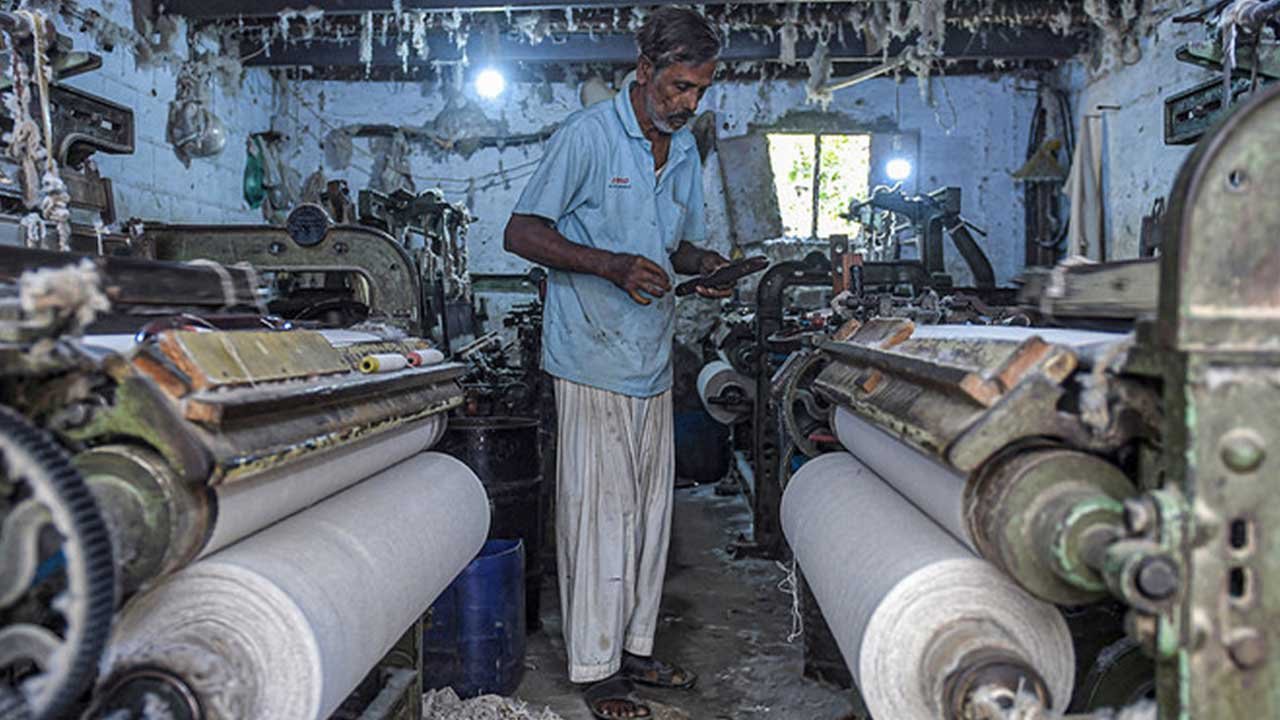
    The gas crisis has grown worse in the economic hub of Pakistan as the duration of gas load-shedding in Karachi industries was extended for up to two days.

    The industrial sites in Karachi will be facing two-day gas load-shedding instead of one.

    According to the information obtained, all industrial facilities and captive power plants in Karachi will not be supplied gas for two days.

    From December 17 to December 19, seven industrial zones and captive power plants were instructed to refrain from using Sui Southern Gas Company’s (SSGC) gas supplies on Saturday and Sunday.

    In addition to conducting unannounced raids on all industrial sites, the SSGC surveillance teams will also take legal action against those who violate the rules.

    Imtiaz Shaikh, the energy minister for Sindh, criticised the gas load-shedding on December 13 and claimed that although the province is generating more natural gas than it needs, it is still being denied its legitimate right.

    Imtiaz Shaikh, the energy minister, demanded that Sindh be given preference over other parts of the country in the provision of natural gas.

    “We will take the matter to court if required,” Sindh’s energy minister said. “We are also considering raising the issue in the Council on Common Interest (CCI),” he said.

    He said that the chief minister had discussed Sindh’s case regarding the gas issue during discussions between the state and federal governments. He expressed hope that the prime minister will pay attention to the situation.

    The provincial minister stated that when additional petrol is provided to the province, Karachi’s industry will resume operation.

    The most natural gas-producing province in Pakistan, Sindh, is now experiencing a severe natural gas shortage for home, industrial, and commercial customers.

  • Domestic users to experience 16-hour gas load shedding during winter

    Domestic users to experience 16-hour gas load shedding during winter

    Due to the requirement for a $37 per mmbtu subsidy, the federal government is unable to guarantee that domestic customers of both Sui Northern Gas Pipeline Limited (SNGPL) and Sui Southern Gas Company (SSGC) will have uninterrupted access to eight hours of gas per day during cooking hours in the upcoming winters.

    A parliamentary panel was informed on Thursday by Captain Muhammad Mahmood (retired), Additional Secretary (Incharge) for the Ministry of Energy’s Petroleum Division, that neither the government nor the gas firms had the resources to severely subsidise the domestic gas consumers. The secretary said, “We can’t supply gas at $3 per MMBtu against a current purchase of $40 per MMBtu.”

    He made it clear that every effort will be taken to guarantee household gas supply for three hours in the morning, two hours in the afternoon, and three hours in the evening.

    In response to a query, he stated that the Sindh gas load-shedding was a result of the allocation of gas between home and industrial uses. He claimed that in Sindh, 60 per cent of gas was delivered to industry and the remaining 40 per cent to homes and other sectors, in contrast to KP where 80 per cent of gas was supplied to domestic users.

    Imran Maniar, the managing director (MD) of SSGC, informed the committee that Balochistan contributed 110 mmcfd while Sindh produced 740 mmcfd.

    He claimed that due to the 10 per cent annual depletion of domestic gas reserves and the 100 per cent dependency on imported gas in ten years, there will be no gas in the upcoming winter.

    He stated that it was anticipated that in three to four years, LNG prices would decline significantly and the government would be able to finish building the new LNG facilities as planned.

    Due to the high expense of security and the country’s continued political unrest, new corporations were not expressing interest in oil and gas exploration. “The investors are waiting as they would not invest when new general election will be held next year,” he said.

    He added that due to sanctions, the anticipated import of gas from Russia or Iran was not feasible.

    In response to a question, the secretary stated that the cost of storing gas in the nation was high and that industrialised nations lacked such facilities; nonetheless, during recent gas crises, Germany and England began developing gas storage facilities.

    The previous administration authorised a draught of a new Pakistan Upstream Regulatory Authority to separate policy from regulation, according to Director General (DG) PC, Petroleum Division Kashif Ahmed.

    Provinces disagreed with a few of the proposed regulatory authority’s provisions, though. He stated that the authority would have four members from four different provinces and one vice chairman. “After getting approval from the competent forum, it will take three to four years for the establishment of the regulator for the upstream sector,” he added.

  • Severe gas shortage affect residents of Rawalpindi

    Severe gas shortage affect residents of Rawalpindi

    Since most of Rawalpindi has been without gas for more than a week, the Sui Northern Gas Pipelines Limited (SNGPL) has failed to supply natural gas for domestic users, even during the busiest summer months, and nothing has been done to remedy the situation.

    On Friday, there were long queues of customers waiting to purchase ‘naan’ at exorbitant prices at all ‘tandoors’ and hotels.

    According to Mukhtar Shah, General Manager of Sui Northern Gas Pipelines Limited (SNGPL) for the Rawalpindi region, there is a gas shortage for consumers as a result of the wet weather. In cloudy weather, there is a significant difference between supply and demand, he claimed. He claimed that we are working to make natural gas available everywhere.

    On the other hand, under the condition of anonymity, a few key post officers from SNGPL told The News that the relevant department had cut off natural gas to domestic users in order to benefit nearby businesses and CNG stations. According to the sources, the officers claimed that corrupt officers were profiting greatly from it.

    The LPG vendors were also making money by offering gas in black for an exorbitant Rs300 per kilogramme. The price of LPG gas has also increased by the government and been set at Rs260 per kilogramme, but dealers have been taking full advantage of the current circumstance and selling the commodity in black.

    Gas has not been available for more than a week in the following areas:

    Sher Zaman Colony, Shah Faisal, Shah Khalid, Adiala Road, Qasim Market, Misriyal, Chakra, Satellite Town, Jhanda, Mareer Hasan, Saleha Street, Munawar Colony, Mubarak Lane, Dhoke Juma, New Lalazar, Tahli Mohri, Defence Road, Dhoke Kala Khan, Gulistan Colony, Naik Alam, Dhoke Manga Khan, Kashmir Colony, Gulshanabad, Dhamyal, Quaid-e-Azam Colony, Scheme-III, Dhok Ratta, Arya Mohalla, Tipu Road, Lalkurti, Tench Bhatta, Jan Colony, Dhoke Ratta, Dhok Munshi, Rehmatabad, Dhoke Banaras, Sadiqabad, Muslim Town, Tipu Road, Raheemabad and several other localities.

  • OGDCL confirms gas discovery near Ghotki, Sindh

    OGDCL confirms gas discovery near Ghotki, Sindh

    On Wednesday, the Oil and Gas Development Company Limited (OGDCL) announced the finding of gas from an exploration well near Ghotki, Sindh.

    “The joint venture (JV) of Guddu Block comprising Oil & Gas Development Company Limited as an operator (70 per cent), SPUD Energy PTY Limited (SEPL) (13.5 per cent), IPR Transoil Corporation (IPRTOC) (11.5 per cent), and Government Holdings (Private) Limited (GHPL) (5 percent) has discovered Gas from an exploratory well namely Umair South East # 01, which is located in District Ghotki, Sindh,” the company stated in a notice.

    The Umair South East # 01 well, according to OGDCL, was spudded on May 9, 2022, as an exploration well to investigate the hydrocarbon potential of the Pirkoh Formation and Habib Rahi Limestone (HRL) to a projected depth of 785m.

    “Based on the interpretation of wireline logs, successful Drill Stem Test-1 in HRL tested 1.063 million standard cubic feet per day (mmscfd) gas through choke size 32/64” at 210 pounds per square inch (PSi) Well Head Flowing Pressure (WHFP)”.

    The finding of Umair South East-1 is the outcome of Guddu Joint Venture Partners’ aggressive exploration approach, according to the Pakistani oil and gas business.

    “It has opened a new route and will favourably contribute to alleviating energy demand and supply gaps from indigenous resources, while also adding to OGDCL’s and the country’s hydrocarbon reserves base,” it said.

    The discovery comes at a fortunate time for Pakistan, which has recently experienced huge power outages and a gas scarcity.

    Mari Petroleum Company Limited (MPCL) discovered gas/condensate earlier this month in the Bannu West-1 ST-1 Exploration Well, which was drilled in the Bannu West Block in North Waziristan, Khyber Pakhtunkhwa.

  • Lahore continues to face gas and power outage in Ramzan

    Lahore continues to face gas and power outage in Ramzan

    People in several localities of Lahore have complained of substantial pressure reduction as well as unannounced power cuts, bringing the natural gas and power shortages back in the holy month of Ramzan.

    On Friday, customers reported that natural gas load shedding had resumed in the city, making cooking at home difficult. Natural gas pressure only improved to a limited extent during Sehri and Iftari hours due to micromanagement by Sui Northern Gas Pipelines Ltd (SNGPL).

    As per the gas load management plan, gas supply to Compressed Natural Gas (CNG) filling stations has been a concern in the country, which has yet to be updated to accommodate this sector.

    Shortages, according to experts, are due to a gap in the import of Liquefied Natural Gas (LNG) shipments. After long-term sellers were unable to deliver, the government attempted to negotiate cargoes of spot LNG as a backup plan. Such attempts, however, have yet to show positive outcomes. The same goes for power load shedding.

    Read more: Another hike of Rs4.9 per unit approved in power tariff

    Gas disruptions and load shedding have become the norm, according to residents. Affected locations include Canal Bank Housing Scheme, Bedian Road, Taj Bagh, Mughalpura, Saddar, Johar Town, and many more Lahore neighbourhoods.

  • Major policy shift: Gas companies told to reduce tariffs

    Major policy shift: Gas companies told to reduce tariffs

    The government of Pakistan has officially directed the board and managing directors of the two gas utilities to cut down major revenue sources to provide relief to consumers through lowering tariffs reported DAWN.

    In a letter, the petroleum division has asked the chairpersons and managing directors of the Sui Northern Gas Pipelines Limited (SNGPL) and Sui Southern Gas Company Limited (SSGCL) to seek approval of their boards for lower revenue requirements in the consumer tariff.

    The companies have been asked to reduce their benchmarks of unaccounted for Gas (UFG) from 6.3 per cent to 4pc. This will cut gas companies’ revenue by Rs10bn a year.

    Secondly, they are also asked to reduce their rate of return from 17 and 17.5pc to 15pc with a revenue loss of about Rs5bn a year.

    Third, the directives also demand one per cent reduction in the rate of depreciation on assets with the financial impact of another Rs5bn. On top of that, both companies have also been asked to find ways to reduce their overall operational costs to create another fiscal space of about Rs5bn.

    The letter, written by petroleum secretary Asad Hayauddin, has conveyed to the boards and management of the two companies that these areas have been identified through a review of “various options to decrease the gas sales prices with a view to providing relief to the gas consumers”.

  • Largest gas reserve in 20 years discovered in Balochistan

    Largest gas reserve in 20 years discovered in Balochistan

    Pakistan Petroleum Limited (PPL) has found a huge gas reserve in Margand block of Kalat, Balochistan, 100% of drilling rights of which are owned by the PPL.

    According to the details, PPL had been drilling at Margand X-1 block since June 30, 2019. It carried out Modular Dynamics Testing (MDT) that helps in the detection of gas reserves. PPL further conducted a Drill Stem Test (DST) that revealed that these reserves might potentially exceed 1 trillion cubic feet.

    In comparison, Sui has estimated reserves of 2 trillion cubic feet. This is the first significant discovery of gas reserves in Balochistan since 2000 after which companies such as British Petroleum, Petronas and Niko Resources had been trying to tap unexplored reserves.

    All companies had, however, failed to discover reserves this large and pulled out of the country.

    Furthermore, little to no attention was given during the tenures of previous governments to exploit the domestic wealth of minerals and fulfil the energy needs of the country. Instead, dubious contracts like rental power plants and Liquified Natural Gas (LNG) power plants were signed, which the National Accountability Bureau (NAB) has been investigating.

    Pakistan can save more than $900 million on the import bill if Margand gas reserves replace LNG, which costs domestic consumers 100% more than Sui gas, a former board director of the PPL has said.