Tag: sun

  • Largest black hole discovered in Milky Way

    Largest black hole discovered in Milky Way

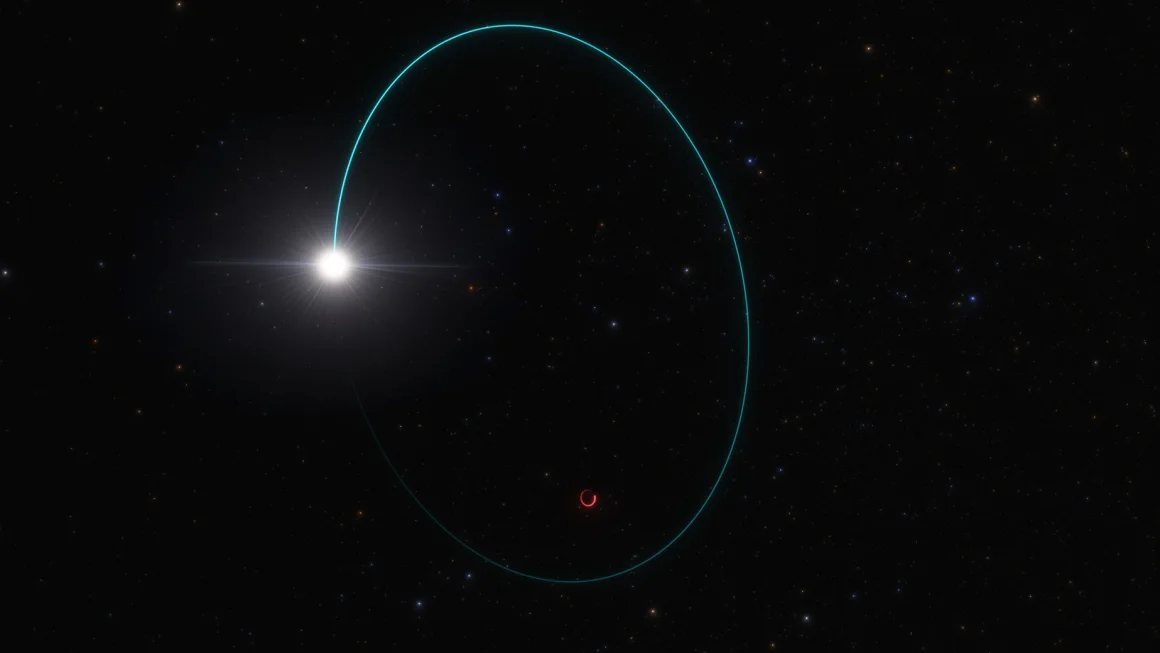
    PARIS: Astronomers identified the largest stellar black hole yet discovered in the Milky Way, with a mass 33 times that of the Sun, according to a study published on Tuesday.

    The black hole, named Gaia BH3, was discovered “by chance” from data collected by the European Space Agency’s Gaia mission, said an astronomer from the National Centre for Scientific Research (CNRS) at the Observatoire de Paris, Pasquale Panuzzo.

    Gaia, which is dedicated to mapping the Milky Way galaxy, located BH3 2,000 light years away from Earth in the Aquila constellation.

    As Gaia’s telescope can give a precise position of stars in the sky, astronomers were able to characterise their orbits and measure the mass of the star’s invisible companion — 33 times that of the Sun.

    Further observations from on-the-ground telescopes confirmed that it was a black hole with a mass far greater than the stellar black holes already in the Milky Way.

    “No one was expecting to find a high-mass black hole lurking nearby, undetected so far. This is the kind of discovery you make once in your research life,” Panuzzo said in a press release.

    The stellar black hole was discovered when scientists spotted a “wobbling” motion on the companion star that was orbiting it.

    Stellar black holes are created from the collapse of massive stars at the end of their lives and are smaller than supermassive black holes whose creation is still unknown.

    Such giants have already been detected in distant galaxies via gravitational waves. But “never in ours”, said Panuzzo.

    BH3 is a “dormant” black hole and is too far away from its companion star to strip it of its matter and therefore emits no X-rays — making it difficult to detect.

    Gaia’s telescope identified the first two inactive black holes (Gaia BH1 and Gaia BH2) in the Milky Way.

    Gaia has been operating 1.5 million kilometres from Earth for the past 10 years and in 2022 delivered a 3D map of the positions and motions of more than 1.8 billion stars.
  • First solar eclipse of 2021 to occur on June 10

    First solar eclipse of 2021 to occur on June 10

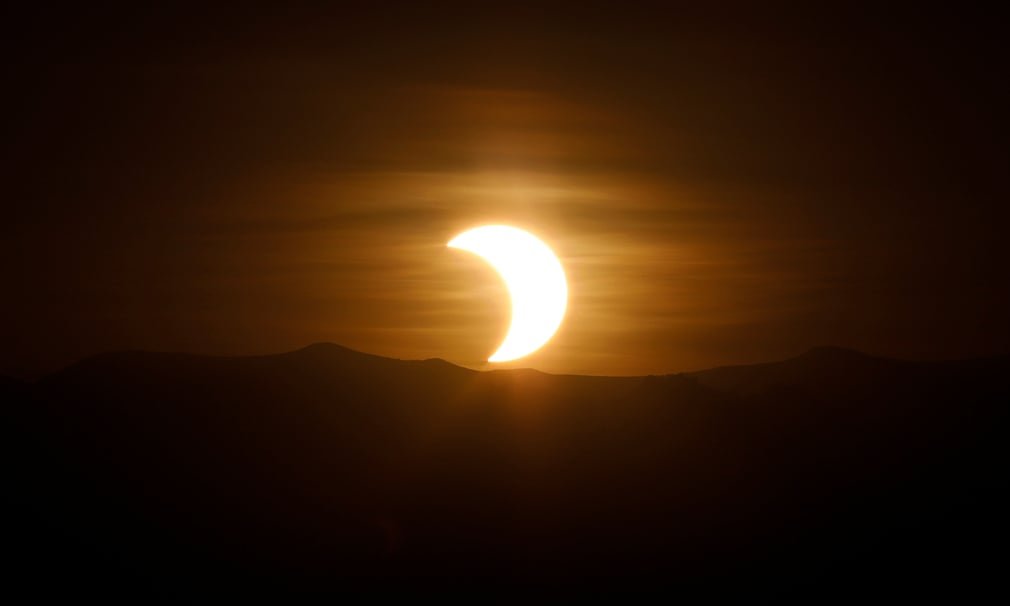
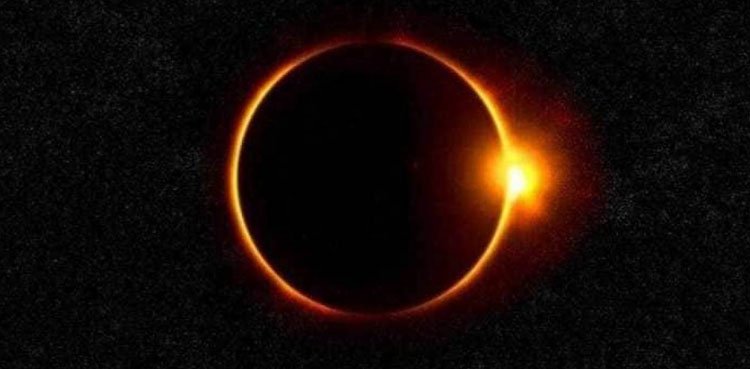
    The first solar eclipse of the year will occur on June 10. This eclipse is going to appear as a ‘ring of fire’.

    As per details, the eclipse will be seen in Russia, Greenland, Northern Canada, North Asia, Europe, and the United States.

    Astronomer and Director Institute of Space Science and Technology Karachi University Professor Dr Javed Iqbal said that the first solar eclipse of 2021 could not be witnessed in Pakistan.

    The eclipse can take place at 1:12pm Pakistani time while it would be at its peak at 3:42pm and expectedly end at 4:34pm, the professor said.

    Also Read:13 mesmerising photos of the Super Flower Blood Moon

    The annular solar eclipse occurs when the sun, moon and the earth come in a straight line and almost on the same plane. It is a partial eclipse when a ring of fire appears in the sky.

    They occur every year or two and can only be seen from a thin pathway across the planet.

    A solar eclipse always occurs about two weeks before or after a lunar eclipse, when the Moon moves into Earth’s shadow. Lunar eclipses are evident from about half of the Earth’s surface.

    The last lunar eclipse which was also notseen  in Pakistan was witnessed on May 26.

  • IN PICTURES: ‘Ring of Fire’ eclipse enthralls observers in Asia

    IN PICTURES: ‘Ring of Fire’ eclipse enthralls observers in Asia

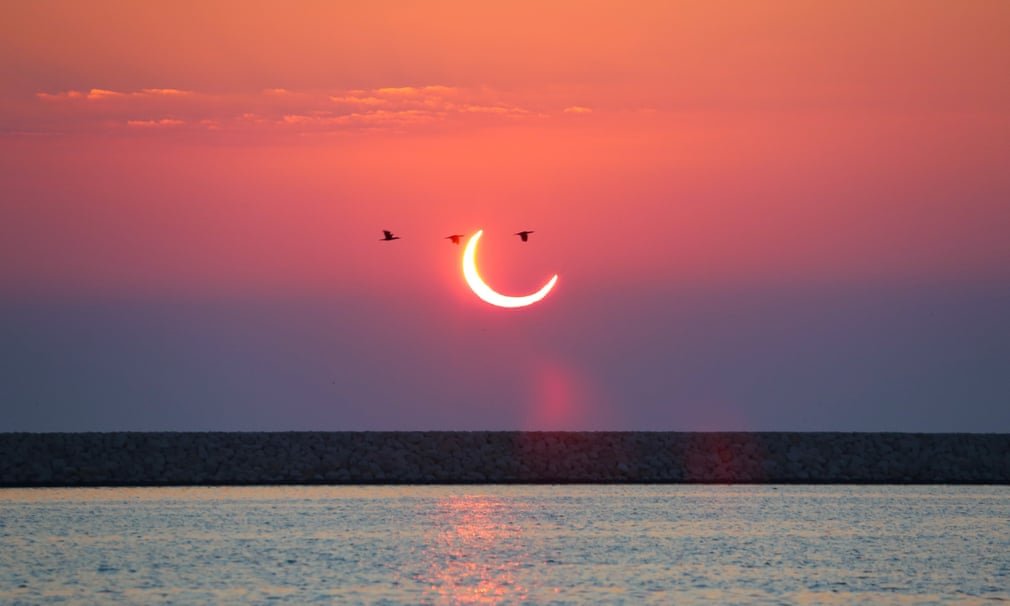
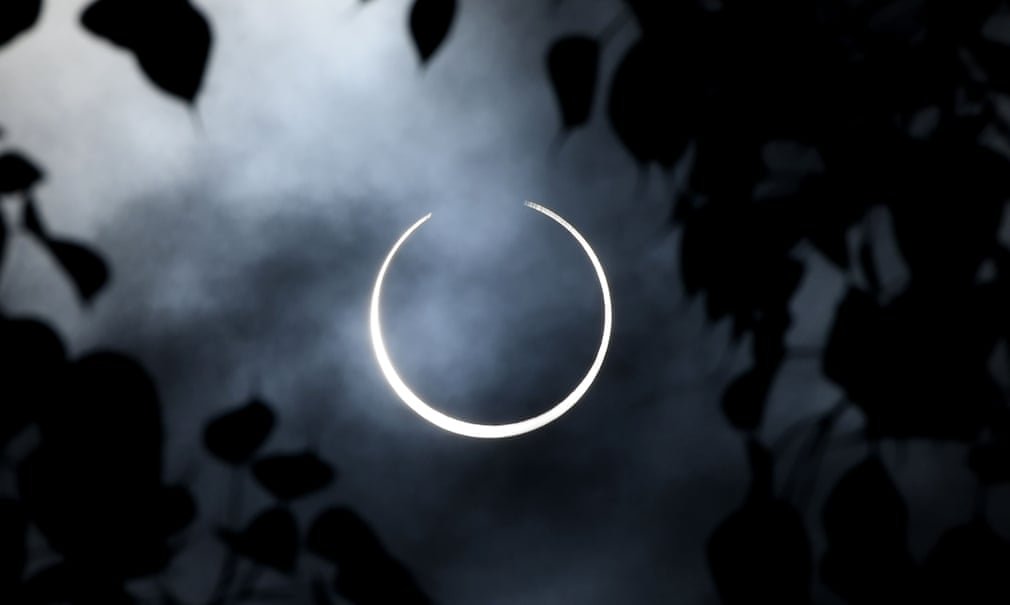
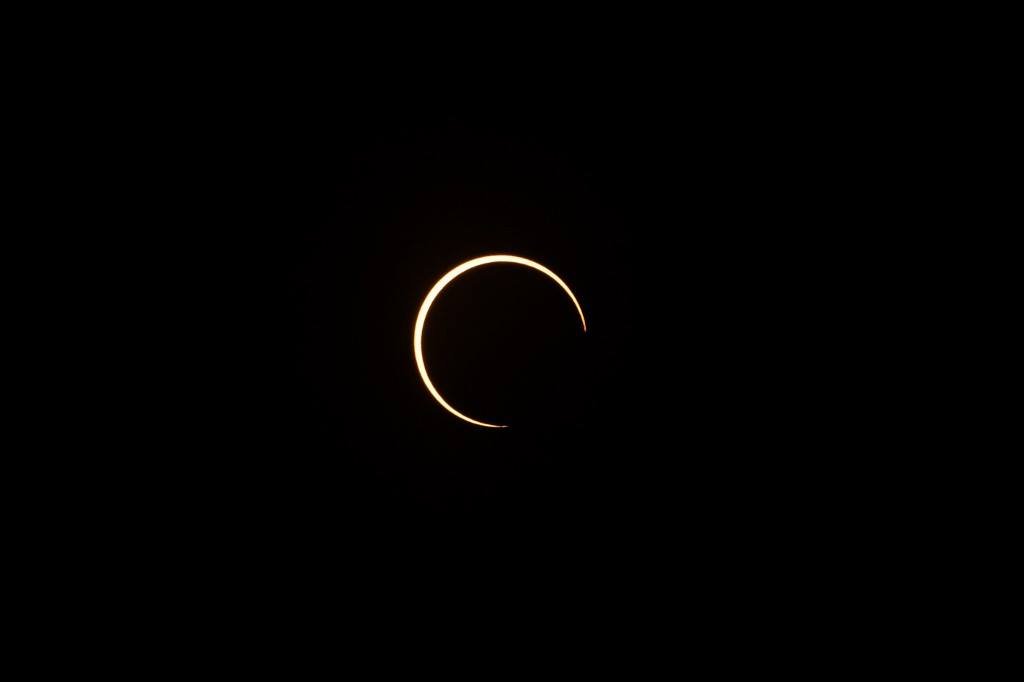
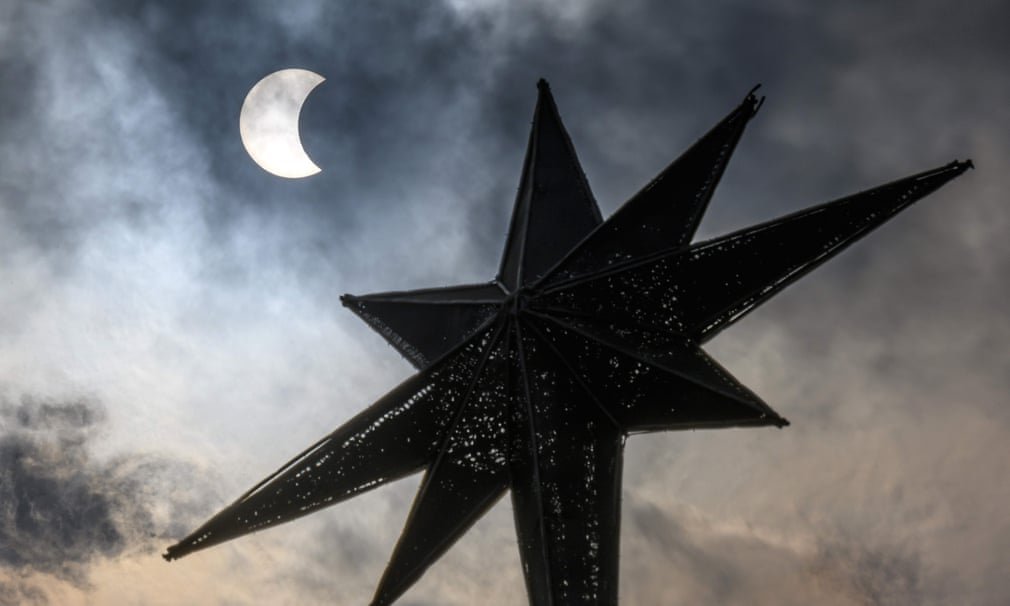
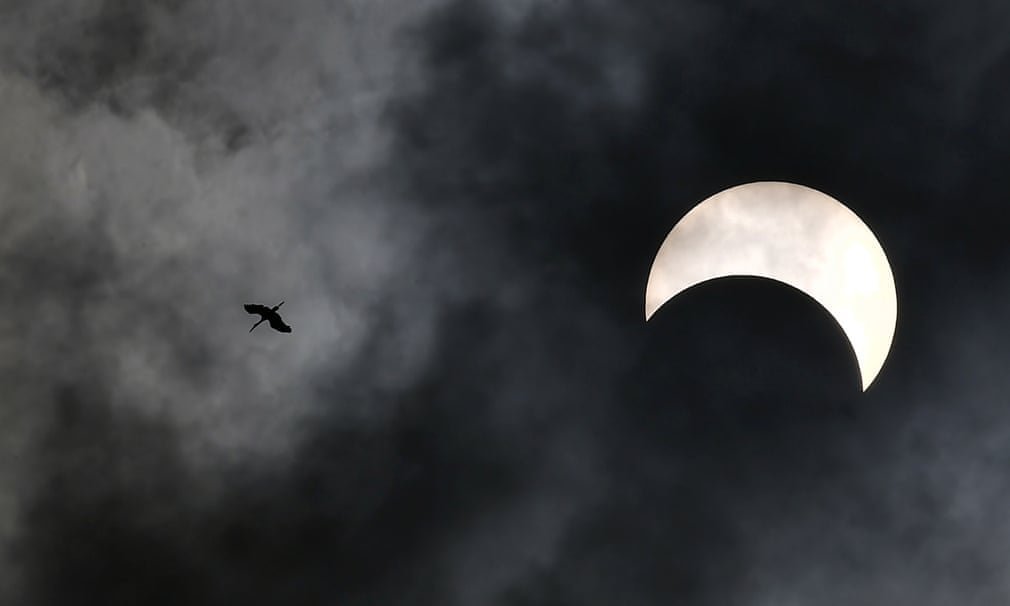
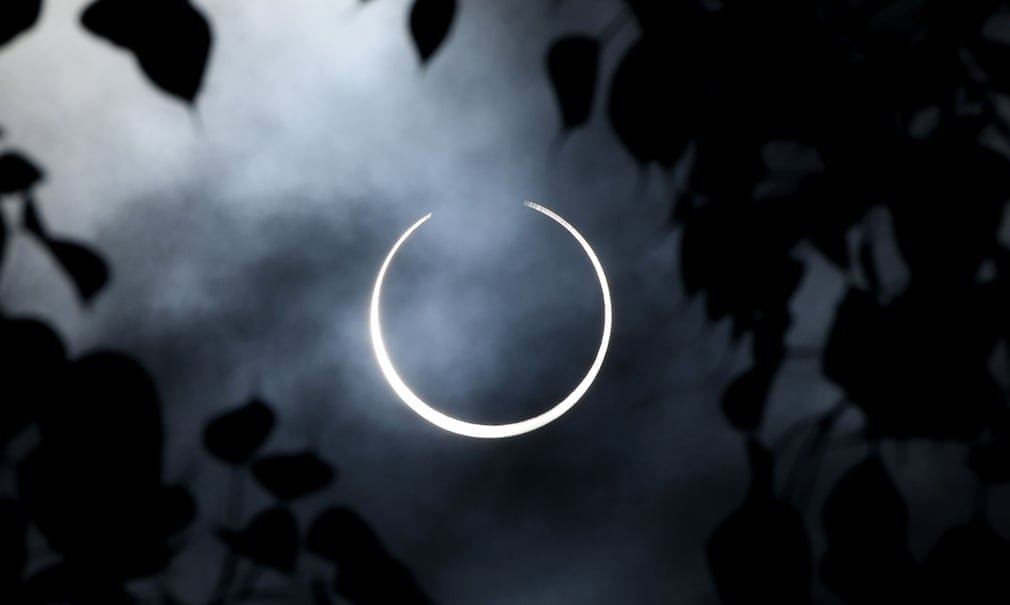
    Skywatchers from Saudi Arabia and Oman to Pakistan and Singapore were treated to a rare “ring of fire” solar eclipse on Thursday.

    Annular eclipses occur when the Moon is not close enough to the Earth to completely obscure the Sun, leaving a thin ring of the solar disc visible.

    While these types of eclipses occur every year or two, they are only visible from a narrow band of Earth each time and it can be decades before the same pattern is repeated.

    Depending on weather conditions, this year’s astronomical phenomenon was set to be visible from the Middle East across southern India and Southeast Asia before ending over the northern Pacific.

    Hundreds of amateur astronomers, photographers and set up by Singapore’s harbour for what some described as a “once in a lifetime” event.

    Bahrain
    Dindigul in Tamil Nadu, India
    Bangkok, Thailand
    Sanaa, Yemen
    Bangkok, Thailand

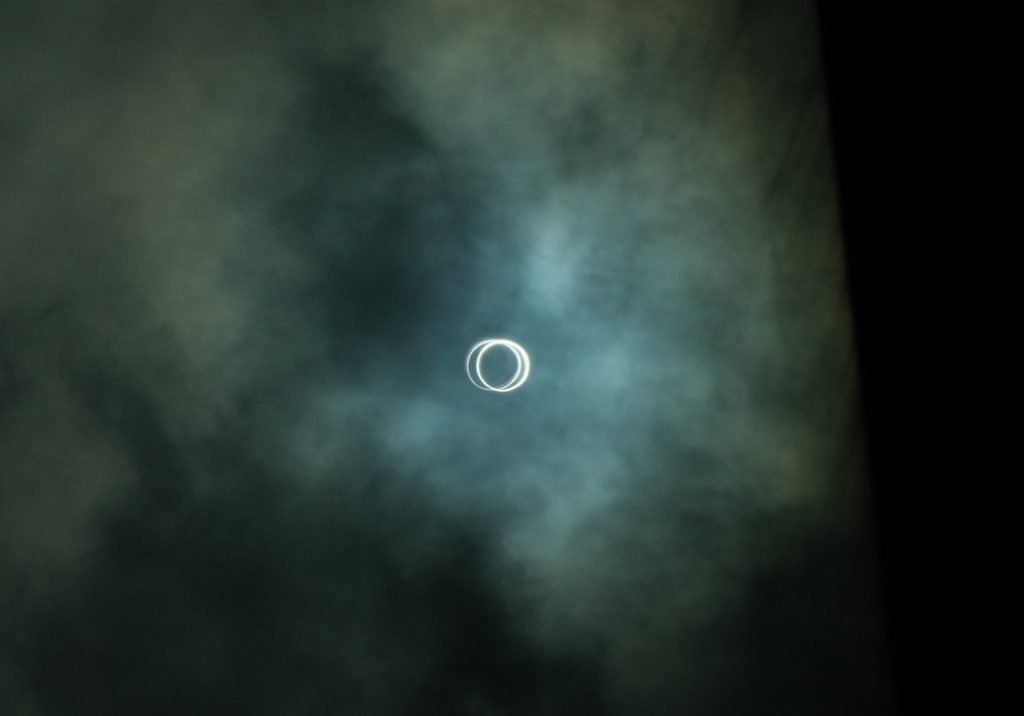
    Meanwhile, in Pakistan due to the dense fog, smog and cloudy skies, the eclipse wasn’t very visible.

    The next annual eclipse in June 2020 will be visible to a narrow band from Africa to northern Asia.

    The following one in June 2021 will only be seen in the Arctic and parts of Canada, Greenland and the remote Russian far east.