Tag: Super Tax

  • Banks will now pay 10% super tax if their earnings exceed Rs30 crore

    Banks will now pay 10% super tax if their earnings exceed Rs30 crore

    The Federal Board of Revenue (FBR) has announced important amendments to the Income Tax Ordinance, 2001 through Finance Act 2023, bringing significant changes to the Super Tax structure. According to the latest income tax circular (2 of 2023), banks will now be required to pay a 10 per cent Super Tax if their income exceeds Rs300 million.

    The Super Tax was initially introduced through the Finance Act of 2022, imposing graduated tax rates ranging from 1 per cent to 4 per cent on income slabs starting from Rs150 million to Rs300 million and above. Certain specified business sectors were subject to a higher Super Tax rate of 10 per cent if their income surpassed Rs300 million.

    New Super Tax slabs

    To enhance the scope of the Super Tax and ensure progressivity and uniformity in the tax rate structure, the Finance Act 2023 has introduced additional income slabs. These new slabs are as follows: Rs350 million to Rs400 million, Rs400 million to Rs500 million, and Rs500 million and above, with corresponding Super Tax rates of 6 per cent, 8 per cent, and 10 per cent, respectively. These new Super Tax rates will apply to all taxpayers across the board for the Tax Year 2023 and beyond.

    Addressing a significant concern, the Finance Act 2023 has also clarified the payment procedure for the Super Tax. The ambiguity surrounding whether the Super Tax under section 4C of the Ordinance should be paid as a lump sum at the time of filing income tax returns or in monthly/quarterly installments of advance tax under section 147 of the Ordinance has been resolved.

    The introduction of a new sub-section (5A) in section 4C now requires Super Tax liability to be paid in conjunction with monthly/quarterly advance tax installments, depending on the taxpayer’s circumstances. Corresponding amendments have been made in section 147 of the Ordinance to facilitate this process.

    This move is aimed at broadening the scope of the Super Tax and making it a more progressive and comprehensive tax measure. The FBR expects these changes to contribute significantly to the country’s revenue collection efforts while ensuring a fair and equitable tax system for all taxpayers.
  • Pakistan Stock Exchange surpasses 46,000 mark for the first time in 15 months

    Pakistan Stock Exchange surpasses 46,000 mark for the first time in 15 months

    The Pakistan Stock Exchange’s (PSX) benchmark KSE-100 index experienced significant gains on Friday, rising by over 500 points and closing just below the 46,000 mark.

    The index reached 46,073.61 points at 3:47 pm, showing a notable increase of 675.30 points from the previous day’s closing of 45,398.31. However, by the end of the day, it closed at 45,920.73, up by 522.42 points or 1.15 per cent.

    According to Dawn, Ahsan Mehanti, the Director of Arif Habib Corporation, mentioned that foreign capital was actively buying shares in the energy sector. He attributed the stock market rally to favorable financial results, the Islamabad High Court’s ruling declaring the imposition of a super tax on various companies unlawful, and reports indicating the policy rate would remain unchanged.

    As a result of these factors, the index reached the 46,000 mark after a gap of 15 months, signaling an overall improvement in all sectors. Mehanti also pointed out the positive impact of the recently announced standby agreement with the International Monetary Fund (IMF).

    Looking ahead, if the market continues to close above 46,000, it is expected to see further growth. Amir Shehzad, Director of First National Equities Limited, referred to the recent market fluctuations as a “technical correction” and expressed optimism that the market could surpass the 47,000 point barrier in the coming week. He believed that maintaining an unchanged monetary policy by the central bank would likely have a positive effect on the market, possibly leading to new record levels.

  • Islamabad High Court deems super-tax on high-income businesses unconstitutional

    Islamabad High Court deems super-tax on high-income businesses unconstitutional

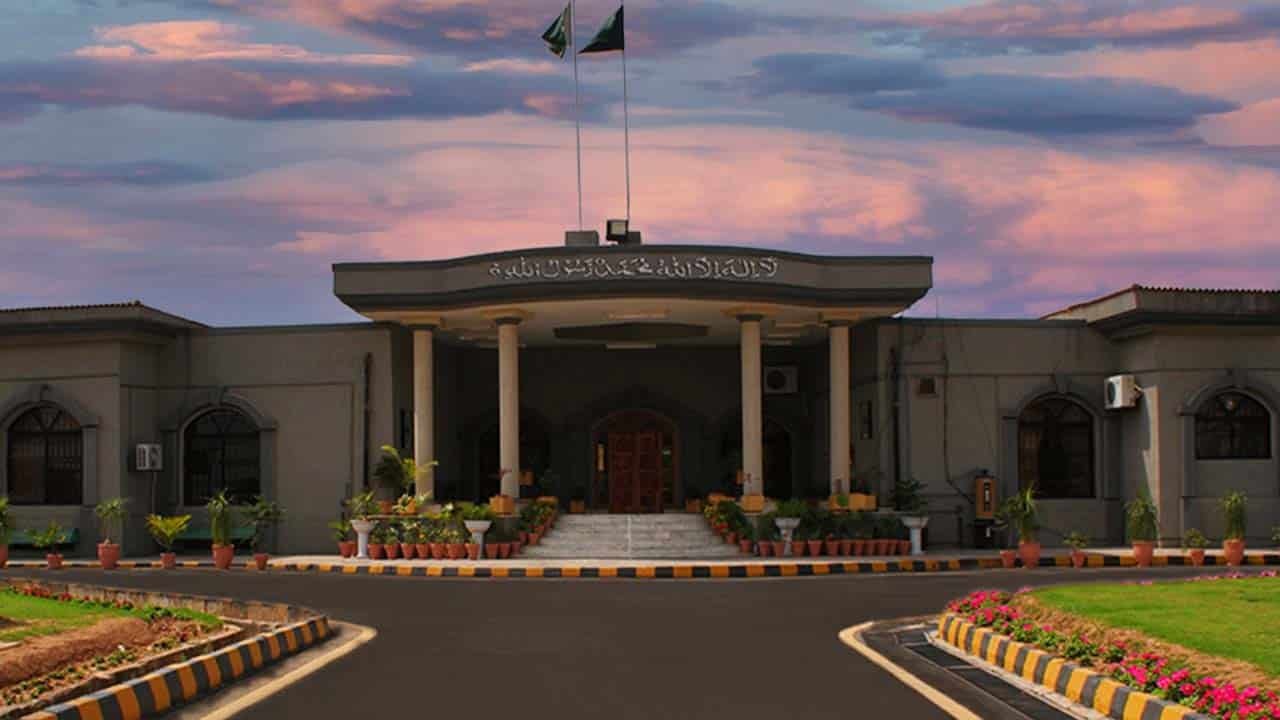
    The Islamabad High Court (IHC) has invalidated the imposition of a super-tax on high-income businesses, ruling it as unconstitutional. Justice Sardar Ejaz Ishaq Khan delivered the verdict on Thursday after a reserved decision. The court declared all notices of demand and recovery associated with the controversial tax null and void, providing relief to the affected businesses.

    Furthermore, the court struck down Section 4C of the Income Tax Ordinance, effectively negating the legal basis for the super-tax. The petitioners, who challenged the validity of this tax, were represented by prominent legal counsel, including Salman Akram Raja and Adnan Haider Randhawa, among others. They argued that the imposition of such a tax was unjust and detrimental to the growth of high-income businesses.

    The origin of this tax can be traced back to the budget speech of Finance Minister Ishaq Dar, wherein he announced the implementation of the super tax last month. Initially, the tax was proposed to be levied on individuals earning Rs500 million annually or more, but the conditions were later relaxed from the original proposal, which targeted those earning Rs300 million per annum.

    It is worth noting that the Supreme Court had previously approved the imposition of the super-tax, setting it at 4 per cent for all industries in February. The government had initially imposed a 10 per cent rate for some industries and 4 per cent for others.

    While the Lahore High Court also approved the tax, it added a caveat that the rules did not allow a tax rate higher than 4 per cent. However, the recent ruling by the Islamabad High Court has effectively struck down the super-tax altogether, providing significant relief to high-income businesses affected by the proposed tax.

  • Supreme Court directs FBR to collect 50% super tax from big companies within seven days

    The Supreme Court of Pakistan has ordered organisations earning more than Rs150 million to submit 50 per cent of the super tax imposed on them to the Federal Board of Revenue (FBR) within seven days.

    A two-member bench consisting of Chief Justice of Pakistan Umar Ata Bandial and Justice Athar Minallah heard the plea filed by the FBR against an interim order issued by the Lahore High Court (LHC). The FBR’s counsel, Salman Akram Raja, informed the bench that the LHC had temporarily prohibited the FBR from collecting the tax pending a final decision.

    However, counsel for the respondents argued that the government’s super tax on corporations was unconstitutional. The Supreme Court suspended the interim order of the high court and allowed the FBR to collect 50 per cent of the super tax from these industries within seven days.

    Last year, Prime Minister Shehbaz Sharif announced the implementation of a 10 per cent super tax, also referred to as the “poverty alleviation tax,” on 13 key industries to increase tax collection. The government stated that the “tough decisions” were made to safeguard the economy.

    According to Geo, the sectors subject to the tax included cement, steel, banking, airlines, textile, automobile assembly, sugar mills, beverages, oil and gas, fertilizer, cigarettes, chemicals, and LNG terminals.

  • Imposing super tax on the rich will reduce budget deficit: Miftah

    Imposing super tax on the rich will reduce budget deficit: Miftah

    The government’s recently announced indirect tax (super tax) is intended to assist the country in increasing tax revenue and lowering the budget deficit, according to Finance Minister Miftah Ismail.

    He was relating to the large industries’ 10 per cent super tax or poverty alleviation tax.

    13 industries, including LNG terminals, sugar, cement, steel, textile, tobacco, fertiliser, banks, oil and gas, beverages, automobiles, and steel, will be subject to this one-time levy, according to Miftah. The government labelled these 13 industries for a special tax as they made significant profits last year.

    Companies in these sectors earning more than Rs300 million will be subject to a 10 per cent super tax, he added.

    According to the finance minister, this tax is a one-time levy that will only be in effect for fiscal year 2022–2023.

    He clarified on Twitter that the 4 per cent super tax will be imposed on all industries.

    “For the specified 13 sectors, another 6 per cent will be added for a total of 10 per cent,” he said. “So their tax rates will go from 29 per cent to 39 per cent. This is a one-time tax needed to curtail the previous four record budget deficits.”

    The imposition of a super tax on the wealthy, according to Finance Minister, will lessen the country’s reliance on foreign aid, lower the budget deficit, and bring the country closer to financial stability.

    Other businesses that make over Rs150 million will be subject to a 1 per cent super tax, and those that make over Rs200 million will be subject to a 2 per cent tax. On top of the current rates, it is worth noting that these taxes are additional.

    Businesses that earn more than Rs250 million in revenue will pay a 3 per cent super tax, and those that earn more than Rs300 million will pay a 4 per cent super tax.

    He continued, citing statistics, that there were 9 million retail and wholesale establishments in Pakistan, and that the government wanted to bring an additional 2.5–3.5 million into the tax system.

    “We are linking the income tax and sales tax of these shops with the electricity bill,” Miftah said. “Now, small shops will pay a fixed tax of Rs3,000 and large shops will pay Rs10,000.”

    Only 22 of Pakistan’s more than 30,000 gold trading companies, he claimed, were registered, and their average annual sales came to Rs4,000.

    Sales tax and a fixed income of Rs40,000 will now be paid by gold shops of 300 square feet or less.

    He said that the government would lower the sales tax on large stores from 17 per cent to just 3 per cent.

    The withholding tax on jewellery sales to gold shops by the general public has been reduced from 4 per cent to 1 per cent.

    According to Miftah, fixed tax structures similar to these will be introduced for real estate agents, car dealers, and builders. Since this tax only applies to income and not to spending, inflation will not rise.

    Additionally, the withholding tax for the IT sector has been eliminated. Sales and income taxes would not apply to IT companies with annual revenue of less than Rs80 million.

    Miftah emphasised that Pakistan needs the IMF programme to resume as the country’s foreign exchange reserves are at a critical point.