Tag: supply chain disruptions

  • IMF predicts modest 3.5% growth for Pakistan amid global economic uncertainty

    IMF predicts modest 3.5% growth for Pakistan amid global economic uncertainty

    The International Monetary Fund (IMF) has forecasted a 3.5 per cent growth rate for Pakistan’s economy in the fiscal year 2024-25 (FY25), slightly below the government’s target of 3.6 per cent.

    This comes after Pakistan’s economy grew by 2.4 per cent in the fiscal year 2023-24, missing the government’s target of 3.5 per cent.

    Pakistan’s economic challenges are compounded by chronic mismanagement, the aftermath of the COVID-19 pandemic, the war in Ukraine, inflationary pressures from supply chain disruptions, and severe flooding in 2022.

    The IMF’s World Economic Outlook (WEO) update warns of modest global growth over the next two years, influenced by cooling activity in the US, stabilization in Europe, and stronger consumption and exports from China, but significant risks remain.

    Globally, the IMF has maintained its 2024 growth forecast at 3.2 per cent and slightly increased its 2025 forecast to 3.3 per cent. IMF Managing Director Kristalina Georgieva has expressed concern over these tepid growth rates. The US growth forecast for 2024 has been revised down to 2.6 per cent, reflecting slower consumption, while the 2025 forecast remains at 1.9 per cent due to a cooling labor market and moderated spending.

    The IMF has raised China’s 2024 growth forecast to 5.0 per cent, reflecting a rebound in private consumption and strong exports, but recent data showing lower-than-expected GDP growth poses a downside risk.

    The IMF also highlighted persistent risks to inflation due to high services prices and wage growth in labor-intensive sectors, alongside potential trade and geopolitical tensions that could exacerbate price pressures. Additionally, the IMF warned of the impact of economic policy shifts from upcoming elections, which could lead to increased protectionism and fiscal irresponsibility.

    The IMF advised policymakers to restore price stability, gradually ease monetary policy, rebuild fiscal buffers, and implement policies to promote trade and productivity growth.
  • Daraz Group plans layoffs amid market challenges

    Daraz Group plans layoffs amid market challenges

    In an internal communication obtained by Reuters on Tuesday, Alibaba-owned e-commerce platform Daraz Group revealed its decision to implement layoffs across the company.

    Acting CEO James Dong stated that the move aims to “adopt a more streamlined and agile structure” to address challenges faced by the company in the market.

    While the memo did not specify the exact number of individuals affected by the layoffs, it acknowledged the necessity of saying farewell to numerous valued members of the Daraz family.

    The company, operating in Pakistan, Bangladesh, Nepal, Sri Lanka, and Myanmar, declined to provide details on the percentage or absolute number of employees impacted.

    Last year, Daraz employed 3,000 individuals globally. However, the company had to reduce its workforce by 11% due to various challenges, including difficult market conditions, the Ukraine crisis, supply chain disruptions, inflation, higher taxes, and reduced government subsidies.

    James Dong emphasised the group’s commitment to addressing the market’s unprecedented challenges and stated, “Despite our efforts to explore different solutions, our cost structure continues to fall short of our financial targets. Facing unprecedented challenges in the market, we must take swift action to ensure our company’s long-term sustainability and continued growth.”

    Dong outlined the group’s strategy moving forward, highlighting a focus on improving the consumer experience.

    This involves diversifying the offerings of value-for-money products, expanding product categories, and enhancing the operational efficiency of sellers on the Daraz platform.

    The company, founded in Pakistan in 2012 as an online fashion retailer, was acquired by Chinese internet giant Alibaba in 2018. James Dong assumed the role of acting CEO in January, succeeding outgoing CEO Bjarke Mikkelsen.

    Mikkelsen had previously noted that Pakistan and Bangladesh are the group’s largest markets.

    Daraz Group, encompassing e-commerce, logistics, payment infrastructure, and financial services, serves more than 30 million shoppers, boasts 200,000 active sellers, and collaborates with over 100,000 brands, according to company statements provided to Reuters.

  • Honda Atlas extends production suspension amid an ongoing parts shortage

    Honda Atlas extends production suspension amid an ongoing parts shortage

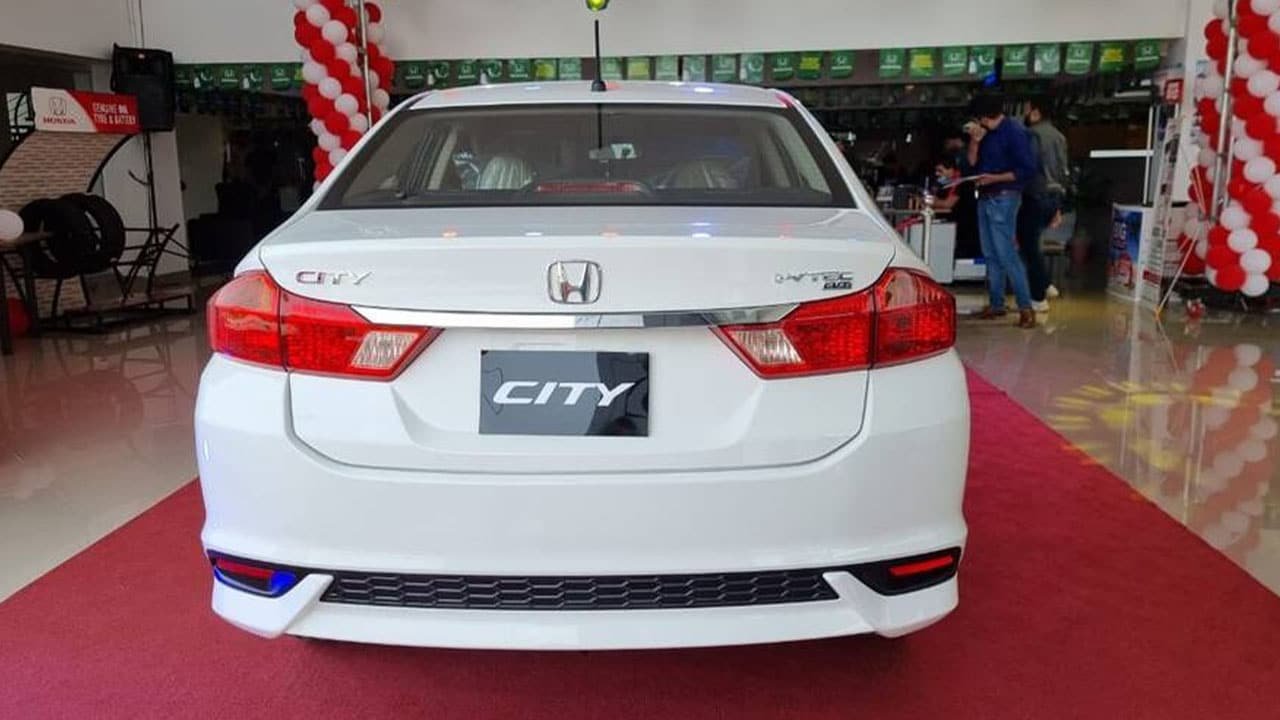
    Honda Atlas Cars (Pakistan) Limited, a subsidiary of Honda Motor Co., Ltd. of Japan, has officially announced a temporary plant shutdown due to supply chain disruptions.

    In line with their communication dated October 30, 2023, the company has made the decision to extend the plant closure from November 8, 2023, to November 9, 2023, as disclosed in their notice to the Pakistan Stock Exchange (PSX).

    The automaker further said that any updates to this plan will be duly communicated.

    The automaker had previously communicated the shutdown of its plant from October 24, 2023, to October 31, 2023, and later extended it to November 7, 2023.

    This decision was attributed to significant inventory levels and disruptions in the supply chain, which have severely affected the company’s production capabilities.

    Earlier this year, Honda Atlas Cars also suspended its production activities from March 9 to May 15, citing adverse economic conditions in the country and government-imposed restrictions on Letters of Credit (LC) issuance.

  • Inventory challenges lead Indus Motor Company to halt Toyota car production in Pakistan

    Inventory challenges lead Indus Motor Company to halt Toyota car production in Pakistan

    Indus Motor Company Limited, the firm responsible for the assembly of Toyota vehicles in Pakistan, has recently announced a temporary suspension of its production operations until October 9. This significant decision was formally communicated through a notice submitted to the Pakistan Stock Exchange (PSX).

    The rationale behind this temporary cessation of production is primarily linked to the company’s current vehicle inventory status. Indus Motor Company Limited has set the production plant’s closure period from September 28 through October 9 to address these concerns.

    This pause in production is the latest in a series of similar actions undertaken by the company. Previously, Indus Motor Company Limited had temporarily halted production from August 25 to September 6, attributing it to reduced demand and inventory challenges. Additionally, the company faced a production plant shutdown from July 21 to August 3, driven by complications in the importation of raw materials, logistical hurdles in clearing consignments, and disruptions in the supply chain from select international vendors.

    These issues collectively hampered the company’s supply chain, leading to insufficient inventory levels to sustain uninterrupted production. Furthermore, a similar production hiatus had occurred earlier, from June 26 to June 27, with the same underlying reasons.

  • Toyota Indus Motor Company suspends car production until August 3

    Toyota Indus Motor Company suspends car production until August 3

    Indus Motor Company Limited has recently made the difficult decision to close its production plant temporarily. The interruption is set to last for two weeks, as the company faces significant challenges in importing essential raw materials, leading to disruptions in its supply chain.

    The root of the problem lies in the difficulties the company and its vendors are encountering in importing raw materials and clearing consignments. These issues are primarily attributed to the struggles with opening letters of credit (LCs) and supply chain problems from certain foreign vendors. Unfortunately, this has left the company with insufficient inventory levels to maintain its production activities.

    The company’s secretary addressed these concerns in a statement released to the Pakistan Stock Exchange, outlining the seriousness of the situation. Indus Motor’s production plant experienced a brief shutdown the previous month due to similar issues with raw material imports. However, the current circumstances have exacerbated the problem, forcing the company to take this temporary production halt.

    Commencing from July 21, 2023, and extending until August 3, 2023, the plant’s complete shutdown is expected to have implications beyond Indus Motors itself. Other major players in the automotive sector, such as Pak Suzuki Motors and Honda Cars, have also faced similar challenges and implemented several shutdown days in recent months.

    The automotive industry, along with other sectors dependent on imported raw materials, has been struggling due to a shortage of foreign exchange reserves in Pakistan. The complications surrounding LCs have severely impacted the supply chain’s seamless functioning, leading to significant disruptions in production activities.

    Indus Motors holds a significant position in Pakistan’s automobile industry and has notably invested $100 million in local production of hybrid electric vehicles (HEVs). Furthermore, the company plays a crucial role in the local automotive ecosystem, with over 50 part manufacturers contributing to the value chain by producing parts worth over Rs250 million every working day.

    Additionally, the company has established 53 independently owned authorised dealerships that provide aftersales service, generating substantial employment opportunities for over 450,000 people directly and indirectly across the country.

    The temporary closure of the production plant presents various challenges for Indus Motors, its employees, and the overall automobile industry. The company’s management is likely to be exploring potential solutions to address the scarcity of raw materials and resume operations as soon as the situation allows.

    As analysts point out, finding lasting solutions may require collaboration between the government and relevant stakeholders to ensure a stable supply of raw materials for the automotive industry and other affected sectors. Swift action and strategic measures will be vital to mitigate the economic impact of these closures and preserve the growth trajectory of Pakistan’s automotive sector.

  • Toyota Indus Motor Company sees 142% increase in quarterly profit despite low demand

    Toyota Indus Motor Company sees 142% increase in quarterly profit despite low demand

    Indus Motor Company (IMC) announced a 37 per cent decrease in its profit-after-tax (PAT) for the third quarter of financial year 2022-23, with earnings of Rs3.216 billion compared to Rs5.118 billion in the same period last year.

    Despite this, the automaker saw an increase in its quarterly PAT by 142 per cent, which was attributed to an improvement in gross margins, resulting in an operating profit after two consecutive quarterly operating losses. The company also declared an interim cash dividend of Rs24.4 per share, in addition to the previously paid interim cash dividend of Rs18.4 per share.

    Muhammad Abrar, an investment analyst at Arif Habib Limited, explained that IMC was able to offset the impact of currency devaluation by raising the prices of its cars significantly. The automaker’s operating expenses were also curtailed. While revenue decreased by 29 per cent due to lower units sold, IMC’s gross profit was Rs3.05 billion during 3QFY23, compared to Rs5.23 billion in the same period last year.

    Pakistan’s auto sector has been struggling due to the government’s decision to curb imports and restrict issuance of Letters of Credit (LC), higher finance cost, and massive increases in car prices. Despite this, IMC’s gross margins improved to 6.3 per cent on a QoQ basis, which was unexpected, according to Abrar.

    According to Brecorder, the company’s earnings per share (EPS) stood at Rs40.92, compared to Rs65.11. IMC’s board of directors met to review the company’s financial and operational performance in the first nine months ended March 31, 2023. While higher profits are expected in the upcoming quarter due to the increase in car prices and the reduction of operating expenses, the country’s auto industry reported a 66 per cent decrease in car sales compared to March 2022.

    Last week, Pak Suzuki Motor Company Limited also reported its highest-ever quarterly loss of Rs12.9 billion in the first three months of 2023 due to decreased sales and high finance costs.

  • Economic situation forces Honda Atlas Pakistan to suspend production for more than 20 days

    Economic situation forces Honda Atlas Pakistan to suspend production for more than 20 days

    Honda Atlas Cars Pakistan Limited (HACPL), one of the leading car manufacturers in Pakistan, has announced the temporary closure of its plant from March 09, 2023, to March 31, 2023.

    In a notice sent to the Pakistan Stock Exchange (PSX), the company cited disruptions in its supply chain caused by the current economic situation in Pakistan.

    The government’s strict measures, such as restricting the opening of LCs for the import of completely knocked down (CKD) kits and raw materials, and halting foreign payments, have significantly impacted the company’s production capabilities.

    The shutdown is expected to affect Honda car production in the region and potentially impact the company’s financial performance.

    The closure of HCAR’s plant is also likely to have a ripple effect on the automotive industry in the region, highlighting the challenges faced by businesses in Pakistan due to the current economic situation.