
Tag: supply chains

  • Growing Saudi-India partnership: MBS and Modi discuss expanding trade goals

    Growing Saudi-India partnership: MBS and Modi discuss expanding trade goals

    Indian Prime Minister Narendra Modi and Saudi Crown Prince Mohammed bin Salman held discussions on trade ties in New Delhi after the G20 Summit. The leaders met at the Hyderabad House, New Delhi, for the Saudi-Indian Strategic Partnership Council meeting. During the talks, they covered various areas of cooperation and regional and international topics of mutual interest.

    Modi expressed satisfaction with the discussions, highlighting synergy with Saudi Arabia. He emphasized the potential for collaboration in grid connectivity, renewable energy, food security, semiconductors, and supply chains.

    The meeting involved senior officials from Saudi Arabia, including Minister of Energy Prince Abdulaziz bin Salman, Foreign Minister Prince Faisal bin Farhan, and Minister of Investment Khalid al-Falih. Falih mentioned the possibility of establishing an office for Saudi Arabia’s sovereign wealth fund, the Public Investment Fund, in India’s tax-neutral financial services center, Gujarat International Finance Tec-City.

    Furthermore, the Saudi Export-Import Bank (Saudi EXIM) and the India Export-Import Bank (India EXIM) signed an agreement to boost exports and mutual market presence.

    This gathering followed the announcement of a multinational rail and ports deal involving India, Saudi Arabia, the United States, the European Union, the United Arab Emirates (UAE), and other global leaders. The deal aims to connect the Middle East and South Asia through the India-Middle East-Europe Economic Corridor, enhancing connectivity and reducing shipping costs.

    US President Joe Biden viewed this agreement as a significant step and a counter to China’s Belt and Road Initiative.
  • China lifts ban on seafood product imports from Pakistan

    China lifts ban on seafood product imports from Pakistan

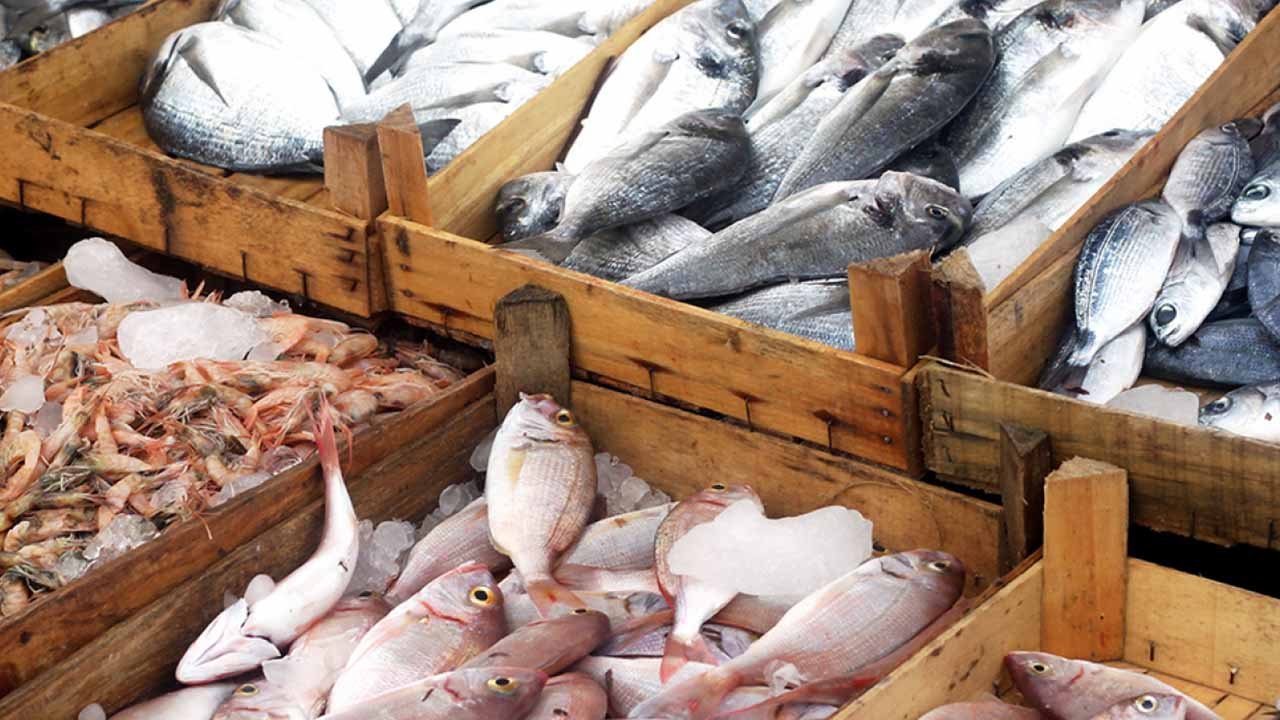
    China’s General Administration of Customs (GAC) has confirmed the resumption of aquatic product imports from Pakistan and several other countries, aiming to enrich the supply of domestic aquatic products and boost the stability of the seafood industry and supply chains. In a statement released on May 26, the GAC announced that imports from 20 overseas companies would be allowed.

    The GAC statement revealed that the 20 companies resuming exports to China are based in various countries, including Pakistan, Brazil, Malaysia, Spain, New Zealand, and Indonesia.

    This move comes after China suspended imports from eight overseas suppliers last year due to non-compliance with safety and hygiene controls, as well as inadequate adherence to COVID-19 control measures set by the United Nations Food and Agriculture Organization.

    Although industry experts told the Global Times that this recent change would not have a significant impact on overall supply in China, they acknowledged that the rise in seafood imports reflected a growing demand among Chinese consumers.

    Cui He, Director of the China Aquatic Products Processing and Marketing Alliance, stated that the increase in imports was driven by China’s expanding consumption patterns and its customers’ preference for quality aquatic products offered by some overseas companies.

    According to Geo, China’s seafood imports have been on the rise, primarily sourced from countries such as Russia, Australia, and Argentina, according to Cui. Last year, China experienced a 35 per cent surge in seafood imports, reaching a value of $19.13 billion, as reported by data from the International Trade Centre.

    The GAC emphasised its commitment to strengthening the management of imported food safety. While the resumption of imports from Pakistan and other countries is expected to contribute to the diversification of China’s aquatic product supply, the focus on ensuring the safety and quality of imported food remains a priority for Chinese authorities.

  • Pakistan’s inflation rate surges to an all-time high, reaching 38.9% in rural areas

    Pakistan’s inflation rate surges to an all-time high, reaching 38.9% in rural areas

    According to recent reports, the finance ministry’s expectations of high inflation were met due to market frictions caused by the relative demand and supply gap of essential items, exchange rate depreciation, and recent upward adjustment of administered prices of petrol and diesel. However, there was a monthly decline in the inflation rate, which dropped to 3.7 per cent in March compared to February.

    Despite this, the inflation situation has worsened significantly over the months, causing mass distress due to the high prices of almost every edible item. The core inflation rate, which excludes volatile energy and food prices, increased in March to 18.6 per cent in urban areas and 23.1 per cent in rural areas. Experts believe that Pakistan is now heading towards hyperinflation, where prices are out of control and expected to surge by 50 per cent.

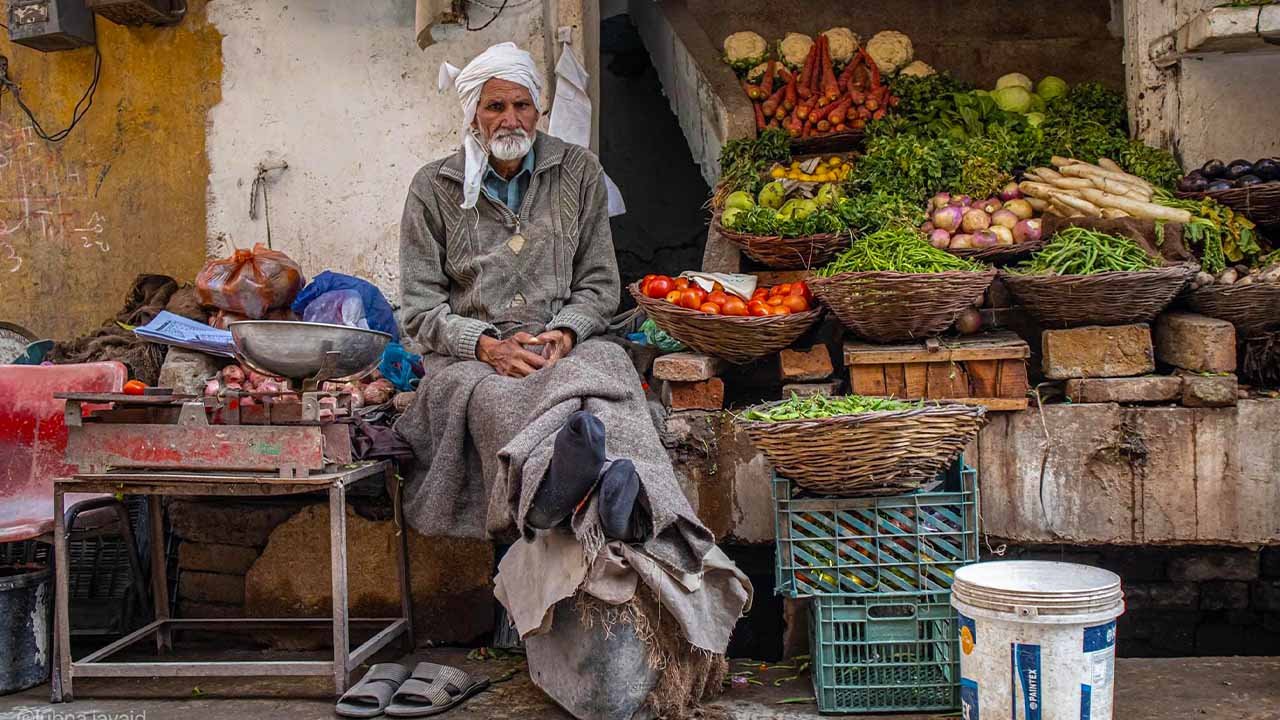
    The Pakistan Bureau of Statistics (PBS) reported that the inflation rate in rural areas reached 38.9 per cent, while it surged to 33 per cent in the cities. Food inflation rose sharply to 50.2 per cent in rural areas and increased to 47.1 per cent in urban areas last month. Supply chain disruptions and weak checks have led to a substantial rise in the food inflation rate.

    Unfortunately, both the federal and provincial governments are unable to provide steady essential food supplies, and the prices of most consumer goods remain out of reach for the people. This surge in prices coincides with a significant economic slowdown, and poverty and unemployment levels are rising.

    A majority of the surge in prices was seen in rural areas where income levels were already low. The food group prices rose by 47.15 per cent in March compared to the same month last year. Both perishable and non-perishable food items witnessed unprecedented increases in prices.

    The Wholesale Price Index (WPI), which monitors prices in the wholesale market, also rose sharply to 37.5 per cent in March compared to 23.8 per cent in the same month last year. The inflation rate has remained above 20 per cent since June after the coalition government curtailed imports.

    The overall inflation rate recorded an increase in both urban and rural areas, with urban areas surging to 33 per cent in March, while rural areas soared to 38.9 per cent over the same month last year. In March last year, the inflation rate in urban areas was 11.9 per cent, while in rural areas, it stood at 13.9 per cent.

    The non-food inflation rate increased to 24.1 per cent in urban areas and 28.5 per cent in rural areas compared to 10.4 per cent and 12.5 per cent in the same month last year. Prices of non-perishable food items surged by 46.44 per cent on an annualized basis, and the prices of perishable goods surged by 51.81 per cent year-on-year.