
Tag: Suprem court

  • Supreme Court upholds NAB amendments, rejects Imran Khan’s appeal

    Supreme Court upholds NAB amendments, rejects Imran Khan’s appeal

    The Supreme Court of Pakistan on Friday approved the intra-court appeal, upholding amendments in the National Accountability Ordinance (NAO).

    A five-judge bench headed by Chief Justice Pakistan (CJP) Qazi Faez Isa announced the 5-0 majority verdict and remarked that respondent former Prime Minister (PM) Imran Khan and other parties failed to prove NAO amendments unconstitutional.

    The apex court noted that the CJP and other judges “cannot be the gatekeepers of the parliament.”

    A larger apex court bench stressed, “whenever possible, the Supreme Court should strive to maintain legislation” enacted by the parliament.

    In 2022, the Pakistan Democratic Movement (PDM) led government made several amendments to NAO’s laws, including limiting the National Accountability Bureau (NAB) jurisdiction to investigate over Rs 500 million cases and restricting the tenure of the NAB chairman to three years.

    Imran Khan then moved the apex court, calling the amendments “legitimise corruption.”

    In September 2023, a Supreme Court bench led by the then CJP Umar Ata Bandial, ruled 2-1 to restore corruption cases, declaring Khan’s plea legitimate, which the provincials and federal government challenged.
  • Bill tabled in Senate to increase number of Supreme Court judges to 21

    Bill tabled in Senate to increase number of Supreme Court judges to 21

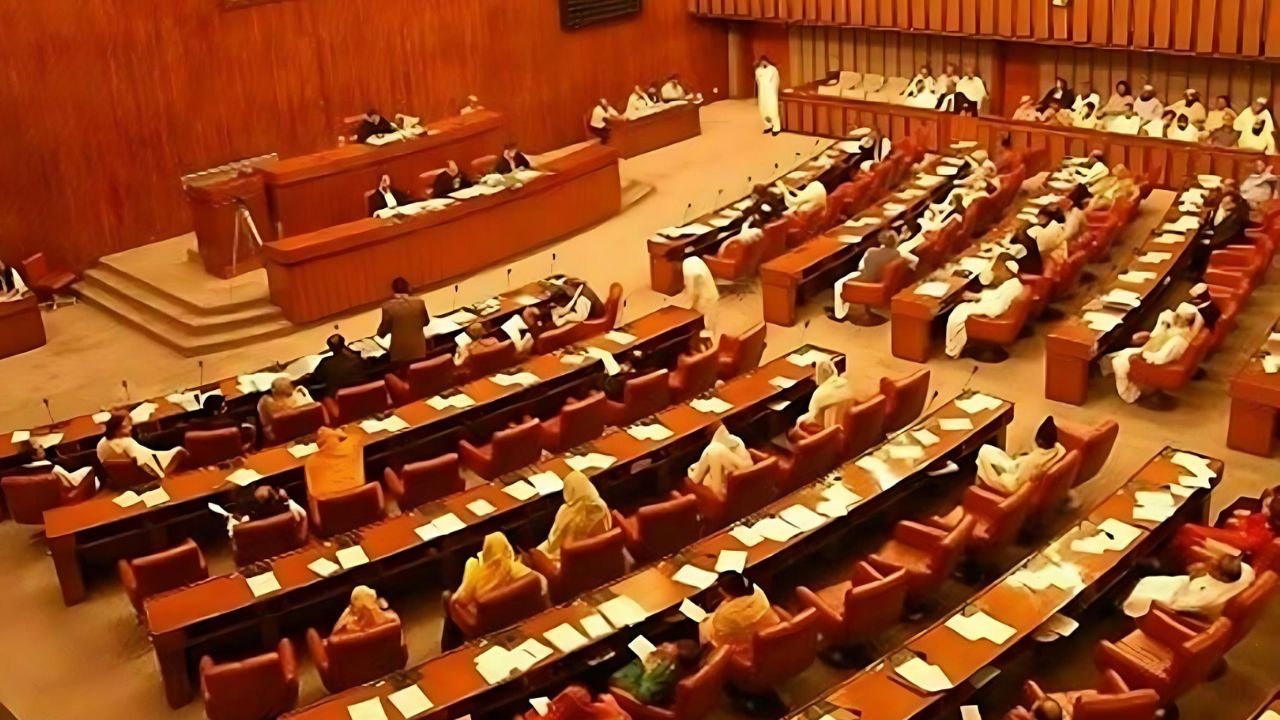
    Senator Muhammad Abdul Qadir has introduced the Supreme Court (Number of Judges) Amendment Bill in the Senate, proposing to increase the number of Supreme Court judges from 17 to 21.

    Lawmaker Qadir explained that the purpose of the amendment is to ensure quicker justice and to address the fifty-three thousand pending cases in the apex court. He emphasized that the amendment would significantly improve the judicial system’s efficiency.

    He also noted that billions of rupees in cases have remained unresolved due to the shortage of judges in the superior court and the lack of available time.

    The opposition, however, expressed concerns over the proposed amendment, arguing that it would favour the incumbent government and called it a “judiciary coup.”

    Pakistan Tehreek-e-Insaf (PTI) parliamentary leader Barrister Ali Zafar advised the government to focus on reforming the lower judiciary rather than increasing the number of judges in the apex court.

    Law Minister Senator Azam Nazeer Tarar said, “Massive reforms are being introduced in the criminal procedure code, from registration of FIR to manner of arrest and discharge, and timelines in the material and sessions trial to the use of the modern device in the law of evidence,”