Tag: Supreme court of Pakistan

  • ‘Another lie of Faisal Vawda has been exposed’: PTI leader used expired passport to prove single nationality

    ‘Another lie of Faisal Vawda has been exposed’: PTI leader used expired passport to prove single nationality

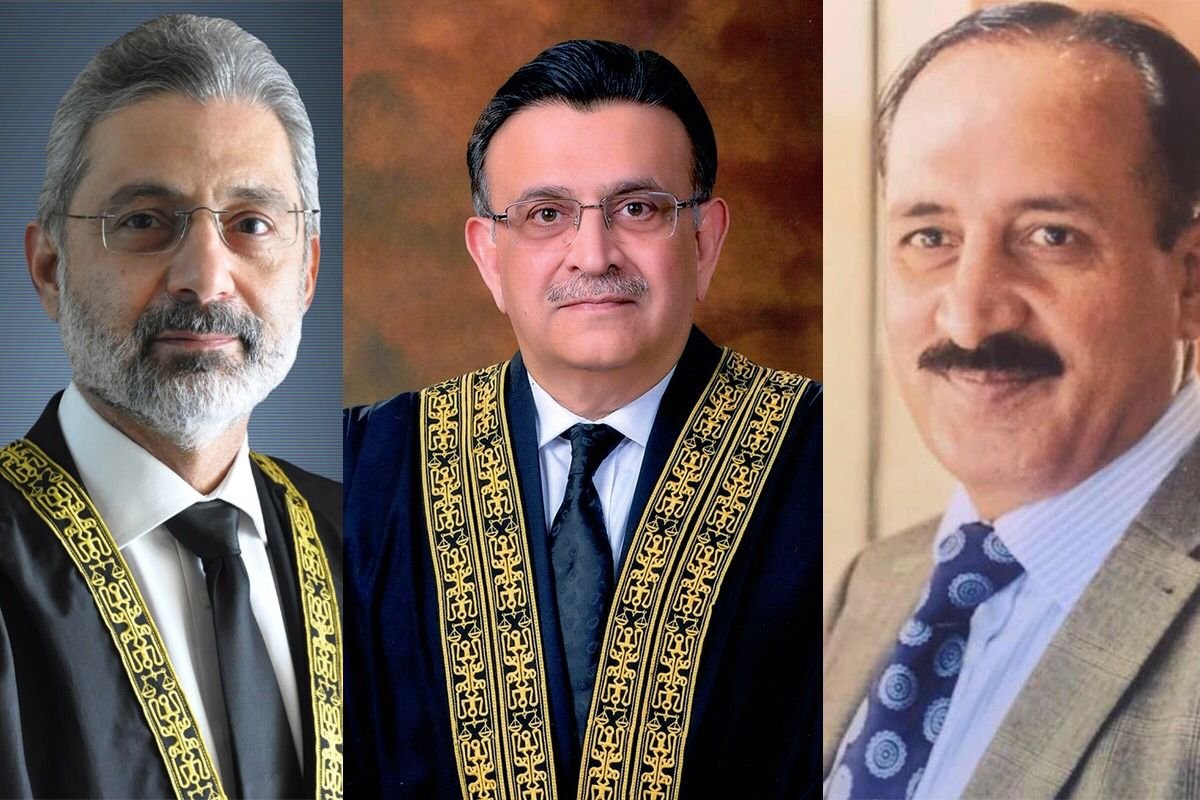
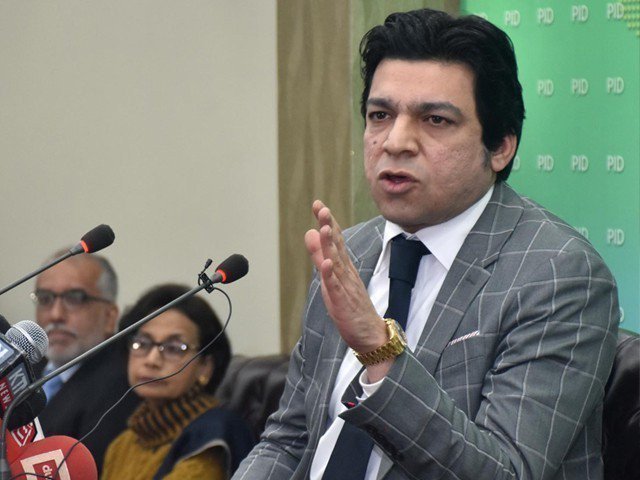
    Justice Mansoor Ali Shah of the Supreme Court (SC) Wednesday remarked that another lie of Pakistan Tehreek-e-Insaf (PTI) leader Faisal Vawda has been caught as the court took up the former federal minister’s petition against a lifetime ban imposed on him by the Election Commission of Pakistan (ECP).

    A three member-bench headed by Chief Justice Umar Ata Bandial, Justice Mansoor Ali Shah and Justice Ayesha Malik heard the petition.

    Justice Ayesha Malik remarked that the cancelled passport which the counsel was relying upon expired in 2015 but was shown to the RO in 2018.

    “When you get the new passport, the older one is stamped cancelled. How can a cancelled passport be evidence of renouncing the nationality,” she asked.

    To this, CJP Bandial said that the issue has become very serious.

    Justice Mansoor Ali Shah then said, “Another lie of Faisal Vawda has been exposed”.

    The hearing was adjourned for two weeks after Faisal Vawda’s counsel, Wasim Sajjad asked for more time for preparation.

    At this, Justice Mansoor Ali Shah said, “You will not get answers of these queries even after a week.

  • ‘Not liable to answer or provide information to you,’ Khan tells FIA

    ‘Not liable to answer or provide information to you,’ Khan tells FIA

    Pakistan Tehreek-e-Insaf (PTI) Chairman Imran Khan on Wednesday (August 17) asked the Federal Investigation Agency (FIA) to take back the notice sent to him in the prohibited funding case in two days, further stating that he would take legal action against the organisation.

    “Neither am I liable to answer to you nor is it liable on me to provide information to you. If notice is not taken back in two days, then I will take legal action against you,” said Khan to FIA.

    “ECP [Election Commission of Pakistan] did not give a decision but issued a report. ECP cannot order FIA or any other organisation based on this report,” said the PTI chief. He added that the FIA does not have the authority to act under the Political Parties Order 2002.

    “The notice issued is also contrary to the FIA Act. Supreme Court has declared the ECP as an administrative institution in several decisions,” said Khan, adding that the ECP is neither a court nor a tribunal.

    FIA sought records from Khan regarding the total funds provided to PTI by national and international companies, and business firms.

  • Supreme Court uploads audio of JCP meeting on its website

    The Supreme Court of Pakistan (SCP) uploaded the audio of the Judicial Commission of Pakistan’s (JCP) meeting on its website.

    The recording was of the letters issued by two JCP members — senior puisne SC judge Justice Qazi Faez Isa and Justice Sardar Tariq Masood — both of whom claimed the meeting had disapproved the nominations of judges, proposed by the Chief Justice of Pakistan, for elevation to the top court.

    Justice Sardar Tariq Masood, in a letter, highlighted the need for putting out factual and correct minutes of the meeting, in which details of observations and discussions of each member should be mentioned.

    “The correct minutes of the meeting, if made publically, will stop needless rumours,” Justice Masood wrote in his two-page letter.

    In a similar letter written to other JCP members, Justice Qazi Faez Isa also highlighted that the acting secretary, who had attended the meeting in the absence of the JCP secretary, should immediately release this decision to the media, which would also stem unnecessary speculation and misreporting, as the meeting was held behind closed doors.

    “In these exceptional circumstances the Hon’ble chairman JCP has been pleased to relax the restriction under Rule 5(4) of the JCP Rules, 2010 and has directed for the audio recording of the JCP proceedings of 28.07.2022 to be made available on the official website of the SCP,” said a statement issued by the apex court.

    The audio recording from time slot 1:29:45 to 1:38:08 contains the statement by Attorney General for Pakistan (AGP) Ashtar Ausaf that the matters under discussion should be deferred to frame appropriate rules. He did not assess or reject the merits of any of the high court judges proposed for appointment to the apex court. As a result, five members of the JCP supported the deferment of the meeting as reported in the press note of Thursday,” the fresh statement said.

    In the audio tape, the AGP can be heard saying “when we talk of seniority, ability, integrity, and temperament, we should also consider whether the appellate courts have appreciated their judgements or overturned them”.

    “While nominating judges we should also consider how much time they will have in the Supreme Court to decide matters,” he said, pointing out that if they had only three years, then it would not be enough.

    Justice Isa, who spoke in the end after the CJP, expressed surprise that while the two senior-most CJs of the high courts could sit in the Supreme Judicial Council (SJC), they were not fit to be elevated to the Supreme Court. “What an irony?” he remarked.

    “What does a CJ of the high court bring to this court? [He] brings experience as a CJ. What I have learnt as CJ, I would never have learned as a judge. It is altogether a different ball game,” he emphasised.

    “We all are equal and can nominate and all of us carry one vote to decide. This is not about winning or losing but a question of the future. You are bypassing chief justices,” said Justice Isa.

    “We will be short of five judges next month and we have 50,000 cases,” the CJP pointed out.

  • Regulate CJ’s powers to constitute benches, say lawyers

    Regulate CJ’s powers to constitute benches, say lawyers

    The legal fraternity on Wednesday demanded the regulation of the exercise of jurisdiction of the Supreme Court (SC), particularly ending the sole discretion of the chief justice of Pakistan (CJP) in the constitution of benches and fixing cases.

    The request was made in a joint meeting of the Supreme Court Bar Association (SCBA) and Pakistan Bar Council (PBC).

    The meeting emphasised its demand that the Judicial Commission of Pakistan (JCP) immediately amends its rules to allow nominations for judicial appointments to be initiated by any member of the Judicial Commission rather than the chief justice alone (which is even otherwise violative of Article 175-A of the Constitution) and, moreover, to frame fair, transparent and objective criteria and procedures to gauge the suitability of prospective appointees.

    Moreover, they demanded that Article 184(3) of the Constitution be amended in order to provide one right of appeal. They asked the federal government to immediately withdraw the curative review filed against Justice Qazi Faez Isa.

    SCBA President Ahsan Bhoon in a press conference said that the appointment of judges to the higher judiciary was not a matter of election, adding that the chief justice of Pakistan and members of the Judicial Commission should strictly adhere to the principle of seniority.

    Govt to withdraw review petition against Justice Qazi Faez Isa

    The federal cabinet on July 27 decided to withdraw the curat­ive review petitions filed against Justice Qazi Faez Isa.

    The cabinet meeting, chaired by Prime Minister (PM) Shehbaz Sharif, observed the action taken against Justice Isa by the Pakistan Thereek-e-Insaf (PTI) government was through “unfair use of authority”.

    An inquiry committee was constituted, which includes Minister for Kashmir Affairs Qamar Zaman Kaira, Minister for National Food Security Tariq Bashir Cheema and Minister for Education Rana Tanveer.

    The committee, after an assessment of the review petitions filed against Justice Isa, would present a report to the cabinet.

    Justice Faez Isa advised CJP not to bulldoze the due process of judges’ appointment

    Justice Qazi Faez Isa advised Chief Justice of Pakistan (CJP) Umar Ata Bandial not to bulldoze the “due process” for the appointment of more than one-third of the total number of judges in the apex court.

    In a letter written to the Judicial Commission of Pakistan (JCP), Justice Isa said that it was surprising that the JCP’s meeting had been convened to consider the appointment of five SC judges during summer vacations. It is pertinent to mention here that JCP is headed by CJP Bandial.

    “When availing of annual leave no meeting of the JCP was scheduled but as soon as I left Pakistan the CJP decided to hold two meetings of the JCP to consider appointments to the Sindh and Lahore High Courts, and now a third unscheduled meeting of the JCP is to be held during the summer vacations of the SC. The summer vacations of the SC were notified by the CJP himself, and then these were gazetted in the Official Gazette. If the CJP renders his own notification utterly meaningless then let him first withdraw it, instead of violating it,” wrote Justice Isa in his letter.

    “It suggests that the CJP does not want me to be physically present, which is illegal and unconstitutional.”

    Justice Isa said that the matter of appointing judges to the superior courts requires utmost care and due deliberation as it is a delicate matter.

    Addressing the CJP, the judge said: “Please do not ridicule the JCP and your nominees by contravening the Constitution. Restricting the JCP to consider only the CJ’s pre-selected nominees is inappropriate. The JCP deserves to be treated with respect and consideration by its chairman.”

    Justice Isa stressed the need that “all appointments must be made in accordance with the Constitution, on the basis of a predetermined and non-discriminatory criteria. And above all without any impression of favouritism. The Constitution does not grant the CJP any powers additional to those of the other members of the JCP; the CJP is only designated as the Chairman of the JCP.”

    JCP meeting underway to discuss CJP Bandial’s five nominees for elevation to SC

    JCP meeting is underway to discuss CJP Bandial’s five nominees for their elevation to Supreme Court. Justice Isa is attending the meeting from Spain and Attorney General for Pakistan Ashtar is participating from the USA.

  • PTI Azadi March: SC says Khan did not commit contempt of court

    The Supreme Court of Pakistan (SCP) on Thursday disposed off the federal government’s contempt of court plea against Pakistan Tehreek-e-Insaf (PTI) Chairman Imran Khan over his violation of the apex court’s orders during PTI’s ‘Azadi March’.

    The government had filed the plea this morning after the PTI went against the SC’s orders, announcing to hold a rally at D-Chowk in Islamabad. A five-member larger bench, headed by Chief Justice Umar Ata Bandial, was present at the court.

    “We will issue the verdict in the case which will serve as an example in the future,” CJP remarked, adding, “Don’t forget that this party [PTI] has held several rallies.”

    At this, Attorney General Ashtar Ausaf maintained that strict security was provided to all PTI rallies since the dismissal of the party’s government.

    “Whatever happened yesterday was unfortunate. It shattered SC’s trust in political parties,” CJP Bandial remarked, adding that the court doesn’t want to continue hearing the case.

    Bandial said that the court “going beyond its authority, had given orders for the security of people […] directed the political parties to hold negotiations”.

    The attorney general then requested the court’s permission to play a video recording of Khan’s address to his supporters, which was granted.

    AGP Ausaf argued that Khan told his supporters the SC had granted permission to protest at D-Chowk. The chief justice questioned what happened after the PTI chairman’s statement.

    “Imran then asked his workers to reach D-Chowk,” Ausaf replied.

    “It is possible that the message was not delivered to Imran Khan properly,” CJP Bandial remarked. “The entire issue is [related to] a conflict. Judicial proceedings cannot be based on assumptions.”

    The attorney general argued that the PTI was granted permission to protest after assurances that the Azadi March would be peaceful.

    During the hearing, the CJP inquired about the number of people injured yesterday. At this, the AGP informed that 31 police officials were injured.

    “Citizens would also have been wounded. The crowd was highly charged,” CJP Bandial said, adding that only the PTI leadership could have controlled the situation.

    He said that PTI should understand its responsibility toward citizens. The party should have become an example, he added.

    SC directs govt to provide PTI with ground between H-9, G-9 areas to hold jalsa

    The Supreme Court of Pakistan (SCP) on Wednesday directed the federal government to provide the PTI with the ground between the H-9 and G-9 areas of Islamabad to hold its public gathering.

    The directives came during a hearing of the Islamabad High Court Bar Association’s (IHCBA) plea against the government’s decision to block roads to stop PTI’s “Azadi March” in the federal capital.

    A three-member bench of the SC, headed by Justice Ahsan, was hearing the plea. Islamabad chief commissioner and Inspector-General of Police (IGP) Akbar Nasir Khan appeared before the court during the hearing.

    Today’s hearing saw two breaks before the apex court issued the final order of providing the space to the PTI for the jalsa.  

    When the hearing resumed after the second break, the Attorney-General for Pakistan (AGP) Ashtar Ausaf Ali told the three-member bench that the ground, which will be given to the PTI, only had the capacity to accommodate 10,000 people. 

    During the hearing, Justice Ijaz Ul Ahsan asked PTI’s lawyer Babar Awan when the gathering will be held.

    “Till when will the gathering go on for?” asked Justice Ahsan. To this Awan, replied that the decision is for the political leadership to take.

    In response, Justice Ahsan remarked that the apex court can change its order, amend or take it back. He added that the bench will be monitoring the developments.

    “Talks between the government committee and PTI committee should be held at 10pm tonight at the chief commissioner’s office,” said the court. It directed the deputy commissioner, interior secretary, and inspector-general Islamabad to make sure the meeting take place.

    “Arrested political leadership and workers should be freed at once,” said the court. It also ordered the government to follow the point agreed between the JUI-F and PTI during the former’s 2019 long march.

    “Any new clause should be included in the agreement through mutual consultation and the court should also be informed about it,” said the bench.

    Before the break, the court had directed the authorities concerned to hold consultations over permission for the PTI rally on H9 ground and update the court on the outcome. The bench then adjourned the hearing of the case till 9:30am tomorrow. 

    SC orders provision of alternative venue for PTI rally

    Earlier the court ordered the authorities concerned to provide an alternative venue to Pakistan Tehreek-e-Insaf (PTI) for Azadi March.

    The court directed the authorities concerned to hold consultations over permission for the PTI rally on H9 ground and update the court on the outcome.

    The directive came during a hearing of the Islamabad High Court Bar Association’s (IHCBA) plea against the government’s decision to block roads to stop PTI’s ‘Azadi March’. A three-member bench of the SC, headed by Justice Ahsan, was hearing the plea. Islamabad chief commissioner and Inspector-General of Police (IGP) Akbar Nasir Khan appeared before the court during the hearing.

    Justice Ijazul Ahsan directed the Islamabad chief commissioner to prepare a traffic plan for the PTI rally and submit a report after compliance with orders by 2:30pm.

    “Let them protest and then go home,” Justice Ahsan said. “We expect the government to remove barricades.”

    He also directed PTI’s lawyer Faisal Chaudhry to “sit at the negotiating table” with the administration officials and gave him time to get instructions from the party leadership in this regard. The court also directed authorities to provide complete protection to PTI leaders for the negotiations.

    “If the PTI fears arrests, it should provide us with a list. We will protect those who fear arrests,” Justice Ahsan said.

    Attorney General Ashtar Ausaf told the SC that the government did not allow the PTI to hold its Azadi March on Islamabad’s Srinagar Highway because there was a “threat” to Khan’s life according to reports from security agencies.

    “The permission to gather at Srinagar Highway was denied due to the security situation. Imran Khan’s life is in danger as per reports of security agencies. Security agencies have raised fears of a suicide attack on the former prime minister.”

    The administration should present a complete plan of action which allows the protest, but keeps roads open so that the protesters can reach peacefully and go back home afterward,” Justice Ahsan said.

    The judge sought assurance from the authorities that there won’t be any violence and that roads will not be closed. Moreover, the court directed PTI’s counsel to give names if the party fears arrest.

    Justice Mazahir Ali Akbar Naqvi remarked that the Islamabad IGP and Interior secretary should review their policies.

    The judge warned the IGP to understand his responsibilities and fulfill them. “You have been appointed four days ago. Stay within your limits as you already have enough burden of cases and allegations,” Justice Naqvi said.

    The Islamabad High Court (IHC) on Tuesday ordered police and the administration to stop harassing PTI leaders and workers following a crackdown by the Punjab Police last night.

    The court then asked PTI’s lawyer if he could provide an affidavit stating that no incident would take place during the sit-in and that the counsel would be responsible if an unfortunate incident occurred.

    “If you cannot provide an affidavit then how can the court issue a general order?” the judge asked.
  • PTI Azadi March: Khan leaves D-Chowk, says will come back in 6 days if no election announced

    PTI Azadi March: Khan leaves D-Chowk, says will come back in 6 days if no election announced

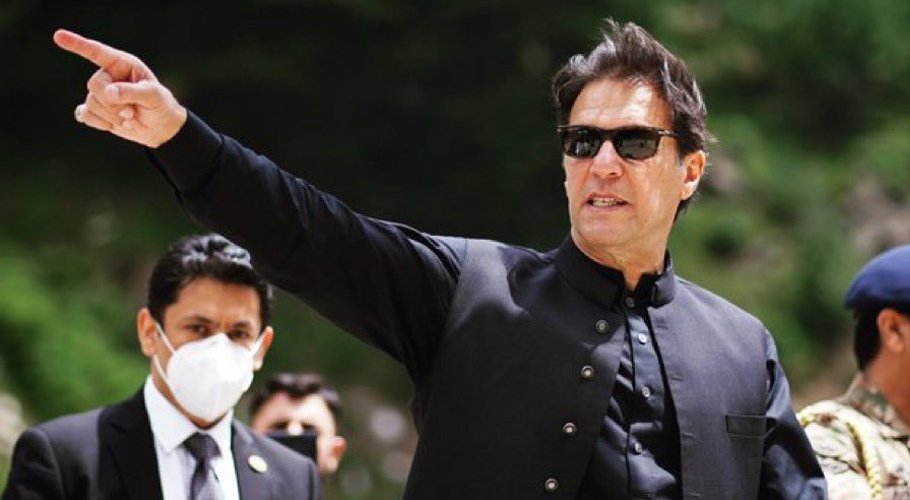
    Pakistan Tehreek-e-Insaf (PTI) Chairman Imran Khan addressed the protesters at Islamabad’s 9th Avenue and gave a six-day deadline to the government for announcing elections and dissolving assemblies.

    “I had decided that I will sit here until the government dissolves assemblies and announces elections, but of what I have seen in the past 24 hours, they (govt) are taking the nation towards anarchy,” he said, claiming that the government was also trying to create a divide between the nation and the police.

    “The government tried every method to crush our Azadi March. They used teargas on peaceful protests, our homes were raided and our privacy was violated. However, I have seen the nation free itself of [the] fear of slavery,” said Khan addressing his caravan.

    He claimed that five PTI protesters were killed in clashes after the PTI’s march, saying that one had fallen off the Attock bridge amid tear-gas shelling and the other was pushed into Ravi river. He said he had also received information that three were killed in Karachi.

    Addressing the Supreme Court (SC), he asked, “What crime were we committing?”

    He said he “wants justice for the people of Pakistan from Supreme Court judges and the lawyers’ community”.

    “I am again asking the judiciary to save your FIA (Federal Investigation Agency). In the future, no FIA officer will investigate the powerful if he will meet the same end as Dr Rizwan and Asghar,” he added. Imran said peaceful protest was the right of every Pakistani and no one “gives you [the government] to treat the people in the manner that you treated them”.

    People have completely rejected the riot: Sanaullah

    Interior Minister Rana Sanaullah, meanwhile, said the people “have completely rejected the riots”. In a statement posted on PML-N’s official Twitter account, Sanaullah was quoted as saying he had been personally monitoring the security situation.

    “Imran Niazi entered the city after getting permission from the Supreme Court to hold a rally at a designated place in Islamabad and broke his promise by announcing plans to go to D-Chowk.”

    Read more: PTI Azadi March: Imran sets out to lead party caravan, tensions escalate

    Army summoned to control the situation

    As the situation turned chaotic in Islamabad after Khan and his convoy entered the federal capital and started marching towards the city’s D-Chowk, the government decided to seek the help of the army to control the situation and protect the government’s offices located in the Red Zone.

    The government, in a notification, said that the army was summoned to control the situation under Article 245 of the Constitution.

    PTI, govt negotiations fail

    Following the Supreme Court’s order for the government and the PTI to hold negotiations in a bid to control the situation at 10pm Wednesday, the government’s team headed by Pakistan Muslim League-Nawaz (PML-N) leader Ayaz Sadiq, reached the commissioner’s office in Islamabad but the PTI team, led by Bawar Awan, returned without holding the talks due to the late arrival of the government’s team.

    Sadiq said it was decided to meet at 10pm but “due to the closure of roads, the government’s team reached the Islamabad commissioner’s office 25 minutes late”.

    “We were gathered here on SC’s orders but now leaving as a sign of protest,” he told journalists. The PML-N leader added that the purpose of the dialogue was to select a place and set a guideline for PTI’s protest.

    “Following the court’s order, we have removed obstacles but the city was set on fire,” he added. “The chief commissioner had been continuously calling the PTI team but they were not responsive. However, we will wait here a little longer for them.”

    SC directs govt to provide PTI with ground between H-9, G-9 areas to hold jalsa

    The Supreme Court on Wednesday directed the federal government to provide the PTI with a ground between the H-9 and G-9 areas of Islamabad to hold its public gathering.

  • Supreme Court bars transfers, appointments in high-profile cases

    Supreme Court bars transfers, appointments in high-profile cases

    The Supreme Court of Pakistan (SCP) is barring authorities from making new appointments and transferring officials involved in “high-profile” and National Accountability Bureau (NAB) cases as well as those cases which are being heard by special courts, reports Dawn.

    The Chief Justice of Pakistan (CJP) observed that special courts in Karachi and Lahore lack judges while three accountability courts in Islamabad are also empty.

    The court issued notices to the Federal Investigation Agency (FIA) director general, the National Accountability Bureau (NAB) chairman and the interior secretary. The court asked the parties concerned to give an explanation as to why there was “interference” in criminal cases, and stopped the NAB and FIA from withdrawing cases till further orders.

    The court also asked to be informed about the steps being taken to protect the record of criminal cases and directed for the record of high-profile cases to be checked and sealed. When Attorney General for Pakistan (AGP) Ashtar Ausaf protested against this, the CJP said that the record of ongoing cases would not be sealed, only that of the prosecution.

    During the hearing, the CJP also observed that there should be “no interference in the prosecution process or the prosecution wing”.

    The CJP also noticed that FIA’s former director Mohammad Rizwan, who was probing money laundering charges against Prime Minister (PM) Shehbaz Sharif and his son Punjab Chief Minister (CM) Hamza Shahbaz, was also transferred and later died of a heart attack.

    “We are concerned over these developments,” the CJP said. Justice Bandial, indirectly pointing out at Pakistan Muslim League-Nawaz (PML-N) also stated that according to news reports, “thousands” of people had benefitted after their names were removed from the no-fly list.

    At one point, CJP Bandial remarked that the court was only concerned with ensuring justice and adjourned the hearing till May 27.

  • ‘Want to get access to his Peer’: Usman Buzdar’s expected comeback sparks a meme fest

    ‘Want to get access to his Peer’: Usman Buzdar’s expected comeback sparks a meme fest

    The Supreme Court (SC) on Tuesday in its decision on a presidential reference seeking interpretation of Article 63-A of the Constitution, which is related to the status of defecting lawmakers, said the votes of defecting lawmakers will not be counted.

    Pakistan Tehreek-e-Insaf (PTI) supporters started celebrating the ‘expected’ comeback of Usman Buzdar by removing the current Punjab Chief Minister Hamza Shehbaz.

    The memes in relevance to Buzdar are hilarious.

    Seems like the Peer baba’s business is about to boom.

    Some questioned the short tenure of Hamza Shehbaz.

    Some declared Buzdar as the real danger.

    Some said Hamza might be a good player but Buzdar is the real coach.

    Some wished for the same luck as that of Buzdar.

    Some showed how Buzdar will make an entry at the CM House.

  • SC decides defecting lawmakers’ votes will not be counted

    SC decides defecting lawmakers’ votes will not be counted

    The Supreme Court (SC) on Tuesday in its decision on a presidential reference seeking interpretation of Article 63-A of the Constitution, which is related to the status of defecting lawmakers, said the votes of defecting lawmakers will not be counted.

    Chief Justice of Pakistan (CJP) Umar Ata Bandial, Justice Ijazul Ahsan, and Justice Munib Akhtar gave the majority verdict while Justice Mazhar Alam Khan Miankhel and Justice Jamal Khan Mandokhail were the dissenting judges.

    Question 1: Should Article 63-A have a limited or a broad, purpose-oriented interpretation?

    The short-order said that the first question was related to the proper approach to be taken for the interpretation and application of Article 63-A.

    “In our view, this provision cannot be read and applied in isolation and in a manner as though it is aloof from, or indifferent to, whatever else is provided in the Constitution,” the verdict stated.

    It said that Article 63-A was an “expression in the Constitution itself of certain aspects of the fundamental rights that inhere in political parties under clause (2) of Article 17,” adding that the two provisions were “intertwined”.

    “Defections rightly stand condemned as a cancer afflicting the body politic. They cannot be countenanced,” the order said, adding that 63-A must be interpreted in a “purposive and robust manner”.

    “The pith and substance of Article 63-A are to enforce the fundamental right of political parties under Article 17 […] It must therefore be interpreted and applied in a broad manner, consistent with fundamental rights,” the verdict said.

    Question 2: Will the defecting members’ vote be counted, given equal weightage?

    Giving its stance on the second question, the verdict said that the vote of any member of a parliamentary party in a house “that is cast contrary to any direction issued by the latter in terms of para (b) of clause (1) of Article 63-A cannot be counted and must be disregarded, and this is so regardless of whether the party head, subsequent to such vote, proceeds to take, or refrains from taking, an action that would result in a declaration of defection.”

    Question 3: Will the defectors be disqualified for life?

    “While it is for parliament to enact such legislation, it must be said that it is high time that such a law is placed on the statute book. If such legislation is enacted it should not amount to a mere slap on the wrist but must be a robust and proportionate response to the evil that it is designed to thwart and eradicate,” the order stated.

    Question 4: Measures that can be taken to prevent defection, floor crossing, and vote-buying

    On the question of the measures that can be taken to curb vote-buying, the verdict refrained from giving an opinion on the fourth question, submitted by the president was returned by the court as it was “stated in terms” that were “vague, and too broad and general”.

    What is Article 63-A?

    Article 63(A) of the Constitution of Pakistan deals with the defection of parliamentarians.

    According to the Article, a lawmaker can be disqualified on the grounds of defection if they vote or abstain from voting in the House contrary to any direction issued by the parliamentary party to which they belong.

    However, this is restricted to three instances where they have to follow the party’s directions:

    Election of the prime minister or chief minister;

    Vote of confidence or a vote of no-confidence;

    Money bill or a Constitution (amendment) bill.

    Per the Article, the head of the party is required to present a written declaration that the MNA concerned has defected.

    However, prior to presenting the declaration, the head of the party will have to give the MNA concerned a chance to explain the reasons for defection.

    Following that, the party chief will then forward the written declaration to the speaker, who would, in turn, hand it over to the chief election commissioner (CEC).

    The CEC will have 30 days at its disposal to confirm the declaration. Once confirmed, the MNA concerned will no longer be a member of the House and their “seat shall become vacant”.

  • Drug Smuggling: SC bars Czech model from leaving Pakistan

    Drug Smuggling: SC bars Czech model from leaving Pakistan

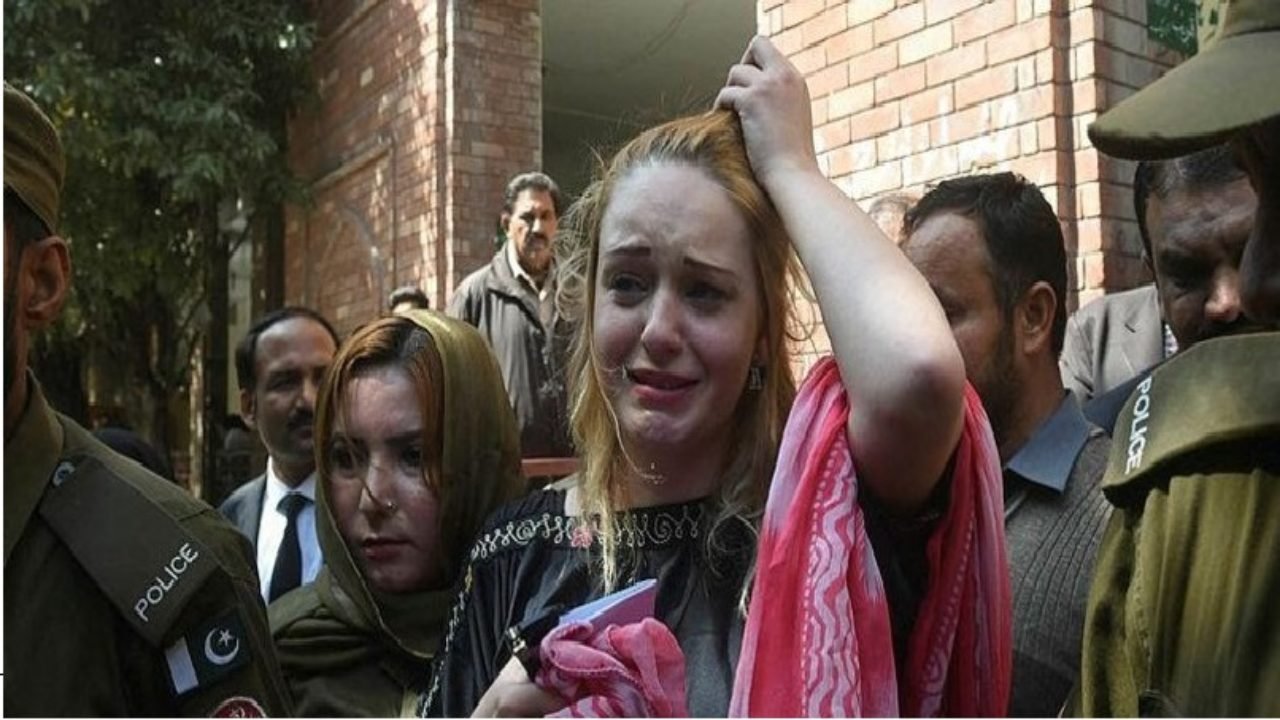
    The Supreme Court of Pakistan on Tuesday stopped Czech model Tereza Hluskova from travelling abroad in drug smuggling case.

    According to ARY News, Tereza Hluskova was sentenced to eight years and eight months in jail by a sessions court in April 2019. She was arrested at Lahore airport for attempting to smuggle heroin from Pakistan to Abu Dhabi on January 10, 2018.

    The court acquitted her last year in November and was released from prison the same month.

    On Tuesday, the apex court issued notice to Czech model and stopped her from leaving the country on the request of Pakistan customs.

    The counsel for Customs contended in the court that Tereza Hluskova was sentenced to eight years in prison by the trial court for smuggling drugs and was later on released by LHC.