Tag: Supreme Court

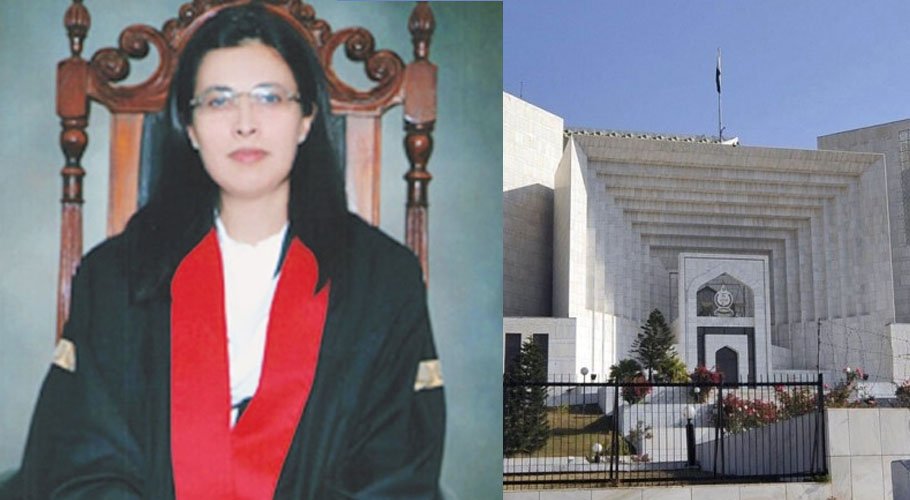
  • Justice Ayesha Malik confirmed for Supreme Court Judge, needs President’s formal approval

    Justice Ayesha Malik confirmed for Supreme Court Judge, needs President’s formal approval

    The Parliamentary Committee on Wednesday confirmed the nomination of Justice Ayesha Malik to the Supreme Court (SC).

    Justice Malik only requires the president’s formal assent to become the first woman to be elevated to the country’s top court.

    Justice Malik will remain a judge of the Supreme Court until March 2031 and may even have a chance to become the first woman to hold the post of chief justice.

    After a session on January 6, the Judicial Commission of Pakistan (JCP) recommended Justice Malik’s name by a majority of five votes to four.

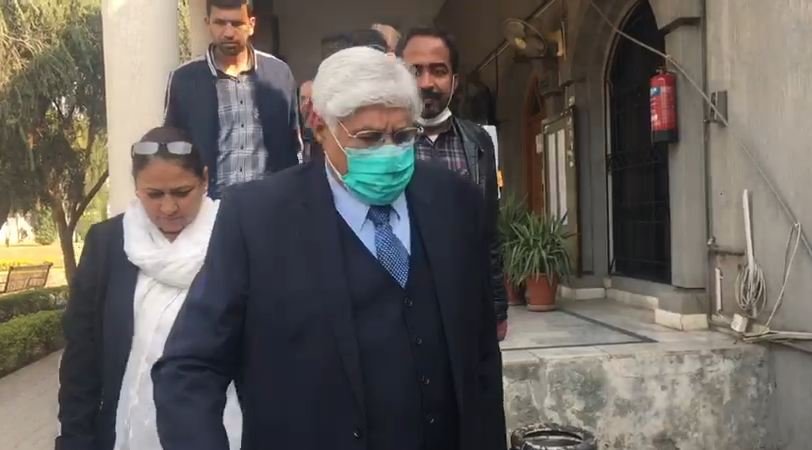
    Chief Justice Gulzar Ahmed, senior judge Justice Umar Ata Bandial, former judge Sarmad Jalal Osmany, Law Minister Barrister Farogh Naseem, and Attorney General Khalid Jawed Khan had supported Justice Malik’s candidature, while Justice Qazi Faez Isa, Justice Maqbool Baqar, Justice Sardar Tariq Masood and Pakistan Bar Council representative Akhtar Hussain opposed the selection.

  • Four more children die of malnutrition in Tharparkar, death toll at 10

    Four more children die of malnutrition in Tharparkar, death toll at 10

    Four more children are reported to have died due to malnutrition within the last two days in Tharparkar. The death toll of children in January has climbed to ten.

    A report released by the United Nation’s Children Fund (UNCF) in April stated that Pakistan is among the countries with the highest infant mortality rates, with 22 infants dying before turning a month old.

    The number of children who have lost their lives during the current year due to malnutrition and other diseases in Tharparkar has reached 413.

    Earlier this month, Chief Justice of Pakistan Justice Gulzar Ahmed asked for the filing of a petition in the Supreme Court for a resolution of the problems of the Thar region.

    The health department in order to avoid humiliation has directed staffers of concerned hospitals not to talk with the media, reports ARY News.

  • Islamabad High Court orders closure of all sheesha cafes in the city

    Islamabad High Court orders closure of all sheesha cafes in the city

    Islamabad High Court (IHC) has ordered the local administration to shut down all sheesha cafes in the federal city with immediate action and submit a progress report to the court as well.

    The Anti-Narcotics Force (ANF) along with the Islamabad administration and police have mobilised their resources to initiate the crackdown on all sheesha cafes operating in Islamabad.

    The complete ban on sheesha was announced across the country led by the Supreme Court previously in 2015 but in the following year, the bench headed by Justice Gulzar Ahmed of the Supreme Court expressed displeasure over the sale and import of sheesha and tobacco smoking items despite the ban from the apex court.

    This time the court emphasised that action must be louder than words.

    The court also asked the advocate generals from the provincial governments about the implementation of previous orders regarding the ban on sheesha smoking in public spaces.

  • KP government wants harsher sentences for those convicted in Mashal Khan case

    The Supreme Court (SC) on Tuesday accepted for hearing a set of appeals by the Khyber Pakhtunkhwa (KP) government seeking to enhance the sentences of the convicts involved in the 2017 lynching of Mardan university student Mashal Khan, reports Dawn.

    Additional Advocate General (AAG) for KP Nisar Khan, told Dawn that the appeals were filed against the November 2020 verdict in which the Peshawar High Court had commuted the death sentence awarded to primary accused Imran Ali in Mashal Khan lynching case, but maintained the jail terms handed down to 32 others.

    Mashal Khan, a 23-year-old student of the Department of Mass Communication at Abdul Wali Khan University, Mardan, was lynched by a mob and shot over allegations of blasphemy on April 13, 2017.

    In June 2017, a 13-member joint investigation team concluded that the allegations of blasphemy against Mashal Khan were unfounded and were used as a pretext to incite a mob against him.

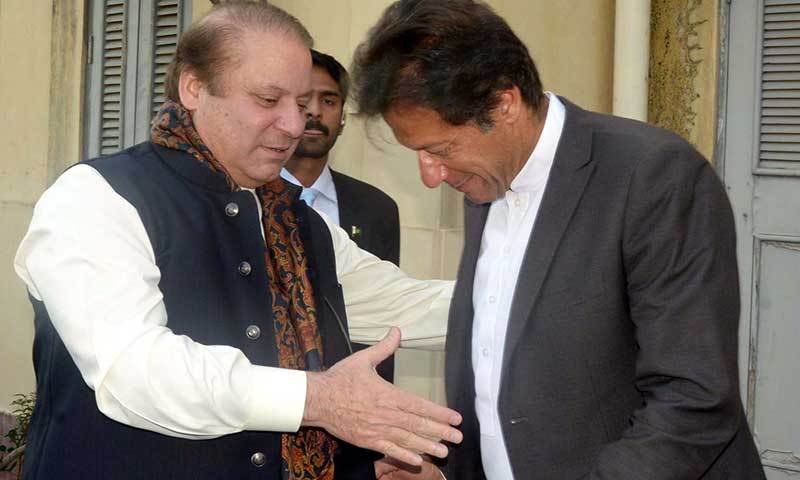
  • ‘If law can apply to Nawaz Sharif, why not Imran Niazi?’ Shehbaz demands action against PM

    ‘If law can apply to Nawaz Sharif, why not Imran Niazi?’ Shehbaz demands action against PM

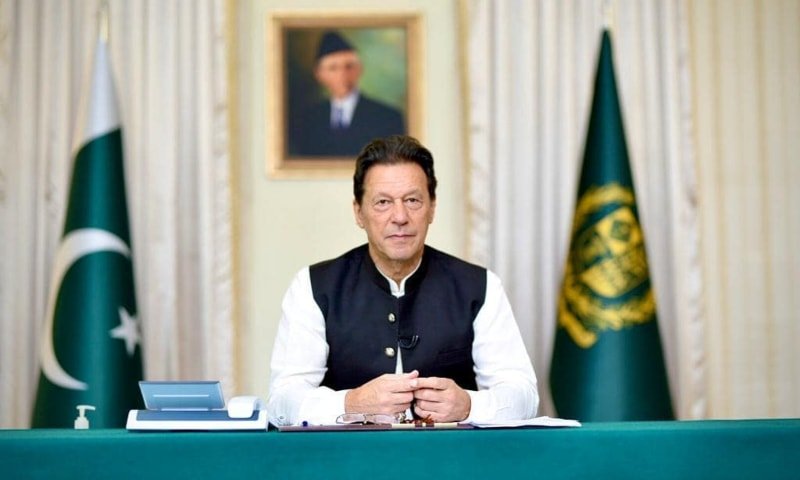
    Leader of the Opposition in the National Assembly (NA) Shehbaz Sharif on Friday demanded legal action and “daily court proceedings” against Prime Minister (PM) Imran Khan.

    In a series of statements shared by the party’s official Twitter account, “A person who hides facts, steals, and lies, cannot hold constitutional, governmental or political office,” said Shehbaz.

    Shehbaz asked, “if the law can apply to a popular leader like Nawaz Sharif, why not Imran Niazi?”

    “If a Panama Papers JIT can be formed against Nawaz Sharif, and can be overseen by the honourable judges of the Supreme Court (SC), then why can this not be done for Imran Niazi?” he further questioned.

     “Under the Constitution of Pakistan and its laws, “no thief can be a prime minister. Imran Niazi, who has been proven a thief and a liar under the law, must resign,” he added.


    The Pakistan Muslim League-Nawaz president demanded that a probe be initiated against PM Imran Khan and his case be heard on a daily basis — like against former prime minister Nawaz Sharif.

    He said equal treatment under the Constitution and law is a fundamental principle of Pakistan’s laws and one that must be fulfilled.

    “The Election Commission of Pakistan (ECP’s) scrutiny committee has charged Imran Niazi and his party under the law,” he said.

    The ruling Pakistan Tehreek-e-Insaf (PTI) hid 53 bank accounts and funds worth millions of rupees from the ECP.

    The report of an ECP scrutiny committee probing the party’s funds revealed the following details.

    The committee’s report showed that the PTI had only disclosed 12 out of its 65 accounts, which are registered with the State Bank of Pakistan (SBP).

  • ‘Sadiq aur Ameen’: Can PM Khan be disqualified?

    ‘Sadiq aur Ameen’: Can PM Khan be disqualified?

    Prime Minister (PM) Imran Khan and his ruling party are being criticised by the Opposition after a scrutiny committee of the Election Commission of Pakistan (ECP) reported that the party received funding from foreign nationals and companies, under-reported funds, and concealed dozens of its bank accounts.

    Lashing out at the premier, Pakistan Muslim League-Nawaz (PML-N) president Shehbaz Sharif said, “Truth has a strange way of exposing people. The facade of ‘Sadiq aur Ameen’ [Truthful and honest] has been shredded into pieces.”

    The Current reached out to the legal experts to understand what will happen to PM Khan’s stance of being truthful and honest and will the Supreme Court (SC) disqualify him.

    It is being speculated that the ruling PTI may only face confiscation of funds but another notion is that the election commission can take action against the party head under the corrupt practices clause of the election act.

    Former Additional Advocate General Punjab and Advocate Supreme Court, Faisal Hussain Chaudhry while speaking to The Current said, “The Prime Minister cannot be declared or disqualified in this aspect. This aspect has been dealt with by SCP. Secondly one has to see whether the accounts were concealed.”

    “The party chairman submitted the accounts which were duly audited by a chartered accountant. It’s not his own, he just submitted the documents,” said Hussain.

    “Similar cases which contain the same allegation, more or less, are on Nawaz Sharif and Asif Ali Zardari are also pending. So, whatever the consequence of this case would be, it will be applicable to the other parties as well,” said Hussain.

    Reema Omer, a legal adviser for the International Commission of Jurists (ICJ) in a conversation with The Current said, “A question that arises from this case is whether PM Khan would cease to be “honest and Ameen” under Article 62(1)(f) of the Constitution if the ECP finds the PTI had received foreign funding, given that as head of the party, he issued certificates pledging that the PTI received no funds from any source prohibited under the law.”

    “Supreme Court’s interpretation of Article 62(1)(f) has been arbitrary and inconsistent, which makes it difficult to predict how such a plea would be decided,” she added.

    “However, given the dangers inherent in the SC disqualifying members of parliament on vague and subjective grounds and making declarations about their honesty, such a provision should be construed narrowly. It is time laws such as Article 62(1)(f) are repealed or read down — not given more teeth,” said Reema.

    “Imran Khan’s disqualification was one of Hanif Abbasi’s prayers in the petition before the Supreme Court. The SC did not give any definitive answer and left it open, to be determined once the issue of foreign funds is decided,” said Reema Omer.

  • ‘Used’:Rana Shamim in trouble as court frame charges against ex-judge

    ‘Used’:Rana Shamim in trouble as court frame charges against ex-judge

    The Islamabad High Court (IHC) on Tuesday set January 7, 2022, as the date for framing charges against former Gilgit-Baltistan Chief Judge Rana Shamim and others in a case related to an affidavit that accuses former Chief Justice of Pakistan (CJP) Mian Saqib Nisar of colluding to deny bails to Pakistan Muslim League-Nawaz (PML-N) leadership prior to the 2018 elections.

    During the hearing today, CJ IHC Athar Minallah observed that Shamim’s written response submitted to the court had “laid the entire blame” on journalist Ansar Abbasi [the journalist who published the story accusing CJP Nisar], recalling that the former jurist had also maintained that he had not shared the affidavit with anyone.

    He added that in similar circumstances, courts in the United Kingdom asked journalists to disclose their sources but the IHC would not do so.

    “The judge [mentioned in] the affidavit was on leave at the time. Attempts were also made to cast doubt on the two judges on the bench,” Justice Minallah said.

    Justice Minallah said the matter had “nothing to do” with the former CJP. “Go and do what you want to do with Mian Saqib Nisar,” he remarked.

    He recalled that proceedings had started because of an attempt to cast suspicion on judges of the high court. “[This] perception is being created which everyone has started believing as true,” Justice Minallah said.

    “Where was that perception when bail was granted two weeks later by this same court?” he questioned.

    Attorney General of Pakistan (AGP) Khalid Jawed Khan said that the concerned document was very important in contempt of court case. Shamim’s counsel, Lateef Afridi, responded that Shamim had said the affidavit was a “private document” and was written at his wife’s request.

    “By now, even Rana Shamim must have come to know how sensitive this issue is,” Justice Minallah remarked.

    “Contempt of court cases were initiated against Firdous Ashiq Awan in [the IHC] and Imran Khan in the Supreme Court. What happened in those cases? Such cases are initiated and the court has to show mercy,” Afridi responded.

    Afridi said Shamim “did not know about the affidavit’s consequences when he wrote it”. The judge reiterated his question about who the beneficiaries were to which Afridi again responded that he did know and requested the court to not waste time on the issue since there were other cases pending.

    The chief justice remarked, “What if Kulbhushan Jadhav (Indian spy) submitted an affidavit saying his case should not be heard by this court since it is compromised? This is a serious matter. Understand the consequences of this affidavit.”

    Meanwhile, journalist Ansar Abbasi said that he had talked to Shamim a day before the report was published. “Rana Shamim also [messaged] me that what I read out was correct,” the journalist said.

    Subsequently, the attorney general requested the court to indict Shamim and others. Terming Shamim responsible since he was the one who wrote the affidavit, the AG said the ex-judge had committed contempt of court.

    “Since the past three days, there are [reports] that the affidavit was written in someone’s office. It is surprising that no denial has come forth,” the AG said.

    Shamim’s counsel responded that the matter had been denied in a TV interview. However, the AGP argued that no denials were made by those related to the matter.

    “Rana Shamim should accept that he was used and apologise. If he does, then I too will [ask the court] to not take action. If he doesn’t apologise, then set a date quickly for indictment,” the AG requested the court.

    Subsequently, the court set January 7, 2022, as the date for framing charges.
  • SCBA pays tribute to Benzair Bhutto

    The Supreme Court Bar Association (SCBA) paid tribute to Shaheed Mohtarma Benazir Bhutto on her 14th death anniversary.

    “Mr Muhammad Ahsan Bhoon, President, Supreme Court Bar Association of Pakistan, has paid tribute to Shaheed Mohtrama Benzair Bhutto, (the first lady and twice democratically elected Premier of a Muslim country), on her 14th death anniversary.”

    “While paying homage to Shaheed Mohtarma, the President said that she was an exceptional and charismatic leader who set topmost standards in politics based on self-esteem, truthfulness and integrity.”

    “All her life, she struggled for upholding rule of law, supremacy of the constitution for intensification of the democratic values.”

    “She was a symbol of judicious, democratic and liberal Pakistan and had shown the courage and valor against those who opted to resort extremism and perhaps that is the reason for which she was assassinated,” the President opined.

    Benazir Bhutto was assassinated in a gun-and-bomb attack in Rawalpindi’s Liaquat Bagh on December 27, 2007. She was elected as prime minister of Pakistan twice. She was the first woman to lead a Muslim country.

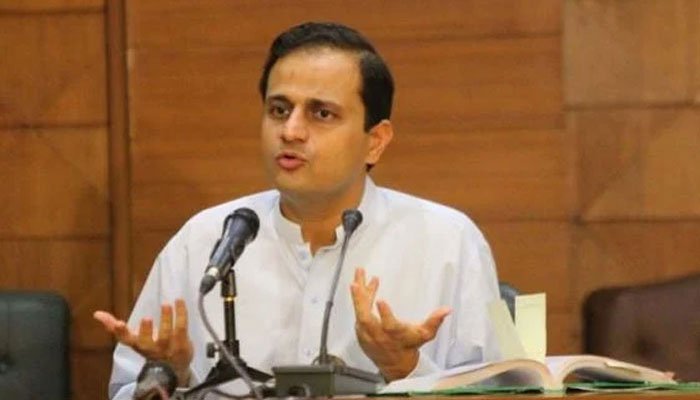
  • ‘Get out from here’: SC reinstates Murtaza Wahab as Administrator Karachi after unconditional apology

    ‘Get out from here’: SC reinstates Murtaza Wahab as Administrator Karachi after unconditional apology

    The Supreme Court (SC) took back its order for the removal of Murtaza Wahab from the post of Administrator Karachi after he tendered an “unconditional apology” during a hearing of the Gutter Baghicha case at the Karachi Registry on Monday.

    The court directed that the post of administrator be “kept away from politics” and instructed Wahab to fulfill his responsibilities while remaining above “political affiliation and pressure”.

    Earlier, a two-member bench comprising Chief Justice Gulzar Ahmed and Justice Qazi Mohammad Amin issued a directive for Wahab’s removal after a heated exchange with him.

    Attorney General of Pakistan Khalid Jawed Khan, Advocate General of Sindh Salman Talib Ud Din, Karachi Commissioner Iqbal Memon, Wahab, and Senior Director of the anti-encroachment department Bashir Siddiqui were present during today’s hearing.

    During the hearing of a matter related to the Gutter Baghicha park, Justice Amin, while addressing Wahab remarked, “These are state lands [and] not your personal property. [You will] have to return them. If we don’t take them [back] then someone else will. You will return the lands.”

    “Should we leave the government?” Wahab questioned, saying that major observations are made about the provincial government by the court.

    “Silence yourself mister, what are you saying? Don’t do politics here,” the chief justice reprimanded Wahab.

    “Get out from here. We will fire you right now. Are you an administrator or a political leader?” Justice Gulzar questioned. 

    “The administrator, prima facie, failed to perform his duties. The administrator’s behaviour is that of political leaders [and] not of serving the citizens,” the chief justice remarked.

    “Go and transfer Bin Qasim park [and] Hill park in your name. Take Frere [Hall] park too. How many parks are there in Karachi? Finish them now. Distribute the few remaining parks among your officers as well,” the chief justice scolded Wahab.

    “Is Karachi your personal property?” he questioned.

    Murtaza Wahab later apologised to the court for using harsh words.

    “I apologise for my behavior,” Wahab said.

    Justice Qazi Amin remarked that they have removed him [Wahab] from office. “You are no longer an administrator. You are not part of the state but the government,” he said.

    Wahab, while speaking to the media during a break in the hearing, said that he accepted whatever the court’s decision would be.

    He said that he has apologised to the court. “I was stating my opinion with great respect,” said Wahab, adding that this court is his own court.

    “[A person] should be heard before issuing a decision against them,” Wahab said as he looked forward to the court’s final decision after the break.

    The court later accepted the apology of Murtaza Wahab after a short break in the proceedings and withdrew the order to remove him from office.

  • SC orders action against officials who issued permits for Nasla Tower construction

    The Supreme Court (SC) has given orders to authorities to take strict action against those officials who issued construction permits to build the illegal 15-storeyed Nasla Tower on Monday.

    A two-judge bench comprising Chief Justice Gulzar Ahmed and Justice Qazi Mohammad Amin ordered the anti-corruption department to register a case against those who are responsible for the issuance of construction permits. They also directed the police to file a separate case against them.

    The Deputy Inspector General (DIG) West has been given instructions to take immediate action against the officials who had approved the Nasla Tower building plan and present a report to the Supreme Court.

    The Supreme court also ordered to seize the 780 square yards of the land the tower was constructed upon and directed the official assignee of Sindh High Court (SHC) to take possession of the land and prohibit its sale.

    The Chief Justice also expressed his anger over the slow pace of the demolition procedure of the Nasla Tower. He asked Karachi Commissioner Iqbal Memon, “Such a building is torn down within one hour in the world. What are you people doing?”

    The Karachi Commissioner replied that five floors have been demolished so far and currently 400 labourers are working on the given task.