Tag: Supreme Court

  • SC dismisses presidential reference against Justice Qazi Faez Isa

    SC dismisses presidential reference against Justice Qazi Faez Isa

    The Supreme Court (SC) on Friday dismissed the Pakistan Tehreek-e-Insaf (PTI) government’s presidential reference against Justice Qazi Faez Isa of the top court, announcing its short verdict on the petition challenging the reference in the Supreme Judicial Council (SJC).

    A ten-member larger bench of the apex court headed by Justice Umar Ata Bandial and comprising Justice Maqbool Baqar, Justice Manzoor Ahmad Malik, Justice Faisal Arab, Justice Mazhar Alam Khan Miankhel, Justice Munib Akhtar, Justice Sajjad Ali Shah, Justice Syed Mansoor Ali Shah, Justice Yahya Afridi and Justice Qazi Muhammad Amin Ahmed heard the case, reserving the verdict before it was announced after 4 pm.

    The case was wrapped up after Justice Isa’s spouse on Thursday provided the money trail pertaining to her foreign properties and the Federal Board of Revenue (FBR) provided its input on the matter.

    The petitioner’s lawyer, Munir A Malik, concluded his arguments in court by saying that the federation had “gotten on the wrong bus” in the case.

    The top court judge’s wife, Zarina Carrera Khoso, submitted the money trail of her three properties in the United Kingdom (UK) to a full bench of the SC via video link in an assets concealment and alleged misconduct case against her husband.

    The SJC had initiated the proceedings against Justice Isa on allegations that he purchased three properties in London in the name of his wife and children between 2011 and 2015 but did not allegedly disclose them in wealth returns declared in Pakistan.

    Justice Isa had told the apex court on Wednesday that his wife wanted to appear before the SC bench to explain the sources of her UK properties.

    Subsequently, following the top court’s approval she testified that all the money was transferred from Pakistan to UK through her two foreign accounts.

    “Properties in Karachi were sold out and two bank accounts — one in British pounds and the other in US dollars — were opened in a private bank to transfer the money.

    “From 2003-2013, a total of £700,000 was transferred through these two foreign accounts in the Standard Chartered Bank’s Karachi branch,” she added.

    Khoso clarified that she was a Spanish citizen and that she had used her passport to purchase the properties in London. She added that when her husband was a lawyer, she would get a five-year visa.

    However, the Pakistani authorities had issued a one-year visa after 2018 only to create hurdles.

    Justice Isa’s wife explained that since she was born in Spain and her father’s and mother’s names, respectively, were Khoso and Carrera, her name on her birth certificate and passport is Zarina Carrera Khoso.

    After she got married to Justice Isa back in 1983, however, the Pakistani government registered her name on her CNIC as Zarina Isa.

    In her statement, the judge’s wife said her tax returns were filed after advice from Rehan Naqvi, her solicitor, and that she owned a house in Clifton, as well as a plot in Shah Latif Town. She has also received agricultural land from her father, which is now in her name.

    Khoso said she was advised that according to the law, tax returns were not filed on agricultural land. All of her taxes were filed after consultations with Naqvi, she added, noting that the last tax return she had filed was over Rs7.6 million.

    Later, Justice Maqbool Baqar reportedly remarked that what was going on in the country in the name of accountability would also be looked into. He said destruction [of institutions] was underway in the country in the name of accountability and they would also write that in the verdict.

    Justice Maqbool Baqar asked if the SJC could review the performance of the president, to which the federation’s lawyer, Farogh Naseem, said that the council had the authority to review anyone’s performance.

    NOT SURE ABOUT THE CASE? DON’T WORRY, WE HAVE YOU COVERED:

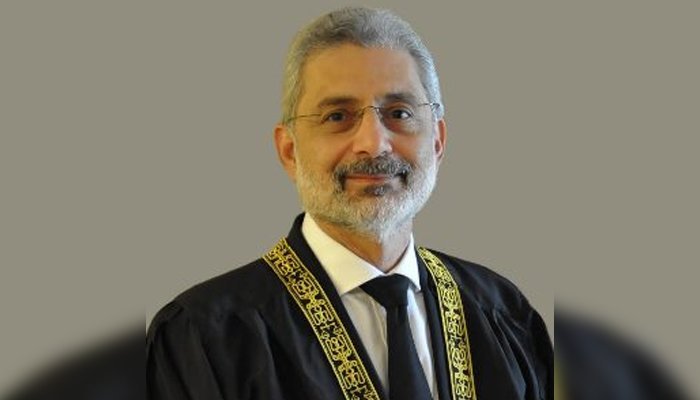
    Justice Qazi Faez Isa is an SC justice who took oath as a judge of the top court in September 2014. He is scheduled to become the chief justice of Pakistan (CJP) in August 2023 for thirteen months.

    His landmark cases include the Faizabad Sit-in judgment in 2019, the Quetta Massacre Commission in 2016 — when he headed an inquiry commission to find out what happened when a suicide attack in August 2016 killed 74 people — and the Memogate Commission in 2012, a case where an alleged memo was delivered to an American official at the behest of former ambassador to the United States (US), Husain Haqqani, in May 2012.

    In May 2019, media started reporting that references were being filed against SC judges Reports became so rampant that Justice Isa approached President Arif Alvi, complaining that information being leaked to the media amounted to character assassination, which would hinder his right to a fair trial. He also asked the president if a reference was being filed against him by the president in the SJC.

    There was no reply by the president and soon, a notice was sent to the federal government by the SJC that a reference was being filed against him and another judge, accusing them of concealing assets.

    Justice Isa then wrote another letter, in which he said that he could’ve handled the inquiry against him and his family but it seemed that the independence of the judiciary was being undermined and that a judge had to preserve and protect the constitution as he had sworn to do.

    He then asked the SC that a full bench be constituted, a plea that was accepted by then CJP Asif Saeed Khosa, and after a months-long trial, a full bench of the apex court on Friday dismissed the petition against him.


  • Justice Qazi Faez Isa strikes back with ‘Imran, others’ properties in UK’

    Justice Qazi Faez Isa strikes back with ‘Imran, others’ properties in UK’

    Supreme Court’s (SC) Justice Qazi Faez Isa, who is facing a presidential reference for not disclosing his family’s assets, on Tuesday put the federal government in a tight spot before a full bench of the apex court by pointing out key leaders of the ruling party who also owned properties in the United Kingdom (UK), including Prime Minister (PM) Imran Khan and his special assistant on accountability, Shahzad Akbar.

    As a 10-judge full court, headed by Justice Umar Ata Bandial, continued hearing the petitions against the reference, Justice Isa in a written statement informed the bench that PM Imran owned six properties, Akbar (five), Special Assistant to the PM on Overseas Pakistanis Zulfiqar Bukhari (seven) and Special Assistant to Prime Minister (SAPM) on Youth Affairs Usman Dar have three to his name.

    Former federal information minister Firdous Ashiq Awan and Pakistan Tehreek-e-Insaf (PTI) stalwart Jahangir Tareen each owned a property there as well. In addition, the judge submitted before the court that former military ruler Gen (r) Pervez Musharraf owned two properties in the UK.

    Justice Isa submitted the statement in response to SAPM Akbar telling the court that he did not receive any salary or benefit as the head of the Asset Recovery Unit (ARU).

    “Taking a cue from what is stated to have transpired in the case of the petitioner’s family, the search engine 192.com was used to search a few known public figures,” the statement read.

    The judge clarified that he was “not saying or suggesting, let alone allege” that the people he had identified had illegally acquired any property in the UK in violation of the income tax, the foreign exchange and/or money laundering laws.

    “Before an allegation of non-compliance with income tax law is made, the Federal Board of Revenue must check its records [of these individuals] and consider how much taxable income was declared and income-tax paid and whether they had non-taxable income, such as from agricultural land, which the Constitution exempts from payment of income tax.”

    Justice Isa further stated that before making an allegation with regard to the illegal transfer of money abroad, the State Bank “must check to determine whether the said individuals had foreign exchange accounts and whether through these accounts money was remitted abroad, to exclude the possibility of it sent to the UK through Hawala, Hundi or by any other illegal means”.

  • ‘Alvi, Imran ready to face consequences if SC quashes reference against Justice Isa’

    ‘Alvi, Imran ready to face consequences if SC quashes reference against Justice Isa’

    The government’s counsel has told the Supreme Court (SC) that the President Arif Alvi and Prime Minister (PM) Imran Khan were ready to face the consequences if the presidential reference against SC’s Justice Qazi Faez Isa was quashed.

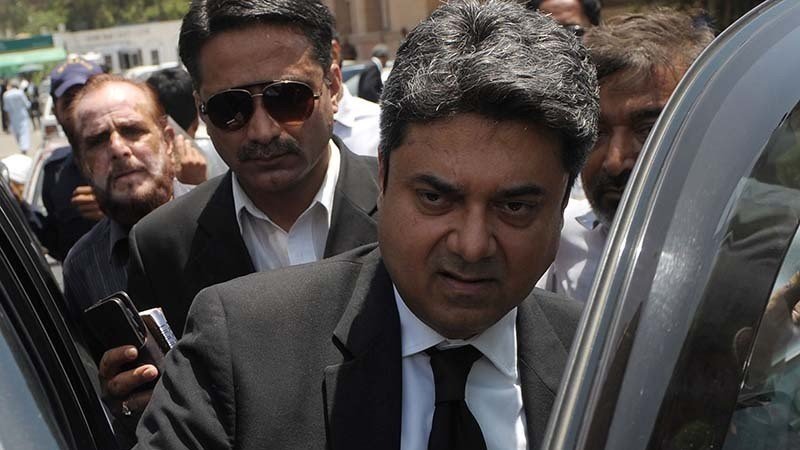
    Dr Farogh Naseem, former law minister and currently the government’s counsel in the case against Justice Isa, submitted before members of the 10-judge full court that it appeared as if the top government functionaries were on trial and not the judge who has yet to explain the source of income for his family members’ properties.

    “We are ready to face consequences,” said Dr Naseem, adding that the consequences would be across the board.

    Earlier, Justice Syed Mansoor Ali Shah had observed that the government is also accountable if the reference is not maintainable.

    “There should be consequences if the reference is quashed based on malice,” noted another judge, Justice Maqbool Baqar.

    Meanwhile, chief judge of the full court, Justice Umar Ata Bandial observed that no bar association has ever complained about Justice Isa being dishonest. None of the government’s allegations prove dishonesty of Justice Isa, he remarked.

    READ: Law minister resigns again; this time to represent govt in Faez Isa case

    The federal counsel maintained that a judge is the most powerful person in society, and therefore, he argued, we must have confidence that the judge is free of controversy. The independence of the judiciary comes through integrity, and there should be good public perception of the judge, added Dr Naseem.

    At this, Justice Shah inquired whether the counsel admits that this is a case pertaining to independence of the judiciary.

    Justice Shah further asked the federal counsel whether a husband could seek his wife’s tax records from the Federal Board of Revenue. To this, Dr Naseem replied that he would have to ask the relevant officials.

    Under which law can the Supreme Judicial Council (SJC) ask a judge to disclose details of his wife’s properties, inquired Justice Shah. He observed that the public perception of a judge can also be destroyed on social media.

    At this, Dr Naseem said that fake news could not destroy public perception but if a judge is unable to explain the source of his family members’ properties than it would influence his reputation before the public.

    Justice Bandial told the federal counsel that instead of relaying a violation of Section 116 of the Income Tax law his main focus is on the issuance of the show cause notice to Justice Isa by the SJC.

    READ: New top lawyer excuses himself from fighting Justice Faez Isa case for PTI govt

    With regards to the show cause notice, Justice Maqbool Baqar noted that if the basis of the reference was illegal then all of the proceedings would be quashed.

    Referring to various SC judgements, Dr Naseem said that the office of a judge came under the definition of public office and it is mandatory for a public servant that their family members’ lifestyle is not beyond the ostensible source of income. He maintained that his case was about the source of income.

    The bench asked Dr Naseem yet again as to why the government did not question Justice Isa’s wife about her source of income for the properties in question. If the wife purchased these properties through inherited income, would the judge be liable to reply, asked Justice Shah.

    In the same vein, Justice Yahya Afridi asked whether all judges should be asked about their family members’ tax concerns by the SJC or by tax authorities. To this Dr Naseem said that disciplinary proceedings against a judge could only be initiated by the SJC.

  • Law minister resigns again; this time to represent govt in Faez Isa case

    Law minister resigns again; this time to represent govt in Faez Isa case

    Federal Minister for Law and Justice Dr Farogh Naseem resigned on Monday to represent the government in the Supreme Court (SC) in the presidential reference against Justice Qazi Faez Isa.

    This is the second time that Naseem, a Muttahida Qaumi Movement-Pakistan (MQM-P) stalwart, has resigned from his post. Previously, he had resigned in November last year to represent Gen Qamar Javed Bajwa before the apex court in the case pertaining to the extension in his tenure as the army chief.

    Confirming the news of his resignation, Naseem said, “I will ensure that the respect and dignity of judges is maintained. I have no personal agenda. I have the greatest respect for the Bar.”

    READ: ‘Farrogh Naseem can go to jail for representing Gen Bajwa with a suspended licence,’ PBC says

    Last year in September, Justice Isa filed a fresh application requesting the SC to form a full-court bench comprising all eligible judges to hear his petition against the presidential reference filed over non-disclosure of assets in his wealth statement.

    Justice Isa had requested that the case be heard by a full court bench comprising all eligible judges of this court since the matter pertained to reference against an SC judge and as per precedent of this court in the case of ex-chief justice of Pakistan (CJP) Iftikhar Chaudhry versus president of Pakistan, PLD 2010 Supreme Court.

    Justice Isa had said matters narrated in accompanying civil miscellaneous application dated August 26 – “which may for the sake of brevity be read as a part hereof” – demonstrates the necessity for hearing by such full court bench.

    “The petition also raises a number of important constitutional questions, including that of the independence of the judiciary, formation of an independent opinion by the president, obtaining federal cabinet’s approval and other vital issues of surveillance, and the manner and method of collecting evidence against a judge of the Supreme Court and his family,” he had said in his application.

    READ: New top lawyer excuses himself from fighting Justice Faez Isa case for PTI govt

    On Friday, Justice Isa questioned the eligibility of Special Assistant to Prime Minister (SAPM) on Accountability Shahzad Akbar’s appointment as the head of the Asset Recovery Unit (ARU) and for public office.

    A 10-member judge bench, led by Justice Umar Ata Bandial, will resume hearing the case on June 2, which was earlier scheduled to be taken up on March 30. The apex court had postponed the hearing due to the coronavirus pandemic.

    On the last hearing on February 24, the federal government had sought a three weeks’ adjournment in the case.

  • Supreme Court orders reopening of shopping malls across Pakistan

    Supreme Court orders reopening of shopping malls across Pakistan

    Despite coronavirus continuing to spread across the country, the Supreme Court (SC), which seems to be at odds with the government over the latter’s handling of the pandemic, has ordered the reopening of shopping malls across the country.

    According to the details, a five-member larger bench of the apex court was hearing a suo motu case regarding measures taken to curb the spread of COVID-19.

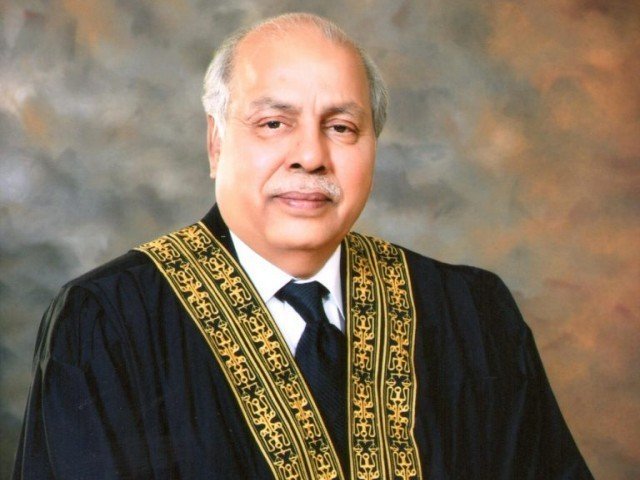
    The bench was headed by Chief Justice of Pakistan (CJP) Gulzar Ahmed while Justice Umar Ata Bandial, Justice Mazhar Alam Khan Miankhel, Justice Sajjad Ali Shah and Justice Qazi Muhammad Amin Ahmed were also on the bench.

    During the hearing today, Chief Justice of Pakistan Gulzar Ahmed remarked that if the shops are shut down then shopkeepers will ‘die of hunger rather than the coronavirus’.

    CJP Ahmed said that in Karachi, except for five big malls every market has resumed operations.

    Upon which, Commissioner Karachi Iftikhar Shallwani said that a few markets were sealed for not following the Standard Operating Procedures laid out by the government.

    “The sealed markets should be opened and instead of intimidating them (shop owners) make them understand (the situation and SOPs),” remarked the top judge.

    The CJP noted that the SOPs will be ‘better implemented’ at the big shopping malls.

    The apex court also ordered that on the weekends, all the small markets should remain open to public.

  • Fact Check: Authorities break silence on claims regarding top judge ‘contracting coronavirus’

    Fact Check: Authorities break silence on claims regarding top judge ‘contracting coronavirus’

    Claim: Chief Justice Gulzar Ahmed has contracted COVID-19

    Fact: CJP Gulzar Ahmed has not tested positive for COVID-19

    Authorities have rubbished claims regarding Chief Justice of Pakistan (CJP) Gulzar Ahmed contracting coronavirus, which had surfaced after an employee reportedly from the top judge’s chamber at the Supreme Court (SC) tested positive for COVID-19 on Tuesday.

    According to Dawn, the apex court, in a statement, has said that the CJP, his family and his secretary have all tested negative for the coronavirus.

    The statement added that the top judge’s tests were conducted after an employee of the court developed symptoms of Covid-19, following which he was put under quarantine as a suspected coronavirus patient.

    The employee, a Naib Qasid at the apex court, had first tested negative for the virus, but the result was “doubtful” and another test was conducted which turned out to be positive, the statement read.

    The employee has now been isolated at a polyclinic in Islamabad.

    Earlier in the day, reports circulated on local media that an employee in the CJP’s chamber had tested positive. However, the statement did not clarify whether the coronavirus-positive employee worked in the chief justice’s chamber but merely referred to him as an “employee of the Supreme Court”.

    The reports had led to claims that the top judge had also tested positive for COVID-19.

    VERDICT: FALSE

  • Coronavirus: Supreme Court orders sacking of Dr Zafar Mirza

    Coronavirus: Supreme Court orders sacking of Dr Zafar Mirza

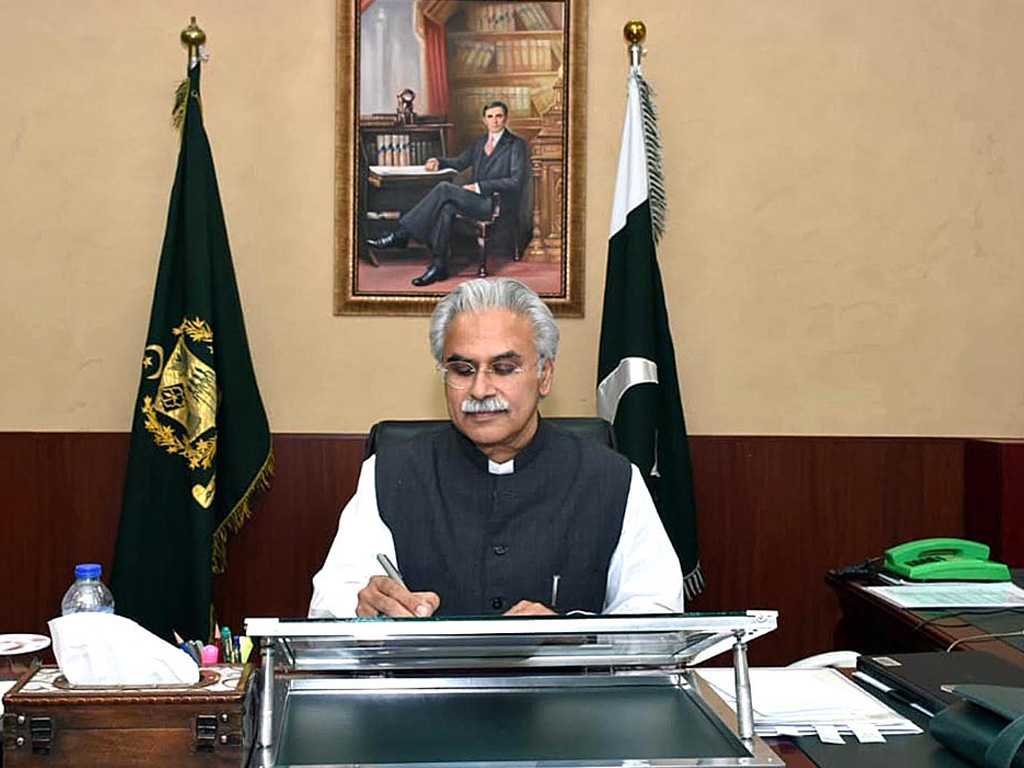
    The Supreme Court (SC) on Monday told the federal government to remove Special Assistant to Prime Minister (SAPM) on Health Dr Zafar Mirza from his post as coronavirus continues to spread across the country amid the alleged incompetence of the authorities concerned.

    According to reports, the apex court, while hearing a suo motu case regarding the situation arising out of the COVID-19 outbreak, expressed displeasure over the performance of Dr Mirza in dealing with the pandemic and ordered the government to remove him.

    A five-member larger bench of the apex court — headed by Chief Justice of Pakistan (CJP) Gulzar Ahmed — was hearing the case.

    During the hearing, the CJP expressed anger and said the top court was not satisfied with the performance of premier’s aide as a health advisor.

    The top judge also asked the attorney general of Pakistan (AGP) about the ongoing inquiry against Dr Mirza by the Federal Investigation Agency (FIA).

    The AGP informed the court that FIA was investigating him for alleged smuggling of face masks to China.

    “Removing Zafar Mirza from the post at this point will not be suitable for the country as it can worsen the health crisis,” the government’s lawyer told the court.

    CJP Gulzar had on Friday taken his first suo motu notice over “insufficient facilities” in the country to deal with the COVID-19 outbreak.

    He had issued notices to the AGP and health as well as interior secretaries besides also summoning all chief secretaries and advocate generals.

  • Imran govt renamed ‘Benazir Income Support Programme’ as ‘Ehsaas’

    Imran govt renamed ‘Benazir Income Support Programme’ as ‘Ehsaas’

    In yet another embarrassing development for the ruling Pakistan Tehreek-e-Insaf (PTI), the government’s lawyer has told the Supreme Court (SC) that Benazir Income Support Programme (BISP) — a flagship project of the Pakistan People’s Party’s (PPP) government for poverty reduction — was renamed as Ehsaas — a similar and much-boasted-about initiative by Prime Minister (PM) Imran Khan.

    As per the details, Attorney General for Pakistan (AGP) Khalid Jawed Khan on Tuesday told the apex court that the data collected by BISP, “which had been renamed as Ehsaas”, was being used by the government to ensure that money reaches the poor amid lockdowns due to the spread of coronavirus.

    A five-member larger bench of the apex court headed by Chief Justice of Pakistan (CJP) Gulzar Ahmed and comprising Justice Umar Ata Bandial, Justice Mazhar Alam Khan Miankhel, Justice Sajjad Ali Shah and Justice Qazi Muhammad Amin Ahmed was hearing the case regarding the closure of hospitals in the country during the global outbreak.

    During the course of proceedings, the AGP apprised the court that he had talked to Special Assistant to the PM (SAPM) on Health Dr Zafar Mirza regarding the court’s query about the closure of out-patient departments of hospitals, who wanted to give a briefing to the court on the steps taken by the government in the health sector. The government was taking steps to combat the virus, he added.

    Justice Umar Ata Bandial said the government had to help the people on the ground. “If there were local governments, the people would have been helped at the grassroots level,” he said, adding that the local government system in the country, including Islamabad, was dysfunctional.

    The CJP said the government’s job was not to keep employees on contract instead of appointing on a regular basis.

    The AGP said that the federal cabinet had discussed the matter.

    The CJP asked the government to appoint all employees on a regular basis in all the departments of hospitals. “Many cases were pending in the SC regarding the regularisation of employees,” he remarked.

    CJP Gulzar further said the government had appointed the employees on a contract basis, instead of recruiting them through the Public Service Commission.

    He said the parliament should be in session at all times to formulate new laws. The job of courts was not to make laws, he added.

    The CJP then asked who was being paid under the Ehsaas programme, to which the AGP replied that the government would give money to those below the poverty line.

    “How will the government know if money reached the poor or not?” the top judge question.

    “The data collected by BISP, which had been renamed as Ehsaas, is being used,” the lawyer said in response, adding that Ehsaas programme had been approved by a foreign agency.

    WATCH VIDEO:

    https://twitter.com/fatah_pak/status/1247592261300424708?s=21

    PPP REACTS:

    Reacting to the revelation, PPP Information Secretary Dr Nafisa Shah has expressed her shock and said that a law made by the parliament could not be changed.

    “Thousands of poor have been left without income support by the people who are haters of the late Benazir Bhutto,” she said in a statement and asked what kind of Ehsaas took away bread from the poor women of Pakistan.

    Shah said that this was the time when the neglected needed the most help, but the government had let them down.

    “BISP had given confidence to the poor women of Pakistan. By changing the name of this programme poor women have been deprived of their income. Imran Khan and his government have no right or authority to change the name of a programme established by [the] parliament,” she concluded.

  • Coronavirus: Top judge slams PTI govt, says ‘nothing being done on ground’

    Coronavirus: Top judge slams PTI govt, says ‘nothing being done on ground’

    Chief Justice of Pakistan (CJP) Gulzar Ahmed has rebuked the Pakistan Tehreek-e-Insaf (PTI) led federal government for its “insufficient” measures to contain the new coronavirus, declaring that “nothing is being done on ground”.

    The top judge’s remarks came as COVID-19 infections in Pakistan crossed 3,500 with at least 52 deaths on Monday.

    Hearing an appeal against the verdict announced by the Islamabad High Court (IHC), the CJP directed the government to grant bail to low-risk under-trial prisoners (UTPs) during the pandemic.

    At the outset of the hearing, he said that the government had closed the out-patient departments (OPDs) of all hospitals, leaving no place for patients to seek treatment at such a crucial time.

    “Hospitals have been closed when we need them. Up till now, 10 hospitals with 1,000 beds each should have been made operational,” he said.

    “Everyone is talking about funds, no one is doing anything. The public has been left at the mercy of God,” he remarked. The chief justice also criticised the government’s efforts to encourage people to stay indoors in order to curb the spread of the disease.

    The attorney general (AG) said that the federal government is taking best possible measures to fight the deadly contagion. He further stated that another report, apprising about the situation in the country has also been submitted before the court.

    The top judge said that Minister for Human Rights Shireen Mazari filed a reply that the Peshawar High Court has ordered the release of 3,200 prisoners.

    The AG replied that no such verdict was given by the (PHC), adding that the human rights minister might be mistaken.

    The chief justice also questioned the competence of State Minster for Health Dr Zafar Mirza, saying that he is just being given coverage on media on a daily basis.

    The top court remarked that no one has come from the Defence Ministry. “The court needs to inquire about what the Defence Ministry is up to,” the SC remarked.

    To this, the AG responded that no one from the ministry was summoned yet.

    On Saturday, senior lawyer Khawaja Haris had urged the top court to reconsider its decision of revoking the IHC ruling. In a set of recommendations submitted to the apex court, Haris said that the IHC had announced the verdict in line with the law due to the ongoing crisis.

    He had said that it is imperative that measures are taken to curb the spread of the coronavirus.

  • Court orders jailing health secy for six months if PMDC building not opened in an hour

    Court orders jailing health secy for six months if PMDC building not opened in an hour

    Expressing displeasure with the federal government over its failure to revive the Pakistan Medical and Dental Council (PMDC), the Islamabad High Court (IHC) on Monday ordered jailing the health secretary for six months if the building was not opened in an hour.

    PMDC — a statutory regulatory authority that maintained the official register of medical and dental practitioners in Pakistan — was in October last year dissolved and replaced by the Pakistan Medical Commission after the president signed the Pakistan Medical Commission Ordinance 2019 for the regulation of the medical profession.

    On February 11, the IHC declared the federal government’s decision to dissolve the PMDC null and void. The court also issued contempt notices to the federal government and health department for not implementing its orders.

    According to SAMAA, Justice Mohsin Akhtar Kayani resumed hearing the contempt case on Monday. He said the PMDC should be made functional today. The authorities should break the lock on its building and make its registrar sit there. “A report should be submitted to the court in one hour,” the judge said.

    The health secretary will be sent to jail for six months if the building is not opened in an hour, he remarked. “I have given you three dates already and you haven’t done anything.”

    Not implementing court’s orders is contempt, the judge remarked. “This is a slap on the court’s face.” Such behaviour does not suit the federal government, said Justice Kayani, adding that the government should be ashamed.

    The court also asked if PMDC employees were getting their salaries or not. The lawyer of the employees said that the they haven’t been paid in over five months.

    TOP COURT AGAINST RELEASE OF PRISONERS AMID COVID-19 OUTBREAK:

    Meanwhile, the Supreme Court (SC) has refrained high courts and all governments to pass any orders regarding the release of prisoners amid the coronavirus outbreak.

    According to journalist Hasnaat Malik, the top court has also suspended the implementation of IHC orders regarding release of under-trial prisoners.

    Punjab had last week decided to let go of almost 20,000 of its 46,000 prisoners amid the ongoing COVID-19 health crisis as jails in Pakistan remain overcrowded.

    Jail superintendents, who had reached out to the courts to approve the bail of prisoners handed sentences of seven years or less, had reportedly taken the step in light of special instructions.

    Bail requests were also filed for prisoners jailed for petty crimes, as well as the elderly, or criminals over 60 years of age.

    The development had come days after IHC Chief Justice (CJ) Athar Minullah had ordered for bails to be issued for prisoners facing trial for minor crimes in order to prevent the spread of the coronavirus. He had made the decision while hearing a case of 1,362 incarcerated prisoners.

    The top IHC judge had noted how prisons in Pakistan were in dire straits and that the situation would get out of control if any prisoner got infected.