Tag: Supreme Court

  • New top lawyer excuses himself from fighting Justice Faez Isa case for PTI govt

    New top lawyer excuses himself from fighting Justice Faez Isa case for PTI govt

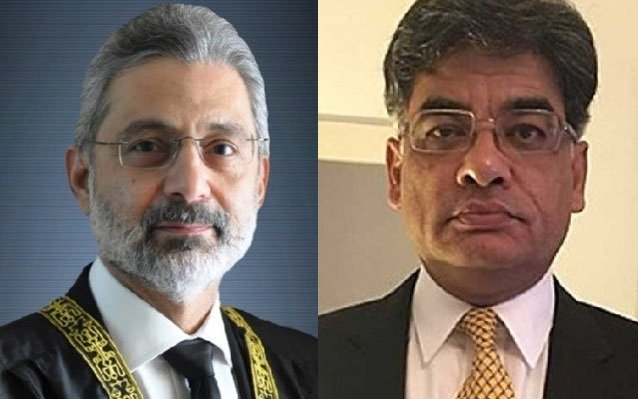
    The newly-appointed attorney general of Pakistan (AGP) — chief law officer and legal advisor of the government –, Khalid Javed Khan, has recused himself from representing the Pakistan Tehreek-e-Insaf (PTI) in the Justice Qazi Faez Isa case.

    Justice Faez Isa, a vocal critic of the establishment, has been facing a presidential reference accusing him of concealing his properties in the United Kingdom (UK), allegedly held in the name of his wife and children. He has submitted before the Supreme Court (SC) that these properties were bought and have always been held in plain sight in the personal names of his wife and children.

    “The government has recommended the name of Additional Attorney General (AAG) Aamir Rehman to represent it in the Supreme Court,” Khalid said Monday, adding that he could not represent the federation. “I have already stated my opinion regarding the Justice Isa reference,” he explained, while his predecessor, Anwar Mansoor Khan, who was representing the government in the case against the top court judge, withdrew his unwarranted statement and tendered unconditional apology.

    Anwar had stepped down from the post after lawyer bodies demanding his resignation for his “baseless” claims against certain judges of the SC. He was replaced by Khalid as Prime Minister (PM) Imran Khan appointed him last week.

    The Pakistan Bar Council (PBC) had demanded Mansoor’s resignation over some comments he made regarding Supreme Court judges, for which he had been reprimanded by the court as well.

    During the hearing on Monday, the AGP told the court that AAG Aamir Rehman was ready for the case.

    Justice Ata Bandial, who is heading the 10-judge bench hearing the Justice Isa reference said the court would give the government additional time to prepare for the case.

    AAG Rehman had on Friday filed an application with the apex court, submitting that the hearing of the petition of Justice Isa as well as the identical petitions challenging the presidential reference fixed for February 24 may be adjourned for three weeks.

    As the hearing resumed on Monday, the AAG told the court that he would be out of the country till March 20 for some official work. On this, Justice Bandial said one of the judges on the bench would be away after March 20 and they would hear the case upon his return.
  • Ishaq Dar to take govt to court for turning his residence into shelter home

    Ishaq Dar to take govt to court for turning his residence into shelter home

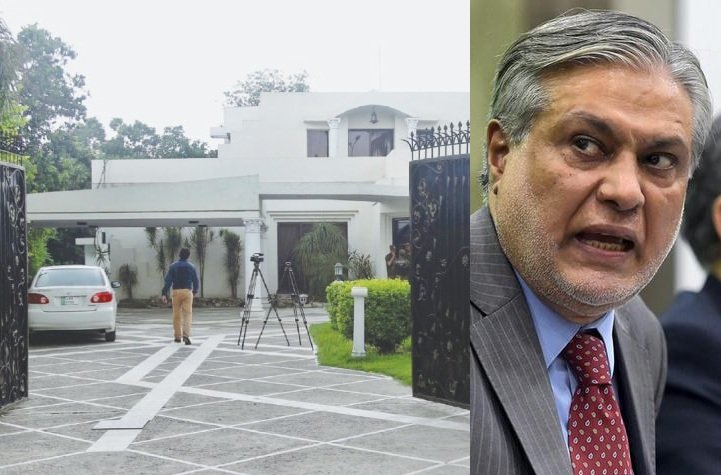
    Pakistan Muslim League-Nawaz (PML-N) leader and former finance minister Ishaq Dar has accused the federal and Punjab governments of contempt of court for turning his Lahore residence — seized as part of the National Accountability Bureau’s (NAB) action against him in an assets beyond means case — into a shelter home.

    “They have violated the decision of the Islamabad High Court (IHC) and I will take them to court for it,” Dar said in a video message tweeted by the PML-N.

    Dar’s 4 kanal 17 marla residence in Lahore’s posh Gulberg area was seized on July 27, 2019, on NAB’s orders and was to be auctioned last month.

    “The government had raided my residence in Lahore and wanted to auction it in January, but the court had on January 27 barred it from doing so,” Dar said in the video, adding that when the government failed to auction it, it decided to convert the house into a shelter home.  

    He termed the conversion of his residence as “state terrorism”, and maintained that he had proof of his innocence. “I can show it to the world in a global conference but I’m waiting for the right time.”

    Dar had left Pakistan in 2017 to seek medical treatment abroad and hasn’t returned since. On May 8, 2018, he was ordered by the Supreme Court (SC) to return to the country and Pakistan had even sought Interpol’s help for the same, however, on November 7, 2019, Interpol had said there was insufficient evidence against Dar for his extradition.

    His house is going to be inaugurated as a shelter home by Punjab Social Welfare Department on Saturday. As many as 40 people will be given a place to stay in the house, and beds have been set up in what was once a living room. Each room is air-conditioned and separate rooms for women have also been set up.

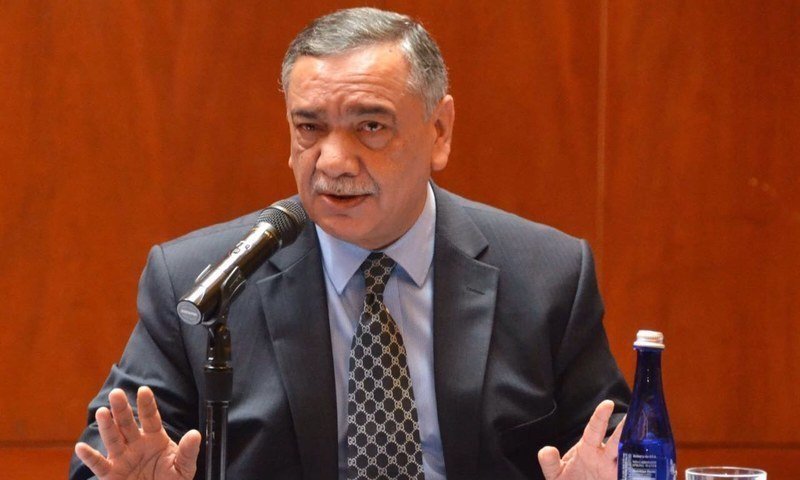
  • Even I’ll lose my house if DHA is investigated: chief justice

    Even I’ll lose my house if DHA is investigated: chief justice

    Chief Justice of Pakistan (CJP) Gulzar Ahmed has reprimanded officials from the Defence Housing Authority (DHA) and the Cantonment Board Clifton (CBC) over their failure to stop the rise of encroachments in Karachi, directing them to demolish all illegally constructed buildings in Punjab Colony, Delhi Colony, PNT Colony and Gizri Road areas of the metropolis.

    According to Daily Times, a three-member bench of the Supreme Court (SC) — headed by the CJP and comprising Justice Faisal Arab and Justice Sajjad Ali Shah — while hearing a case pertaining to encroachments in the provincial metropolis, at the apex court’s Karachi Registry on Friday issued orders to clear illegal structures built on government properties in the port city.

    During the hearing, the CJP reprimanded both DHA and CBC officials over their failure to stop the rise of encroachments in Karachi, directing them to demolish all illegally constructed buildings in Punjab Colony, Delhi Colony, PNT Colony and Gizri Road areas of the metropolis.

    He admonished the CBC land director for “closing his eyes when ill-gotten money was being made”, and lamented that fortunes had been amassed and now the court was being told that the buildings are illegal. “If permission is granted for ground-plus-one buildings in cantonment areas, how is it that high-rise buildings have been built in these sectors? Buildings with nine stories are being built, and they must be razed to the ground,” the CJP told the CBC.

    “If an investigation is launched [into encroachments], the entire DHA would be found to be illegal. All leases will be dismissed, and hum bhi farig hojaein gay [we will be made to walk as well],” said the CJP as he himself lives in DHA. “But that does not matter, we have to live by the law.”

    Addressing the attorney general, the CJP once again questioned as to who gave permission for constructing the buildings. “It’s not as if the cantonment board can go around doing as they please,” he said.

    This prompted officials from the CBC to say that they have taken action against illegally-constructed buildings on several occasions. “We have given orders for razing unlawful constructions,” stated an official, adding that the laws allowed for constructing ground-plus-two buildings on residential plots and five-storey buildings on commercial plots.

    The court also directed the chief secretary to get rid of all the encroachments in the city and put in a request for the re-settlement of the residents of the katchi abadis and the affected people. He also directed the officials to invite the recommendations of experts through media.

    The case was later adjourned till February 21.

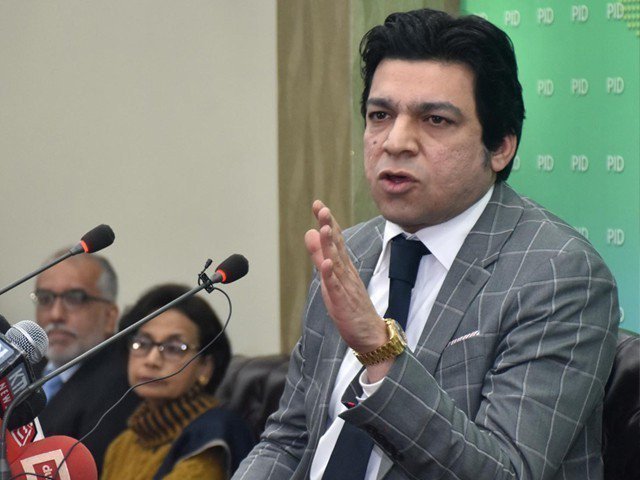
  • Faisal Vawda to be disqualified for being an American citizen?

    Faisal Vawda to be disqualified for being an American citizen?

    Federal Minister for Water Resources Faisal Vawda was a dual national by the time of filing nomination papers for 2018’s general election, and concealed his American citizenship by falsely declaring on the oath he submitted to the Election Commission of Pakistan (ECP), The News has reported.

    According to reports, his status was intact not only when he filed nomination papers on June 11, 2018, but even during the scrutiny of the same.

    The Supreme Court (SC), in a recent judgment, has categorically directed that the candidates who previously held dual nationality should have the renunciation certificate at the time of filing of nomination papers. Various lawmakers, including two senators of Pakistan Muslim League-Nawaz (PML-N), have been disqualified by the top court on this count.

    Both of them had applied for the renunciation of foreign citizenship much earlier, but were unable to obtain the renunciation certificate at the time of filing of nomination papers because of long process.

    In Vawda’s case, the last date to file nomination papers for the election held in July 2018 was June 8 and later extended for another three days. Taking his document an evidence, Vawda submitted election papers on the last date — June 11, 2018 — along with an affidavit wherein he declared himself holding no citizenship other than that of Pakistan.

    The returning officer (RO) of NA-249 Karachi — Vawda’s constituency — approved the papers on June 18, 2018. It was only after this approval that the now federal minister applied for renunciation of his United States (US) nationality in US Consulate Karachi, meaning thereby he was American citizen at the time of filing.

    Vawda applied for revocation of his American citizenship in US Consulate Karachi on June 22, 2018. Normally, the process of renunciation of US nationality takes a couple of weeks or even months because it requires clearance from all the concerned departments. However, the US Consulate issued the ‘Certificate of Loss of Nationality’ to Vawda on next working day, documents revealed.

    Three top legal experts from Vawda’s own party, including Federal Minister Fawad Chaudhry and former interim law minister Ali Zafar, are unanimous in their opinion that whoever holds dual nationality at the time of submitting nomination papers is set to not only face instant disqualification, but he or she can also be penalised on the charges of perjury.

    His dual citizenship didn’t go unchallenged. His rival candidate Abdul Qadir Mandokhel of Pakistan People’s Party (PPP) moved Sindh High Court (SHC) in order to disqualify his candidature. However, after a couple of court hearings, Mandokhel withdrew his petition from the apex court. Explaining the reason of pulling out, he told The News he did so “under immense pressure” that he faced not only from certain quarters but also from the leadership of his own party.

    Taking opinion of top legal minds as a guide, Vawda stands disqualified as a member of the Lower House if his case is judged on the same standards which were applied when the apex court dealt with those of leaders of the PML-N, PPP and other political parties.

    A source close to Vawda was quoted as claiming by the media outlet that the now minister was not in favor of surrendering his American passport because he was unsure about winning the election. “However, once he was assured of his victory, only then he applied for the revocation of US citizenship,” he said.

    Meanwhile, ECP spokesperson Nadeem Qasim said the election watchdog cannot take notice on the dual nationality of any parliamentarian by its own. “Someone has to challenge the dual nationality of the said parliamentarian in the court of ECP. If proved that the said parliamentarian was a foreign national at the time of filing of nomination papers, then he will be disqualified,” he was quoted as saying.

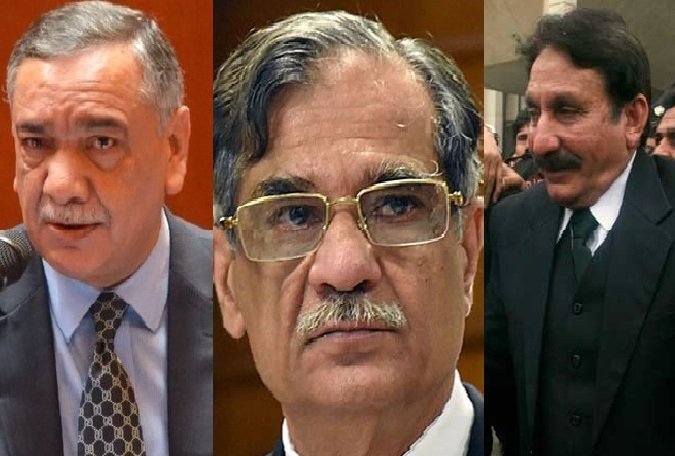
  • The Current Quiz: Which chief justice of Pakistan are you?

    The Current Quiz: Which chief justice of Pakistan are you?

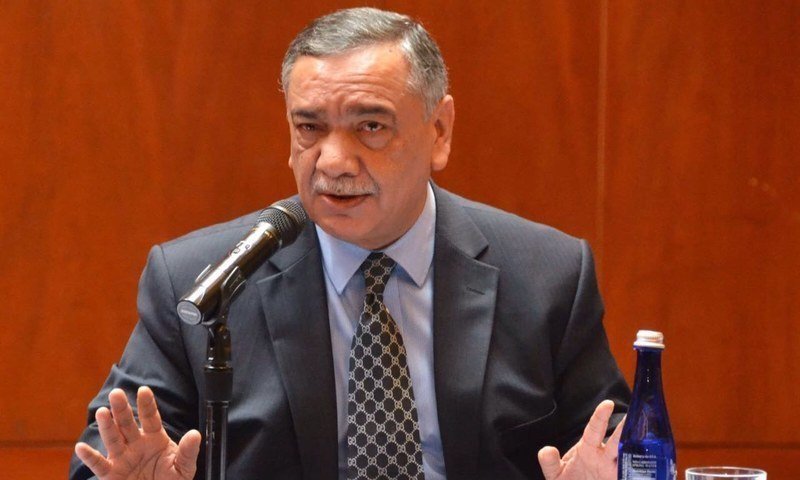
    With Chief Justice of Pakistan (CJP) Asif Saeed Khan Khosa retiring and Justice Gulzar Ahmed being sworn in as the new top judge, The Current brings for you a personality quiz to find out which of the most popular CJPs are you.

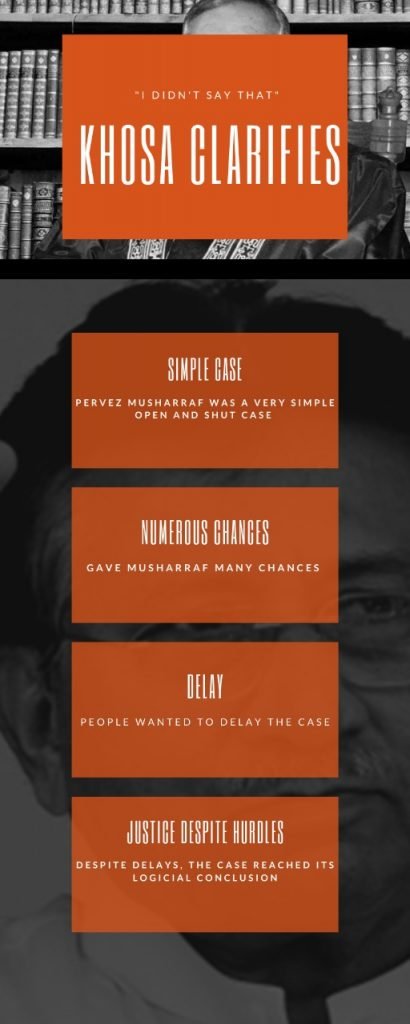
  • ‘CJP Khosa’s statements about Musharraf’s case are fake,’ clarifies SC

    ‘CJP Khosa’s statements about Musharraf’s case are fake,’ clarifies SC

    The Supreme Court (SC) of Pakistan has said that the statements of Chief Justice of Pakistan (CJP) Asif Saeed Khosa being aired and published by differnent news channels regarding former army cheif Gen (r) Pervez Musharraf’s high treason case are baseless and concocted.

    In a press release, the top court clarified that the fake news items have created an impression that CJP Khosa was personally involved in the progress of the case and he was giving directions to other judges.

    “Different benches of the supreme court of Pakistan had been hearing different aspects of the case of Gen (r) Pervez Musharraf and had passed various orders for the early disposition of the said case”

    “The Hon’ble Chief Justice had not issued any direction of any sort to the Special Court other than the judicial directions issued by the relevant benches of the Supreme Court in the above mentioned case,” the statement said.

    A few news channels and newspaper had earlier published statements of CJP Khosa saying that the treason case was clear and that Mushrraf was given many chances to present his views.

    On Tuesday, a special court awarded death sentence to former military dictator Musharraf in absentia for suspending the constitution on November 3, 2007.

  • SC issues detailed judgement in Gen Bajwa’s case, points out flaws

    SC issues detailed judgement in Gen Bajwa’s case, points out flaws

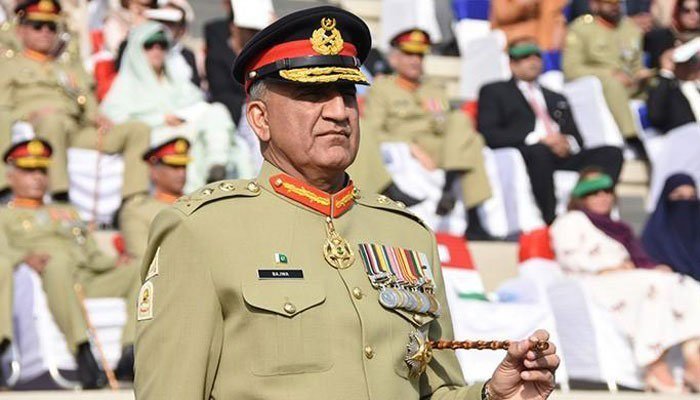
    The Supreme Court (SC) on Monday issued its detailed judgment on Chief of Army Staff (COAS) General Qamar Javed Bajwa’s extension, pointing out the flaws in the process undertaken by the Pakistan Tehreek-e-Insaf (PTI) government.

    Citing procedural loopholes, the top court had last month suspended a notification issued by the Prime Minister’s Office (PMO) in August for the army chief’s reappointment till 2022.

    It had directed the federal government to legislate and remove lacunae in the reappointment/extension of tenure of the COAS within six months.

    The detailed written judgement released Monday in connection with the previous short, the SC said it had “found that the Pakistan Army Act, 1952 falls deficient of the structural requirements for raising and maintaining an Army under clause (3) of Article 243 of the Constitution”.

    EXPLAINED:

    The verdict noted that “no tenure or age of retirement for the rank of General is provided under the law. As per the institutional practice a general retires on completion of a tenure of three years. Although an institutional practice cannot be a valid substitute of the law.”

    “There is no provision in the law for extending service of a General for another tenure; nor is there any consistent and continuous institutional practice of granting such extension,” Justice Shah wrote, adding that the summaries for the reappointment, extension and fresh appointment of General Bajwa were “meaningless” in absence of the relevant law.

  • Gen Bajwa’s extension: ‘Supreme Court can’t tell us what to do,’ says Fawad

    Federal Minister for Science and Technology Fawad Chaudhry has said that the Supreme Court (SC) “does not have the authority to dictate the parliament on what matters to legislate on and how”.

    The apex court, in its November 28 verdict, had allowed the federal government to grant a six-month extension to Chief of Army Staff (COAS) General Qamar Javed Bajwa, directing the government to legislate on the army chief’s tenure and extension during the said time.

    Speaking to Voice of America (VOA), Fawad questioned the judiciary’s “authority to direct the parliament on legislative matters”. “The SC’s orders have a lot of legal defects and shortcomings. It almost eliminates Article 243.”

    Article 243 of the constitution pertains to the command of armed forces — that the federal government should have their control.

    “The SC cannot tell the parliament that ‘you can legislate on this but cannot legislate on that’ or ‘you can or cannot extend the duration’,” Fawad said, adding that in the constitutions of 1956 and 1962, the duration of the army chief’s tenure was ascertained.

    “But after many debates and arguments, it was taken out of the constitution of 1973, and there was a reason for that because the parliament wanted the prime minister (PM) to be empowered.”

    WATCH VIDEO:

    “If you assign a specific amount of term to the army chief then how would you remove him before the expiration of his term, if need be. Therefore, the SC’s verdict has a lot of flaws and it needs to be corrected.”

    The minister maintained that the federal cabinet was awaiting the release of the detailed verdict of the apex court, after which the government would decide how to proceed forward. “The decision to file a review petition still has to be finalised,” he clarified.

    When asked about the differences between the government and the opposition, and how they could hinder efforts aimed at the smooth passage of any legislation in the parliament, the Fawad said “all political players in the country were on the same page on the matter since the army chief was apolitical”.

  • ‘We’ve been told that generals never retire,’ says CJP Khosa

    ‘We’ve been told that generals never retire,’ says CJP Khosa

    Chief Justice of Pakistan (CJP) Asif Saeed Khan Khan Khosa, hearing the petition challenging Chief of Army Staff (COAS) General Qamar Javed Bajwa’s extension, has said the court was told that “generals never retire”.

    A three member bench of the Supreme Court (SC), headed by CJP Khosa and comprising Justice Mazhar Alam Khan Miankhel and Justice Mansoor Ali Shah, on Thursday allowed the federal government to grant a six-month extension to Army chief Gen Bajwa.

    In its short order the apex court directed the government to bring necessary legislation within six months’ time. The order, read out by the CJP, ordered the parliament to introduce legislation for appointment of the army chief under Article 243 of the constitution.

    He remarked that the court was observing judicial restraint and leaving the matter to the parliament. “We have reviewed several laws including Army Act 1952 and Rule 1954.”

    The court had earlier reserved its verdict in this high-profile case and directed the federal government to furnish a fresh summary of the army chief’s extension of services.

    “We were told yesterday [Wednesday] that generals never retire,” the top judge remarked as hearing resumed on Thursday.

    The attorney general (AG) informed the court that Gen Bajwa has been reappointed under Article 243, to which the CJP remarked that the government had to convince the court that it was legal.

    After arguments made by the AG and Gen Bajwa’s counsel Farogh Naseem, the bench stated that a 10-member full court will announce the short order in the afternoon, whereas the detailed verdict would be issued in the evening.

    In the meantime, the court granted Gen Bajwa permission to continue working, conditionally. It further instructed the government to prepare a fresh notification, which did not list the tenure of the extension.

  • Gen Bajwa allowed to continue serving as army chief

    The Supreme Court (SC) on Thursday granted a six-month conditional extension to Chief of Army Staff (COAS) General Qamar Javed Bajwa as it directed the federal government to furnish a fresh summary of the army chief’s extension of services.

    According to details, announcing the verdict in the COAS’s extension case, which was reserved earlier in the day, a three-member bench of the apex court, headed by Chief Justice of Pakistan (CJP) Asif Saeed Khan Khosa, sought an undertaking from the government that it would legislate on the matter within six months.

    Meanwhile, Prime Minister (PM) Imran Khan also took to Twitter to comment on the development.

    For the third day, the bench heard the petition challenging the extension. When the hearing resumed, the CJP asked Attorney General (AG) Anwar Mansoor Khan to present the notifications of extension granted to former army chief General (r) Ashfaq Pervez Kayani, as well as the notification of the retirement of Gen (r) Raheel Sharif.

    The attorney general informed the court that General Qamar Bajwa has been reappointed under Article 243, to which the CJP remarked that the government had to convince them it was legal.

    After arguments made by the AG and Gen Bajwa’s counsel Farogh Naseem, the bench stated that a 10-member full court will announce the short order in the afternoon, whereas the detailed verdict would be issued in the evening.

    In the meantime, the court granted General Bajwa permission to continue working, conditionally. It further instructed the government to prepare a fresh notification, which does not list the tenure of the extension.