Tag: Supreme Court

  • Legal fraternity criticises Justice Naqvi’s resignation over expected perks

    Legal fraternity criticises Justice Naqvi’s resignation over expected perks

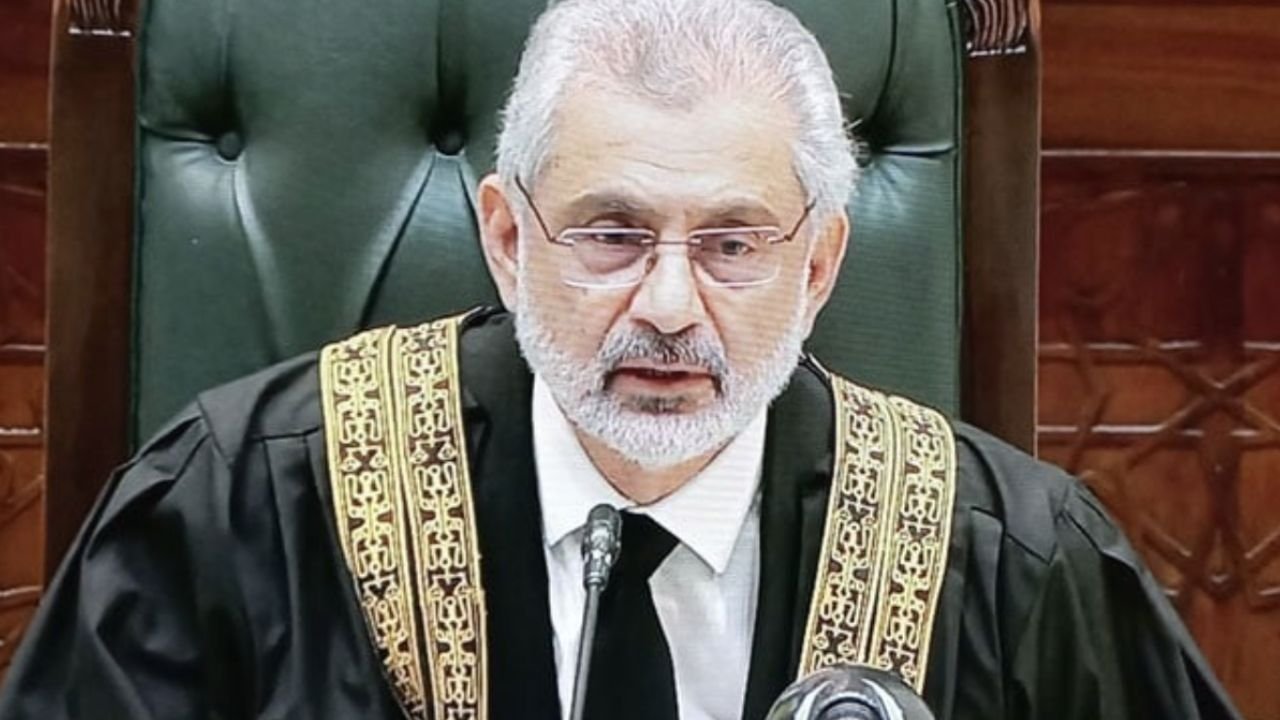
    Justice Sayyed Mazahar Ali Akbar Naqvi, who has been facing allegations of misconduct, has resigned from the Supreme Court (SC) on Wednesday. The esteemed justice cited circumstances that had become “a matter of public knowledge” as the reason behind his resignation.

    The resignation letter, obtained by Dawn.com, was formally addressed to President Dr. Arif Alvi. Justice Naqvi expressed gratitude for the honor of serving as a judge, both in the Lahore High Court and later in the Supreme Court of Pakistan.

    “In the circumstances, which are a matter of public knowledge and to some extent public record, it is no longer possible for me to continue to serve as a judge of the Supreme Court of Pakistan,” stated Justice Naqvin

    Acknowledging the importance of due process, he added, “Considerations of due process also compel. I, therefore, effective today, resign as a judge of the Supreme Court of Pakistan.”

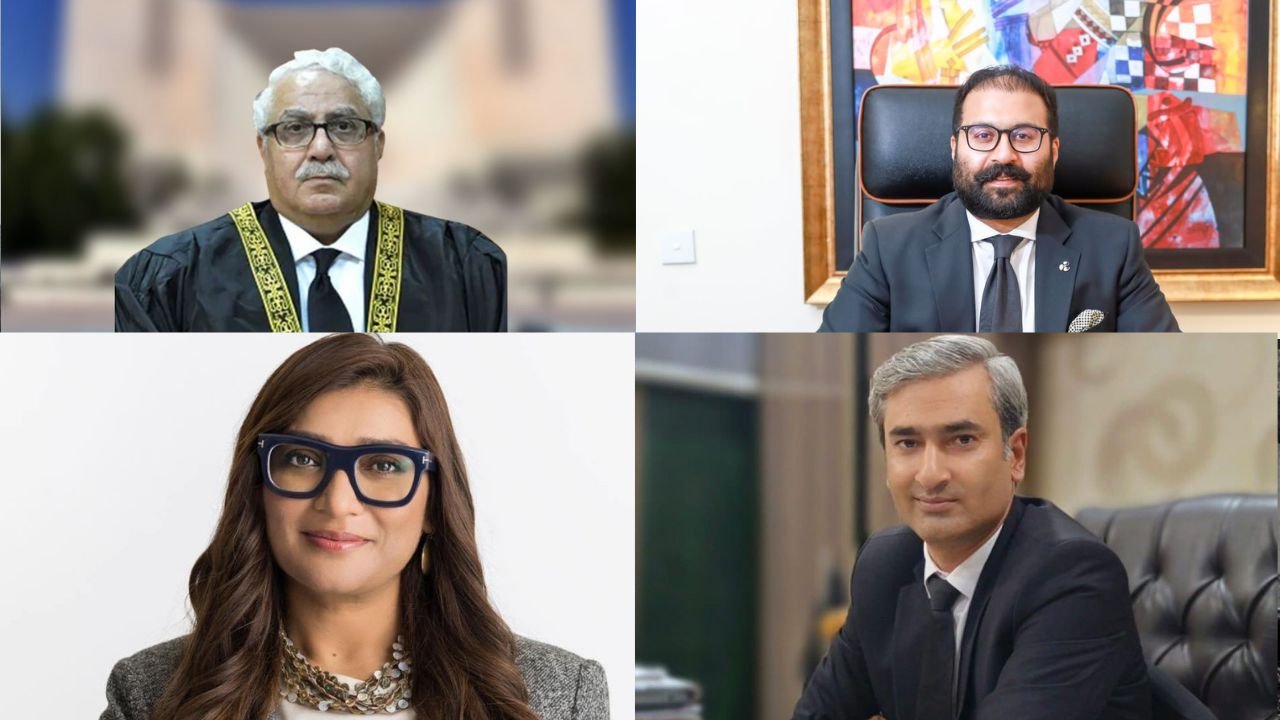
    Mian Dawood, a Lahore-based lawyer, one of the complainants against Justice Sayyed Mazahar Ali Akbar Naqvi, declared the resignation a win for lawyers and asserted that they would challenge his resignation in the Supreme Court.

    Pakistan Muslim League Nawaz (PMLN) leader Khwaja Asif demanded that assets of the judge and his children should be investigated in the same manner as is done for politicians.

    Lawyer Abdul Moiz Jaferii took tok X (former Twitter) and said, “This resignation should be rejected. He should face the SJC and the truth should out. If he is guilty of the accusations against him, he should not have the choice to take a million rupee a month pension off into the sunset like other supposedly compromised agents before him.”

    Lawyer Nighat Dad also criticised the move and said, “Pakistanis should only focus on the perks #JusticeMazaharAkbarNaqvi he and his family will be enjoying from our tax money after resignation. His pension amount will be determined on the basis of years of service. He will have one driver and one orderly. A police guard at residence. 300 free local calls, 2000 units of electricity, 25 HM of gas, water and 300 litres of petrol per month.”

    Journalist Matiullah Jan also questioned the merits of resignation.

    The Case

    In October last year, the SJC had issued a show-cause notice to Justice Naqvi in connection with 10 complaints lodged against him and directed the judge to submit a reply within two weeks.

    The ten complaints include the complaints of Mian Dawood, a Lahore-based lawyer, Pakistan Muslim League- Nawaz (PML-N) Lawyers Forum, Punjab, PBC Vice Chairperson Haroon Rasheed and Council’s Chairperson Executive Committee Hasan Raza Pasha and Advocate Ghulam Murtaza Khan, for amassing illegitimate assets and misconduct.

    In his response, Justice Naqvi raised issues with the SJC inquiry against him and called for Chief Justice of Pakistan (CJP) Qazi Faez Isa and two other judges to recuse themselves from the matter.

    On Nov 20, Justice Naqvi contested the SJC proceedings against him and also challenged the show-cause notice issued to him by the council, stating the initiation of proceedings was coram non-judice and without lawful authority.

    Subsequently, the SJC issued a fresh show-cause notice to Justice Naqvi on Nov 22, with a direction to come up with his defense by filing a reply within a fortnight.

    On December 4, Justice Naqvi had again approached the apex court and expressed his intent to pursue the constitutional petition he had moved earlier seeking to quash the revised show-cause notice issued by the SJC.

    Two days later, Justice Naqvi had invited the attention of the SC committee comprising three senior-most judges to the silence over his petitions challenging the issuance of the show-cause notice (SCN) despite the lapse of time as stipulated in the Supreme Court (Practice & Procedure) Act, 2023.

    Justice Naqvi had also written a separate letter to the SJC secretary, asking the latter to furnish a number of documents without which, the judge said, he would not be in a position to prepare his reply to the show-cause notice within time.

    On December 15, the SJC, in an open hearing, had given two weeks to the top court judge to respond to the misconduct allegations and directed him to submit a reply to the show-cause notice by January 1.

    On January 8, Justice Naqvi had withdrawn his objection to the three-judge bench hearing his plea challenging the issuance of a show-cause notice to him.
  • Bat is back for PTI

    Bat is back for PTI

    The Peshawar High Court (PHC) has restored Pakistan Tehreek-e-Insaf’s (PTI) election symbol ‘bat’ after hearing PTI’s petition against the Election Commission of Pakistan’s decision revoking the party’s election symbol and declaring its intra-party polls “unconstitutional”.

    A two-member bench of the PHC was hearing PTI’s writ petition challenging the Election Commission of Pakistan’s (ECP) decision declaring the intra-party election as null and void and revoking their symbol of a cricket bat, a sign that depicts the party’s founder, Imran Khan’s career in the sport.

    In its verdict, the court termed the ECP’s decision “incorrect”.

    A two-member PHC bench comprising Justice Ijaz Anwar and Justice Arshad Ali announced the verdict today. 

    A day earlier, the court heard the arguments by the counsels of Election Commission of Pakistan (ECP) and the PTI.

    Earlier today, Chairman of the Pakistan Tehreek-e-Insaf (PTI), Barrister Gohar Khan, said that the party is withdrawing its plea seeking the ‘bat’ symbol from the Supreme Court (SC), adding that the party is hopeful that Peshawar High Court (PHC) will give a favourable decision in the matter.

    “Today, our petition was fixed at the Supreme Court, but we have withdrawn it,” he said while talking to media outside the apex court, adding that the decision from PHC will be issued in the party’s favour.

    Earlier, the PHC had accepted ECP’s review petition and restored the electoral authority’s ruling on intra-party polls and election symbol of the PTI.

  • Rawalpindi police arrest Imran Khan in GHQ attack case

    Rawalpindi police arrest Imran Khan in GHQ attack case

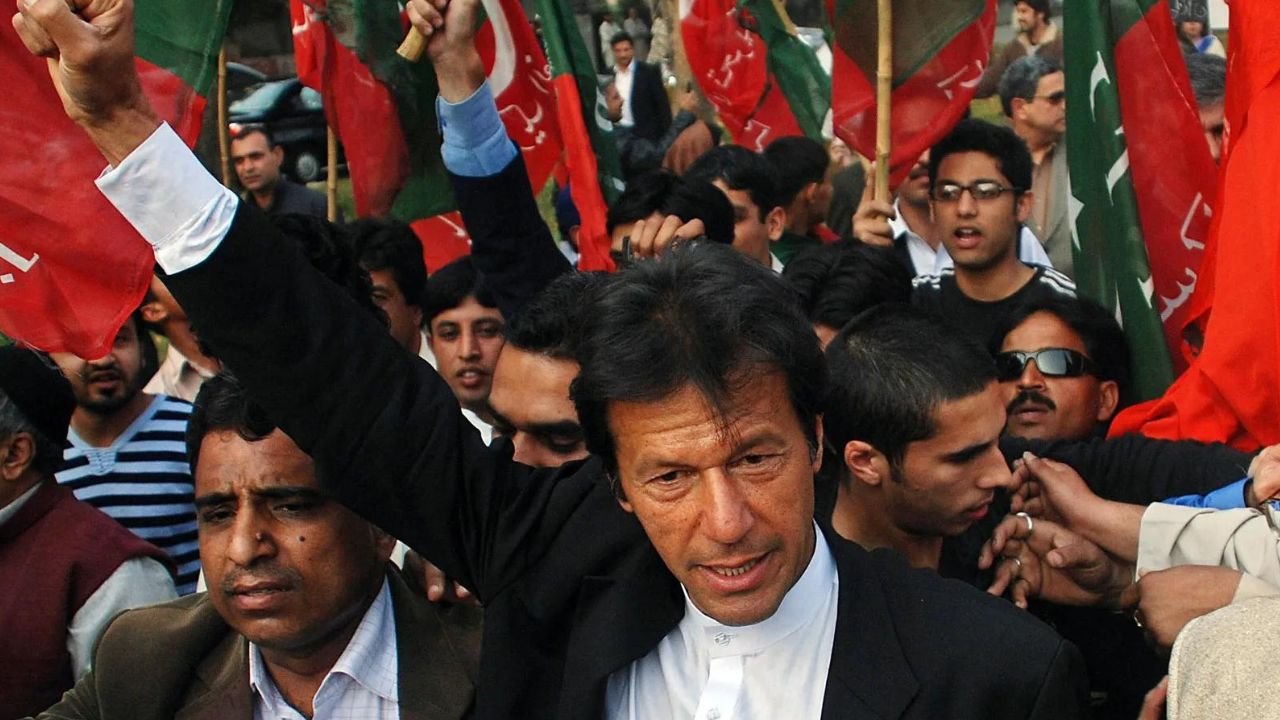
    Pakistan Tehreek-e-Insaf (PTI) founder and former prime minister Imran Khan was arrested on Tuesday in connection with the GHQ attack case pertaining to May 9 riots.

    The former prime minister was summoned by an Anti-Terrorism Court (ATC) in Rawalpindi on Tuesday in connection with the GHQ attack case. Khan is already behind bars in cipher and graft cases.

    However, Imran Khan attended the hearing via video link, as he could not be produced in court by Adiala jail police.

    During the hearing, police officials asked for the custody in May 9 cases, but ATC Judge Malik Aijaz Asif declined the request.

    The ATC judge instructed the police to investigate the PTI founder in Adila jail.

    The development occurred days after the arrest of PTI’s senior leader Shah Mahmood Qureshi in the May 9 case after getting bail in cipher case from the Supreme Court (SC).

    Earlier, a local court in Rawalpindi approved Shah Mahmood Qureshi’s 14-day remand in connection with May 9 cases and sent him to Adiala jail.

  • Supreme Court ends lifetime disqualification

    Supreme Court ends lifetime disqualification

    In a landmark decision, the Supreme Court of Pakistan on Monday overturned the lifetime disqualification of lawmakers, rescinding its previous order that barred politicians from seeking office indefinitely.

    The decision came during the hearing of a case presented by former PML-N provincial member Sardar Meer Badshah Khan Qaisrani. The top court identified inconsistencies between the Election Act of 2017 and a previous Supreme Court ruling regarding the duration of disqualification.

    The Supreme Court declared that no person can be barred for a lifetime from running in elections if they are disqualified under Article 62 (1)(f), setting aside its landmark judgment in the Samiullah Baloch case.

    Sardar Meer Badshah Khan Qaisrani had filed a petition in 2007 challenging his lifetime disqualification over allegations related to a fake degree.

    Chief Justice of Pakistan, Qazi Faez Isa, announced that the Supreme Court aims to conclude proceedings on the lifetime disqualification case by January 4 (Thursday). This crucial decision will determine whether the amendment to the Election Act 2017 aligns with Article 62(1)(F) and establish whether lawmakers’ disqualification from contesting polls should be lifelong or limited to five years.

    The seven-member larger bench, led by Chief Justice Qazi Faez Isa and consisting of Justices Mansoor Ali Shah, Yahya Afridi, Aminuddin Khan, Jamal Mandokhail, Muhammad Ali Mazhar, and Musarrat Hilali, deliberated on the matter of lifetime disqualification for lawmakers during today’s proceedings.

    The apex court acknowledged the contradiction in the Election Act of 2017 and the earlier Supreme Court verdict and took this step after careful consideration. The decision marks a significant development in the ongoing debate over the length of disqualification for politicians and its alignment with constitutional provisions.

  • Senate approves resolution asking for delay in elections

    Senate approves resolution asking for delay in elections

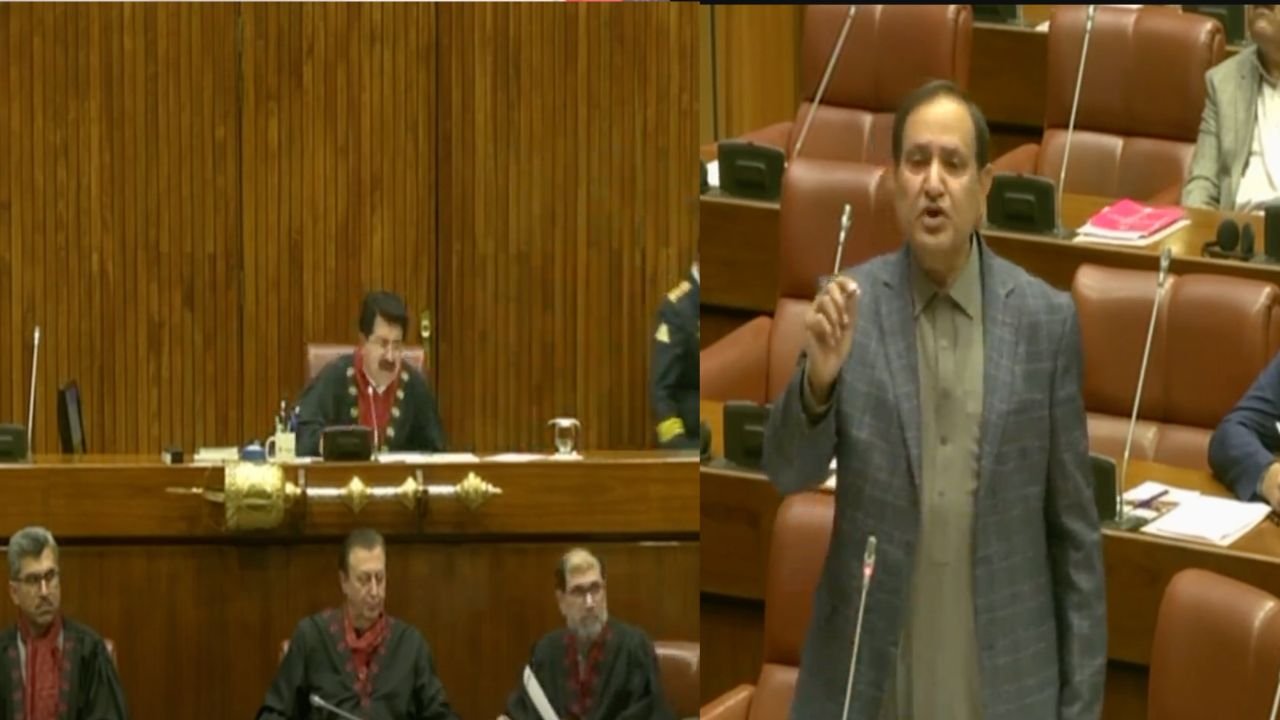
    The Pakistani Senate has approved a resolution to postpone the general elections scheduled for February 8 in the country.

    Senator Dilawar Khan tabled the resolution in the sparsely attended Upper House which garnered required support despite opposition from Information Minister Murtaza Solangi and Senator Afnan Ullah Khan of the Muslim League (N).

    13 out of 14 senators present in the House voted in favor of the resolution.

    As Senator Dilawar read the resolution out loud, he said that the Constitution upheld the right to vote for every citizen of Pakistan, and the Election Commission of Pakistan (ECP) was bound to conduct free and fair polls contingent upon inclusivity and ensuring the participation of all regional people.

    “The vote turnout in colder areas remains notably high during the moderate weather conditions. January and February are recognised as the coldest months in the majority of the areas in Balochistan and Khyber Pakhtunkhwa,” he said.

    Senator Dilawar Khan cited severe cold weather prevalent in many regions, making participation in those areas challenging.

    He also highlighted recent security incidents, including attacks on Mohsin Dawar and members of Jamiat Ulama-e-Islam Fazl (JUI-F), as well as security forces in Balochistan and Khyber Pakhtunkhwa.

    Aimal Wali of the ANP also expressed reservations over the elections.

    During the debate, Senator Dilawar Khan emphasized the existence of threats against individuals during election rallies, underscoring the need to address these security challenges before proceeding with the elections.

    He proposed delaying the February 8 election schedule and called for the Election Commission to act, expressing trust in the Senate Election Commission.

    Senator Afnan Ullah Khan of the Muslim League (N) opposed the resolution, seeking to validate Senator Dilawar Khan’s concerns.

    He acknowledged security challenges but argued that conditions were not as dire as in 2008 and 2013 when elections proceeded under more adverse circumstances.

    Afnan Ullah questioned the rationale behind using security as a pretext for postponing the elections, expressing skepticism about the proposed delay, questioning whether Great Britain and the United States postponed elections during major conflicts.

    He asserted that using weather conditions as a reason for election delay was unfounded, pointing out that elections had been held twice in adverse circumstances before.

    Information Minister Murtaza Solangi also voiced his opposition to the resolution. However, despite these objections, the Senate moved forward, approving the resolution to postpone the general elections slated for February 8.

    The controversy surrounding the decision continues, with differing opinions on the validity of the reasons presented for delaying the electoral process.

  • Finally, some good news for PTI

    Finally, some good news for PTI

    Several Pakistan Tehreek-e-Insaf (PTI) aspirants, along with their allies, re-entered the electoral fray on Thursday following successful appeals against the rejection of their nomination papers by Returning Officers (ROs) during the scrutiny process last week.

    The appellate tribunals, responsible for reviewing appeals against ROs’ decisions, swung into action a day after the deadline for filing appeals expired.

    Rulings were issued on many appeals, while notices were dispatched to the Election Commission of Pakistan (ECP) and other relevant parties for further cases.

    Numerous PTI candidates, facing rejection of their nomination papers, took up the challenge against RO decisions. Simultaneously, objections were raised against the acceptance of Pakistan Muslim League-Nawaz (PML-N) President Shehbaz Sharif’s papers in Karachi.

    According to the election schedule, nomination papers were accepted until December 22, scrutinized by December 30, and the appeal window extended until January 3. The tribunals are expected to conclude all appeals by January 10.

    Among those approved by the appellate tribunals are PTI Central Vice President Firdous Shamim Naqvi for NA-236, Karachi, and party ally Sheikh Rashid and his nephew Sheikh Rashid Shafiq for NA 56 and 57, Rawalpindi. Additionally, several other candidates from various parties, including Ijazul Haq and Punjab Assembly Speaker Sabatin Khan, received the green light to contest elections.

    Firdous Shamim Naqvi took to Twitter (former X) and wrote, “Jibran, Andaleeb and Shiraz, the team that batted for me to get my nomination cleared by the tribunal. My thanks to all those who prayed for my success. I hope to contest with your support and bat for Pakistan. Inshallah we will all succeed on the 8th of February 24.”

    In Rawalpindi, two election tribunals continued hearings on Thursday, deciding a total of 26 appeals—approving 20 and rejecting six. Notably, the tribunals accepted appeals from prominent figures such as PTI founder Imran Khan, former Punjab chief minister Parvez Elahi, and former minister Fawad Chaudhary, prompting notices to the ECP and relevant returning officers.

    Justice Chaudhry Abdul Aziz, a tribunal judge, emphasized the need to adhere to the Constitution and the law during appeal hearings, discouraging the discussion of political matters in court.

    In Islamabad, an appellate tribunal issued notices on appeals from 51 candidates whose nomination papers were rejected, including PTI’s Ilyas Mehrban, Aamir Mughal, Shiraz Kayani, and Zubair Farooq. Tribunal Judge Arbab Muhammad Tahir also sought responses on the appeal against the acceptance of the transgender candidate Nayab Ali’s nomination papers for NA-46 and NA-47.

    Meanwhile, in Karachi, the appellate tribunal at the Sindh High Court accepted the nomination papers of PTI Central Vice President Firdous Naqvi for NA-236, Karachi, declaring objections to his papers as “illegal.”

    The election process is currently undergoing a thorough review, with various candidates and parties actively participating in the appeal process to ensure fair representation in the upcoming elections. The tribunals are expected to play a crucial role in shaping the final candidate list for the upcoming polls.

  • Supreme Court issues notice to IGP, chief secretary on PTI’s petition

    Supreme Court issues notice to IGP, chief secretary on PTI’s petition

    The Supreme Court issued notices on Wednesday to the Inspector General of Police Punjab (IGP), chief secretary, and advocate general in response to a plea filed by Pakistan Tehreek-e-Insaf (PTI), seeking a level-playing field in the upcoming general elections on February 8, 2024.

    A three-member bench, including Chief Justice of Pakistan (CJP) Qazi Faez Isa, Justice Muhammad Ali Mazhar, and Justice Musrat Hilali, heard the case and adjourned the hearing until January 8.

    PTI leader and lawyer, Sardar Latif Khosa, presented arguments on behalf of party leader Shoaib Shaheen.

    The proceedings of the case were broadcast live on SC’s website and YouTube channel.

    The apex court directed the ECP on December 22 to address the concerns of PTI regarding level playing field in the upcoming general elections, set to take place on February 8.

    At the beginning of the hearing, CJP Isa reprimanded Khosa for using the title “Sardar” with his name.

    “Stop using words like Sardar, Nawab, and Peer,” the CJP said while expressing displeasure over the use of such a title.

    Qazi Faez Isa asked the PTI lawyer for evidence that ECP violated the apex court’s direction regarding level-playing field matter.

    “I have brought the CD containing all evidence,” Khosa replied adding that PTI leaders were not allowed to submit their nomination papers.

    “The entire Pakistan has seen what is happening with PTI.”

    After this, CJP advised PTI lawyer to avoid “political speech” in the courtroom and talk about constitution and law.

    “What does the IG and the chief secretary have to do with the election?” the CJP wondered.

    “Do you want action against individuals or the Election Commission?” the CJP asked.

    Sardar Latif Khosa replied to CJP that it’s the responsibility of ECP to conduct free, fair, and transparent elections in the country.

  • Supreme Court to finalise lifetime disqualification case on Thursday

    Supreme Court to finalise lifetime disqualification case on Thursday

    Chief Justice of Pakistan, Qazi Faez Isa, has announced that the Supreme Court (SC) aims to finalise the proceedings on the lifetime disqualification case by January 4 (Thursday). This significant decision will determine whether the Election Act 2017 amendment aligns with Article 62(1)(F) and establishes whether lawmakers’ disqualification from contesting polls should be lifelong or limited to five years.

    The Supreme Court of Pakistan (SC) addressed the matter of lifetime disqualification of lawmakers today.

    A seven-member larger bench, headed by Chief Justice of Pakistan (CJP) Qazi Faez Isa, and comprising of Justice Mansoor Ali Shah, Justice Yahya Afridi, Justice Aminuddin Khan, Justice Jamal Mandokhail, Justice Muhammad Ali Mazhar, and Justice Musarrat Hilali.

    During the hearing of a case submitted by former PML-N provincial member Sardar Meer Badshah Khan Qaisrani last month, the top court noted discrepancies over the length of disqualification in the Election Act, 2017 and a Supreme Court ruling.

    The apex court noted that there is a contradiction regarding the duration of disqualification in the Election Act, 2017 and a SC verdict.

    In 2007, Meer Badshah Qaisrani filed a petition against his lifetime disqualification over a fake degree.

  • PMLN says Peshawar High Court’s decision regarding PTI’s ‘Bat’ symbol is ‘pre-poll rigging’

    PMLN says Peshawar High Court’s decision regarding PTI’s ‘Bat’ symbol is ‘pre-poll rigging’

    Pakistan Muslim League-Nawaz (PML-N) has labeled the Peshawar High Court’s (PHC) recent decision about the iconic bat symbol of Pakistan Tehreek-e-Insaf (PTI) as “pre-poll rigging”.

    Last week, the Election Commission of Pakistan (ECP) nullified PTI’s internal elections and revoked their bat symbol. However, on Tuesday, the PHC suspended the ECP’s declaration, prompting strong reactions from PML-N leaders.

    “Keeping in view the urgency, that a political party has been denuded of its symbol, meaning hearby that aspirants from the general public who were willing to vote for the petitioners’ party were divested of their right to vote as per their choice,” Justice Kamran Hayat Miankhel ruled.

    PML-N President Shehbaz Sharif, while addressing an event in Karachi on Thursday, called the PHC’s order “an attack” on the election commission’s authority.

    “How can the Peshawar High Court give an order that affects Pakistan? There are candidates, who are in some way, related to the judge. I believe that the judge should have recused himself from the bench based on his relationship,” he said.

    The scales of justice, the former prime minister said, were being titled for a “ladla” (blue-eyed boy). “The kind of decisions that are being issued are concerning for us. We expect justice from the judiciary.”

    Reacting to the PHC verdict, PML-N senior leader Rana Sanaullah accused the court of engaging in “pre-poll rigging and attack on the ECP,” asserting that the ruling violated the Election Act 2017. Sanaullah claimed that the judge’s cousin, a PTI candidate, influenced the decision.

    PML-N Senior Vice-President Maryam Nawaz condemned the PHC ruling, describing it as an attack on the constitutional powers of the ECP.

    “The [PHC] judge gave relief to his cousin’s party.”
    In her statement, PML-N Senior Vice-President Maryam Nawaz blasted the PHC ruling and termed the single bench verdict tantamount to an attack on the ECP’s constitutional powers.
    “Fake and fraudulent intra-party elections [of PTI] have been declared ‘halal’. The ruling is the victory of the selection but not the election.”
    Firing a fresh salvo at the incarcerated PTI founder, Maryam, who is also the party’s chief organiser, said: “Those who seek a level-playing field are not ready to give the same to anybody within their party.”

    Reacting to the PHC ruling, JUI-F chief Maulana Fazlur Rehman told journalists in Islamabad that an atmosphere of “judicial martial law” was created in the country.

    In a separate development, the ECP filed an appeal in the Supreme Court against the PHC’s ruling on the appointment of a returning officer for a provincial assembly constituency. The ECP questioned whether the high court’s order interfered with its constitutional and statutory duties, emphasizing the importance of maintaining the election process.

    The PHC’s decision to suspend the appointment of a returning officer has sparked legal challenges, with the ECP urging the Supreme Court to set aside the order for the sake of justice and the electoral process.

  • ‘Those who have dissociated from PTI through press conferences will not be granted election tickets,’ Barrister Gohar Khan

    ‘Those who have dissociated from PTI through press conferences will not be granted election tickets,’ Barrister Gohar Khan

    Pakistan Tehreek-e-Insaf (PTI) Chairman Barrister Gohar Ali Khan made a significant announcement on Wednesday, stating that PTI leaders who have dissociated from the party through press conferences will not be granted election tickets.

    Speaking to the media outside Adiala Jail in Rawalpindi, Barrister Gohar emphasized the party’s firm decision not to award tickets to individuals involved in such public disassociations, regardless of the number of people involved.

    Highlighting the directives of PTI founder and former Prime Minister Imran Khan, Barrister Gohar mentioned, “Imran Khan has instructed the party to gear up for general elections 2024.”

    In response to the recent Supreme Court order on senior PTI leader Shah Mahmood Qureshi, the PTI chairman emphasized the Election Commission’s responsibility to ensure its implementation.

    He revealed that the commission had requested the party to submit an application concerning Qureshi and other incidents where PTI leaders and activists were targeted.

    Barrister Gohar informed the media about the Peshawar High Court (PHC) order and urged the Election Commission to upload the certificate of PTI’s intra-party elections, assuring that the commission would conduct an investigation. He asserted that if a party’s election symbol is revoked, it is equivalent to its dissolution, and only the Supreme Court holds the authority to make such decisions.

    Earlier on December 26, PTI Punjab Acting President Hammad Azhar commented on the issue, stating that the fate of PTI leaders who held press conferences and parted ways with the party would be decided by Imran Khan on a case-to-case basis.

    Azhar mentioned that many individuals who had dissociated through press conferences wished to return to the party, and Imran Khan would personally decide on their return.

    He also demanded release of all political workers, “Stop turning the criminal justice system into a joke. Release all political prisoners. My colleagues have languished in jails for more than 7 months despite being innocent. I myself have been falsely nominated as an accused in dozens of Fake FIRs despite being not present on any single incident mentioned (one overly imaginative mind even listed me as chucking petrol bombs on mall road). End this madness and release all. Stop rearresting ppl after bail. Stop booking ppl in fake cases after arbitrarily arresting them for holding political association with PTI. Let the people of Pakistan decide who will govern them.”