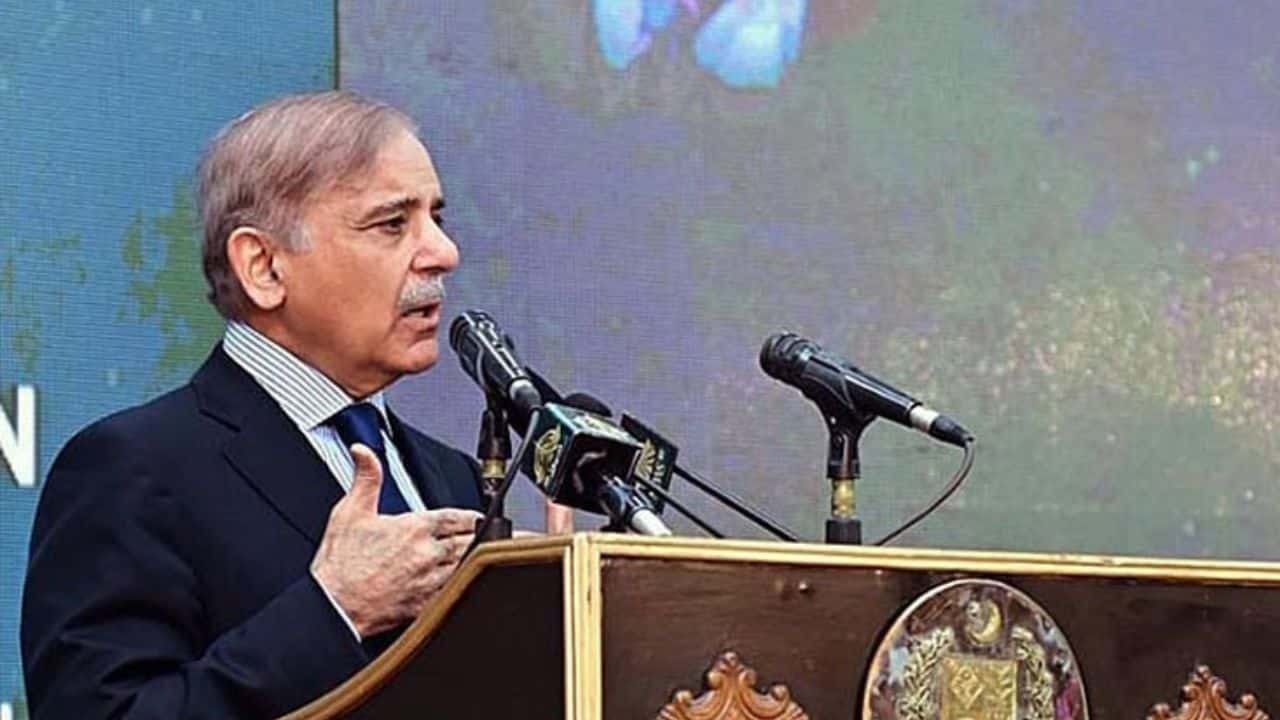
On Wednesday, Prime Minister (PM) Shehbaz Sharif officially launched the Pakistan Endowment Fund for Education, which includes the incorporation of computer coding and constitutional studies into the National Curriculum. During the launching ceremony, he announced a budget of Rs14 billion for the program over the next four years, with Rs3 billion allocated for the current fiscal year.
PM Shehbaz Sharif expressed his desire to sustain this project indefinitely, with increased funding, in order to provide maximum opportunities for higher education to deserving students. He emphasised the importance of prioritising the education sector in the future and recommended that the next elected government allocate up to Rs140 billion for the program over the next 10 years.
The prime minister reflected on his past achievements as the Chief Minister of Punjab, where he initiated the Punjab Education Endowment Fund (PEEF) in 2008 with an annual allocation of Rs2 billion. He proudly mentioned that more than 400,000 students have benefited from this fund and are now serving the country in various professions.
PM Shehbaz Sharif emphasised that the promotion of education should not be influenced by political motivations, but rather be considered a form of worship. He pledged to focus on underdeveloped areas of the country, where many young people are unable to complete their studies due to limited resources.
Regarding the financial situation of the country, the prime minister noted that the International Monetary Fund (IMF) board meeting was scheduled for that day, with hopes of approving a $3 billion stand-by agreement with Pakistan. He acknowledged the need for self-reliance and expressed his determination to make serious efforts for the development and prosperity of the country, highlighting China as an example of regaining lost glory through a focus on education and various sectors.
PM Shehbaz Sharif also mentioned the support received from friendly countries, including China, which had provided $5 billion in the past three months. He further mentioned that Saudi Arabia had sent $2 billion, and another $1 billion was expected from the UAE in the near future.
During the ceremony, PM Shehbaz Sharif distributed scholarship checks to talented and deserving students as part of the newly launched project. Minister for Education and Professional Training, Rana Tanvir Hussain, explained that the program was designed based on the Punjab Education Endowment Fund (PEEF) and aimed to provide merit-based scholarships to talented students in fields such as engineering, nursing, agriculture, social sciences, and allied health sciences.
Minister Hussain also mentioned the government’s decision to introduce computer coding and constitutional studies into the national curriculum, considering the current situation. He emphasised that the amended curriculum, agreed upon by all provinces under the leadership of Prime Minister Shehbaz Sharif, was necessary to provide students with quality education and enable them to contribute to the socio-economic development of the country.
Federal Secretary of Education, Waseem Ajmal, informed that scholarships under the Pakistan Endowment Fund for Education would be provided to students through the Higher Education Commission (HEC) and National Endowment Scholarships for Talent (NEST).