A survey conducted by a leading research firm has revealed that around 55 percent Pakistanis were ‘happy’ that the Taliban would be ruling Afghanistan, Arab News has reported. The study was released by the Gilani Research Foundation (GRF) and carried out by Gallup & Gilani Pakistan (GGP).
The survey was conducted from August 13 to September 5 and 2,170 men and women in urban and rural areas of the Punjab, Sindh, Khyber Pakhtunkhwa and Balochistan were surveyed.
“Some people are happy that the Taliban will now rule Afghanistan. Some are not happy about that. What is your opinion?” this question was asked in the survey.
In response to the question, 55 percent said they were happy. Moreover, 25 percent said they were unhappy, 16 percent did not know and four percent did not respond.
The highest numbers of respondents were from Khyber Pakhtunkhwa, and more 65 per cent were happy with the Taliban take over. In Punjab 54 per cent, 55 per cent in Balochistan, and around 54 per cent were happy in Sindh.
56 per cent of men and 36 per cent women were happy.
Afghan women have started an online campaign using the hashtag #DoNotTouchMyClothes to challenge the Taliban’s conservative female clothing rules. Many Afghan women shared pictures of their colourful traditional dresses.
Dr Bahar Jalali, a former history professor at the American University in Afghanistan, used hashtags #DoNotTouchMyClothes and #AfghanistanCulture to reclaim Afghan women’s traditional clothes.
While posting a picture of herself on Twitter in a green Afghan dress, she stated: “This is Afghan culture. I am wearing a traditional Afghan dress.”
Referring to the women who wore long, fully veiled black gowns, covering their faces and hands at pro-Taliban rally, she tweeted: “No woman has ever dressed like this in the history of Afghanistan. This is utterly foreign and alien to Afghan culture. I posted my pic in the traditional Afghan dress to inform, educate, and dispel the misinformation that is being propagated by the Taliban.”
No woman has ever dressed like this in the history of Afghanistan. This is utterly foreign and alien to Afghan culture. I posted my pic in the traditional Afghan dress to inform, educate, and dispel the misinformation that is being propagated by Taliban. https://t.co/jrp772jIKu
This is our Afghan authentic dress. Afghan women wear such colorful and modest attires. The black burqa never has been part of the Afghan culture. #FreeAfghanistan🇦🇫 pic.twitter.com/v9LIbcvklG
This campaign was also in reaction to a video in which many women holding a pro-Taliban rally in the capital were seen saying that Afghan women wearing make-up and in modern clothes do not represent the Muslim Afghan women and we don’t want women’s rights that are foreign, reports BBC.
Afghanistan’s Higher Education Minister Abdul Baqi Haqqani said that universities will be segregated and veils made mandatory for all female students. Earlier this month, the Taliban announced an all-male interim government.
The United States (US) has urged Pakistan that it should not recognise the Taliban government until it gives women their due rights and allows Afghans who want to leave the country to do so, reports Khaleej Times.
Testifying before Congress on the Taliban victory in Afghanistan, US Secretary of State Antony Blinken said, “What we have to look at is an insistence that every country, to include Pakistan, make good on the expectations that the international community has of what is required of a Taliban-led government if it’s to receive any legitimacy of any kind or any support.” He said the priorities included ensuring the Taliban let out people who want to leave Afghanistan and respect the rights of women, girls and minorities, as well as adhere to promises that the country not again become “a haven for outward-directed terror”.
“Pakistan’s policies have been on many occasions detrimental to our interests, on other occasions in support of those interests. It is one that involved hedging its bets constantly about the future of Afghanistan, it’s one that’s involved harboring members of the Taliban … It is one that’s also involved in different points cooperation with us on counterterrorism,” Blinken said.
“This is one of the things we’re going to be looking at in the days, and weeks ahead – the role that Pakistan has played over the last 20 years but also the role we would want to see it play in the coming years and what it will take for it to do that,” he said.
Commenting on the US-Taliban relationship, Blinken said, “We achieved our objectives in Afghanistan,” adding that it was time to end the two-decade-long war.
“The US will continue to play its role to promote anti-terrorism in the region,” he said, adding that the Taliban had also promised to not let Daesh and Al-Qaeda use the country for militant activities.
Meanwhile, Foreign Minister Shah Mahmood Qureshi said that the practice of human rights by the Taliban in Afghanistan was connected to economic pressures, reports Dawn.
“Ensuring sustainable development and promoting respect for human rights requires political stability and peace in Afghanistan. And peace cannot consolidate unless Afghanistan is provided the necessary economic and fiscal space,” said Qureshi in a video statement made at the UN conference on the humanitarian situation in Afghanistan.
The death of Rahimullah Yusufzai is a terrible blow to journalism – not just in this region, but at a global level. He was one of the best-known and most well-respected journalists on the subject of the Afghan conflict and considered an authority on the Taliban and Al-Qaeda. With his passing we have lost not just an important source of context and information, we have lost a master practitioner of this craft, somebody who was dedicated to truth and accuracy, and who was always ready to go into the field, talk to people, find the story, understand the context.
Despite his considerable fame, Rahimullah sahab, as we always called him, remained modest about his achievements and very down to earth about everything. What I most remember about him was his enthusiasm for his work and the professionalism with which he did it. In the three decades, I knew him, he never turned down a request for an interview or a story – even if this was a very short notice.
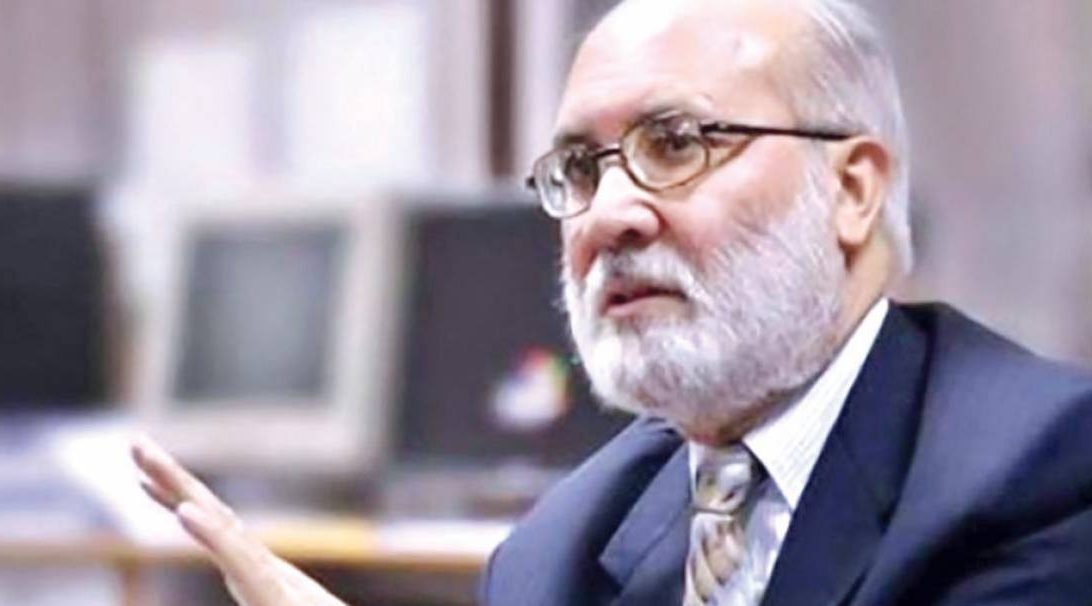
In this picture, late Rahimullah sahab, Resident Editor of The News is seen working in his office
Rahimullah sahab was recommended to Newsline in 1989 by another journalist (I think it was Aziz Siddiqui, then editor of the Frontier Post). At that time, he worked for the Frontier Post in Peshawar and Rahimullah sahab would file the monthly political roundup from the province for us. His copy was impeccable and his political insights sound but what was also very interesting was his readiness to write on other subjects. We would ask about possible writers or reporters for sports and culture stories and he would offer to do everything himself. I remember a few responses like: “Sports – that’s my first love! I can do that for you,” and “Culture, I can cover that for you.” And he really could. He was extremely versatile; a story he did on Pashto cinema was one of Newsline’s greatest hits.
Newsline, founded by Razia Bhatti, was an independent, journalist-owned venture and we often struggled with finances but Rahimullah sahab was a great supporter in those early years and he remained so throughout his life. In March this year – just six months ago – he was a guest speaker at the IBA Centre for Excellence in Journalism’s Razia Bhatti Memorial lecture. It was indeed a privilege to have him deliver the lecture in which he spoke specifically about his 1998 interview with Osama bin Laden (OBL) and more generally about reporting on the Taliban and Al-Qaeda.
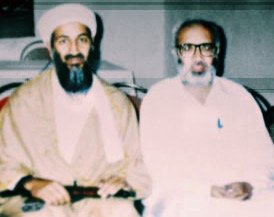
Earlier press briefing with OBL 1998
The event was titled ‘Tea with Osama bin Laden’, and despite being a virtual event, it was extremely well attended. After Kamal Siddiqui of CEJ, Akbar Zaidi of IBA and I had said a few introductory words, Rahimullah sahab began his talk by saying how “humbled and honoured” he was by what had been said. We had only stated facts and talked about his achievements and reputation. I had also spoken about his great sense of professional solidarity, but the fact that he was so touched by what we said showed how modest he remained about his achievements.
The talk itself was extremely interesting and full of detail. His account of a 1998 presser with OBL was fascinating. He recalled that he asked OBL a number of awkward questions, one of which was how wealthy was he. In response, OBL had put his hand on his heart and said he was rich (‘ghani’) in there and thus deflected the enquiry. There was a lot of interesting detail in his account of the OBL interview, which took place a few months after the press briefing — how it was arranged, what constraints there were, how he was asked to destroy a photo he took of OBL entering the tent because Osama bin Laden was walking with the aid of a stick and the organisation “didn’t want him to look weak”.
In the Q&A session after the talk, Rahimullah sahab also spoke about a number of other experiences and issues. When asked about any advice he wanted to remind journalism students of, he said the most important issues were just “hard work and honesty”. He emphasised the need for proper preparation and research (tayari). He also said laughingly that he was perhaps the person who had taken the most photographs of OBL but that in the early years, he had sold them to various outlets, not for very much money. That sounds right, Rahimullahsahab was very much a person who wanted to get on with his work rather than promote his own persona or negotiate lucrative deals for his work.
We also talked about the Sharbat Gula matter. Sharbat Gula was the green-eyed Afghan girl whose photograph had appeared on the cover of National Geographic in 1984, and who was featured again by the publication more than a decade later (and who Pakistan, rather pointlessly, deported in 2016 despite her having lived in the country for decades). Rahimullah sahab was the person who traced her for National Geographic after all those years and he spoke about that and how he was able to negotiate with the publication on her behalf. He needn’t have done that — many journalists would have looked only to their own interests but Rahimullah sahab made sure to help Sharbat Gula’s family to get something from the magazine (medical aid, Hajj expenses, and a small monthly stipend). He said he had never mentioned all of this publicly before but now he was putting it into his book. When asked when we might see this book completed, he lamented he wasn’t able to give enough time to this because the misfortune of a working journalist like himself was he was always so involved with various deadlines on a daily basis. He also mentioned the financial pressures journalists in Pakistan were facing and how his employers had not paid their staff for months.
He recalled that a CNN producer who had once interviewed OBL had managed to produce two books based just on that one meeting and how so many others who had met Osama had managed to get so much mileage out of the experience. He said somehow the fascination with the man and the movement continued, yet he himself had not really taken advantage of this, but that he would record such experiences in his book.
But now Rahimullah sahab is gone. We don’t know if any part of his book is complete or whether it was in notes and planning form. But he does leave behind a vast body of work in journalism. He is now invariably described as a ‘veteran’ journalist, which is apt: he covered the Afghan conflict for years and interviewed nearly every Afghan leader of consequence, including Dr Najeebullah and several leading mujahideen. He had a rare insight and understanding of the politics of his own country and province. He leaves behind a tremendous void – not just was he an experienced reporter and an informed analyst, he was an invaluable source of information and one of the people still practising the craft of journalism with integrity and commitment.
Apart from his enthusiasm for his work, his meticulous attention to detail and fact-checking, and his ability to present a balanced and factual picture, what I shall remember also about Rahimullah sahab is the tremendous grace and dignity with which he always conducted himself – whether on reporting assignments, in international conferences or in small villages. He was never one to curry favour or be impressed by pomp or power. He always remained essentially a journalist: looking for stories, talking to people, ascertaining the facts, and abiding by the basic principles of journalism.
Rahimullah sahab towered above most of his colleagues physically in his life but professionally too, he was a giant of the profession. We shall all miss him very much.
Adding to a list of Taliban atrocities, two Afghan Journalists were left with immense bruises in Kabul. Their crime: covering protests in the Afghan capital.
According to Taqi Daryabi and his colleague Nematullah Naqdi, of the daily newspaper Etilaat Roz (Information Daily), the Taliban separated them into two rooms, insulted, and flogged them with cables after accusing them of organising the protest as per Agence France-Presse (AFP).
The two were reporting on a protest by women demanding the right to work and education in front of a police station.
Naqdi said he was stopped by a Taliban fighter as soon as he started taking pictures.
“They told me that you cannot film’,” he told AFP. Moreover he said that Taliban fighters insulted him and kicked him in the head and that a Taliban fighter placed his foot on his head and crushed his face against the concrete. When he was asked why he was being beaten, he was told, “you are lucky you weren’t beheaded.”
Zaki Daryabi, the daily newspaper publisher told Committee to Protect Journalist (CPJ) via phone that the Taliban subjected the reporters to severe physical abuse that he described as “torture” for four hours that each lost consciousness at least four times in custody. However, CPJ could not independently confirm allegations of torture.
According to the BBC, their journalists were also prevented from filming. Not only this, Al-Jazeera reported that three of their reporters said that Taliban fighters pushed, slapped them and took their belongings.
Over the last days, the Taliban detained and later released at least 14 journalists covering protests against the group, At least nine of these journalists were subject to violence during their detention.
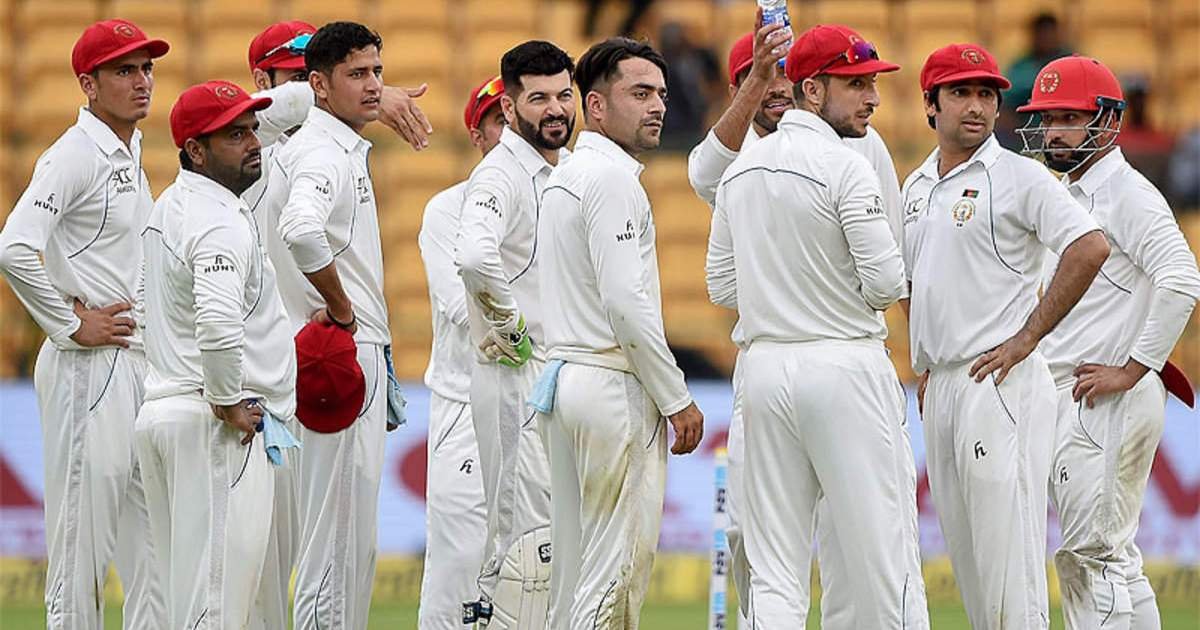
Cricket Australia (CA) warned to cancel the Test match against Afghanistan in November if women are not allowed to play the sport under the Taliban regime.
The updated stance from CA follows the developments on Wednesday where the Taliban indicated that women would not be able to participate in sport, including cricket.
The planned historic maiden men’s Test between Australia and Afghanistan appears almost certain to be cancelled #AUSvAFG
In a statement released on Thursday, Cricket Australia confirmed it would be unable to proceed with the planned Test at Hobart’s Blundstone Arena from November 27 if news reports of Taliban views on the women’s game were true.
“Driving the growth of women’s cricket globally is incredibly important to Cricket Australia,” the statement said.
“Our vision for cricket is that it is a sport for all and we support the game unequivocally for women at every level.”
“If recent media reports that women’s cricket will not be supported in Afghanistan are substantiated, Cricket Australia would have no alternative but to not host Afghanistan for the proposed Test Match due to be played in Hobart,” it added.
The ICC has said that Afghanistan’s status in the international game will be discussed at their next board meeting but that is not scheduled until November, which raises further questions about their participation in the T20 World Cup.
Afghanistan is the only Full Member to have received that status without having an operational women’s team in place. Last year, the Afghanistan Cricket Board had announced their first contracts for women as they looked to build a team.
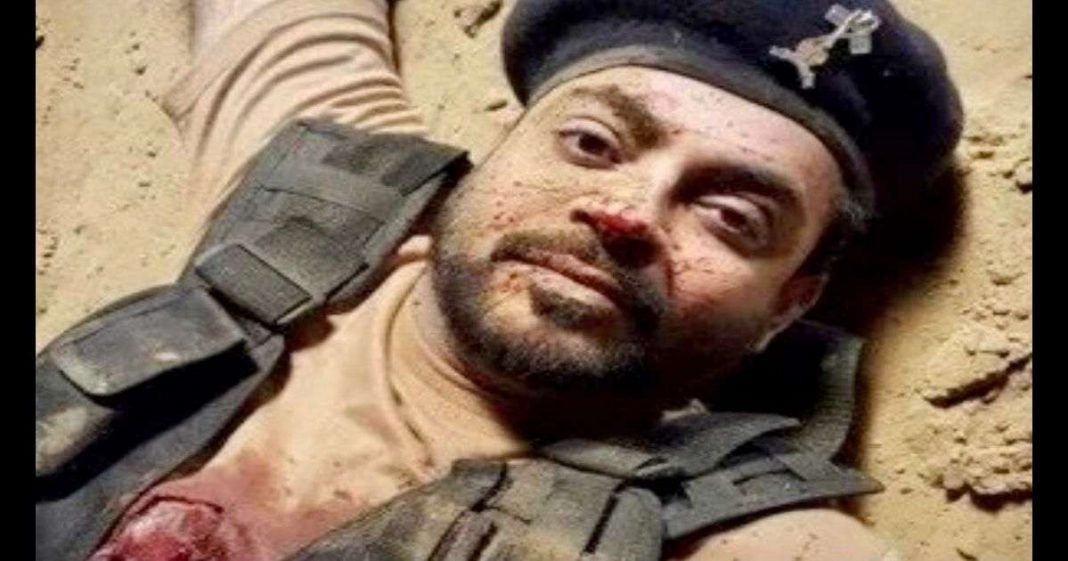
An Afghan journalist, Noor Quraishi, claimed that Pakistani commando Colonel Adil was killed in Panjshir Valley and shared a picture of Pakistan Tehreek-e-Insaf (PTI) MNA Aamir Liaquat.
He shared the picture on his Twitter account, claiming that he [Amir Liaqat] was killed in the clashes with anti-Taliban forces. His tweet translated to, “The first casualty of Pakistani commandos: Colonel Adil died during the fighting in Panjshir.”
Shortly after the tweet, netizens started mocking the journalist for a faux pas.
Hahaha this post by an anti-Pakistan journalist says “The first safety of Pakistani commandos: Colonel Adil died during the fighting in Panjshir”… This is our actor “aamir liaqat ali”… https://t.co/Q66AOUgYyk
Fake and misleading news regarding Pakistan’s involvement in Taliban takeover in Afghanistan has been making rounds on social media.
Earlier, a Twitter user had shared a picture of a fighter jet, claiming that a Pakistan Air Force (PAF) plane was shot down in Afghanistan’s Panjshir valley. Later, a fact check byDawn showed that the picture is actually from 2018 in the United States.
Apart from this, Indian News Channels, Republic TV and Zee Hindustan, ran footage from a video game Arma-3 as visuals stating that it was the PAF attacking the anti-Taliban fighters.
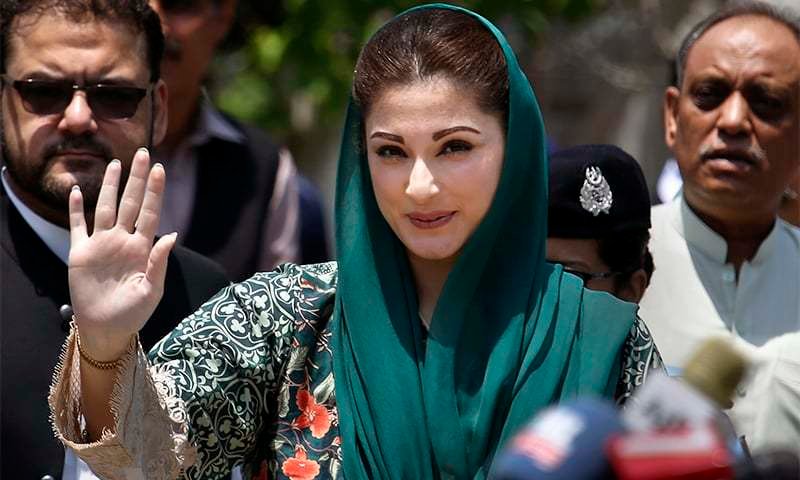
Pakistan Muslim League-Nawaz (PML-N) Vice President Maryam Nawaz has said that her lawyer Amjad Pervez has recused himself from the case because of his health condition after he had contracted Covid-19.
میرے وکیل امجد پرویز صاحب شروع سے اس کیس کو دیکھ رہے ہیں جب سے انہیں کووڈ ہوا ہے انہیں کمر میں شدید تکلیف ہے ہفتے میں دوبار سفر کرنا انکے ممکن نہیں اس لیے انہوں نے مجھ سے کہا کہ آپ مجھے اس مقدمے سے علیحدہ کردیں.
“I told him to contest my case, and until he recovers, I will arrange another counsel for my case,” said Maryam.
A journalist questioned Maryam whether Pakistan should recognise the new Taliban government in Afghanistan.
Maryam responded, “Pakistan must accept the will of the Afghan people and refrain from imposing its decision on Afghanistan.”
The PML-N leader said Afghanistan was a sovereign country and insisted that Pakistan must not interfere in the internal matters of the neighbouring country.
Taliban announced the formation of its interim government on Tuesday. There was not even one woman among the 33 members.
In their first press conference after the takeover of Kabul, spokesperson Zabihullah Mujahid had said the group would honour women and assured that it was ready to provide them with the opportunity to be “present in different government (structures) according to Islamic law and in accordance with our cultural values”, reports Dawn.
In late August, the group had also said that they wanted an inclusive government (inclusion of other Afghan parties and groups) in the country.
Later, International and Pakistani journalists started questioning the absence of women, with most not expressing any surprise.
The Taliban said they would form an inclusive govt. They appear to have meant a govt representing different tribes, but which included only Taliban officials (and no women).
Taliban’s foot soldier/ rank and file and ideology has “prevailed” in round one. As expected it’s a big NO to the demand of an “inclusive” govt and women representation for now. Not surprising at all. #kabul#Afghanistan#Taliban
There is no female included in the #Taliban Cabinet and they have eliminated women’s ministry from the #Afghanistan cabinet. Also there is no Ethnics balance in the Taliban cabinet.
No representation of women and minorities in newly established Government under Afghan Taliban. Says a lot about ‘badlay huay’ changed Tbs 2.0 pic.twitter.com/21JsYAM9Zp
The acting body is stacked with veterans of Taliban’s hardline rule from the 1990s and the 20-year battle against the US.
Sirajuddin Haqqani, who is on the FBI’s most-wanted list with a reward of up to $10 million, has been appointed to the key post of interior minister.
The country will be led by Mohammad Hasan Akhund who is on a UN sanctions list and was previously the foreign minister and then deputy prime minister during the Taliban’s last stint in power from 1996-2001.
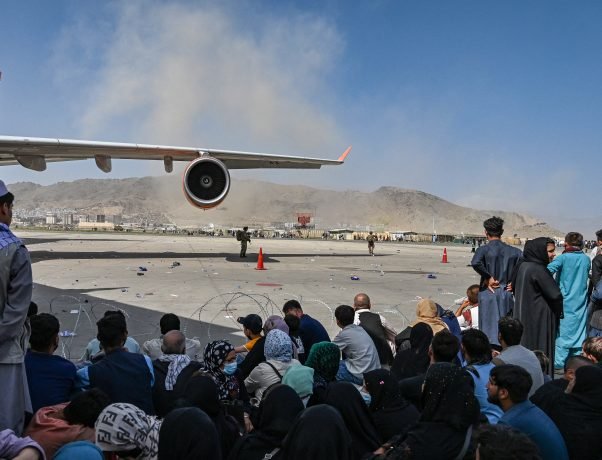
At least four planes chartered to evacuate several hundred people trying to escape the Taliban’s takeover of Afghanistan have not been successful in leaving the country for days, reported TIME.
Contradictory reports are emerging about why the flights weren’t able to take off as pressure builds upon the United States (US) to help those left behind to flee.
An Afghan official at the Mazar-e-Sharif airport said that the would-be passengers were Afghans, many of whom did not have passports or visas, and thus were unable to leave the country. He said they had left the airport while the situation was sorted out.
Residents of Mazar-e-Sharif also said the passengers were no longer at the airport. At least 10 families were seen at a local hotel waiting, they said, for a decision on their fates. None of them had passports or visas but said they had worked for companies allied with the US or German military.
Republican Michael McCaul of Texas told Fox News Sunday that American citizens and Afghan interpreters were being kept on six planes.
“The Taliban will not let them leave the airport,” he said, adding that he’s worried “they’re going to demand more and more, whether it be cash or legitimacy as the government of Afghanistan.” He did not offer more details.
The US State Department has no reliable way to confirm information about such charter flights, including how many American citizens might be on them, since it no longer has people on the ground, according to a US official, reported AP.