Tag: Taliban

  • ‘I will not let the imposed war on people cause more deaths’: Ashraf Ghani

    ‘I will not let the imposed war on people cause more deaths’: Ashraf Ghani

    Afghan President Ashraf Ghani said Saturday the remobilisation of Afghanistan’s armed forces was a “top priority”.

    In a televised speech, Ashraf Ghani said, “As a historic mission, I will not let the imposed war on people cause more deaths.”

    “In the current situation, the remobilisation of our security and defence forces is our top priority, and serious steps are being taken in this regard,” he said.

    With the country’s second and third-largest cities having fallen into Taliban hands, Kabul has effectively become a besieged last stand for government forces who have offered little or no resistance elsewhere.

    “Therefore, I have started extensive consultations inside the government with the elders, political leaders, representatives of people, and international partners on achieving a reasonable and certain political solution in which the peace and stability of the people of Afghanistan are envisaged.”

    But Ghani praised the forces “that have defended the nation courageously and showed strong determination”.

  • Pashtuns are probably the most ‘xenophobic’ people on earth, says PM Khan

    Pashtuns are probably the most ‘xenophobic’ people on earth, says PM Khan

    Prime Minister Imran Khan, while talking to foreign journalists on Wednesday, to explain the unrest in the region, referred to the Pashtuns as ‘xenophobic’.

    “We have a larger Pashtun population here in Pakistan than in Afghanistan and they’re probably the most ‘xenophobic’ people on earth,” said PM Khan.

    “They fight each other normally but when it’s an outside [force], they all get together,” said the prime minister.

    Twitterati reacted to PM Khan calling the Pashtuns ‘xenophobic’. As per the Oxford dictionary, ‘xenophobia’ means literally, fear of foreigners or strangers, though the term is often used to refer to attitudes of hatred or contempt rather than pure fear.

    The word ‘xenophobic’ means having or showing a dislike of or prejudice against people from other countries.

    National Assembly member Mohsin Dawar tweeted, “Shocking to see that in 2021 a PM would label an entire ethnicity as xenophobic.”

    Journalist Khurram Husain tweeted, “When you think in stereotypes, the results often look like this.”

    A Twitter user wrote, “Imran Khan should apologise to all Pashtuns. We are not xenophobic we are peaceful people who just want to live in peace.”

    Another Twitter user requested, “I think time has come that IK should only be giving written speeches/media talks with editing/homework on each question. No more live talks. Restrict him now.”

    https://twitter.com/AatifAzio1/status/1425788752945991681

    Journalist Murtaza Solangi questioned, “Is he [Imran Khan] a social scientist or social anthropologist?”

  • PM Khan not ‘waiting’ for a phone call from President Joe Biden

    Prime Minister Imran Khan, while talking to foreign journalists at his residence on Wednesday night, said he was not “waiting” for a phone call from United States (US) President Joe Biden.

    “I keep hearing that President Biden hasn’t called me. Well, it’s his option. If he wants to call or not it’s his business. If he thinks it’s necessary or not. Not that I am waiting for any phone call,” he said in response to a question from Reuters journalist, Gibran Peshimam.

    PM Khan’s comments come after National Security Adviser (NSA) Moeed Yusuf had said that Pakistan has other options if Joe Biden continues to ignore the country’s leadership.

    While speaking to Finacial Times (FT), Yusuf categorically said, “If a phone call is a concession, if a security relationship is a concession, Pakistan has options.”

    “We’ve been told every time that . . . [the phone call] will happen, it’s technical reasons or whatever. But frankly, people don’t believe it,” Yusuf added.

    The prime minister also talked about the current situation in Afghanistan, its impact on Pakistan, and the withdrawal of US troops.

    PM Khan further said, “The only solution to Afghan problem is the formation of an inclusive government through a political settlement.”

    He said the prevailing situation in Afghanistan could lead to a civil war in the country resultantly making us suffer being the immediate neighbour. He said it could also affect our geo-economic agenda of improving trade links with Central Asia.

    Prime Minister said, ” Pakistan is ready to work with any government in Afghanistan that is elected by its people.” He once again made it clear that we have no favourites in Afghanistan.

  • Thrown to the wolves

    A relative, who is one of this government’s true believers, recently circulated a video of people hurriedly getting onto a small airplane. When I asked what this was and why they had shared this video, the answer was, “This is Ashraf Ghani’s family fleeing Afghanistan.”

    The explanation was made in such a gleeful tone that I found it extremely disturbing. Other family members got in on the discussion with one cousin, remarking, “Historically, Taliban rule in Pakistan had been better for Pakistan.” That remark simply seemed to reflect the sense of excitement and anticipation that appears to be widespread in Pakistan about the return of the Taliban next door.

    Pakistan’s Afghan policy, has always centred around somehow being in control of the politics of that country, mainly through religious groups. The lucrative nature of using Islam as a rallying cry in Afghanistan was made clear after the Russian invasion. The US, aided willingly by Saudi Arabia and Pakistan, mobilised ‘mujahideen groups’ against the Soviet forces and the rallying cry of ‘saving Islam’, along with the cash and arms that poured in for this purpose proved to be very effective in the conflict. Certainly, many in Pakistan profited from the conflict but while these individuals and establishments would often complain about all the Afghan refugees who flooded into Pakistan, they never really complained about all the money they made. They just went on and on about ‘strategic depth’ and continued to happily support militant groups. The generals watched in horror as one Pakistani prime minister tried to find a political and consensual solution to the conflict so he (Junejo) was dismissed by the military dictator General Zia-ul-Haq fairly quickly. Subsequent, elected prime ministers have been similarly undermined and challenged on the Afghan policy front.

    My cousin thinks that history shows us that Taliban rule in Afghanistan has been good for Pakistan. Hmm, that would be because of the scores of public executions in the football stadium. Or perhaps because of the Taliban government’s efforts to take the country back to the dark ages. Or perhaps because the Taliban’s efforts to fix the country concentrated on such useful and revolutionary measures as smashing televisions, destroying ancient statues and insisting that women and minorities (like the well-entrenched Sikh communities) had no rights at all. Or perhaps that regime was ‘good’ for Pakistan because the militant violence then seeped into Pakistan and resulted in more than a decade of terror: bomb blasts and armed attacks. Despite all of that violence, many Pakistanis refused to condemn the killers because somehow they felt a sort of grudging admiration for the extremists, the ‘true believers’. Never mind the brutality of armed attacks or the heroin, Kalashnikovs and network of Saudi funded madrassahs that flooded the country, the mujahideen/Taliban groups were apparently ‘good’ for Pakistan.

    The way the US has simply upped and left Afghanistan is shockingly callous. They invaded the country in 2001, after the 9/11 attacks, all in the name of fighting against religious militancy and terrorism. I am not sure what they did in two decades of occupying the country: but the Afghan Taliban now seem stronger than before and their forces are now re-taking the country bit by bit. Along the way, they execute journalists, comedians and anyone else they disapprove of. And they continue their practice of targeting any high profile individuals or government officials who oppose them – just a few days ago they killed Dawood Khan Menapal, the head of the Afghan government’s press operations for local and foreign media. He was gunned down in his car in Kabul during the time of Friday prayers.

    The interesting thing about all this is that the world does not seem to be interested in Afghanistan any more. The advance of the Taliban forces on the capital, the decimation of the Afghan security forces along the way, the fact that thousands who believed in the west’s false claims of furthering democracy and progress now fear for their lives – none of this is considered worthy of sustained media coverage. There are occasional news stories, of course, but the intensity is nothing like it was when the Bamiyan Buddhas were blown up or when one or two western coalition soldiers were killed. Everybody seems to be watching events in Afghanistan with a degree of resignation, with a sense that Taliban victory is inevitable. The country seems to have been thrown to the wolves. After two decades of US occupation, it’s back to square one, nothing seems to have changed in the country except that Kabul now has trendy coffee shops and the trappings of western capitalism. After claiming that they were training and supporting government forces, the US-led coalition has abandoned them: the soldiers who resist the Taliban are now simply cannon fodder. It seems a familiar enough pattern: invade and occupy a country and wage a war in the name of peace and progress, get lots of people killed, and then just get up and leave.

    Many organisations in the west are now trying to do their conscientious bit by arranging sanctuary for those Afghans who worked with the western coalition – the translators and media fixers in particular. But how tragic it is that those who worked for what they thought was positive change, progress and the rule of law in their homeland are now forced with the choice of either losing their country or losing their life.

    Meanwhile, people in Pakistan (or at least my right-wing relatives) continue to be all excited about the return of the Middle Ages. Probably because of the thinking that Afghanistan should be regarded mainly as a battleground for the covert Indo-Pakistan war and ongoing power struggle in the region. Or perhaps because of the thinking that a religious ideology will trump any other ideology, particularly that of Pakhtun nationalism (something that we seem particularly phobic about). Some people will be of the opinion that the Taliban are more representative of the Afghan nation than any other group so eventually some sort of political evolution will happen in the country and that will be better than an artificially imposed system. Well, that’s all very well but what about those two decades then? What of all the lives lost and the promises made?

    And what about the Afghans dreaming of peace and progress? Their fate can be summed up in two words: cannon fodder.

    Thank you America. And thank you also to all you neighbours of Afghanistan.

  • ‘If a phone call and a security relationship is a concession, Pakistan has options’: Moeed Yusuf tells US

    ‘If a phone call and a security relationship is a concession, Pakistan has options’: Moeed Yusuf tells US

    National Security Adviser (NSA) Moeed Yusuf has said that Pakistan has other options if United States (US) President Joe Biden continues to ignore the country’s leadership.

    While speaking to Finacial Times (FT), Yusuf categorically said, “If a phone call is a concession, if a security relationship is a concession, Pakistan has options.”

    “We’ve been told every time that . . . [the phone call] will happen, it’s technical reasons or whatever. But frankly, people don’t believe it,” Yusuf added.

    Moeed Yusuf’s statement came as a complaint about Joe Biden’s failure to contact Prime Minister Imran Khan as Washington seeks help to stop the Taliban from taking over Afghanistan following US troop withdrawal.

    “The cold shoulder from Washington comes as the Taliban has captured swaths of territory across Afghanistan in a ruthless offensive emboldened by the US pullout,” the report added.

    “The president of the United States hasn’t spoken to the prime minister of such an important country who the US itself says is make-or-break in some cases, in some ways, in Afghanistan — we struggle to understand the signal, right?”

    A Biden administration official told FT, “There are still a number of world leaders President Biden has not been able to speak with personally yet. He looks forward to speaking with Prime Minister Khan when the time is right.”

    The US State Department, however, has assured Islamabad that Washington recognises Pakistan’s vital role in restoring peace in Afghanistan and wants the country to play that role. “Pakistan has much to gain and will continue to have a critical role, be well-positioned to have a role in supporting the outcome” in Afghanistan, said US State Department’s spokesman Ned Price, reported Dawn.

    A person familiar with last week’s discussions between Yusuf and his American counterpart Jake Sullivan told FT: “The conversation about Afghanistan had been tough but that securing a political settlement … could help improve the US-Pakistan relationship dramatically.”

  • Flags of Afghanistan, Taliban raised in Islamabad

    Flags of Afghanistan, Taliban raised in Islamabad

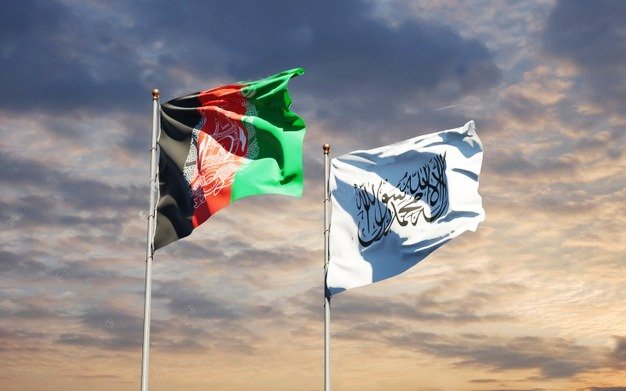
    Security agencies were put on alert on Sunday after police learned that a group of individuals were flying Afghanistan’s national flag as well as that of the Taliban at Islamabad’s Lake View Park, reports Dawn.

    A group of 20 to 25 young men holding the two flags were seen taking photographs at the park in the evening.

    A police party rushed to the place and questioned the individuals, but did not register any case against them.

    A police officer said since waving a flag of any country was not a crime, police did not take any action.

  • FO condemns ‘malicious smear campaign against Pakistan’ by former Canadian minister

    FO condemns ‘malicious smear campaign against Pakistan’ by former Canadian minister

    The Foreign Office (FO) strongly objected to the remarks made by a former Canadian minister, saying his comments betrayed a lack of understanding of the Afghan peace process as well as showed ignorance about facts on the ground.

    In a series of tweets, the Foreign Office addressed the matter and said, “We strongly condemn the unwarranted comments by former Canadian minister Chris Alexander, making unfounded & misleading assertions about…Pakistan’s role in #AfghanPeaceProcess.”

    Chris Alexander, former Canadian minister posted on Twitter, “Taliban fighters waiting to cross the border from Pakistan to Afghanistan… anyone still denying that Pakistan is engaged in an ‘act of aggression’ against Afghanistan is complicit in proxy war & war crimes.”

    The FO also reiterated Pakistan’s policy on Afghanistan and said that international powers had begun to appreciate what Prime Minister Imran Khan had been saying for a long time. “Now when the world has acknowledged what…Pakistan & PM @ImranKhanPTI has consistently maintained abt there being no military solution to the conflict in #Afghanistan & the need for an inclusive, broad-based & comprehensive political settlement, such gratuitous commentary is deplorable,” it added.

    The FO further said that Pakistan had taken up the matter with the government of Canada. “The matter has been taken up with the Canadian side. We have urged the Canadian authorities to take steps to address this motivated and malicious smear campaign.”

  • ‘Extremely unfair to allege Pakistan supported Taliban’: PM Khan

    ‘Extremely unfair to allege Pakistan supported Taliban’: PM Khan

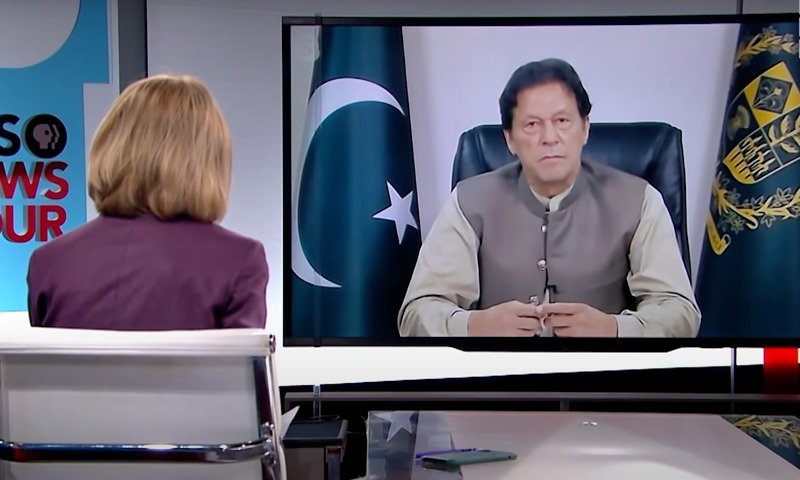
    In an interview with PBS Newshour, Judy Woodruff asked Prime Minister Imran Khan about Pakistan’s alleged military, intelligence, and financial support to Afghanistan.

    PM Khan replied, “I find this extremely unfair.”

    The premier added that when the Pakistani government decided to join the United States (US) war on terror, “we were devastated by that”. PM said that 70,000 Pakistanis died because of the US war in Afghanistan, even when “Pakistan had nothing to do with what happened” [in New York on September 11, 2001].

    Al Qaeda was based in Afghanistan at the time, and “there were no militant Taliban in Pakistan,” he said, maintaining that Pakistan was not involved in the 9/11 attacks.

    “We had nothing to do with it,” he repeated, regretting that the war in Afghanistan had resulted in a loss of $150 billion to Pakistan’s economy.

    PM further added that the US “really messed it up in Afghanistan”.

    Judy Woodruff asked PM Imran about claims of Taliban sanctuaries being present in Pakistan and a report about 10,000 fighters crossing the border to help the group in Afghanistan.

    “Judy, for a start, this 10,000 Taliban — or as the Afghan government says, Jihadi fighters — have crossed over, is absolute nonsense. Why don’t they give us evidence of this?” asked PM Imran.

    To a question about safe-havens, the premier questioned where the sanctuaries are located in Pakistan.

    “Taliban are not some military outfit. They are normal civilians. If there are some civilians in these camps, how is Pakistan supposed to hunt these people down? How can you call them sanctuaries?” asked PM Imran.

    “First of all, they tried to look for a military solution in Afghanistan when there was never one. And people like me, who know the history of Afghanistan and kept saying there isn’t a military solution, were called anti-American. I was called Taliban Khan,” said PM Imran.

    The prime minister further added, “I don’t know what the objective was in Afghanistan, whether there was to have some nation-building, democracy or liberate the women. Whatever the cause was, the way they went about it was never going to be the solution.”

    “When they finally decided there is no military solution, unfortunately, the bargaining power of the American or North Atlantic Treaty Organisation (NATO) forces had gone,” said the premier.

    “Once they had reduced the troops to barely 10,000 and when they gave the exit date, Taliban thought they had won,” said PM Imran. He added that it is difficult right now to ask the group to compromise or “force them” to take a political solution.

    “It’s very difficult to force them into a political solution because they [Taliban] think that they won,” said PM Imran.

    PM Khan further said, “Pakistan is hosting over three million Afghan refugees. And what we fear is that a protracted civil war would [bring] more refugees. And our economic situation is not such that we can have another influx.”

    “Secondly, the worry is that the civil war will flow into Pakistan because Taliban are ethnic Pashtuns. Now there are more Pashtuns on our side of the border than Afghanistan. And so the worry is if this goes on, the Pashtuns on our side will be drawn into it and that is also the last thing we want,” said PM Imran.
  • ‘To blame Pakistan is extremely unfair’: PM Khan tells Ashraf Ghani

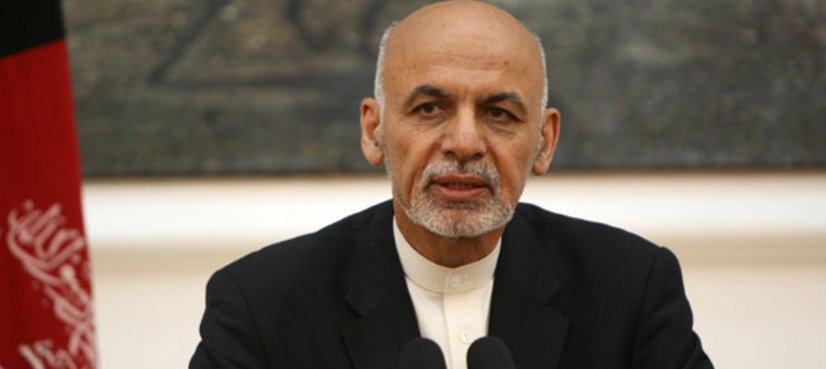
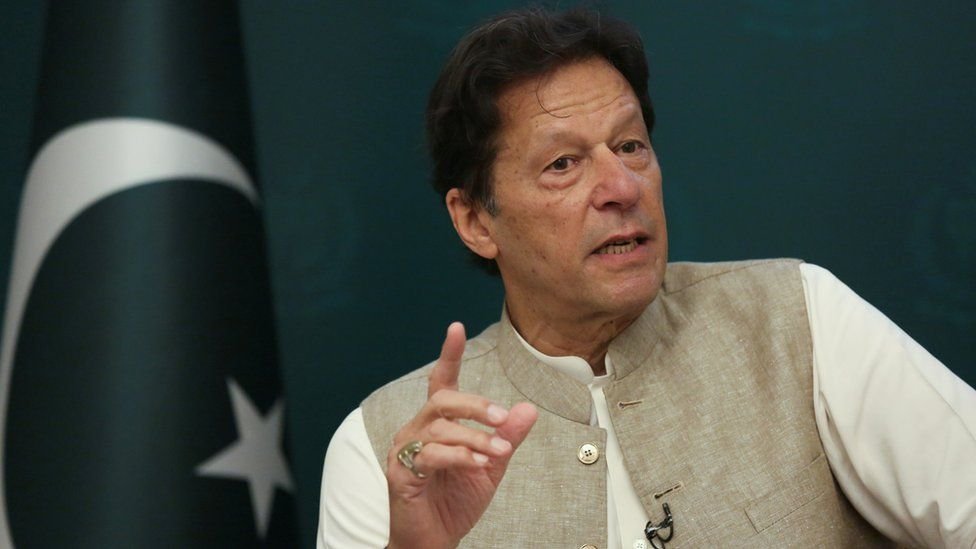
    ‘To blame Pakistan is extremely unfair’: PM Khan tells Ashraf Ghani

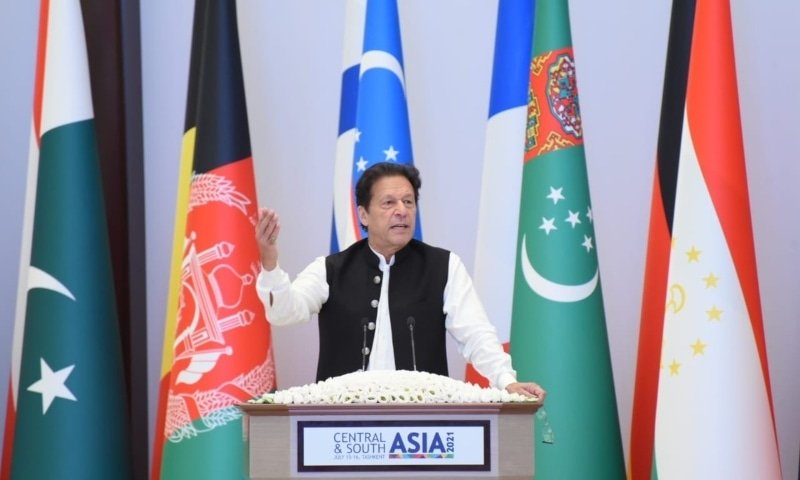
    Prime Minister Imran Khan on Friday countered Afghan President Ashraf Ghani’s claims about Pakistan’s “negative role” in the Afghan peace process and said, “To blame Pakistan for what is going on in Afghanistan I feel is extremely unfair.” PM Khan was addressing the international conference on “Central and South Asia Regional Connectivity: Challenges and Opportunities” during his two-day visit to Uzbekistan.

    “President Ghani, let me just say that the country that will be most affected by turmoil in Afghanistan is Pakistan. Pakistan suffered 70,000 casualties in the last 15 years. The last thing Pakistan wants is more conflict,” the premier said

    “To blame Pakistan for what is going on in Afghanistan, I feel, is extremely unfair,” said PM Khan.

    “Why would I come to Kabul if I was not interested in peace? The whole idea was that Afghanistan should have looked at Pakistan as a partner in peace. I feel really disappointed that we have been blamed for what is going on in Afghanistan.”

    “I repeat, the last thing we want is turbulence in Afghanistan,” said PM Khan.

    PM Khan added, “What is happening in Afghanistan is over two decades of conflict, deep divisions, and unfortunately the United States (US) seeking a military solution when there was no one. When there were 150,000 Nato troops in Afghanistan, the greatest military machine, that was the time to ask the Taliban to come on the table. Why were the Taliban to compromise when their existing date was given and with only a few thousand American troops left? Why would they [Taliban] listen to us, when they are sensing victory?”

    He said that he had a conversation with Uzbekistan President Shavkat Mirziyoyev about how all the neighbours in the region can help the Afghan peace process. 

    “All neighbours are interested in a peace settlement in Afghanistan. There are already three million Afghan refugees in Pakistan. We are petrified that will be another flow of refugees coming in. We do not have the capacity or the economic strength to bear another flow of refugees. So I can assure you again, if any country is trying its best of all the countries in the world, it’s Pakistan today.”

     Director-General Inter-Services Intelligence (ISI) Lt Gen Faiz Hameed Friday rejected the allegations of infiltration levelled by Afghan President Ashraf Ghani.

     Afghan president had levelled unsubstantiated accusations against Pakistan, saying that 10,000 fighters had crossed over into Afghanistan from Pakistan.

    “If talks fail, we will fight the Taliban,” said Ghani. “This is the last chance for peace,” he had said.

    DG ISI explicitly stated that these accusations against Pakistan are not true. In fact, infiltration is being done from Afghanistan, he added.

    “We want peace in the neighbouring country as a peaceful and stable Afghanistan is in the interest of Pakistan and other countries,” DG ISI said.

    He said that Pakistan is not supporting any group in Afghanistan. “We are interested in a negotiated settlement among all the Afghan groups,” added DG ISI.

  • Taliban snatch three billion Pakistani rupees from Afghan forces

    Taliban snatch three billion Pakistani rupees from Afghan forces

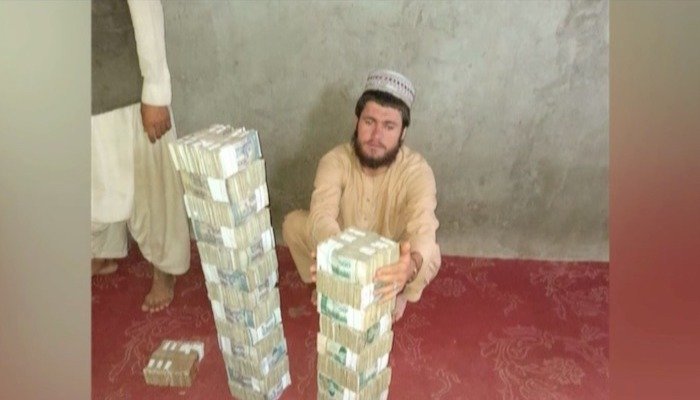
    The Taliban have snatched three billion Pakistani rupees that they found at checkposts of Afghan security forces along a Pak-Afghan border crossing, reports Geo News.

     A statement released by the Afghan Taliban said that around Rs3 billion in Pakistani currency was found from the checkposts of the Afghan forces in the Spin Boldak area of ​​Kandahar, which was evacuated by the Afghan security forces.

    “The (Taliban) Mujahideen have captured an important border town called Wesh in Kandahar,” Taliban spokesman, Zabihullah Mujahid, said in a statement.

    Read More: ‘No smoking, shaving’: Afghan Taliban’s first orders

    “With this, the important road between (Spin) Boldak and Chaman and Kandahar customs have come under Mujahideen control.”

    Pakistan security forces confirmed the Taliban had captured the crossing. The Afghan defense ministry said it was checking developments.

    Analysts say the Rs3 billion amount was reportedly given by smugglers as a bribe to the Afghan forces. They say the Afghan intelligence agency, NDS, used the money to pay terrorists to plan attacks in Pakistan.