Tag: Targeted subsidies

  • Govt to implement Rs7 per unit power tariff hike, expecting over Rs3.2 trillion in revenue

    Govt to implement Rs7 per unit power tariff hike, expecting over Rs3.2 trillion in revenue

    The government is planning to raise the power base tariff by approximately Rs7 per unit. This move is expected to generate over Rs3.2 trillion in additional revenue from power consumers. The International Monetary Fund (IMF) Executive Board is set to discuss a stand-by arrangement, which is the final step in solidifying the IMF Staff Level Agreement. The government will then need to fulfill the program’s requirements.

    The increase in power tariff is a crucial condition set by the IMF for providing financial assistance to Pakistan. The Fund has been urging the government to raise the tariff and eliminate power subsidies to reduce the country’s fiscal deficit. The proposed increase, along with an 18 per cent GST on bills, could lead to a significant financial burden on power consumers.

    Nepra, the regulatory authority, has conducted hearings with distribution companies (Discos) on this matter. While the privatised company, K-Electric, will be insulated from the increase in base tariff, the price of electricity it draws from the national grid will become costlier.

    The increase in base tariff, estimated at nearly Rs7 per unit, is awaiting submission to the federal government for notification. If finalised, it would raise the base tariff to Rs31.80 per unit from the current Rs24.80. The increase is aimed at reducing the power sector’s circular debt accumulation, which currently stands at approximately Rs2.64 trillion due to inefficiencies in power generation, transmission, and distribution.

    The rise in power tariffs will impact consumers across residential, commercial, and industrial sectors, leading to inflation. Businesses will pass on the increased costs to consumers, while households will need to allocate more funds for power, straining their budgets. However, the government asserts that this step is necessary to revive the power sector and the economy. It has also promised targeted subsidies to alleviate the burden on the poor and vulnerable.

    In a positive development, the government has made a payment of Rs142 billion to Independent Power Producers (IPPs), reducing their outstanding dues and improving their cash flows. However, the power sector still faces a circular debt of Rs2.64 trillion. Additionally, the IMF has called for a 45-50 per cent increase in gas tariffs, affecting consumers of Sui Northern Gas Pipelines Limited (SNGPL) and Sui Southern Gas Company Limited (SSGCL).

    The government is likely to continue its policy of having high-end consumers subsidise low-end consumers. The circular debt in the energy sector amounts to over Rs4.30 trillion, including debts from the oil and gas sector.

    Finance ministry and Nepra officials have experienced confusion regarding the finalisation of the increase in base tariff, as the IMF board meeting approaches. The regulator is awaiting projections from the finance ministry to determine the final base tariff. The government aims to achieve a value of Rs240 for the US dollar, despite setting it at Rs290 billion in the federal budget.

    Overall, the government’s objective is to address the financial challenges in the power sector while providing support to those affected by the tariff increase. The proposed measures are crucial to stabilise the power sector and stimulate the economy.
  • Finance Ministry responds to IMF’s concerns on budget, pledges commitment to programme

    Finance Ministry responds to IMF’s concerns on budget, pledges commitment to programme

    The International Monetary Fund (IMF) has publicly raised reservations regarding Pakistan’s budget, prompting a response from the Finance Ministry. The ministry clarified that the budget is not part of the pending ninth review, which has been delayed since November of last year. However, it emphasised its commitment to finding an amicable solution through ongoing engagement with the IMF.

    In a statement addressing the IMF’s concerns, the ministry highlighted the completion of the ninth review in early February 2023, with all technical issues promptly addressed. The only outstanding matter was external financing, which was resolved after discussions between Prime Minister Shehbaz Sharif and the IMF managing director.

    The ministry clarified that although the FY24 budget was not part of the ninth review, it shared the budget numbers with the IMF mission in line with the prime minister’s commitment. Continuous engagement with the IMF, including discussions on the budget, is ongoing.

    Addressing the IMF’s concerns about broadening the tax base, the ministry noted the addition of 1,161,000 new taxpayers by the Federal Board of Revenue (FBR) over the past 11 months. It emphasised that efforts to expand the tax base will continue, highlighting the introduction of a 0.6 per cent advance adjustable withholding tax on cash withdrawals over Rs50,000 as a significant step.

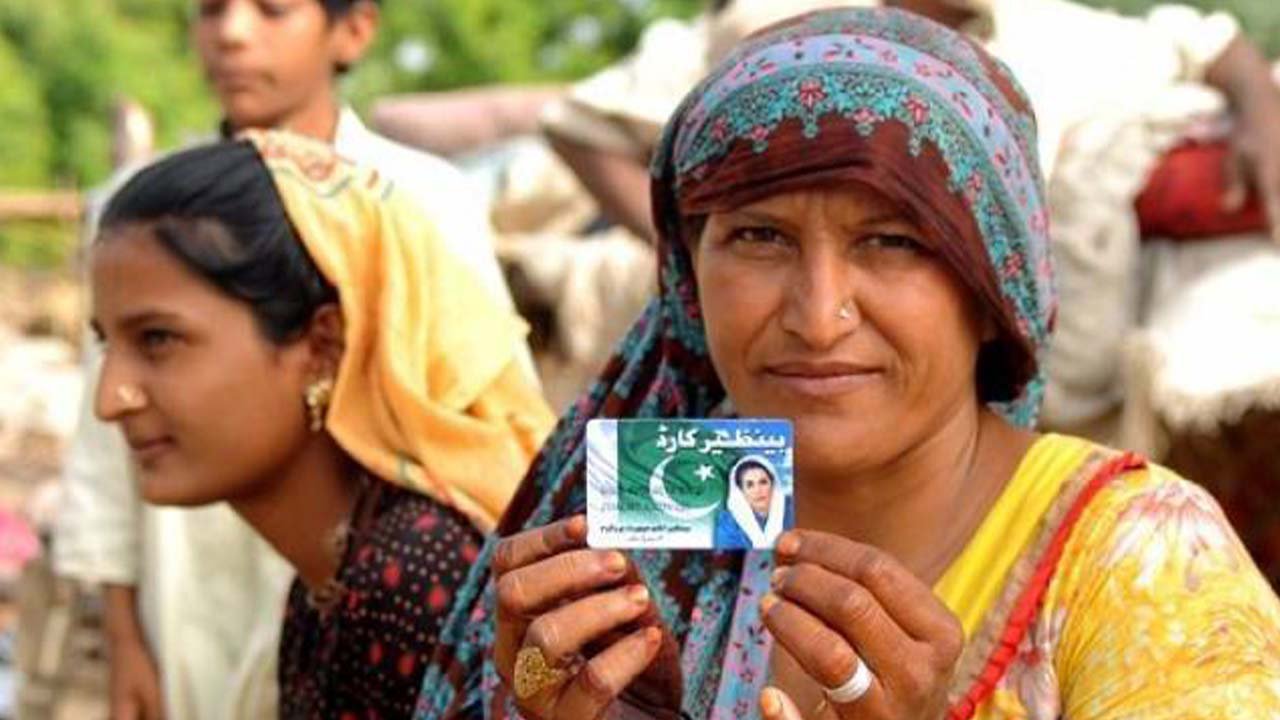
    The ministry defended the tax exemptions announced in the budget, describing them as catalysts for growth in the real sectors of the economy. It assured that the budget provides targeted subsidies for families with a PMT scorecard of up to 40, not limited to the Benazir Income Support Programme (BISP) beneficiaries.

    Regarding the amnesty measures, the ministry explained that the only change made was to “dollarize” the value of an existing provision in the IT Ordinance. It clarified that this facility has always been available and that the cap of Rs10 million ($100,000 approximately) introduced in FY2016 is being resolved based on the rupee equivalent of $100,000.

    The ministry reiterated its full commitment to the IMF programme and eagerness to at least complete the ninth review. It emphasised the government’s willingness to make difficult decisions and engage with the IMF to find an amicable solution.

  • ADB recommends targeted subsidies and tax reforms for Pakistan’s economic recovery

    ADB recommends targeted subsidies and tax reforms for Pakistan’s economic recovery

    The Asian Development Bank (ADB) has recommended that Pakistan implement targeted subsidies to alleviate inflationary pressures and improve the tax-to-GDP ratio in order to emerge from the current state of economic uncertainty.

    Yevgeniy Zhukov, Director General of the Central and West Asia Department, and Yong Ye, Country Director of the Pakistan Resident Mission, emphasised the significance of targeted subsidies to help the most vulnerable segments of society, as well as the mobilization of domestic resources to bolster the national economy. They also suggested strengthening the Benazir Income Support Programme (BISP) and improving its verification process to ensure that the assistance reaches only those who require it.

    Zhukov noted that the ADB has been providing financial assistance to the government to strengthen social security through the BISP programme since 2016. The ADB has provided $600 million in conditional cash transfers for health and education since 2021, and an additional $1.5 billion under the Countercyclical Support Facility.

    A significant portion of this funding will be directed to the BISP to provide necessary assistance to those most affected by ongoing difficulties. Zhukov further suggested that Pakistan should improve its revenue collection, as its tax-to-GDP ratio of 10 per cent is one of the lowest in the region. He cautioned that if the government is only collecting 10 per cent, it may not have adequate resources to provide support and boost income.

    Yong Ye indicated that the ADB, World Bank, European Union, and United Nations had pledged assistance to Pakistan after devastating floods last year, and a second meeting of the Geneva conference was scheduled to take place soon to discuss progress. Zhukov expressed sympathies for flood victims and stated that the ADB had approved a $1.5 billion programme for Pakistan before the floods to address the negative impact of the Russia-Ukraine war on the country’s economy, which was then repurposed to provide social protection for the flood-affected people.

    The ADB has approved additional emergency assistance, including a $175 million loan and $5 million in grants, to rehabilitate damaged infrastructure and develop a stronger infrastructure that can withstand future floods. The bank is working with Pakistan and other partners, such as the International Monetary Fund and the World Bank, to introduce important structural reforms in public finance management, domestic resource mobilization, and energy sector reforms. The ADB is committed to collaborating with its partners and the Pakistani government to ensure that the reform agenda is advanced.

  • Pakistan’s proposal to increase number of beneficiaries for BISP rejected by IMF

    Pakistan’s proposal to increase number of beneficiaries for BISP rejected by IMF

    The International Monetary Fund (IMF) rejected the Pakistani government’s proposal to increase the number of beneficiaries of the Benazir Income Support Programme (BISP) and expand its scope to cover 20-30 per cent of the population living in poverty.

    The proposal aimed to provide quarterly stipends to those below the poverty line. While the IMF approved an increase in the BISP allocation by Rs40 billion, increasing it from Rs360 billion to Rs400 billion for the current fiscal year for 8.9 million beneficiaries, the proposal to expand coverage could not be implemented due to a shortage of budgetary resources.

    According to sources, the IMF refused to increase the Proxy Mean Test (PMT) ceiling for enhancing coverage and providing monthly stipends to around 30 per cent of the population living below the poverty line, citing a lack of budgetary resources. The Finance Ministry official stated that there was no disagreement, and the government has been providing a quarterly stipend of Rs7,000 to 8.9 million beneficiaries.

    The IMF staff suggested increasing tax revenues and abolishing un-targeted subsidies but did not initially oppose the idea of expanding coverage. The IMF high-ups recommended using the National Socio-Economic Registry (NSER) of the BISP to provide targeted subsidies on electricity, gas, and provision of POL for motorcycles and small vehicles.

    According to Geo, different proposals to start a targeted subsidy mechanism were discussed but ultimately dropped due to various reasons. The weekly Sensitive Price Index (SPI) touched 45.64 per cent on a weekly basis, and Consumer Price Index (CPI) crossed 31.5 per cent on a monthly basis in February 2023. Both the CPI and SPI are expected to rise further in the weeks and months ahead of the current fiscal year.

    To protect vulnerable segments from falling below the poverty line, there is no other option but to implement a targeted subsidy mechanism over the short and medium-term period. Pakistan and the IMF will need to place a target subsidy mechanism, given the possibility of a new IMF program after the expiration of the current one under the Extended Fund Facility in June 2023.