Tag: Tariff

  • Govt may add 9,000 MW solar energy to national grid as an alternative power source

    Govt may add 9,000 MW solar energy to national grid as an alternative power source

    The federal government intends to prioritise the addition of 9,000 megawatts (MW) of solar energy to the national grid.

    According to Express Tribune,  the government may spend money on producing 6,000 MW of solar energy. A scheme to install 2,000 MW of solar photovoltaic (PV) power on 11 kV feeders is also being considered. The government has chosen a number of locations in south Punjab for this purpose.

    By solarizing the public-sector buildings, the government will also add 1,000 MW of solar energy to the national grid.

    Through a single-stage, two-envelope bid process and a tariff indexation of 70 per cent every three months, the authorities will implement a straight-line tariff. In this regard, it aims to provide friendly nations with competitive tariffs.

    The government may acquire all the electricity produced on a 25-year BOOT (Build, Own, Operate, and Transfer) basis due to increased demand. It also intends to guarantee power off-take and offer the land for the projects.

    Additionally, the government intends to exempt all investors from import customs and other taxes, as well as from income tax on gains and profits for the first ten years.

    Incentives for the 4MW solar generation to be installed at 11kv feeders through a bid process may also be announced by the Ministry of Energy.

    In this context, the government can propose a straight-line tariff and a quarterly 50 per cent Pak CPI indexation with a 15 per cent maximum. Additionally, a bid/lease procedure will be used to install the solar rooftop system.

  • Nepra approves price increase of Rs9.66 per unit for Karachi

    Nepra approves price increase of Rs9.66 per unit for Karachi

    On account of the fuel cost adjustment (FCA) for May 2022, the National Electric Electricity Regulatory Authority (Nepra) allowed K-Electric to increase its power rate by Rs9.66 per unit on Monday.

    According to Aaj News, Nepra will make the announcement following careful consideration.

    In order to transfer the financial burden of Rs22.65 billion to consumers for May 2022, K-Electric requested an increase of Rs11.34 per unit.

    Officials from Nepra questioned K-Electric during a hearing about why it wasn’t buying less expensive electricity and offered to help K-Electric establish a connection with the provincial and federal governments for this reason.

    The power distributor also questioned K-Electric’s decision not to use the inexpensive oil it had acquired for power production.

    Nepra’s representatives responded that the company was using peak hours, which are from 6:30 PM to 10:30 PM, to provide electricity and that the cost of power is much greater at these times.

    The FCA estimate for May 2022, according to K-Electric, was based on the requested rate for the month from CPPA-G and is subject to change based on a decision to be made by Nepra.

    In its FCA adjustment request, the power utility informed the regulator that it imports from outside sources and dispatches power from its own generating units (with the available fuel resources) in accordance with economic merit orders (EMOs).

  • Number of 3G, 4G users in Pakistan increases to 113.89 million

    Number of 3G, 4G users in Pakistan increases to 113.89 million

    The latest data from Pakistan Telecommunication Authority (PTA) reveals that the number of 3G and 4G users grew by 1.14 million from 112.75 million in April 2022 to 113.89 million in May 2022.

    Pakistan’s cellular subscriber base grew by 0.25 million to 193 million by the end of May 2022, up from 192.75 million at the end of April, according to Brecorder.

    By the end of May, cellular mobile teledensity had risen from 87.6 per cent to 87.67 per cent. By the end of May, the total teledensity had risen to 88.81 per cent, up from 88.74 per cent in April.

    The monthly penetration of Next Generation Mobile Services (NGMS) at the end of April had risen to 51.73 per cent, up from 51.24 per cent.

    Network providers

    The total number of 3G users on Jazz fell from 6.222 million at the end of April to 6.068 million at the end of May, a reduction of 0.154 million. By the end of May, the number of Jazz 4G users had risen from 36.567 million to 37.168 million.

    Zong 3G subscribers fell from 3.357 million at the end of April to 3.272 million at the end of May, while 4G users grew from 27.952 million at the end of April to 28.317 million at the end of May.

    Telenor 3G subscribers fell from 3.696 million at the end of April to 3.613 million at the end of May, whereas Telenor 4G users enhanced from 21.216 million at the end of April to 21.494 million at the end of May.

    By the end of May, there were 3.576 million Ufone 3G users, up from 3.673 million at the end of April. Ufone’s 4G users increased from 8.761 million at the end of April to 9.052 million at the end of May, a 0.291 million increase over the previous month.

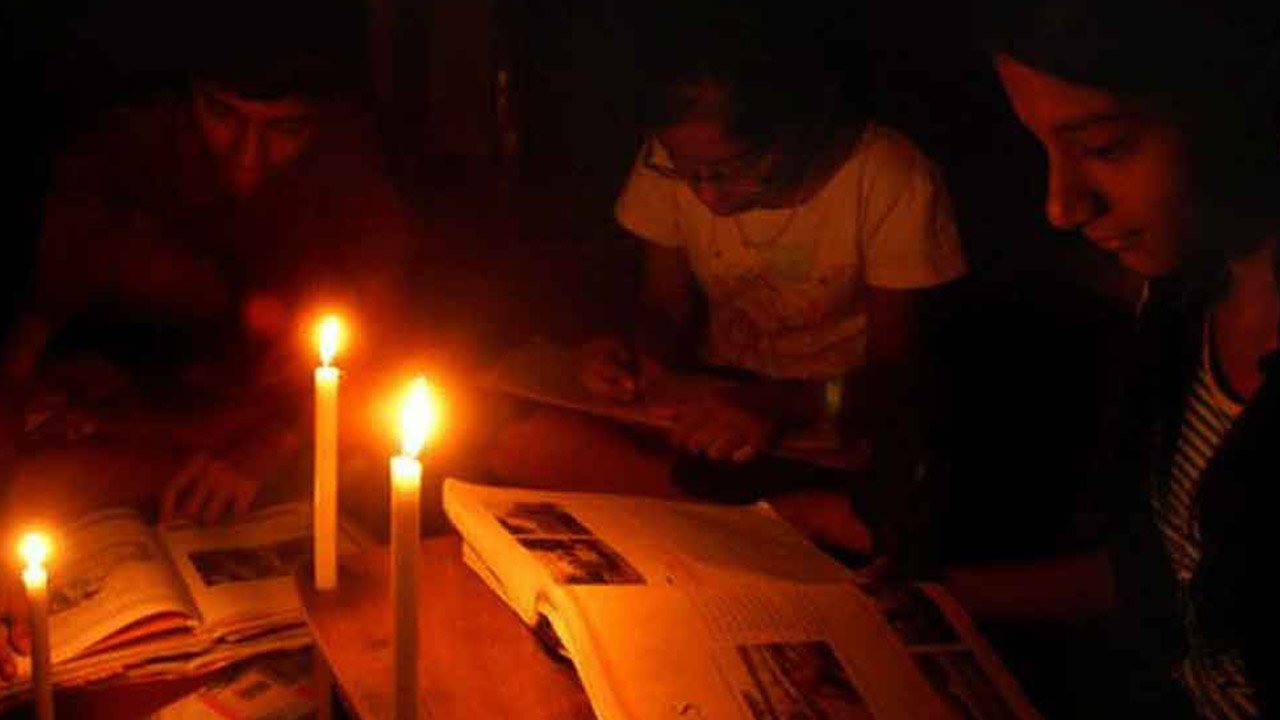
  • Pakistan’s energy crisis worsens, resulting in ten hours of load shedding

    Pakistan’s energy crisis worsens, resulting in ten hours of load shedding

    Due to higher demand and reduced generation caused by fuel shortages, and reduced gas supplies to power plants, Pakistan is experiencing 6-10 hours of electricity load-shedding in various areas.

    As of April 25, generation was 17,976 MW, compared to demand of almost 21,000 MW, indicating a significant discrepancy between demand and generation. IPPs contributed 14,536 MW, Gencos contributed 837 MW, and Wapda hydel contributed 2,603 MW.

    LNG-powered facilities are only receiving 500 MMCFD RLNG against a demand of 690 MMCFD, forcing the system operator, the National Power Control Centre (NPCC), to run furnace oil-fired facilities, which are much more expensive to run than natural gas and RLNG. Due to a lack of gas, Nandipur is working, however, Bhikki is not operating at full capacity.

    Prime Minister (PM) Shahbaz Sharif and former Minister of Energy Hammad Azhar exchanged accusing remarks on Twitter.

    “Mian Nawaz Sharif’s government halted the worst load-shedding in five years,” the Prime Minister declared in a tweet. The PTI administration failed to procure fuel on schedule or fix power plants. As a result, present load shedding is in effect. Power generation costs the population Rs100 billion per month due to inefficient plants. “We’re working on it”.

    Former Energy Minister Hammad Azhar responded to Prime Minister, claiming that “there are only 5 power plants under repair, the most of them are in the private sector”.

    Read more: US launches $23 million project to enhance Pakistan’s power sector

    Two PML-N LNG contracts defaulted in the recent two weeks, resulting in a fuel deficit and prompt system gas diversions. This is a textbook case of poor management that could have been averted.