Tag: Tariff Adjustment

  • OGRA approves massive gas tariff hike for SNGPL, SSGC consumers

    OGRA approves massive gas tariff hike for SNGPL, SSGC consumers

    In a move to address the fiscal challenges faced by Sui Northern Gas Pipelines Limited (SNGPL) and Sui Southern Gas Company Limited (SSGC), the Oil and Gas Regulatory Authority (OGRA) has granted approval for a noteworthy increase in gas tariffs.

    Effective January 1, 2024, consumers of SNGPL will experience a 35.13 per cent surge, while SSGC customers will witness an 8.57 per cent rise.

    This marks the second adjustment in gas prices within the current fiscal year, following a substantial 193 per cent increase announced by OGRA, effective November 1, 2023. The decision to implement these changes is aimed at bridging the Rs98 billion shortfall collectively faced by both gas companies.

    The interim government’s initial projections aimed to collect Rs980 billion, intending to cover the estimated revenue requirements of Rs700 billion for both SNGPL and SSGC.

    The recommended average increase in the prescribed gas price is set at 23 per cent, reaching Rs1,590 per mmbtu, compared to the previous average of Rs1,291 per mmbtu determined on June 2, 2023.

    Specifically, OGRA has outlined a 50 per cent increase (Rs415.11 per mmbtu) for SNGPL, elevating the gas price to Rs1,238.68 per mmbtu, effective July 1, 2023.

    Simultaneously, the gas price for SSGC has been raised by 45 per cent (Rs417.23 per mmbtu) to reach Rs1,350.68 per mmbtu.

    The decision to increase gas prices aligns with the interim government’s commitment to the International Monetary Fund (IMF), with an agreement to announce a raise in gas sale prices by February 18, 2024.

    However, the OGRA Ordinance stipulates that if the government remains unresponsive to OGRA’s notification within 40 days, the determined tariff by the regulator will be automatically enforced.

    The recent approval underscores the ongoing efforts to address financial challenges and ensure the sustainability of the gas sector in Pakistan.
  • Electricity bills to reflect Rs3.07 per unit hike in December

    Electricity bills to reflect Rs3.07 per unit hike in December

    The National Electric Power Regulatory Authority (NEPRA) has officially sanctioned a Rs3.07 per unit increase in electricity prices for October 2023, attributed to Fuel Charges Adjustment (FCA), as communicated in its notification on Tuesday.

    This tariff adjustment will be separately reflected in the power bills based on the units consumed by consumers of all ex-Wapda DISCOs (XWDISCOs) during October 2023. NEPRA has specified that XWDISCOs are to incorporate the FCA in the billing cycle for December 2023.

    It is important to note that this tariff adjustment does not apply to K.Electric (KE) consumers, Electric Vehicle Charging Stations (EVCS), or lifeline consumers.

    The adjustment in the approved tariff for Ex-WAPDA DISCOs was prompted by variations in fuel charges for October 2023, as indicated in the request submitted by CPPA-G via a letter dated November 15, 2023, the authority clarified. NEPRA emphasised the need for XWDISCOs to adhere strictly to court orders while implementing the FCA.

    In a separate development, a NEPRA inquiry report disclosed that numerous electricity consumers in Pakistan were overcharged during July and August of the current year. 

    The report highlighted that distribution companies (DISCOs) billed consumers for over 40 days, leading to widespread overbilling. NEPRA identified MEPCO, followed by GEPCO, FESCO, LESCO, and HESCO, as the main contributors to this overbilling, holding all DISCOs responsible for this unjustified practice.

    The report recommended legal actions against power distribution companies, including K-Electric Limited (KEL), under NEPRA Fine Regulations, 2021, for violating the provisions of the NEPRA Act, Consumer Service Manual (CSM), and tariff terms and conditions.

  • Tariff hike of Rs1.72 per unit approved for K-Electric consumers 

    Tariff hike of Rs1.72 per unit approved for K-Electric consumers 

    The Economic Coordination Committee (ECC) has granted approval for quarterly tariff adjustments of Rs1.72 per unit for K-Electric, alongside government guarantees of Rs100 billion for Pakistan State Oil (PSO) and a Rs20 billion credit facility for Punjab’s Green Cooperative Initiative. 

    The ECC session, presided over by Federal Minister for Finance Dr Shamshad Akhtar and attended by other federal ministers and senior officials, addressed various summaries submitted by ministries such as Interior, Maritime Affairs, Energy (Power Division), Energy (Petroleum Division), Poverty Alleviation and Social Safety, and Defence. 

    The decision to adjust the tariff for K-Electric was reached after careful consideration of a summary presented by the Ministry of Energy regarding “Uniform Quarterly Tariff Adjustments for K-Electric Consumers on a par with XWDISCOs 2nd and 3rd Quarterly FY 2023.” 

    Following in-depth discussions, the ECC concluded that the tariff rationalisation through adjustments for K-Electric, aligning with the uniform Quarterly Tariff Adjustment (QTA) guidelines already issued to NEPRA, will be applicable to the consumption of July, August, and September 2023.  

    According to The News, these adjustments are set to be recovered from K-Electric consumers in December 2023, January 2024, and February 2024, respectively. 

  • NEPRA announces increase in electricity tariff, impacting November bills 

    NEPRA announces increase in electricity tariff, impacting November bills 

    In yet another unsettling development for power consumers already burdened by rising costs, the National Electric Power Regulatory Authority (NEPRA) has announced an increase of Rs0.40 per unit in the electricity tariff.  

    This adjustment, approved by NEPRA in response to the monthly fuel adjustment for September, will result in higher charges on November bills for electricity consumers. 

    It’s important to note that this tariff hike will affect all consumer categories, except for those classified as lifeline consumers and K-Electric users.  

    In October, NEPRA had previously approved a separate increase of Rs1.71 per unit in the electricity tariff, which was attributed to fuel adjustment charges (FAC) for the month of August. This increase was reflected in the bills for October. 

    Additionally, on October 3rd, NEPRA sanctioned a per-unit price increase of Rs 3.28 as part of the quarterly adjustment.  

    This adjustment will entail a recovery of Rs3.28 per kilowatt-hour (kWh) from various consumer categories within power distribution companies (DISCOs) and K-Electric over a six-month period, spanning from October 2023 to March 2024. 

  • IMF declines request for tariff adjustment and subsidy on high electricity bills 

    IMF declines request for tariff adjustment and subsidy on high electricity bills 

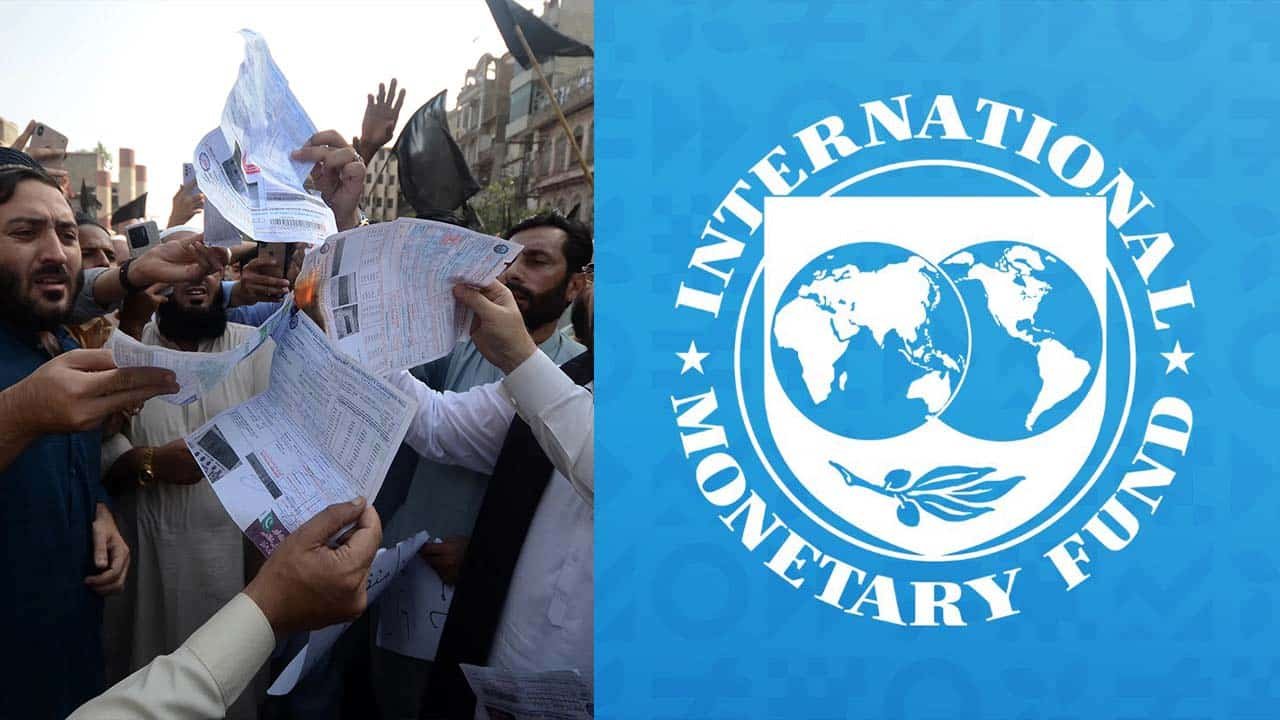
    In light of the government’s comprehensive deliberation on strategies to alleviate the burden of electricity bills, the International Monetary Fund (IMF) has declined the proposal for tariff adjustments or additional subsidies. This decision was made despite the government’s assertion that its bill collections for August had nearly met expectations, as reported by The News on Tuesday. 

    The IMF has expressed strong reservations regarding the government’s initiative to provide relief to economically disadvantaged individuals facing high power bills. Pakistan has consequently approached the global lender, requesting permission to phase in upcoming quarterly tariff adjustments (QTAs) and Fuel Price Adjustments (FPAs) amounting to Rs7.50 per unit over the next four to six months. 

    An authoritative source confirmed this request, stating, “Pakistan has sought the IMF’s approval for a gradual implementation of QTAs and FPAs over a four to six-month period, potentially incurring additional costs that will require mutual agreement.” 

    According to sources, the power sector continues to grapple with challenges, given the necessity of increasing tariffs by approximately Rs5 per unit in the current month and incorporating FPAs amounting to Rs2.72 per unit. Consequently, a cumulative tariff increase exceeding Rs7 per unit is anticipated.  

    The computation of QTAs will be based on losses incurred during the April-June period, reflecting reduced unit usage, increased interest payments, and fluctuations in exchange rates. Meanwhile, the FPA is calculated to address the rising prices of imported fuel, resulting in a potential hike of Rs7.50 per unit in September bills, subject to regulatory approval.  

    Simultaneously, the Ministry of Power asserts that its bill collection performance for August 2023 has improved and is nearing expectations. They contend that to mitigate the impact of inflated bills, they must seek the IMF’s approval for the staggered implementation of QTAs and FPAs.  

    According to calculations by the Ministry of Power for various consumer categories, those utilising 400 units can anticipate a reduction in power charges from Rs21,000 in August 2023 to Rs16,963 in September and further to Rs11,356 in October, factoring in QTAs and FPAs. Similarly, charges for consumers using 300 units are projected to decrease from Rs13,000 in August to Rs10,000 in September and Rs8,000 in October 2023. 

    With the onset of winter in October, it is anticipated that the issue of escalated bills will gradually subside. Additionally, officials are planning to approach the National Electric Power Regulatory Authority (Nepra) to determine the next tariff adjustments, considering seasonal usage trends. Given the peak usage during the summer months followed by a decline in winter, tariff adjustments will be tailored to accommodate these seasonal fluctuations. 

    The Prime Minister has instructed the Ministry of Finance to develop a strategy for economic stability in Pakistan. During a meeting with Interim Finance Minister Shamshad Akhtar, the current economic situation was discussed. 

    The government aims to find innovative solutions to ease the burden on electricity consumers, addressing issues like circular debt, power theft, and taxes with short-term measures. 

    The caretaker government’s primary goal is to facilitate early general elections while upholding constitutional obligations such as constituency delimitation following the population census. The focus is on restructuring fiscal and monetary policies for economic revitalization. 

  • IMF and Pakistan discuss circular debt and energy sector losses in virtual meeting

    IMF and Pakistan discuss circular debt and energy sector losses in virtual meeting

    Pakistan and the International Monetary Fund (IMF) recently discussed the country’s energy sector losses and efforts to reduce circular debt during a virtual meeting. The government is committed to adjusting fuel prices and quarterly tariffs to eliminate circular debt accumulation.

    According to The News, a new plan called the Circular Debt Management Plan (CDMP) was shared with the IMF. This plan involves revising fuel price adjustments and quarterly tariffs upward to counter circular debt growth. The IMF expressed concerns about the plan’s sustainability due to slower recoveries.

    The government was advised to create an effective strategy to tackle this issue. The meeting took place virtually on a technical level. The newly appointed Finance Minister, Dr Shamshad Akhtar, is expected to hold a virtual meeting with the IMF team soon.

    The IMF’s first review is scheduled for October or November and will be based on economic data from the initial quarter (July–September) of the current fiscal year.

    Pakistan and the IMF signed a $3 billion bailout package under the Standby Arrangement in July 2023. Pakistan has already received $1.2 billion, with two more reviews planned to release the remaining $1.8 billion by March or April 2024.