Tag: tax collection

  • FBR collects highest-ever tax of Rs6 trillion in FY22

    FBR collects highest-ever tax of Rs6 trillion in FY22

    The Federal Board of Revenue (FBR) achieved a significant feat by collecting a record Rs6,000 billion in revenue during the previous fiscal year 2021–2022.

    The FBR reported that during the current fiscal year, it collected Rs2,205 billion in income tax, Rs2,773 billion in sales tax, and Rs1,007 billion in customs duty. The organisation in charge of collecting taxes also released Rs305 billion in refunds during that time.

    According to former finance minister Shaukat Tarin, the government of Imran Khan’s policies and the country’s economic growth allowed FBR to meet its revenue goals.

    Tarin insisted that the government should continue enforcing the prior administration’s tax laws. According to Tarin, the government shouldn’t impose additional taxes on the current taxpayers. Heavy taxes shouldn’t be imposed on the economy’s productive sectors, he continued.

    The government has given the general public significant tax breaks on a number of necessities, but the FBR claims that these tax breaks haven’t prevented revenue collection from continuing on an unprecedented and constant growth trajectory. Sales tax on all POL products has been eliminated for the first time in the nation’s history, costing the FBR Rs45 billion per month.

    In order to maximise revenue potential through digitization, transparency, and taxpayer facilitation, the FBR has implemented a number of novel interventions at both the policy and operational levels. In addition to ensuring transparency, facilitating taxpayers, and making business easier, this has led to a steady increase in revenue collection.

  • Elimination, reduction of withholding taxes in budget 22-23

    On June 10, 2022, Pakistan will present its federal budget for 2022-2023. A number of new taxes measures are expected to be announced in the budget to raise additional income.

    It has been learned that a number of withholding taxes would be removed or lowered in the coming budget.

    The Federal Board of Revenue (FBR) will choose those withholding taxes that have lower revenue implications without jeopardising the goal of documenting as part of the budget planning process.

    According to Brecorder, to document future withholding transactions, a new Directorate-General for Synchronized Withholding Agents System would be developed.

    Withholding taxes cause inconsistencies will be reduced by the FBR, as all withholding taxes will be examined to see whether there are any distortions produced by income tax withholding, and adjustments will be made to correct them.

    This will be accomplished by making modifications to guarantee that all withholding tax received is either claimed or reimbursed in the return filed in response to the tax demand.

    Elimination of Taxes in budget 21-22

    The government had eliminated multiple withholding taxes, including the tax on royalty payments to residents during budget 21-22 such as cash withdrawals, banking tools, money transfers other than cash, tax collection from persons remitting funds abroad via credit, debit, or prepaid cards, tax collection on domestic and international air travel, mineral extraction, tax collection by a stock exchange registered in Pakistan, tax collection on marginal financing by NCCPL, CNG stations, and tax collection on certain petroleum products.

    Income Tax Ordinance

    The Income Tax Ordinance of 2001 contained 38 withholding tax measures. This large number of requirements adds to the complexity and places an excessive strain on different withholding agents to comply. It also has an impact on a country’s ease of doing business rating. In the last budget, 12 withholding taxes were eliminated in an effort to improve company ease and simplify tax rules.

    The Overseas Investors Chamber of Commerce and Industry (OICCI) advocated that the withholding tax (WHT) structure be overhauled and reduced from its current twenty-six rates to just five for filers.

    Only inactive taxpayers should be subject to this tax. Alternatively, the 8% WHT rate on services is a minimum tax that applies regardless of the service provider’s actual taxable revenue. This tax effectively becomes an indirect tax, raising the cost of doing business for service providers; as a result, service tax should be flexible.

    Withholding Tax Regime

    The Withholding Tax Regime (WHT) is a worldwide phenomena, and it is the primary source of federal revenue received at the national level in Pakistan. The collection of withholding taxes, as well as the reliance on them, has increased throughout time. Various Withholding Taxes, which are distinguished by their adjustable and presumptive nature, collected Rs422(b) out of total Direct Taxes collection of Rs740(b) for the financial year 2012, accounting for 57 per cent of total Direct Taxes collection.

    Since the imposition of direct taxes by governments and taxpayers on two counts, the withholding tax regime has been a feature of the tax system in some form or another:

    1. The government receives revenue on a consistent basis throughout the year to fund its expenditures and operations.
    2. Provides taxpayers with the opportunity to pay down their debts in affordable installments.

    Many countries have been obliged to change their economies in recent years as a result of globalisation, in order to unify tax laws and align them with new trade and investment policies represented in free trade agreements. “Hang Together” is more relevant today than it has ever been. Neither countries’ borders nor their economies can be closed. Tax policies are also inextricably linked to foreign economies.

    Due to the requirement for an entity to oversee and manage the Withholding Tax Regime in such a competitive climate, the Directorate General of Withholding Taxes was established by the Finance Act of 2008 under section 230A of the Income Tax Ordinance 2001.
  • What can the govt do, will have to go to IMF again if exports don’t increase, says PM Khan

    What can the govt do, will have to go to IMF again if exports don’t increase, says PM Khan

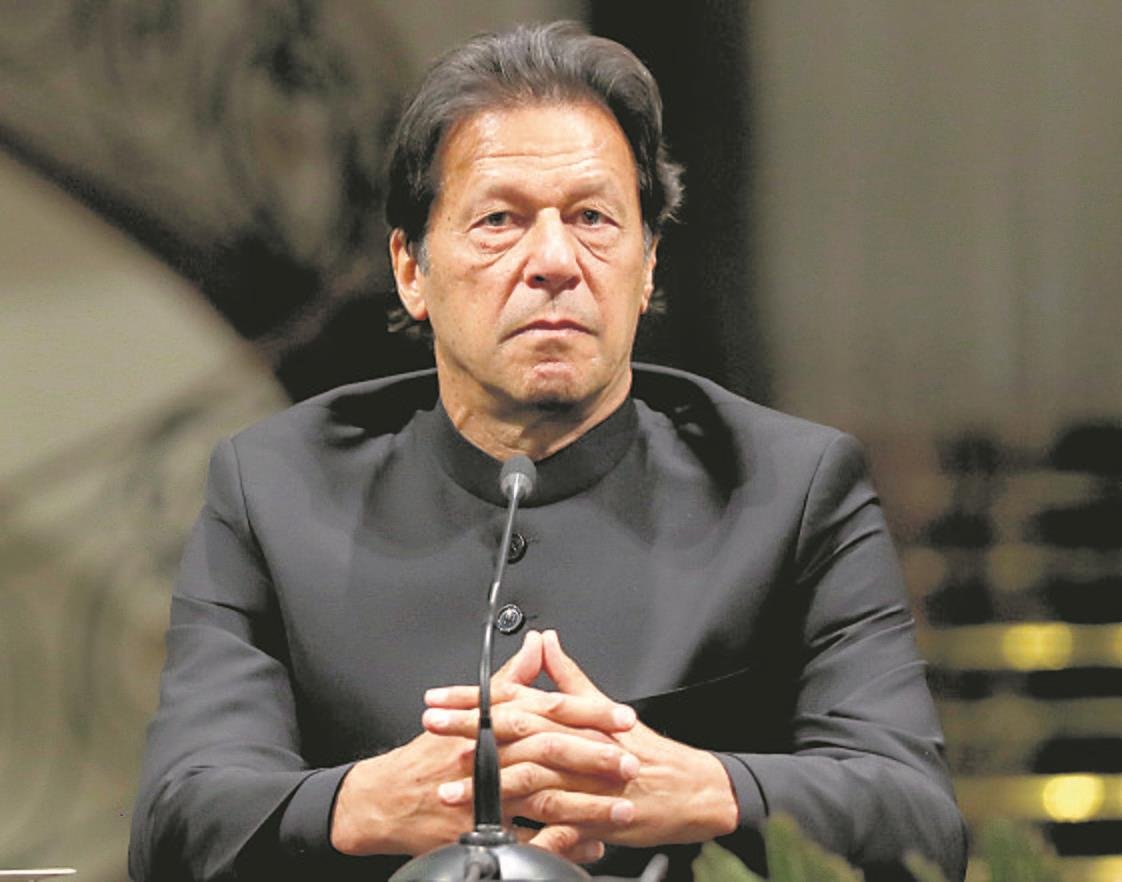
    Prime Minister (PM) Imran Khan while addressing the inaugural ceremony of the 14th International Chambers Summit 2022 organised by the Rawalpindi Chamber of Commerce and Industry said that tax collection and exports are the main drivers of boosting the economy.

    Saying that Pakistan has an “improving economy”, PM Khan said that all economic indicators were showing upward trends despite inherited economic crunch and the impact of Covid-19.

    “Will have to go to the International Monetary Fund (IMF) again if we do not enhance our exports,” said PM Khan.

    “In the past, no attention was paid to these sectors of the economy which are vital for wealth creation. The exports sector was stagnant in the past, but the incumbent government is providing all facilitation to the exporters,” he said.

    “We realise that people are worried, there is imported inflation in our country, dollar rate has gone up due to smuggling of dollar to Afghanistan, still Pakistan is a cheap country, US President Joe Biden has also been criticised by Donald Trump on inflation in the country.”

    PM Khan said commodity prices have increased all over the world and Pakistan also imported inflation which hurt its people badly but asked what the government could do in the circumstances.

    Claiming that the steps taken by his government to combat coronavirus and keep businesses open were being followed by United Kingdom’s Prime Minister Boris Johnson. “We did not let people die due to Covid-19 and lockdowns,” he added.

    The prime minister said corruption would assume the role of cancer. “Corruption is a symptom of lack of rule of law in society. Our fight is for the rule of law in Pakistan. It is a difficult one because of different cartels and mafias which do not want the rule of law,” he said, terming it a jihad against the mafias to secure the future of the country.

    Contrary to the claims, Pakistan lost $250m worth of textile exports in December 2021 when the gas supply was suspended for 15 days in the Punjab textile sector. Executive Director of All Pakistan Textile Mills Association (APTMA), Shahid Sattar also confirmed the loss of millions of dollars by saying that it will “never be recovered.”

  • Top economist wants govt to make Maulana Tariq Jamil chief of FBR

    Top economist wants govt to make Maulana Tariq Jamil chief of FBR

    If honesty is the sole criterion for the appointment of the Federal Board of Revenue (FBR) head then the government should request cleric Maulana Tariq Jamil to head the tax watchdog, said top economist Dr Ikramul Haq while criticising the government’s tax policies.

    In an Express News show, the economist said the use of technology and enforcement of laws were important to achieve tax targets.

    “If tax collection can be increased through honesty alone, we should request Maulana Tariq Jamil to head the FBR,” the economist said, alluding to the remarks made by Imran Khan before the 2018 elections that an “honest leadership” could convince people to pay taxes and become a tax-compliant nation.

    He also urged the government to relax the definition of non-resident person to one year to facilitate those who were stuck in the country due to Covid-19.

    Haq was of the view that the government should make a general rule to facilitate the people instead of waiting for them to individually plead their cases regarding overstay due to the pandemic as scores of non-resident persons have accidentally become Pakistani residents.

    According to the economist, the FBR should send tax returns to the people to measure the response. According to the TV show, at least 72 per cent of people didn’t file tax returns: 4.7million out of the total 6.5m.

  • FBR achieves five-month tax target

    FBR achieves five-month tax target

    The Federal Board of Revenue has collected Rs1.690 trillion during the first five months (July-Nov) of the fiscal year 20-21, collecting Rs17 billion more than the collection target set for the required period.

    According to media reports, the overall collection could further increase to Rs1.694 billion after book adjustment.

    Profit reported that the department had collected Rs350bn revenue in November, witnessing a growth of 4.4 per cent against last month’s 3.7 per cent.

    According to a report in Express Tribune, the five-month target was set at a low level, which was equal to 33.7 per cent of the annual target and considered very low.

    The report claimed that the FBR could not achieve the monthly target for the fourth successive month and the five-month target was achieved only due to the better performance of Pakistan Customs.

    It is pertinent to mention that the government had fixed Rs4.963 trillion as tax target for the current fiscal year after consultation with the International Monetary Fund.