Tag: tax compliance

  • Banks will now pay 10% super tax if their earnings exceed Rs30 crore

    Banks will now pay 10% super tax if their earnings exceed Rs30 crore

    The Federal Board of Revenue (FBR) has announced important amendments to the Income Tax Ordinance, 2001 through Finance Act 2023, bringing significant changes to the Super Tax structure. According to the latest income tax circular (2 of 2023), banks will now be required to pay a 10 per cent Super Tax if their income exceeds Rs300 million.

    The Super Tax was initially introduced through the Finance Act of 2022, imposing graduated tax rates ranging from 1 per cent to 4 per cent on income slabs starting from Rs150 million to Rs300 million and above. Certain specified business sectors were subject to a higher Super Tax rate of 10 per cent if their income surpassed Rs300 million.

    New Super Tax slabs

    To enhance the scope of the Super Tax and ensure progressivity and uniformity in the tax rate structure, the Finance Act 2023 has introduced additional income slabs. These new slabs are as follows: Rs350 million to Rs400 million, Rs400 million to Rs500 million, and Rs500 million and above, with corresponding Super Tax rates of 6 per cent, 8 per cent, and 10 per cent, respectively. These new Super Tax rates will apply to all taxpayers across the board for the Tax Year 2023 and beyond.

    Addressing a significant concern, the Finance Act 2023 has also clarified the payment procedure for the Super Tax. The ambiguity surrounding whether the Super Tax under section 4C of the Ordinance should be paid as a lump sum at the time of filing income tax returns or in monthly/quarterly installments of advance tax under section 147 of the Ordinance has been resolved.

    The introduction of a new sub-section (5A) in section 4C now requires Super Tax liability to be paid in conjunction with monthly/quarterly advance tax installments, depending on the taxpayer’s circumstances. Corresponding amendments have been made in section 147 of the Ordinance to facilitate this process.

    This move is aimed at broadening the scope of the Super Tax and making it a more progressive and comprehensive tax measure. The FBR expects these changes to contribute significantly to the country’s revenue collection efforts while ensuring a fair and equitable tax system for all taxpayers.

  • FBR hikes motor vehicle tax by 200% for non-filers

    FBR hikes motor vehicle tax by 200% for non-filers

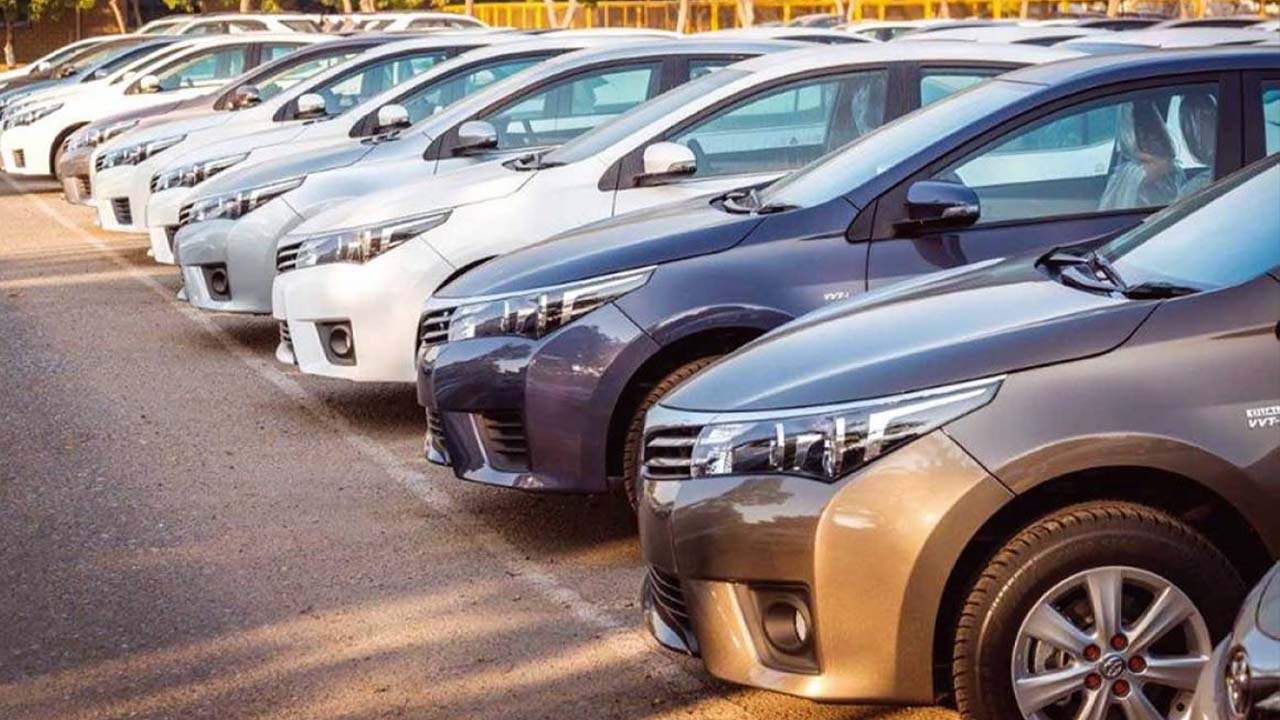
    The Federal Board of Revenue (FBR) has implemented significant changes to the tax structure for motor vehicles in an effort to boost government revenue and encourage tax compliance. The new regulations apply to both Active Taxpayers List (ATL) filers and non-filers.

    For individuals not on the ATL, the tax rates on motor vehicles have been increased by a substantial 200 per cent. This means that non-filers will now be subject to fixed tax rates of 18 per cent, 24 per cent, and 30 per cent, based on the engine capacity of their vehicles, specifically 2001cc to 2500cc, 2501cc to 3000cc, and above 3000cc, respectively.

    On the other hand, ATL filers will experience a different taxation structure. Instead of fixed tax amounts, they will be required to pay tax at a rate of 6 per cent, 8 per cent, and 10 per cent, depending on the engine capacity of their motor vehicles, namely 2001cc to 2500cc, 2501cc to 3000cc, and above 3000cc, respectively.

    In cases where the engine capacity is not applicable, and the value of the vehicle exceeds Rs5,000,000, the tax rate will be 3 per cent of the import value (including customs duty, sales tax, and federal excise duty for imported vehicles, and invoice value for locally manufactured or assembled vehicles).

    It is worth noting that certain exemptions have been made. Pakistan’s government agencies and foreign diplomats will not be subject to these revised tax rates.

    Furthermore, the circular introduced tax implications for bank withdrawals based on the withdrawn amount. Non-ATL filers will be taxed Rs303 for withdrawals of Rs50,500 and taxed Rs450 for withdrawals ranging from Rs55,000 to Rs75,000.

    Additionally, to curb unnecessary foreign exchange outflows via credit/debit card transactions, the withholding tax rates for ATL persons have been increased from 1 per cent to 5 per cent, while non-ATL persons will face a higher rate of 10 per cent, up from the previous 2 per cent.

    These adjustments in the tax policy aim to strengthen the country’s revenue generation while encouraging citizens to become active taxpayers.

  • Govt targets non-filers with 0.6% tax on cash withdrawals more than Rs50,000

    Govt targets non-filers with 0.6% tax on cash withdrawals more than Rs50,000

    The federal government has announced the implementation of a flat 0.6 per cent tax for individuals who are not listed on the Federal Board of Revenue’s (FBR) Active Taxpayer List (ATL). This taxation policy, as outlined in the budget documents, aims to facilitate the documentation of the economy.

    As per the official document, the government has chosen to impose a tax rate of 0.6 per cent on cash withdrawals exceeding Rs50,000.

    The primary objective behind this initiative is to record the cash withdrawal data of individuals who are not on the ATL and encourage them to increase their transactional expenditure. The intention is to attract more individuals to become part of the tax system.

    It is important to note that this legislation was previously in effect but was repealed by the previous administration through the Finance Bill 2021. However, certain significant measures introduced under the Finance Act 2022 to address non-compliance were not effectively enforced.

    Consequently, the government has now made the decision to strictly enforce these measures in order to enhance the country’s tax revenue.

  • Non-filers beware: Proposed increase in advance taxes on vehicles and utility bills

    Non-filers beware: Proposed increase in advance taxes on vehicles and utility bills

    In an attempt to boost tax revenue and increase non-tax income, the Pakistan Business Council (PBC) has proposed the Federal Board of Revenue (FBR) to impose higher advance taxes on various sectors. The council’s recommendations primarily target non-filers and aim to generate additional funds for the government’s development initiatives.

    One of the key proposals put forth by the PBC is to increase the annual advance income tax amount for owners of vehicles with an engine capacity of 2000cc and above who are non-filers. The council suggests raising the amount to Rs250,000 per year.

    Additionally, the PBC argues for an increase in advance income tax levied on non-filers for the purchase of cars, as outlined in section 231B.

    The proposed changes in advance income tax for different engine capacities are as follows:

    Engine capacity: 1800cc – 2000cc

    Existing tax: Rs600,000

    Proposed increased tax: Rs2,000,000

    Engine capacity: 2001cc – 2500cc

    Existing tax: Rs900,000

    Proposed increased tax: Rs2,500,000

    Engine capacity: 2501cc – 3000cc

    Existing tax: Rs1,200,000

    Proposed increased tax: Rs3,000,000

    Engine capacity: Above 3000cc

    Existing tax: Rs1,500,000

    Proposed increased tax: Rs4,000,000

    Furthermore, the PBC suggests raising the advance income tax from Rs1,200,000 to Rs2,400,000 on the sale of vehicles with an engine capacity of 2001cc and above by non-filers before registration.

    In addition to the proposed changes in vehicle-related taxes, the PBC recommends increasing the advance tax collected from domestic connections in the name of non-filers.

    Currently, non-filers with monthly utility bills of Rs25,000 or more are subject to a 7.5 per cent advance tax. The council suggests continuing this practice and exploring the possibility of imposing withholding tax on withdrawals exceeding Rs50,000 in a single day from non-filer bank accounts.

    According to sources within the FBR, the board has decided to increase the petroleum development levy from Rs50 to Rs60 per unit, which is expected to generate revenue of Rs870 billion. The government aims to increase non-tax income to Rs2.9 trillion through such measures.

    It is worth mentioning that the proposed measures are intended to create additional funds for various government initiatives. One such initiative involves increasing pensions by up to 30 per cent, which would require Rs780 billion in funding.

    The PBC’s recommendations, if implemented, would significantly impact non-filers and luxury expenditures. These proposed changes seek to address the revenue deficit and support the government’s efforts to strengthen the economy and promote sustainable development in Pakistan.