Tag: tax hike

  • Suzuki Swift GLX CVT now priced above Rs5.4 million

    Suzuki Swift GLX CVT now priced above Rs5.4 million

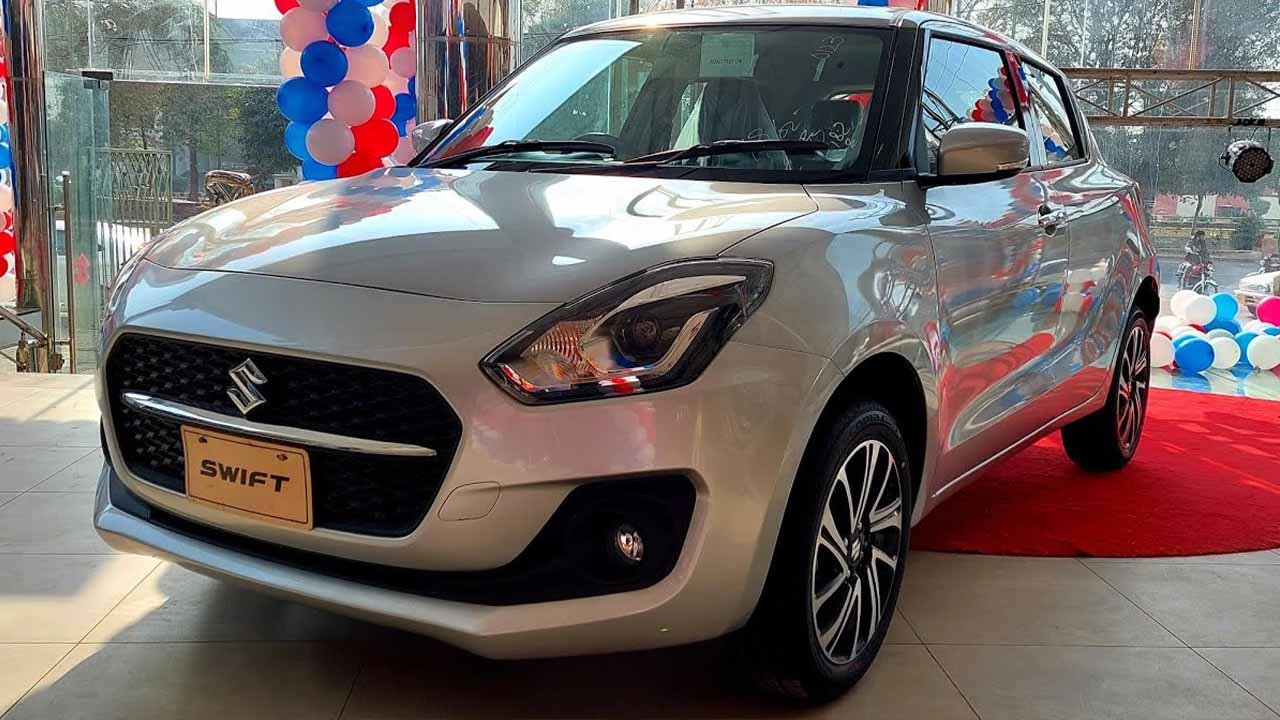
    Pak Suzuki Motor Company Limited (PSMC) announced a substantial increase of Rs304,000 in the price of its Swift G. CVT model, effective from March 8, 2024.

    This adjustment comes in response to the recent surge in taxes imposed by the government on locally manufactured or assembled vehicles, as indicated in the company’s official notice issued today.

    Consequently, the new sale price for the Swift G. CVT model will see an adjustment from Rs5.125 million to Rs5.429 million, reflecting the impact of the revised tax structure.

    The decision stems from a notification released by the Ministry of Finance and Revenue on the same date, highlighting a hike in the sales tax rate from 18 per cent to 25 per cent for vehicles falling under chapter 87.03 of the Pakistan Custom Tariffs, with an invoice price (excluding sales tax) exceeding Rs4 million.

  • FBR imposes 400% tax increase on payments to non-residents via debit and credit cards

    The Federal Board of Revenue (FBR) has taken a significant step to discourage the outflow of foreign exchange reserves by raising the withholding tax (WHT) on payments to non-resident individuals through debit and credit cards. The move aims to curtail the substantial impact of such payments on the country’s foreign exchange reserves.

    The FBR recently issued Circular Number 2 of 2023, which outlines the amendments to the Finance Act 2023. As per the circular, the Finance Act 2022 had introduced section 236Y, subjecting payments to non-residents through debit/credit cards to a 1 per cent withholding tax rate for Active Taxpayer List (ATL) persons and 2 per cent for Non-ATL persons.

    However, considering the considerable foreign exchange outflows resulting from these transactions, the FBR has implemented a drastic increase in withholding tax rates through the Finance Act 2023. According to The News, for ATL persons, the withholding tax rate has been elevated from 1 per cent to 5 per cent, and for Non-ATL persons, it has been raised from 2 per cent to 10 per cent. This means a fourfold increase in tax rates for both categories of taxpayers as well as non-filers.

    According to estimates shared by the State Bank of Pakistan (SBP) with parliamentarians before the 2023-24 budget, monthly payments made through credit cards or debit cards amounted to approximately $70 to $100 million, resulting in an annual outflow of around $1 billion.

    In line with the Finance Bill, the FBR has been granted powers under Section 236Y to levy advance tax on individuals remitting amounts abroad through credit, debit, or prepaid cards. As per the Finance Bill 2022, the proposed advance tax rate on such remittances was set at 1 per cent of the gross amount remitted abroad.

    The implementation of the increased withholding tax is expected to have a considerable impact on curbing unnecessary foreign exchange outflows and strengthening the country’s forex reserves. It also serves as a measure to encourage individuals to transact responsibly and ensure the stability of the country’s economic landscape.

    As the FBR takes these steps to address forex challenges, stakeholders and taxpayers await the outcomes and potential adjustments in the overall economic landscape. The move also highlights the government’s efforts to strike a balance between promoting foreign investments and managing capital outflows to ensure sustainable economic growth in the country.

  • FBR hikes motor vehicle tax by 200% for non-filers

    FBR hikes motor vehicle tax by 200% for non-filers

    The Federal Board of Revenue (FBR) has implemented significant changes to the tax structure for motor vehicles in an effort to boost government revenue and encourage tax compliance. The new regulations apply to both Active Taxpayers List (ATL) filers and non-filers.

    For individuals not on the ATL, the tax rates on motor vehicles have been increased by a substantial 200 per cent. This means that non-filers will now be subject to fixed tax rates of 18 per cent, 24 per cent, and 30 per cent, based on the engine capacity of their vehicles, specifically 2001cc to 2500cc, 2501cc to 3000cc, and above 3000cc, respectively.

    On the other hand, ATL filers will experience a different taxation structure. Instead of fixed tax amounts, they will be required to pay tax at a rate of 6 per cent, 8 per cent, and 10 per cent, depending on the engine capacity of their motor vehicles, namely 2001cc to 2500cc, 2501cc to 3000cc, and above 3000cc, respectively.

    In cases where the engine capacity is not applicable, and the value of the vehicle exceeds Rs5,000,000, the tax rate will be 3 per cent of the import value (including customs duty, sales tax, and federal excise duty for imported vehicles, and invoice value for locally manufactured or assembled vehicles).

    It is worth noting that certain exemptions have been made. Pakistan’s government agencies and foreign diplomats will not be subject to these revised tax rates.

    Furthermore, the circular introduced tax implications for bank withdrawals based on the withdrawn amount. Non-ATL filers will be taxed Rs303 for withdrawals of Rs50,500 and taxed Rs450 for withdrawals ranging from Rs55,000 to Rs75,000.

    Additionally, to curb unnecessary foreign exchange outflows via credit/debit card transactions, the withholding tax rates for ATL persons have been increased from 1 per cent to 5 per cent, while non-ATL persons will face a higher rate of 10 per cent, up from the previous 2 per cent.

    These adjustments in the tax policy aim to strengthen the country’s revenue generation while encouraging citizens to become active taxpayers.