Tag: tax rates

  • PBC warns more skilled Pakistanis will leave country due to increased taxes on salaried class

    PBC warns more skilled Pakistanis will leave country due to increased taxes on salaried class

    The Pakistan Business Council (PBC), the country’s foremost corporate advocacy platform, has issued a stark warning regarding the potential consequences of the proposed budgetary measures on the salaried class.

    In a letter dated June 20, 2024, the PBC expressed concerns that these measures would significantly hasten the brain drain in Pakistan.

    Drawing on data from the recently released Pakistan Economic Survey 2023-24, the PBC highlighted a substantial increase in the number of highly skilled individuals seeking employment abroad.

    The survey revealed that the number of highly skilled persons emigrating from Pakistan rose from 20,865 in 2022 to 45,687 in 2023, marking a 119 per cent increase.

    Additionally, there was a 26.6 per cent rise in the emigration of highly qualified professionals and a 2.28 per cent increase in semi-skilled trades during 2023. Unskilled categories also saw an 8.7 per cent increase in emigration.

    The PBC underscored that this 119 per cent surge in emigration is alarming, particularly as many of these individuals are experienced, high-quality professionals who are being lost to the formal sector.

    The council cautioned that the proposed changes in tax slab rates, especially the earlier application of the 35 per cent top rate, would exacerbate this brain drain.

    This warning follows the government’s decision to increase the tax liability for individuals earning more than Rs50,000 per month in the Budget 2024-25. The Finance Bill 2024 outlines that those earning Rs6 million or more annually (Rs500,000 monthly) would face an additional tax liability of Rs22,500.

    Interestingly, this same tax increase applies to those earning up to Rs12 million annually (Rs1 million monthly).

    The PBC also pointed out that the formal sector not only loses talent due to emigration but also suffers from the shift of professionals to the informal, untaxed sector. The council deemed the proposal to increase tax revenue from the formal sector as unjust.

    It argued that, unlike the government which can print money and borrow to fund salary increases for its employees, the private sector would be adversely affected by a higher brain drain as professionals seek lower-taxed environments both within and outside Pakistan.

    The PBC concluded by emphasizing that a vast majority of Pakistanis are seeking to move abroad due to inflation and high tax rates. The council stressed that further increasing the tax rate, while considering that salary income is taxed on a gross basis, is an anomaly that needs to be addressed.
  • Govt increases excise duty on registration of cars over 2000cc

    Govt increases excise duty on registration of cars over 2000cc

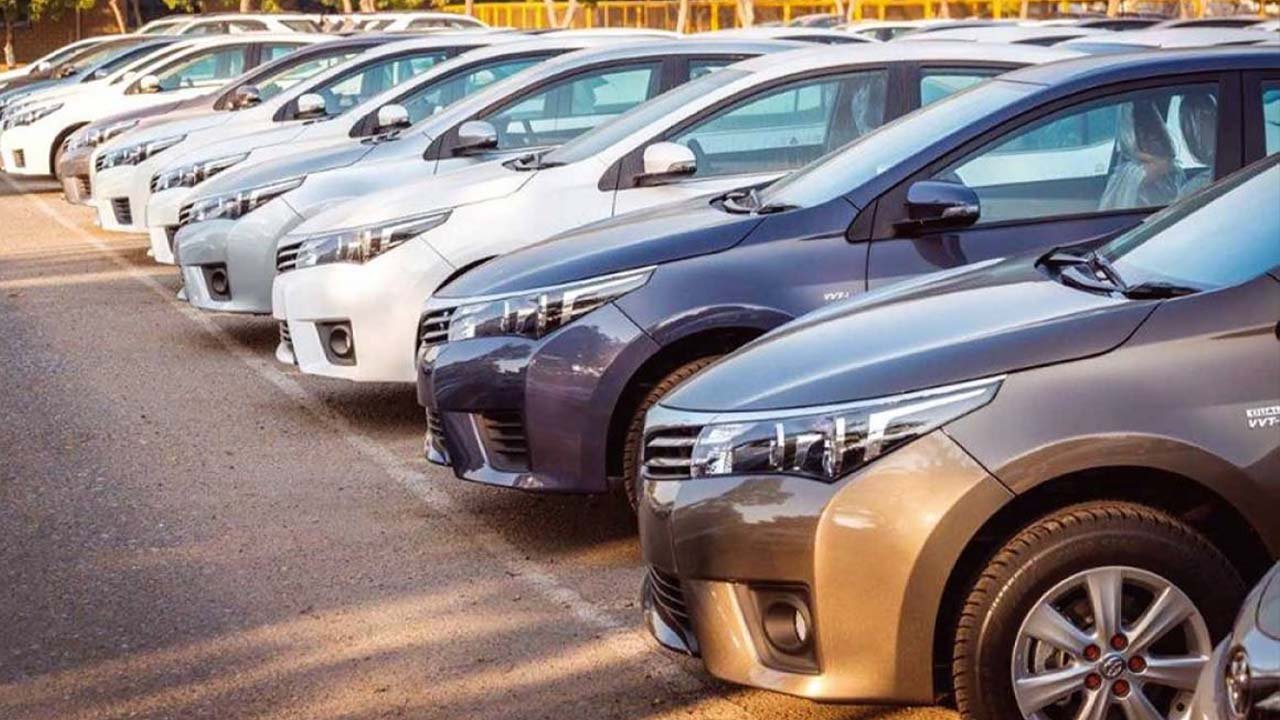
    The federal government has implemented a considerable increase in excise duty on vehicle registration for vehicles with engine capacities exceeding 2000cc in the Finance Bill for the fiscal year 2023-2024.

    Under the new regulations, a fixed tax rate of six per cent has been imposed on vehicles ranging from 2001cc to 2500cc. Individuals who file their taxes will be subject to a tax payment of Rs0.25 million for vehicles falling within this range.

    For vehicles with engine capacities between 2501cc and 3000cc, the government has introduced an eight per cent fixed tax rate. Previously, filers were required to pay Rs0.2 million, while non-filers were subjected to a higher tax amount of Rs 0.4 million. Furthermore, a substantial ten per cent fixed tax has been imposed on the registration of vehicles with a capacity of 3000cc.

    The National Assembly has already approved the Finance Bill for the upcoming fiscal year, incorporating vital budgetary proposals. Finance Minister Ishaq Dar presented the bill to the House, outlining a total outlay of Rs14,480 billion.

    The passage of the federal budget in the House was a crucial step taken to address the concerns of the International Monetary Fund (IMF) and secure the revival of a suspended loan program. In light of these developments, revisions were made to the tax collection target, raising it from Rs9,200 billion to Rs9,415 billion.

    To accommodate increased pension payments, an allocation of Rs801 billion has been designated, reflecting a significant rise from the previously allocated amount of Rs761 billion. These measures demonstrate the government’s commitment to addressing pressing fiscal matters and ensuring financial stability.

  • IMF criticises Pakistan’s budget for FY24, urges govt to enhance revenue generation

    IMF criticises Pakistan’s budget for FY24, urges govt to enhance revenue generation

    The Ministry of Finance high-ups informed the Senate Standing Committee on Finance and Revenues that the International Monetary Fund (IMF) has expressed serious objections regarding the budgetary framework for 2023-24. 

    The IMF has urged the government to increase both tax and non-tax revenues. 

    A senior Ministry of Finance official acknowledged the IMF’s dissatisfaction with the budgetary framework and stated that they would need to defend the proposal to raise the petroleum development levy to Rs869 billion for the next fiscal year, compared to the revised estimate of Rs542 billion for the current financial year.

    However, the senators strongly opposed the Ministry of Finance’s intention to bypass parliamentary approval and empower the government to amend the Petroleum Levy Ordinance 1961 in order to raise the petroleum levy beyond Rs50 per litre. The government plans to increase the levy to Rs60 per litre in accordance with the consumption pattern in the country, as outlined in the Finance Bill 2023-24.

    Additionally, the Senate panel rejected the proposed imposition of a 0.6 per cent advance tax on cash withdrawals exceeding the limit of Rs50,000 and suggested raising the tax rate to 1% while reducing the limit to Rs25,000 for non-filers. The panel also recommended changes to the tax rates for Super Tax, proposing a reduction in the maximum rate from 10 per cent to 8 per cent for the highest income bracket.

    The Securities and Exchange Commission of Pakistan (SECP) expressed severe concerns about the increased risk of money laundering resulting from the raised monetary limit of foreign remittances from five million rupees to $100,000. SECP Commissioner Abdul Rehman Warraich informed the Senate committee that the Federal Board of Revenue (FBR) is unable to inquire about the source of investment or income under Section 111 of the Income Tax Ordinance 2001. 

    Similarly, the FBR cannot investigate tax evasion based on the source of remittance under the same section. It is worth noting that Section 111 taxes unexplained income except foreign remittances entering Pakistan.

  • Govt raises tax rates for salaried class on IMF demands

    Govt raises tax rates for salaried class on IMF demands

    In response to the International Monetary Fund’s (IMF) recommendation to eliminate relief provided on June 10, the coalition government on Friday announced amended tax deduction rules for the salaried class.

    The News reported on Saturday that the Federal Board of Revenue’s (FBR) target for tax collection for the fiscal year 2022–23 has been raised to Rs7,470 billion, an increase of Rs466 billion.

    In order to raise the collection, the government had to take harsh measures, such as boosting the tax rates for high earners to raise Rs120 billion for fighting poverty and Rs35 billion for the salaried class.

    For the upcoming fiscal year 2022–2023, the government imposed a 10 per cent super tax on 13 high-earning sectors, which will cost Rs80 billion in income.

    The government increased the Personal Income Tax (PIT) by Rs80 billion by abolishing tax relief worth Rs47 billion and then increasing the tax amount by Rs35 billion. As a result, the FBR was expected to collect Rs235 billion from the salaried class in the upcoming budget, up from Rs200 billion in the preceding fiscal year.

    The PTI-led government had promised to raise the tax revenue by Rs335 billion by increasing the tax slab rates for the salaried class, but the PDM-led coalition government persuaded the IMF to accept Rs100 billion less than the amount the PTI-led government had promised to raise.

    The government suggested a tax rate of 2.5 per cent for the salaried class for income brackets of Rs50,000 to Rs100,000. The proposed tax rate increased to 12.5 per cent for income earners who make between Rs100,000 and Rs300,000 per month.

    The FBR proposed raising the tax rate from 17.5 per cent to 20 per cent in cases where the taxable income is greater than Rs3,600,000 but not greater than Rs6,000,000. The FBR tax rate is proposed to rise from 22.5 per cent to 25 per cent where the taxable income exceeds Rs6,000,000 but does not exceed Rs12,000,000.

    The FBR will charge a tax amount of Rs2,004,000 plus 32.5 per cent of the amount exceeding Rs12,000,000 on an annual basis where the taxable income exceeds Rs12,000,000. The FBR suggested a 35 per cent tax rate for the aforementioned income.