Tag: tax reform

  • Reducing financial burden on low-income groups remains top priority for govt: Aurangzeb

    Reducing financial burden on low-income groups remains top priority for govt: Aurangzeb

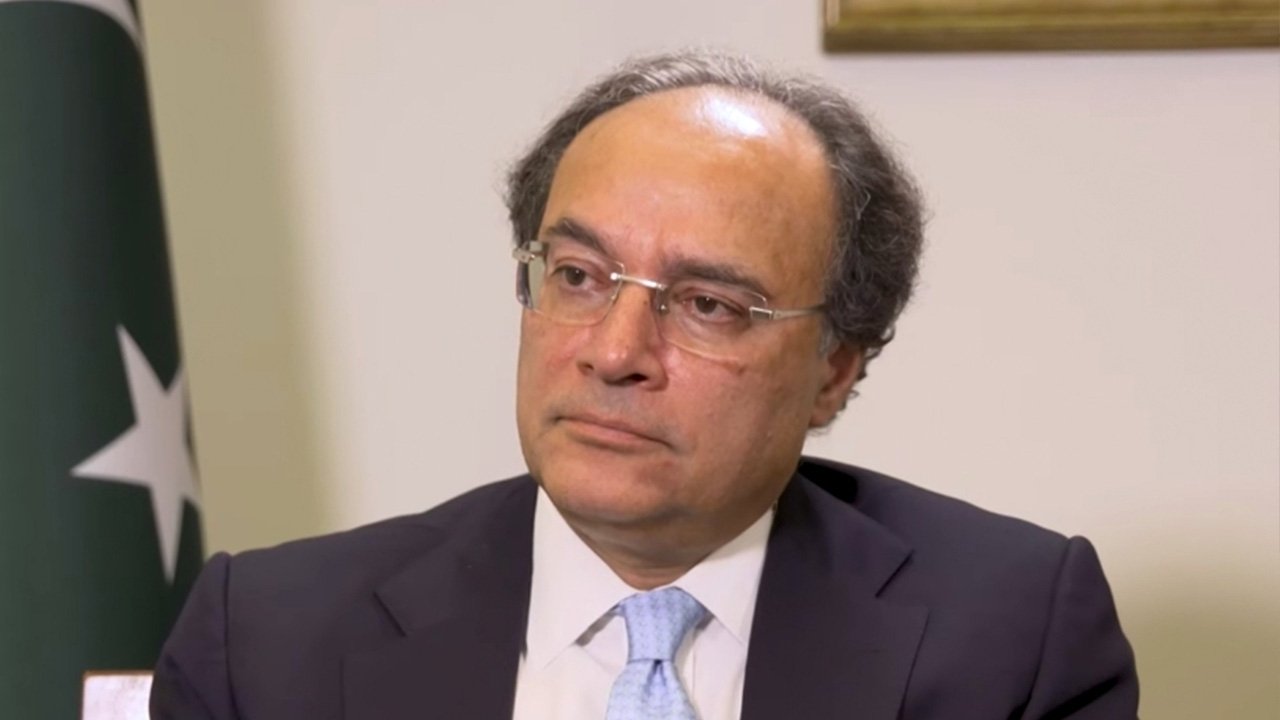
    Finance Minister Muhammad Aurangzeb said Sunday that the government is taking robust measures to improve the country’s economy.

    Addressing a press conference in Islamabad, he said reforms are being done in the Federal Board of Revenue (FBR) to increase revenue collection.

    He said weekly meetings are being held under the chair of Prime Minister Shehbaz Sharif. He said that putting less burden on the lower-income class is the government’s top priority.

    Expressing gratitude to the Chief Ministers of all four provinces for supporting the government’s tax reforms agenda, he expressed hope that they will introduce tax legislation for the inclusion of the Agricultural sector in the taxation regime.

    He said without including the untaxed and under-taxed community in the tax regime, we cannot achieve certainty and ease of collection which is vital for economic stability.

    Regarding facilitation to the business community, Aurangzeb said claims worth 68 billion rupees have so far been now refunded.

    The Minister said notices will be sent through a centralized system, while field formations will be authorized to collect taxes accordingly.

    Mentioning the details of tax evasions and frauds, he said we have identified a tax potential worth 600 billion rupees that was not collected, out of which one billion rupees has been recovered so far.

    In customs, through misclassification, tax worth around 50 to 200 billion rupees has been identified.

    He urged the media to start a campaign against the under-tax and un-taxed community.

    The Minister said the government is also working on the simplification of the tax processes to facilitate the business and salaried persons.

    Through this simplified process, they will be able to respond to our system in a very simple and easy manner without the involvement of any tax consultant.

    Stressing the importance of rightsizing, the Minister said five ministries, including Kashmir and Gilgit Baltistan, SAFRON, Industries and Production, IT and Telecom, and Health have been short-listed in this regard.

    He said Prime Minister Shehbaz Sharif will take the final decision to this effect, he said.

  • IMF urges Pakistan to expand capital gains tax scope to include cryptocurrencies

    IMF urges Pakistan to expand capital gains tax scope to include cryptocurrencies

    The International Monetary Fund (IMF) has advised the Federal Board of Revenue (FBR) to broaden the scope of capital gains tax (CGT) by incorporating cryptocurrencies into the tax regime.

    This recommendation arises amidst ongoing discussions between the Fund and Pakistani authorities regarding the $3 billion stand-by arrangement (SBA).

    The four-day review, which commenced on Thursday, aims to unlock the final tranche of approximately $1.1 billion secured by Islamabad under a last-minute rescue package last summer, thus averting a sovereign debt default.

    During these deliberations, the IMF proposed a reassessment of tax slabs for real estate and listed securities to ensure comprehensive taxation of all gains, irrespective of asset holding periods.

    Moreover, the IMF urged the FBR to mandate property developers to monitor and report all pre-completion property transfers, with penalties for non-compliance. This move aims to bring under the tax umbrella the prevalent practice of trading property plot files within housing schemes.

    These recommendations are anticipated to be incorporated into the forthcoming bailout package under the Extended Fund Facility (EFF), potentially becoming integral to the FY2024–25 budget through the finance bill.

    The IMF’s technical assistance report highlights the challenges faced by Pakistani authorities in assessing and collecting taxes on capital gains from real estate transactions, particularly those occurring before formal property registration.

    To address this issue, the IMF suggests obligating property developers to track and report all pre-completion property transfers, with penalties for non-compliance, thereby shifting tax liabilities to developers if they are not recoverable from the initial transferor.

    Furthermore, the IMF advocates for the expansion of assets subject to capital gains tax to include emerging investment avenues such as cryptocurrencies alongside real estate and listed securities. 

    It also proposes revising tax slabs to ensure equitable taxation of capital gains, irrespective of asset holding durations.

    Overall, these IMF recommendations seek to fortify the taxation framework, ensuring a more inclusive and equitable approach to capital gains taxation in Pakistan.

  • Federal secretaries to play key role in Customs Board as part of tax reform drive 

    The interim government is poised to establish a dedicated Customs Board as part of the ongoing reform initiative to oversee the operations of Pakistan Customs. 

    Within the framework of the tax reform programme, five federal secretaries, namely those from Finance, Industries and Production, National Food Security, Commerce, and Interior, are slated to serve as ex-officio members of the Customs Board. 

    Insiders reveal that FBR Chairman Amjad Zubair Tiwana recently apprised Caretaker Prime Minister Anwaar ul Haq Kakar of the FBR’s reform agenda. 

    Additionally, reports suggest that the government has decided to institute a novel position, “Member Appraisal,” within the Customs Department with the aim of segregating appraisal from operational and enforcement functions. 

    Sources further indicate that the government intends to expand the scope of the Track and Trace System to encompass additional sectors as part of the new reform framework. 

    Furthermore, as part of the reform measures, tax authorities are set to implement an electronic invoicing system in designated sectors with the objective of overseeing the entire supply chain and mitigating the risk of smuggling. 

  • FBR restructuring: 145 offices set up to add 2 million new taxpayers

    FBR restructuring: 145 offices set up to add 2 million new taxpayers

    In a bid to streamline operations, the Federal Board of Revenue (FBR) has set up 145 district tax offices, aiming to bring in 1.5 to 2 million new taxpayers by June 2024. 

    Highlighting the significance of revenue and the need to increase the number of tax filers, the Prime Minister also stressed these goals in recent meetings.  

    The initiative is geared towards expanding the tax base, ultimately achieving the desired tax-to-GDP ratio. 

    Heading these offices are district tax officers responsible for compelling income tax returns from non-filers and preventing lapses from existing filers.  

    This marks a pivotal step in bridging the critical tax gap and incorporating all potential taxpayers into the system. 

    The newly established offices, led by dedicated Inland Revenue Officers in BS-17/18, will leverage third-party data obtained from various departments to track information on asset investments and significant expenditures by potential taxpayers.   

    This approach aims to curtail avenues for individuals evading taxation, particularly in terms of registration and filing returns. 

    The department will invoke the recently introduced Section 114B in the Income Tax Ordinance, 2001, to enforce compliance, enabling it to disconnect utility connections (such as electricity and gas) and block mobile SIMs if returns are not filed in response to issued notices. 

    A new documentation law is also in the works to mandate agencies and departments to provide data to the FBR through an automated common transmission system. 

    The Federal Board of Revenue has sought collaboration with the National Database and Registration Authority (NADRA), and the Chairman of NADRA is ensuring assistance for the expansion of the tax base through data integration. 

    This comprehensive initiative not only strengthens the FBR’s capacity to enforce tax laws but also facilitates taxpayers by establishing dedicated offices, ultimately fostering a more efficient and effective taxation system. 

  • Non-filers beware: Proposed increase in advance taxes on vehicles and utility bills

    Non-filers beware: Proposed increase in advance taxes on vehicles and utility bills

    In an attempt to boost tax revenue and increase non-tax income, the Pakistan Business Council (PBC) has proposed the Federal Board of Revenue (FBR) to impose higher advance taxes on various sectors. The council’s recommendations primarily target non-filers and aim to generate additional funds for the government’s development initiatives.

    One of the key proposals put forth by the PBC is to increase the annual advance income tax amount for owners of vehicles with an engine capacity of 2000cc and above who are non-filers. The council suggests raising the amount to Rs250,000 per year.

    Additionally, the PBC argues for an increase in advance income tax levied on non-filers for the purchase of cars, as outlined in section 231B.

    The proposed changes in advance income tax for different engine capacities are as follows:

    Engine capacity: 1800cc – 2000cc

    Existing tax: Rs600,000

    Proposed increased tax: Rs2,000,000

    Engine capacity: 2001cc – 2500cc

    Existing tax: Rs900,000

    Proposed increased tax: Rs2,500,000

    Engine capacity: 2501cc – 3000cc

    Existing tax: Rs1,200,000

    Proposed increased tax: Rs3,000,000

    Engine capacity: Above 3000cc

    Existing tax: Rs1,500,000

    Proposed increased tax: Rs4,000,000

    Furthermore, the PBC suggests raising the advance income tax from Rs1,200,000 to Rs2,400,000 on the sale of vehicles with an engine capacity of 2001cc and above by non-filers before registration.

    In addition to the proposed changes in vehicle-related taxes, the PBC recommends increasing the advance tax collected from domestic connections in the name of non-filers.

    Currently, non-filers with monthly utility bills of Rs25,000 or more are subject to a 7.5 per cent advance tax. The council suggests continuing this practice and exploring the possibility of imposing withholding tax on withdrawals exceeding Rs50,000 in a single day from non-filer bank accounts.

    According to sources within the FBR, the board has decided to increase the petroleum development levy from Rs50 to Rs60 per unit, which is expected to generate revenue of Rs870 billion. The government aims to increase non-tax income to Rs2.9 trillion through such measures.

    It is worth mentioning that the proposed measures are intended to create additional funds for various government initiatives. One such initiative involves increasing pensions by up to 30 per cent, which would require Rs780 billion in funding.

    The PBC’s recommendations, if implemented, would significantly impact non-filers and luxury expenditures. These proposed changes seek to address the revenue deficit and support the government’s efforts to strengthen the economy and promote sustainable development in Pakistan.

  • ADB recommends targeted subsidies and tax reforms for Pakistan’s economic recovery

    ADB recommends targeted subsidies and tax reforms for Pakistan’s economic recovery

    The Asian Development Bank (ADB) has recommended that Pakistan implement targeted subsidies to alleviate inflationary pressures and improve the tax-to-GDP ratio in order to emerge from the current state of economic uncertainty.

    Yevgeniy Zhukov, Director General of the Central and West Asia Department, and Yong Ye, Country Director of the Pakistan Resident Mission, emphasised the significance of targeted subsidies to help the most vulnerable segments of society, as well as the mobilization of domestic resources to bolster the national economy. They also suggested strengthening the Benazir Income Support Programme (BISP) and improving its verification process to ensure that the assistance reaches only those who require it.

    Zhukov noted that the ADB has been providing financial assistance to the government to strengthen social security through the BISP programme since 2016. The ADB has provided $600 million in conditional cash transfers for health and education since 2021, and an additional $1.5 billion under the Countercyclical Support Facility.

    A significant portion of this funding will be directed to the BISP to provide necessary assistance to those most affected by ongoing difficulties. Zhukov further suggested that Pakistan should improve its revenue collection, as its tax-to-GDP ratio of 10 per cent is one of the lowest in the region. He cautioned that if the government is only collecting 10 per cent, it may not have adequate resources to provide support and boost income.

    Yong Ye indicated that the ADB, World Bank, European Union, and United Nations had pledged assistance to Pakistan after devastating floods last year, and a second meeting of the Geneva conference was scheduled to take place soon to discuss progress. Zhukov expressed sympathies for flood victims and stated that the ADB had approved a $1.5 billion programme for Pakistan before the floods to address the negative impact of the Russia-Ukraine war on the country’s economy, which was then repurposed to provide social protection for the flood-affected people.

    The ADB has approved additional emergency assistance, including a $175 million loan and $5 million in grants, to rehabilitate damaged infrastructure and develop a stronger infrastructure that can withstand future floods. The bank is working with Pakistan and other partners, such as the International Monetary Fund and the World Bank, to introduce important structural reforms in public finance management, domestic resource mobilization, and energy sector reforms. The ADB is committed to collaborating with its partners and the Pakistani government to ensure that the reform agenda is advanced.