Tag: tax

  • FBR hikes motor vehicle tax by 200% for non-filers

    FBR hikes motor vehicle tax by 200% for non-filers

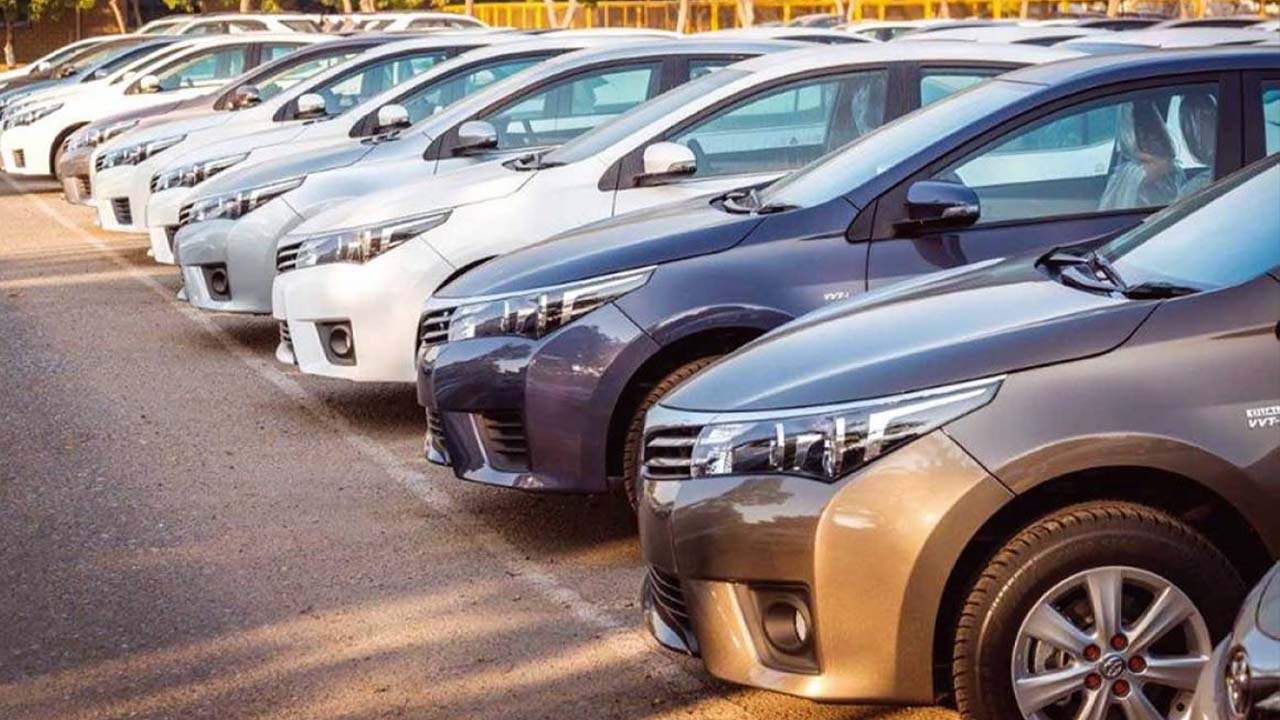
    The Federal Board of Revenue (FBR) has implemented significant changes to the tax structure for motor vehicles in an effort to boost government revenue and encourage tax compliance. The new regulations apply to both Active Taxpayers List (ATL) filers and non-filers.

    For individuals not on the ATL, the tax rates on motor vehicles have been increased by a substantial 200 per cent. This means that non-filers will now be subject to fixed tax rates of 18 per cent, 24 per cent, and 30 per cent, based on the engine capacity of their vehicles, specifically 2001cc to 2500cc, 2501cc to 3000cc, and above 3000cc, respectively.

    On the other hand, ATL filers will experience a different taxation structure. Instead of fixed tax amounts, they will be required to pay tax at a rate of 6 per cent, 8 per cent, and 10 per cent, depending on the engine capacity of their motor vehicles, namely 2001cc to 2500cc, 2501cc to 3000cc, and above 3000cc, respectively.

    In cases where the engine capacity is not applicable, and the value of the vehicle exceeds Rs5,000,000, the tax rate will be 3 per cent of the import value (including customs duty, sales tax, and federal excise duty for imported vehicles, and invoice value for locally manufactured or assembled vehicles).

    It is worth noting that certain exemptions have been made. Pakistan’s government agencies and foreign diplomats will not be subject to these revised tax rates.

    Furthermore, the circular introduced tax implications for bank withdrawals based on the withdrawn amount. Non-ATL filers will be taxed Rs303 for withdrawals of Rs50,500 and taxed Rs450 for withdrawals ranging from Rs55,000 to Rs75,000.

    Additionally, to curb unnecessary foreign exchange outflows via credit/debit card transactions, the withholding tax rates for ATL persons have been increased from 1 per cent to 5 per cent, while non-ATL persons will face a higher rate of 10 per cent, up from the previous 2 per cent.

    These adjustments in the tax policy aim to strengthen the country’s revenue generation while encouraging citizens to become active taxpayers.

  • PTA introduces 120-day tax-free mobile registration for overseas Pakistanis

    PTA introduces 120-day tax-free mobile registration for overseas Pakistanis

    Prime Minister (PM) Shahbaz Sharif inaugurated the Online Temporary Mobile Phone Registration System on Tuesday, aimed at facilitating overseas Pakistanis and foreign nationals during their visits to the country.

    Under this system, individuals will be able to register and utilise their personal mobile phones for a duration of up to 120 days from the date of their arrival, exempt from any duties and taxes. This facility is available to overseas Pakistanis, including students and employees, as well as foreign nationals visiting Pakistan for tourism or business purposes.

    During the inaugural ceremony in Islamabad, PM Shehbaz acknowledged the significant progress made by Pakistani youth in the field of information technology and emphasised the need to seize the abundant opportunities in this sector. He further stated that the current government has allocated ample funds in the budget to support various youth-oriented programmes.

     To attract foreign investment and revive the economy, a Special Investment Facilitation Council (SIFC) has been established, with the IT Ministry playing a pivotal role in achieving the set objectives.

    Additionally, the PM highlighted the importance of promoting IT parks in the country to boost IT exports. He mentioned the distribution of free laptops among deserving students based on merit and assured that a non-financial package will be announced soon to further enhance facilitation for overseas Pakistanis.

    In December 2018, the government introduced the ‘Mobile Phone Tax Policy,’ allowing overseas Pakistanis to bring one phone without paying customs duty, subject to registration upon arrival at the airport. Failure to register resulted in the phone being non-operational. Initially, the registered phone could be used with one SIM for 60 days, after which it required payment of due taxes to regularise its usage.

    In 2022, authorities upgraded and introduced new features in the Identification Registration and Blocking System, enabling overseas Pakistanis to use their imported mobile phones for a period of 120 days.

    The system facilitated data exchange among the Federal Investigation Agency (FIA), the Federal Board of Revenue (FBR), and the Pakistan Telecommunication Authority (PTA). It was also integrated with the FIA’s record of passengers’ entry and exit.

  • Govt increases levy on petrol to Rs55 per litre, maintains Rs50 levy on diesel

    Govt increases levy on petrol to Rs55 per litre, maintains Rs50 levy on diesel

    In a recent development, the government has decided to raise the petroleum development levy (PDL) on petrol in accordance with a staff-level agreement worth $3 billion signed with the International Monetary Fund (IMF).

    Starting from today, the PDL on petrol will be increased from Rs50 to Rs55 per litre, while there will be no change in the development levy on high-speed diesel (HSD), which remains at Rs50 per litre.

    The announcement was made by Finance Minister Ishaq Dar, who clarified that petrol prices would not be affected by this decision. However, diesel prices will see an increase of Rs7.50 for the next two weeks, with the new price becoming effective from July 1.

    Minister Dar emphasised this during a late-night press conference, ensuring that there would be no change in the price of petrol.

    To enable this adjustment, the government sought the power to amend the Petroleum Products (Petroleum Levy) Ordinance, 1961 (XXV of 1961) through the Finance Act 2023-24. This amendment grants the government the authority to increase the petroleum levy, eliminating the requirement for parliamentary approval to determine the maximum limit of the levy.

    According to The News, the Ministry of Finance shared with the Senate Standing Committee on Finance that the PDL has been set at Rs60 per litre, aiming to generate revenue of Rs879 billion in the upcoming fiscal year. This target surpasses the revised target of Rs542 billion for the previous financial year, which concluded on June 30, 2023.

  • Pakistani rupee reverses marginal gains, closes at Rs281.61 against US dollar

    Pakistani rupee reverses marginal gains, closes at Rs281.61 against US dollar

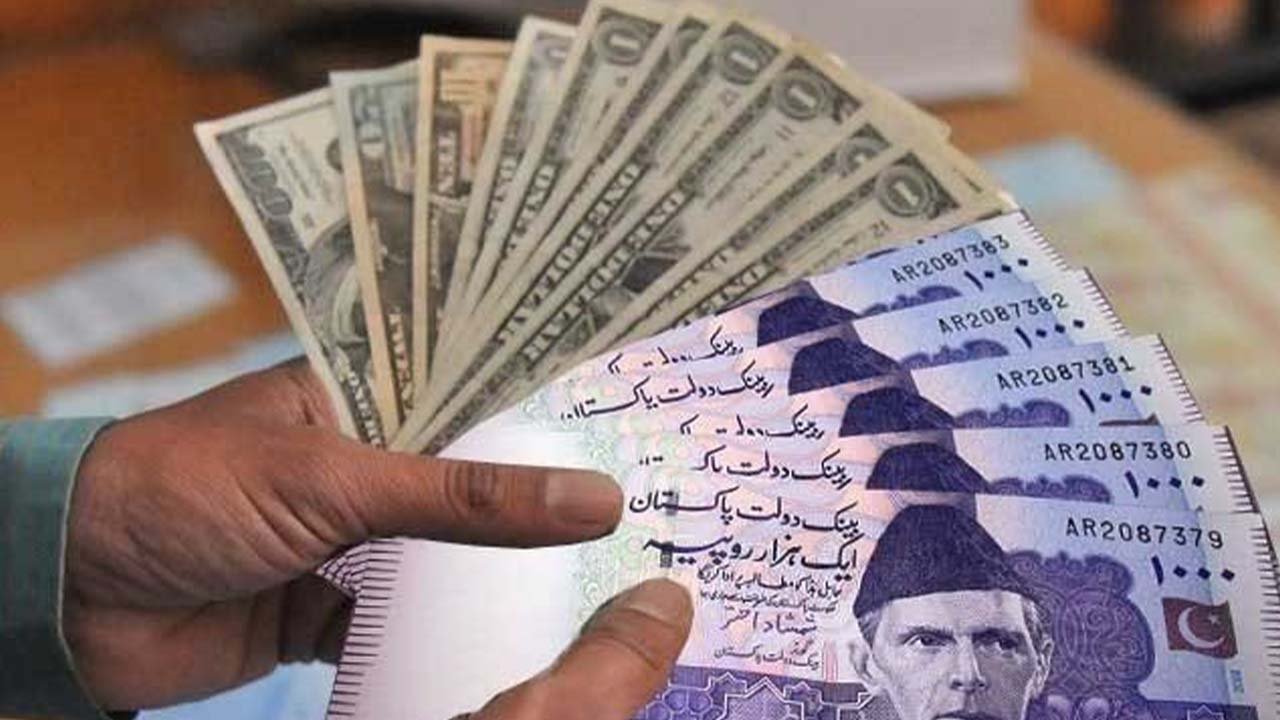
    On Monday, the Pakistani rupee faced renewed pressure against the US dollar, declining by 0.30 per cent in the inter-bank market after posting marginal gains on Friday. According to the State Bank of Pakistan (SBP), the rupee settled at Rs281.61, representing a decrease of Re0.84.

    Despite the rupee having found some relief on Friday with a 0.54 per cent appreciation in the inter-bank market, the currency had depreciated by 0.82 per cent against the US dollar during the previous week.

    The SBP has received inflows from China, which have provided support to critical levels of foreign exchange, but concerns over the delay in the International Monetary Fund (IMF) programme have continued to impact sentiment.

    Miftah Ismail, former Federal Finance Minister, suggested on Sunday that Pakistan should ensure 15 per cent tax on Gross Domestic Product (GDP) and 15 per cent exports to GDP in order to avoid the need for IMF programs.

    Internationally, the US dollar experienced a sharp decline on Monday due to the sudden collapse of Silicon Valley Bank (SIVB). The US government announced various measures on Monday to mitigate the impact of the bank’s collapse, including ensuring access to deposits for SVB customers and depositors of New York’s Signature Bank.

  • No luxury cars, no five-star hotels, federal cabinet’s perks and salaries cut amid economic crisis

    Prime Minister (PM) Shehbaz Sharif has announced major cuts in perks and facilities that were being given to the federal cabinet as the economic crisis worsens.

    Addressing a press conference on Wednesday in Islamabad, the Premier, flanked by members of the federal cabinet, said that ministers, state ministers and special advisers had decided “willingly” to forego their salaries and perks. He said that all ministers would now pay their own telephone, electricity, water and gas bills.

    The premier further said that federal ministers would also travel in economy class and will not stay in five-star hotels during foreign trips.

    He asserted that no cabinet member or government officer will use a luxury car, adding that “Until June 2024, there will be a complete ban on purchasing all types of new cars.”

    The head of government also said that “to conserve gas and electricity, advice for opening offices at 7:30am during summer has been accepted.”

    Shehbaz Sharif said that it has also been decided that government employees will not be allotted more than one plot, saying that this would be implemented from tomorrow.

    He said that in terms of food, only a single dish would be allowed at government events.

    Talking about the Toshakhana, the premier said that the federal cabinet has decided that no one will be allowed to retain state gifts worth more than $300 (approx. Rs70,000). He also added that the government has decided to make the Toshakhana record public.

    Responding to a question from a reporter, PM Shehbaz said that the measures would save Rs200 billion annually.

    He said that matters with the International Monetary Fund (IMF) are at the “last stage” and hoped that everything will go well.

    The development has taken place while Pakistan is eyeing a staff-level agreement with the International Monetary Fund (IMF) this week as the country reels under a foreign reserve shortage.

    Earlier this week, the National Assembly passed the IMF-dictated Finance (Supplementary) Bill 2023, seeking to impose an additional Rs170 billion in taxes.

  • Latest gas price hike will hit the rich, not the poor: Petroleum Minister

    Latest gas price hike will hit the rich, not the poor: Petroleum Minister

    Minister of State for Petroleum Dr Musadik Malik stated that the latest hike in gas tariff was implemented without imposing a burden on the low-income segment. In a media briefing, he added that the government separated the poor and rich segments to protect low-income individuals from its impact.

    However, Malik admitted that the low-income segment in Pakistan is facing tough times. He also shared that 60 per cent of the Pakistani public will remain unaffected by the gas price hike, and the low-income segment might even see a decrease in their bills.

    Malik agreed with former finance minister Miftah Ismail that Pakistan is experiencing elite capture. He emphasized that Pakistan is different for the high-income and low-income segments, and the gas tariff has mostly increased for the high-income segment.

    During the speech, Malik criticised the developed countries for fancying development and progress, which he believed have put most of the world’s population – nearly 5 billion – at peripheries.

    According to Dawn, the minister said that the development has not been inclusive and countries like Pakistan were paying the price despite having “zero” contribution in carbon emissions and lately, it became the third most affected country from global warming.

    He made these comments after the government raised gas prices in line with the International Monetary Fund’s recommendation. As a result, the weighted average cost of gas has increased by 43 per cent from Rs620 to Rs885 per million British thermal units.

  • From soap to air tickets: What’s getting costlier after mini-budget?

    From soap to air tickets: What’s getting costlier after mini-budget?

    The Federal Board of Revenue (FBR) has issued an SRO to increase the standard 17 per cent general sales tax (GST) to 18 per cent, which will collect taxes worth Rs115 billion. The remaining Rs55 billion will be generated through other measures mentioned in the Finance (Supplementary) Bill 2023.

    The top tax collection authority stated in the notification that the 18 per cent GST would be applicable to consumer packaged goods, which include various items used in everyday life.

    Following the increase in GST, the following items will experience a hike in their prices:

    • Biscuits
    • Jam
    • Jelly
    • Noodles
    • Edible oil
    • Coffee
    • Chocolates
    • Make-up
    • Shampoos
    • Creams
    • Lotion
    • Soap
    • Toothpaste
    • Hair colour
    • Hair removal cream
    • Hair gel
    • Shaving foam
    • Shaving gel
    • Shaving cream
    • Shaving blades
    • Computers
    • Laptops
    • Electronic gadgets
    • Smartphones
    • iPods
    • TVs
    • LEDs
    • LCDs
    • Juicers
    • Blenders
    • Other electronic machinery
    • Car shampoos
    • Car polishes
    • Perfumes
    • Children’s toys

    In addition to the aforementioned actions, the government intends to raise the Goods and Services Tax (GST) on luxury items from 17 per cent to 25 per cent. The Federal Excise Duty (FED) on first and business class air tickets will be increased to either Rs20,000 or 50 per cent, whichever amount is higher.

    Marriage halls will be subject to a ten percent withholding adjustable advance income tax, and the FED on soft drinks, sugary drinks, and cement will also be increased.

  • IMF rejects Pakistan’s circular debt management plan, advises raising power tariff

    IMF rejects Pakistan’s circular debt management plan, advises raising power tariff

    In order to cap the extra subsidy at Rs335 billion for the current fiscal year, the International Monetary Fund (IMF) has rejected the circular debt management plan (CDMP) that the government had given and requested the authorities to hike the power tariff by Rs12.50 per unit.

    Talks on the ninth review are now being held in Pakistan by an IMF team; they will last until February 9 and are anticipated to result in a staff-level agreement between the two parties.

    During the second day of technical discussions, the Washington-based lender referred to the amended CDMP as “unrealistic,” which is based on several incorrect assumptions. Therefore, the government would need to make further adjustments to its recommended course of action to limit the losses in the cash-strapped electricity industry.

    A fiscal deficit will be worked up between the IMF and the Finance Ministry, and various extra taxing measures will then be finalised through the forthcoming mini-budget.

    The international lender has asked Pakistan to impose Rs600–800 billion in additional taxes in the second round of talks to revive the $7 billion Extended Fund Facility (EFF), which has been stalled for months.

    According to details, the Federal Board of Revenue held a second round of technical talks with the IMF mission, led by Mission Chief to Pakistan Nathan Porter, on the ninth review of a $7 billion loan programme.

    The lender also demanded the government increase tax collection to 1 per cent of the gross domestic product (GDP). Sources claimed that the fund demanded the government fix the next fiscal year’s tax collection target at Rs8.3 billion.

  • FBR must collect Rs120 billion in two days to meet monthly target of Rs684 billion

    To reach its monthly goal of Rs684 billion by the end of the current month, the Federal Board of Revenue (FBR) must collect approximately Rs120 billion in the final two days of September.

    The FBR’s preliminary revenue collection as of September 2022 was over Rs565 billion compared to the target of Rs684 billion, representing a shortfall of over Rs119 billion.

    To reach the monthly goal of Rs684 billion, the FBR needed to collect about Rs60 billion every day during the final two days of September 2022, according to Brecorder.

    The government would be forced to implement emergency collection measures, such as imposing a sales tax on petroleum items, if the FBR is unable to meet the monthly target of Rs684 billion. To avoid taking emergency revenue measures, the FBR has increased efforts to reach the desired revenue collection objective.

    The tax collecting system currently has a difficult task ahead of it: achieving the assigned revenue collection target of Rs684 billion in September 2022.

    In order to maximise revenue collection, tax authorities have developed a plan in conjunction with the chief commissioners of the LTOs and heads of MTUs.

    The final day to pay advance tax instalments was September 25, and the majority of the corporate sector had already paid their owed advance tax instalment by that date.

    The FBR examined the big tax offices’ and medium tax offices’ revenue results via the video link. The meeting also covered the potential reduction in income collection under a few heads as a result of the severe floods.

    In comparison to the target of Rs483 billion, the FBR had tentatively collected net revenue of Rs489 billion for August 2022, representing an increase of Rs6 billion.

    In comparison to the set revenue collection target of Rs926 billion during the first two months of July and August in 2022–2023, the FBR has collected Rs948 billion. The Board has so far surpassed the specified target in the current fiscal year 2022–2023 by Rs22 billion.

    The FBR collected net revenue of Rs489 billion during August 2022, exceeding the objective of Rs483 billion compared to Rs448 billion collected during the same period last year, according to provisional figures.

  • Pakistan inflation hits highest level since 1973

    Pakistan inflation hits highest level since 1973

    According to the Pakistan Bureau of Statistics (PBS), Pakistan’s Consumer Price Index-based inflation (CPI) climbed by 27.3 per cent on a year-over-year basis in August 2022 as opposed to an increase of 24.9 per cent the previous month and 8.4 per cent in August 2021.

    Inflation has increased by an average of 26.1 per cent in the first two months of the current fiscal year 2023 compared to 8.36 per cent in 2022. August’s inflation rate was the highest since November 1973.

    According to brokerage house Arif Habib Limited (AHL) the Consumer Price Index (CPI) for the month of Aug’22 clocked in at 27.26 per cent YoY (+2.45 per cent MoM). This takes 2MFY23 average inflation to 26.1 per cent compared to 8.36 per cent in 2MFY22.

    CPI inflation

    Urban

    In August 2022, urban CPI inflation was 26.2 per cent on an annual basis, up from 8.3 per cent in August 2021 and 23.6 per cent the month before.

    It climbed by 2.6 per cent month over month in 2022, compared to 4.5 per cent the month before and 0.5 per cent in August 2021.

    Rural

    In addition, rural CPI inflation reached 28.8 per cent on an annual basis in August 2022, up from 8.4 per cent in August 2021 and 26.9 per cent in the preceding month.

    In August 2022, it climbed by 2.2 per cent month over month, compared to 4.2 per cent the month before and 0.7 per cent in August 2021.

    Further increase expected

    Rising inflation has become a major worry for Pakistan’s economy, which is already experiencing a loss of foreign exchange reserves.

    In the midst of severe flash floods that have resulted in at least 1,100 fatalities, extensive destruction, and millions of displaced people, experts have cautioned that the country will experience additional increases in food costs.