Tag: tax

  • Shaukat Tarin presents the Pakistan Economic Survey 2020-21

    Shaukat Tarin presents the Pakistan Economic Survey 2020-21

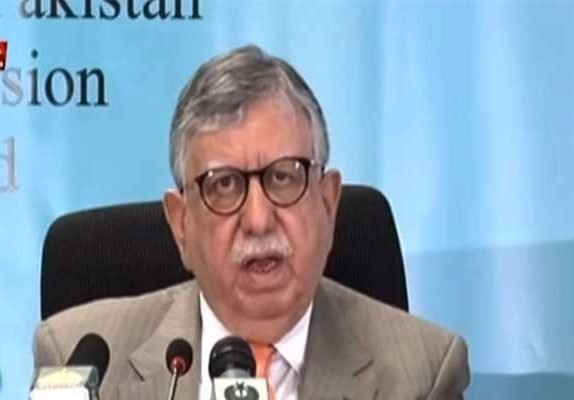
    Finance Minister Shaukat Tarin presented the Pakistan Economic Survey 2020-21 at a press conference in Islamabad on Thursday. However, the document did not have the latest figures on poverty and unemployment.

    Tarin revealed that the industrial and services sectors had helped the country post-Gross Domestic Product growth of 3.94 per cent in the first nine months of the fiscal year [FY](July to March), significantly higher than the target of 2.1 per cent.

    “The agriculture and manufacturing sectors helped the economy grow to 4.4%, laying stress on the need for sustainable growth in Pakistan in the years to come,” added Tarin.

    Coronavirus Pandemic

    The minister opened his press briefing by speaking highly of Prime Minister Imran Khan’s policies in combating the coronavirus pandemic.

    “The government itself had set [GDP] growth will be 2.1pc and the IMF predicted even lower. But the decisions by this government such as incentivising manufacturing and textiles, construction, and interventions in agriculture have helped the economy recover,” said Tarin.

    He said many people lost their jobs when the pandemic hit Pakistan, however, due to PM’s visionary policy of not imposing a complete lockdown across the country, millions of people who were unemployed were hired again. 

    “The economy is recovering,” he said. 

    Remittances

    Tarin said Pakistan’s remittances had broken records, adding that they had crossed $26bn. He said that lately imports, especially food in the form of wheat and sugar, were increasing as Pakistan’s economy was growing at the same time. 

    “We were net exporter of food but now, we have become a net importer,” he said. “Our exports registered a growth but our remittances increased manifold,” he added. 

    Ehsaas Programme

    Tarin spoke highly of the Ehsaas programme, adding that the World Bank had described it as “one of the best and the largest” poverty alleviation initiatives across the globe. 

    “Full credit goes to Sania Nishtar,” he said, adding that handing out cash to 15 million people was not a small achievement.

    Growth rate

    Tarin said he had told the prime minister it was time to focus on sustainable growth “until we go to 5-8pc GDP growth”.

    “We will do interventions and take care of the poor. The poor man has been crushed in this stabilisation phase because the dreams we have shown them have been of a trickledown economy. And this can only happen when growth is sustainable and continuous for 20-30 years,” he said.

    “Countries which had sustainable growth, they grew continuously for 20-30 years. What have we done? Every time we grow by borrowing money, which is credit-based growth.”

    Current Account

    According to the survey, during FY 2021, while the world was reeling from the economic impact of the pandemic, Pakistan’s “external sector appeared as a key buffer for resilience.”

     “The main driver of improvement in current account balance was the robust growth in remittances,” it stated.

    Trade Deficit

    “During July-March FY 2021, export of goods grew by 2.3 percent to $18.7 bn as compared to US$ 18.3 bn the same period last year. Import of goods grew by 9.4pc to $37.4 bn as compared to US$ 34.2 bn last year. Consequently, the trade deficit increased by 17.7per cent to $18.7bn as compared to $15.9bn last year,” the survey said.

    Inflation

    The finance minister said the government wanted to control inflation “but prices are still high and affecting the common man”.

    “So the way to solve this is by increasing production and that is why we have focused on agriculture in this budget,” Tarin said.

    Federal Board of Revenue (FBR)

    Speaking about the FBR, Tarin said he would end the practice of people being harassed by the bureau. “FBR will not audit [businesses or persons] but a third-party audit will be conducted,” he said. 

    International Monetary Fund (IMF)

    Tarin said Pakistan’s negotiations with the IMF were ongoing, adding that the international money lender had asked the government to hike tariffs and increase taxes. 

    The finance minister said Pakistan and the IMF want the same thing; sustainable growth, adding that the country cannot afford to increase taxes or hike tariffs so that the poor and the salaried class do not feel additional burden of inflation. 

    “This is a red line for the prime minister,” he said. “We will not further burden the poor,” he added. 

    Energy Sector

    Tarin said Pakistan’s economy was burdened due to the overcapacity in the power sector, saying that “it was a very big challenge and a black hole” for Pakistan. 

    Privitisation

     Tarin said it was fair to ask how he can privatise state-owned enterprises when all others, before him, promised to do the same but failed to. 

    “Nawaz Sharif used to shout the same slogan during the first time [when he was prime minister] and then for a second time [when he again became the prime minister] and then a third, but nothing happened,” he said. 
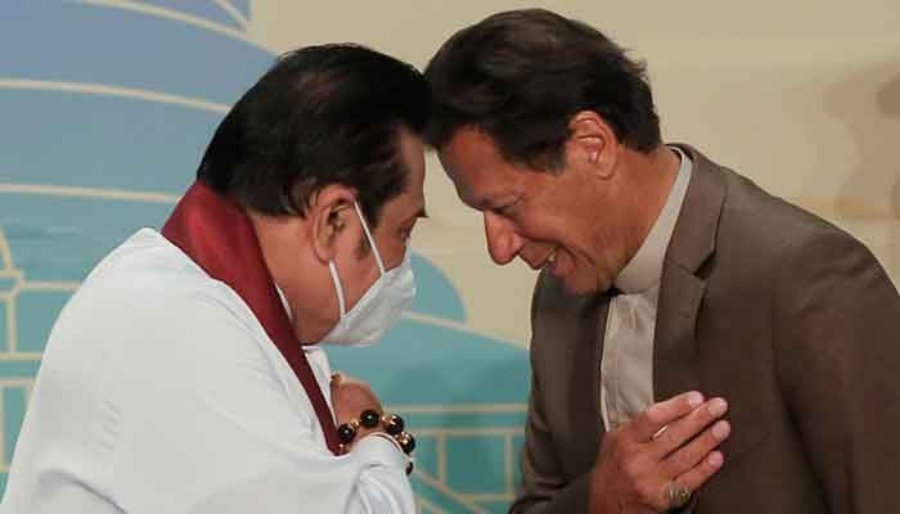
  • What did PM Imran’s Sri Lanka trip cost taxpayers?

    What did PM Imran’s Sri Lanka trip cost taxpayers?

    Prime Minister (PM) Imran Khan’s ongoing tour of Sri Lanka cost taxpayers a mere $34,800 (Rs5,507,771 or Rs5.5 million), his special assistant on political communication, Dr Shahbaz Gill, has revealed in a tweet.

    The 2016 visit of former premier Nawaz Sharif to Sri Lanka, on the other hand, had cost the treasury $276,266, he stated further.

    During his two-day-long visit to the country, PM Imran met President Gotabaya Rajapaksa and his Sri Lankan counterpart besides notable business personalities.

    While Gill went on to say that PM Imran’s trip had proven to be more fruitful as compared to that of Nawaz, Minister for Communications and Postal Services Murad Saeed also claimed that the incumbent premier’s Sri Lanka visit cost the treasury “just $34,000”.

    The minister further said the premier had cut his office’s expenses by 49%. He maintained the incumbent government was carefully spending public funds that were a sacred trust.

    Saeed’s statements come a week after it was reported that the expenditures of PM House and Office have reportedly reduced by 49% and 29%, respectively.

    According to reports, the total expenditure of the PM House narrowed down to Rs280 million (Rs28 crores) in 2020 from Rs339 million (Rs33 crores) in 2019 and Rs590 million (Rs59 crores) in 2018 — the year when the Pakistan Tehreek-e-Insaf (PTI) was handed reins of the country.

    The PM Office witnessed a considerable decrease in its expenditure from 2018 to 2020, but last year was slightly more than in 2019. It stood at Rs334 million (Rs33 crores) in 2020, Rs305 million (Rs30 crores) in 2019 and Rs514 million (Rs51 crores) in 2018.

    The premier, since assuming office in 2018, has been pushing for austerity measures to save taxpayers’ money and reduce the burden on the national exchequer.

    Despite the steps taken by PM Imran in this regard, the austerity drive has faced multiple setbacks owing to the apparent reluctance of the lawmakers in cutting down expenses.

  • FBR goes after NAB for not paying Rs69 crores in taxes

    FBR goes after NAB for not paying Rs69 crores in taxes

    The Federal Board of Revenue (FBR) has served a notice to the National Accountability Bureau (NAB) for costing the country a whopping Rs690 million (Rs69 crores).

    As per the details, NAB did not deduct 15% withholding tax while paying damages worth over Rs4 billion (Rs4 Arab) in the Broadsheet case.

    The News quoted sources as saying that a notice on behalf of the International Tax Department of FBR under Section 152 of FBR Ordinance was sent to NAB to pay the said amount.

    The notice said it had come to the knowledge of tax department that NAB had paid damages to Broadsheet LLC — the United Kingdom (UK) based company roped in during military ruler Pervez Musharraf’s regime to track down foreign assets purchased by Pakistani politicians “through looted money”.

    “NAB had to deduct 15% withholding tax and deposit it to the national exchequer at the time of payment under the Income Tax Ordinance, but it was not followed,” it said.

    The fine was paid to the UK-based firm after NAB ended with it the asset recovery agreement in 2003, pushing Broadsheet as a third party to move the London High Court for damages.

    The UK-based companies claimed that Pakistan owed them money according to the terms agreed upon since the government was taking action to seize assets identified by the firm, including the Avenfiled Apartments of the Sharif family.

    After much drama, an arbitration court of London had imposed a $20 million fine on NAB in the Broadsheet case. However, NAB had to pay an extra $9 million under the head of mark-up due to non-payment on time.

    The court in London had withdrawn over $28 million partially in this regard by freezing accounts of the Pakistan High Commission.

  • Did PM Imran just give the corrupt a chance to whiten their black money?

    Did PM Imran just give the corrupt a chance to whiten their black money?

    With Prime Minister (PM) Imran Khan offering amnesty for the construction sector, netizens are expressing their “disappointment” at what they say is the premier “flip-flopping on his ideals to hold the corrupt accountable”.

    PM Imran on Friday gave the status of industry to the construction sector, as he announced opening of the sector along with a package of incentives to boost it with a view to keeping the wheels of economy moving and mitigate the impact of the lockdown on people.

    Speaking to reporters after a meeting of the National Command Centre, the PM said the government provided these exemptions to provide employment to the labourers so that they can be saved from “hunger and the coming difficult circumstances”.

    In line with the relief package, the government will not ask construction entities about their source of income for this year as well as approval of a fixed tax regime for the sector.

    The PM said: “This [move] will bring down the amount of tax to be paid. Also, if the investment is for the Naya Pakistan Housing Scheme, we will exempt 90% of the tax on it.”

    He announced an Rs30bn subsidy for the Naya Pakistan Housing Scheme, saying that on the one hand, it will regulate economic activity and on the other, ensure houses for the poor were also built.

    He also said that withholding tax on materials and services had been abolished in the informal sector. “Tax will be collected only on steel and cement, mainly because these are the formal sectors.”

    Here’s what Twitterati have to say in this regard:

    Meanwhile, some resorted to meme-ing it out:

    What do you think of the incentives announced by the PM? Let The Current know in the comments…

  • OGRA proposes slashing petrol, jacking diesel price

    OGRA proposes slashing petrol, jacking diesel price

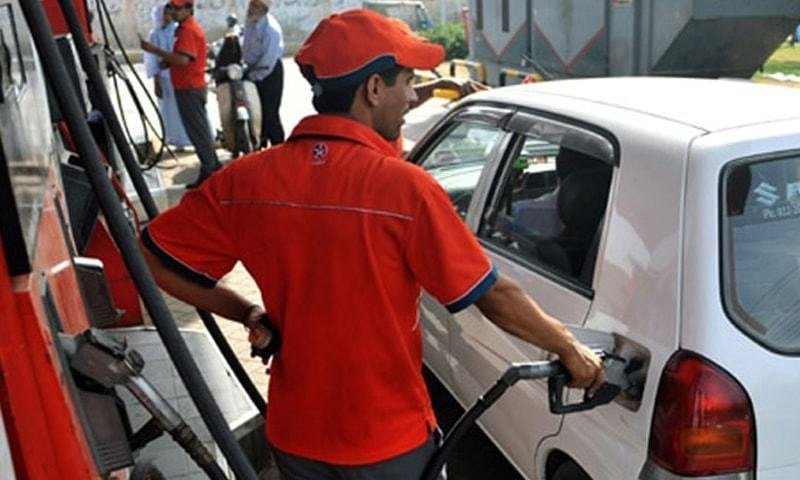
    Oil and Gas Regulatory Authority (OGRA) has proposed slashing petrol, and increasing diesel prices due to existing tax rates.

    According to reports, the authority has calculated and proposed a two percent increase in diesel prices. It has moved a summary with calculations of petroleum prices on the basis of existing rates of the general sales tax (GST) and petroleum demand. 

    The Ministry of Finance is expected to announce a detailed list of prices of petroleum products based on the import parity (the price that a purchaser pays or can expect to pay for the imported goods). 

    PROPOSED RATES

    OGRA says about Rs2.47 per litre of High-Speed Diesel (HSD) and Rs1.10 per litre in Light Diesel Oil (LDO) should be increased. 

    On the other hand, the regulatory has calculated six paisas and 66 paisas per litre reduction in the price of petrol and kerosene oil respectively. 

    The rate of HSD has been calculated at Rs129.73 per litre instead of Rs127.26, showing an increase of 1.9pc. In addition, light diesel oil (LDO) has been worked out at Rs85.61 per litre instead of the existing rate of Rs84.51, showing an increase of 1.3pc.

    On the contrary, petrol price has been proposed to go down to Rs116.54 per litre from the existing rate of Rs116.60, down 0.1pc.

    The ex-depot price of kerosene has been proposed to be reduced by 0.7pc to Rs98.79 per litre from the existing rate of Rs99.45 per litre.

    The government has already increased GST on all petroleum products by a standard rate of 17pc across the board to generate additional revenues. 

  • 1981 to 2017: Imran Khan paid a few hundred rupees tax in some years

    1981 to 2017: Imran Khan paid a few hundred rupees tax in some years

    Prime Minister (PM) Imran Khan paid only a few hundred rupees tax in some years and almost Rs4.7 million in 37 years from 1981 to 2017 — a period during which he was exempted from tax for a couple of years, The News has reported.

    According to reports, the highest ever tax paid by PM Imran was in 2010 when he paid Rs1,883,033, while the second-highest income tax amount paid by the Pakistan Tehreek-e-Insaf (PTI) chief was Rs562,554 that he paid in 2011.

    Babar Sattar, counsel for Justice Qazi Faez Isa on Monday raised questions and highlighted that for some years his client’s wife has paid even more tax than the premier. He mentioned Khan’s 2017’s annual tax return when he paid Rs103,763 and argued before the Supreme Court (SC) that how could such a person raise a finger at others.

    According to an investigation carried out by The News to determine how much tax Imran has paid every year since he was registered as a taxpayer in Pakistan, against the principle set by the Prime Minister’s Office (PMO) in a recent reference against the SC judge, the premier himself never declared the bank accounts or the foreign assets held by his children or wives even during the years corresponding to their married life.

    The President of Pakistan, on recommendations of the PMO, has sent a reference to the Supreme Judicial Council (SJC) against Justice Isa, alleging that he hasn’t declared the assets held by his wife and children in the United Kingdom (UK) and thus he should be sent home.

    In his letter to the president, Justice Isa had maintained that his wife and children were not dependent on him, living in UK and he was not under the obligation of declaring any assets held by them. However, the principle set by the PMO, was different.

    Keeping in the view the principle set by the PMO, scrutiny of tax record of PM Imran shows that he never declared any foreign bank accounts or assets held by his ex-wife Jemima Goldsmith during the years of their marriage. Not only this, the now premier never declared any foreign bank accounts or foreign assets held by his two sons, who are now in their twenties. Imran did the same in cases of his second wife Reham Khan and third wife Bushra Bibi.

    PM Imran married Goldsmith on June 21, 1995. Both separated through a divorce on June 22, 2004. Under the principle defined by the PMO in Justice Isa’s case, the PTI chief was supposed to declare all bank accounts and foreign properties held in Goldsmith’s name in tax years 1994-95 to 2003-04. However, a careful examination of his tax record of the said period revealed that Imran never declared any bank accounts or assets owned by his first wife abroad.

    Not only this, Imran has two sons Sulaiman (born 1996) and Kasim (born 1999) and the PTI chief was also supposed to declare any bank accounts held by them or the assets in their names. However, he never declared them in his tax returns.

    Imran announced his marriage with Reham Khan on January 6, 2015, and divorced her on October 30, 2015. So he was supposed to declare bank accounts and other assets in Reham’s name, locally or abroad, in his annual tax returns for the tax years 2014-15 and 2015-16, but he hasn’t.

    Moreover, he announced his marriage with Bushra Bibi on February 18, 2018. Under the principle defined by his office, he was supposed to declare assets in his third wife’s name in the annual tax returns and Wealth Statement for tax year 2017-18, but only mentioned that as he was recently married, he was not annexing her details.

  • Buzdar-led Punjab govt’s tax collection jumps 44%

    Buzdar-led Punjab govt’s tax collection jumps 44%

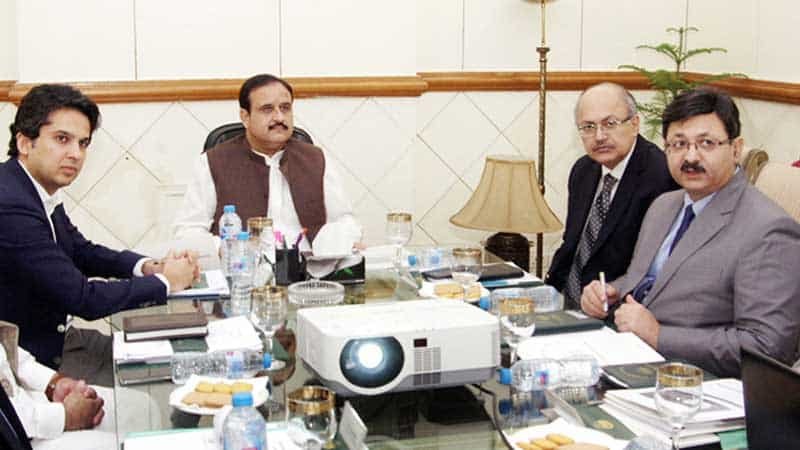
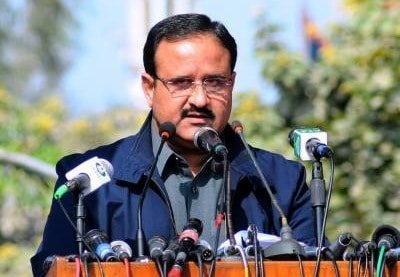
    Chief Miniter (CM) Sardar Usman Buzdar-led Punjab government has registered a 44% growth to Rs77 billion of tax collection in the first quarter of the ongoing fiscal year, The Express Tribune reported.

    According to the details, the Finance Department on Monday held a review meeting during which Finance Minister Makhdoom Hashim Jawan Bakht briefed the members about the performance of the provincial government.

    The meeting was told that despite the financial backlog left by the previous government, the incumbent government gave a surplus budget of Rs233 billion in order to meet financial requirements of the federal government to comply with conditions of the International Monetary Fund (IMF) loan programme.

    Meeting participants also noted that a revenue collection target of Rs388 billion was fixed for Punjab for the fiscal year 2019-20, which was 44% higher than the previous fiscal year.

  • Punjab govt misses tax collection target by over Rs20 billion

    Punjab govt misses tax collection target by over Rs20 billion

    The Punjab government has missed its tax collection target in July, costing the provincial exchequer an amount of Rs20.45billion, The Express Tribune reported.

    According to reports, the provincial government collected Rs11.91billion, down by 63 per cent from its target of Rs32.33billion, and economic experts associate the reduction in tax collections with the fiscal crisis that currently grips the country.

    “If the economy remains in this condition, revenue will continue to fall,” the report quoted an expert as saying.

    Several factors, including lower than usual property tax, irrigation tax, income tax, and land revue, contributed to the overall shortfall. During July, the Federal Board of Revenue (FBR) collection under stamp duty, property tax, irrigation tax, income tax, and land revenue fell by 20.41 per cent, due to which the tax authority was only able to bag Rs5.38billion instead of Rs6.76billion.

    Similarly, a reduction of 22.16 per cent in property transfer, professional tax, professional excise, and other indirect taxes resulted in a shortfall of Rs0.73 billion.

    The provincial exchequer received another blow in lower than expected collection of sales tax and other indirect taxes. Out of the Rs13.87billion, only Rs318.6million ended up in the provincial coffers.

    Experts believe slowing economic growth will result in lower revenues for the government. And if current trends continue, the government revenue receipts will fail to match the budgeted targets.

    Official sources, on the other hand, confirmed the English daily that the targets were not being met due to the current economic crisis. However, they were hopeful that the coming year would yield better results and bring in greater revenue through taxation.

  • Govt increases tax on Landa clothes by 5pc

    Govt increases tax on Landa clothes by 5pc

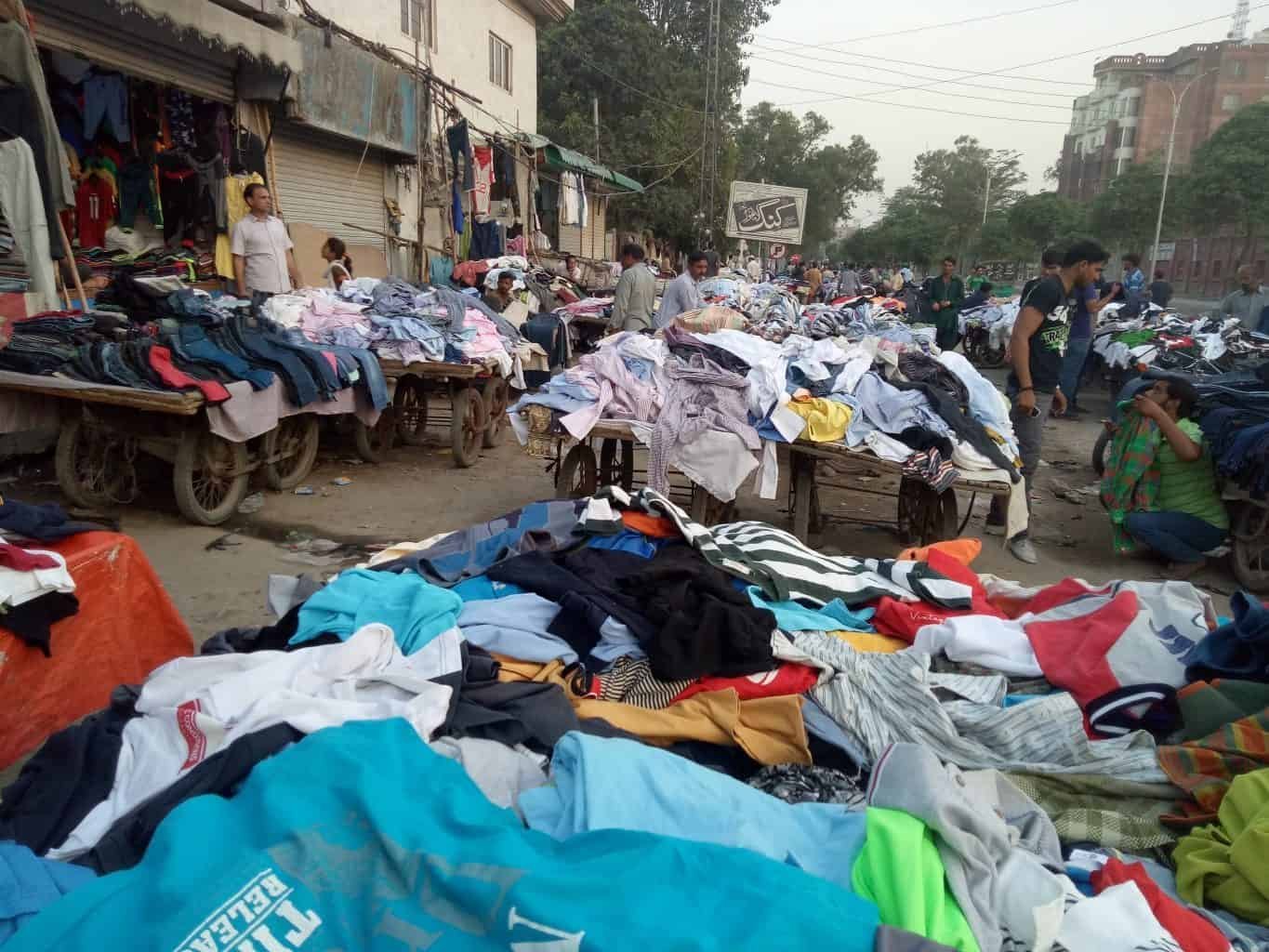
    In the budget for the fiscal year 2019-20, the Pakistan Terheek-e-Insaf (PTI) government has increased withholding tax on secondhand clothes by 5 per cent.

    Reports quoted the Pakistan Second Hand Clothing Merchants
    Association (PSHCMA) as saying that the tax on used clothes has been increased
    from 1 per cent to 6 per cent, effective July 1 – start of the new fiscal year.

    The development is expected to pave way for an increase in
    the costs of secondhand clothes by at least five per cent — something that
    could’ve been bought for Rs200 earlier, can now cost you Rs210; Rs500, Rs525.

    Urging the government to bring down the withholding tax amid rupee depreciation against the dollar, members of the association have also demanded that 10 per cent regulatory duty (RD) on used clothes import be removed.

    Pakistan imports used ladies garments, gents’ trousers and
    shirts, blankets, warm clothing, winter garments, shoes etc mainly from the
    United States (US) and Europe. Landa Bazar is a marketplace where all these secondhand
    goods are sold at cheaper rates.

    According to the figures of Pakistan Bureau of Statistics
    (PBS), import of worn clothing has risen to 426,797 tonnes valuing $165 million
    against 404,737 tonnes worth $148m in the last fiscal year.

    However, the development suggests that the trend might not
    live long with even used clothes and other items being out of reach for low-income
    groups.