Tag: taxes

  • Punjab increases govt employees’ pay by 30%, pensioners above 80 to receive 20% raise

    Punjab increases govt employees’ pay by 30%, pensioners above 80 to receive 20% raise

    In a significant development, the interim Punjab cabinet, headed by caretaker Chief Minister Mohsin Naqvi, has approved the provincial budget for the initial four months of the fiscal year 2023-24. The cabinet meeting, held on Monday, saw the endorsement of several key measures aimed at providing relief to the people and promoting various sectors of the economy.

    One of the major highlights of the budget is a 30 per cent increase in salaries for government employees, which will be implemented as an ad hoc relief. This decision is expected to bring significant relief to public servants who have been facing the brunt of rising costs of living. Additionally, pensioners above the age of 80 will receive a 20 per cent increase in their pensions, acknowledging their valuable contributions to society.

    The Punjab cabinet has also taken a bold step to stimulate business growth in the information technology and education sectors. By withdrawing all duties and taxes, the provincial government aims to create a favorable environment for these industries, fostering innovation and progress. An allocation of Rs70 billion has been set aside to provide relief to the people over the course of the first four months of the fiscal year.

    Addressing concerns related to the construction sector, the cabinet rejected a recommendation to increase stamp duty by up to 3 per cent. Instead, it approved fixing the stamp duty ratio at 1 per cent, thereby promoting the growth of the construction industry and encouraging investment in the sector.

    Recognizing the importance of agriculture, the cabinet allocated over Rs47 billion to support and enhance the sector. This move demonstrates the government’s commitment to bolstering the agricultural industry, which plays a crucial role in the province’s economy and livelihoods of the rural population.

    Furthermore, the interim setup has pledged to complete 50 per cent of ongoing development projects within the first four months of the new fiscal year. This ambitious target showcases the government’s determination to prioritise infrastructure development and provide better facilities for the citizens.

    The cabinet’s focus on critical sectors also extends to education and healthcare. An increase of up to 31 per cent in the budget allocation for education and health has been approved for the initial four months of the fiscal year. This decision reflects the government’s commitment to improving access to quality education and healthcare services across Punjab.

    The cabinet’s proactive approach toward promoting technological advancements is evident through the approval to establish an information technology park within the Lahore Knowledge Park. This venture aims to create a hub for technology-driven innovation and attract investment to the region.

    In a noteworthy move, the cabinet also approved the establishment of an endowment fund worth Rs1 billion for journalists. This step recognises the vital role played by journalists in society and aims to support and encourage their professional growth.

    Chief Minister Mohsin Naqvi emphasised that the Punjab budget does not impose any new taxes on the people, providing further relief to the general public. He commended the chief secretary, Planning and Development Board chairman, Punjab finance secretary, and their teams for their diligent efforts in presenting a people-friendly budget.

    The cabinet meeting was attended by provincial ministers, advisors, and secretaries of relevant departments, signaling a collaborative approach to decision-making and ensuring the inclusivity of various stakeholders.

    With the interim Punjab cabinet’s approval of this budget, the province is poised to embark on a path of economic growth, development, and improved quality of life for its citizens.
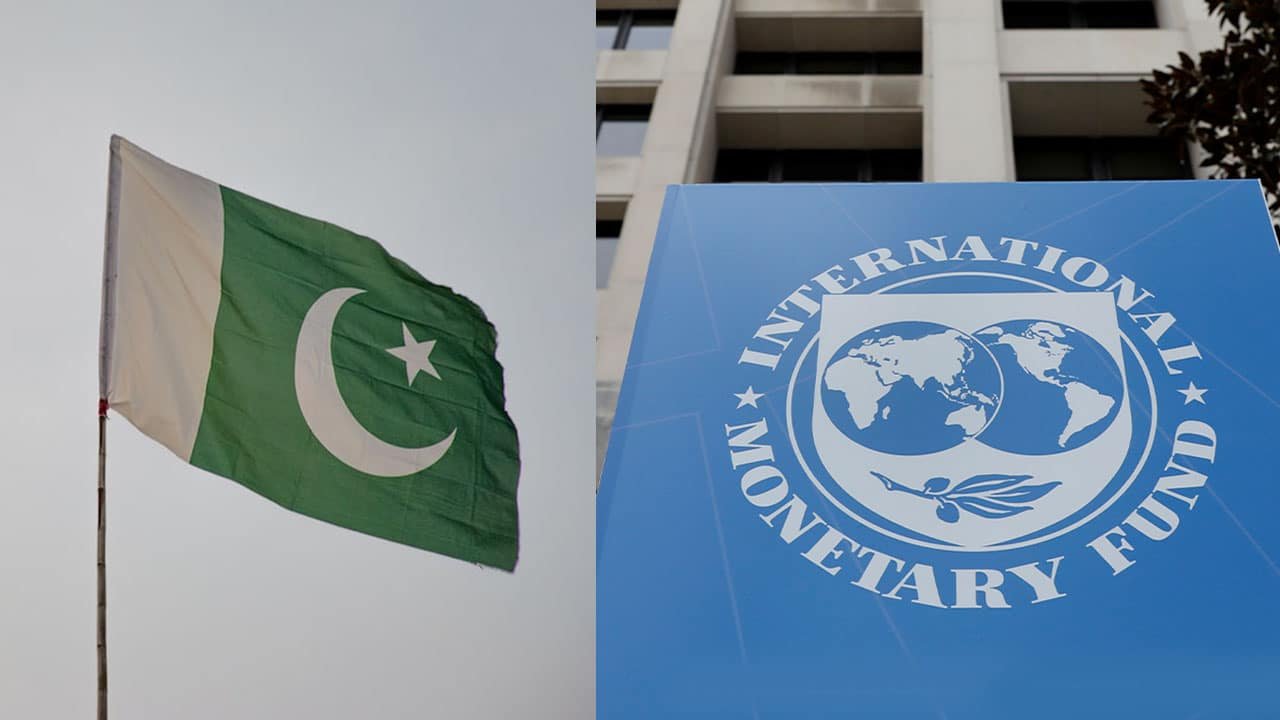
  • Pakistan moves forward with budget planning despite delayed IMF programme

    Pakistan moves forward with budget planning despite delayed IMF programme

    The government is expected to present an overall budget deficit of 5.1 per cent of the GDP for the fiscal year 2023-24, as stated in the delayed Budget Strategy Paper (BSP) to be presented before the federal cabinet. A recent report by The News highlighted that the paper will be tabled amid the government’s failure to revive the stalled International Monetary Fund (IMF) programme.

    The budget-making process has already been affected by uncertainty on both the IMF and political fronts. Nonetheless, the government has decided to present the next budget on June 9. Despite failing to reach a staff-level agreement with the IMF, the government will present the BSP for a medium-term period of three years. The proposed federal government budget deficit stands at 6.4 per cent of the GDP, while the overall deficit of the country is estimated to be lowered to 5.1 per cent of the GDP for the next financial year.

    In addition, the BSP for the upcoming fiscal year has proposed an allocation of Rs1.7 trillion for the defence budget compared to Rs1.56 trillion in the outgoing fiscal year. The overall primary surplus of budget deficit is estimated to be 0.3 per cent of the GDP for the next fiscal year, up from the previous projection of 0.2 per cent for the outgoing year.

    The Federal Board of Revenue (FBR) has been set a target of Rs9.2 trillion for the next budget, and the finance ministry suggests this is on the higher side. The FBR estimates that it could collect Rs7.2 trillion in the outgoing fiscal year against the targeted Rs7.64 trillion. In the next budget, the FBR could collect up to Rs8.6 trillion, subject to import restrictions being lifted, which could boost revenue collection. The government is projecting a GDP growth rate of 3.4 per cent for the next fiscal year, while inflation is expected to hover around 21 per cent.

    According to the IMF’s latest press briefing, the country may experience stagflation, which means low growth and higher inflation rates. If stagflation continues, it could lead to rising poverty and unemployment in Pakistan. The current account deficit is estimated to be approximately $8 billion for the next budget, and there is hope that import restrictions will be gradually lifted during the next financial year.

    The BSP has to be approved by the federal government under the Public Finance Management Act, which states that the paper must contain quantified macroeconomic and fiscal projections for the medium-term, be approved by April 15 of each year, and published on the Finance Division’s official website. Upon approval, the Finance Division will issue indicative budget ceilings to ministries and divisions.

    The minister for finance will also discuss the budget strategy paper with the Standing Committees for Finance and Revenue in the Senate and the National Assembly. The government may extend the deadline mentioned in Sub-section (1) of the PFM Act in case of an extreme requirement.

  • IMF asks for more effort from Pakistan, loan programme in jeopardy

    IMF asks for more effort from Pakistan, loan programme in jeopardy

    Despite assurances from friendly countries regarding external funds for Pakistan, the International Monetary Fund (IMF) remains unconvinced and is asking Islamabad to make additional efforts to unlock a loan programme.

    According to sources, Pakistan has been requested to present a repayment plan for a $3.7 billion loan to the IMF in June and to demonstrate stronger support from friendly nations to fulfill this obligation.

    However, the IMF has not yet accepted a proposal to exchange reserves worth between $11 to $12 billion, equivalent to two months’ revenues. The Ministry of Finance has stated that the government has imposed Rs170 billion in taxes through a mini-budget to secure a staff-level agreement with the IMF, which was initially scheduled for February 9th.

    It is noteworthy that the IMF has not included Pakistan in any agenda until May 17th. The budget-making process may also be affected if transactions with the IMF are not concluded, as funding will not be available from international financial institutions without a staff-level agreement.

    Last month, the staff-level agreement between Pakistan and the International Monetary Fund was postponed due to the lender’s new demand.

    Finance Secretary Hamid Yakoob’s meeting with the International Monetary Fund in the United States did not yield positive results as the lender requested the arrangement of $1 billion from commercial banks to unlock the loan program.

    The staff-level agreement, originally scheduled for February 9th, was delayed due to the IMF’s demands.

  • Pakistan’s hopes for IMF agreement rise as Saudi Arabia confirms $2 billion in additional deposits

    Pakistan’s hopes for IMF agreement rise as Saudi Arabia confirms $2 billion in additional deposits

    The International Monetary Fund (IMF) has informed Pakistan that Saudi Arabia has confirmed $2 billion in additional deposits, which has rekindled hopes of an early agreement signing. Since January, Islamabad has been negotiating with the IMF for the release of $1.1 billion from a $6.5 billion bailout package that was agreed upon in 2019.

    To unlock the funding, the Pakistani government has cut back on subsidies, removed an artificial cap on the exchange rate, added taxes, and raised fuel prices. However, assurances from friendly nations for additional funds have delayed the agreement.

    The lender has informed Pakistani authorities of the development and the Fund staff is reportedly satisfied with the latest confirmation. The report states that the Saudi authorities are set to make a public announcement, possibly during the upcoming visit of Prime Minister Shehbaz Sharif to the kingdom.

    The Saudi envoy in Pakistan had also hinted in a recent interview that his country had always supported Pakistan in critical situations and that good news would be shared soon. The sources have stated that all eyes are focused on the UAE for getting confirmation on another $1 billion deposit from them, which may pave the way for striking the staff-level agreement (SLA) with the IMF.

    Finance Minister Ishaq Dar is expected to visit UAE on his way to the US where he will hold talks on the release of funds. However, there is still another stumbling block in the way of signing the SLA with the IMF. The Ministry of Petroleum, in consultation with the PM Office, had announced an unplanned cross-fuel subsidy for owners of motorcycles and cars up to 800cc, which needs to be scrapped at this stage.

    The government has not yet withdrawn the proposed cross-fuel subsidy, which cannot be implemented in a half-baked manner. Such schemes were considered in the past during the tenure of former finance minister Shaukat Tarin and even during the era of the PDM-led government when Miftah Ismail had the charge of the Ministry of Finance.

    Even Miftah Ismail had allocated Rs48 billion on the eve of the last budget in the name of Sasta Petrol, but it could not be implemented because such schemes could not be designed properly. The announcement of a half-baked cross-fuel subsidy had provided an excuse to the IMF for delaying the SLA signing, as they were still raising questions for getting more details to ascertain how the scheme was going to be implemented in a transparent manner.

  • Real estate in Pakistan is ‘parking lot’ for untaxed money with support of DHAs and Army, says former FBR chairman

    Real estate in Pakistan is ‘parking lot’ for untaxed money with support of DHAs and Army, says former FBR chairman

    Shabbar Zaidi, the former Chairman of the Federal Board of Revenue in Pakistan, stated that only 300 companies out of the entire business sector in the country pay 70 per cent of the total taxes collected.

    According to Dawn, Zaidi dismissed the claims of some businesses that there were too many taxes in Pakistan and no dividends. He pointed out that the real estate was the “parking lot” of untaxed money, and that with the support of the DHAs and army, a system had been developed to officially launder money through real estate, which had perpetual amnesty in the country.

    He called for removing DHAs from the real estate business as there could not be fair competition between a state institution and private businesses in real estate, and also suggested that plots of land should be confiscated if construction was not done on them.

    Kashif Anwar, the president of the Lahore Chamber of Commerce and Industry, argued in favor of amnesty on undeclared foreign reserves to bring money back to the country.

    In another session, Tassaduq Hussain Jillani, the former Chief Justice of Pakistan, acknowledged that criticism of the Supreme Court for messing up big corporate cases was justified as the judges were not expert at finance and economics.

    Jillani suggested the formation of commercial benches in the SC and high court for such cases. In a session on local governments, Ammar Ali Jan, the general secretary of Haqooq-i-Khalq Party, criticized the absence of local government in the country, citing examples of polluted water and waste management issues.

  • Pakistan Tobacco Company fears surge in smuggling, fake cigarette supply after tax hike

    Pakistan Tobacco Company fears surge in smuggling, fake cigarette supply after tax hike

    Pakistan Tobacco Company (PTC) has expressed serious concern over the recent mini-budget announcement, stating that new taxes on cigarettes will result in an increase in smuggling and counterfeit products in markets. Speaking to the media on Friday, PTC’s Director Legal and External Affairs, Syed Asad Shah, explained that the increase in federal excise duty (FED) and the lower minimum price set by the Federal Board of Revenue (FBR) would lead to less revenue collection from the cigarette industry.

    Shah displayed several illicit cigarette packs available in markets across the country, including some smuggled brands without health warnings, counterfeit products of local brands, and unregistered and non-tax-paid locally produced cigarettes.

    Shah projected that the share of illicit cigarettes in Pakistan would increase from the current 35 per cent to 40-50 per cent in the current year. He added that if the government did not rationalize the policy of managing the threshold price level and did not restrict illicit trade, its revenues would also decline after two years. Illicit cigarettes are sold below the minimum price because the applicable tax per pack is not paid on these products.

    The cigarette industry paid total taxes of Rs150 billion in fiscal year 2021-22, and the expected tax receipts this year would be around Rs185 billion because of the new taxation measures. According to the industry, tax contribution by PTC and Philip Morris, two multinational companies, alone will be around Rs182 billion.

    Shah pointed out that around 35 cigarette companies were running in Pakistan, making some 200 brands, but local players paid only Rs3 billion in taxes and duties. He added that many companies were not paying due taxes, which was why some were selling cigarette packs for Rs7.

    PTC officials emphasized the need for a rational increase in the minimum legal price of cigarettes. After the recent rise in FED, taxes, and duties on tier-2 cigarette packs came in at Rs101, but the minimum sale price of the same packs was Rs108.

    According to Express, the company officials demanded that the finance ministry take stringent action against the illicit cigarette trade and ensure across-the-board implementation of the FBR’s track and trace system that monitors the production and supply of cigarettes.

  • IMF likely to announce staff level agreement with Pakistan by this week

    IMF likely to announce staff level agreement with Pakistan by this week

    According to Syed Naveed Qamar, the Federal Minister for Commerce, Pakistan has taken all necessary measures to unfreeze a $6.5 billion credit line and is expected to reach a staff level agreement (SLA) on Extended Fund Facility (EFF) with the International Monetary Fund (IMF) this week.

    Dr Aisha Ghaus Pasha, the Minister of State for Finance, stated that Pakistan and the IMF are close to reaching an SLA, but that basic structural reforms are necessary regardless of whether they are part of the IMF program or not.

    After the formal announcement, Pakistan will receive a $1.2 billion tranche under the EFF. Qamar stated that the agreement would give investors and creditors confidence in Pakistan’s stabilising economy and that their money would remain protected.

    Qamar emphasized that the IMF program is the beginning of other funds flowing in and that increased imports would benefit exports.

    However, Pakistan is struggling to meet the tough conditions set by the IMF, such as increasing its low tax base, ending exemptions for the export sector, and raising artificially low energy prices. The country is in dire need of funds as the State Bank of Pakistan-held foreign exchange reserves only cover one month of imports.

    To meet IMF conditions, Pakistan has raised taxes, cut subsidies, and devalued its currency. Additionally, a supplementary finance bill was approved that increases sales tax from 17 per cent to 25 per cent on imports and raises general sales tax from 17 per cent to 18 per cent, increasing the burden on already inflation-stricken people.

  • National Assembly passes mini-budget to meet IMF targets

    National Assembly passes mini-budget to meet IMF targets

    The National Assembly of Pakistan passed the Finance (Supplementary) Bill, 2023, aimed at amending certain laws relating to taxes and duties. The bill is intended to generate an additional Rs170 billion within the next four and a half months, to fulfill the last prior actions agreed upon with the International Monetary Fund (IMF).

    Pakistan’s reserves have fallen to a critically low level of $2.9 billion, which experts believe is sufficient for only 16 to 17 days of imports. The completion of the ninth review of a $7 billion loan programme with the IMF would lead to a disbursement of $1.2 billion, as well as unlock inflows from friendly countries.

    The Finance Minister, Ishaq Dar, introduced the bill to the National Assembly on February 15, and the formal debate started on it after moving a motion by Commerce Minister Syed Naveed Qamar on February 17. In his concluding speech during the NA session, Dar said the new taxes proposed in the bill would not affect the poor segments of society, as most of the new taxes are being imposed on luxury items that they don’t use.

    The government has also proposed an increase of Rs40 billion in the budget of the Benazir Income Support Programme (BISP) to help the poor cope with rising inflation.

    The Finance Bill aims to increase the general sales tax (GST) rate from 17 per cent to 18 per cent, with an increase to 25 per cent on luxury items. The bill proposes to raise the federal excise duty (FED) on cigarettes, and aerated and sugary drinks. GST on 33 categories of goods covering 860 tariff lines, including high-end mobile phones, imported food, decoration items, and other luxury goods, will increase from 17 per cent to 25 per cent, however, the raise will be notified through another notification.

    The excise duty on cement has been raised from Rs1.5 to Rs2 per kilogram, a measure expected to generate an additional Rs6 billion. An excise tax of 10 per cent has been proposed on non-aerated drinks like juices, including mango and orange, to raise an additional tax of Rs4 billion.

    The finance bill also proposed a 10 per cent withholding tax on functions and gatherings held in marriage halls, marquees, hotels, restaurants, commercial lawns, clubs, community places, or other places, expected to raise Rs1 billion to Rs2 billion from this tax. The excise duty on carbonated or aerated drinks has been raised to 20 per cent from 13 per cent to generate an additional Rs10 billion for the government.

    The proposed increase in excise duty on business, first, and club-class air tickets will raise an additional Rs10 billion for the government, with a tax rate of 20 per cent (or Rs50,000, whichever is higher) proposed on the value of air tickets.

  • Journalist who was allegedly involved in Gen Bajwa’s tax data leak returns home

    Journalist who was allegedly involved in Gen Bajwa’s tax data leak returns home

    Senior investigative journalist Shahid Aslam took to Twitter to announce his release from the custody of the Federal Investigation Agency (FIA) for his alleged part in leaking the personal tax data of former army chief General (retired) Qamar Javed Bajwa.

    In a series of tweets, he thanked his colleagues within the media community.

    He said, “Thanks everybody including the media community particularly @UmarCheema1 @AzazSyed @matiullahjan911 @Fahdshehbazkhan @AmirZia1 @AnsarAAbbasi @AsadAToor and my lawyer @MianAliAshfaq for the unprecedented support on my illegal arrest by @FIA_Agency and those who had ordered.”

    After Aslam’s arrest, many journalists came forward for his defence.

    On January 18, the Islamabad sessions court granted bail to him after being in custody for four days.

    On January 14, Aslam was sent on a two-day physical remand to FIA over his alleged involvement in this matter.

    ‘Dehshatgardon ki tarhaan mujhe uthwaya hai’; journalist who was allegedly involved in Gen Bajwa’s tax data leak lashes out

    Bol News journalist Shahid Aslam, talking to the media, has categorically said that he has nothing to do with former army chief General (retd) Qamar Javed Bajwa’s tax data leak.

    The journalist directly blamed Director General (DG) Federal Investigation Agency (FIA) Mohsin Butt for picking him up from his house “like a terrorist”. According to him, 20-25 men were sent to pick him up.

    “They [FIA] have mentally tortured me”, Aslam said.

    Aslam alleged that Mohsin Butt was given orders from higher up that he had to bring the journalist in.

    On Monday, a local court in Islamabad sent Aslam to jail on judicial remand.

    Journalist who was allegedly involved in Gen Bajwa’s tax data leak is handed over to FIA

    On Saturday, Aslam was sent to a two-day physical remand to FIA over his alleged involvement in this matter.

    Judicial Magistrate Umar Shabbir of the District and Sessions court announced the decision to hand over the journalist to the agency. During the proceedings, the reporter denied all charges against him, saying that there is no evidence against him.

    However, the prosecutor said the proof is in Aslam’s mobile phone and laptop, which he is not providing to the investigators. He claimed the journalist played the role of “facilitator” in the leak.

    Earlier that day, the agency arrested Aslam from Lahore and produced him in court.

    In November, a report by investigative news website FactFocus accused the army chief and his family of amassing assets worth Rs12.7 billion over the past six years. FactFocus has claimed that after the publication of the story, the traffic on its site was “disrupted” and the website had been “banned”.

    At the time, Finance minister Ishaq Dar had said that the leak was “clearly violative of the complete confidentiality of tax information that the law provides”.

    He also shared that he has received the interim report related to the leak of Gen (retd) Bajwa’s income tax records, adding that the authorities had traced some of the people involved in the act.

  • FBR collects highest-ever tax of Rs6 trillion in FY22

    FBR collects highest-ever tax of Rs6 trillion in FY22

    The Federal Board of Revenue (FBR) achieved a significant feat by collecting a record Rs6,000 billion in revenue during the previous fiscal year 2021–2022.

    The FBR reported that during the current fiscal year, it collected Rs2,205 billion in income tax, Rs2,773 billion in sales tax, and Rs1,007 billion in customs duty. The organisation in charge of collecting taxes also released Rs305 billion in refunds during that time.

    According to former finance minister Shaukat Tarin, the government of Imran Khan’s policies and the country’s economic growth allowed FBR to meet its revenue goals.

    Tarin insisted that the government should continue enforcing the prior administration’s tax laws. According to Tarin, the government shouldn’t impose additional taxes on the current taxpayers. Heavy taxes shouldn’t be imposed on the economy’s productive sectors, he continued.

    The government has given the general public significant tax breaks on a number of necessities, but the FBR claims that these tax breaks haven’t prevented revenue collection from continuing on an unprecedented and constant growth trajectory. Sales tax on all POL products has been eliminated for the first time in the nation’s history, costing the FBR Rs45 billion per month.

    In order to maximise revenue potential through digitization, transparency, and taxpayer facilitation, the FBR has implemented a number of novel interventions at both the policy and operational levels. In addition to ensuring transparency, facilitating taxpayers, and making business easier, this has led to a steady increase in revenue collection.