Tag: taxes

  • PTA temporarily unblocks non-compliant smartphones

    PTA temporarily unblocks non-compliant smartphones

    A number of Pakistani users have regained cellular connectivity on smartphones that are not PTA compliant. This led many customers and sellers to believe that the PTA had unblocked all non-PTA-approved phones.

    Unfortunately, all of the reports claiming that the PTA has unblocked non-tax compliant phones are false as the majority of imported phones with unpaid taxes, are still blocked by the Pakistan Telecommunication Authority (PTA) and cannot work with any cellular networks in the country.

    They can, however, continue to use Wi-Fi connections like before. Some people with unapproved phones had their phones unblocked at random in recent weeks, allowing them to reconnect to cellular networks.

    The telecommunications authority has made clear that it has unblocked an undefined number of non-approved phones solely to motivate people to pay taxes and have their phones properly unblocked.

    According to PTA spokesperson Khurram Ali Mehran, this was just a persuasive drill to get people to authenticate their phones and pay taxes, no matter how expensive they are.

    He stated that the PTA chose to unblock the phones at random and that they will all be blocked again within two months.
  • IMF urges FBR to collect Rs7.2 trillion in the upcoming budget

    IMF urges FBR to collect Rs7.2 trillion in the upcoming budget

    The International Monetary Fund (IMF) urged the Federal Board of Revenue (FBR) to collect Rs7.2 trillion in taxes in the upcoming budget, with personal income tax (PIT) and GST harmonisation being prioritised.

    “Discussions are ongoing as the FBR pitched up its tax collection target in the range of Rs6.9 trillion, but the IMF insists on stretching the FBR’s tax collection target in the range of Rs7.2 trillion in the coming budget for 2022-23,” top official sources confirmed on May 26.

    When contacted for comment, FBR Chairman Asim Ahmed stated that work in this area was still ongoing.

    Total tax collection would be expanded to Rs7.2 trillion in the upcoming budget, up from Rs5.9 to Rs6 trillion in the previous fiscal year, according to revised estimates. The government was also having difficulty meeting its non-tax revenue target for the current fiscal year because the State Bank of Pakistan (SBP) did not provide its estimated Rs200 billion quarterly profit to the Ministry of Finance following the passage of the new SBP Amendment Act 2022. This sum may be provided in the next fiscal year, but the SBP found it difficult to provide it before June 30, 2022.

    Personal income tax (PIT) would be markedly restructured, with the taxable cap likely to be raised from the present level of 0.6 million to Rs1-1.2 million, and the amount of slabs lowered from 13 to six. The IMF also suggested significantly raising tax rates.

    Former Finance Minister Dr. Hafiz A Pasha stated that the maximum tax rate was imposed on an annual income ceiling of Rs 5 million, which was 300 per cent higher than Pakistan’s per capita income. He proposed that those earning Rs20 million or more per year be subject to the full tax rate.

    He furthermore recommended that the duration and rate of capital gains on stock shares be assessed and modified in order to collect more taxes.

    Via: Islamabad Post

  • FBR records 29.1% growth during July 2021 to March 2022, despite providing ‘massive tax relief’

    The provisional revenue collection data for the months of July 2021 to March 2022 of the current financial year 2021-22 have been announced by the Federal Board of Revenue (FBR).

    The net collection was Rs575 billion for the month of March 2022, up 20.5 per cent from Rs477 billion in March 2021.

    Conversely, the gross revenues, rose by 28.9 per cent in the current financial year, from Rs3,577 billion in July 2020 to March 2021 to Rs4,611 billion in July 2021 to March 2022. Furthermore, the amount of reimbursements granted in March 2022 was Rs31.9 billion, compared to Rs26.3 billion in March 2021, showing a 21.3 per cent upsurge.

    Then again, refunds of Rs229 billion were paid from July 2021 to March 2022, a 25 per cent increase over the Rs183 billion paid the previous year.

    Read more: Petrol, Diesel prices to remain unchanged till April 15

    It is worth noting that the continuous remarkable growth in revenue collection has been achieved despite the government providing ‘massive tax relief’ to the general public on a variety of vital commodities.

    For the first time in Pakistan’s history, the sales tax on all petroleum products was abolished, costing the FBR Rs45 billion in the past month.

  • PTI’s Hammad Azhar gives tax details, confirms that he paid Rs18 million in taxes

    PTI’s Hammad Azhar gives tax details, confirms that he paid Rs18 million in taxes

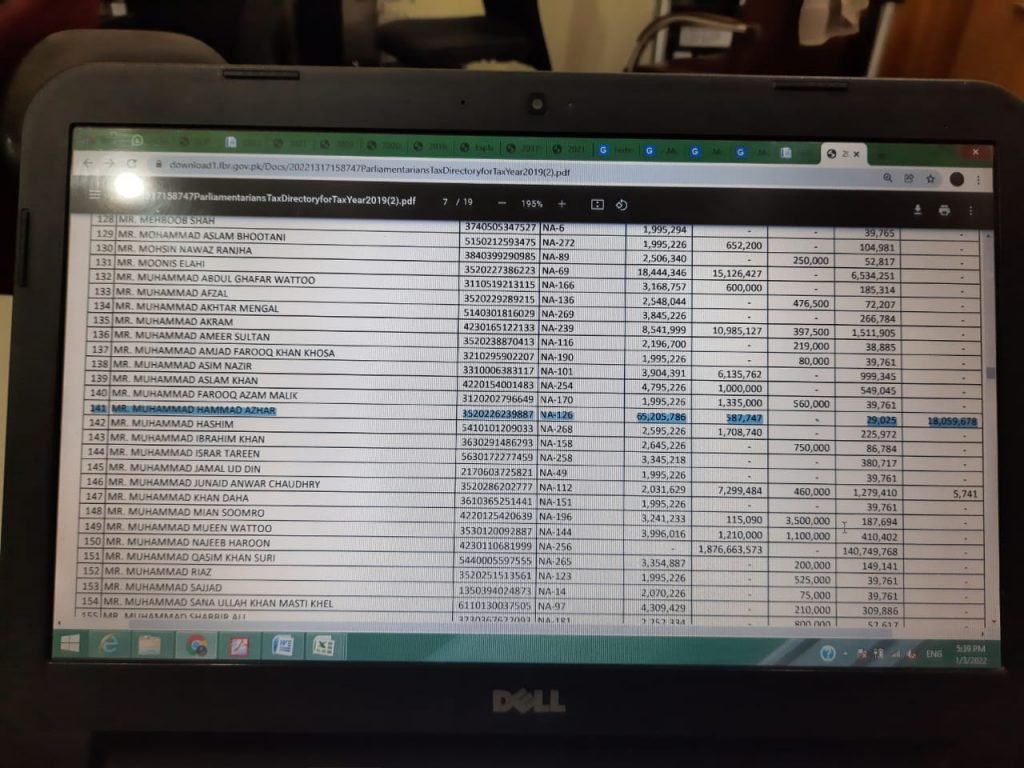
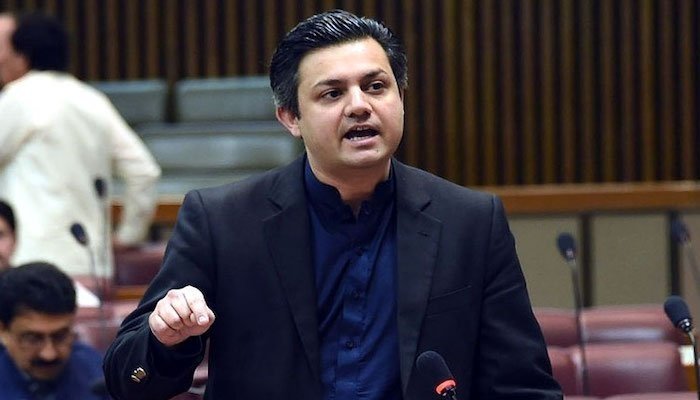
    Energy Minister Hammad Azhar has responded to The Current’s news report that stated he paid Rs29,025 in an individual capacity in 2019. However, the minister denied the report and clarified that he paid Rs18 million in 2019.

    Hammad Azhar said that, “My AOP pays my personal income tax on my behalf and it has paid Rs18 million on that count. They [Federal Board of Revenue] have listed clearly that my AoP has paid my share of income tax as Rs18 million.”

    The Federal Board of Revenue (FBR) released its 2019 tax directory for parliamentarians recently. According to the document, the directory complied tax returns filed manually and electronically till January 3, reports Dawn.

    According to the data, Prime Minister (PM) Imran Khan paid Rs98 lakh. Leader of the Opposition in the National Assembly (NA) Shehbaz Sharif paid Rs82 lakh while Pakistan People’s Party (PPP) Chairman Bilawal Bhutto-Zardari paid Rs5 lakhs 30 thousand.

  • Govt to reduce taxes on food items: reports

    The government has reportedly decided to reduce taxes on the prices of food items, Ayaz Akbar Yousafzai reported for Geo News.

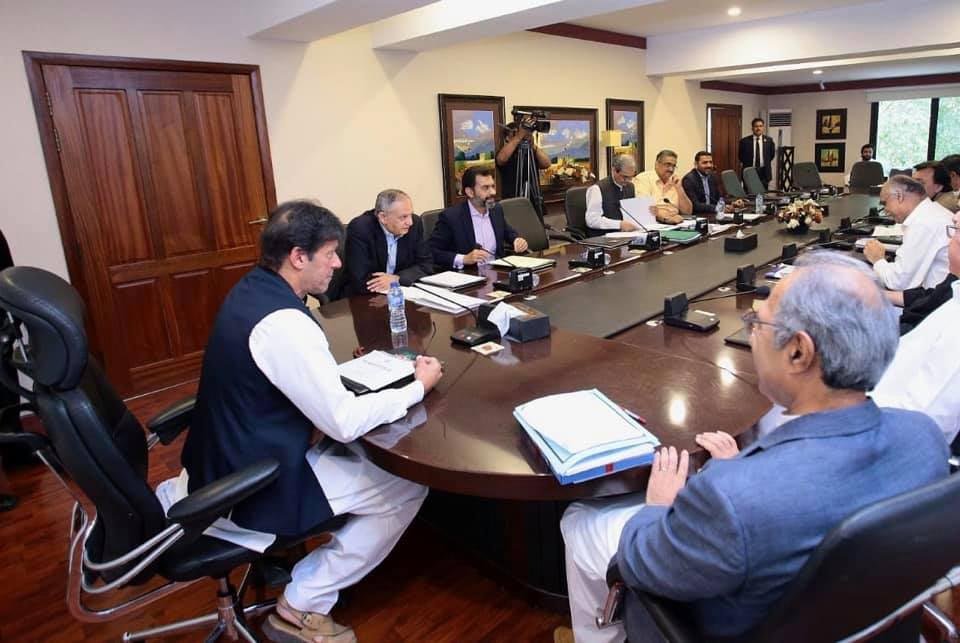
    According to sources, a meeting was held in Islamabad under the chairmanship of Prime Minister (PM) Imran Khan to review the rising inflation and the overall economic situation in the country. The impact of the rising prices of petroleum products was also discussed in the meeting. 

    During the meeting, PM Khan issued orders to the federal ministers to take steps for the implementation of Price Control Committees.

    The premier also directed the ministers to keep an eye on the artificial price hike in their constituencies and to take strict measures against hoarders 

    Commodity prices have gone up in recent weeks.

    Addressing a news conference on Monday, Minister for Planning and Development Asad Umar said the government had decided to reduce GST rate and customs duty by half to 8.5 per cent and would abolish 2 per cent additional customs duty to cut cooking oil prices by Rs45 per kilo.

    He said that the decision would be implemented on the return of Adviser to the Prime Minister on Finance and Revenue Shaukat Tarin.

  • Govt to impose extra Rs900 billion taxes: report

    Govt to impose extra Rs900 billion taxes: report

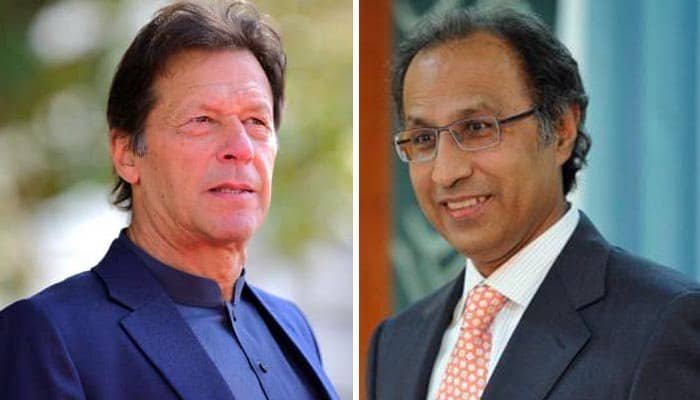
    Pakistan’s former finance minister Dr Hafeez Pasha has said that under an ongoing deal with the International Monetary Fund (IMF), the government will impose taxes worth Rs900 billion in the upcoming budget, The Express Tribune reported.

    “The government has assured the IMF that it will impose Rs700 billion in additional taxes in the first year, Rs900 billion in the second year and Rs1,200 billion in the third year. We don’t have an option but to renegotiate with the IMF since our team was not able to prepare things properly,” Pasha said.

    “It is high time to bring radical tax reforms through tough decisions in the upcoming budget and those who can bear taxes should now take the burden since Pakistan has to pay Rs2 trillion in debt servicing this year; this amount will further increase to Rs3 trillion next year,”

    Economist Dr Qais Aslam said that Pakistan could not enter the 21st century “while having a mindset and policies of the 19th century”. “We have to uplift our institutions with a clear message to our bureaucracy that things will no longer materialise with their mindset.”

    He pointed out that the small-scale industry accounted for only 1% of Pakistan’s economy whereas in the modern world it was considered the backbone of any country. “We have to fix these issues, or else it will be impossible to give employment to the people.”

    “The country has lost one million jobs in the past one year and during the same period about two million youngsters have qualified for jobs… we have to create employment opportunities for them,” he said.

  • Govt to impose tax on underground water usage

    The government of Sindh on Tuesday decided to impose a new tax on the use of water in the province, Profit reported.

    A draft of law comprising recommendations for the proposed tax has been prepared and the officials of local government department will brief the members of the provincial cabinet over the upcoming Sindh Water Tax Act in a meeting.

    The draft of the law suggests Rs1 per litre tax on water, sources said. The tax will be recovered from the mineral water companies, according to sources.

    Proposed tax will also be recovered from the soft drinks manufacturing companies, as per the report

    The revenue generated by the proposed tax will be distributed among the Karachi Water Board and the Water and Sanitation Agency (WASA).

  • ‘Salary not enough to pay for my expenses’ says PM Imran Khan

    ‘Salary not enough to pay for my expenses’ says PM Imran Khan

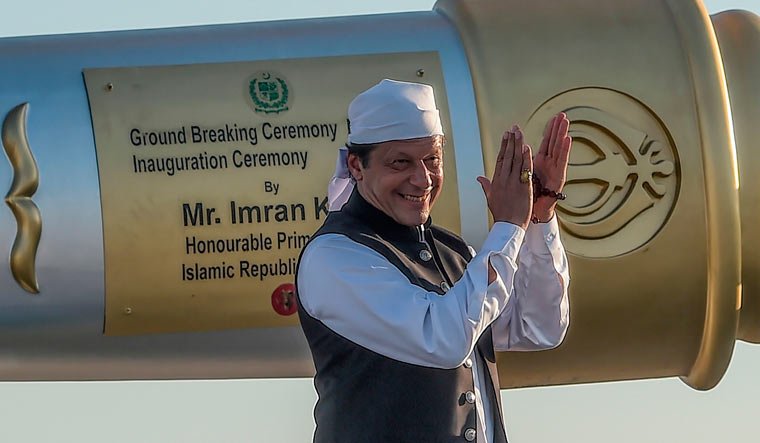
    Addressing the business community in Islamabad, Prime Minister Khan stated that the business community needs to pay taxes if the country is going to get out of the present economic crisis. He urged them to work with the government and help in collecting more taxes.

    He also said that people didn’t want to pay taxes because former rulers had looted the country and lost the trust of the people. “When leaders live lavishly on public expense, who will pay taxes?” he asked.

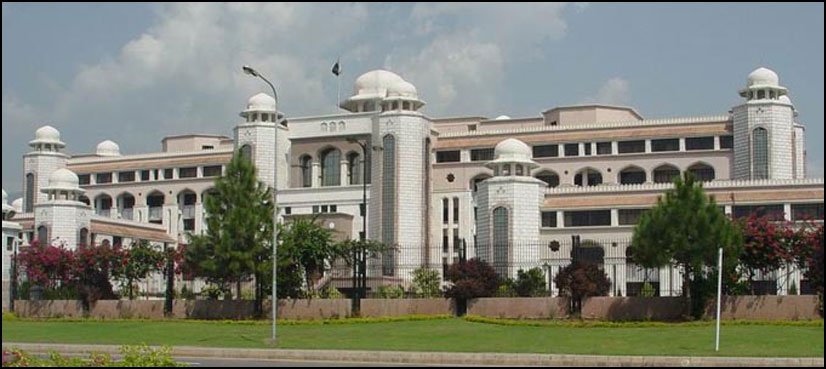
    Prime Minister House in Islamabad

    He said that he had slashed the expenses of the PM house by 40 percent and that he lived in his own home and paid his own expenses. “My salary is not enough to fulfil by own household expenses,” he said, adding that he did not start any business after becoming the Prime Minister and that the expenses of his foreign tours were 10 times less than previous rulers.

    PM Khan is leaving for Davos today where he will be speaking at the World Economic Forum.

  • ‘Eight million people have gone below poverty line under PTI govt’

    ‘Eight million people have gone below poverty line under PTI govt’

    Pakistan’s renowned economist Dr Hafiz A Pasha has claimed that eight million people in the country have gone below the poverty line under the Pakistan Tehreek-e-Insaf (PTI) government and another 10 million could slip below the same soon, Express Tribune reported.

    According to the details, Dr Pasha in an article has said that due to low economic growth and double-digit food inflation the national poverty ratio, which was 31.3% in June 2018, would sharply jump to over 40% by June 2020.

    In simple terms, people living in poverty will increase from 69 million in June 2018 to 87 million by June 2020, indicating 26% increase in poverty in first two years of the PTI government.

    “The situation is very alarming due to an economic growth rate that is close to the population growth rate and an exponential increase in prices of perishable food items,” reports quoted Pasha as saying.

    The economist said that the government’s decision to simultaneously increase taxes, energy tariffs and devaluation of currency contributed to the increase in poverty.

    He said that the Pakistan Muslim League-Nawaz (PML-N) government’s decision to keep the rupee-dollar parity stable kept the inflation under check adding that the incumbent government is implementing probably the toughest IMF programme of Pakistan’s history aimed at overpowering fiscal and external accounts challenges.

    Dr Pasha is the former finance minister of Pakistan and has also advised Prime Minister (PM) Imran Khan at the time of building consensus on signing an IMF [International Monetary Fund] programme.

    Meanwhile, the Federal Minister for Planning and Development Asad Umar in response to Dr Pasha’s claims has said, “We do not have latest official poverty statistics,” adding that the country was exiting a severe balance of payments crisis which had its own implications.

    “The PTI government accelerated the poverty alleviation measures aimed at protecting the poor and vulnerable people from the adverse impact of macroeconomic adjustments”, said the minister.

  • ‘Govt collected Rs644bn taxes against target of Rs580bn’

    ‘Govt collected Rs644bn taxes against target of Rs580bn’

    The Pakistan Tehreek-e-Insaf (PTI) government has succeeded in collecting Rs644 billion taxes against the envisaged target of Rs580 billion, Adviser to Prime Minister (PM) on Finance and Revenue Dr Hafeez Shaikh has said.

    Addressing a press conference, Shaikh said the government is confident to surpass the growth target of 2.4 per cent set for the current fiscal year as after gaining stability on the external front during the past year, the economy is currently moving in a positive direction.

    “There has been considerable growth in exports, which grew from $2.01 billion during first two months of last year to $2.23 billion this year, while imports have declined from $5 billion to $4.1 billion, reducing overall current account deficit of the country by 7.3 per cent.”

    PM Imran Khan’s adviser also said that the overall revenue has increased from Rs509 billion during the first two months of the last year to Rs580 billion during the current year, showing a 25 per cent growth.