Tag: Teachers

  • Shehzad Roy urges government to reverse sales tax on books

    Shehzad Roy urges government to reverse sales tax on books

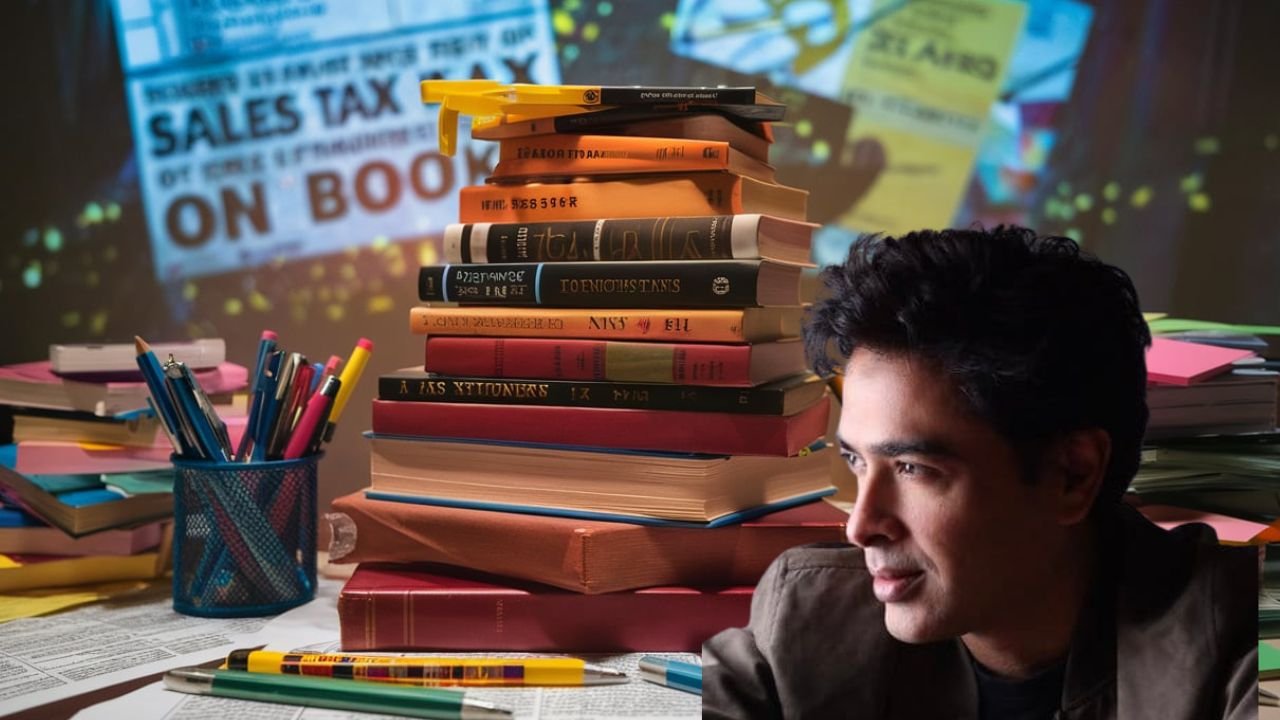
    Singer and social activist Shehzad Royal has requested the government to undo the book sales tax it has recently imposed, and restore teacher salary rebates.

    Taking to his X (formerly Twitter) handle, the singer said that he also requested the Prime Minister and Planning Minister Ahsan Iqbal to reinstate the 25 percent tax rebate for teachers.
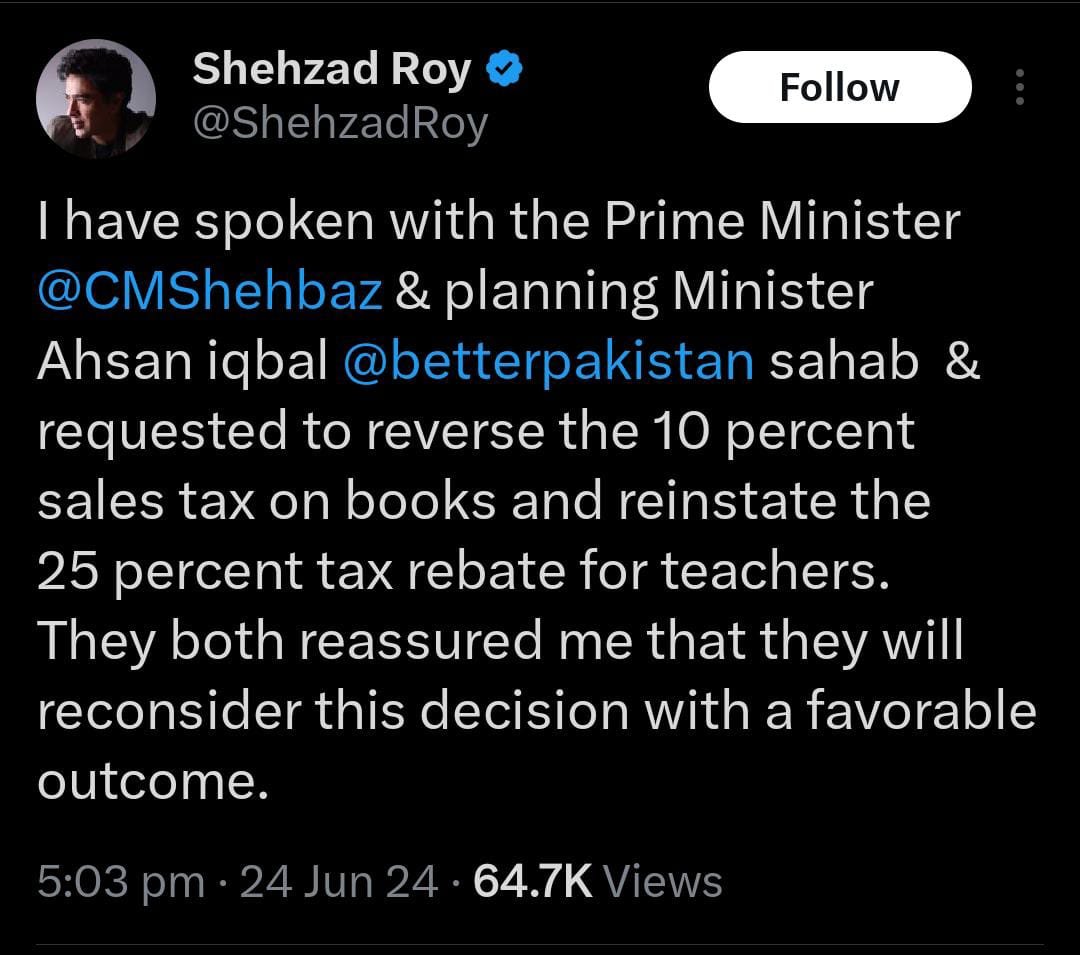
    Shehzad Roy tweeted, “I have spoken with the Prime Minister @CMShehbaz & planning Minister Ahsan iqbal @betterpakistan sahab & requested to reverse the 10 percent sales tax on books and reinstate the 25 percent tax rebate for teachers. They both reassured me that they will reconsider this decision with a favorable outcome.”

    The federal government, through the Finance Bill 2024, removed tax rebates for full-time teachers and researchers which created panic in the education sector. The proposal was aimed at teachers at both private and public education institutions.
    The Finance Bill proposes a 10 percent sales tax on books, with the condition that any refund of excess input tax would not be allowed. When the International Monetary Fund (IMF) wants Pakistan to tax stationery products, which include books, pens, paper, sticky notes, and similar material, it is uncertain if the government would remove this tax rate.

  • Police baton-charges teachers and health workers in Lahore, Bahawalpur

    Police baton-charges teachers and health workers in Lahore, Bahawalpur

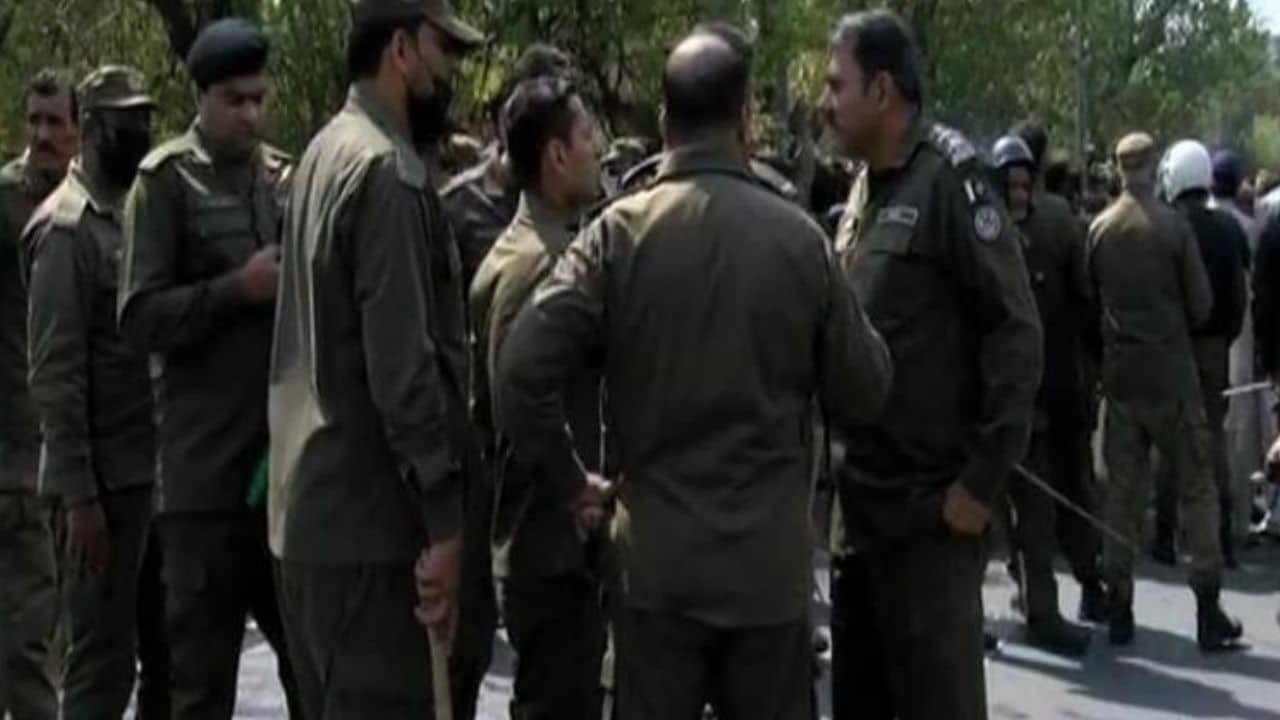
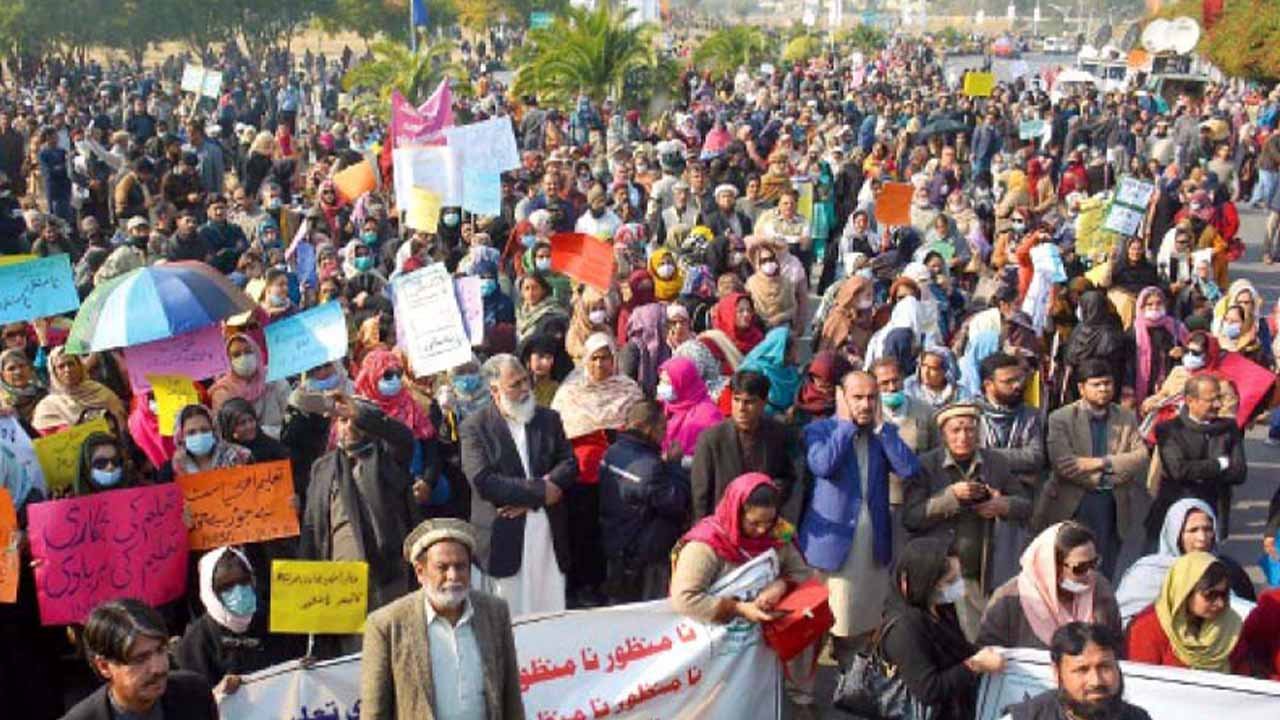
    In an attempt to deter protesting government employees, Lahore police subjected them to baton charging. The incident occurred on Thursday while protesters were holding a rally from the PMG chowk to Aiwan-i-Iqbal. There were more than a hundred government employees, both male and female teachers and health workers. As part of the crackdown they were shifted to different police stations of the city.

    The protest was held by All Government Employees Grand Alliance (AGEGA), a coalition of 34 organisations representing many departments including health, education and higher education. Their protest is especially targeteding the Punjab Government and the district administration over the arrest of more than 200 teachers.

    They have a range of demands which include the restoration of leave encashment, reversal of amendments to pension regulations and cancellation of privatisation plans for public schools. To get their protests registered, many teachers are boycotting classes in the schools and colleges throughout the province for the last one week.

    The office bearers of AGEGA have held Caretaker Chief Minister Mohsin Naqvi responsible for all their complaints but they also pledged not to give up on their demands or surrender in front of violence.

    In Bahawalpur, Police booked around 200 employees under 16-MPO for making provocative speeches against the Government and blocking the road. An FIR lodged by the police says that the demonstrators were asked to unblock the road, however, they kept it blocked until action by police became imperative.

  • Video of primary teacher wearing dress colored by her class adored by netizens

    Video of primary teacher wearing dress colored by her class adored by netizens

    The internet’s cold heart was won over by a primary teacher who surprised her pupils on their last day by wearing a dress painted by them.

    Heather Stansberry shared the video on her Instagram in which her students were looking delighted at discovering the dress the teacher was wearing under the coat. She explains in the video that she asked the kids to color her white dress.

    She captured their reaction on the day she wore it. It was also their last day with her.

    Little children could be seen coming up to the teacher, hugging her and identifying the art each of them made.
    “The dress reveal!! Such a happy/sad day my heart is so full,” she wrote.

    Since being shared, the video has amassed 1.2 million views. The comment section was filled with much love and admiration. One person wrote this was a beautiful idea.

    “You should wear the dress to these kids’ graduation once they all have forgotten about the drawings,” added another.

    People couldn’t help but adore the gesture. What an incredibly wonderful way to make your students fall in love with art.

  • Sindh becomes the first province to introduce teaching license policy

    In a historical move, Sindh has become the first province to introduce a teaching license policy for instructors from the public and private sector.

    Under this policy, two teacher training insitutes will be established under the Sindh Teacher’s Education Development Authority (STEDA) and a board will be set up to oversee teacher trainings as well as provide professional licenses.

    With this initiative, anyone who wishes to join with a Bachelor’s in Education (BEd.) can give the exam, after which they will be provided with a license to teach students from one of the three categories: elementary (Grades 1-8), primary (Grades 1-5) and secondary (Grades 6-12).

    The Sindh government has also taken a step to attract more people towards the teaching sector by opening up 700 new vacancies for elementary school teachers for BPS-16 across the province, which will be offered to those with a BEd and a teaching license obtained by passing the exam.

    Speaking on the success of the policy, the Provincial Minister of Sindh for Education, Culture, Tourism and Antiquites, Syed Sardar Ali Shah said:

    “Conceptualising and bringing the teaching license policy to life has not been easy. However, I am grateful to Aga Khan University’s Institute for Educational Development (AKU-IED), Sindh Teachers Education Development Authority (STEDA), Durbeen and all other partners who have worked tirelessly to make this policy a possibility. The success of the next generation of teachers and students ultimately depends on its smooth implementation.”

    He also added that Sindh was the only province in Pakistan to pass the landmark bill which shall improve the teaching profession and attract mroe bright minds to the field:

     “Sindh is the only province that has approved a teaching license policy, which represents a proactive approach to recognising the value and importance of effective teaching. With the policy in place, the Sindh Government has laid the foundation for a more robust and professional teaching workforce, which will have a positive and lasting impact on the educational landscape in the province.”

  • KP launches AI-based attendance system for schools

    KP launches AI-based attendance system for schools

    Due to an upsurge in complaints about teachers’ absences, Khyber Pakhtunkhwa (KP) has deployed artificial intelligence (AI)-based video systems in schools to monitor students’ and teachers’ live attendance.

    According to Zarif-ul-Mani, MD of the Elementary Schools Education Foundation (ESEF), the AI-based attendance system in the foundation schools would uphold the standard of instruction and improve student performance.

    He also described how the School Management Information System (SMIS) works to guarantee quality, accountability, and a simple transfer of scholarship cash to partners.

    He also commended the ESEF’s e-governance division for reviving this project, which had been mismanaged in the past.

    Additionally, the project would reduce dropout rates while guaranteeing that professors are present and that classes start on schedule.

    Prior to that, the government of Sindh made the decision to take strong action against teachers who were getting their wages while staying at home and neglecting their jobs.

    The provincial education agency reportedly stopped more than 2,000 “ghost teachers” being paid across the province.

    According to Express Tribune, Akbar Laghari, the education secretary for Sindh, said in a statement on the choice that they have filed a letter to the AG for Sindh asking him to cease paying the wages of 2,019 ghost teachers.

    He added that the department would fire the “ghost teachers” and would do everything it took to ensure that teachers showed up for work.

  • Fact Check: All Confucius Chinese learning centers except NUML are shutting down

    Fact Check: All Confucius Chinese learning centers except NUML are shutting down

    Claim: All Confucius Chinese learning centers have shut down in Pakistan in the wake of the University of Karachi bomb blast in which three Chinese nationals were killed.

    Fact: All Confucius Chinese learning centers except the one in NUML are shutting down as most Chinese educators have gone back to China. Remaining classes for the current session have been shifted online.

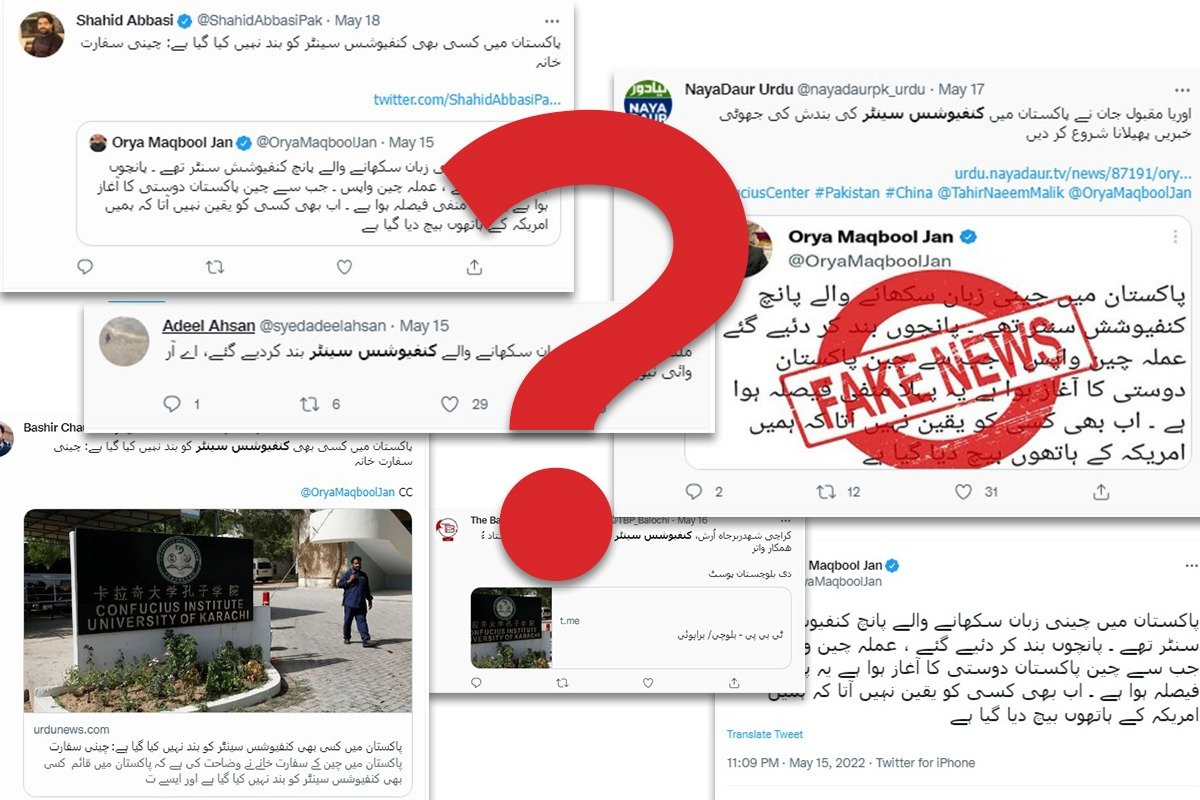
    On May 15, right-wing activist and journalist Orya Maqbool Jan with 477.2K followers on Twitter, shared a tweet claiming that all five Confucius centers in Pakistan are being shut down in the aftermath of the University of Karachi bombing by Shari Baloch. The female suicide bomber targeted three Chinese nationals working at the Confucius Institute of the University of Karachi.

    On May 17, The News posted an article quoting Zhang Heqing, the Cultural Counsellor at the Chinese embassy in Islamabad, stating that all centers are operating and that China will continue to increase educational support sent towards Pakistan. After the article in the English daily, social media users started “fact checking” Orya Maqbool Jan, including Naya Daur andUrdu News, using The News’ article to back up their claim that none of the Confucius centers are shutting down.

    Team Current decided to verify this widely spread news and we discovered that except for the Confucius center inside National University of Modern Languages (NUML), Islamabad, all other centers – in Lahore, Faisalabad, Karachi and Bahawalpur, are on their way to shutting down for the foreseeable future.

    We got in touch with Babar Saleem, the accounts officer at the University of Karachi Confucius center, who confirmed on call that outside these five centers the Chinese government had set up a few classes in PItaro as well. But since all Chinese educators have already gone back to China, the current session in these centers have been changed from in person to online and after the current session ends, all activities at the center have been cancelled.

    Verdict: 90% TRUE (since the learning center at NUML will remain open)

  • Federal Govt teachers demand pay raise, promotion

    Federal Govt teachers demand pay raise, promotion

    Federal government employees have warned to hold another sit-in in the federal capital if their demands for salary increments and promotions are not met by May 23.

    They voiced the statement during a rally in front of Parliament House organised by the All-Government Employees Grand Alliance (AGEGA), where a significant number of teachers showed up, responding to the Federal Government College Teachers Association’s call (FGCTA).

    Dr Nazir Ahmed Bhutta, the FGCTA’s General Secretary, urged the government to fulfill its promise made last year in February.

    As per the agreement, all perks or allowances should be combined with basic salaries, employees should be given timely promotion and raise, including pay and pension adjustments should be implemented to minimise wage discrepancy.

    Professor Tahir Bhatti, president of the FGCTA (local unit of H-9 College), demanded the return of the Saturday weekly off for government employees who, he claimed, couldn’t afford to work six days a week due to a large increase in fuel prices in recent months.

    To preserve electricity, he believes the government should proclaim Saturday as a holiday.

    Professor Farhan Azam, senior vice-president of the FGCTA, noted that the remuneration of employees in different departments differed significantly, causing resentment among lesser-paid staff of the same grade. He proposed that professionals of the same status should have the same pay and privileges.

    Rehman Bajwa, AGEGA’s chief coordinator, cautioned that if the employees’ demands were not met by May 23, they would take to the streets after speaking with their management.

  • Federal Directorate of Education bans jeans for male, female teachers

    The Federal Directorate of Education (FDE) on Monday has ordered female teachers not to wear jeans and tights and barred male teachers from wearing jeans and t-shirts, Dawn reported.

    All principals have been asked to ensure that their teaching and non-teaching staff (both male and female) have personal hygiene, including regular haircut, beard trimming, nail cutting and use of perfume.

    The FDE released a letter directing the principals of schools and colleges to ensure the implementation of the dress code and personal hygiene of the staff.

    The letter issued by the director academics stated: “All heads of institutions/section in-charges shall ensure that every staff member observes reasonably good measures in their physical appearance and personal hygiene.”

    Read More: Bahawal Victoria Hospital bans jeans, bangles, rings in hospital premises

    This includes regular haircut, beard trimming, nail cutting, shower and use of deodorants/perfume. The letter stated gatekeepers must wear uniforms and all the support staff may also be allocated a uniform.

    “It is recommended that all teaching staff must wear teaching gown while teaching in the class and lab coats while taking practical periods in laboratories,” the letter said, adding that the non-teaching staff must be presentable and neat, clean and properly ironed clothes and appropriate shoes.

    The letter mentioned a formal dress for females, which includes: “Appropriate simple and decent shalwar qameez, trouser, shirt with dupatta/shawl. Purdah observing females are allowed to wear scarf/hijab while ensuring its clean and neat appearance. Wearing of jeans and tights are not allowed in any case. Only formal shoes (pumps, loafers and mules) are allowed. Owing to long-standing hours during teaching, comfortable shoes like sneakers and sandals can be worn as well. But wearing of slippers is not allowed at all.”

    During the winter season, coats, blazers as well as sweaters, jerseys, cardigans and shawls of decent colours and design are allowed.

    For male staff, the letter said: “Wear appropriate, simple and decent shalwar qameez preferably with waistcoat in accordance with the weather conditions. Wear dress shirt (full sleeves preferably with tie) and trousers (dress and cotton pants only). Wearing jeans is not allowed in any case. During the summer, a half sleeves dress shirt or bush shirt can also be worn but t-shirts of all types are not allowed.”

    “Only formal shoes (dress shoes, loafers, moccasins and boots) must be worn and owing to longstanding hours during teaching comfortable shoes like sneakers and sandals can be worn as well. However, wearing of slippers is not allowed at all,” the letter said.

    It said for males, wearing shalwar qameez with waistcoat, pant and shirt with tie (preferably jacket/coat) was mandatory.

    For females, event-appropriate decent dress (shalwar qameez, trouser, shirt) with dupatta/shawl must be observed. “Fancy/party dresses in official gatherings/meetings are discouraged,” added the letter.
  • Teachers should receive vaccine priority: UNICEF

    Teachers should receive vaccine priority: UNICEF

    The head of the UN children’s agency, UNICEF, has said that teachers should be among those given priority access to the COVID-19 vaccines.

    “The Covid-19 pandemic has wreaked havoc on children’s education around the globe. Vaccinating teachers is a critical step towards putting it back on track,” Unicef chief Henrietta Fore said in a statement.

    Teachers should be “prioritised to receive the Covid-19 vaccine, once frontline health personnel and high-risk populations are vaccinated,” she said.

    “This will help protect teachers from the virus, allow them to teach in person and ultimately keep schools open.”

    According to UNICEF, at the peak of the first wave of the pandemic at the end of April, “school closures disturbed the learning of almost 90% of students worldwide.”

    Assuming that schools are not the main driver of community transmission, Unicef said in its statement that unfortunately, classes currently remain closed for “nearly one in five schoolchildren globally — or 320 million children.”

    We must “do everything in our power to safeguard the future of the next generation. This begins by safeguarding those responsible for opening that future up for them,” Fore said.

    “The consequences of extended, missed or impaired education are steep, especially for the most marginalized. The longer children remain out of school, the less likely they are to return, and the more difficult it is for their parents to resume work,” she said.

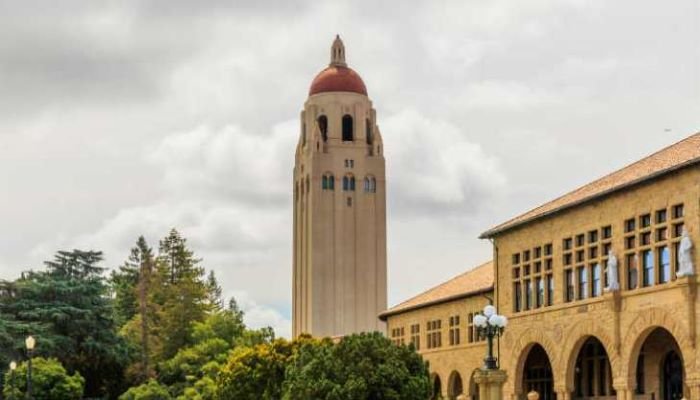
  • Stanford University’s top scientists’ list includes 12 Pakistani teachers

    Stanford University’s top scientists’ list includes 12 Pakistani teachers

    Twelve Pakistani teachers have been included in world’s top two percent scientists list compiled by Stanford University.

    Nine of them are from Punjab University and three from Government College University, Lahore.

    US-based Stanford University recently released a list that represents the top 2% of the most-cited scientists in different disciplines. The list consists of around 160,000 persons.

    Punjab University college’s spokesperson said Dr Khalid Mahmood, Dr Mohammad Sharif and Dr Mohammad Akram were selected by Stanford for their lifetime research.

    Six more researchers from Punjab University were selected in the category for international examination of one-year research papers, the spokesperson added. They are Dr Hafiz Azhar, Dr Zeeshan Yousuf, Dr Mohammad Younis, Dr Saima Arshad, Dr Abdur Rehman and Dr Noman Raza.

    Dr Mahmood is the only professor in South Asia to have received an award in Information and Library Science.

    Over 81 professors were recognised in the lifetime research work list.

    Professor Dr Mjuahid Abbas, Professor Dr Zakaullah and Dr Abdul Sattar Nizami were the educationists selected from Government College University, Lahore.

    Government College University, Lahore Vice Chancellor Dr Asghar Zaidi congratulated the teachers and said the professors were honoured to be among the world’s best researchers.