Tag: tech news

  • Elon Musk launches ‘X TV’ app, challenges YouTube

    Elon Musk launches ‘X TV’ app, challenges YouTube

    Tesla Motors and X (formerly Twitter) Chief Executive Officer Elon Musk has launched X TV, continuing his efforts to transform microblogging platform X into a popular multimedia platform.

    The tech tycoon and SpaceX owner recently made the beta version of X TV public on social media. The new feature lets users watch movies and live content within the X app.

    The feature is expected to reduce user dependency on external media platforms by allowing users to switch to other media players without requiring them to do so.

    It will also be available on LG, Amazon Fire TV, and Google TV.

    Earlier, X surpassed YouTube in the battle of ad-revenue features for content creators.

  • Bill Gates’s old CV reveals his salary at age 18

    Bill Gates’s old CV reveals his salary at age 18

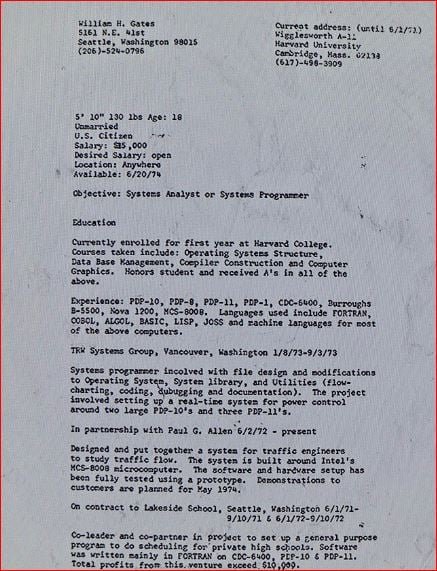
    The CV of Microsoft co-founder Bill Gates from when he was 18-year-old has gone viral on X (formerly Twitter).

    According to his CV, he had experience in various programming languages. At that age, his salary was $35,000, which was very high for a young student.

    Bill-Gates-CV

    He also mentions his partnership with Paul Allen, with whom he later founded Microsoft.

    Bill Gates founded the world’s largest software company ‘Microsoft Corporation’ in 1975, together with Paul G. Allen. He had a keen interest in computer programming from an early age and started coding at the age of 13.

    Gates and Allen developed the operating system MS-DOS, which proved to be a huge success. In 1985, Microsoft released Windows, a graphical user interface for MS-DOS, which revolutionized the world of personal computing.

    In 2000, he established the Bill and Melinda Gates Foundation, which works to eradicate poverty, solve health-related problems, and promote education globally.

    Currently, Bill works as a technology consultant for Microsoft.

    Steve Jobs’ CV is also going viral. He co-founded Apple Inc. and Pixar Animation Studios and introduced the Apple II, one of the first successful personal computers.

    Steve Jobs CV

    Steve Jobs was forced out of Apple in 1985 but returned to the company in 1997 and introduced products like the iPhone, iPod, iMac, and iPad to the market. Under Steve’s leadership, Apple Inc. made its place on the list of the most successful companies in the world, but he died on October 5, 2011.

  • Govt confirms installation of Web Monitoring System; blocks access to certain websites, applications

    Govt confirms installation of Web Monitoring System; blocks access to certain websites, applications

    The government of Pakistan has formally confirmed the installation of the Web Monitoring System (WMS) for content management on the Internet.

    According to the Cabinet, Pakistan Telecommunication (PTA) has installed WMS to manage content on the Internet, and the process of blocking websites and applications within Pakistan is underway.

    PTA has blocked 2369 URLs and 183 mobile applications as of yet.

    Earlier, PTA clarified that the ongoing internet slowdown across the country was mainly due to the failure of two of the seven international submarine cables connecting Pakistan to the outside world. The fault in the submarine cable is likely to be fixed by early October 2024.

    Last week, the PTA told the Senate Standing Committee that Virtual Private Networks (VPNs) were overloading internet services in the country.

  • X to introduce video call feature

    X to introduce video call feature

    Social media platform X (formerly Twitter) will launch a new video calling feature, providing Zoom-like functionality within the app.

    X has created a working version of its video conferencing platform, which owner Elon Musk claims he is already using for internal meetings at the company.

    The new option will be added as a separate functionality along the right-hand function bar (as “Conferences”), and once enabled, it will include full video streaming functionality for participants.

    Presumably, X’s conference calls will be limited to four participants on the screen, although they want to improve to better match Zoom and other conference chat apps.

    This update is another step towards Elon Musk’s vision of making the platform an “everything app” that facilitates all your interactive and transactional needs in one place.

  • Update on petition against slowdown of Internet in Pakistan

    Update on petition against slowdown of Internet in Pakistan

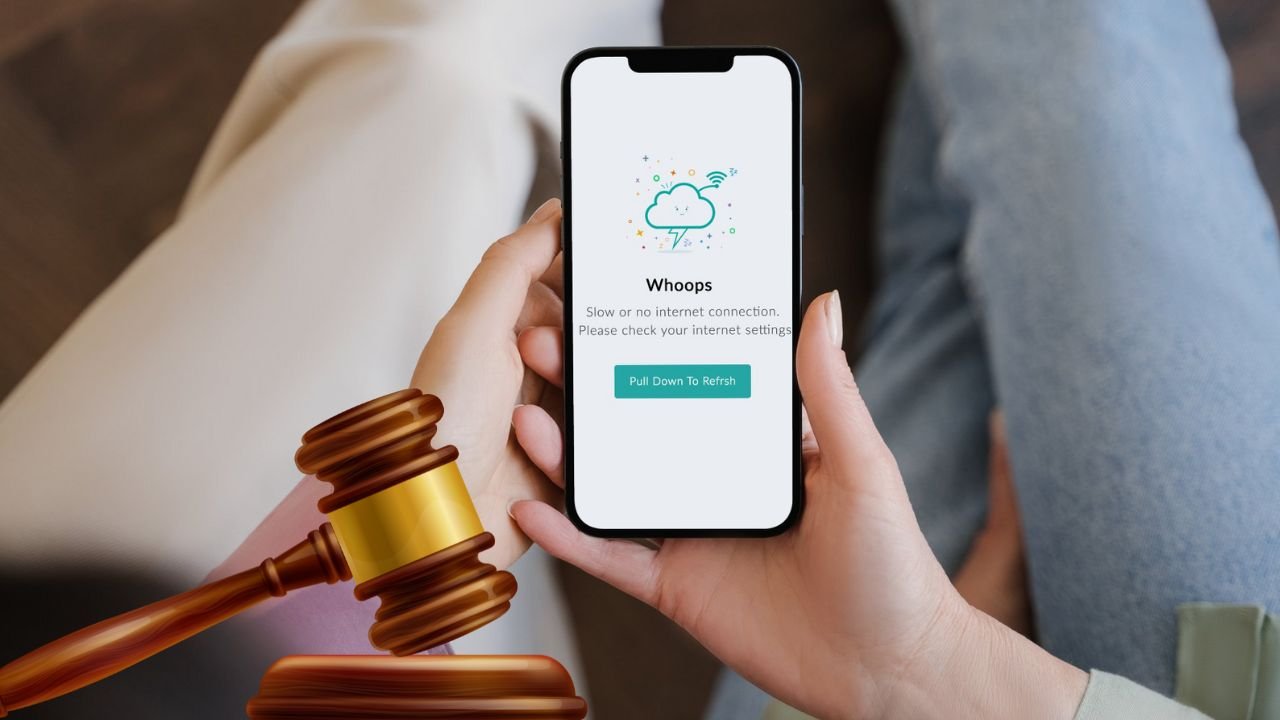
    The Lahore High Court (LHC) reserved its decision on the petition against the slowdown of the Internet across the country.

    At the beginning of the hearing, the court adjourned it by ordering the federal government counsel to appear at 12 noon after taking instructions from the relevant authorities.

    On the resumption of the hearing after a break, Justice Shakeel Ahmed remarked that this is a public interest plea. The court will pass appropriate orders on it, but I am reserving the decision now.

    Federal lawyer Rana Nauman said that the court requested that we give us time to file a detailed report on the Internet shutdown. Later, the judge asked the lawyer if this was a sign of your seriousness; you did not have adequate information.

    Later, the court reserved the decision.

    Earlier, the Lahore High Court (LHC), during the hearing of a petition against the slowdown of the internet, ordered the federal government’s lawyer to appear at 12 noon after taking instructions from relevant authorities.

    The petitioner had said, “Internet has been slowed down in Pakistan due to unknown reasons, and IT-related businesses are being badly affected by this shutdown. The world is moving to the latest technology, and Pakistan’s IT sector is being destroyed. Pakistani companies and youth are earning billions of foreign exchange from IT.”

    The sudden slowdown of the Internet and social media apps in the country, without any prior notice or reason, is a clear violation of fundamental rights. This action has not only disrupted daily life but also hindered the freedom of expression and access to information.

    The court requested that the government be bound not to shut down the Internet in the future. Justice Shakeel Ahmed of the High Court will hear the request today.

  • Apple is working on first foldable iPhone

    Apple will likely introduce its first foldable iPhone as early as 2026, marking the biggest hardware design overhaul for the company’s most popular product, The Information reported on Tuesday.

    The California-based company’s plan to release a foldable iPhone could mimic a similar move by Samsung Electronics, which entered the foldable segment in 2019 with a significant hardware design refresh to attract new customers.

    The company has approached suppliers in Asia to make components for the device, and the makers have created an internal codename, V68.

    This feature is expected to boost iPhone demand, which is facing stiff competition from Honor and Huawei in China and Samsung globally.

    Samsung unveiled its latest foldable smartphones in early July, making its priciest flagship model lighter and thinner with new AI functions.

    Apple also plans to upgrade the camera on at least one iPhone model, which will let users control the size of the aperture with a mechanical system, potentially allowing users to create a depth-of-field effect.

    The report also states that Apple has officially yet to announce a foldable iPhone, so there is no guarantee that it will be released.

  • Apple reportedly testing Samsung-made camera sensor for iPhone 16

    Apple reportedly testing Samsung-made camera sensor for iPhone 16

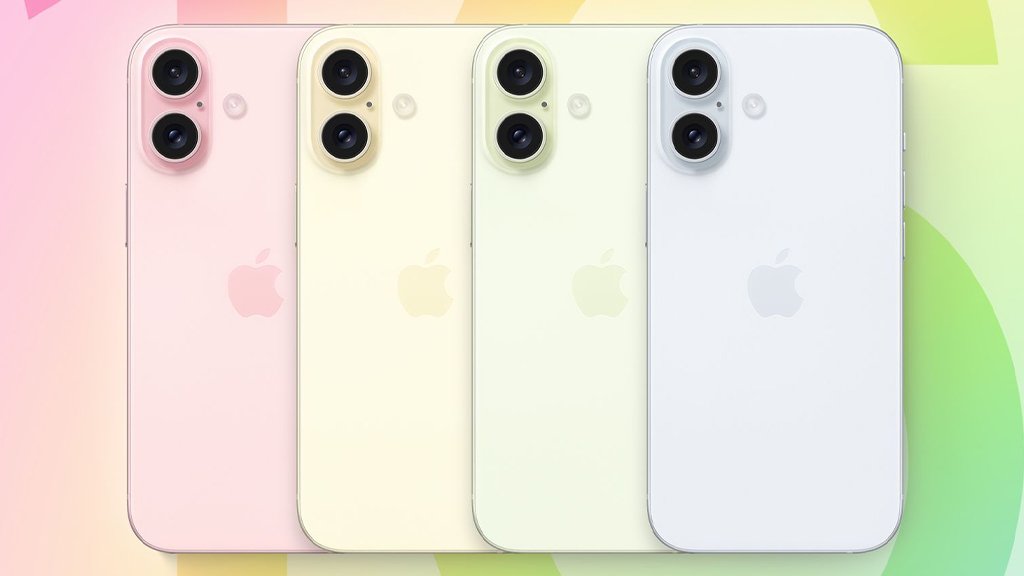
    Apple is reportedly testing advanced CMOS image sensors (CIS) from Samsung, which could feature in the iPhone 16 later this year. According to The Elec, Apple is conducting a final quality assessment of these sensors, provided by Samsung System LSI, the logic business unit of Samsung.

    Traditionally, Apple has relied exclusively on Sony for its CIS needs. However, recent developments suggest a strategic shift away from the Japanese supplier due to concerns about reliability and the desire to integrate new technologies into its camera systems.

    This change in direction comes after Apple encountered issues with Sony last year. In response, Apple asked Samsung to develop new image sensors in 2023 when Sony failed to deliver in a timely manner, complicating the launch schedule for the iPhone 15.

    If Samsung successfully passes the current quality tests, it will mark the first time the company supplies CIS for an iPhone. The new sensors from Samsung boast a more advanced three-wafer stack design, compared to the two-stack design used in current and previous iPhone models. These three wafers separately house the photodiode, transistors, and analog digital converter logics, which allows for higher pixel density, reduced noise, and smaller pixel sizes.

    In a CIS, the photodiode converts light into electrical signals, while four transistors are responsible for transferring, amplifying, reading, and erasing these signals. The separation of these components into three wafers enhances the sensor’s performance.

    Additionally, the new technology uses wafer-to-wafer hybrid bonding, which directly attaches the wafers through a copper pad, eliminating the need for signal-transferring bumps. This results in a smaller CIS with faster data transfer speeds.

    The iPhone 16 lineup is expected to be announced in the autumn, featuring new camera capabilities, including a dedicated “Capture” button and a 48-megapixel Ultra Wide camera.


  • Japanese scientists make smiling robot with ‘living’ skin

    Japanese scientists make smiling robot with ‘living’ skin

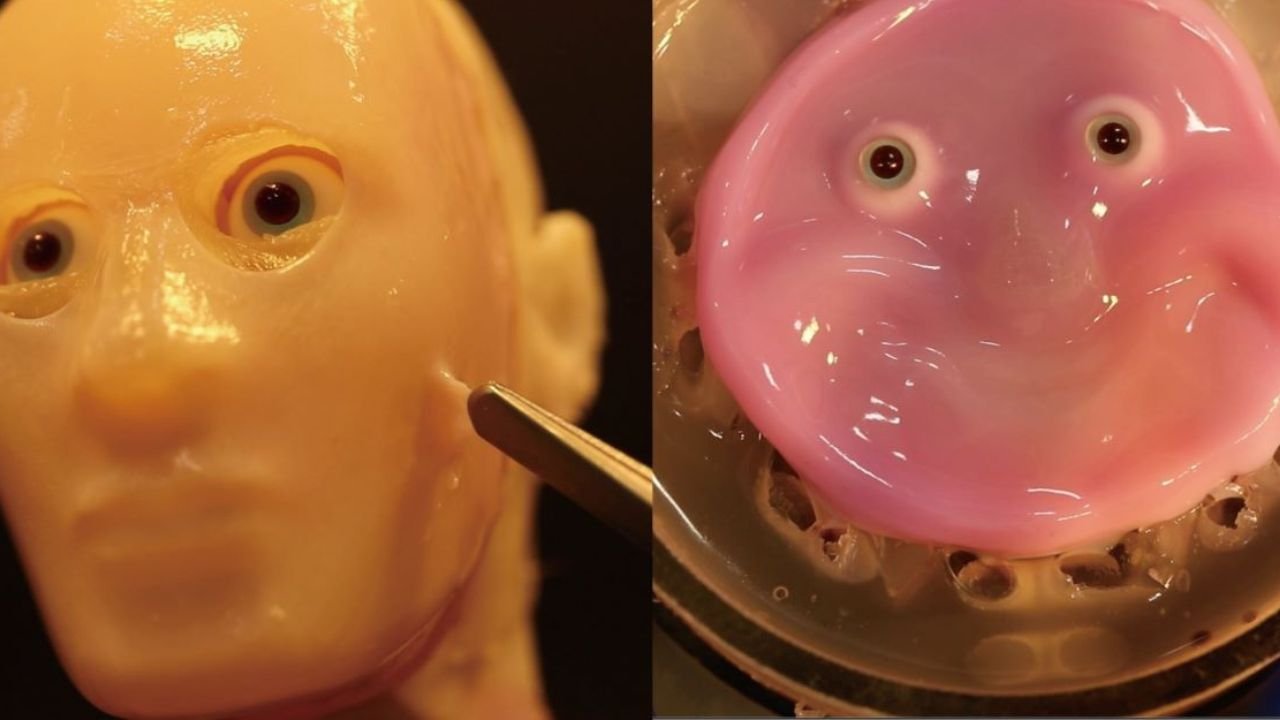
    Japanese scientists make smiling robot with ‘living’ skin have used human cells to develop an equivalent to living skin that can be attached to robotic surfaces to flash a realistic — if creepy — smile.

    The University of Tokyo researchers published their findings this week along with a video of the gooey-looking pink material being stretched into an unsettling grin.

    They used a “skin-forming cell-laden gel” to create a “robot covered with living skin”, their study in the journal Cell Reports Physical Science said.

    The biohybrid robot specialists hope the technology will one day play a role in the invention of androids with human-like appearances and abilities.

    “We also hope this will help shed better light on wrinkle formations and the physiology of facial expressions,” and help to develop transplant materials and cosmetics, the team led by Professor Shoji Takeuchi said.

    The new material could signal a departure from traditional humanoid robots covered with genuine-looking skin often made of silicone rubber, which cannot sweat or heal itself.

    The scientists’ goal is “to endow robots with the self-healing capabilities inherent in biological skin”, but they are not there yet. In previous studies, they grafted collagen onto a cut on lab-grown skin covering a robotic finger to demonstrate how it could be repaired.

    But they said conducting similar repair tests on their smiling robotic skin “is a future challenge”.

    To create what they described as a “natural smile” that moves fluidly, they gelatinised the skin-like tissue and fixed it inside the robot’s holes, a method inspired by real human skin ligaments.

  • Apple to unveil extensive home screen customisation options in iOS 18

    Apple to unveil extensive home screen customisation options in iOS 18

    In the latest edition of his Power On newsletter, tech analyst Mark Gurman has revealed exciting details about the forthcoming iOS 18 update.

    According to Gurman, Apple is set to revolutionise the iPhone user experience by introducing extensive customisation options for the home screen, a departure from the current fixed aligned grid system.

    One of the key highlights of iOS 18 will be the newfound ability for users to freely arrange icons on their home screens, breaking away from the constraints of the existing rigid layout.

    Additionally, Apple will be introducing native support for customising app icons, marking a significant departure from the previous reliance on third-party solutions.

    Gurman’s insights suggest that iOS 18 will empower users to personalise their device like never before, with the ability to alter the color of app icons to suit their preferences.

    For example, users could opt to unify all social networking apps under a distinctive blue hue, while assigning a different color scheme to finance-related applications.

    Although rudimentary home screen customisation has been achievable through workarounds such as creating single-action shortcuts, these methods have often been cumbersome and time-consuming.

    With the imminent release of iOS 18, Apple aims to streamline this experience by integrating robust customisation features directly into the operating system.

    However, the extent of icon customisation remains somewhat ambiguous. While it’s clear that users will have the option to adjust colors, the specifics regarding the potential for entirely new icon designs or limited palette changes have yet to be clarified.

    The eagerly anticipated iOS 18 is scheduled to be officially unveiled at Apple’s annual Worldwide Developers Conference (WWDC) on June 10.

    Alongside this announcement, Apple is expected to showcase a range of innovative features, with a particular emphasis on advancements in artificial intelligence technology.

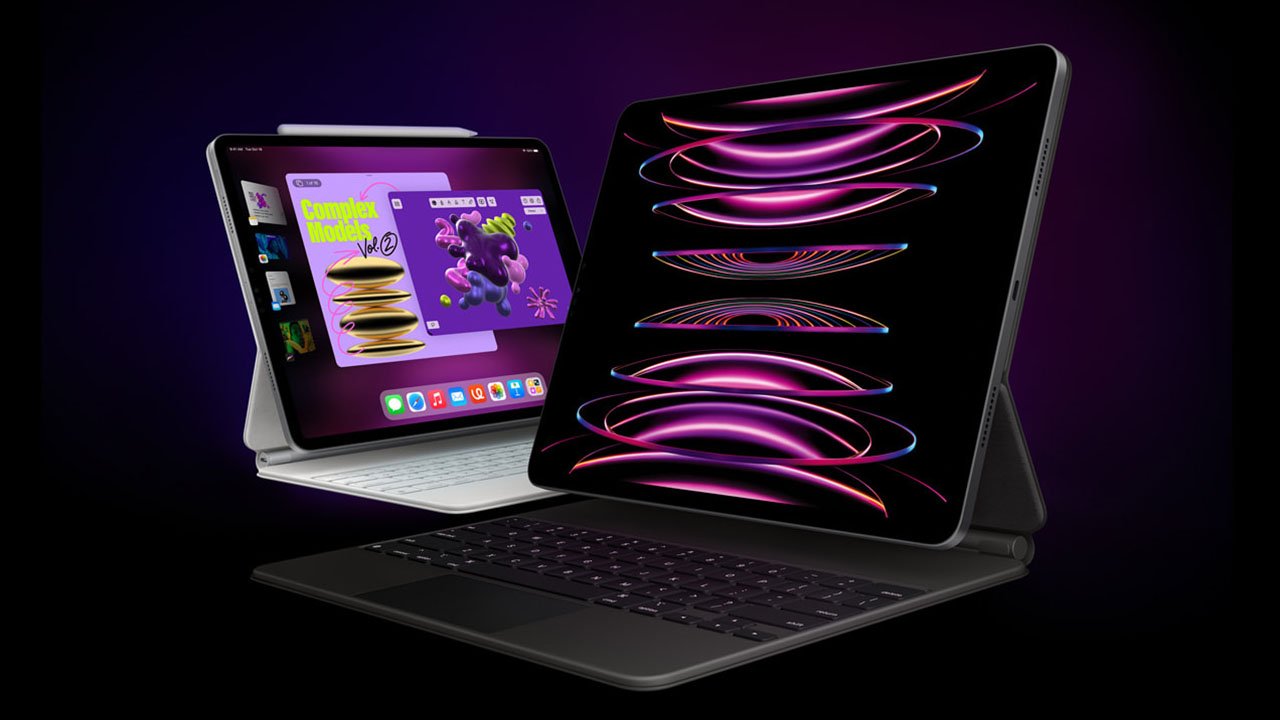
  • Apple set to unveil new iPad Pro, iPad Air models in May

    Apple set to unveil new iPad Pro, iPad Air models in May

    Apple is preparing for a significant launch event, as reported by Mark Gurman in Bloomberg’s Power On newsletter. The tech giant is set to unveil its latest offerings, the new iPad Pro and iPad Air, during the week of May 6.

    The anticipated launch will introduce new models, including 11-inch and 13-inch OLED iPad Pro versions, alongside a larger 12.9-inch iPad Air. Additionally, consumers can expect refreshed Magic Keyboard and Apple Pencil accessories to accompany these devices.

    This announcement marks a notable event for Apple, as it’s been nearly eighteen months since the release of any new iPad hardware. The upcoming iPad Pros are expected to boast enhanced displays, transitioning from mini-LED to OLED panels similar to those found in iPhones.

    This upgrade promises deeper contrast and increased brightness. Alongside display improvements, there’s anticipation for a sleeker design, with a thinner chassis and a repositioned front camera to the landscape edge. These new models will be powered by the advanced M3 chip.

    However, consumers may need to prepare for potential price hikes, as hinted by Gurman’s newsletter. Currently, the 11-inch iPad Pro starts at $799, while the 12.9-inch model begins at $1099.

    For those seeking a more budget-friendly option, the new 12.9-inch iPad Air aims to deliver a larger screen size without breaking the bank. Details regarding its processor, whether M2 or M3, remain unclear at this stage.

    Excitingly, the new accessories are expected to enhance the user experience further. Rumors suggest that the new Apple Pencil might include a new squeeze gesture feature, while the Magic Keyboard for iPad Pro is set to mimic a laptop with its aluminum base and larger trackpad.

    Although updates for the base model iPad and iPad mini are scheduled for later in the year, Gurman anticipates only minor improvements, primarily a processor upgrade for the iPad mini.