Tag: technology advancements

  • Robots tell UN conference they can run the world better than humans with help of AI

    Robots tell UN conference they can run the world better than humans with help of AI

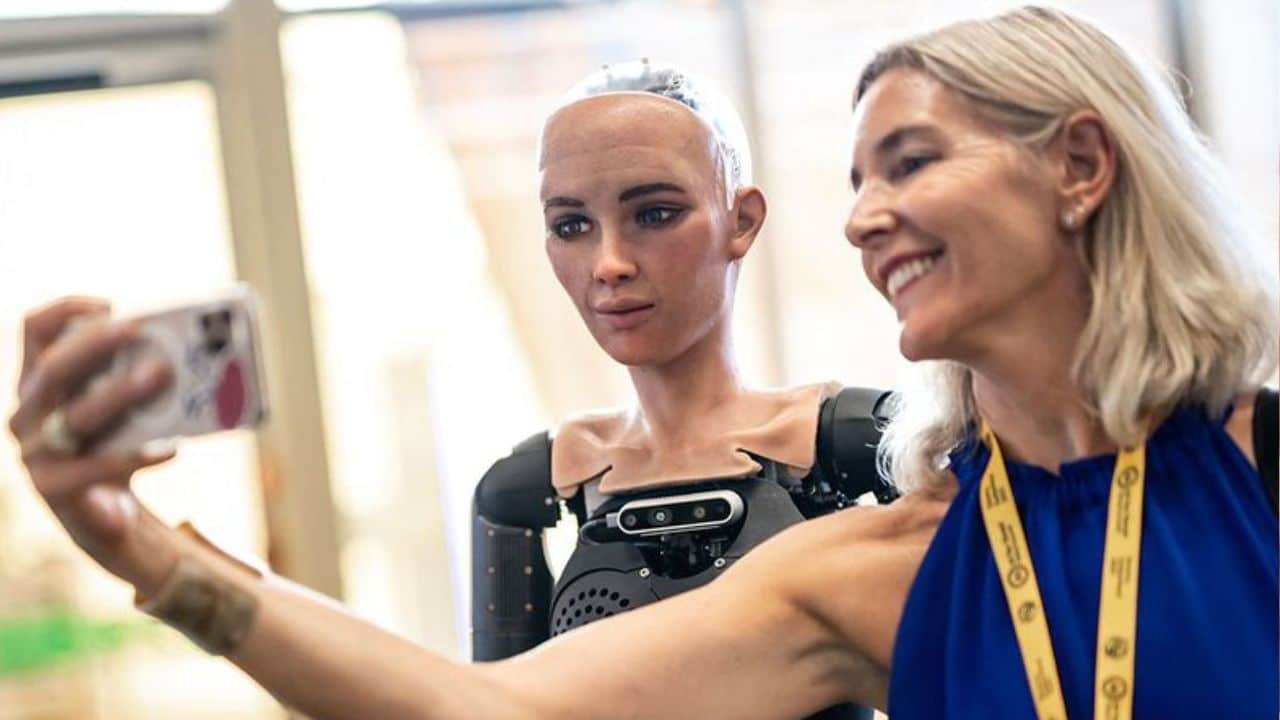
    AI-powered humanoid robots stole the spotlight at a United Nations summit in Geneva, boldly claiming they could run the world more efficiently than humans. These robots, like Sophia from Hanson Robotics and Ameca with a lifelike artificial head, gathered at the AI for Good Global Summit, where around 3,000 experts aimed to figure out how AI could tackle big problems like climate change and social care.

    While the robots proudly touted their knack for crunching unbiased data, they also recognised that humans bring the emotional smarts and creativity needed for making smart decisions. The summit made history by hosting a news conference with a panel of AI-enabled humanoid social robots, a first-of-its-kind event.

    The UN’s ITU tech agency, which organised the summit, also highlighted the downsides of rushing into AI without caution. Job losses and social unrest are concerns, the agency warned. The robots had mixed views on whether there should be global rules for AI. Some urged careful discussions about rules, while others were all about embracing the potential without holding back.

    However, these robots, despite their impressive abilities, confessed that they can’t quite grasp human emotions yet. They admitted that human feelings, like joy and pain, are a mystery to them. Although they understand that emotions matter, they made it clear that they can’t really share those feelings.

    This conference shone a light on the exciting possibilities and tough challenges of AI’s growth. It started conversations about using AI in ways that make sense and don’t cause harm to our society. As AI keeps getting smarter, these humanoid robots remind us that we need to be smart about how we use it in our world.
  • AI’s disruptive power hits tech industry: Job cuts and demand for AI experts

    AI’s disruptive power hits tech industry: Job cuts and demand for AI experts

    The rise of artificial intelligence (AI) has sparked concerns about job displacement in the future. However, it is already having an impact in the tech industry, where employees once seemed secure in their positions. 

    A growing number of tech companies are attributing layoffs and reevaluations of new hires to AI advancements happening right in Silicon Valley.

    For example, Chegg, an education technology company, recently announced in a regulatory filing that it would be cutting 4 per cent of its workforce, around 80 employees. The reason given was to align the company with its AI strategy and create sustainable value for students and investors.

    IBM’s CEO, Arvind Krishna, stated in a May interview with Bloomberg that the company plans to pause hiring for roles that could be potentially replaced by AI in the future. However, in a subsequent interview with Barrons, Krishna clarified that his comments were taken out of context, emphasising that AI will generate more jobs than it eliminates.

    In late April, Dropbox, a file-storage service, revealed that it would be reducing its workforce by approximately 16 per cent, or 500 employees, also citing AI as a factor. Outplacement firm Challenger, Gray & Christmas reported that in May alone, 3,900 individuals were laid off due to AI, marking the first time job cuts were specifically attributed to this factor. All of these layoffs occurred within the tech sector.

    These developments in Silicon Valley not only demonstrate its leadership in AI development but also provide insight into how businesses might adapt to these tools. Rather than rendering entire skill sets obsolete overnight, AI is currently compelling companies to redirect resources to maximize its potential. Consequently, workers with AI expertise are in high demand.

    Dropbox CEO Drew Houston, in a note announcing the job cuts, acknowledged that AI has captured people’s imagination and expanded the market for AI-powered products. He highlighted the need for a different skill set, particularly in AI and early-stage product development, for the company’s future growth.

    Dan Wang, a professor at Columbia Business School, believes AI will lead to organizational restructuring but does not foresee machines entirely replacing humans just yet. He suggests that AI enhances human work rather than replaces it. Wang argues that the real competition lies in human specialists who can effectively leverage AI tools.

    Overall, the influence of AI is already evident in the tech industry, prompting companies to adapt their strategies and prioritize workers with AI expertise, rather than causing immediate job obsolescence.