Tag: temporary relief

  • Sindh govt’s Rs2 roti plan may trigger shortage, price inflation in the near future

    Sindh govt’s Rs2 roti plan may trigger shortage, price inflation in the near future

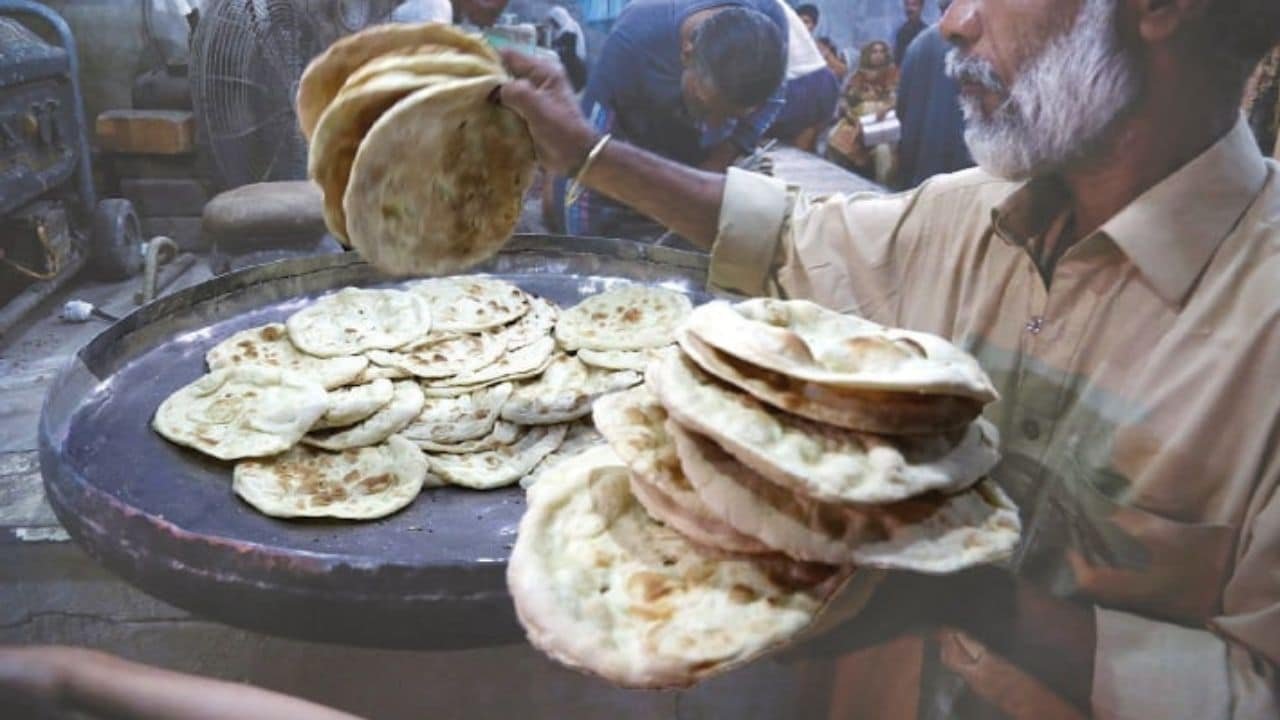
    Sindh Governor Kamran Tessori has announced a subsidised food programme for the poor. As part of this initiative, the government will provide roti (flatbread) at a price of Rs2.

    Tessori stated that the provision of roti at a reduced price is aimed at helping people affected by inflation and will be implemented in specific areas of the metropolis. He emphasised that this noble cause will be pursued as a mission.

    During a ceremony on Sunday, the governor announced the establishment of up to 300 tandoors (traditional clay ovens) across the Sindh capital, where roti will be sold for only Rs2. Additionally, he reiterated that ration bags would be distributed among one hundred thousand deserving families in the port city.

    While it may seem beneficial for the inflation-hit people of Karachi to have access to roti at a significantly lower price of Rs2 compared to the Rs20-25 market price, there could be unintended consequences.

    If the government sets up 300 temporary tandoors selling roti at Rs2, the majority of people may opt to buy from them rather than purchasing roti from tandoors selling it at a higher price. Consequently, the tandoors selling roti for Rs20 may be forced to close as they would be unable to compete with these subsidised tandoors.

    Once the government discontinues the cheap roti scheme or ceases to offer it at reduced rates, there is a potential for a shortage to arise. With only a limited number of tandoors available for citizens to purchase roti from, the scarcity could drive up the price of roti to Rs30 or even higher.

    This highlights the possibility that the government’s initiative of selling roti at a reduced rate may not be sustainable in the long run. The temporary availability of roti at Rs2 might not be as beneficial as initially perceived. Only time will tell whether this programme will provide temporary relief to the masses or worsen the situation.
  • Fitch and Moody’s: IMF loan provides temporary relief for Pakistan, but risks remain

    Fitch and Moody’s: IMF loan provides temporary relief for Pakistan, but risks remain

    Fitch Ratings and Moody’s Investors Service issued warnings on Monday regarding Pakistan’s financial sustainability, despite the recent acquisition of a much-needed $3 billion lifeline from the International Monetary Fund (IMF).

    Last week, Pakistan signed a short-term (nine-month) loan programme worth $3 billion with the IMF, as the previous $7 billion programme was prematurely ending on the same day.

    The objective of the new loan programme is to provide the necessary foreign exchange to reopen imports, support listed companies in gradually resuming partially closed production, and stimulate economic activities within the country.

    Additionally, this programme serves as a signal to other donor agencies and friendly nations, which had pledged $9 billion at a Geneva meeting in January 2023, to extend new financing to Islamabad.

    However, the two global rating agencies caution that risks persist for Pakistan’s economy, particularly as the government faces a daunting $25 billion debt repayment challenge in the upcoming year starting in July.

    Krisjanis Krustins, Fitch’s Director of Sovereigns for APAC, emphasised that Pakistan will require significant additional financing beyond IMF disbursements to meet its debt obligations and support an economic recovery.

    While the IMF likely sought and received assurances for such financing, there remains a risk that it could prove insufficient, especially if current account deficits widen again.

    In order to secure the initial agreement with the IMF, Pakistan had to implement measures such as tax increases, spending cuts, and raising its primary interest rate to a historical peak.

    Although the markets responded positively to this initial agreement, leading to a significant surge in stocks and improved performance of dollar bonds, it still awaits approval from the IMF Executive Board.

    Moody’s analyst Grace Lim, based in Singapore, expressed doubts about Pakistan’s ability to secure the full $3 billion IMF financing during the stand-by period of the loan programme. Lim stated that it remains uncertain whether the Pakistani government will be able to secure the complete amount.

    Furthermore, she highlighted that the government’s commitment to implementing ongoing reforms will be tested as the country approaches elections scheduled for October 2023.

    It is worth noting that Pakistan had previously obtained a $1.1 billion loan in August, which was subsequently halted due to Islamabad’s failure to comply with certain stipulated conditions.

    According to Moody’s, the towering $25 billion debt repayment comprises both principal and interest, amounting to nearly seven times Pakistan’s foreign exchange reserves.

    Lim further added that only after the elections will it become clear whether the country will be able to enter into another IMF programme.

    Until a new programme is agreed upon, Pakistan’s ability to secure loans from other bilateral and multilateral partners in the long term will be severely limited, she cautioned.