Tag: tere bin

  • ‘Completely unnecessary’: Tere Bin’s latest episode is drawing criticism for including an attempted suicide scene

    Drama serial ‘Tere Bin’ had been hitting the right notes for a while with electrifying chemistry between Yumna Zaidi and Wahaj Ali who star as conflicted enemies turned lovers. Fans have lauded the series for Ali’s powerful acting as well as Zaidi’s feisty and headstrong character Meerab who isn’t afraid to stand up for what she believes in. However, a recent episode has left fans conflicted with some arguing that the series has diverted away from the true nature of the male lead, Murtasim.

    In the previous episode, Meerab is kidnapped by her male friend, Rohail, who takes her to his house and confesses his feelings to her. After being unable to contact his wife and panicking, Murtasim rescues her from Rohail’s clutches and threatens to shoot him if he ever comes near her again. But this incident leaves our hero traumatised, thinking that Meerab is still in love with Rohail and had gone to Karachi solely to meet him.

    Now in the latest episode, Murtasim refuses to engage with his wife, despite her attempts to make him happy while cooking his favorite dishes. As the attempts fall flat, Murtasim accuses her of cheating by visiting Rohail in Karachi. When Meerab’s explanation doesn’t satisfy him, he takes his wife to the rooftop and asks her to jump from there to prove herself.

    Fans have slammed this scene as a complete betrayal to Murtasim’s character. Something Haute editor Aamna Isani wrote that the scene was completely unnecessary and had shattered the efforts the show had made in the previous episodes to put Murtasim in a positive light.

    “Like the slap, the jump scene was also totally unnecessary and stripped Murtasim of the human light he was portrayed in when he cried. Very confused, poor writing I’d say. #TereBin,” she wrote.

    Journalist Marvi Sirmed criticised ‘Tere Bin’ for turning Murtasim in to an ‘alpha male’ who tries to domesticate the free-spirited and ambitious Meerab, and slammed the writer Noor Makhdoom for this controversial scene.

    “But this final nail in the coffin of sanity was put when a stupid toxic Murtasim asks Meerab to jump from roof in order to prove her innocence. A grim reminder of Seeta’s Agni Priksha. What nonsense. Really Ms Makhdoom, what bloody nonsense?” she wrote.

    Many users had to point out that in previous episodes, Murtasim had spent two nights in his village with the antagonist Haya, an act that had angered Meerab. But did it lead to Murtasim being forced to prove his innocence? Then why was this imposed over Meerab?

    This is not the first time Tere Bin has attracted criticism for including controversial scenes that were contrary to the characters’ build up. For instance, the slap scene in episode five attracted intense backlash as social media users criticised the show for peddling sexist stereotypes once more.
  • ‘Indian fans responded with more respect to my character in Tere Bin than Pakistanis did’: Sabeen Farooq

    ‘Indian fans responded with more respect to my character in Tere Bin than Pakistanis did’: Sabeen Farooq

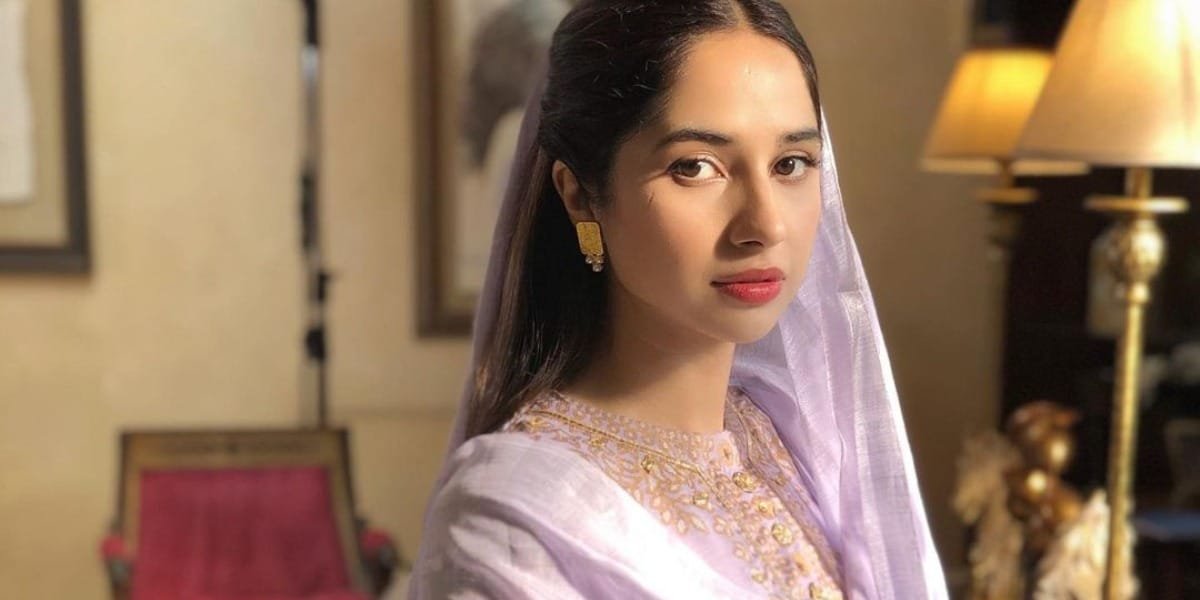
    Sabeen Farooq is currently making waves for her role as the antagonist ‘Haya’ in the drama ‘Tere Bin’. But the actress addressed the feedback she was receiving including threats to her family. In an Instagram post, Farooq slammed the haters for not being able to tell the difference between what is real and what’s fake, as shown by Galaxy Lollywood.

    Farooq talked about the problem in an interview with BBC Urdu, stating that the threats she received from social media trolls were directly targeting her family:

    “If it was about my personality then it would be understandable, but these were personal attacks sent to my family. But thank Allah I don’t take these things personally or let my mental health get impacted by it. I don’t know how other people who have played negative characters on screen have dealt with this, but sending insults to my family and saying awful things is wrong. They did not mention my character, but would only talk about me.”

    Opening up about the popularity of ‘Tere Bin’ in India, Farooq revealed that she was astonished by how polite and respectful fans over there were:

    “These fans would like lovely letters to me where they would solely talk about Haya. And I’m shocked that the kind of praise I’m getting from them, it’s not how Pakistanis are reacting to my role. This is from a neighbouring country where the drama is trending. But over here, people are sending hateful messages.”

    Asked why she chose to play the antagonist, Haya, who plots ways to break apart the main leads Murtasim and Meerab, Farooq revealed that she fell in love with her character’s bluntness, and always had wanted an opportunity to work with Yumna Zaidi:

    “I lover her bluntness because she is not scared of anyone and can say anything she wants infront of everyone. She has the ‘pyaar kiya tou darna kya’ demeanor because she isn’t afraid to confess in front of everyone that she is in love with this man…Also. I learned that Yumna is there.. and I had always wanted to work with her. That is what made me think there is something good about this show other wise why would Yumna sign up for it?”

  • In Bannistan, slaps get more praises than hugs

    Bannistan: the name that keeps circulating every now and then on social media, because it defines what it means to be a resident of Pakistan.

    In an era of inflation, robberies, the never ending rise of lynch mobs and rape cases, rather than looking for ways to encourage joy and laughter, we’ve pointed our pitchforks towards anything and anyone celebrating to their own beat. Whether it is women dancing in the streets, a bride dancing the night away on her wedding, the most simplest forms of affection and love will irk and anger us because after all, the most important rule in the land of Bannistan is to never let joy prevail.

    In the darkest times of humanity, it is our films and dramas that have sustained us and provided us with a glimmer of joy. Like when the Covid-19 pandemic shut down our lifestyles, we turned to films and movies to cope with the fear of surviving this deadly disease. Another poignant example is shown in the documentary ‘The Romantics’ when Aditya Chopra recalls how when there were a few weeks left before the release of his rom-com ‘Rab Nay Banadi Jodi’, the 26/11 attacks in Mumbai took place which wrecked destruction and fear across India. Terrified of the anticipated backlash, Chopra narrated how despite many of his colleagues insisting him to push the film’s release forward, he refused. Because as he declared: this was a more critical time than ever that people had a reason to find joy.

    Films aren’t just a form of entertainment, but a powerful medium to give solace to those struggling to find joy. It is also a powerful tool that can reach across masses beyond than politicians to spread messages about social issues. In this time more than ever, we need our films to teach empathy and love to their audiences, but the rules are completely opposite in the land of Bannistan. Because here, what gets the most ratings is divorces, crying bahus, slaps, incest and anything that involves fear and oppression.

    A scene from a Pakistani drama ‘Tere Bin’ has been going viral since yesterday because it featured a couple sleeping in the same bed together, along with the caption “Censor board is sleeping?” Because in the land of Bannistan, nothing makes us clutch our pearls more than a man and a woman being happy with each other.

    Mind you, this is the first time this drama began circulating widely among national discourse for literally a five minute scene where the two are soundly sleeping next to each other, but several other instances of violence depicted in the same drama had not received the same amount of rage. In the last 30 episodes of the same show, we watch a woman being forcibly married to her cousin, placed under house arrest and barred from meeting her foster parents, slapped by her fiance, slapped by her mother in law, tried to commit suicide. Did you ever hear about such scenes? Nope, because this consistent oppression and cruel manner of stamping out joy is what keeps Pakistanis happy. We hate joy. We hate watching women in consensual, happy relationships.
    What is a tragedy in this mess is this limited, but moving scene from Tere Bin is just a drop in the thousands of dramas Pakistanis celebrate and champion to promote family values everyday, which are littered with misogynist messages and scenes depicting violence and abuse.

    Our censor board sent several notices to ‘Dil Na Umeed Tou Nahi’ because apparently, it is a sin to depict how vulnerable children from lower class families are easy targets for sex trafficking, but a drama like ‘Mere Pass Tum Ho’ get’s a theatrical screening across Pakistan because it shows us for who we really are, a women-hating nation whose biggest nightmare is a woman getting financially independent and wanting a comfortable lifestyle. Any time there has been an attempt to tell moving stories that championed voices of the oppressed, or tried to encourage dialogues about empathy or love, we stamp it out because it’s alien to us. Label them as ‘un-islamic’ and vulgar because we’re a nation of soul suckers, who can’t thrive properly unless we’re watching the misery of others before us.

    It’s imperative now more than ever that we re-think the success formulae of our dramas and movies, especially the kind of messages they are sending to their audiences. Because if a five minute scene featuring a brief intimate moment between a couple is enough to create a national storm, what does it reveal about the way men and women view each other in Pakistan. Pakistani women deserve better stories than what Pakistani audiences are providing them. Our younger generation doesn’t deserve to grow up knowing that a happy couple is a sinful couple, but should remember that like Chopra said, it’s essential that in times of tragedy we try to look for ways to uplift each other.

  • ‘I don’t feel comfortable with slapping scenes’: Bushra Ansari

    ‘I don’t feel comfortable with slapping scenes’: Bushra Ansari

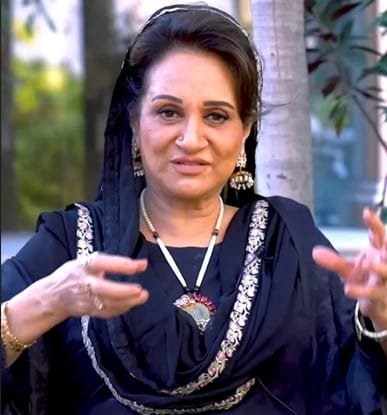
    Bushra Ansari’s currently winning hearts as the strict mother-in-law on the ARY drama ‘Tere Bin’, however it seems like the actor isn’t too comfortable with the character’s cold, selfish nature. Especially in a particular scene where her character Maa Begum slaps Meerab for dancing.
    In a behind the scenes interiew, Ansari confessed that she finds slapping scenes quite difficult to perform:
    “The one thing that I don’t like is slapping people, and I get incredibly upset over it. Not just girls, but with boys as well I have to give a lot of re-takes. In a lot of previous dramas I had to slap actors like my own son. I slapped Wahaj, Ahsan Khan and then Mikaal Zulfiqar…Just one thing I would change about her character is how much she slaps people. Because it breaks my heart. Allah karay I never have to come across such a situation.”
    Ansari also explained the mindset and personality of Maa Begam, and elaborated on how when Meerab began dancing at her wedding, she challenged this mindset which is why she was slapped.
    “I (my character) have a set of rules like ‘this is my house, this is my family and these are my rules, and this isn’t right that my daughter-in-law is dancing at wedding. But no one would find this to be proper, as this is a part of our own culture… I see women now days are dancing at their wedding and wearing full makeup. Back in our days we had a tradition that a bride would wear no makeup so that her face would glow.”

    You can watch the complete interview here:

  • Are Tere Bin’s scenes copied from Barun Sobti-Sanaya Irani’s blockbuster ‘IPKKND’?

    Are Tere Bin’s scenes copied from Barun Sobti-Sanaya Irani’s blockbuster ‘IPKKND’?

    Geo Entertainment’s drama serial Tere Bin starring Yumna Zaidi and Wahaj Ali is currently leading the rating charts.

    Some transnational viewers of this drama have now discovered that many moments in Tere Bin are an exact replica of those in the popular Indian drama Iss Pyar Ko Kya Naam Doon starring the hit pair of Barun Sobti and Sanaya Irani.

    What the netizens has to say about the two shows’ striking resemblance is as follows: