Tag: terror-financing

  • Hafiz Saeed jailed for 31 years in more terror-financing cases

    Hafiz Saeed jailed for 31 years in more terror-financing cases

    The imprisoned Jamaatud Dawa (JuD) chief Hafiz Saeed was sentenced to 31 years in jail collectively in two more cases of terror-financing by an Anti-Terrorism Court (ATC) in Lahore on Friday.

    ATC Judge Ejaz Ahmad Buttar convicted the 70-year-old cleric in the cases filed against him by the Counter-Terrorism Department (CTD) Lahore and Sahiwal officials.

    The court awarded him rigorous imprisonment of 16 years and a half in the case No.90/19 and 15 years and a half in the case No.21/19.

    The court announced the verdict after hearing final arguments from both defence and prosecution sides and recording evidence.

    According to Aljazeera News, a Pakistani court has sentenced Hafiz Saeed, founder of Lashkar-e-Taiba (LeT), the armed group blamed by the United States and India for the deadly 2008 Mumbai siege, to 31 years in prison in two cases of terrorism financing.

    The Aljazeera quoted the verdict that court documents show Saeed was found guilty of multiple breaches in the two cases, but it was not immediately clear how much jail time it would entail given his current incarceration and the sentences’ running concurrently.

    “The sentences awarded to convict Hafiz Muhammad Saeed run concurrently of this case and of previously awarded, if any,” said a court order dated April 7.

    The judge ordered the authorities concerned to take over a mosque and a Madressah built using the funds collected by Hafiz Saeed.

    The JuD chief was arrested in July 2019 in connection with terror financing while he was on his way from Lahore to Gujranwala. Earlier in 2020, he was convicted in two cases of terror-financing when a Lahore anti-terrorism court awarded him 15 years in prison and a fine of Rs15,000 in each case.
  • New Zealand: Multiple people injured in knife attack by an ISIS-inspired man

    New Zealand’s Prime Minister  Jacinda Ardern has said in an official statement that at least six people were hurt in a knife incident at a supermarket in Auckland, Al Jazeera has reported. The attacker was killed within 60 seconds after beginning the attack, she said. Ardern further added that the had been inspired by the ISIS group.

    “It was hateful, it was wrong. It was carried out by an individual, not a faith,” Ardern said. She described the attacker as a Sri Lankan national who arrived in New Zealand in 2011. “He alone carries the responsibility for these acts.”

    Police Commissioner Andrew Coster said the man was acting alone and police were confident there was no further threat to the public, Reuters has reported.

    “We were doing absolutely everything possible to monitor him and indeed the fact that we were able to intervene so quickly, in roughly 60 seconds, shows just how closely we were watching him,” Coster said.

    Videos of panicked people in the shopping mall after the attack has gone viral on social media.

  • Despite ‘serious progress’, Pakistan fails to exit FATF grey list

    Despite ‘serious progress’, Pakistan fails to exit FATF grey list

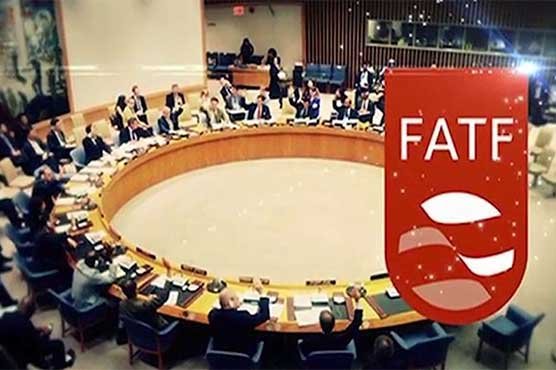
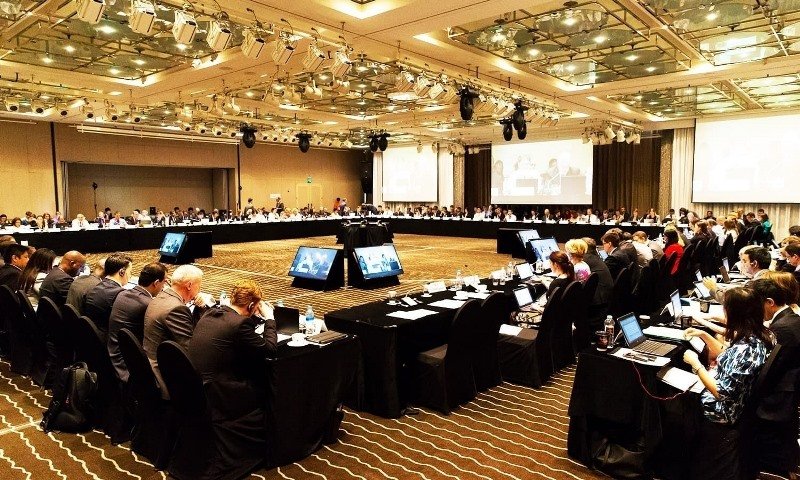
    Pakistan was retained in the “grey list” of the Financial Action Task Force (FATF), which examined its efforts to counter terror financing and money laundering. The decision was taken at the meeting of the multilateral watchdog on Thursday.

    “Pakistan should continue to work on implementing the three remaining items in its action plan to address its strategically important deficiencies, namely by: demonstrating that TF investigations and prosecutions target persons and entities acting on behalf or at the direction of designated persons or entities; demonstrating that TF prosecutions result in effective, proportionate and dissuasive sanctions and demonstrating effective implementation of targeted financial sanctions against all 1267 and 1373 designated terrorists, specifically those acting for or on their behalf,” the FATF said in a statement.

    The anti-terror financing organisation noted that Islamabad has largely addressed 24 of the 27 action items and gave Islamabad time till June 2021 to complete the full action plan.

    FATF president Marcus Pleyer said that Pakistan has made “significant progress” but “some serious deficiencies remain” and all these deficiencies are “in the realm of terror financing”. Pleyer added that Pakistan “remains under increased monitoring”.

    Reacting to the FATF decision, Federal Minister Hammad Azhar said Pakistan had completed “almost 90 per cent” of its current FATF action plan with 24 out of 27 items rated as ‘largely addressed’ and the remaining three items ‘partially addressed’.

    “FATF has acknowledged Pakistan’s high-level political commitment since 2018 that led to significant progress. It was also noted by FATF member countries that Pakistan is subject to perhaps the most challenging & comprehensive action plan ever given to any country,” he tweeted, saying the country was also subject to dual evaluation processes of FATF with differing timelines.

    MOROCCO, SENEGAL ON GREY LIST:

    The FATF during its plenary kept North Korea and Iran as the only two countries on its blacklist but added four new places to its watch list for increased monitoring, according to Pleyer.

    The countries added to the grey list are Morocco, Burkina Faso, Senegal and the Cayman Islands.

    With the four additions, the list now has 19 countries and territories that FATF said were only partially fulfilling international rules for fighting terrorism financing and money laundering.

  • US, France may oppose Pakistan’s bid to exit FATF grey list: report

    US, France may oppose Pakistan’s bid to exit FATF grey list: report

    France and some other European countries have recommended the Financial Action Task Force (FATF) to continue to keep Pakistan on the grey list, saying Islamabad has allegedly failed to comply with the conditions set by the global watchdog, according to a report in Dawn newspaper.

    The virtual FATF plenary will be held in Paris from February 22 to 25 to consider cases of various countries on the grey list, including Pakistan. The final decision will be made at the conclusion of the meetings. If Pakistan fails to satisfy the FATF in the meeting, it will remain on the grey list till June, said reports.

    FATF had placed Pakistan on the list in June 2018.

    France and some other European countries believe that Islamabad has failed to fulfil the FATF criteria.

    Paris has reservations over Pakistan’s response to the blasphemous cartoons issue, said a journalist quoted by the newspaper. The report said that Pakistan and France do not enjoy good diplomatic ties, which is evident from the fact that Islamabad doesn’t even have an envoy in the European country.

    Meanwhile, the US is reportedly irked by the verdict in the Daniel Pearl case. Omer Saeed Sheikh, a prime accused in the murder of US journalist Pearl, was acquitted by the Pakistani Supreme Court much to the chagrin of Washington. It is feared that the US may oppose Pakistan’s bid to exit the grey list.

    On the other hand, Pakistan has said that it has complied with all the FATF recommendations to curb the terror financing and money laundering.

    In its last meeting held in Oct 2020, FATF had decided to keep Pakistan on the grey list till Feb 2021 because it failed to fulfill six out of 27 recommendations to combat terror financing.

    “Pakistan has already complied with the six recommendations and also submitted details to the FATF secretariat. The members would now evaluate Pakistan’s responses during the meeting…Pakistan had made significant progress in legislation as well as its implementation,” Dawn reported.

    In 2020, the Pakistan Tehreek-e-Insaf government had got three laws — the Anti-Money Laundering (second amendment) Bill-2020, Anti-Terrorism Act (ATA) (third amendment) Bill-2020 and Islamabad Capital Territory Waqf Properties Bill-2020 — passed in a joint sitting of parliament to fulfil the legal requirements of FATF.

    PROTEST OUTSIDE FATF OFFICE:

    Meanwhile, a protest was held outside the FATF office in Paris by dissident Pakistani activists and journalists, who are in self-imposed exile. In a press release, the protesters said that the FATF should not “be blackmailed by China” over the issue of terror financing.

    The protesters said China has defended Pakistan at various multilateral forums on the issue of terrorism, urging FATF to take action against Pakistan over alleged support to the banned terror outfits.

  • ‘Successful implementation’: Hammad Azhar says FATF blacklisting off the table

    ‘Successful implementation’: Hammad Azhar says FATF blacklisting off the table

    After the Financial Action Task Force (FATF) decided to keep Pakistan in the grey-list till February, Minister for Revenue Hammad Azhar congratulated the nation for successfully implementing the major points of the FATF.

    “Out of 27 points, we have implemented 21 points given by the authorities concerned regarding FATF, ” he stated while talking to a private television channel. Except India, every country had appreciated the efforts of Pakistan for satisfying the people dealing FATF, he added.

    Pakistan was placed on the grey list during the period of Pakistan Muslim League-Nawaz last government, he said. In reply to a question, he said the remaining six points had partially implemented. He also termed the decision that was taken without voting a “diplomatic victory”.

    BLACKLISTING OFF THE TABLE:

    In a statement, FATF urged Pakistan to complete an internationally agreed action plan by February 2021. FATF said Pakistan had now reached 21 targets out of 27 set for it in 2018 when Pakistan was placed on FATF’s “grey list” of countries with inadequate controls over terrorism financing.

    But Pakistan still needs to demonstrate that law enforcement agencies are identifying and investigating the widest range of terrorism financing activity, FATF said.

    The watchdog also asked Islamabad to demonstrate that terrorism financing probes resulted in effective, proportionate and dissuasive sanctions.

    “FATF acknowledged that any blacklisting is off the table now,” Pakistani federal minister Hammad Azhar tweeted.

    Azhar, who leads Pakistan’s delegation at FATF plenary meetings, said the forum’s discussions were focused on how Pakistan could be supported in meeting its targets before a formal review in the middle of next year.

    Last February, Pakistan secured an extra four months to complete the plan after missing 13 of the 27 targets that FATF had set for it in 2018 when it put Pakistan on its “grey list”.

  • Conviction: Hafiz Saeed sentenced to jail for terror-financing

    Conviction: Hafiz Saeed sentenced to jail for terror-financing

    An anti-terrorism court (ATC) in Lahore on Wednesday convicted banned Jamaatud Dawa (JuD) chief Hafiz Saeed in two terror-financing cases, sentencing him to jail for five years and six months, besides reportedly imposing a fine of Rs15,000 in each case.

    The court that convicted Saeed under sections 11-F (2) and 11-N of the Anti-Terrorism Act (ATA), had reserved its verdict in the two cases on February 6.

    On Tuesday, the court had accepted a plea of Hafiz Saeed, chief of the banned Jamaatud Dawa (JuD), to club all six terror financing cases against him and his associates and announce the verdict on completion of the trial.

    The court had indicted the JuD chief and three of his associates – Hafiz Abdul Salam bin Mohammad, Mohammad Ashraf and Prof Zafar Iqbal – on terror financing charges on December 11 last year in a case filed by the Counter-Terrorism Department (CTD). Saeed and Prof Zafar Iqbal were later indicted in a similar case on December 20. The cases were filed by CTD Lahore and Gujranwala chapters.

    The ATC on Saturday last week had deferred announcing its verdict in the terror financing cases and decided to hear arguments on February 11 on the suspects’ application to hear all cases first before reserving its judgment.

    The application, filed by the petitioners’ counsel, requested that collective verdicts be issued after the completion of trials in all the cases pending against them.

    The petition also prayed the court to quash the false First Information Report (FIR) registered against the JuD chief. According to Deputy Prosecutor General Abdul Rauf Wattoo, in total six cases against the said individuals were pending before the same court, and in four of these cases, presentation of evidence was in progress.